Exit Interview Confidentiality Notification and Acknowledgment
About this form
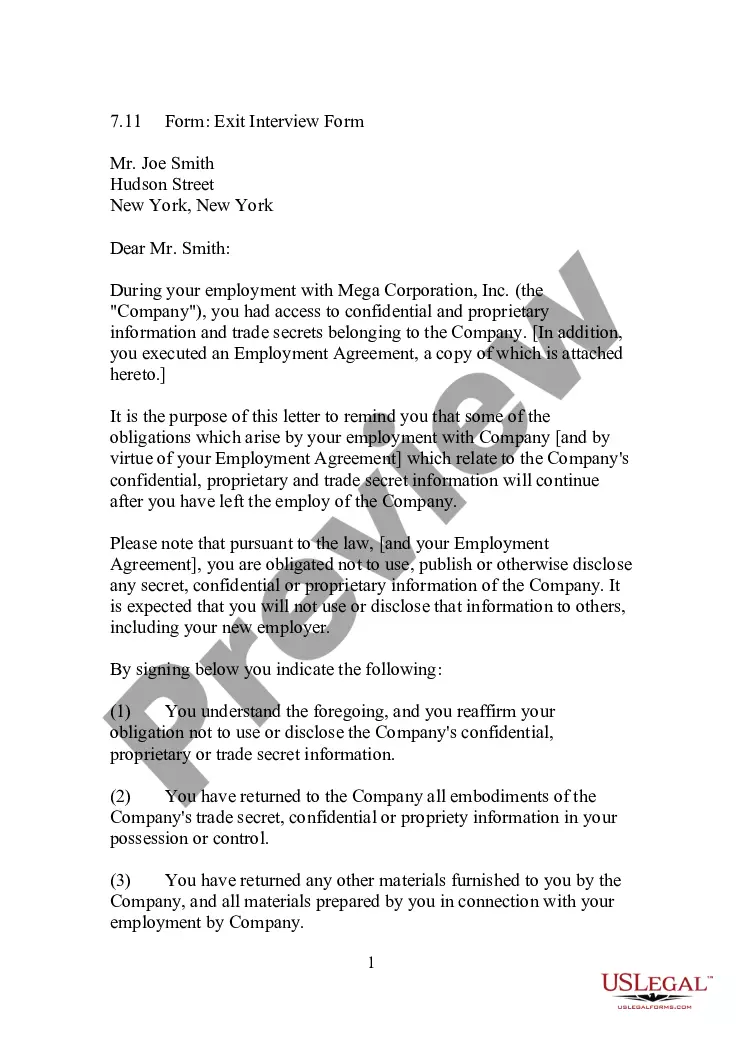
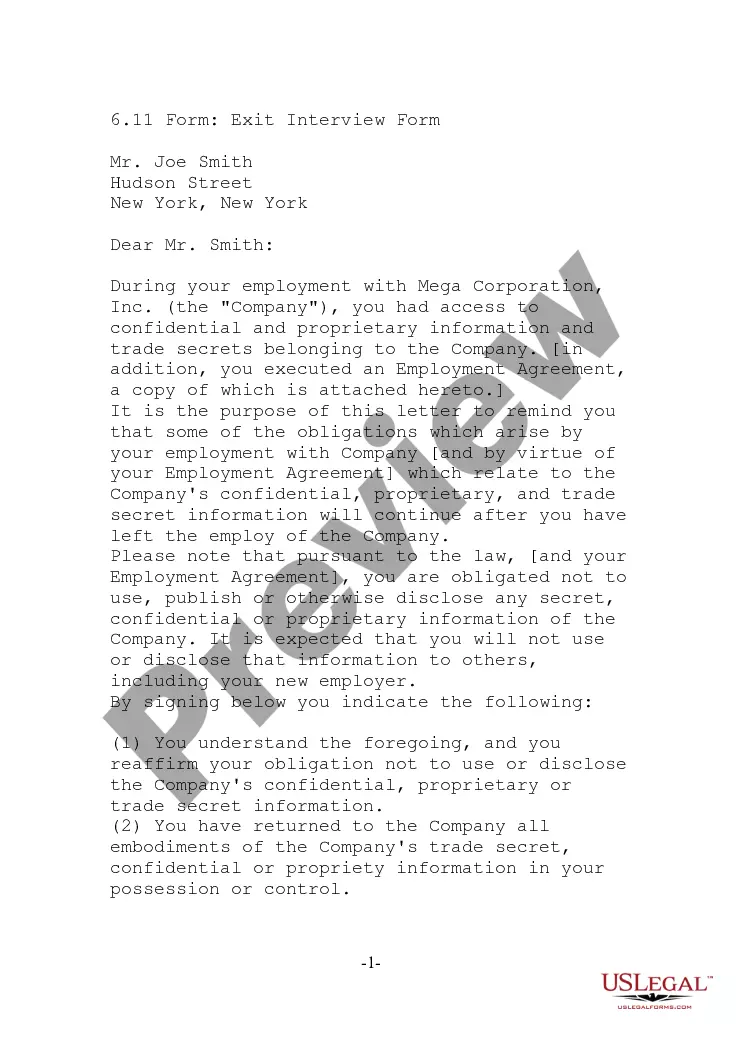
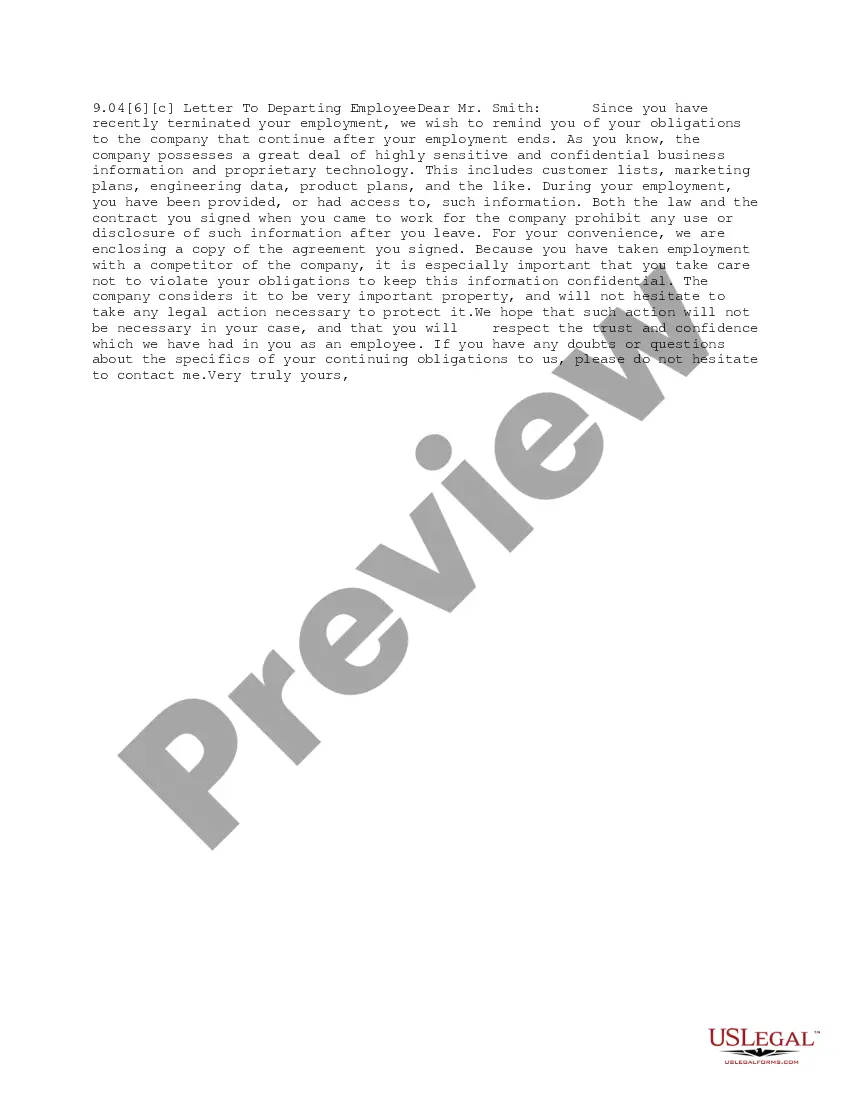
The Exit Interview Confidentiality Notification and Acknowledgment is a legal document used by employers to remind departing employees of their obligations regarding confidential and proprietary information. This form is crucial for maintaining the security of sensitive business information after an employee has left the organization. Unlike other exit interview forms, this document specifically addresses confidentiality obligations that continue post-employment.
What’s included in this form
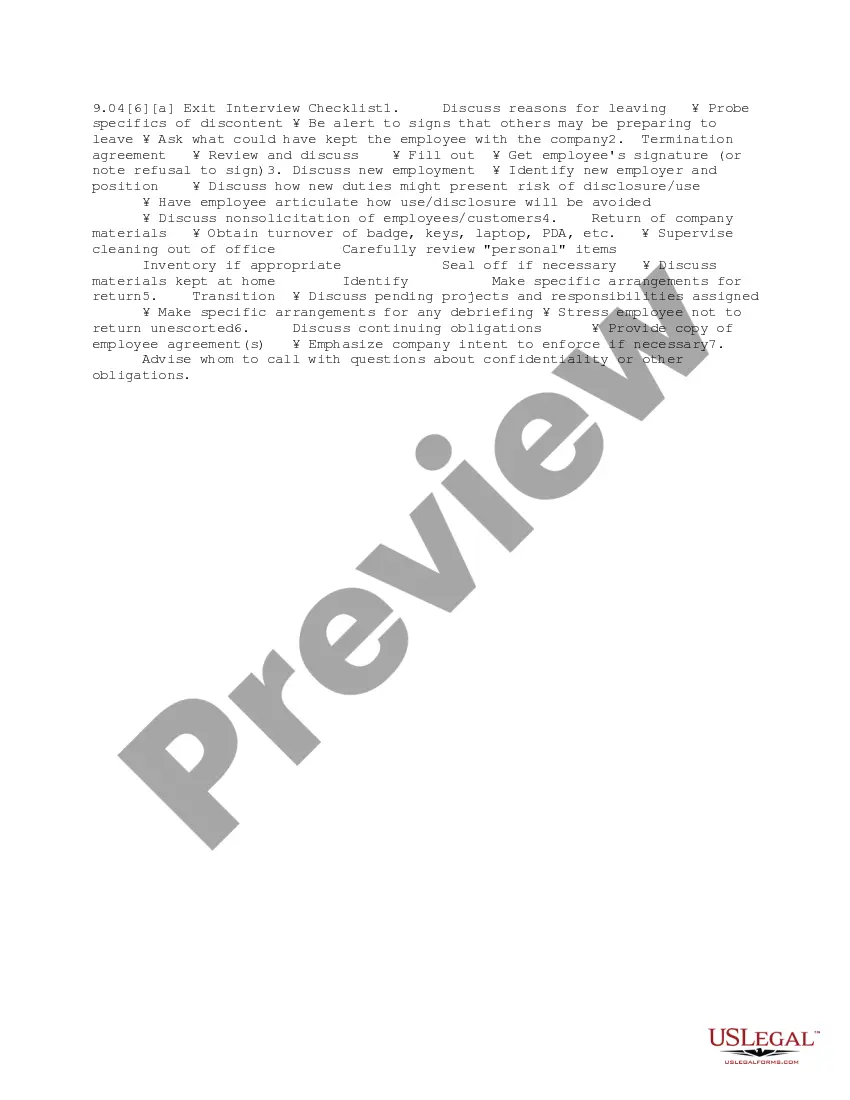
- Reminder of obligations under the Employment Agreement related to confidential information.
- Acknowledgment of the employee's understanding of confidentiality obligations.
- Confirmation of the return of company property and confidential materials.
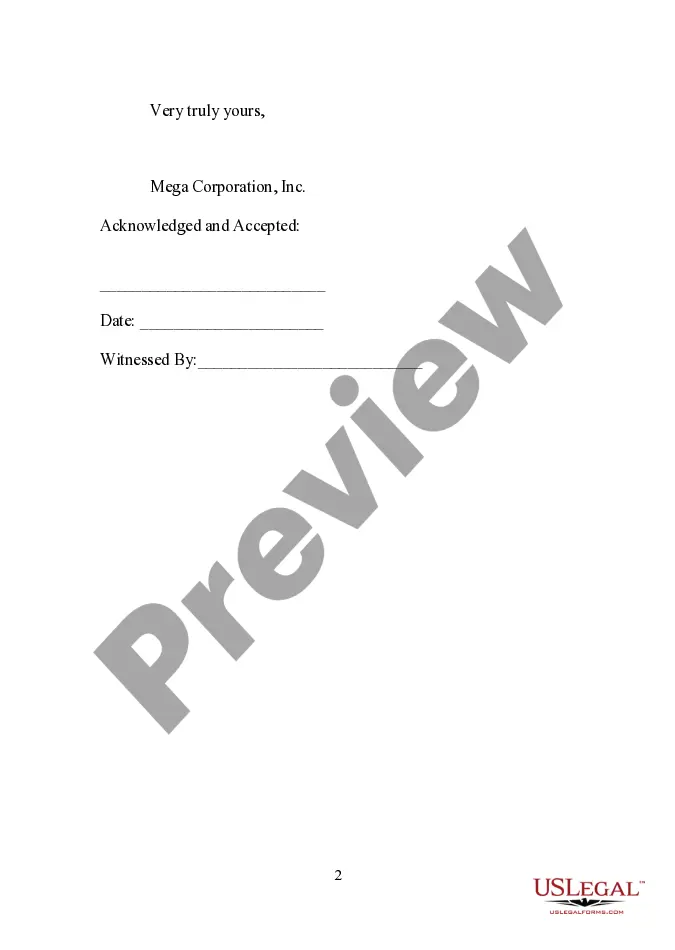
- Signature lines for both the employee and a witness to affirm the acknowledgment.

Situations where this form applies
This form should be used during the exit interview process when an employee leaves a company. It is essential when an employee has had access to sensitive or proprietary information and ensures that they acknowledge their ongoing responsibilities to protect that information. This form can help prevent potential breaches of confidentiality after the employee's departure.
Who can use this document
- Employers seeking to protect their confidential and proprietary information after an employee exits.
- Human resources professionals conducting exit interviews with staff members.
- Companies that require documentation of ongoing confidentiality obligations from departing employees.
Completing this form step by step
- Enter the employee's name and address at the beginning of the letter.
- Review the company's confidentiality obligations outlined in the letter.
- Ensure the employee understands the form by discussing any questions they may have.
- Ask the departing employee to sign and date the acknowledgment section.
- Include a witness signature to validate the acknowledgment.
Notarization guidance
Notarization is not commonly needed for this form. However, certain documents or local rules may make it necessary. Our notarization service, powered by Notarize, allows you to finalize it securely online anytime, day or night.
Get your form ready online
Our built-in tools help you complete, sign, share, and store your documents in one place.
Make edits, fill in missing information, and update formatting in US Legal Forms—just like you would in MS Word.
Download a copy, print it, send it by email, or mail it via USPS—whatever works best for your next step.
Sign and collect signatures with our SignNow integration. Send to multiple recipients, set reminders, and more. Go Premium to unlock E-Sign.
If this form requires notarization, complete it online through a secure video call—no need to meet a notary in person or wait for an appointment.
We protect your documents and personal data by following strict security and privacy standards.

Make edits, fill in missing information, and update formatting in US Legal Forms—just like you would in MS Word.

Download a copy, print it, send it by email, or mail it via USPS—whatever works best for your next step.

Sign and collect signatures with our SignNow integration. Send to multiple recipients, set reminders, and more. Go Premium to unlock E-Sign.

If this form requires notarization, complete it online through a secure video call—no need to meet a notary in person or wait for an appointment.

We protect your documents and personal data by following strict security and privacy standards.
Avoid these common issues
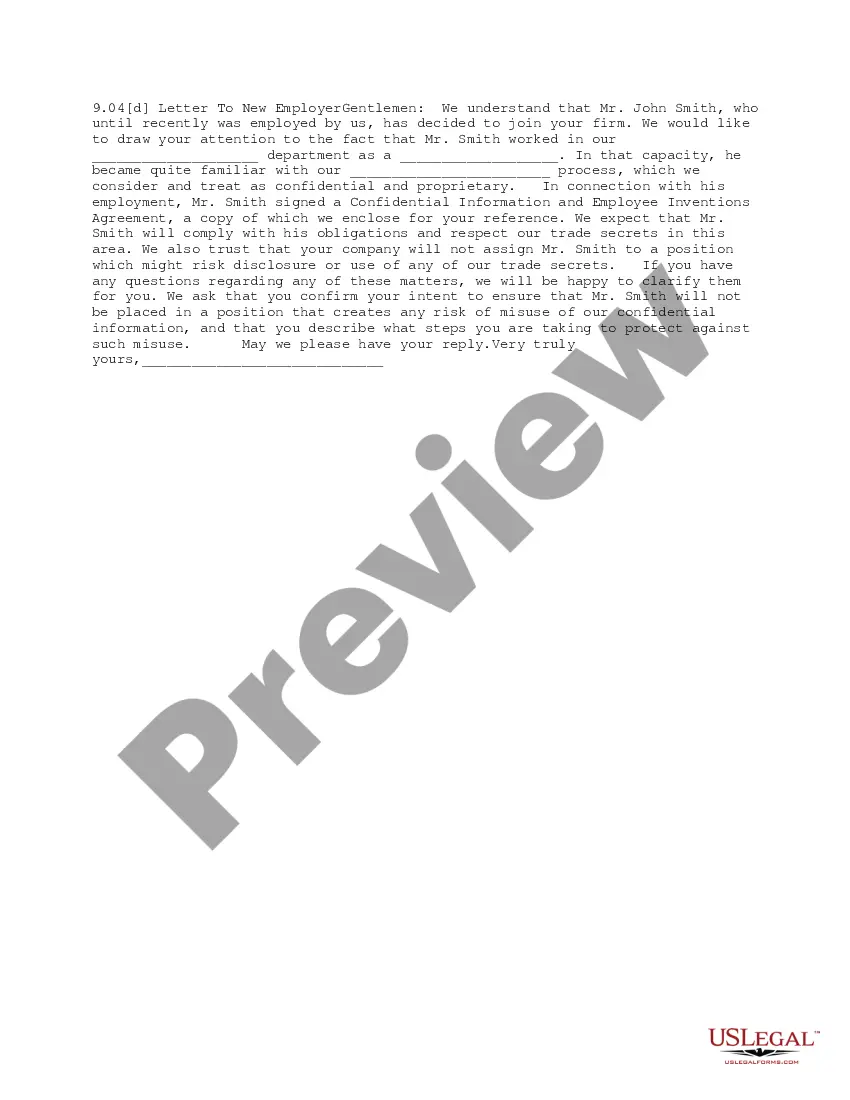
- Failing to discuss the confidentiality obligations with the employee during the exit interview.
- Not obtaining a witness signature on the form.
- Forgetting to provide a copy of the signed document to the departing employee.
- Neglecting to review state-specific confidentiality laws that may apply.
Benefits of completing this form online
- Instant access to a professionally drafted legal document.
- Easy customization to suit individual business needs.
- Downloadable in Word format for convenience and adaptability.
- Saves time compared to drafting a form from scratch.
Looking for another form?
Form popularity
FAQ
The law behind exit interviewsExit interviews are not a legal requirement; they are company policy. If an employer wishes to conduct exit interviews wherever possible, they may choose to inform employees of this protocol by including a provision in their employment contract.
This place is 'going downhill/a sinking ship/lost without me So-and-so was mean to me/did something bad/hates it here, too SHOW ME THE MONEY! @%! Never, ever again. You could have made me stay, you know. Nobody likes working here.
The purpose of an exit interview is to assess the overall employee experience within your organization and identify opportunities to improve retention and engagement. Having a clear set of standards in place when conducting exit interviews can also play an essential role in risk management.
Everything discussed during exit interviews must be kept confidential. HR should assure exiting employees that interview records are confidential. HR should tell employees how they'll present results to management (e.g. in aggregate form or anonymous feedback.)
The purpose of an exit interview is to assess the overall employee experience within your organization and identify opportunities to improve retention and engagement. Having a clear set of standards in place when conducting exit interviews can also play an essential role in risk management.
Exit interviews conducted in person are more effective because they allow for a direct, two-way conversation. In other words, the interviewer will be able to read an employee's body language and ask follow up questions in order to get the most out of these interviews.
You can even recognize a manager or co-worker who you respect as a role model, high performer or leader. The interview is likely to be conducted by an HR representative rather than a direct manager. This allows the departing employee to feel comfortable sharing information.
3. Keep the interview consistent, objective, and simple. Exit interviews should be conducted by a member of the People Operations Team or another HR leader. If these roles don't exist in your organization, try using a manager/director from another department.
Basically, the exit interview has three purposes: to learn where the company can improve itself, to make sure employees leave feeling good about their service and, in some cases, to encourage the employee to stay under new circumstances, Diamond says.