California Eviction For Cause
Description
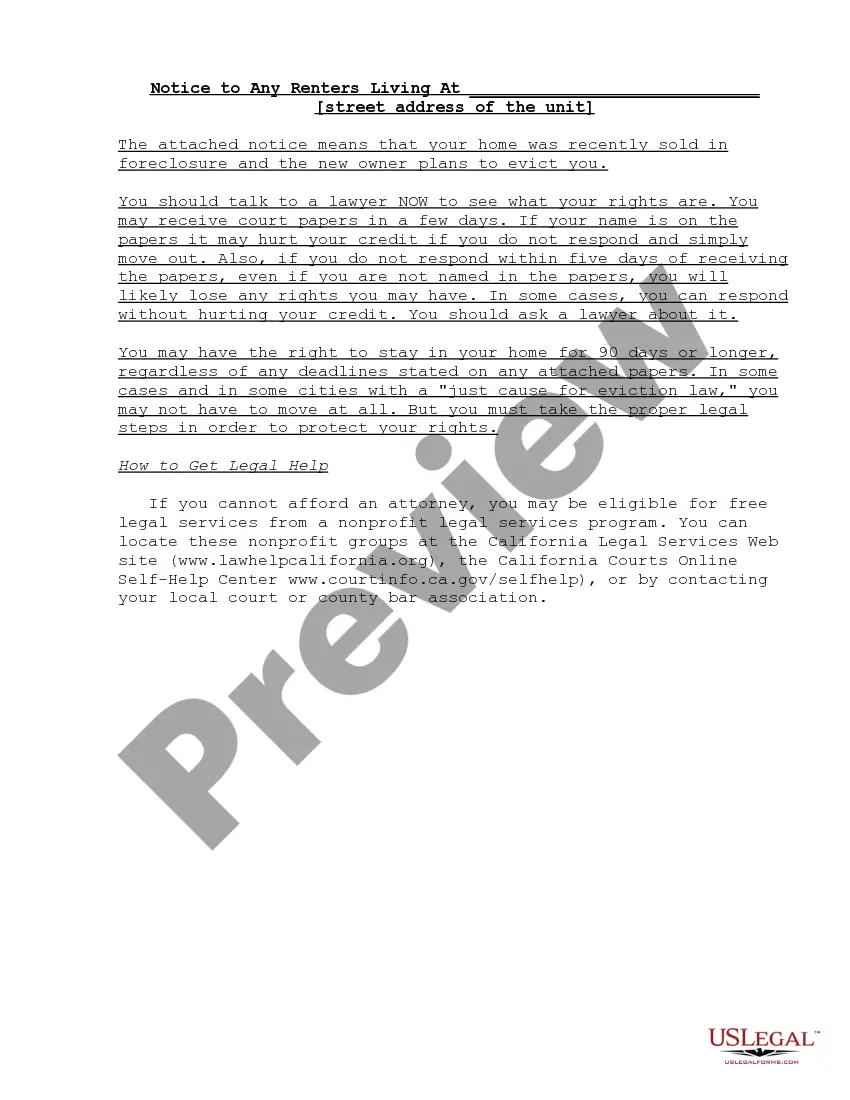
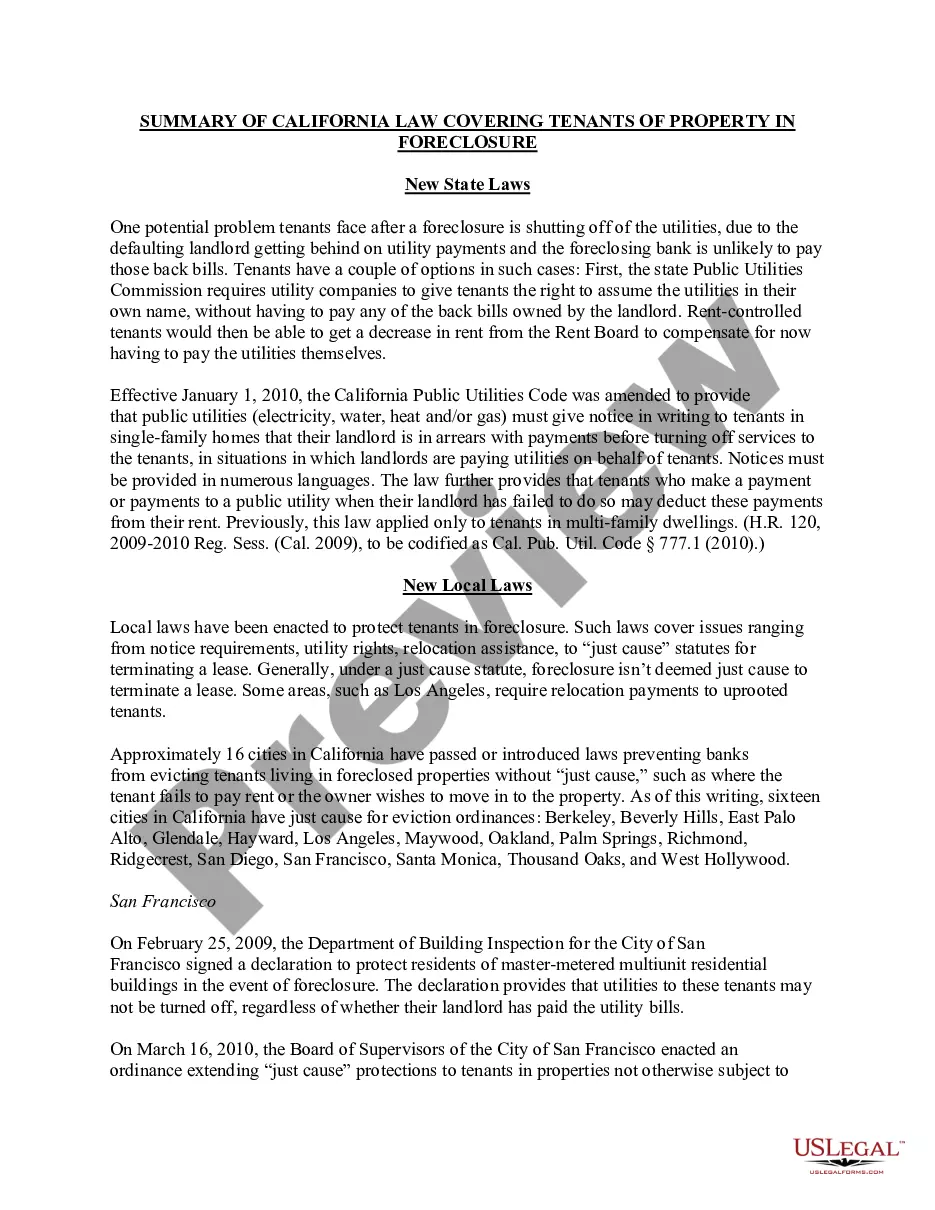
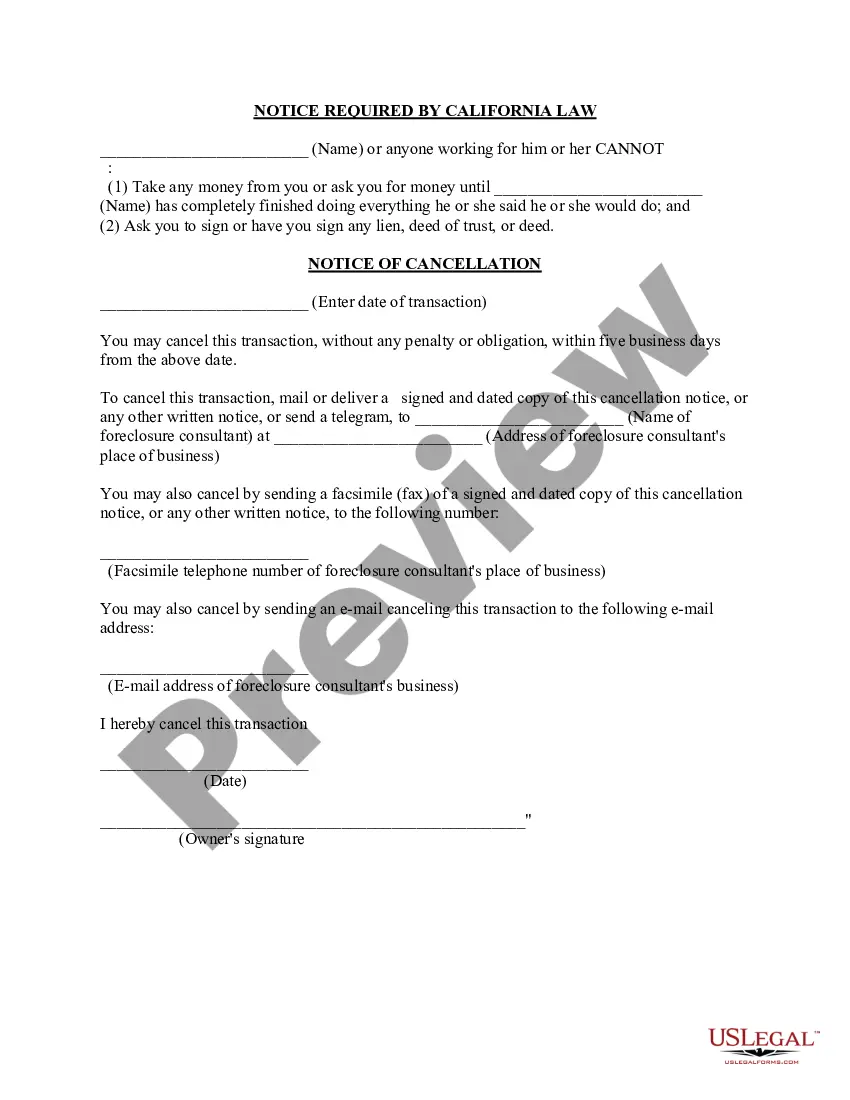
Get your form ready online
Our built-in tools help you complete, sign, share, and store your documents in one place.
Make edits, fill in missing information, and update formatting in US Legal Forms—just like you would in MS Word.
Download a copy, print it, send it by email, or mail it via USPS—whatever works best for your next step.
Sign and collect signatures with our SignNow integration. Send to multiple recipients, set reminders, and more. Go Premium to unlock E-Sign.
If this form requires notarization, complete it online through a secure video call—no need to meet a notary in person or wait for an appointment.
We protect your documents and personal data by following strict security and privacy standards.

Make edits, fill in missing information, and update formatting in US Legal Forms—just like you would in MS Word.

Download a copy, print it, send it by email, or mail it via USPS—whatever works best for your next step.

Sign and collect signatures with our SignNow integration. Send to multiple recipients, set reminders, and more. Go Premium to unlock E-Sign.

If this form requires notarization, complete it online through a secure video call—no need to meet a notary in person or wait for an appointment.

We protect your documents and personal data by following strict security and privacy standards.
Looking for another form?







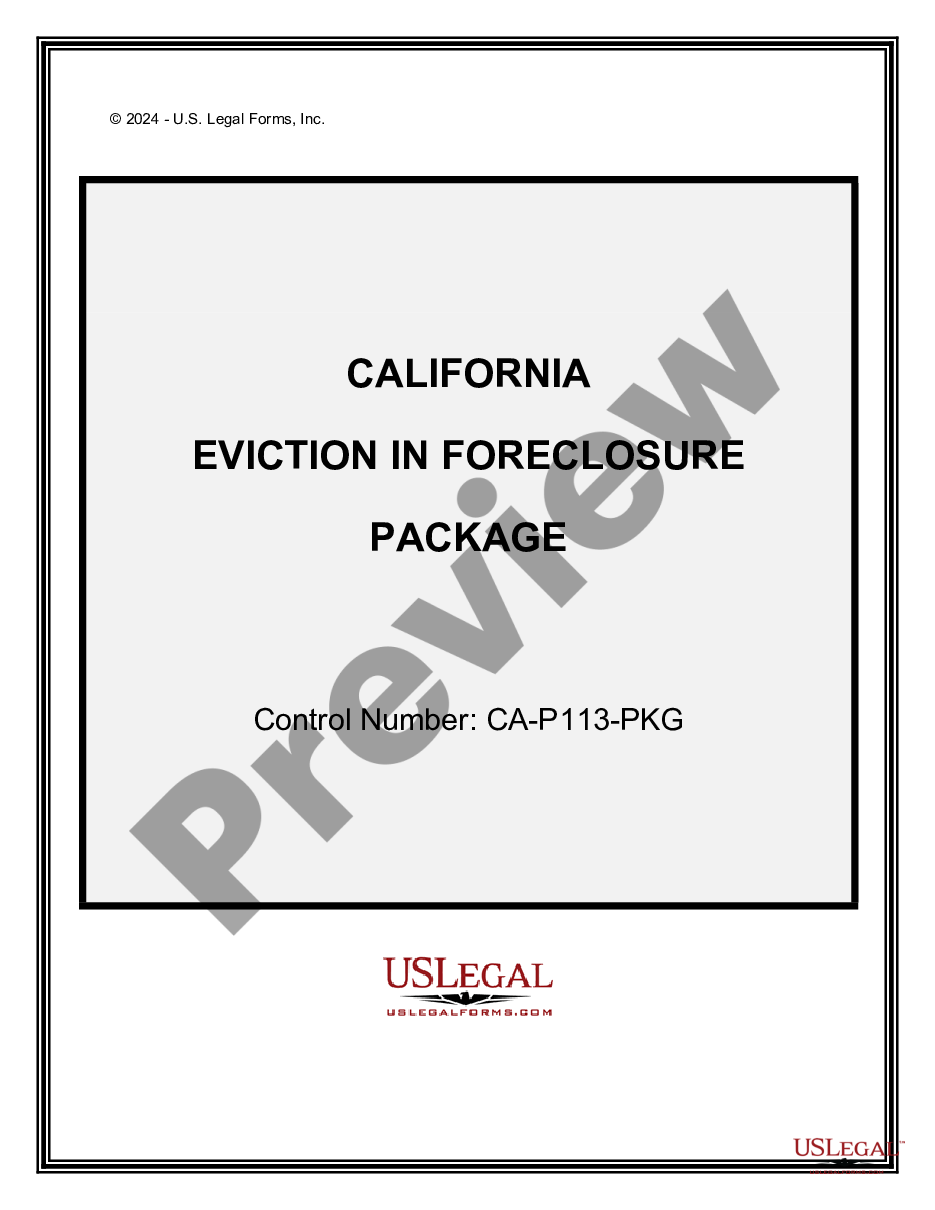
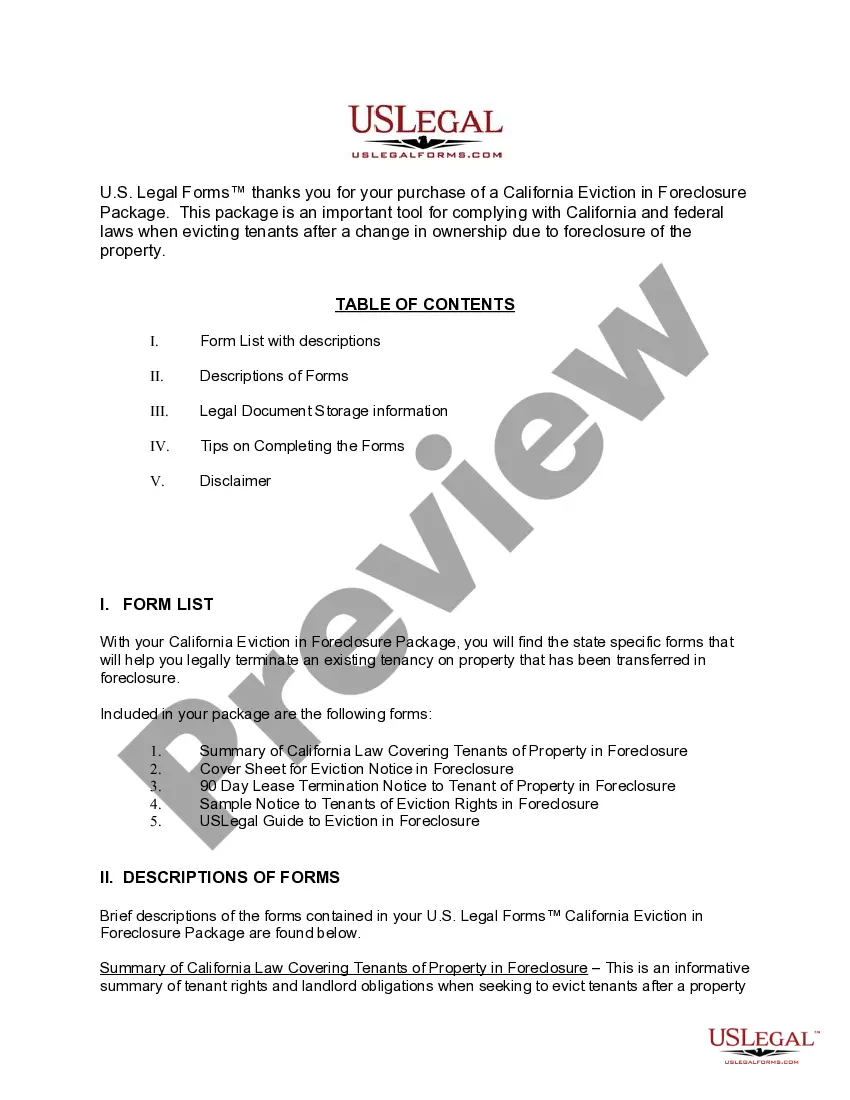
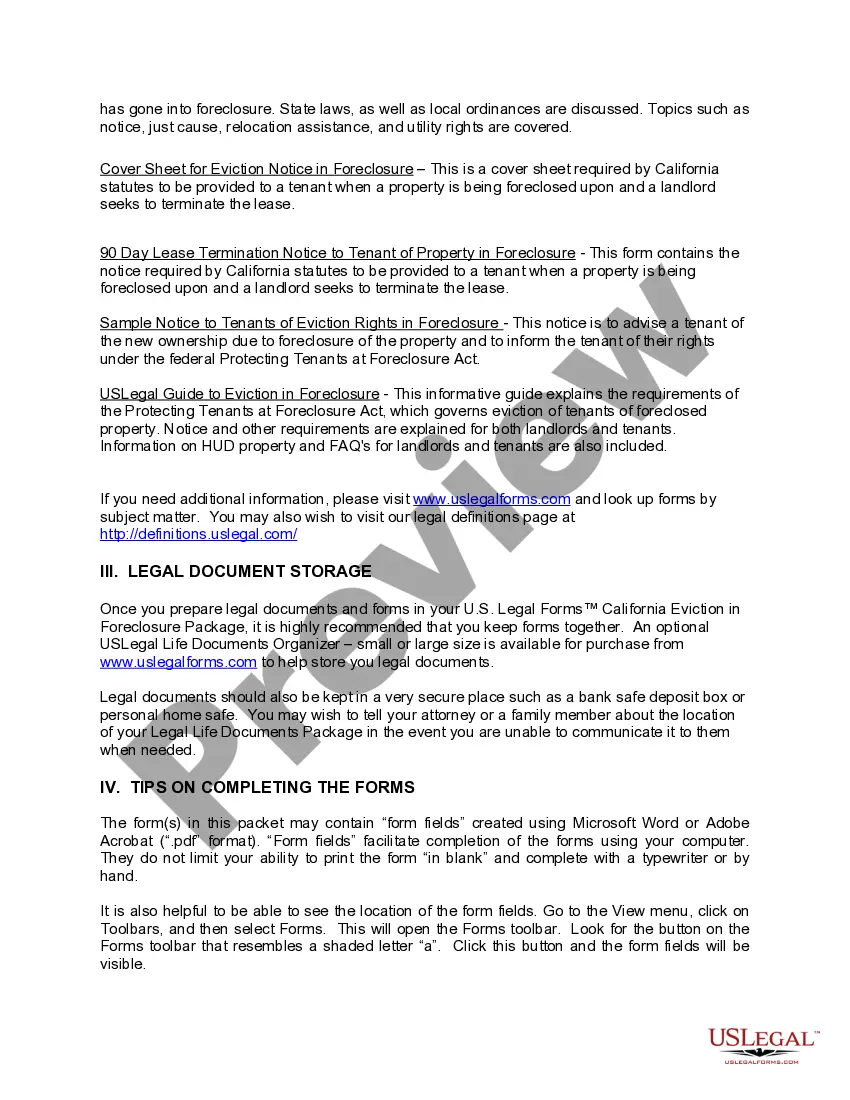
How to fill out California Eviction In Foreclosure Package?
Legal management can be exasperating, even for the most seasoned experts.
If you're looking into a California Eviction For Cause and lack the time to search for the correct and updated version, the processes can be taxing.
Benefit from a repository of articles, guides, handbooks, and materials related to your situation and requirements.
Save time and energy searching for the forms you need, and leverage US Legal Forms’ advanced search and Preview feature to find California Eviction For Cause and download it.
Ensure that the template is approved in your state or county.
- If you have a subscription, Log In to your US Legal Forms account, locate the form, and download it.
- Visit the My documents section to see the documents you've downloaded previously and manage your folders as desired.
- If this is your first experience with US Legal Forms, create an account to enjoy unlimited access to all platform benefits.
- Here are the steps following your access to the desired form.
- Confirm this is the correct form by previewing it and reading its description.
- Access state- or county-specific legal and business documents.
- US Legal Forms addresses any needs you may have, from personal to corporate paperwork, all in one place.
- Employ sophisticated tools to complete and oversee your California Eviction For Cause.
Form popularity
FAQ
California Eviction Laws and Process Step 1: Notice to Terminate. ... Step 2: The Landlord Files an Unlawful Detainer Lawsuit. ... Step 3: The Landlord Serves the Unlawful Detainer Paperwork on the Tenant. ... Step 4: Trial or Hearing. ... Step 5: Eviction Judgment. ... Step 6: Removal of the Tenant.
The Notice must be in writing and include: The date the tenancy will end ("be terminated") Detailed reason(s) for the eviction. That if the tenant doesn't move out within 90 days the owner may start a court case to evict them and that they can give their side of the story then.
?Just cause? (or ?good cause?) eviction policies promote residential stability by limiting the grounds upon which a landlord may evict a tenant; typically, allowable grounds for eviction include nonpayment of rent, intentional damage to the unit, or other material noncompliance with the terms of the lease before they ...
Not paying your rent. Breaking a material rule in your lease or rental agreement. Criminal activity at the rental housing. Subletting if your lease does not allow this.
A tenant in California can absolutely win an unlawful detainer case if they can prove in court that there is no legal ground for the eviction or if the landlord has not followed the correct procedure for the eviction.