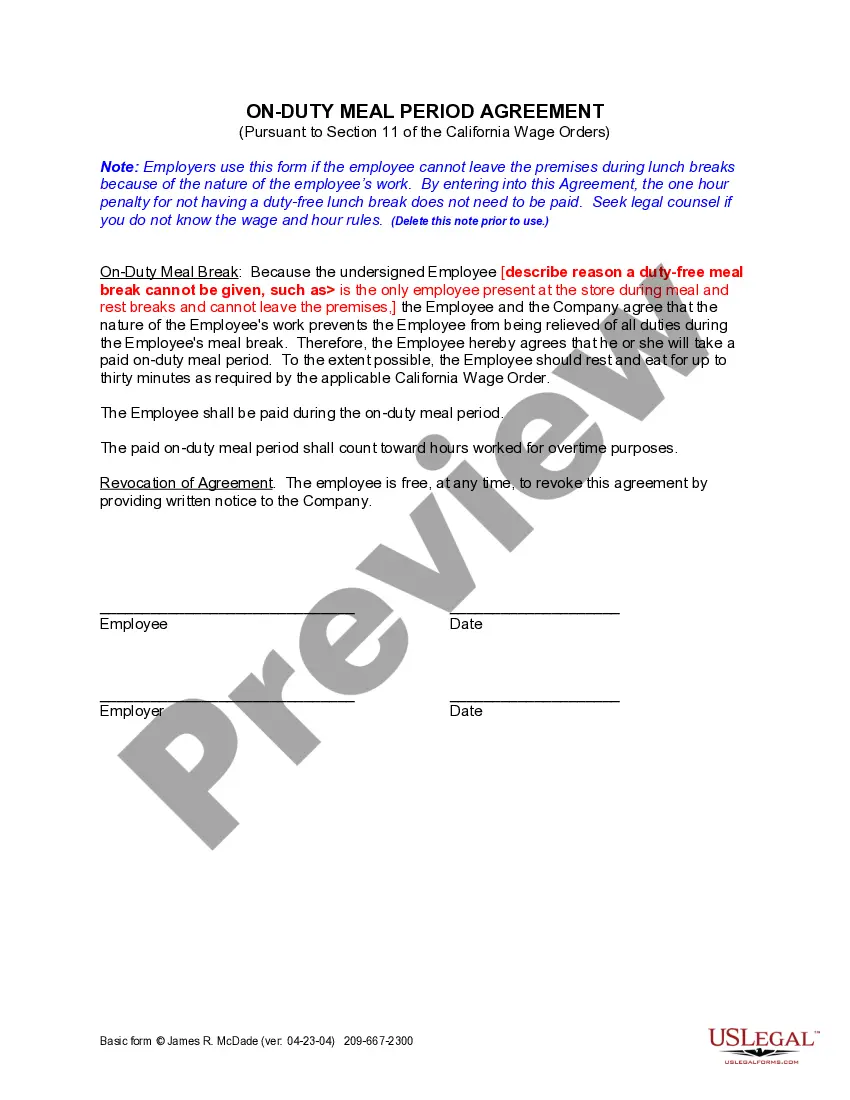
Employee Meal Break With Michelle Wolf
Description
Get your form ready online
Our built-in tools help you complete, sign, share, and store your documents in one place.
Make edits, fill in missing information, and update formatting in US Legal Forms—just like you would in MS Word.
Download a copy, print it, send it by email, or mail it via USPS—whatever works best for your next step.
Sign and collect signatures with our SignNow integration. Send to multiple recipients, set reminders, and more. Go Premium to unlock E-Sign.
If this form requires notarization, complete it online through a secure video call—no need to meet a notary in person or wait for an appointment.
We protect your documents and personal data by following strict security and privacy standards.

Make edits, fill in missing information, and update formatting in US Legal Forms—just like you would in MS Word.

Download a copy, print it, send it by email, or mail it via USPS—whatever works best for your next step.

Sign and collect signatures with our SignNow integration. Send to multiple recipients, set reminders, and more. Go Premium to unlock E-Sign.

If this form requires notarization, complete it online through a secure video call—no need to meet a notary in person or wait for an appointment.

We protect your documents and personal data by following strict security and privacy standards.
Looking for another form?



How to fill out California On Duty Meal Period Agreement?
Handling legal documents and processes can be a lengthy addition to your day.
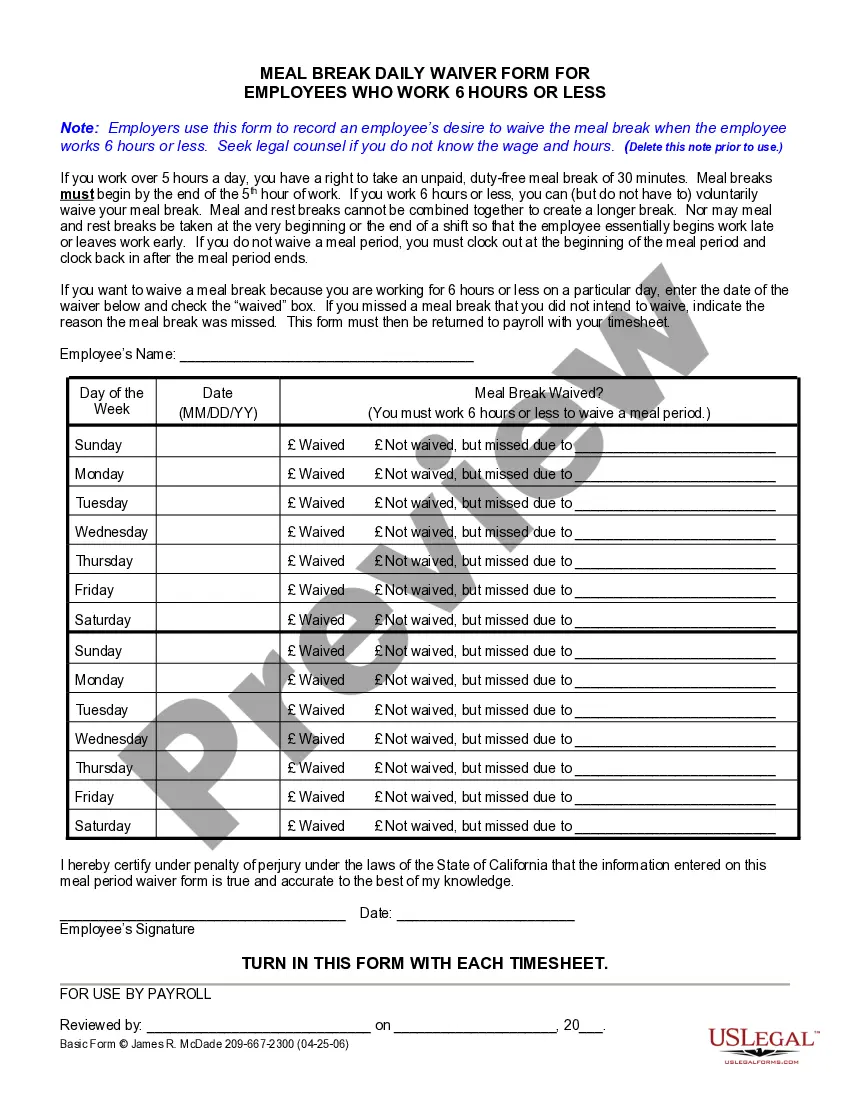
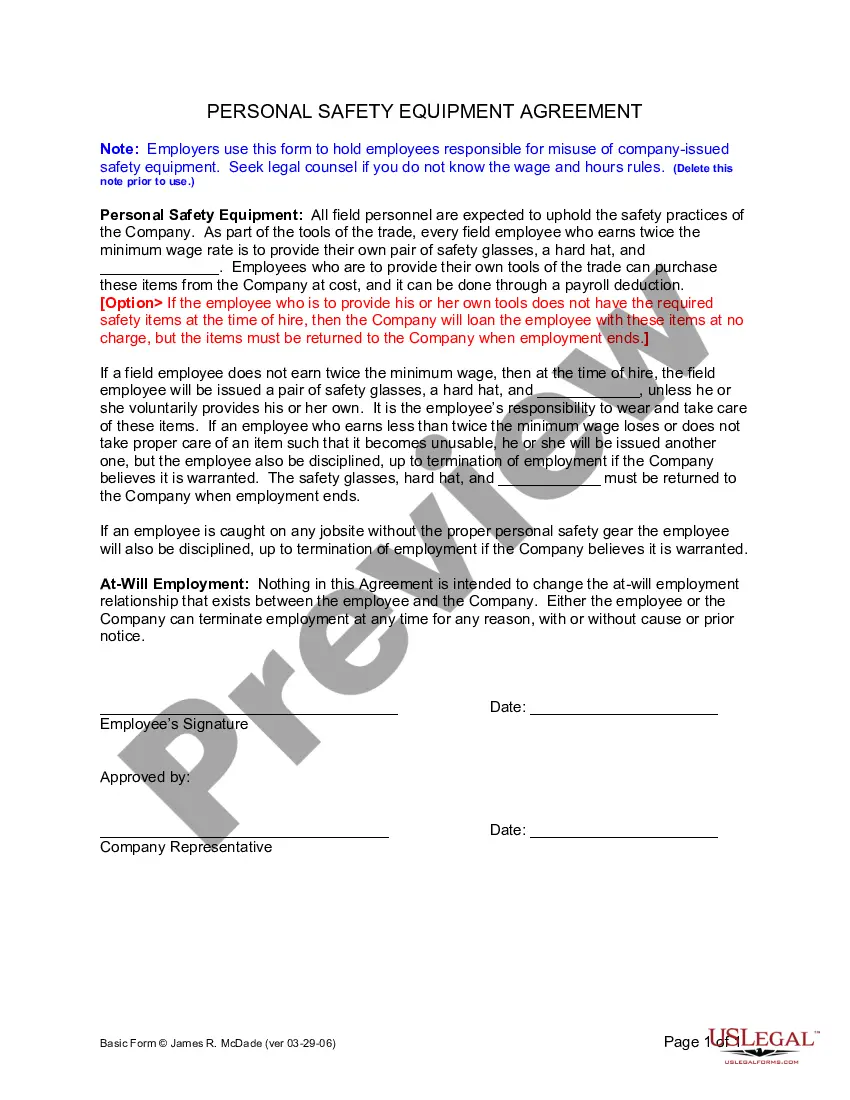
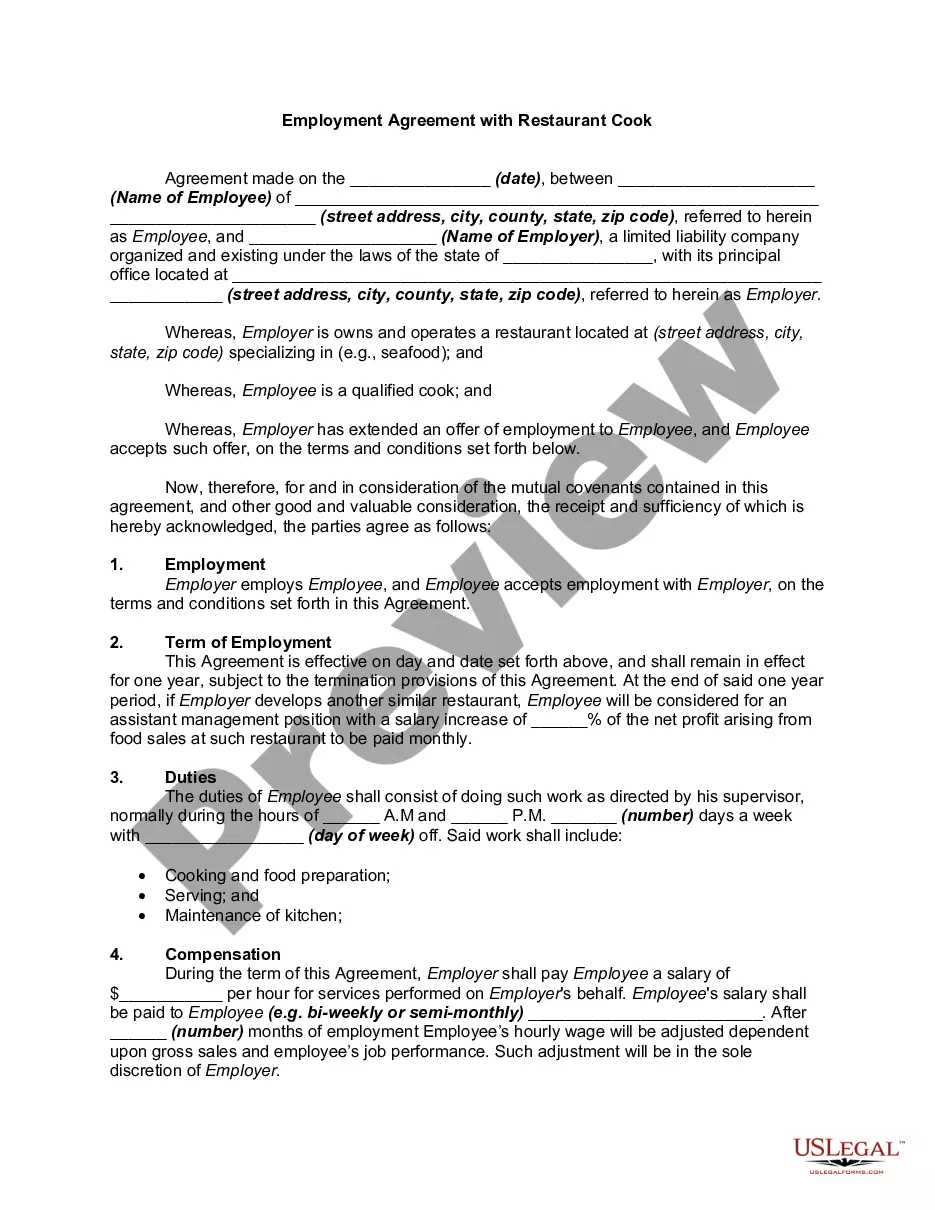
Forms like Employee Meal Break With Michelle Wolf often require you to locate them and figure out how to fill them out efficiently.
For this reason, whether you are managing financial, legal, or personal issues, having a thorough and effective online library of forms readily available will be very beneficial.
US Legal Forms is the premier online platform for legal templates, offering over 85,000 state-specific forms along with a variety of tools to help you complete your documents with ease.
Is this your first time using US Legal Forms? Register and create an account in a few minutes to gain access to the form library and Employee Meal Break With Michelle Wolf. Then, follow the steps below to fill out your form.
- Explore the library of relevant documents available to you with a single click.
- US Legal Forms provides state- and county-specific forms accessible at any time for download.
- Protect your document management processes by utilizing a high-quality service that allows you to create any form in minutes without added or hidden fees.
- Just Log In to your account, find Employee Meal Break With Michelle Wolf, and get it instantly from the My documents section.
- You can also retrieve forms you have previously downloaded.
Form popularity
FAQ
The most common example of an Assignment of Mortgage is when a mortgage lender transfers/sells the mortgage to another lender. This can be done more than once until the balance is paid. The lender does not have to inform the borrower that the mortgage is being assigned to another party.
An assignment of mortgage documents the transfer of a mortgage from an original lender or borrower to another person or entity. Lenders regularly sell mortgages to other lenders. Less often, a borrower transfers the mortgage to someone else who assumes the mortgage.
An assignment of mortgage gives the loan seller's rights under the mortgage, including the right to foreclose if the borrower doesn't make payments, to the new owner of the loan.
An assumable mortgage allows the buyer to purchase a home by taking over the seller's mortgage loan. One reason buyers decide to buy a home with an assumable mortgage is to take advantage of financing with a lower interest rate if rates have risen since the seller originally purchased the home.
A disadvantage of a mortgage assignment is the consequences of failing to record it. Under most state laws, an entity seeking to institute foreclosure proceedings must record the assignment before it can do so. If a mortgage is not recorded, the judge will dismiss the foreclosure proceeding.
The most common example of an Assignment of Mortgage is when a mortgage lender transfers/sells the mortgage to another lender. This can be done more than once until the balance is paid. The lender does not have to inform the borrower that the mortgage is being assigned to another party.