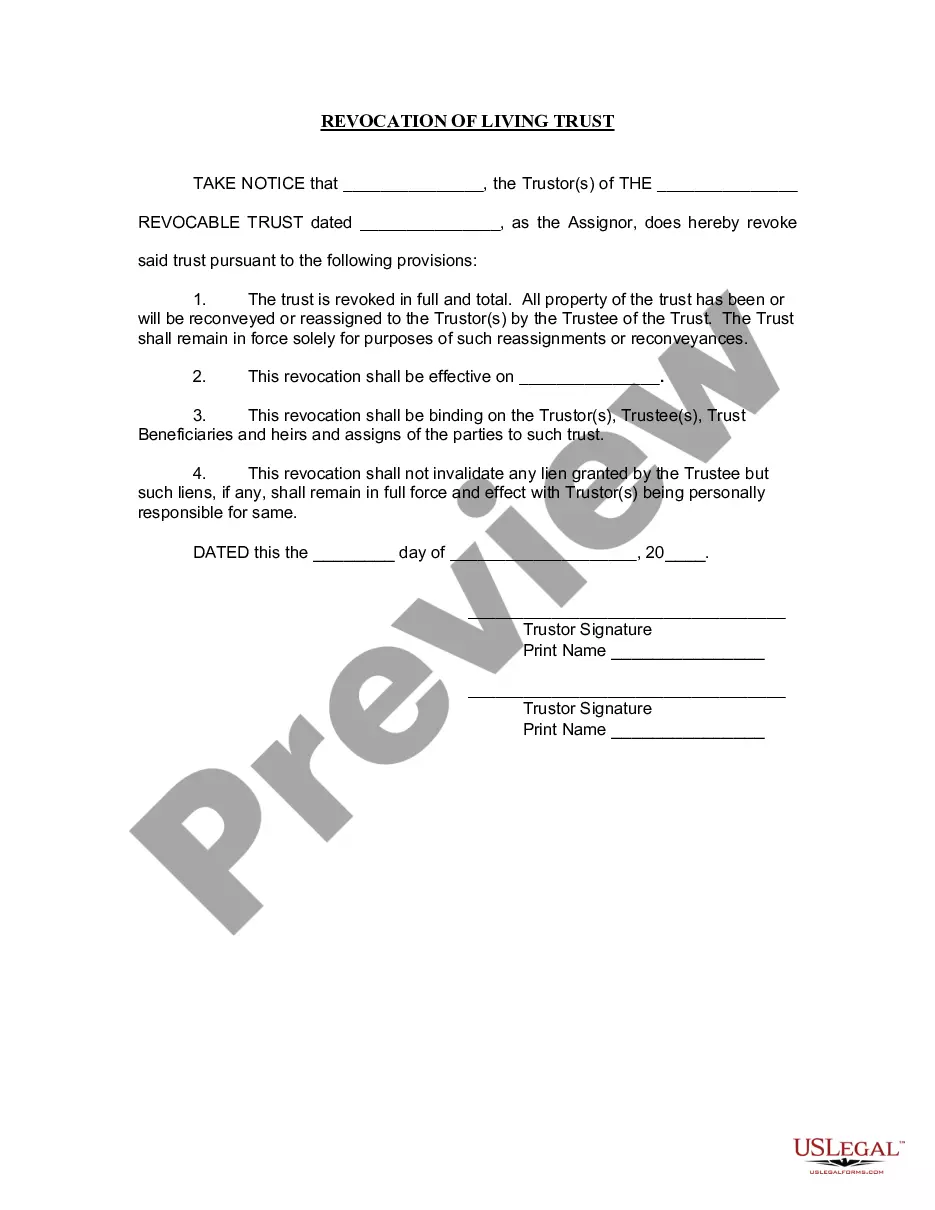
Revocation Living Trust Form For Married Couple
Description
Get your form ready online
Our built-in tools help you complete, sign, share, and store your documents in one place.
Make edits, fill in missing information, and update formatting in US Legal Forms—just like you would in MS Word.
Download a copy, print it, send it by email, or mail it via USPS—whatever works best for your next step.
Sign and collect signatures with our SignNow integration. Send to multiple recipients, set reminders, and more. Go Premium to unlock E-Sign.
If this form requires notarization, complete it online through a secure video call—no need to meet a notary in person or wait for an appointment.
We protect your documents and personal data by following strict security and privacy standards.

Make edits, fill in missing information, and update formatting in US Legal Forms—just like you would in MS Word.

Download a copy, print it, send it by email, or mail it via USPS—whatever works best for your next step.

Sign and collect signatures with our SignNow integration. Send to multiple recipients, set reminders, and more. Go Premium to unlock E-Sign.

If this form requires notarization, complete it online through a secure video call—no need to meet a notary in person or wait for an appointment.

We protect your documents and personal data by following strict security and privacy standards.
Looking for another form?







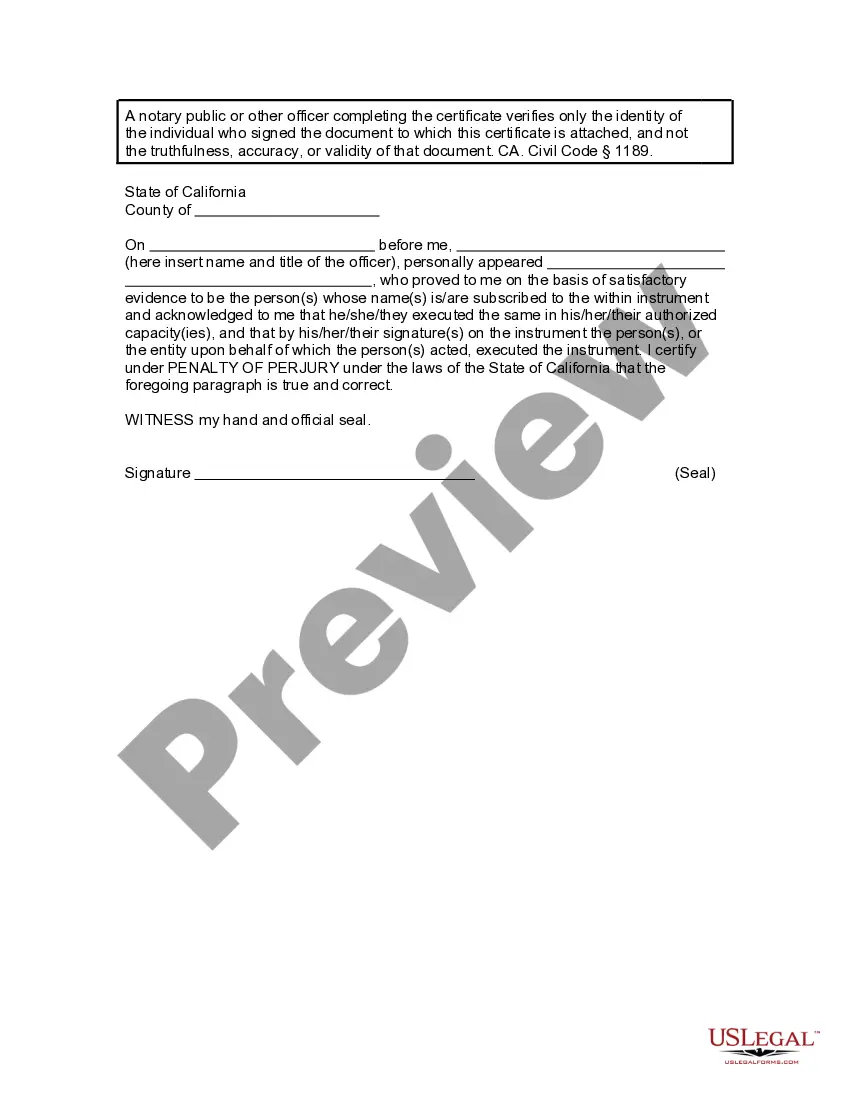
How to fill out California Revocation Of Living Trust?
It's well-known that you cannot transform into a legal expert in a day, nor can you swiftly learn how to efficiently create a Revocation Living Trust Form For Married Couple without a specialized background.
Drafting legal paperwork is an elaborate endeavor that necessitates specific training and expertise. So why not entrust the creation of the Revocation Living Trust Form For Married Couple to the specialists.
With US Legal Forms, one of the most extensive legal template repositories, you can find everything from court documents to templates for workplace communication.
If you are in search of a different template, start your search anew.
Establish a free account and select a subscription plan to acquire the form. Click Buy now. Once your payment has been processed, you can obtain the Revocation Living Trust Form For Married Couple, fill it out, print it, and deliver it by mail to the relevant individuals or entities.
- We recognize how vital compliance and adherence to federal and local laws and regulations are.
- That's the reason all templates on our website are location-specific and current.
- Begin by exploring our platform to obtain the document you need in just a few minutes.
- Utilize the search function at the top of the page to discover the form you require.
- If available, preview it and review the accompanying description to see if the Revocation Living Trust Form For Married Couple meets your needs.
Form popularity
FAQ
You can report income changes through Vermont Health Connect's secure online portal, or by calling our Customer Support Center at 1-855-899-9600.
An advance directive is what many people think of as a living will or a durable power of attorney for health care. It is a written document that outlines your wishes for medical treatment in the future, including if you are no longer able to make those decisions.
While many residents have advance directives that prohibit care in the event that breathing or the heart stops (such as a Do Not Resuscitate order), full code allows for all interventions needed to restore breathing or heart functioning, including chest compressions, a defibrillator and a breathing tube.
The most common types of advance directives are the living will and the durable power of attorney for health care (sometimes known as the medical power of attorney). There are many advance directive formats.
It is a secure online database where Vermonters can submit copies of their completed advance directive forms to be accessed by authorized health care facilities and providers.
Advance directives generally fall into three categories: living will, power of attorney and health care proxy. LIVING WILL: This is a written document that specifies what types of medical treatment are desired. A living will can be very specific or very general.
Report any changes such as income or household size. Log in to your account at .VermontHealthConenct.gov or call 1-855-899-9600 today. Questions about Medicaid renewals? Visit dvha.vermont.gov/unwinding.