Amendment Form For Living Trust Without Attorney
Description
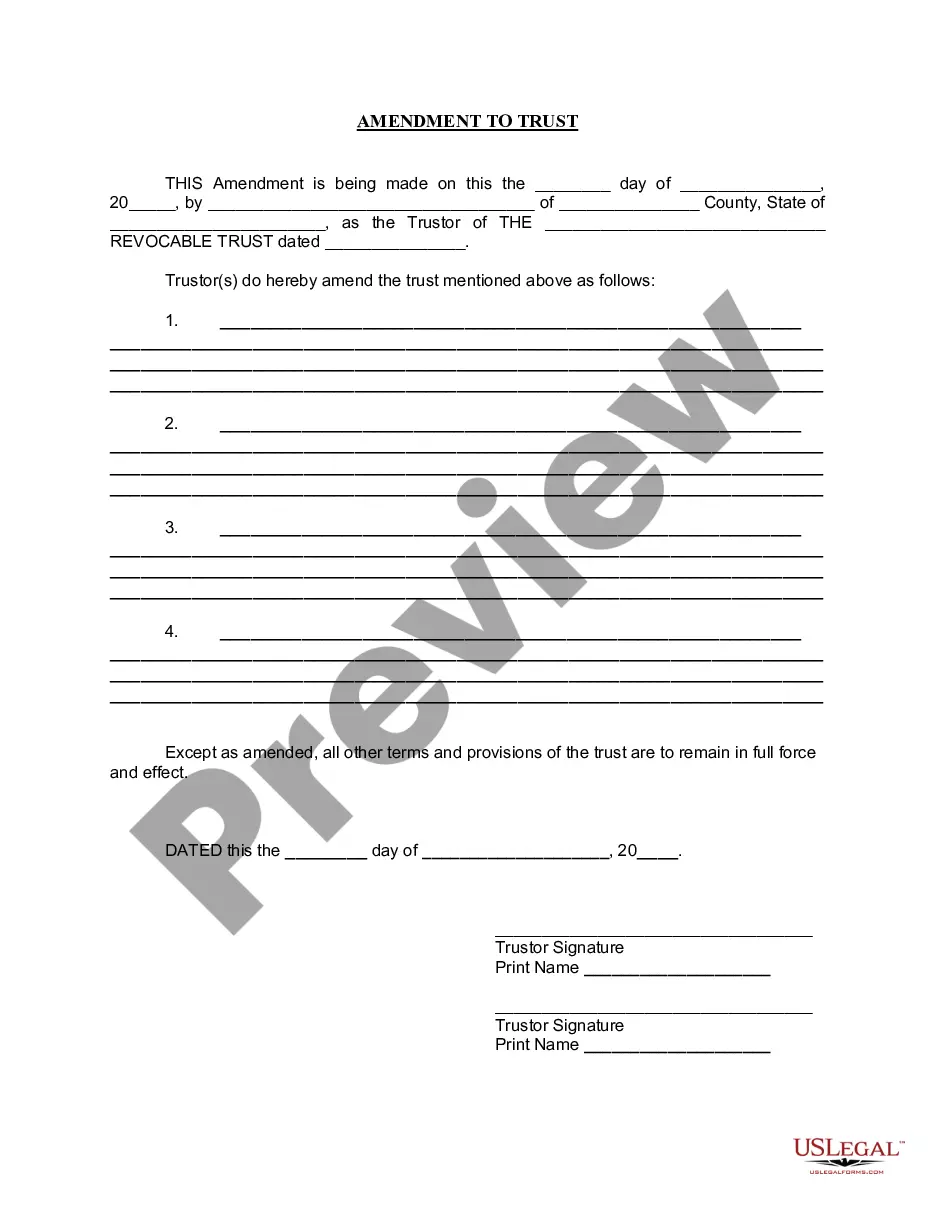


Get your form ready online
Our built-in tools help you complete, sign, share, and store your documents in one place.
Make edits, fill in missing information, and update formatting in US Legal Forms—just like you would in MS Word.
Download a copy, print it, send it by email, or mail it via USPS—whatever works best for your next step.
Sign and collect signatures with our SignNow integration. Send to multiple recipients, set reminders, and more. Go Premium to unlock E-Sign.
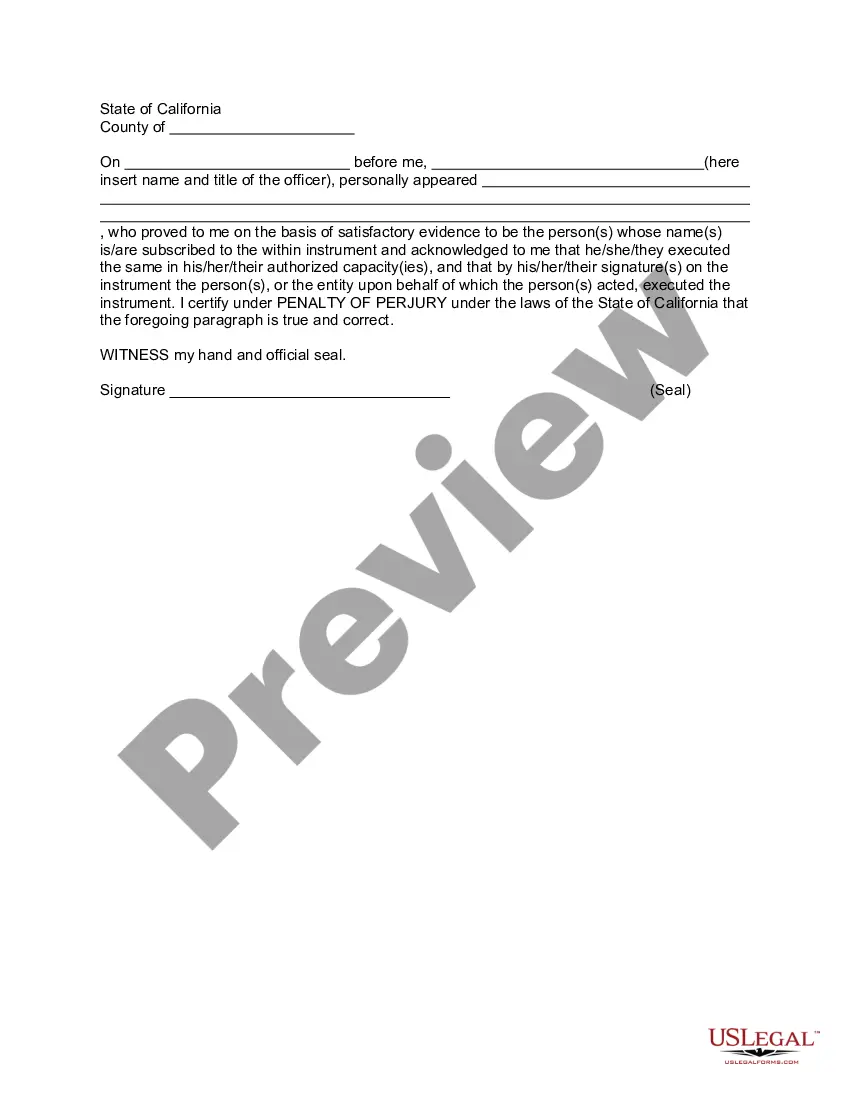
If this form requires notarization, complete it online through a secure video call—no need to meet a notary in person or wait for an appointment.
We protect your documents and personal data by following strict security and privacy standards.

Make edits, fill in missing information, and update formatting in US Legal Forms—just like you would in MS Word.

Download a copy, print it, send it by email, or mail it via USPS—whatever works best for your next step.

Sign and collect signatures with our SignNow integration. Send to multiple recipients, set reminders, and more. Go Premium to unlock E-Sign.

If this form requires notarization, complete it online through a secure video call—no need to meet a notary in person or wait for an appointment.

We protect your documents and personal data by following strict security and privacy standards.
Looking for another form?

How to fill out California Amendment To Living Trust?
It’s clear that you cannot transform into a legal expert instantly, nor can you comprehend how to swiftly create an Amendment Form For Living Trust Without Attorney without a specialized background.
Drafting legal documents is a lengthy process that demands a certain level of education and expertise.
So why not entrust the development of the Amendment Form For Living Trust Without Attorney to the experts.
Preview it (if this option is available) and read the accompanying description to ascertain whether the Amendment Form For Living Trust Without Attorney is what you require.
Restart your search if you need a different template. Sign up for a free account and select a subscription plan to purchase the template. Click Buy now. Once the transaction is completed, you can access the Amendment Form For Living Trust Without Attorney, fill it out, print it, and send it to the relevant individuals or organizations. You can access your forms from the My documents tab at any time. If you’re a current client, you can simply Log In, and locate and download the template from the same tab. Regardless of the intention behind your paperwork—be it financial, legal, or personal—our website has you covered. Give US Legal Forms a try today!
- With US Legal Forms, one of the most comprehensive legal template collections, you can discover anything from court papers to templates for internal communication.
- We recognize how vital it is to comply with federal and state laws and regulations.
- That’s why, on our site, all documents are location-specific and current.
- Here’s how to begin with our website and obtain the form you need in just a few minutes.
- Search for the document you need using the search bar at the top of the page.
Form popularity
FAQ
In the trust deed where there is no mention about amendment, the amendment has to be done with the permission of a civil court. Even the Civil Courts do not have unlimited powers of amendment. The Civil Courts permit amendment under the doctrine of Cy pres, which means the original intent of the settlor should prevail.
The trust deed lists the trustees. Therefore, to change an individual trustee, you need to amend the trust deed. Most trust deeds permit a change of trustee by way of a trustee resolution and entry into a deed of variation. A trustee resolution is a signed statement of the actions taken by the trustee.
It's important to know what you want to change and where in your trust document this information lives (such as the article number you're amending). Fill out the amendment form. Complete the entire form. It's important to be clear and detailed in describing your changes.
Removing or replacing the trustee If a beneficiary feels that the trustee has mismanaged the trust, he may want to replace the trustee. The trust documentation must be read carefully to know if a beneficiary has the power to remove a trustee. Of course, the Court always has the power to remove a trustee.
In most cases, a trust deed generally offers two processes for the removal of a beneficiary. Most commonly, the beneficiary can sign a document to renunciate all interests as a beneficiary. Otherwise, the trustee may have discretionary power to revoke the beneficiary.