California Rules Regulations For A Group
Description
Get your form ready online
Our built-in tools help you complete, sign, share, and store your documents in one place.
Make edits, fill in missing information, and update formatting in US Legal Forms—just like you would in MS Word.
Download a copy, print it, send it by email, or mail it via USPS—whatever works best for your next step.
Sign and collect signatures with our SignNow integration. Send to multiple recipients, set reminders, and more. Go Premium to unlock E-Sign.
If this form requires notarization, complete it online through a secure video call—no need to meet a notary in person or wait for an appointment.
We protect your documents and personal data by following strict security and privacy standards.

Make edits, fill in missing information, and update formatting in US Legal Forms—just like you would in MS Word.

Download a copy, print it, send it by email, or mail it via USPS—whatever works best for your next step.

Sign and collect signatures with our SignNow integration. Send to multiple recipients, set reminders, and more. Go Premium to unlock E-Sign.

If this form requires notarization, complete it online through a secure video call—no need to meet a notary in person or wait for an appointment.

We protect your documents and personal data by following strict security and privacy standards.
Looking for another form?

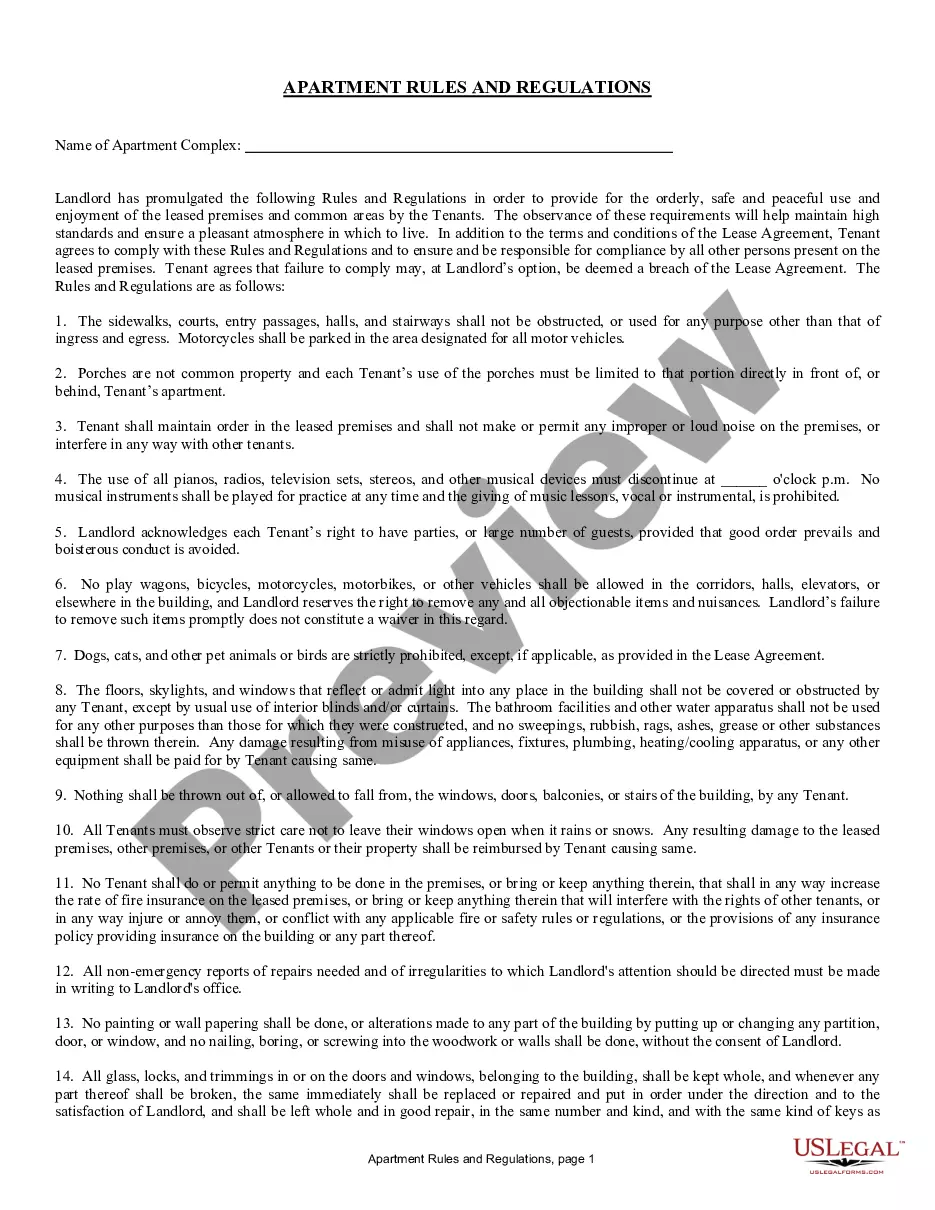
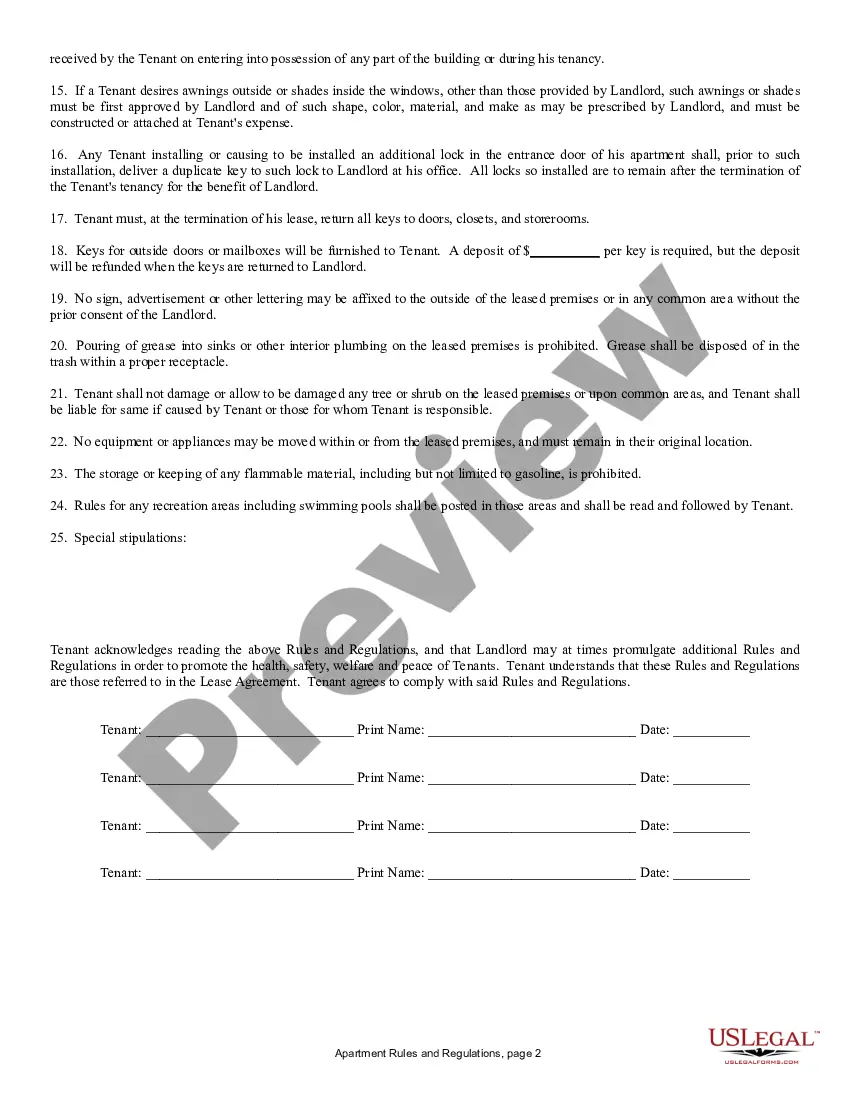
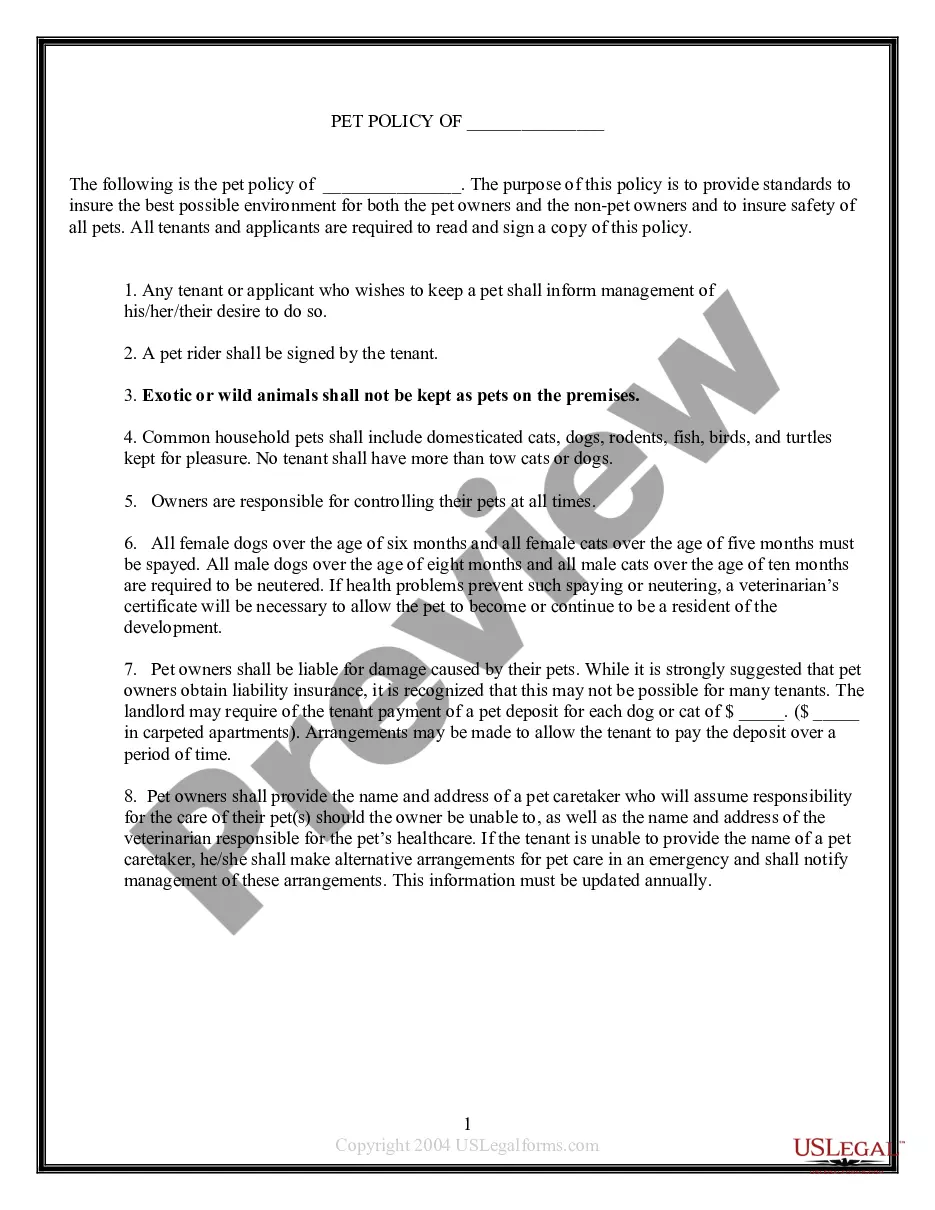
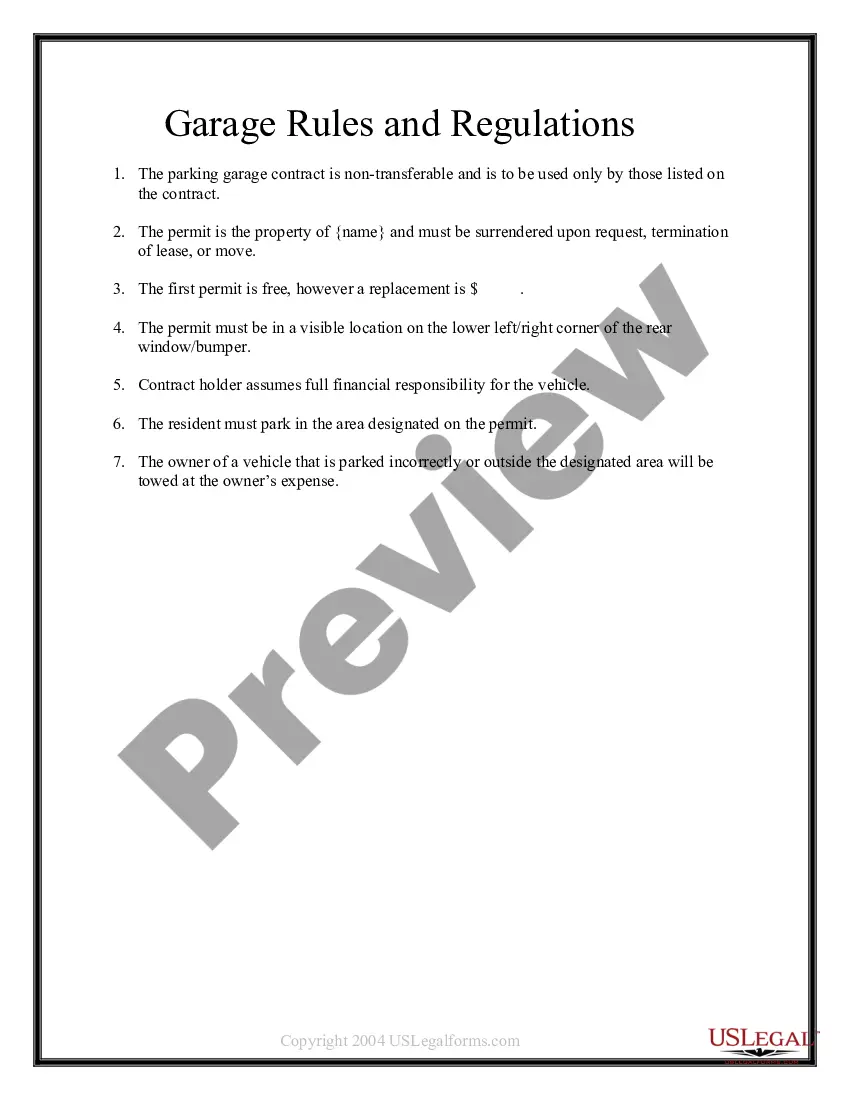
How to fill out California Apartment Rules And Regulations?
The California Guidelines Rules For A Collective you observe on this page is a reusable formal outline crafted by expert attorneys in accordance with federal and state statutes.
For over 25 years, US Legal Forms has supplied individuals, businesses, and legal practitioners with more than 85,000 validated, state-specific documents for any commercial and personal scenario. It’s the quickest, most direct, and most reliable method to secure the documentation you require, as the service ensures bank-level data protection and anti-malware security.
Register for US Legal Forms to access validated legal templates for all of life’s circumstances at your fingertips.
- Search for the document you require and review it.
- Browse the sample you searched and preview it or check the form description to verify it meets your requirements. If it doesn’t, use the search bar to locate the correct one. Click Buy Now once you have identified the template you need.
- Subscribe and Log In.
- Select the pricing plan that works for you and register for an account. Use PayPal or a credit card for a swift transaction. If you already possess an account, Log In and check your subscription to proceed.
- Acquire the editable template.
- Choose the format you prefer for your California Guidelines Rules For A Collective (PDF, Word, RTF) and store the sample on your device.
- Fill out and sign the document.
- Print the template to complete it manually. Alternatively, use an online multifunctional PDF editor to swiftly and accurately fill in and sign your form with an electronic signature.
- Redownload your documents once again.
- Reutilize the same document as necessary. Access the My documents tab in your profile to rediscover any previously saved forms.
Form popularity
FAQ
Citing the California Code of Regulations requires a specific format that includes the title number, the acronym 'CCR,' and the section number. For example, it typically looks like this: Title 17, CCR, Section 1000. Accurately citing these regulations is essential for clarity and legal purposes, especially when discussing California rules regulations for a group. It ensures that everyone refers to the same legal information.
Title 22 regulations in California outline the standards for health facilities, including residential programs and services for various groups. These regulations ensure that facilities meet the necessary health and safety requirements. Understanding the Title 22 regulations is crucial for organizations that operate under California rules regulations for a group. They help maintain compliance and provide quality services to the community.
You can access the California code of regulations online through the official California government website. This resource offers comprehensive guidelines and legal texts relevant to various fields, including business and professional conduct. For those involved in group activities, understanding these regulations is vital for compliance. UsLegalForms provides easy access to relevant documents and templates to assist with navigating the California rules regulations for a group.
The California rules of professional conduct provide a framework for ethical behavior among attorneys. They cover various aspects, including client confidentiality, conflict of interest, and fees. These rules guide lawyers in their practice, reinforcing professionalism and accountability. Familiarizing yourself with these rules is essential, especially when navigating California rules regulations for a group.
In California, corporate names must be unique and not easily confused with existing entities. The name must include a corporate identifier, such as 'Corporation', 'Incorporated', or an abbreviation like 'Inc.'. These requirements help ensure clarity and transparency in business operations. Adhering to these regulations aligns with the California rules regulations for a group and promotes lawful business practices.
Rule 7.3 addresses the solicitation of professional employment by lawyers. It prohibits direct contact with potential clients in certain circumstances, ensuring that communication remains ethical and respectful. The purpose is to protect individuals from unwanted solicitation while maintaining the integrity of the legal profession. Understanding these rules is crucial for compliance with California rules regulations for a group.
To file a complaint against an assisted living facility in California, you can contact the California Department of Social Services. They provide a clear process for submitting complaints, ensuring that your concerns are investigated under the California rules regulations for a group. You can also utilize online resources or forms available through their website to facilitate your complaint.
The California Code of Regulations is written by various state agencies, including the California Department of Social Services. These agencies develop regulations to enforce the laws established by the California Legislature, including those related to California rules regulations for a group. This collaborative effort ensures comprehensive governance and oversight.
Yes, operating a group home in California requires a license. This licensing process ensures adherence to California rules regulations for a group, which help maintain safety and operational standards. Being licensed also reassures potential residents and their families that the home meets established guidelines.
Group homes in California are regulated by the California Department of Social Services, specifically through its Community Care Licensing Division. This division enforces the California rules regulations for a group, conducting inspections and ensuring quality standards are met. Their role is vital in maintaining safe and healthy environments for all residents.