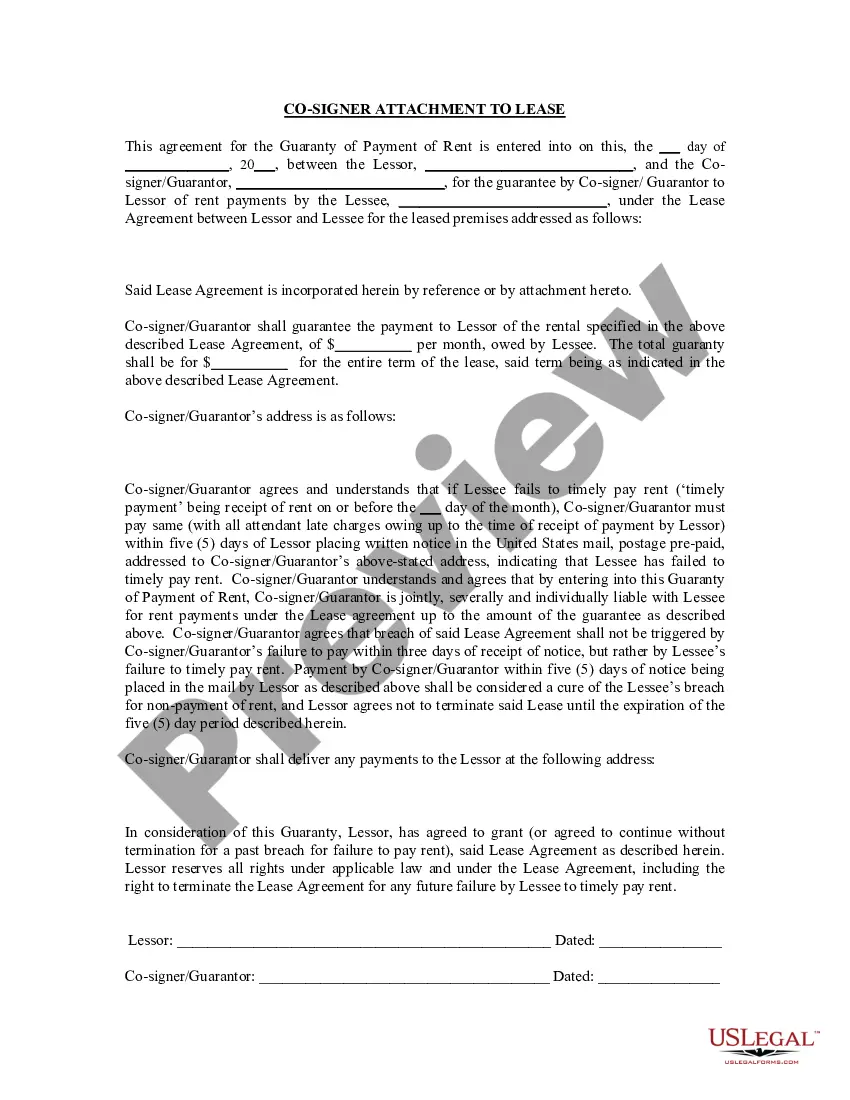
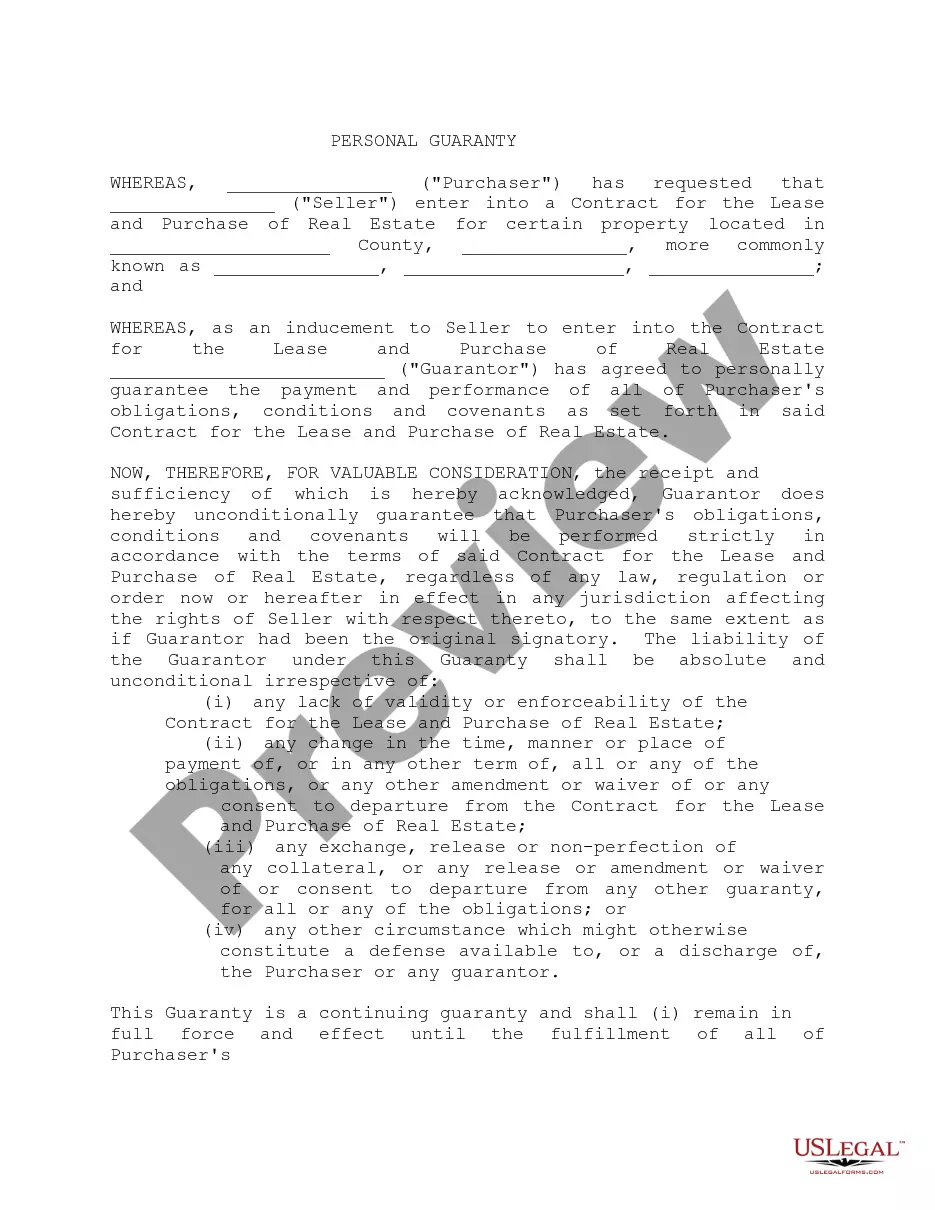
Lease With Guaranty
Description
Get your form ready online
Our built-in tools help you complete, sign, share, and store your documents in one place.
Make edits, fill in missing information, and update formatting in US Legal Forms—just like you would in MS Word.
Download a copy, print it, send it by email, or mail it via USPS—whatever works best for your next step.
Sign and collect signatures with our SignNow integration. Send to multiple recipients, set reminders, and more. Go Premium to unlock E-Sign.
If this form requires notarization, complete it online through a secure video call—no need to meet a notary in person or wait for an appointment.
We protect your documents and personal data by following strict security and privacy standards.

Make edits, fill in missing information, and update formatting in US Legal Forms—just like you would in MS Word.

Download a copy, print it, send it by email, or mail it via USPS—whatever works best for your next step.

Sign and collect signatures with our SignNow integration. Send to multiple recipients, set reminders, and more. Go Premium to unlock E-Sign.

If this form requires notarization, complete it online through a secure video call—no need to meet a notary in person or wait for an appointment.

We protect your documents and personal data by following strict security and privacy standards.
Looking for another form?



How to fill out California Guaranty Attachment To Lease For Guarantor Or Cosigner?
Locating a preferred destination to obtain the most up-to-date and pertinent legal templates is part of the challenge of navigating bureaucracy.
Identifying the appropriate legal documents necessitates precision and carefulness, which is why it is crucial to source samples of Lease With Guaranty exclusively from trustworthy providers, such as US Legal Forms. An incorrect template will squander your time and postpone your situation. With US Legal Forms, your worries are minimal. You can access and review all the specifics regarding the document’s application and significance for your situation and within your jurisdiction.
Once you have the form on your device, you can edit it with the editor or print it and complete it manually. Eliminate the hassle that comes with your legal documentation. Browse through the extensive US Legal Forms library to discover legal templates, assess their relevance to your situation, and download them instantly.
- Utilize the catalog navigation or search bar to find your template.
- Examine the document’s details to confirm if it aligns with the criteria of your state and county.
- Check the form preview, if available, to verify that it is the one you require.
- Return to the search and locate the appropriate template if the Lease With Guaranty does not fulfill your needs.
- If you are confident about the document’s applicability, download it.
- Once you are a registered user, click Log in to verify and access your chosen templates in My documents.
- If you have not created an account yet, click Buy now to acquire the template.
- Select the pricing option that suits your requirements.
- Continue to the registration process to finalize your purchase.
- Complete your transaction by selecting a payment method (credit card or PayPal).
- Choose the document format for downloading Lease With Guaranty.
Form popularity
FAQ
Deciding whether to personally guarantee a lease depends on your financial situation and your relationship with the tenant. If you trust the tenant and have the means to cover their obligations, a personal guarantee can strengthen their chances of securing the lease. However, it's essential to understand the risks involved; using a platform like uslegalforms can help you draft a clear and effective lease with guaranty.
To guaranty a lease means that a guarantor promises to fulfill the lease terms if the tenant cannot. This commitment typically includes covering rent payments and any damages that may occur. When you choose a lease with guaranty, it ensures that landlords feel confident in their rental agreements, while tenants can secure housing despite potential financial concerns.
A guaranteed lease is a rental agreement where a third party, usually a guarantor, agrees to take responsibility for the lease obligations if the tenant fails to meet them. This arrangement offers landlords added security and can help tenants who may not have strong credit histories. When you enter into a lease with guaranty, you bring peace of mind to both parties involved.
Yes, you can rent with just a guarantor. A lease with guaranty allows you to secure a rental even if your credit history is limited or if you do not meet the income requirements on your own. The guarantor agrees to take on the financial responsibility, providing landlords with added security. This arrangement can make it easier for you to find a suitable rental property.
To include a guarantor on a lease, start by discussing the arrangement with your landlord or property manager. You need to provide the necessary documentation from the guarantor, such as proof of income and identification. Make sure the lease with guaranty explicitly states the guarantor’s obligations. This clarity helps protect both you and the landlord in case of any issues.
Filling out a guarantor form is straightforward. First, gather all necessary information about the guarantor, including their name, address, and income details. Next, ensure that the form clearly states the lease with guaranty terms, including the responsibilities of the guarantor. Finally, review the form for accuracy before submitting it to the landlord or property management.
To guarantee a lease, a guarantor must sign an agreement that holds them responsible for the lease obligations if the tenant defaults. This process often involves completing a guaranty form that outlines the terms of the agreement. It is advisable for both parties to review the lease with guaranty carefully to ensure clarity and understanding. Platforms like USLegalForms can provide the necessary templates and support to facilitate this process.
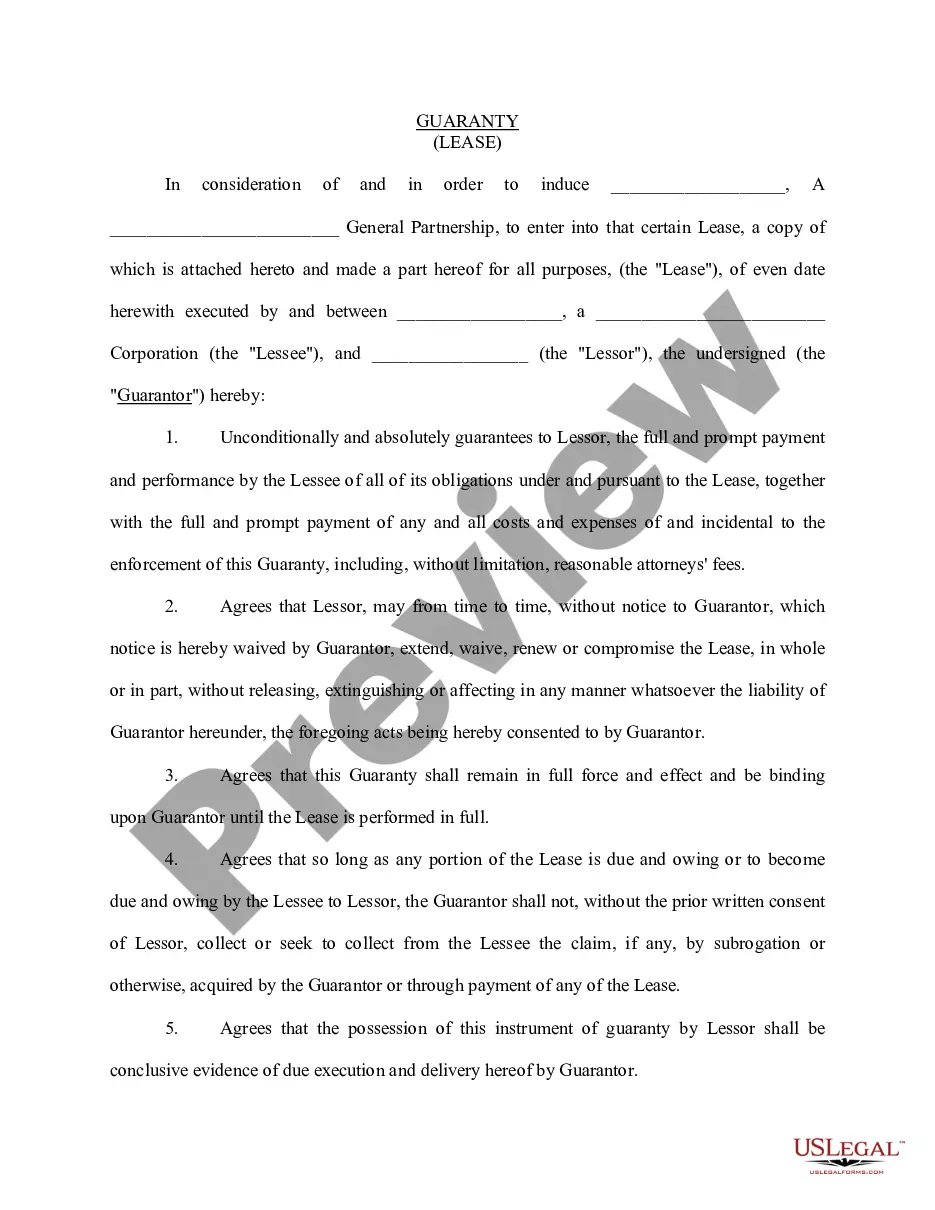
An example of a guaranty on a lease occurs when a business owner secures a commercial lease by having a partner sign as a guarantor. This partner promises to cover the lease payments if the business fails to do so. This type of arrangement helps landlords feel more confident in leasing to new businesses. It’s essential to understand the implications of a lease with guaranty to protect all parties involved.
To exit a lease with a personal guarantee, you may first want to review the lease agreement for specific termination clauses. Consider negotiating with the landlord for a mutual termination or subleasing the property. It’s important to communicate openly with the landlord to explore options that might allow you to relieve yourself from the guarantee. Utilizing a service like USLegalForms can help you draft the necessary documentation to formalize the process.