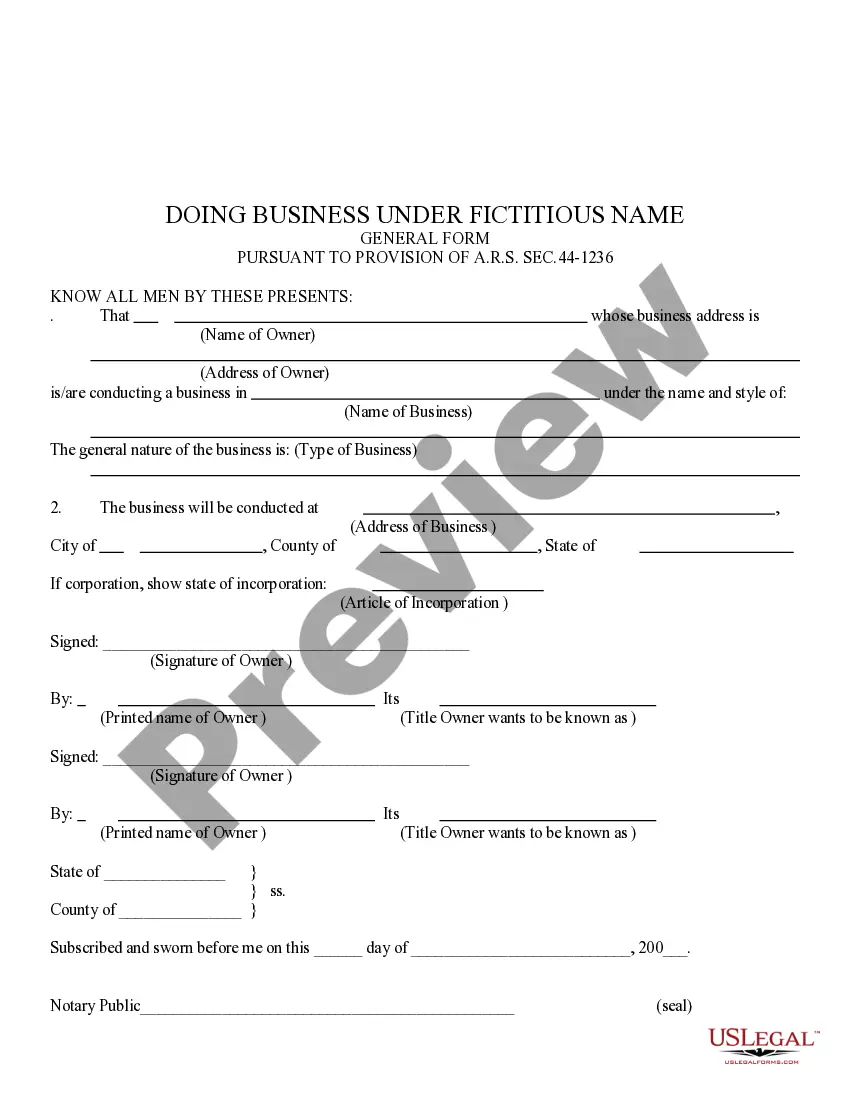
Using Your Name As A Business Name
Description
Get your form ready online
Our built-in tools help you complete, sign, share, and store your documents in one place.
Make edits, fill in missing information, and update formatting in US Legal Forms—just like you would in MS Word.
Download a copy, print it, send it by email, or mail it via USPS—whatever works best for your next step.
Sign and collect signatures with our SignNow integration. Send to multiple recipients, set reminders, and more. Go Premium to unlock E-Sign.
If this form requires notarization, complete it online through a secure video call—no need to meet a notary in person or wait for an appointment.
We protect your documents and personal data by following strict security and privacy standards.

Make edits, fill in missing information, and update formatting in US Legal Forms—just like you would in MS Word.

Download a copy, print it, send it by email, or mail it via USPS—whatever works best for your next step.

Sign and collect signatures with our SignNow integration. Send to multiple recipients, set reminders, and more. Go Premium to unlock E-Sign.

If this form requires notarization, complete it online through a secure video call—no need to meet a notary in person or wait for an appointment.

We protect your documents and personal data by following strict security and privacy standards.
Looking for another form?

How to fill out Arizona Doing Business Under Fictitious Name?
Utilizing legal document examples that comply with federal and local laws is essential, and the web provides numerous choices to select from.
However, what’s the advantage of spending time searching for the properly crafted Using Your Name As A Business Name template online if the US Legal Forms digital library already consolidates such documents in one location.
US Legal Forms is the largest online legal repository with more than 85,000 editable templates created by lawyers for various professional and personal situations. They are easy to navigate with all files categorized by state and intended use. Our experts stay updated with legal modifications, ensuring your documents are current and compliant when obtaining a Using Your Name As A Business Name from our site.
Click Buy Now once you’ve found the appropriate form and choose a subscription plan. Create an account or Log In and complete the payment via PayPal or a credit card. Select the suitable format for your Using Your Name As A Business Name and download it. All documents you find through US Legal Forms are reusable. To re-download and fill out previously saved forms, access the My documents section in your profile. Take advantage of the most comprehensive and user-friendly legal document service!
- Acquiring a Using Your Name As A Business Name is straightforward and quick for both existing and new users.
- If you already possess an account with an active subscription, Log In and download the document sample you require in the correct format.
- If you are unfamiliar with our website, follow the steps below.
- Review the template using the Preview option or through the text description to confirm it meets your requirements.
- Use the search tool at the top of the page to find an alternative sample if necessary.
Form popularity
FAQ
Yes, you can use your personal name as a business name, and this practice is quite common among sole proprietors and freelancers. However, if you choose to operate an LLC or corporation, you may need to register a 'doing business as' (DBA) name. This option allows you to maintain your personal identity while legally operating under your name. To simplify the process, you can utilize US Legal Forms, which offers resources to help you navigate the registration and legal requirements.
Using your name as a business name by forming an LLC can offer significant advantages. It provides personal liability protection, meaning your personal assets are generally safe from business debts. Additionally, an LLC can enhance your credibility and professionalism, which may attract more clients. However, consider your specific situation and consult with a legal expert to ensure this choice aligns with your business goals.
Yes, you can change your business name while retaining the same Employer Identification Number (EIN). When you decide to use your name as a business name, you must notify the IRS of the name change. This process is straightforward and typically requires you to fill out Form 1065 or Form 1120, depending on your business structure. Remember, keeping the same EIN simplifies your tax reporting and maintains your established business identity.
Using your name as a business name is a straightforward process. Start by deciding how you want to present your name—whether it’s just your first name, last name, or a combination. Next, check for name availability and register it with the appropriate authorities. Platforms like US Legal Forms provide templates and guidance to help you navigate the registration process smoothly.
Claiming ownership of a name involves several steps. First, verify that your name is unique by searching trademark databases and local business registrations. Next, you should register your name officially, either as a sole proprietorship or by forming a corporation. This process not only helps in using your name as a business name but also offers legal protection against potential disputes.
To claim ownership of a name, start by conducting a search to check for existing trademarks or business names that might conflict with yours. Once you confirm that your desired name is available, you can file for a trademark or register your business with local authorities. Using your name as a business name can enhance your brand identity, so consider securing domain names and social media handles that reflect your business.
Legal ownership of a name refers to the rights you hold to use that name in a business context. When using your name as a business name, you need to ensure that it is not already in use by another entity. Additionally, registering your name with the appropriate state or federal authorities can help protect your claim to that name.