Notice Letter For Vacating House
Description

Get your form ready online
Our built-in tools help you complete, sign, share, and store your documents in one place.
Make edits, fill in missing information, and update formatting in US Legal Forms—just like you would in MS Word.
Download a copy, print it, send it by email, or mail it via USPS—whatever works best for your next step.
Sign and collect signatures with our SignNow integration. Send to multiple recipients, set reminders, and more. Go Premium to unlock E-Sign.
If this form requires notarization, complete it online through a secure video call—no need to meet a notary in person or wait for an appointment.
We protect your documents and personal data by following strict security and privacy standards.

Make edits, fill in missing information, and update formatting in US Legal Forms—just like you would in MS Word.

Download a copy, print it, send it by email, or mail it via USPS—whatever works best for your next step.

Sign and collect signatures with our SignNow integration. Send to multiple recipients, set reminders, and more. Go Premium to unlock E-Sign.

If this form requires notarization, complete it online through a secure video call—no need to meet a notary in person or wait for an appointment.

We protect your documents and personal data by following strict security and privacy standards.
Looking for another form?







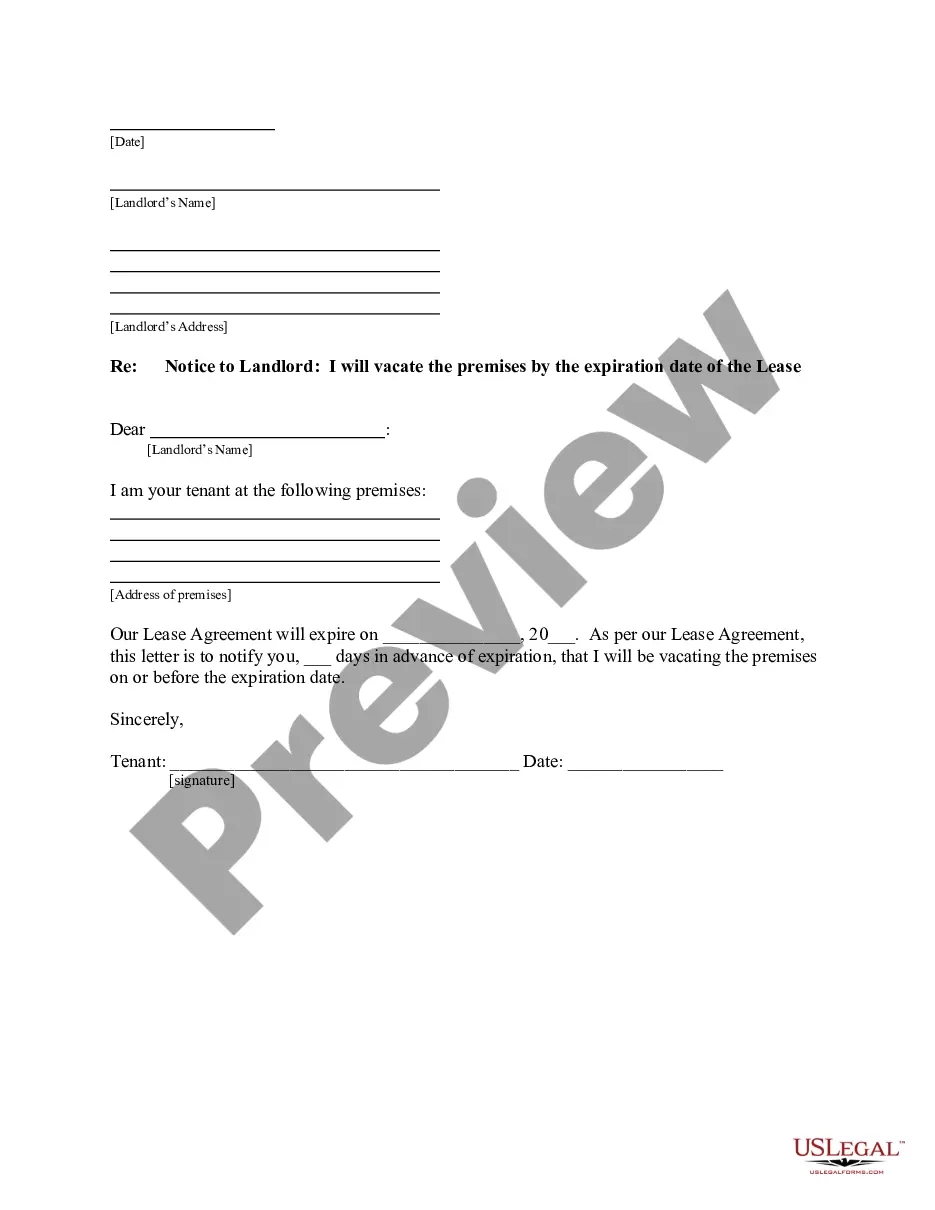
How to fill out Arizona Letter From Tenant To Landlord For 30 Day Notice To Landlord That Tenant Will Vacate Premises On Or Prior To Expiration Of Lease?
Bureaucracy necessitates precision and correctness.
If you do not engage with completing documents like Notice Letter For Vacating House daily, it can result in some miscommunications.
Choosing the right template from the outset will guarantee that your document submission occurs effortlessly and avoid any issues of resubmitting a file or repeating the same task from the beginning.
If you are not a subscriber, finding the desired template may require a few additional steps.
- Obtain the suitable template for your paperwork in US Legal Forms.
- US Legal Forms is the largest online forms repository offering over 85 thousand templates across various categories.
- You can discover the most recent and appropriate iteration of the Notice Letter For Vacating House by simply browsing the website.
- Find, store, and save templates in your profile or consult the description to ensure you possess the correct one available.
- With a profile at US Legal Forms, collecting, storing in one spot, and navigating through the templates you save becomes simple for quick access.
- While on the homepage, click the Log In button to sign in.
- Then, proceed to the My documents page, where your forms history is retained.
- Browse through the form descriptions and save the ones you need at any moment.
Form popularity
FAQ
The primary difference between a notice to vacate and an eviction notice is the urgency and context. A notice to vacate is simply a request for a tenant to leave, often provided with a certain timeframe. In contrast, an eviction notice signifies that legal action is pending and that failure to comply could result in immediate eviction. Understanding these distinctions is crucial for both landlords and tenants.
Typically, a notice to quit itself does not go on a tenant’s record; however, it may lead to an eviction if the issues are not resolved. It’s essential to handle a notice to quit appropriately, as it can escalate to formal eviction procedures that may impact a tenant’s rental history. Addressing the issues directly can help maintain a positive rental reference.
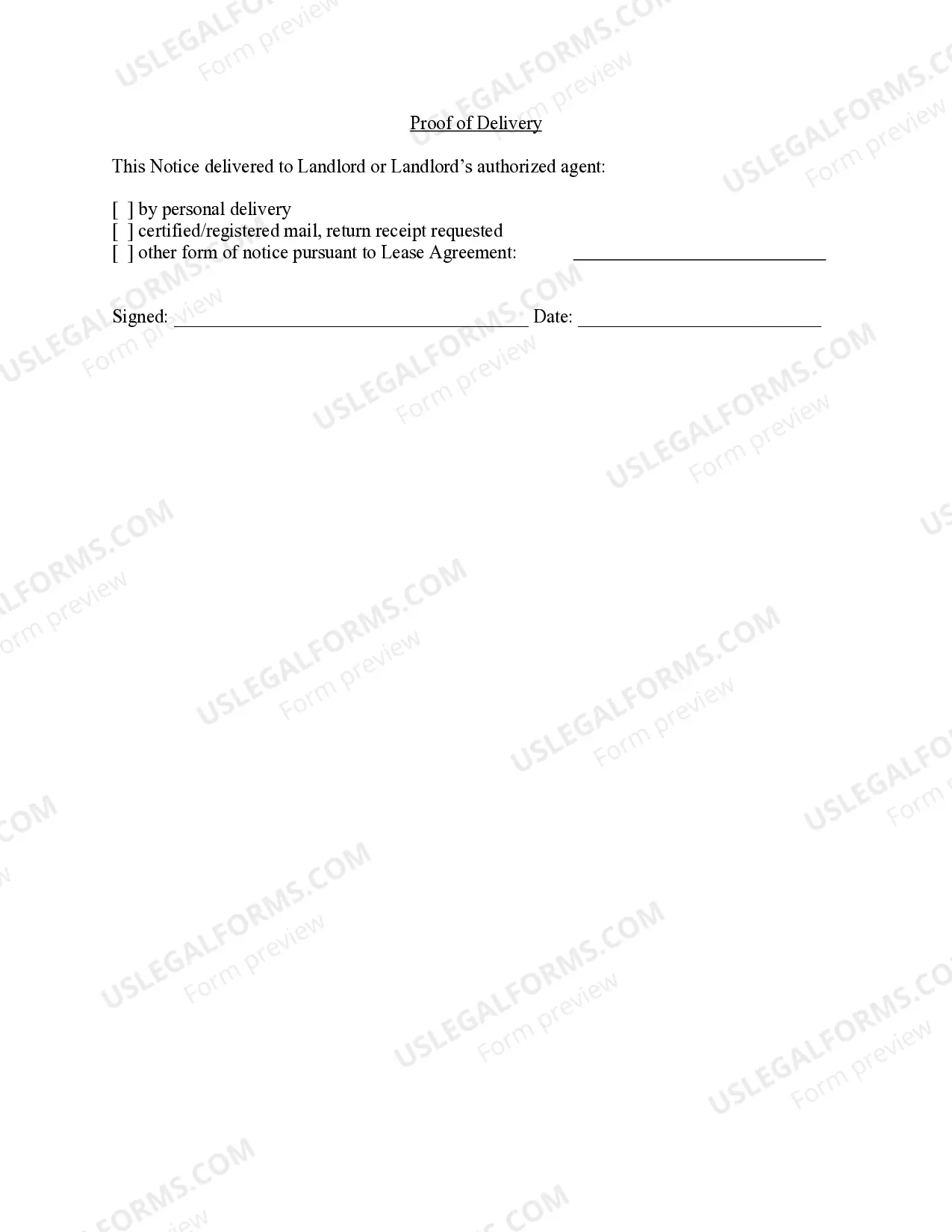
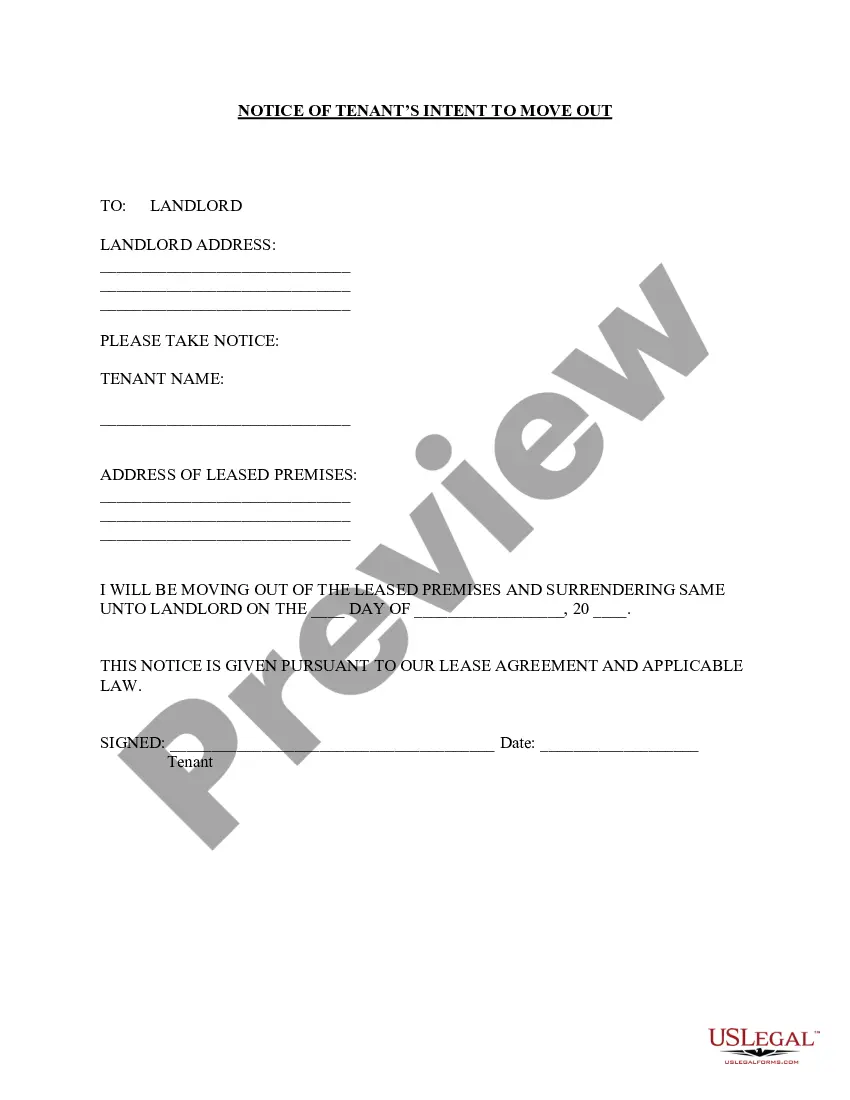
An example of a moving out written notice is a simple letter that states the tenant's intent to vacate the premises, including the move-out date. This notice should be clear and concise, ensuring it complies with any lease agreements. Using a notice letter for vacating house template can streamline this process and ensure all necessary details are covered.
A notice to vacate is not exactly the same as an eviction notice but is often used interchangeably. The notice to vacate serves as a more friendly reminder for tenants to leave, while an eviction notice indicates a legal proceeding. Both can serve as a key element in the process of a notice letter for vacating house.
In Arkansas, the eviction process begins with the landlord issuing a notice letter for vacating house, informing tenants of the reasons for eviction. If the tenant does not comply, the landlord can file for eviction in court. After a hearing, a judge will make a decision, potentially allowing the landlord to take possession of the property.
If a tenant vacates a property before the eviction process is complete, they may avoid further legal action. However, it’s crucial for tenants to provide proper notice through a notice letter for vacating house to protect their rights. Leaving without following appropriate procedures can lead to confusion about deposits and lease agreements.
In Arkansas, a landlord cannot evict a tenant in just three days without a legal process. Instead, they must first provide a notice letter for vacating house, allowing time for tenants to rectify issues or prepare to leave. The timeframe for eviction typically allows for several days to weeks, depending on the circumstances.
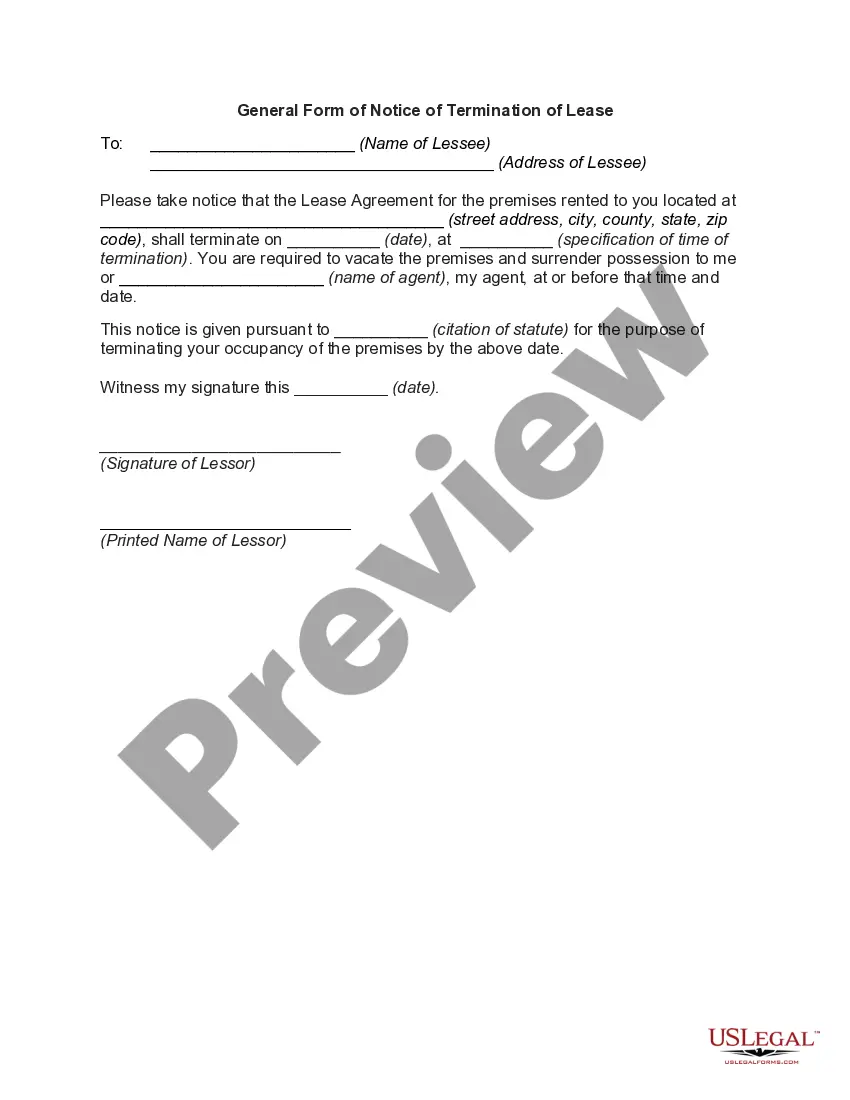
A notice of termination is not the same as an eviction. Instead, it serves as a formal communication that informs tenants they must vacate the property, often due to lease violations or the expiration of a lease. A notice letter for vacating house provides tenants with the opportunity to respond or rectify any issues before a more formal eviction process begins.
To write a notice letter to vacate, start with your name and address, followed by the landlord's information, and then clearly state your intent to vacate the property. Include the date you plan to move out and any pertinent details, such as requesting a final walkthrough. A clearly written notice letter for vacating house protects your rights and ensures transparency. For official templates, consider checking out US Legal Forms for reliable options.
The quickest way to evict a tenant usually involves serving them with a proper notice to vacate, followed by filing an eviction lawsuit if they do not comply. Ensure your notice letter for vacating house complies with your state’s laws to strengthen your case. After filing, the court will schedule a hearing where both parties can present their sides. Being prepared and informed can expedite the eviction process.
