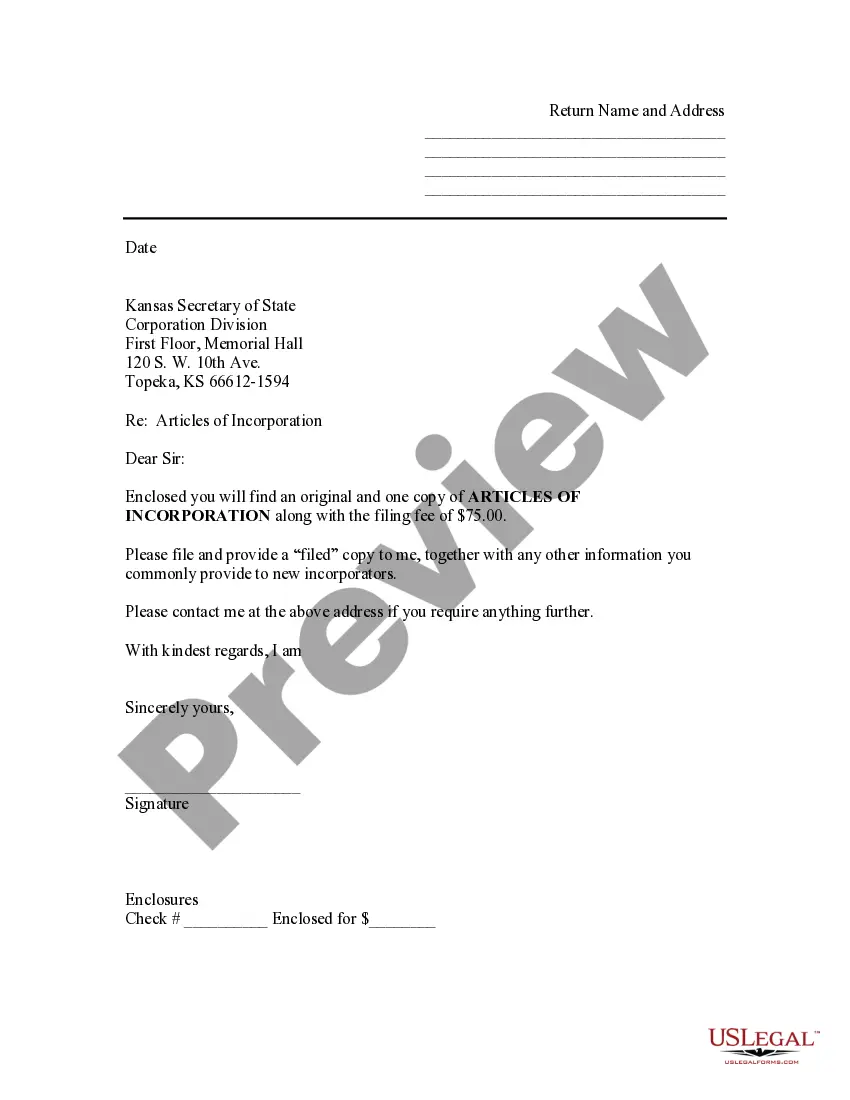
Arizona Letter from Tenant to Landlord for 30 day notice to landlord that tenant will vacate premises on or prior to expiration of lease
What is this form?
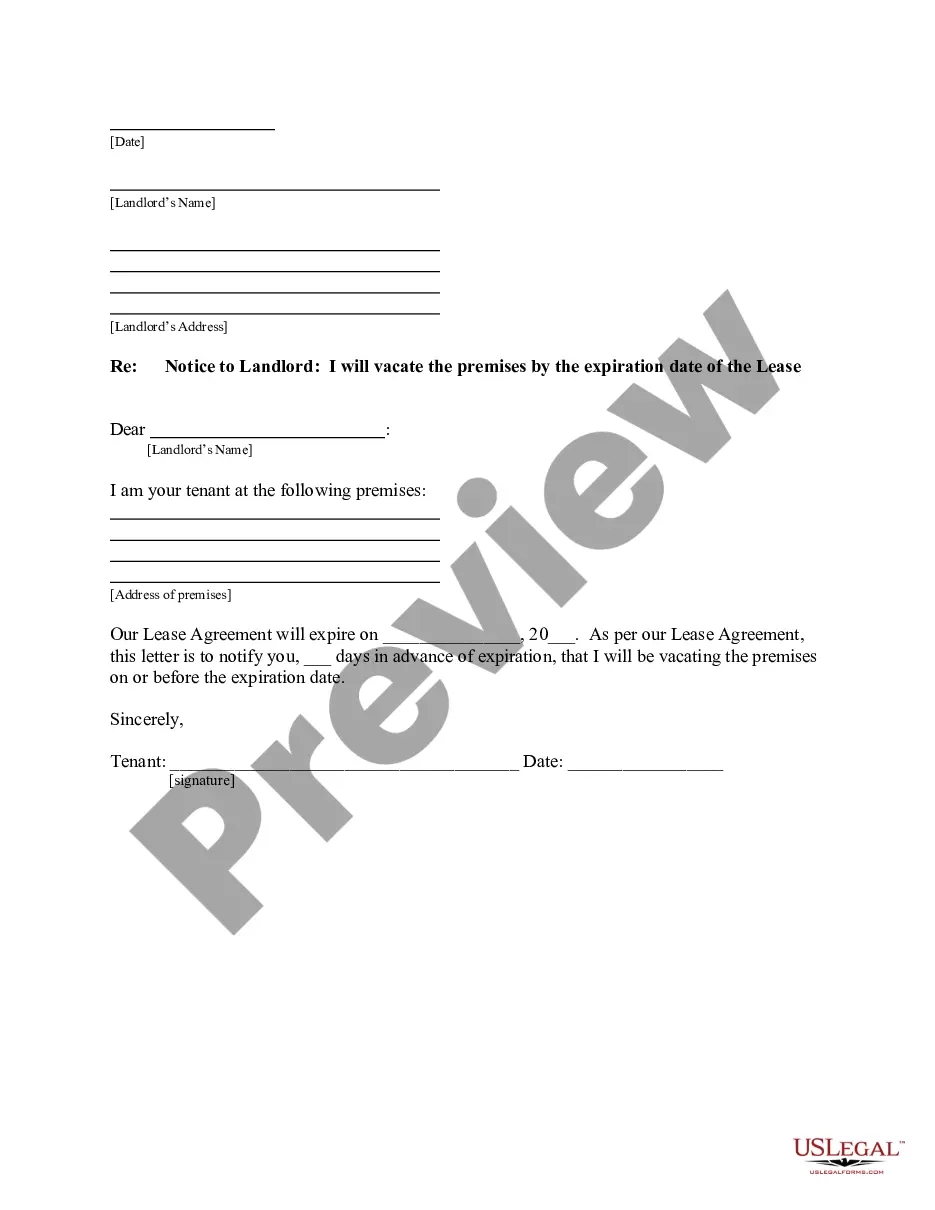
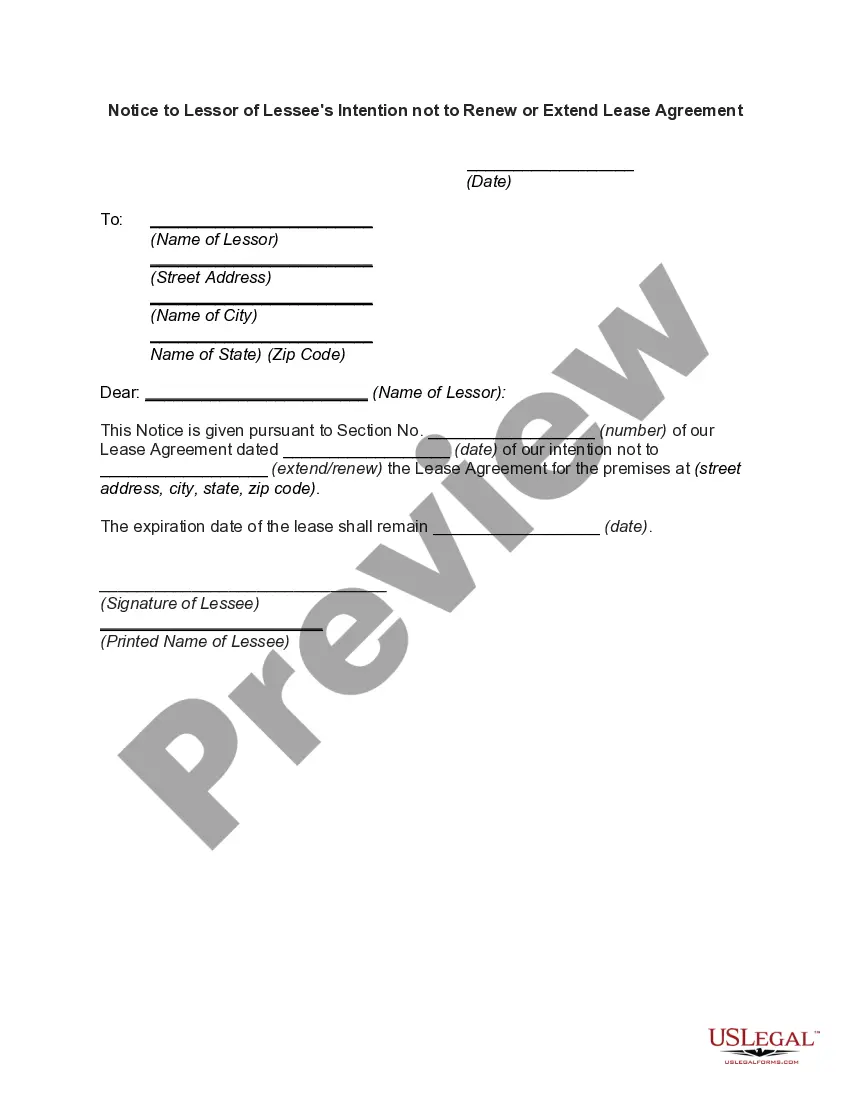
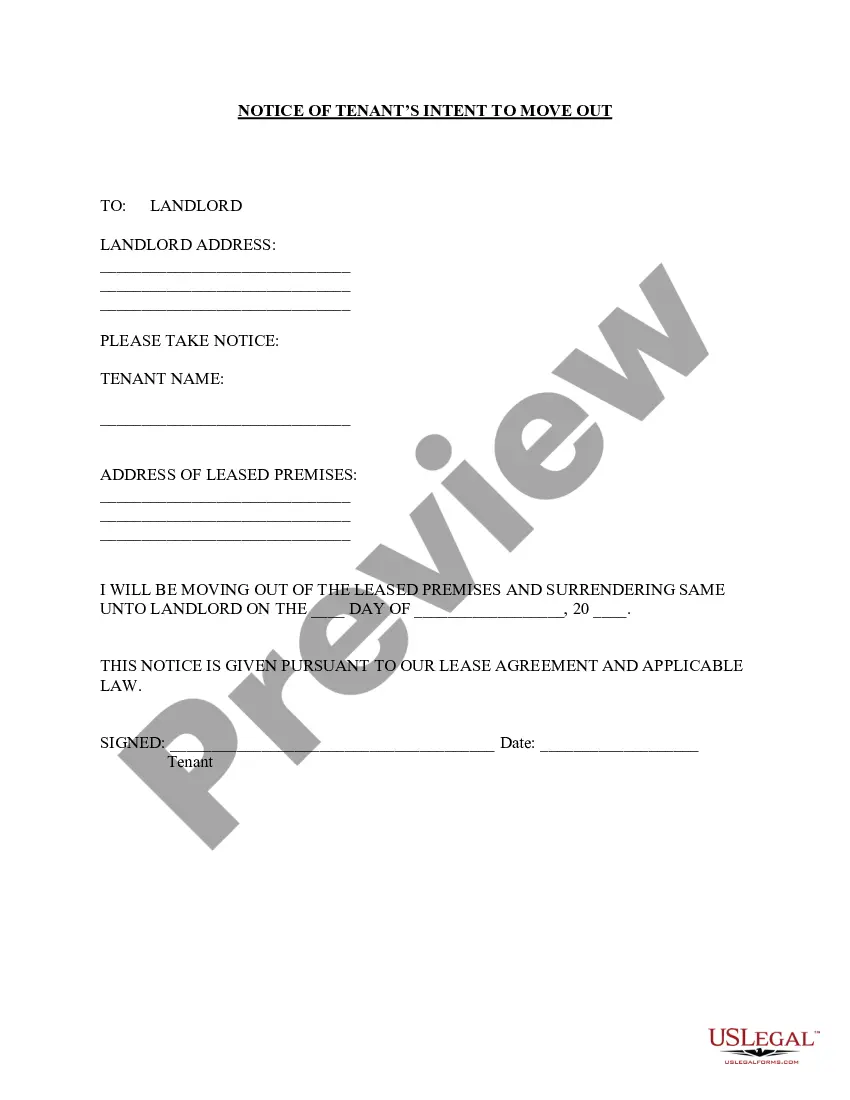
This form is a letter from a tenant to a landlord that provides notice of intent to vacate the rental property at the end of the lease term, adhering to the requirement of a 30-day notice. This letter serves to formally inform the landlord about the tenant's plans and ensures compliance with the lease agreement and state laws. It differs from other eviction or termination forms as it explicitly indicates the tenant's intention to leave rather than address any disputes or issues within the rental agreement.
Key components of this form
- Tenant's name and contact information
- Landlord's name and address
- Property address to be vacated
- Notice of intent to vacate, including specific dates
- Signature and date of the tenant
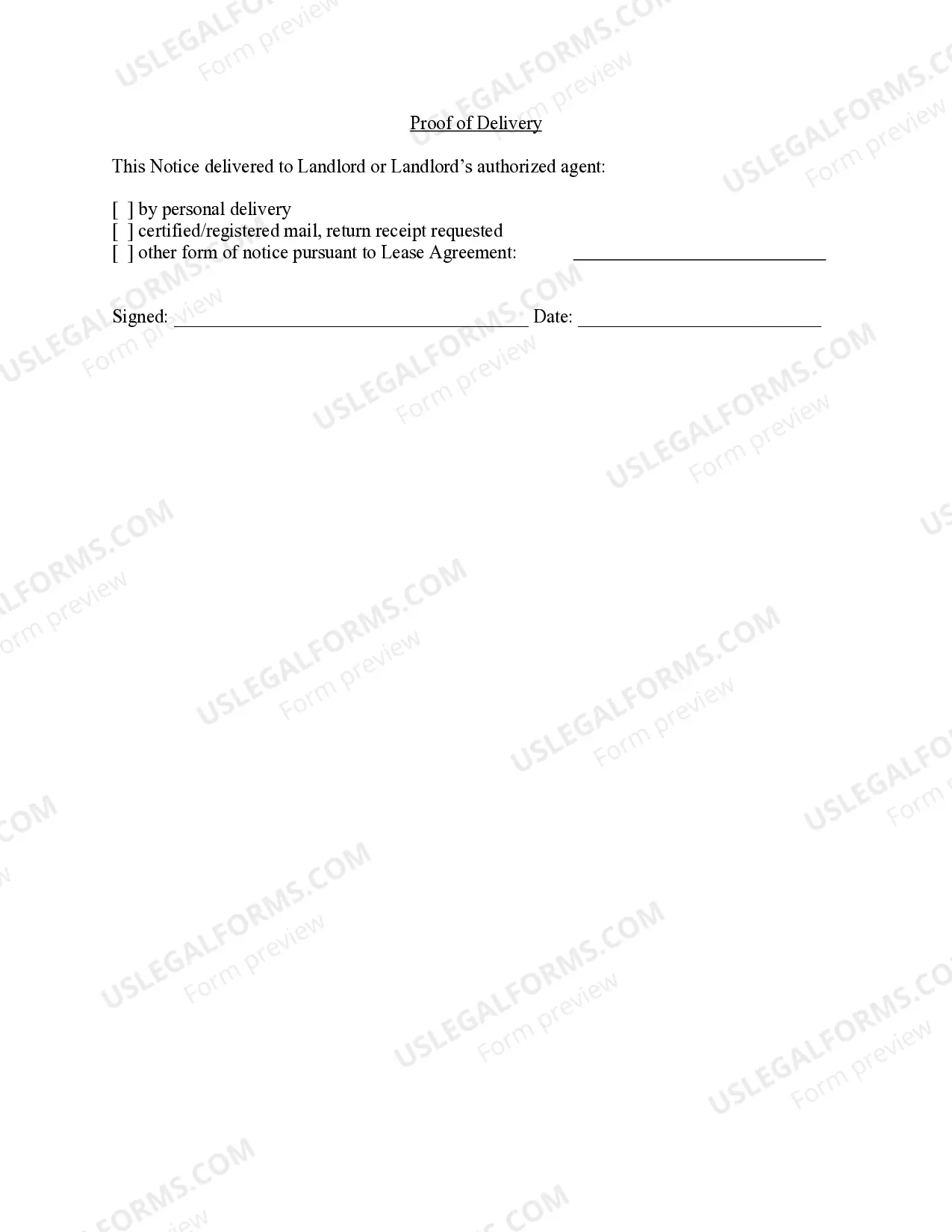
- Proof of delivery options

Situations where this form applies
This letter should be used when a tenant wishes to notify their landlord of their intention to vacate the rental property within 30 days of lease expiration. It is particularly important for tenants who want to ensure that they have provided proper notice in accordance with their lease terms and applicable state laws, helping avoid any potential disputes regarding security deposits or lease obligations.
Who should use this form
- Residential tenants preparing to move out at the end of their lease
- Tenants needing to comply with 30-day notice requirements
- Individuals wanting to maintain a formal communication record with their landlord
Completing this form step by step
- Identify and enter your name and contact information at the top of the letter.
- Include the landlord's name and address to ensure the letter reaches the right party.
- Specify the property address you are vacating.
- Clearly state your intention to move out and include the exact dates.
- Sign and date the letter to validate your notice.
- Choose a method for proof of delivery, such as personal delivery or certified mail, and follow through with that option.
Notarization guidance
This form does not typically require notarization unless specified by local law. Always check your state's specific requirements to ensure compliance.
Get your form ready online
Our built-in tools help you complete, sign, share, and store your documents in one place.
Make edits, fill in missing information, and update formatting in US Legal Forms—just like you would in MS Word.
Download a copy, print it, send it by email, or mail it via USPS—whatever works best for your next step.
Sign and collect signatures with our SignNow integration. Send to multiple recipients, set reminders, and more. Go Premium to unlock E-Sign.
If this form requires notarization, complete it online through a secure video call—no need to meet a notary in person or wait for an appointment.
We protect your documents and personal data by following strict security and privacy standards.

Make edits, fill in missing information, and update formatting in US Legal Forms—just like you would in MS Word.

Download a copy, print it, send it by email, or mail it via USPS—whatever works best for your next step.

Sign and collect signatures with our SignNow integration. Send to multiple recipients, set reminders, and more. Go Premium to unlock E-Sign.

If this form requires notarization, complete it online through a secure video call—no need to meet a notary in person or wait for an appointment.

We protect your documents and personal data by following strict security and privacy standards.
Avoid these common issues
- Failing to provide a full 30-day notice before the lease expiration date.
- Not including the property address, causing possible confusion.
- Omitting the signature, which makes the form invalid.
Why complete this form online
- Convenience of downloading and completing the form from home.
- Editability allows tenants to customize the form as needed.
- Access to templates drafted by licensed attorneys ensures legal accuracy.
Summary of main points
- This form serves as a formal notice to your landlord regarding your intent to vacate.
- Providing a 30-day notice helps protect your legal rights and responsibilities.
- Ensure you follow your stateâs legal requirements to avoid disputes.
Looking for another form?
Form popularity
FAQ
To inform your community or society about a new tenant, draft a simple letter stating the tenant's name and the address where they will reside. It's courteous to mention the expected move-in date and offer a brief welcome. You can also emphasize the importance of community and inclusivity, alongside how the presence of new tenants enriches the neighborhood. This could be outlined in an Arizona Letter from Tenant to Landlord for 30 day notice to landlord that tenant will vacate premises on or prior to expiration of lease if you are moving out of a rented property, as it involves communication about tenancy.
Writing a 30 day letter is straightforward. Start by addressing your landlord professionally and then clearly state that you are providing a 30-day notice to vacate. Include your current address, the date you plan to move out, and the phrase 'Arizona Letter from Tenant to Landlord for 30 day notice to landlord that tenant will vacate premises on or prior to expiration of lease' to specify your intent. This will help ensure your notification fulfills legal requirements.
To end a month-to-month lease in Arizona, you must provide a written notice to your landlord at least 30 days before your desired move-out date. This notice should clearly state your intention to vacate and include the effective date. Utilizing an Arizona Letter from Tenant to Landlord for 30 day notice to landlord that tenant will vacate premises on or prior to expiration of lease is a great way to ensure your communication is formal and clear. Make sure to keep a copy of this letter for your records.
A 30-day notice to a tenant in Arizona is a formal communication that informs tenants they must vacate the premises within thirty days. This notice is essential for landlords to ensure compliance with Arizona lease laws. It serves to clarify expectations and helps prevent misunderstandings during the transition.
A vacate letter to a tenant should include the date and a formal greeting. State the intention to vacate clearly along with the required notice period, such as 30 days. Finally, encourage your tenant to ask questions or discuss any concerns, promoting a positive transitioning experience.
When writing a notice to vacate, include your name, address, and the date you plan to vacate. Clearly express your intention to leave, referencing the relevant lease terms. This written notice serves as a record, providing clarity and structure to your communication with the landlord.
To terminate a month-to-month lease in Arizona, you must provide written notice to your tenant at least 30 days before the intended termination date. The notice should clearly state the date the lease will end and be delivered in a method compliant with state law. This ensures that both parties have enough time to plan accordingly.
To write a 30-day notice letter, begin with the date of the notice and the tenant's name and address. Clearly mention that this is a 30-day notice for the tenant to vacate the premises, citing the expiration of the lease. This provides clarity and ensures compliance with the Arizona laws surrounding tenant vacating procedures.
A formal letter to a tenant should include a clear subject line, date, and formal salutation. Clearly state your message by outlining any requests or essential information in a structured manner. Ensure to sign off formally, leaving contact information if the tenant has further questions, fostering effective communication.
To write a letter from landlord to tenant to vacate, you should begin with a formal greeting, state the intention clearly, and reference the lease agreement. Include relevant details such as the exact move-out date and any conditions for the return of the security deposit. This creates a clear and professional document that assures both parties are on the same page.