Deed Beneficiary Trust With Corporate
Description


Get your form ready online
Our built-in tools help you complete, sign, share, and store your documents in one place.
Make edits, fill in missing information, and update formatting in US Legal Forms—just like you would in MS Word.
Download a copy, print it, send it by email, or mail it via USPS—whatever works best for your next step.
Sign and collect signatures with our SignNow integration. Send to multiple recipients, set reminders, and more. Go Premium to unlock E-Sign.
If this form requires notarization, complete it online through a secure video call—no need to meet a notary in person or wait for an appointment.
We protect your documents and personal data by following strict security and privacy standards.

Make edits, fill in missing information, and update formatting in US Legal Forms—just like you would in MS Word.

Download a copy, print it, send it by email, or mail it via USPS—whatever works best for your next step.

Sign and collect signatures with our SignNow integration. Send to multiple recipients, set reminders, and more. Go Premium to unlock E-Sign.

If this form requires notarization, complete it online through a secure video call—no need to meet a notary in person or wait for an appointment.

We protect your documents and personal data by following strict security and privacy standards.
Looking for another form?





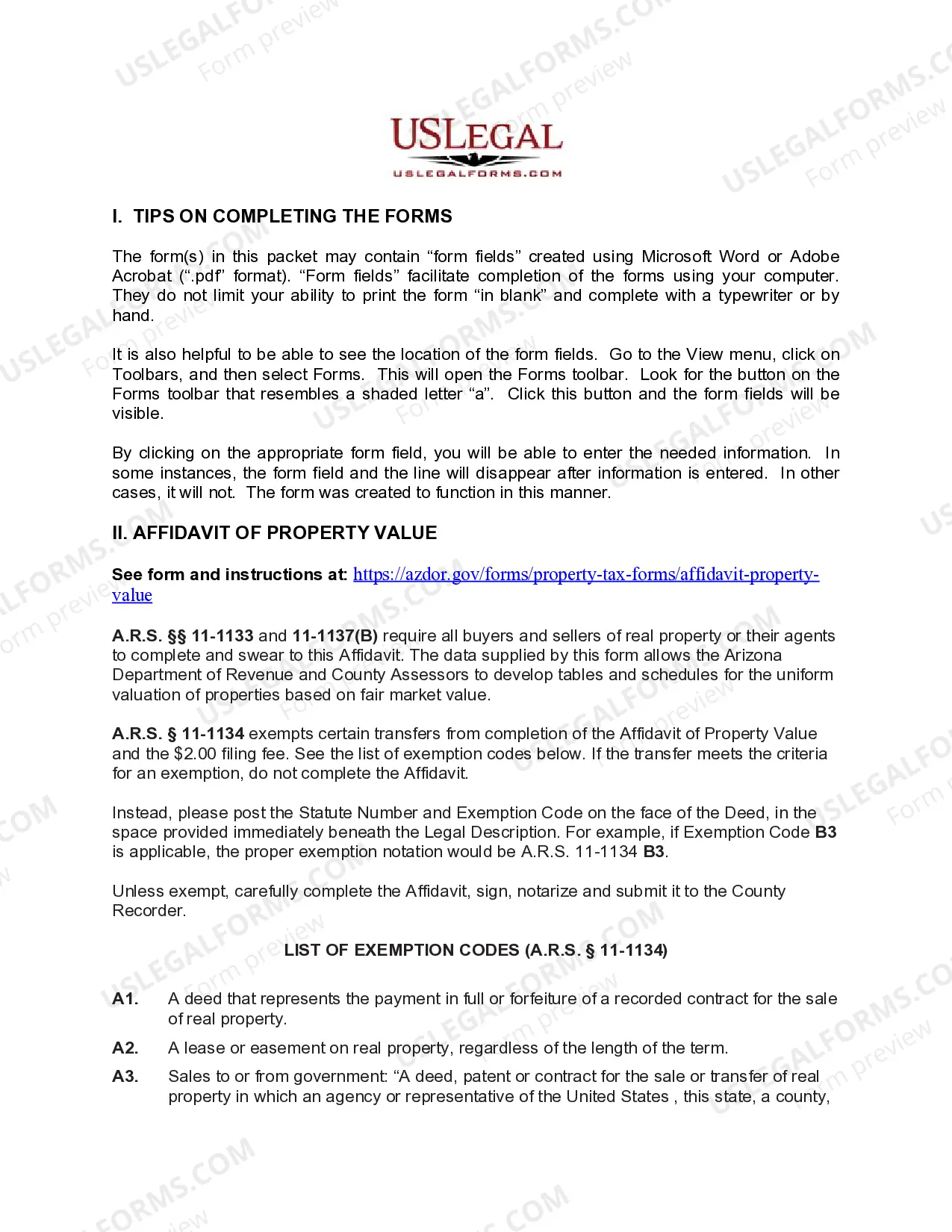
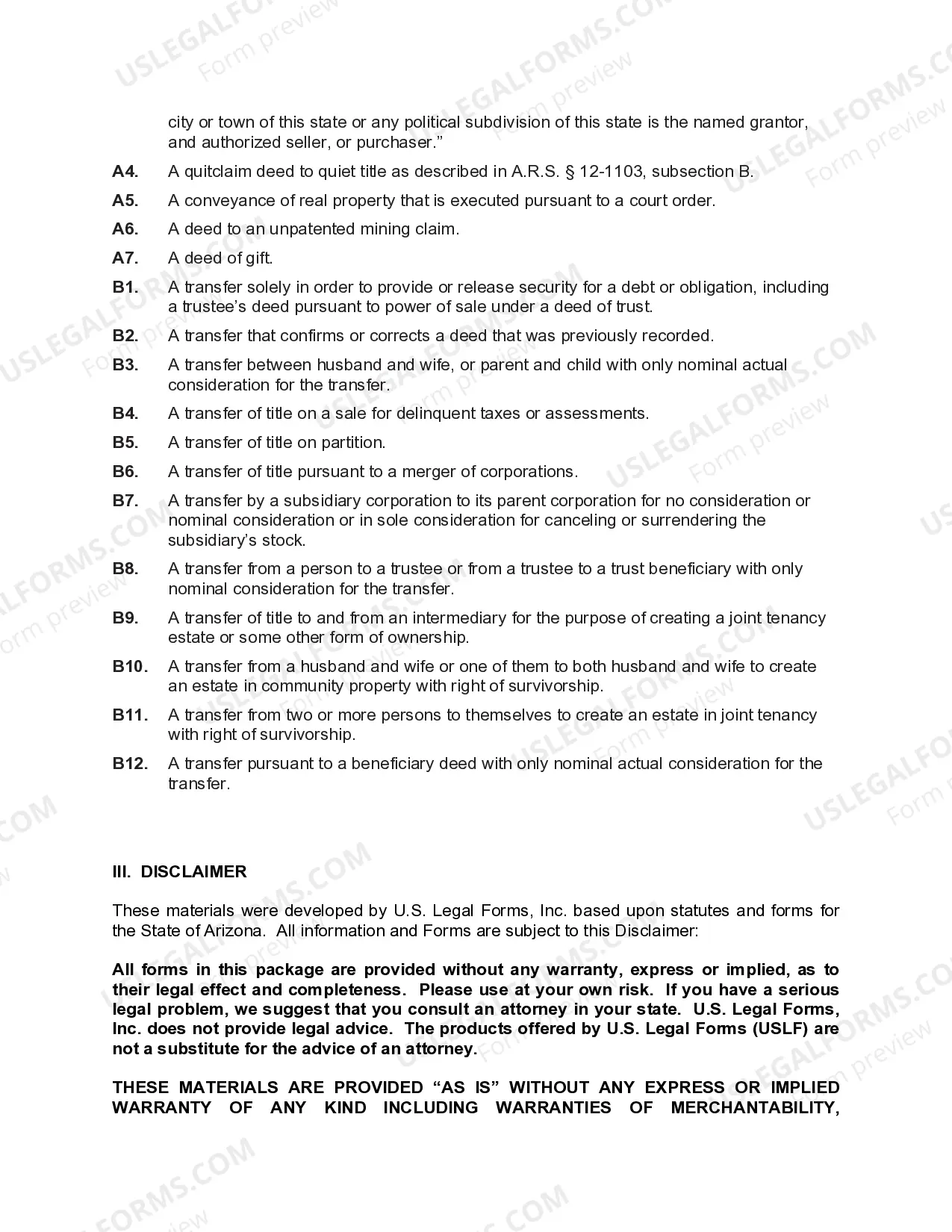
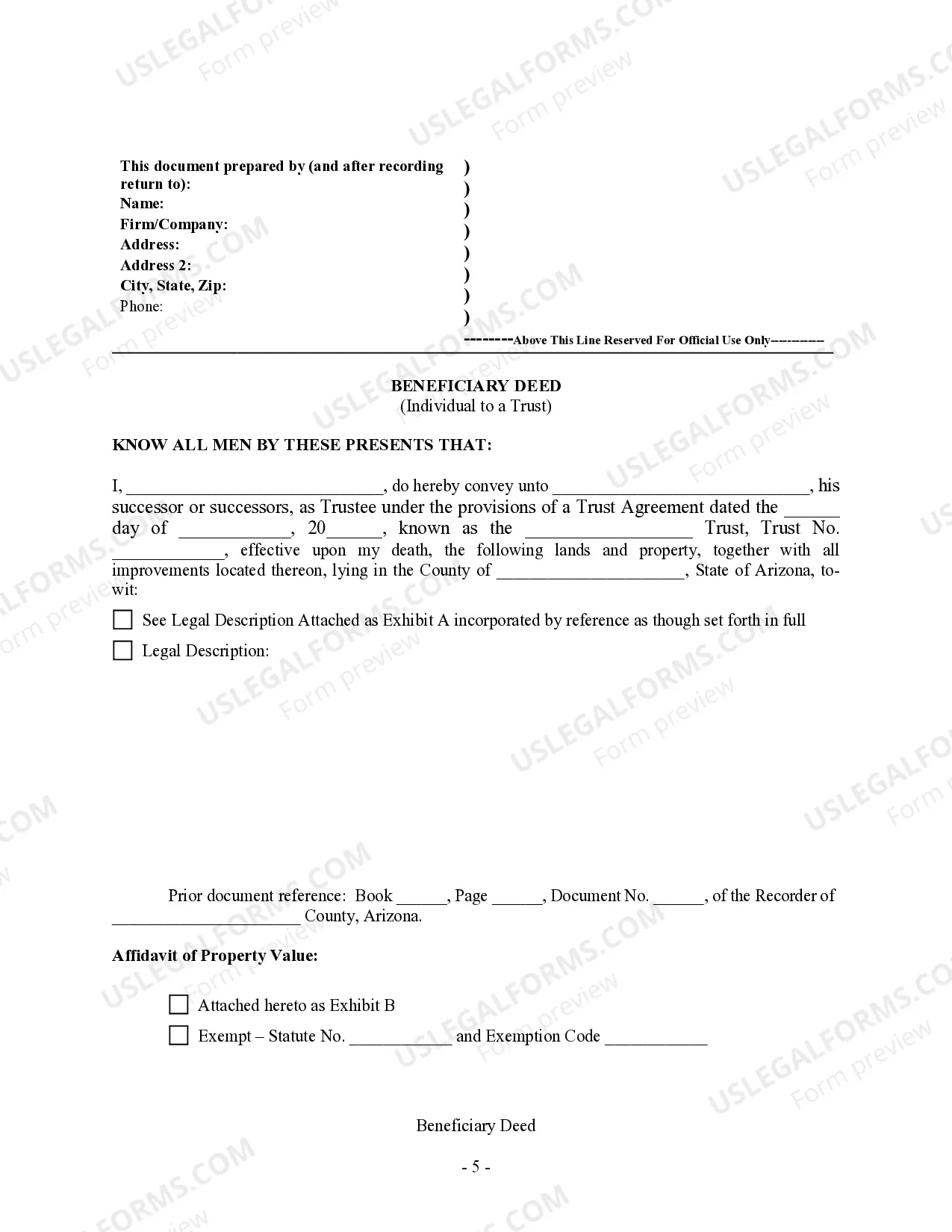
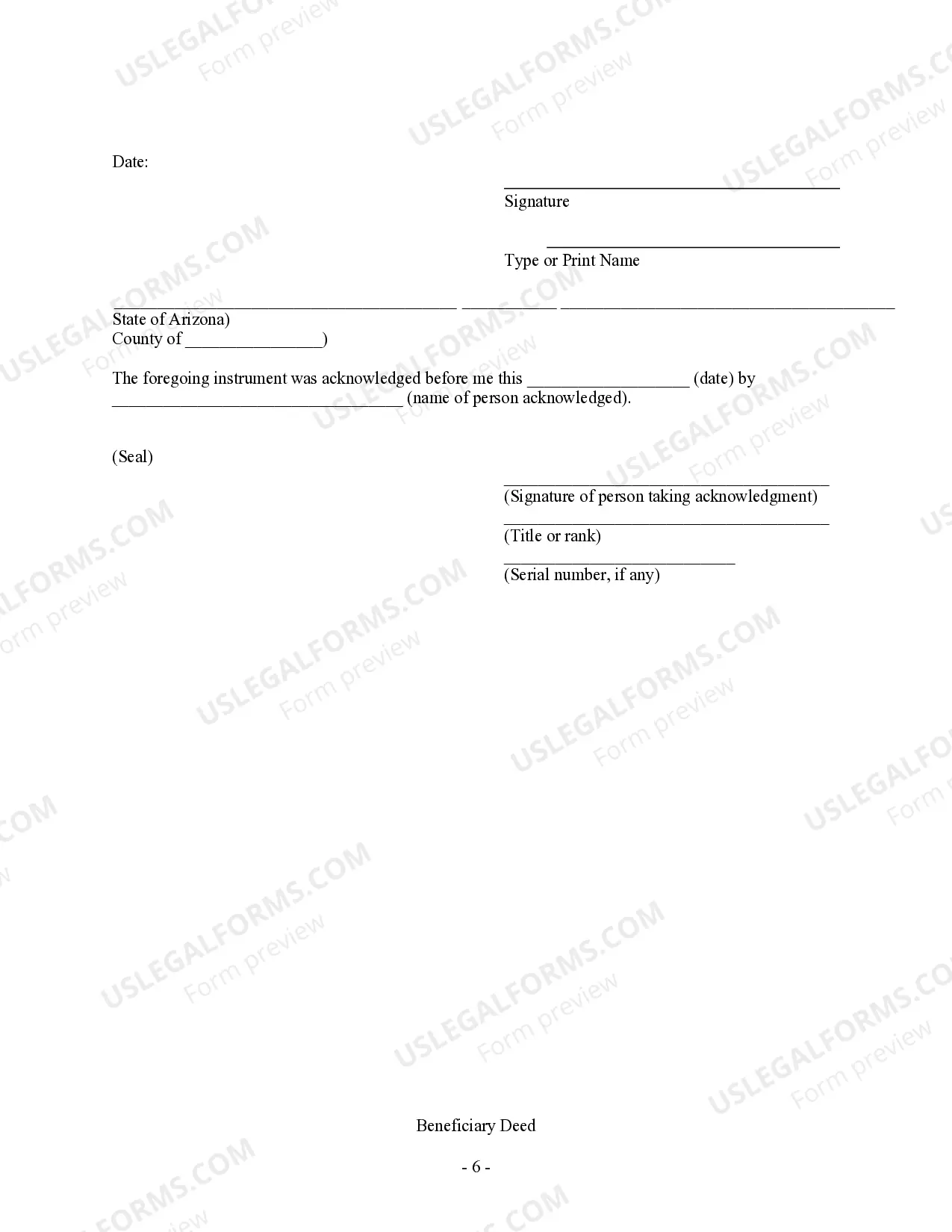
How to fill out Arizona Transfer On Death Deed Or TOD - Beneficiary Deed For Individual To A Trust?
Navigating through the red tape of official paperwork and templates can be challenging, particularly if one does not engage in that professionally.
Even selecting the appropriate template for a Deed Beneficiary Trust With Corporate will be labor-intensive, as it must be valid and precise to the very last detail.
Nevertheless, you will need to invest significantly less time picking the suitable template from a resource you can trust.
Acquire the correct form in a few straightforward steps: Enter the document title in the search box. Select the appropriate Deed Beneficiary Trust With Corporate from the list of results. Review the sample outline or open its preview. If the template meets your needs, click Buy Now. Continue to choose your subscription plan. Use your email and create a password to register an account at US Legal Forms. Select a credit card or PayPal payment method. Save the template document on your device in your preferred format. US Legal Forms will save you considerable time verifying whether the form you discovered online is suitable for your requirements. Create an account and gain unlimited access to all the templates you require.
- US Legal Forms is a service that streamlines the process of locating the right forms online.
- US Legal Forms is a single destination where you can acquire the latest document samples, get advice on their use, and download these samples to complete them.
- It comprises a library of over 85K forms applicable in various areas.
- When searching for a Deed Beneficiary Trust With Corporate, you won't have to doubt its authenticity as all forms are verified.
- An account at US Legal Forms will guarantee you have all the required samples within reach.
- Store them in your history or add them to the My documents catalog.
- You can access your saved forms from any device by simply clicking Log In at the library page.
- If you still don't possess an account, you can always search again for the template you need.
Form popularity
FAQ
Yes, a corporate trustee can also serve as a beneficiary within a deed beneficiary trust with corporate features. This arrangement can streamline asset management while ensuring that the trustee has a vested interest in upholding the trust's terms. It's a strategic choice often made to align the interests of the trustees and beneficiaries.
Corporate accounts can indeed have beneficiaries, particularly when structured through a deed beneficiary trust with corporate principles. This designation allows for a direct transfer of funds to the chosen beneficiaries without unnecessary complications. It enhances transparency and ensures that all parties know their rights and responsibilities.
Yes, you can designate beneficiaries on a business account, and this often involves creating a deed beneficiary trust with corporate specifics. This ensures that in the event of a significant life event, such as the owner's passing, the intended beneficiaries receive the benefits of the account promptly. It's a recommended step for responsible business management.
When the owner of a corporate bank account dies, the account typically goes through a legal process to determine the fate of the assets. If the ownership switch involves a deed beneficiary trust with corporate, the designated beneficiaries can gain access to the account more seamlessly. However, proper documentation and corporate governance will guide the process.
Yes, a corporation can designate a beneficiary through a deed beneficiary trust with corporate provisions. This setup allows for a smooth transition of assets upon certain events, such as the passing of key stakeholders. By having a beneficiary, corporations can ensure that their assets go to designated individuals or entities, enhancing financial planning.
A corporate assignment involves the transfer of rights and responsibilities between parties within a corporate framework. This can encompass various legal documents, including deeds of trust. When looking at a deed beneficiary trust with corporate implications, understanding corporate assignments can help property owners manage assets effectively while maximizing their legal protections.
Yes, a family trust can indeed designate a corporate entity as a beneficiary. By doing this, families may enjoy financial and legal advantages, such as greater flexibility in handling assets and enhanced protection against liabilities. Incorporating a deed beneficiary trust with corporate entities can provide a valuable tool for efficient estate management.
Corporate assignment of deed of trust refers to the process where a corporation takes on the rights and obligations detailed in a deed of trust. This allows the corporate entity to act as the beneficiary, which can provide advantages in terms of liability protection and asset management. Utilizing a deed beneficiary trust with corporate factors can significantly improve how properties are administered.
Assigning a deed of trust involves transferring the rights and benefits tied to the property secured by that trust. This process allows a new party to take over the responsibilities and benefits associated with the deed. In the context of a deed beneficiary trust with corporate involvement, this can streamline the management of the property while enhancing estate planning strategies.
One downside of placing assets in a trust is the lack of immediate access and control over those assets. For instance, once assets are placed in a deed beneficiary trust with corporate characteristics, access can become restricted, which might not suit everyone's needs. Additionally, trustees have a fiduciary duty, meaning beneficiaries must trust the management decisions made on their behalf.
