Sample Bonus Template With 30 Days In Florida
Description
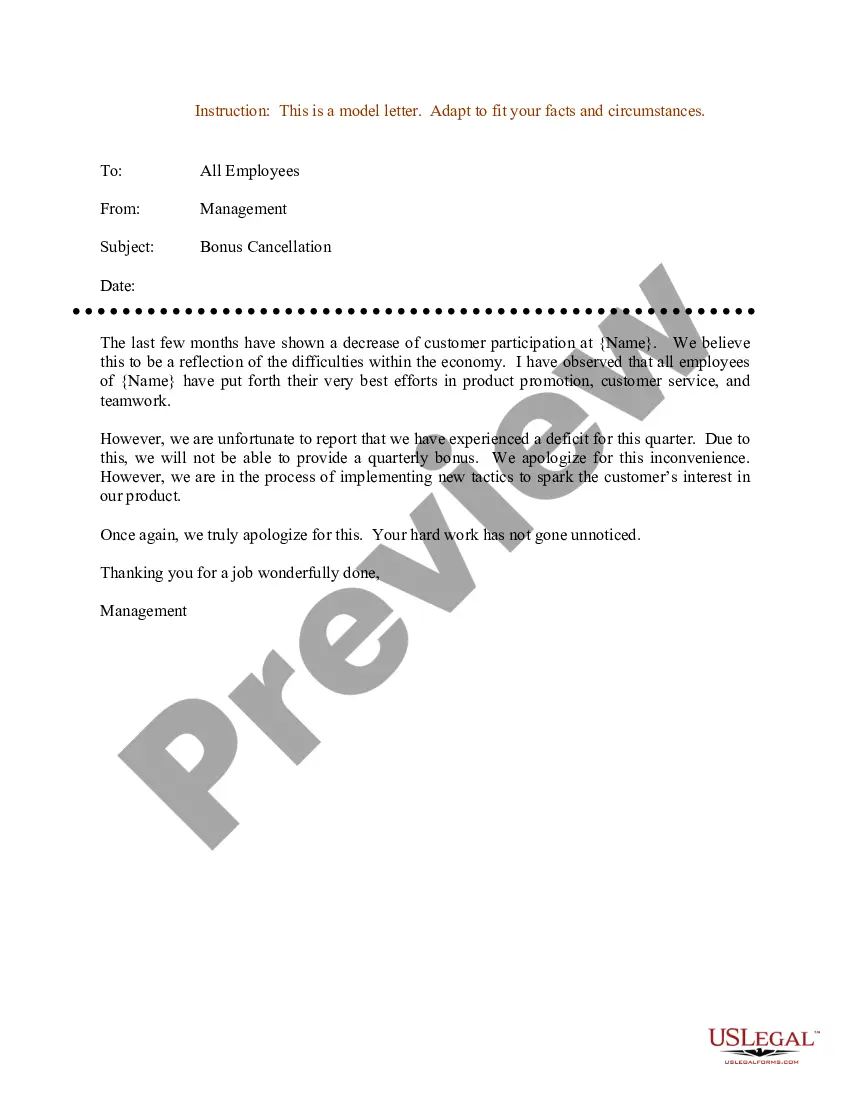
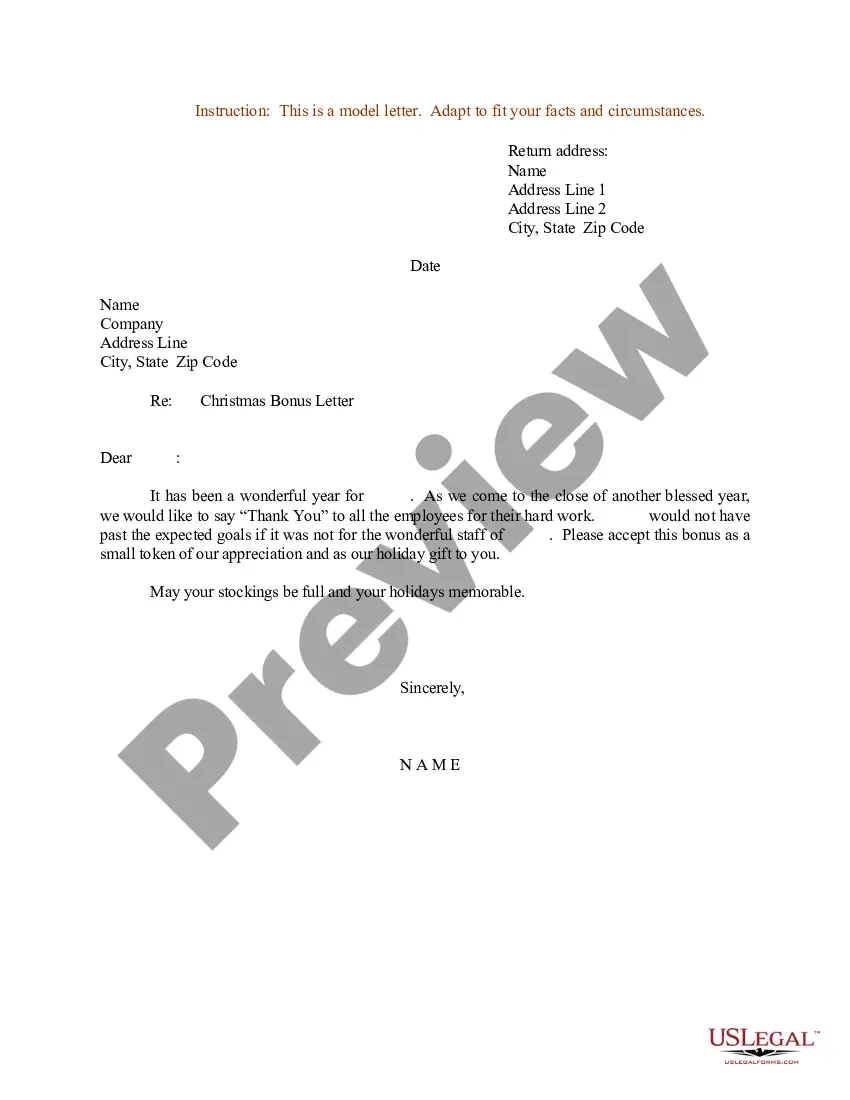
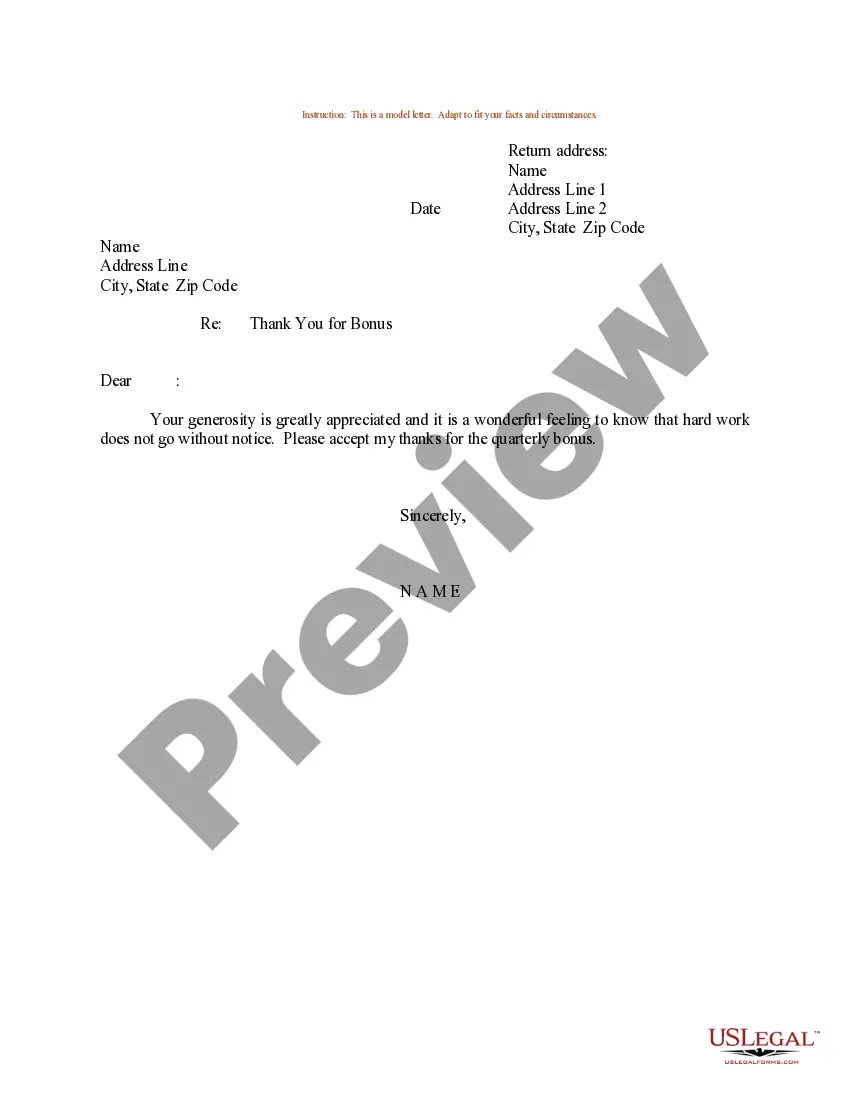
Get your form ready online
Our built-in tools help you complete, sign, share, and store your documents in one place.
Make edits, fill in missing information, and update formatting in US Legal Forms—just like you would in MS Word.
Download a copy, print it, send it by email, or mail it via USPS—whatever works best for your next step.
Sign and collect signatures with our SignNow integration. Send to multiple recipients, set reminders, and more. Go Premium to unlock E-Sign.
If this form requires notarization, complete it online through a secure video call—no need to meet a notary in person or wait for an appointment.
We protect your documents and personal data by following strict security and privacy standards.

Make edits, fill in missing information, and update formatting in US Legal Forms—just like you would in MS Word.

Download a copy, print it, send it by email, or mail it via USPS—whatever works best for your next step.

Sign and collect signatures with our SignNow integration. Send to multiple recipients, set reminders, and more. Go Premium to unlock E-Sign.

If this form requires notarization, complete it online through a secure video call—no need to meet a notary in person or wait for an appointment.

We protect your documents and personal data by following strict security and privacy standards.
Looking for another form?







Form popularity
FAQ
4 tips for how to structure sign-on bonuses Paying a portion upfront and the rest after a probationary period. Paying in installments, with later payments due only if the employee remains for a set period, such as six months or a year.
Performance-based rewards are an incentive that employees receive based on their work-related contributions to the company rather than their time with the company. Performance-based rewards can take many forms, including stock options, bonuses, and salary increases.
Some common examples of performance bonuses include: Commission-based bonus: Common in sales roles, employees earn a percentage of sales they generate. For instance, a car salesperson might earn a commission for each car sold.
One of the most common types of bonus is an annual bonus, which employers give out once a year. Annual bonuses are usually based on your overall performance, although companies who use profit-sharing rewards may distribute bonuses based on company success and profits.
Florida law does not explicitly address the issue of bonuses and wages. Generally, discretionary bonuses are not considered wages, while nondiscretionary bonuses can be considered wages and protected under wage laws.
Organizations may grant goal-based bonuses on a regular basis, such as bi-annually or annually, and use them to incentivize employees to perform well and hit their goals. Example: Employees may receive a goal-based bonus after completing a project or reaching their quota within a set timeline, such as a quarter.
Generally, discretionary bonuses are not considered wages, while nondiscretionary bonuses can be considered wages and protected under wage laws. A nondiscretionary bonus is one where the amount and criteria for getting the bonus are announced in advance.
The typical bonus amount can range from 1% to 15% of an employee's salary, usually depending on a number of factors such as industry, company performance, and individual or team accomplishments. The average bonus for employees continues to rise over time. In 2020, the average employee bonus was only 8.1%.
To devise an effective scheme you need to understand the employee's activities and what is involved. You then need to agree with them how their performance is going to be measured. Consider also what timescale you want to have for you staff to earn the bonus. It can be a monthly, quarterly, or annual bonus.

