Florida Last Will and Testament for Divorced person not Remarried with Adult Children
What this document covers
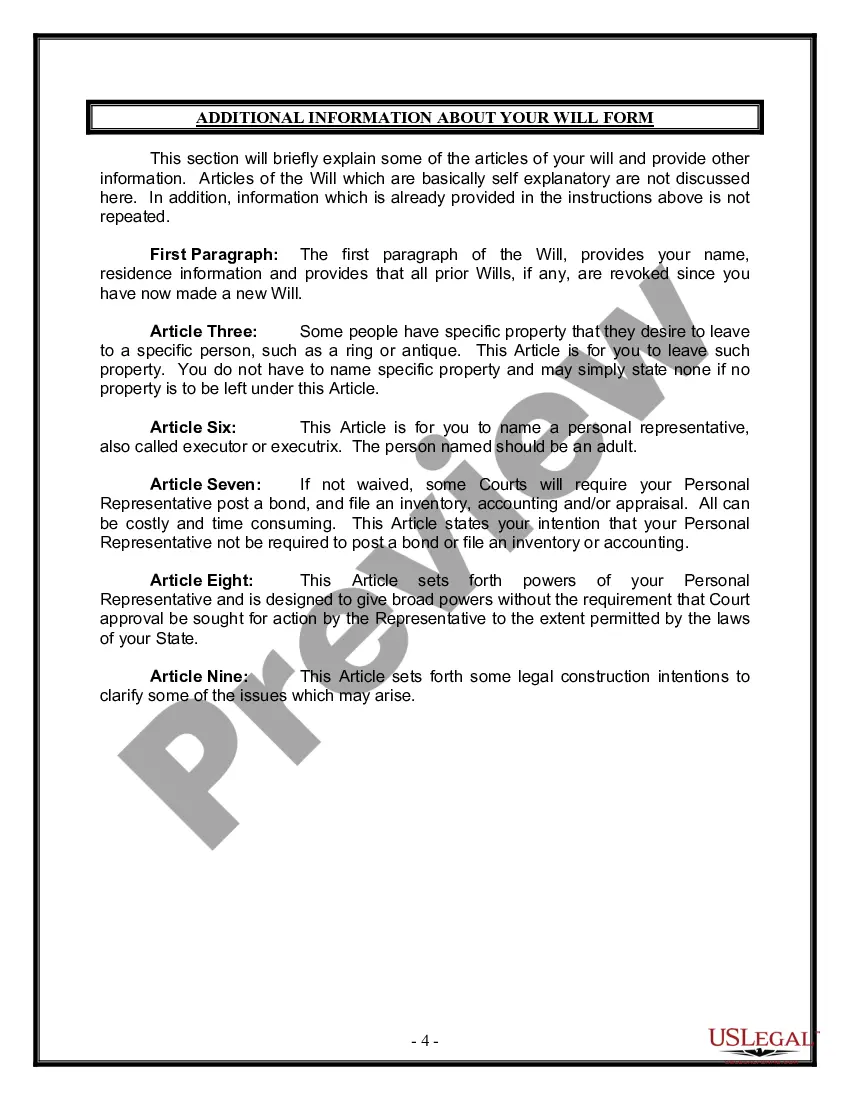
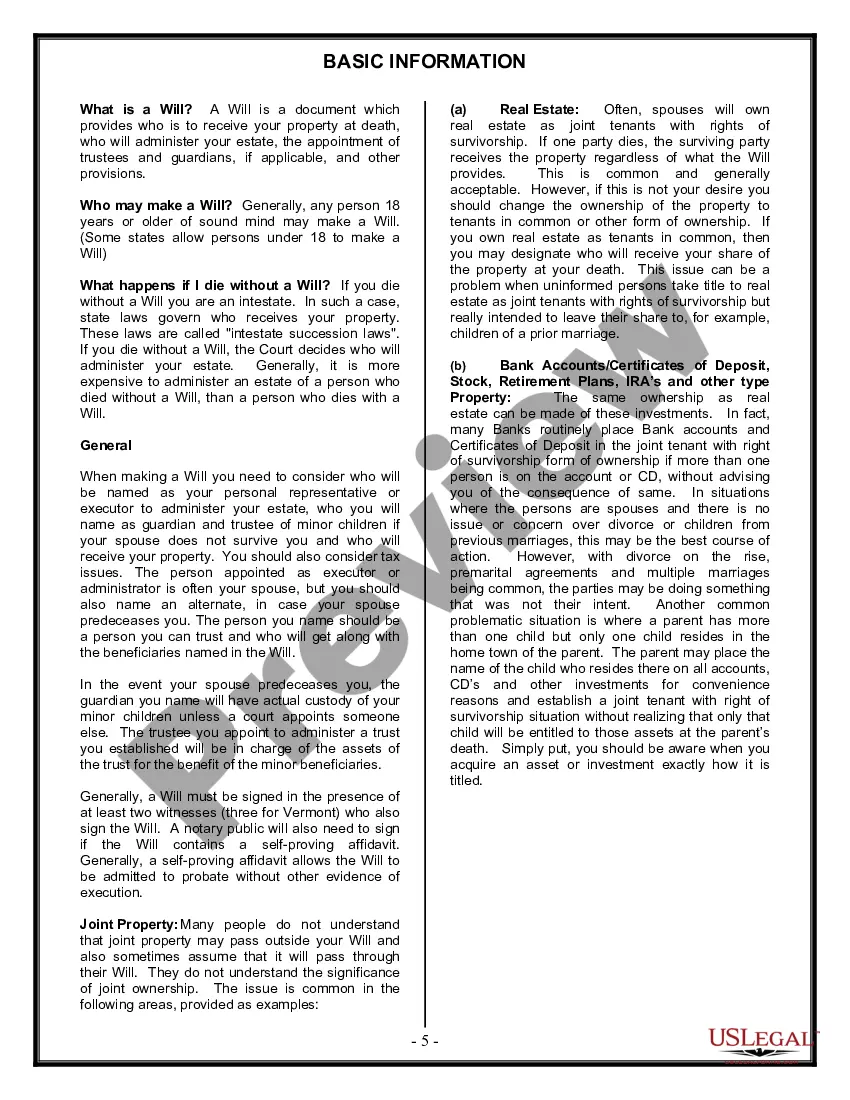
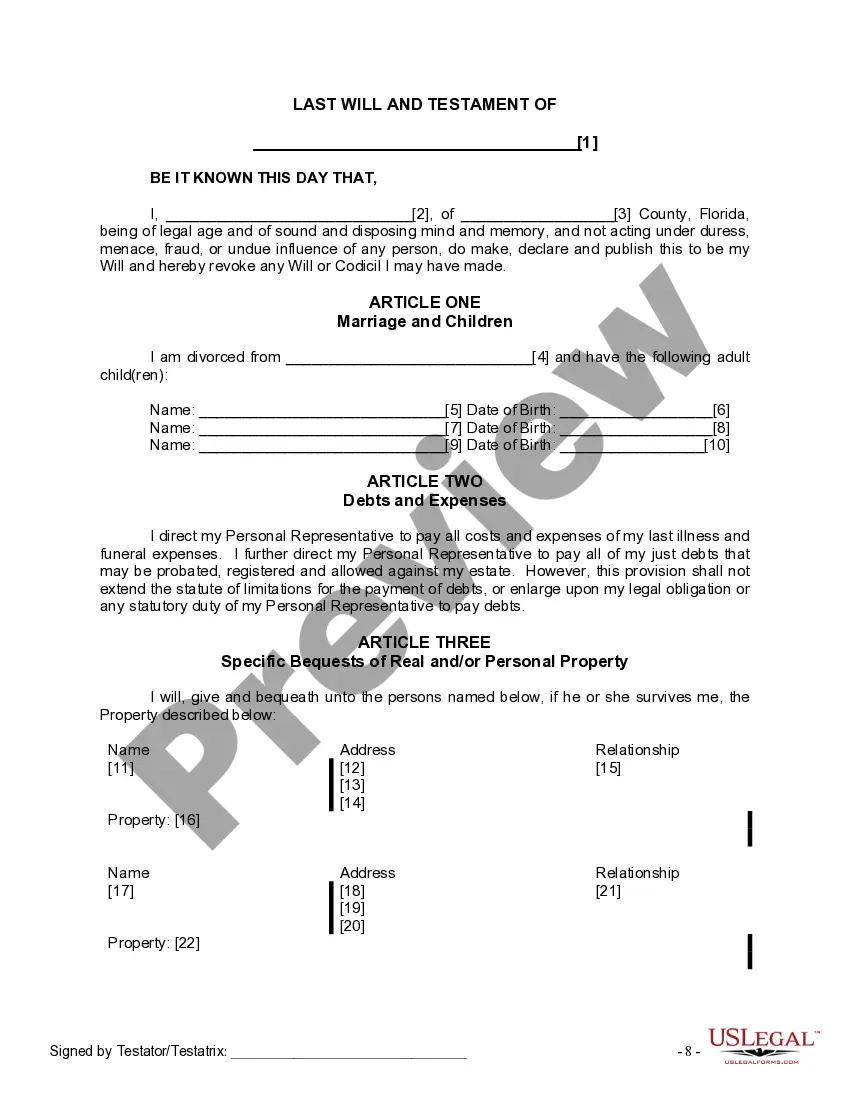
This Last Will and Testament for a divorced person not remarried with adult children is a legal document that outlines how your assets will be distributed after your death. It is specifically tailored for individuals who have undergone a divorce and have adult children, ensuring that your intentions are clear and that your assets are allocated according to your wishes. Unlike other wills, this form takes into account your status as a divorced individual, including provisions that address your unique family dynamics.
Key parts of this document
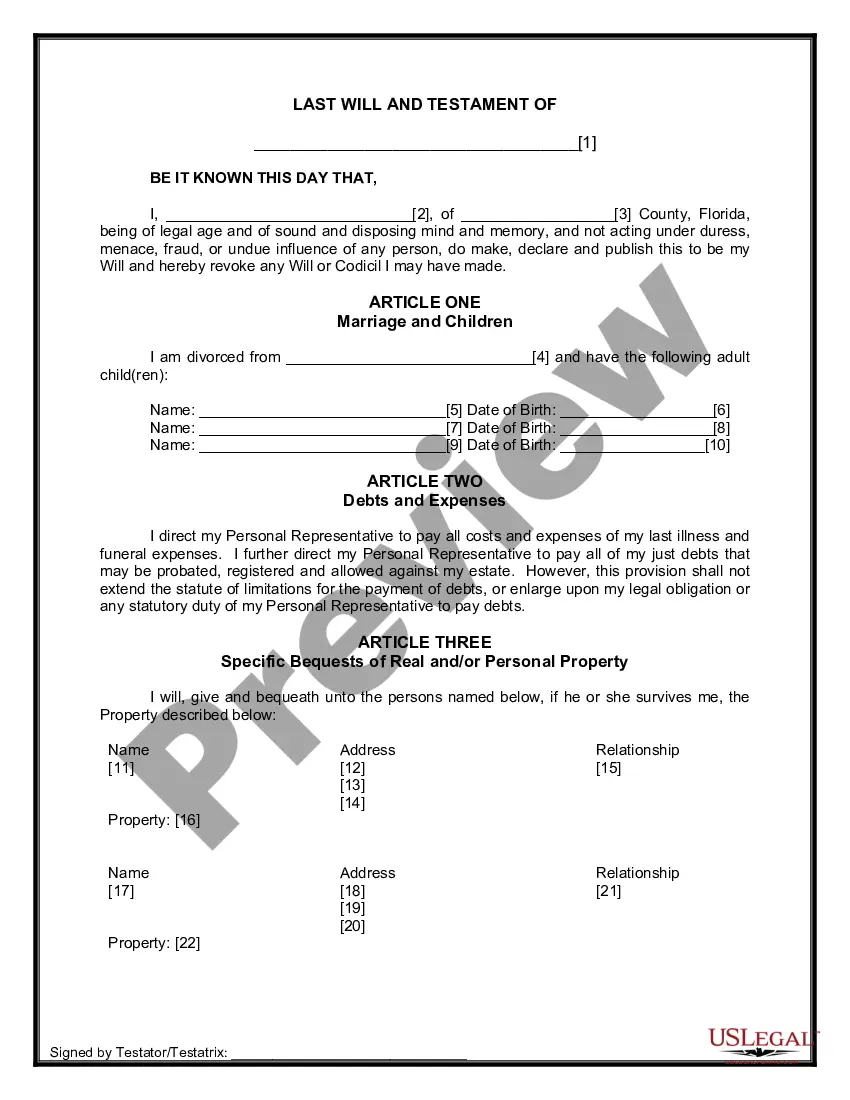
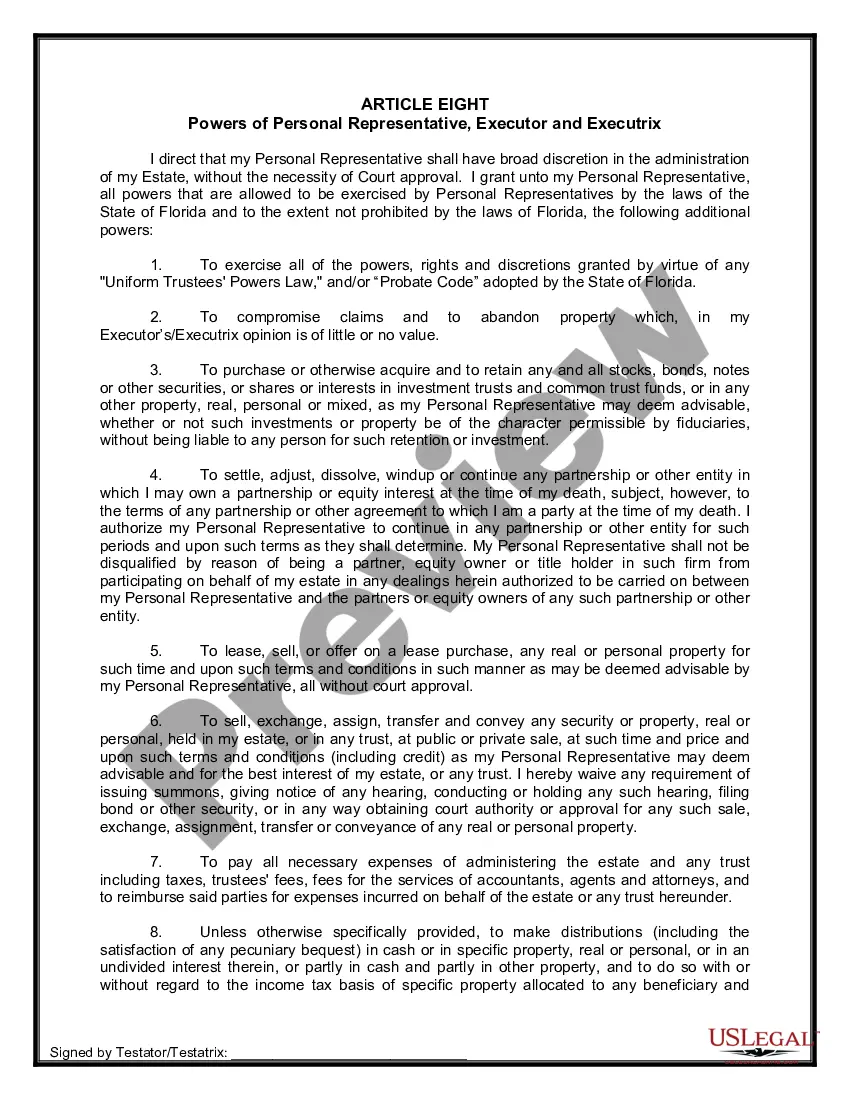
- Appointment of a personal representative to execute your wishes.
- Designation of beneficiaries who will inherit your property.
- Specific bequests of real and personal property to chosen individuals.
- Instructions regarding the distribution of your homestead or primary residence.
- Legal affirmations to ensure the validity and enforcement of the will.





Situations where this form applies
This form should be utilized when you want to establish a clear plan for the distribution of your assets after your passing. It is particularly important if you are divorced, not remarried, and have adult children, allowing you to communicate your final wishes and avoid potential disputes among heirs. You may also need this form to ensure that your estate is managed according to your specific intentions and legal standards.
Intended users of this form
- Individuals who are divorced and not remarried.
- Parents with adult children looking to designate inheritors.
- Anyone wanting to ensure their assets are distributed according to their wishes.
- Persons seeking to avoid disputes among family members after their passing.
How to complete this form
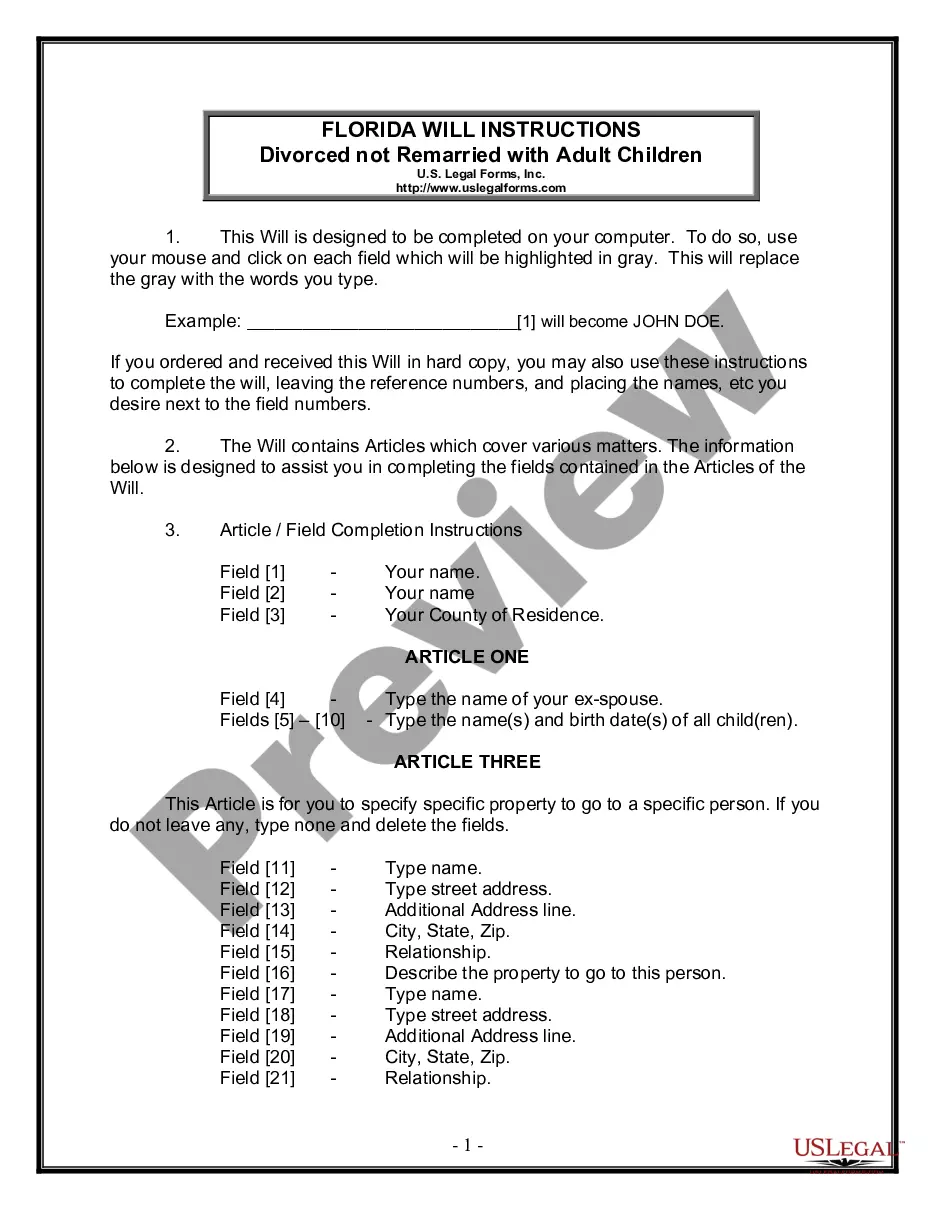
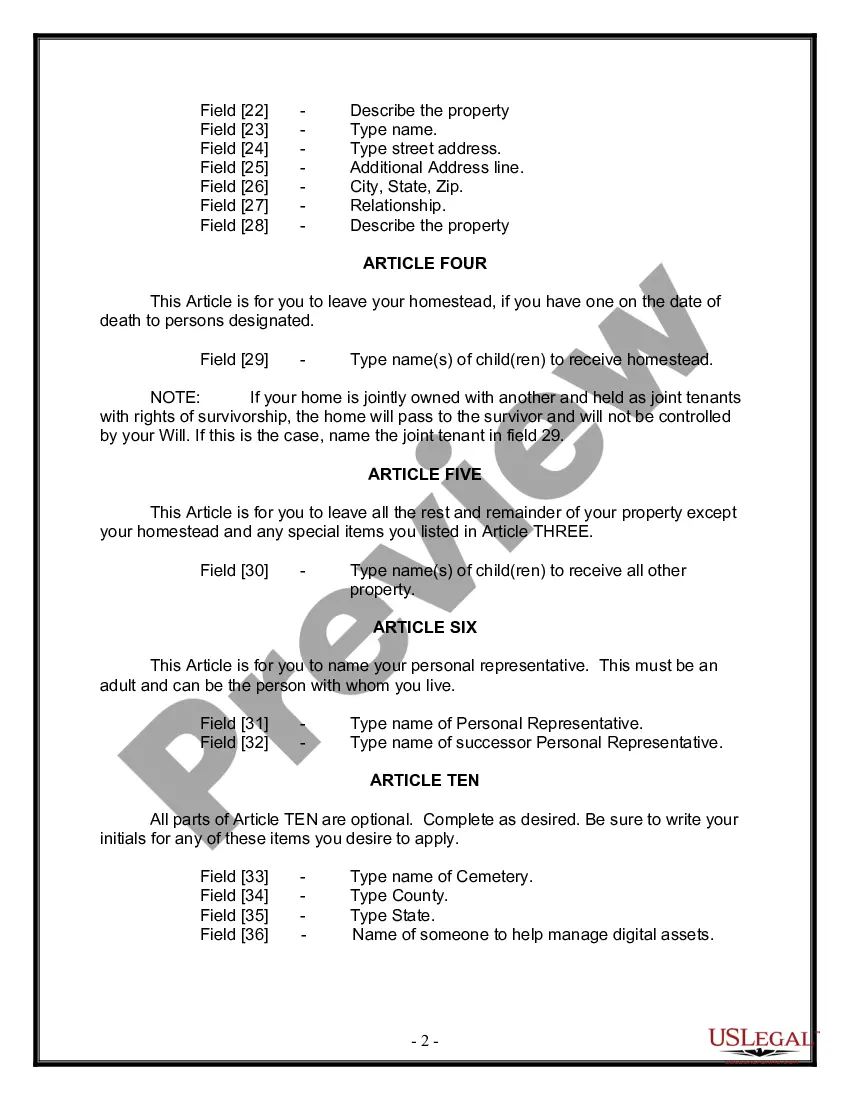
- Enter your full name and county of residence at the beginning of the will.
- Specify your ex-spouse's name and list all your adult children along with their birth dates.
- Designate any specific assets you wish to bequeath to particular individuals.
- Name a personal representative to execute the terms of your will.
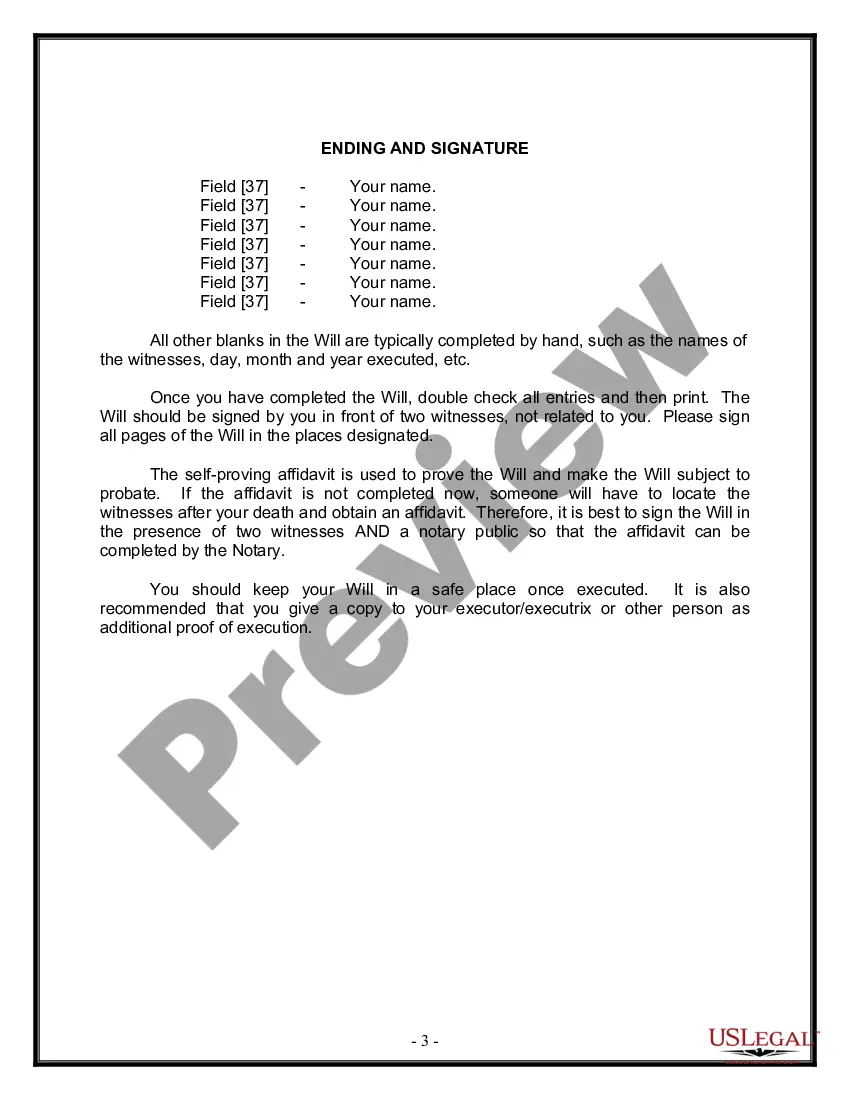
- Sign the will in front of two witnesses and ensure they also sign to validate the document.
Does this document require notarization?
Notarization is required for this form to take effect. Our online notarization service, powered by Notarize, lets you verify and sign documents remotely through an encrypted video session, available 24/7.
Get your form ready online
Our built-in tools help you complete, sign, share, and store your documents in one place.
Make edits, fill in missing information, and update formatting in US Legal Forms—just like you would in MS Word.
Download a copy, print it, send it by email, or mail it via USPS—whatever works best for your next step.
Sign and collect signatures with our SignNow integration. Send to multiple recipients, set reminders, and more. Go Premium to unlock E-Sign.
If this form requires notarization, complete it online through a secure video call—no need to meet a notary in person or wait for an appointment.
We protect your documents and personal data by following strict security and privacy standards.

Make edits, fill in missing information, and update formatting in US Legal Forms—just like you would in MS Word.

Download a copy, print it, send it by email, or mail it via USPS—whatever works best for your next step.

Sign and collect signatures with our SignNow integration. Send to multiple recipients, set reminders, and more. Go Premium to unlock E-Sign.

If this form requires notarization, complete it online through a secure video call—no need to meet a notary in person or wait for an appointment.

We protect your documents and personal data by following strict security and privacy standards.
Avoid these common issues
- Failing to update the will after a divorce.
- Not having the required number of witnesses present during signing.
- Overlooking the importance of detailing specific property bequests.
- Not specifying a successor personal representative.
Advantages of online completion
- Convenience of completing the form online at your own pace.
- Editability allows for easy updates as your circumstances change.
- Access to legally vetted templates prepared by licensed attorneys.
- Quick download options for immediate usage.
Legal use & context
This form is legally enforceable upon proper execution. It is important to follow local laws regarding wills to avoid challenges during the probate process. Ensuring that the will is executed according to state guidelines will help prevent disputes among heirs.
What to keep in mind
- Use this form to clearly articulate your estate planning intentions after divorce.
- Follow the correct legal procedures to ensure your will is enforceable.
- Consider the importance of naming a personal representative for your estate management.
- Update your will as family circumstances change to keep it relevant.
Looking for another form?

Form popularity
FAQ
In the context of inheritance, children typically have rights that cannot be easily overridden by a spouse in Florida. According to law, minor children are entitled to a portion of their parent's estate, regardless of the spouse's claims. Creating a comprehensive Florida Last Will and Testament for Divorced person not Remarried with Adult Children ensures that you clearly outline the distribution of your estate, considering both your children's and your spouse's rights. This helps prevent disputes and clarifies your intentions.
In Florida, both parents generally share equal rights regarding their children after a divorce. However, custody arrangements can differ based on individual circumstances, including the child’s best interests. When creating a Florida Last Will and Testament for Divorced person not Remarried with Adult Children, you can specify guardianship and other provisions to reflect your desires. It is important to consult with an attorney to establish a clear understanding of your parental rights.
A Florida Last Will and Testament for Divorced person not Remarried with Adult Children does not automatically override divorce papers. If the will was created before the divorce, certain provisions concerning the ex-spouse may be revoked or altered by the divorce decree. In these cases, it is crucial to review your will to ensure it aligns with your current wishes and circumstances. Consulting with a legal professional can help clarify these nuances, ensuring your estate plan is up-to-date.
In most cases, your ex-wife cannot claim your inheritance if it is not included in the Florida Last Will and Testament for Divorced person not Remarried with Adult Children. Florida law generally protects inherited assets from being divided in a divorce unless they have been co-mingled with marital property. However, it's advisable to consult an estate planning professional to navigate any complexities regarding your specific situation and ensure your inheritance is safeguarded.
In Florida, the rights of a spouse and adult child can vary depending on the circumstances of the Last Will and Testament. Generally, a spouse has certain statutory rights, such as the right to receive a portion of the estate, even if excluded in the will. However, adult children are beneficiaries if named in the Florida Last Will and Testament for Divorced person not Remarried with Adult Children. It's crucial to understand these rights to ensure your estate is distributed as you wish.
In Florida, during a divorce, the assets owned by you prior to the marriage, including inheritances, typically remain your property. However, if you commingle your inheritance with marital assets, your ex-spouse may have a claim. It is advisable to establish a clear Florida Last Will and Testament for Divorced person not Remarried with Adult Children to ensure your wishes are honored and your estate is protected.
A divorce agreement does not automatically override a will in Florida. However, certain parts of your will related to your ex-spouse may become void after the divorce. For those with a Florida Last Will and Testament for Divorced person not Remarried with Adult Children, it is important to update your will to reflect any changes according to your divorce agreement.
In Florida, to create a valid last will and testament, the document must be in writing, signed by the testator, and witnessed by at least two individuals. These witnesses cannot be beneficiaries who would inherit from the will. When preparing your Florida Last Will and Testament for Divorced person not Remarried with Adult Children, ensure it meets these legal requirements for it to be enforceable.
A will can be voided in Florida for several reasons, including not following the necessary signing and witnessing requirements. Additionally, if a testator revokes a will through another legal document or by destroying it, that will becomes invalid. It is essential to create a Florida Last Will and Testament for Divorced person not Remarried with Adult Children that complies with state laws to avoid any complications.
In Florida, spousal inheritance laws grant a surviving spouse rights to a portion of the estate when one partner dies without a will. This law helps ensure that a surviving spouse is financially protected. However, for those with a Florida Last Will and Testament for Divorced person not Remarried with Adult Children, it is vital to clarify your wishes since divorce can modify these rights.