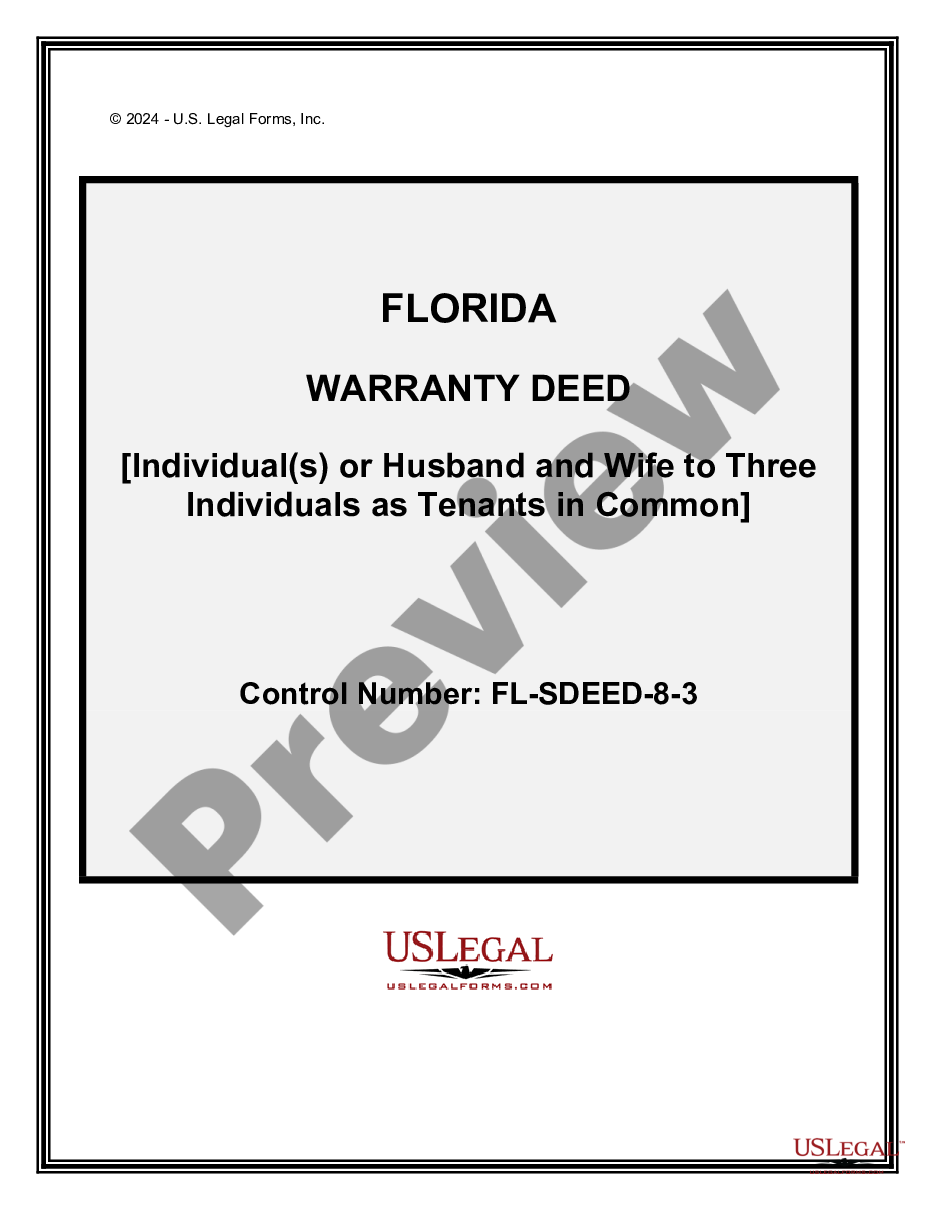
Florida Warranty Deed from Individuals or Husband and Wife to Individuals (3) as Tenants in Common
Overview of this form
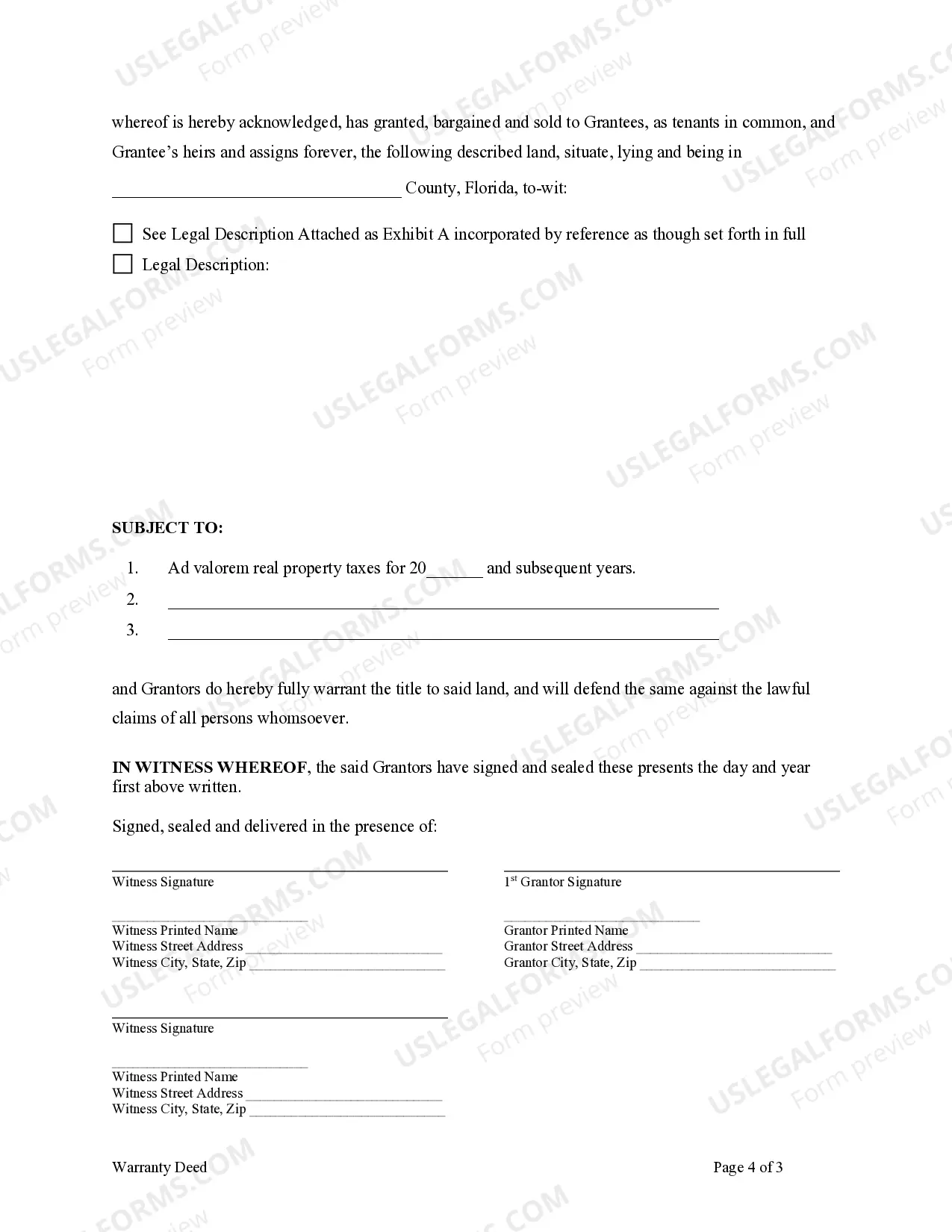
The Warranty Deed from Individuals or Husband and Wife to Individuals (3) as Tenants in Common is a legal document that transfers property ownership from individuals or a couple to three other individuals. This form establishes that the grantees will hold the property as tenants in common, ensuring that each party has distinct shares in the ownership. This differs from other types of deeds, such as joint tenancy, by not including the right of survivorship, which allows the property to pass directly to the remaining tenants upon one owner's death.
Key parts of this document
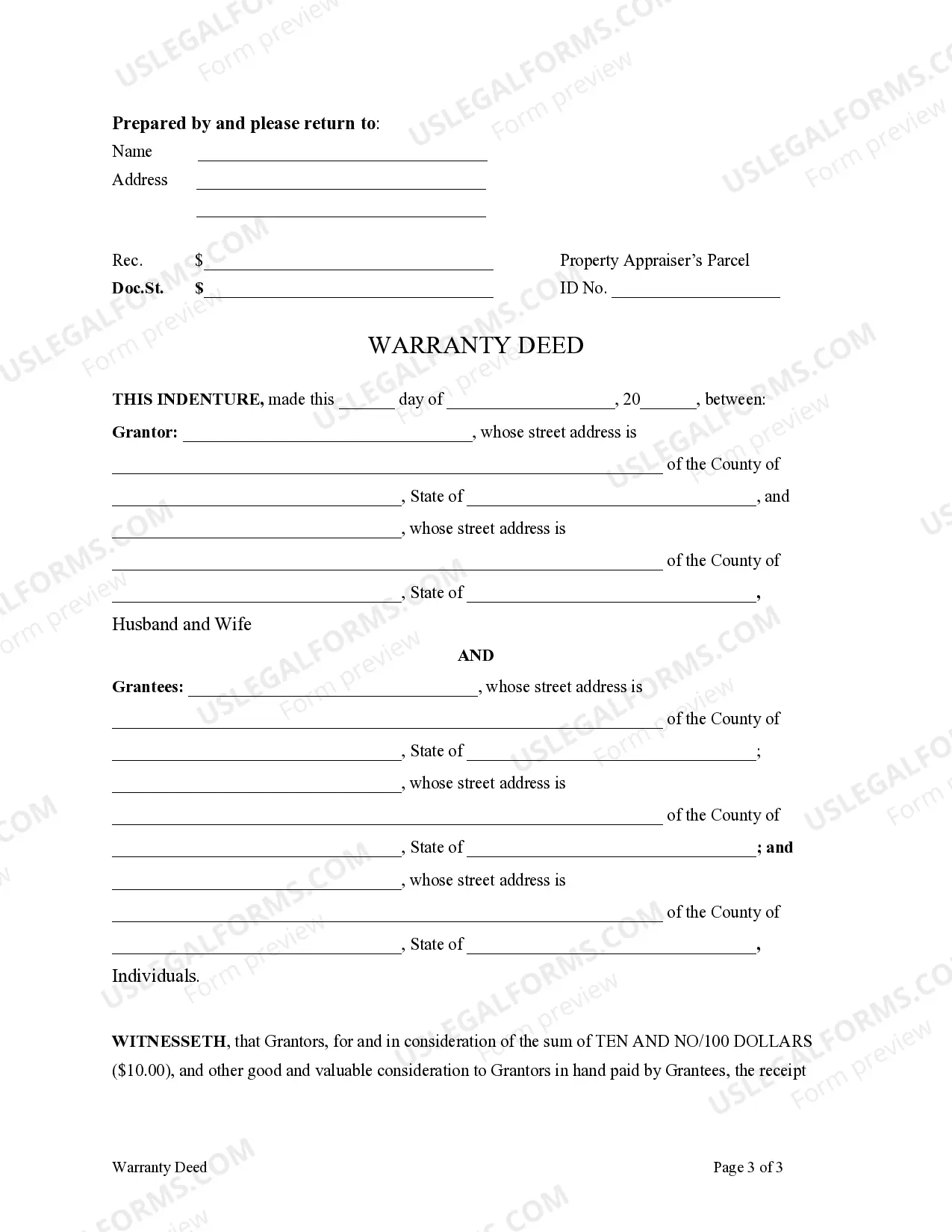
- Names of grantors and grantees: Identifies the current property owners and the new owners.
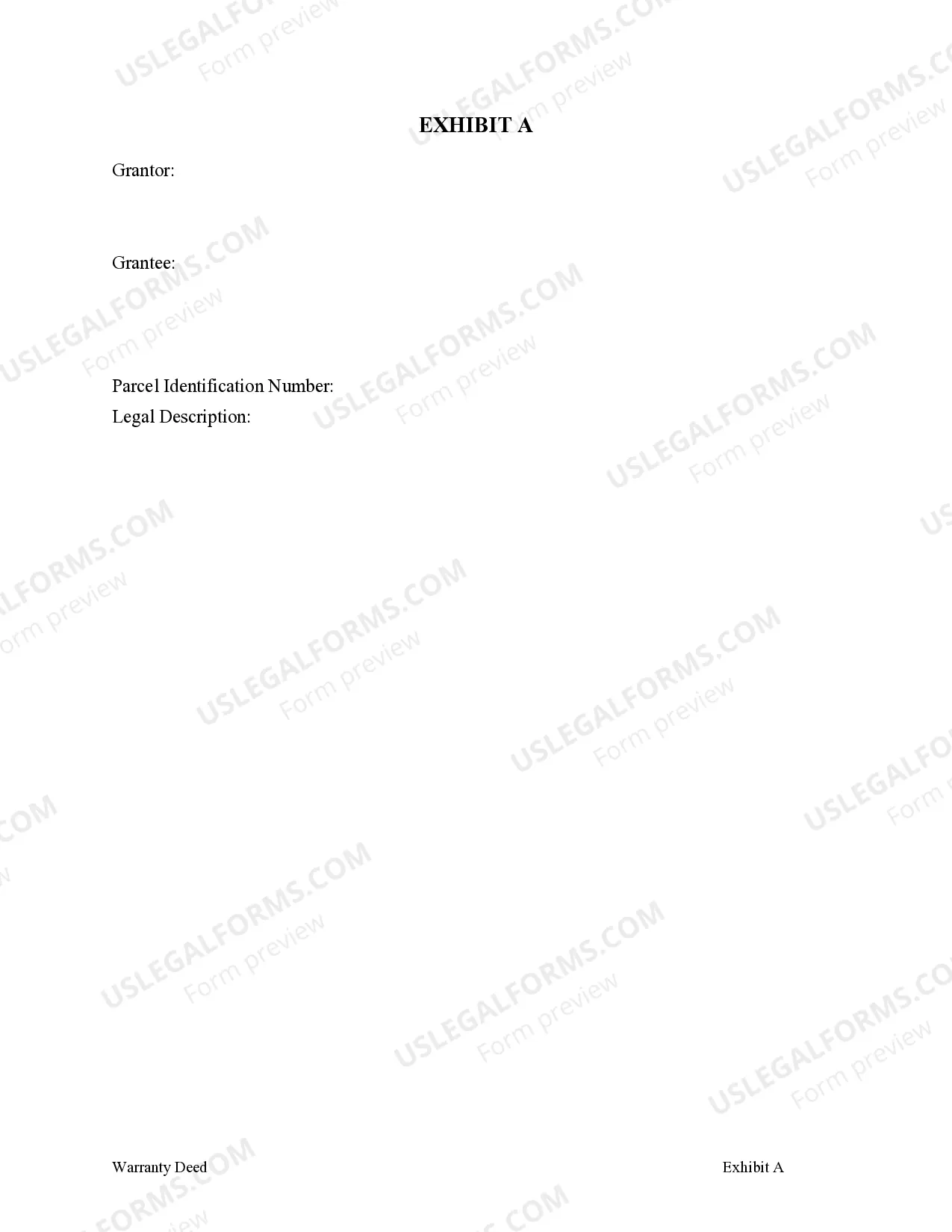
- Description of the property: Provides a detailed account of the property being transferred.
- Terms of ownership: Specifies that the grantees will hold the property as tenants in common.
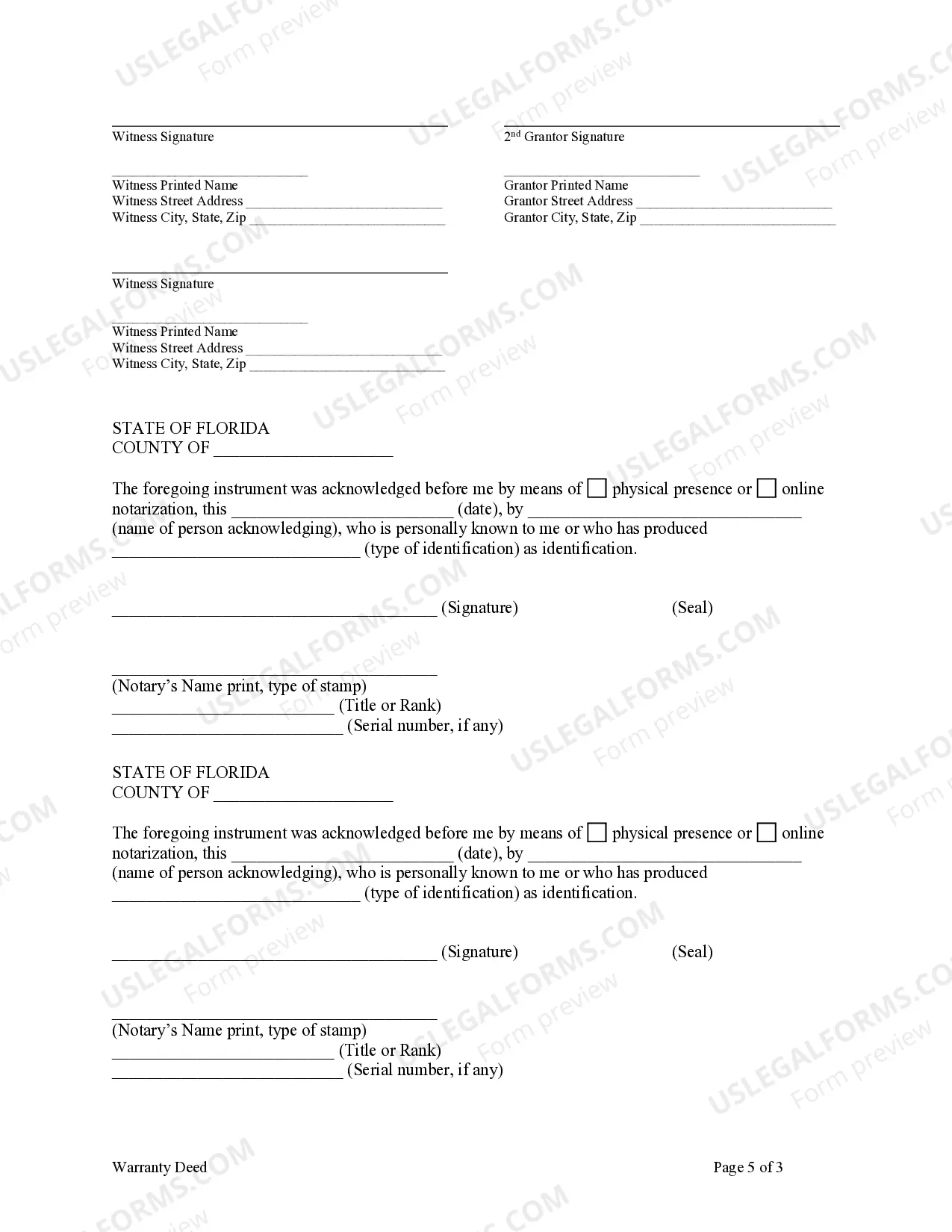
- Signatures: Requires the grantors to sign the document for it to be valid.
- Date of execution: Indicates when the deed is signed and effective.


When to use this form
This form should be used when an individual or couple wishes to transfer property to three different individuals, allowing them to own the property as tenants in common. It is particularly useful in situations involving family property transfers, investments among friends, or estate planning where distinct shares of ownership are preferred without survivorship rights.
Who can use this document
- Individuals transferring property ownership to multiple other individuals.
- Couples providing their property title to three different people.
- Anyone wanting to establish a tenants in common agreement for shared ownership of real estate.
Completing this form step by step
- Identify the parties: Clearly enter the names of the grantors and grantees involved.
- Specify the property: Describe the property being transferred in detail.
- Enter ownership terms: Indicate that the new owners will hold the property as tenants in common.
- Include the date: Provide the date on which the form is executed.
- Obtain signatures: Ensure that all grantors sign the document to validate the transfer.
Is notarization required?
This form does not typically require notarization unless specified by local law. However, it may be advisable to have the form notarized to ensure its acceptance for recording by the county.
Get your form ready online
Our built-in tools help you complete, sign, share, and store your documents in one place.
Make edits, fill in missing information, and update formatting in US Legal Forms—just like you would in MS Word.
Download a copy, print it, send it by email, or mail it via USPS—whatever works best for your next step.
Sign and collect signatures with our SignNow integration. Send to multiple recipients, set reminders, and more. Go Premium to unlock E-Sign.
If this form requires notarization, complete it online through a secure video call—no need to meet a notary in person or wait for an appointment.
We protect your documents and personal data by following strict security and privacy standards.

Make edits, fill in missing information, and update formatting in US Legal Forms—just like you would in MS Word.

Download a copy, print it, send it by email, or mail it via USPS—whatever works best for your next step.

Sign and collect signatures with our SignNow integration. Send to multiple recipients, set reminders, and more. Go Premium to unlock E-Sign.

If this form requires notarization, complete it online through a secure video call—no need to meet a notary in person or wait for an appointment.

We protect your documents and personal data by following strict security and privacy standards.
Common mistakes to avoid
- Failing to include all grantor and grantee names correctly.
- Omitting the legal description of the property.
- Not specifying the ownership terms clearly.
- Signing the document without a witness or notary when required.
Benefits of completing this form online
- Convenience: Access and fill out the form from anywhere at any time.
- Editability: Make changes quickly without needing a new document.
- Reliability: Receive forms drafted by licensed attorneys with legal validity.
Legal use & context
- This warranty deed provides legal protection for the property owners by clearly establishing the terms of ownership.
- It is enforceable in court as long as it is completed correctly and adheres to state laws.
- Any inconsistencies in the form may lead to disputes among the owners, so accuracy is crucial.
What to keep in mind
- A Warranty Deed allows for the transfer of property to multiple individuals as tenants in common.
- It is important to fill out the form accurately to avoid potential legal issues.
- Familiarize yourself with state-specific requirements before executing the deed.
Looking for another form?




Form popularity
FAQ
To fill out a Florida Warranty Deed from Individuals or Husband and Wife to Individuals (3) as Tenants in Common, start by identifying the granter(s) and grantee(s) clearly. Include the legal description of the property, which can usually be found on previous deeds or tax documents. Sign the document in the presence of a notary public, as Florida law requires notarization to validate the deed. Finally, submit the completed deed to the county recorder's office for official recording, ensuring all parties involved are aware of the updated ownership status.
One significant disadvantage of joint tenancy ownership is the lack of control over your share of the property after death. Joint tenants cannot will their share to someone else; it automatically passes to the surviving joint tenant. In contrast, the Florida Warranty Deed from Individuals or Husband and Wife to Individuals (3) as Tenants in Common provides more freedom, allowing each owner to transfer their share as they see fit. If you're uncertain which option suits you best, consider consulting with a legal expert.
Many married couples choose to hold property as joint tenants due to the advantages it offers, including automatic transfer of ownership upon death. However, not all couples opt for this method; some prefer to create a Florida Warranty Deed from Individuals or Husband and Wife to Individuals (3) as Tenants in Common. This choice allows for greater flexibility, particularly when planning for heirs. It's essential to discuss your specific needs with a legal professional.
Joint tenancy in Florida allows two or more individuals to own property together, with each having equal rights to the property. A vital feature is the right of survivorship, which means that when one owner dies, their share is automatically transferred to the surviving owner or owners. If you're considering a Florida Warranty Deed from Individuals or Husband and Wife to Individuals (3) as Tenants in Common, be aware that this option does not include the same survivorship rights as joint tenancy.
In Florida, the right of survivorship is not automatic for every type of ownership. It applies specifically to joint tenancy, not to tenants in common. When you create a Florida Warranty Deed from Individuals or Husband and Wife to Individuals (3) as Tenants in Common, each party owns their share independently. This means if one owner passes away, their share does not automatically transfer to the other owners.
In Florida, husbands and wives are not automatically joint tenants unless specified in the deed. When creating a Florida Warranty Deed from Individuals or Husband and Wife to Individuals (3) as Tenants in Common, you can choose the type of ownership that best suits your needs. This means couples can opt for joint tenancy or decide to be tenants in common based on their individual preferences for property rights and transferability. It’s essential to clarify your intentions in the deed to avoid misunderstandings.
Tenancy in common and joint tenancy have distinct legal ramifications. In tenants in common, each co-owner can sell or pass on their share independently, whereas, in joint tenancy, the entire property passes automatically to the surviving owners upon death. When considering a Florida Warranty Deed from Individuals or Husband and Wife to Individuals (3) as Tenants in Common, remember this can provide more control over individual shares, making it a preferred choice for many.
In Florida, both spouses do not have to be on the deed. Although many couples choose to include both partners on a Florida Warranty Deed from Individuals or Husband and Wife to Individuals (3) as Tenants in Common, it's not legally required. One spouse can solely hold title if they choose. This flexibility can be beneficial for various personal and financial situations.
The key difference lies in ownership rights. Joint tenancy involves equal shares and rights of survivorship, while tenants in common can own differing percentages of the property. This means in a Florida Warranty Deed from Individuals or Husband and Wife to Individuals (3) as Tenants in Common, each tenant can designate their share to heirs, rather than having it automatically go to co-owners. This distinction can significantly impact estate plans.
No, joint tenancy is not the same as tenants in common in Florida. While both involve multiple owners, joint tenancy includes the right of survivorship, meaning if one owner dies, their share automatically passes to the remaining owners. On the other hand, in a Florida Warranty Deed from Individuals or Husband and Wife to Individuals (3) as Tenants in Common, each owner can transfer their interest without consent from others. Understanding these differences is crucial for proper estate planning.