Florida Revocation of Power of Attorney for Care and Custody of Child or Children
What this document covers
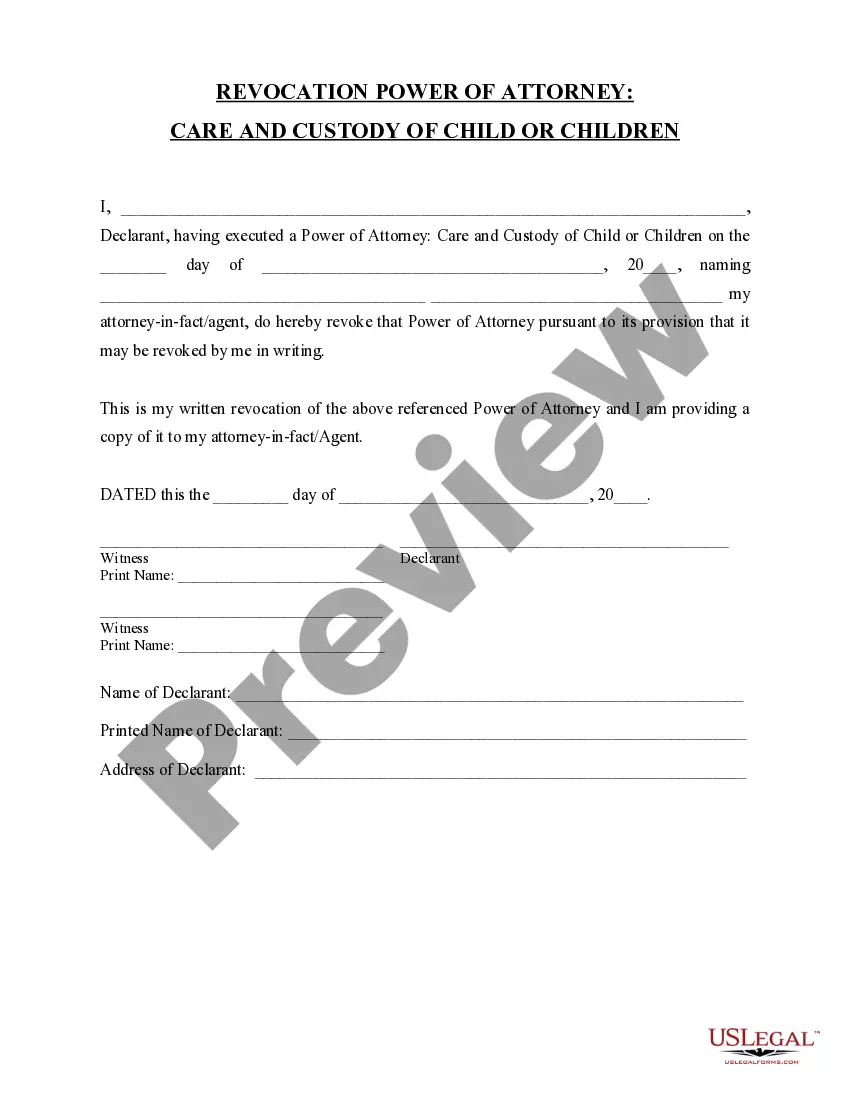
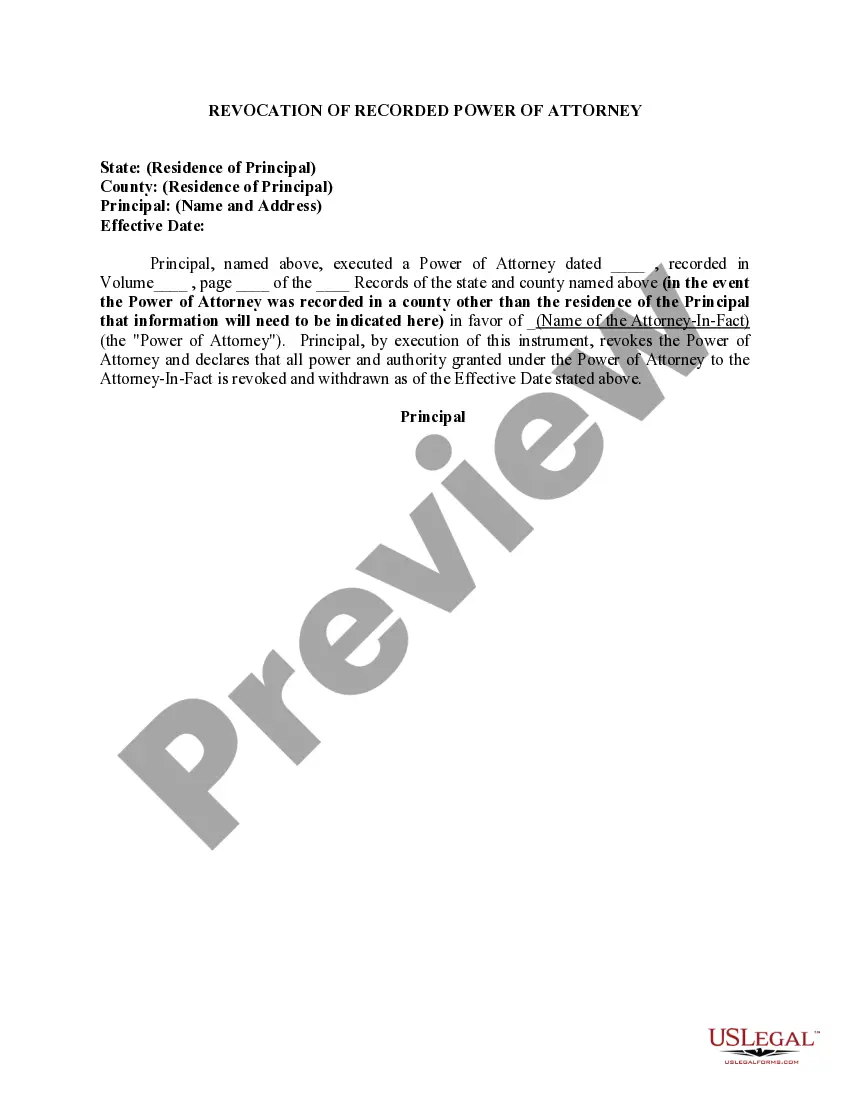
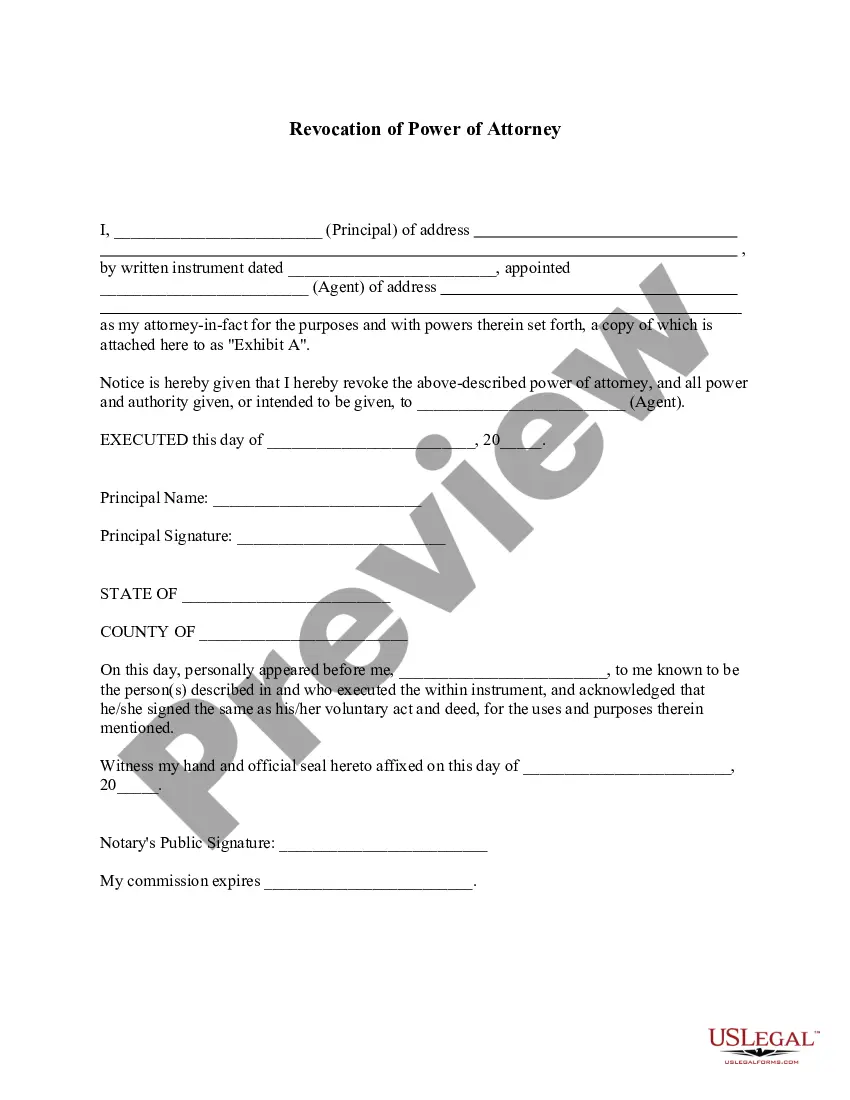
The Revocation of Power of Attorney for Care and Custody of Child or Children is a legal document used to formally cancel a previously granted power of attorney regarding the care and custody of children. Unlike other forms of power of attorney, this document specifically addresses the authority granted to an individual to make decisions about a child's upbringing. By completing this form, the principal clearly communicates the revocation to the designated attorney-in-fact or agent, ensuring all parties are aware of the change.
Form components explained
- Declarant's name and details
- Date of the original power of attorney execution
- Name of the attorney-in-fact or agent being revoked
- Statement of revocation
- Signatures of the declarant and witnesses
When to use this form
This form is necessary when the person who granted the power of attorney (the principal) wishes to terminate that authority over the care and custody of their child or children. Common situations include changes in family dynamics, such as divorce, relocation, or when the principal believes that the attorney-in-fact is no longer suitable for the role.
Who can use this document
- Parents or legal guardians who have previously granted a power of attorney for child custody
- Individuals seeking to regain full control over their child's care and decisions
- Anyone involved in the child's welfare who needs to revoke a previously assigned authority
How to prepare this document
- Identify the declarant by filling in their full name.
- Enter the date when the original power of attorney was signed.
- Specify the name of the attorney-in-fact or agent whose authority is being revoked.
- State the revocation clearly in the provided section.
- Sign the document in front of witnesses, ensuring all required signatures are obtained.
Notarization guidance
To make this form legally binding, it must be notarized. Our online notarization service, powered by Notarize, lets you verify and sign documents remotely through an encrypted video session.
Get your form ready online
Our built-in tools help you complete, sign, share, and store your documents in one place.
Make edits, fill in missing information, and update formatting in US Legal Forms—just like you would in MS Word.
Download a copy, print it, send it by email, or mail it via USPS—whatever works best for your next step.
Sign and collect signatures with our SignNow integration. Send to multiple recipients, set reminders, and more. Go Premium to unlock E-Sign.
If this form requires notarization, complete it online through a secure video call—no need to meet a notary in person or wait for an appointment.
We protect your documents and personal data by following strict security and privacy standards.

Make edits, fill in missing information, and update formatting in US Legal Forms—just like you would in MS Word.

Download a copy, print it, send it by email, or mail it via USPS—whatever works best for your next step.

Sign and collect signatures with our SignNow integration. Send to multiple recipients, set reminders, and more. Go Premium to unlock E-Sign.

If this form requires notarization, complete it online through a secure video call—no need to meet a notary in person or wait for an appointment.

We protect your documents and personal data by following strict security and privacy standards.
Common mistakes to avoid
- Failing to include the date of the original power of attorney.
- Not providing complete and accurate names of all parties involved.
- Omitting witness signatures, which may invalidate the form.
Benefits of completing this form online
- Convenient access to legally vetted templates at any time.
- Editable forms that can be customized to fit individual needs.
- Reliable and secure options for ensuring legal compliance.
Legal use & context
- This form serves as a legal record of the revocation, protecting the declarant's rights.
- It ensures that any prior custodial authority is legally terminated.
- Failure to revoke properly may result in unintentional custody complications.
Key takeaways
- The Revocation of Power of Attorney is essential to regain custody rights over children.
- Understanding when and how to use the form can prevent legal issues.
- Always keep copies of signed documents for your records.
Looking for another form?
Form popularity
FAQ
When writing a letter to revoke a power of attorney, start by stating your full name and any identifying details about the power of attorney you previously issued. Clearly mention that you are revoking the Florida Revocation of Power of Attorney for Care and Custody of Child or Children, and include the date the previous authority was granted. Finally, sign and date the letter, and distribute copies to the agent and any necessary third parties to ensure your wishes are respected.
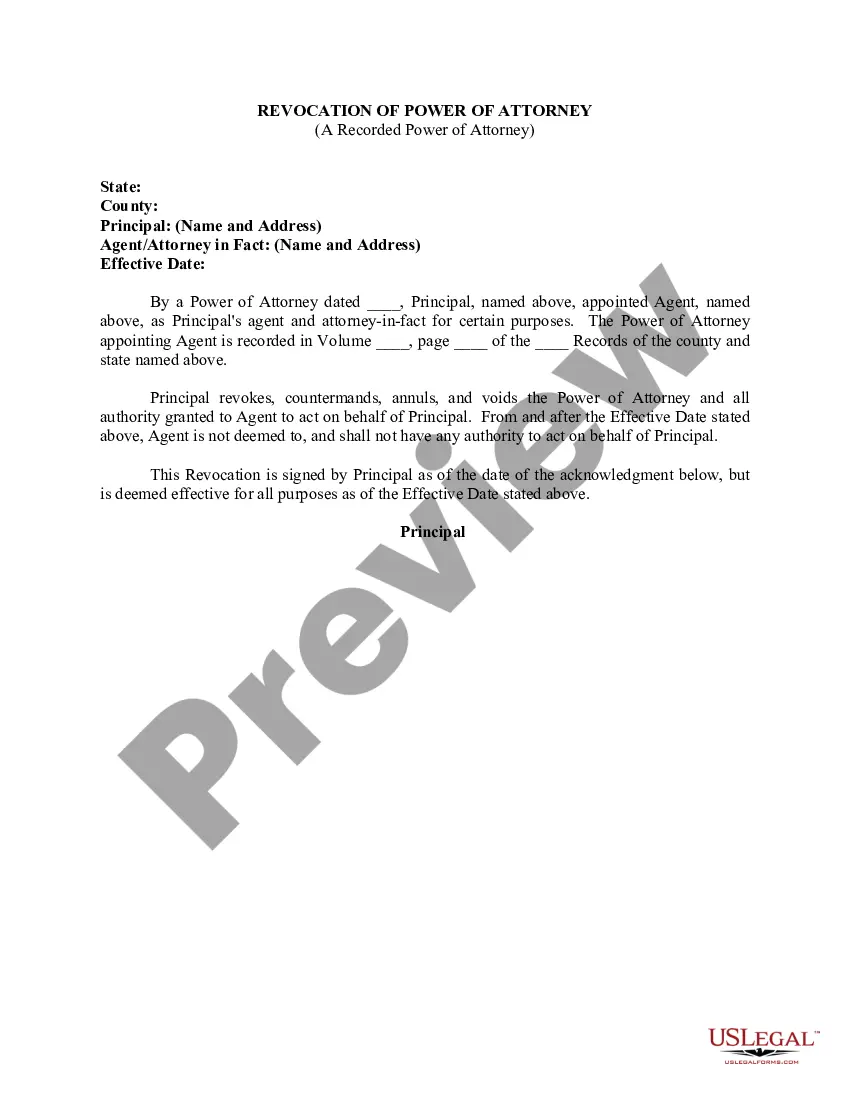
To notice a revocation of power of attorney in Florida, you should prepare a formal document that clearly states your intention to revoke the authority granted to the agent. This document should include your name, the name of the agent, and a declaration that you are revoking the Florida Revocation of Power of Attorney for Care and Custody of Child or Children. Once completed, ensure that you deliver this notice to your agent and any relevant parties, such as healthcare providers or legal entities, to inform them of the change.
A revocation clause is a specific statement included in a legal document that outlines when and how the power of attorney is to be revoked. For instance, a clause might state that the power of attorney is revoked upon the principal’s written notice or the principal’s incapacity. Including a clear revocation clause is beneficial in establishing a smooth transition when executing a Florida Revocation of Power of Attorney for Care and Custody of Child or Children.
A notice of revocation can be a formal letter directed to the agent, indicating the principal’s decision to revoke powers previously granted. The notice should specify the details of the original power of attorney, alongside the principal’s signature and date. Proper notice is crucial in the context of the Florida Revocation of Power of Attorney for Care and Custody of Child or Children, ensuring all parties are informed and legal matters are resolved.
An example of a revocation would be a principal drafting a written document stating that the previous power of attorney is no longer in effect, clearly outlining their decision. This document should include the date and signature of the principal. This action directly relates to the Florida Revocation of Power of Attorney for Care and Custody of Child or Children, ensuring that your wishes are communicated accurately.
The three types of revocation include explicit revocation, implicit revocation, and statutory revocation. Explicit revocation occurs when the principal clearly states their intent to revoke the power of attorney. Implicit revocation happens through actions that contradict the authority granted, while statutory revocation is defined by law under specific circumstances. Knowing these types can help you navigate the Florida Revocation of Power of Attorney for Care and Custody of Child or Children effectively.
In Florida, the principal, or the individual who granted the power of attorney, holds the authority to override or revoke the power of attorney. Additionally, a court can also intervene if the principal is deemed incapacitated. It is crucial to understand that any changes made should be documented properly to ensure the authority reflects your intentions regarding the Florida Revocation of Power of Attorney for Care and Custody of Child or Children.
You do not necessarily need a lawyer to revoke a power of attorney in Florida, as the process can be straightforward. However, consulting a legal expert can help you understand the nuances of the Florida Revocation of Power of Attorney for Care and Custody of Child or Children. Engaging a lawyer can ensure that all legal requirements are met, preventing potential disputes later. Using platforms like uslegalforms can also guide you through the revocation process effectively.
Writing a revocation of power of attorney requires clear and direct language. You should include your name, the name of the Power of Attorney, and a statement indicating your intent to revoke their authority. It's essential to sign and date the document to make it effective. For assistance in drafting this document, consider using uslegalforms to ensure compliance with Florida laws regarding Florida Revocation of Power of Attorney for Care and Custody of Child or Children.
A Power of Attorney cannot make decisions about a person’s healthcare if they have not been granted that authority. Additionally, they cannot change the principal's will or make decisions that go against the principal's best interests. This limitation ensures a level of personal autonomy is maintained, especially during the process of Florida Revocation of Power of Attorney for Care and Custody of Child or Children.