Florida Landlord Notices for Eviction / Unlawful Detainer Forms Package
Overview of this form package
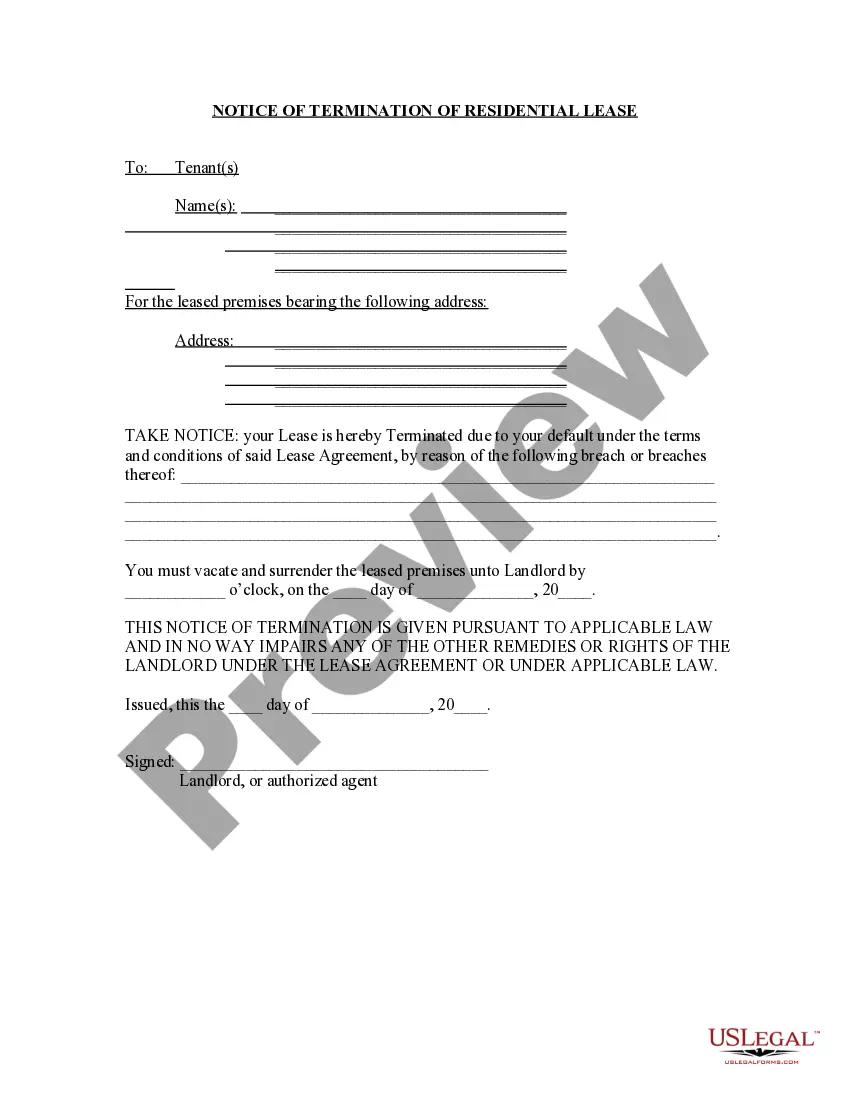
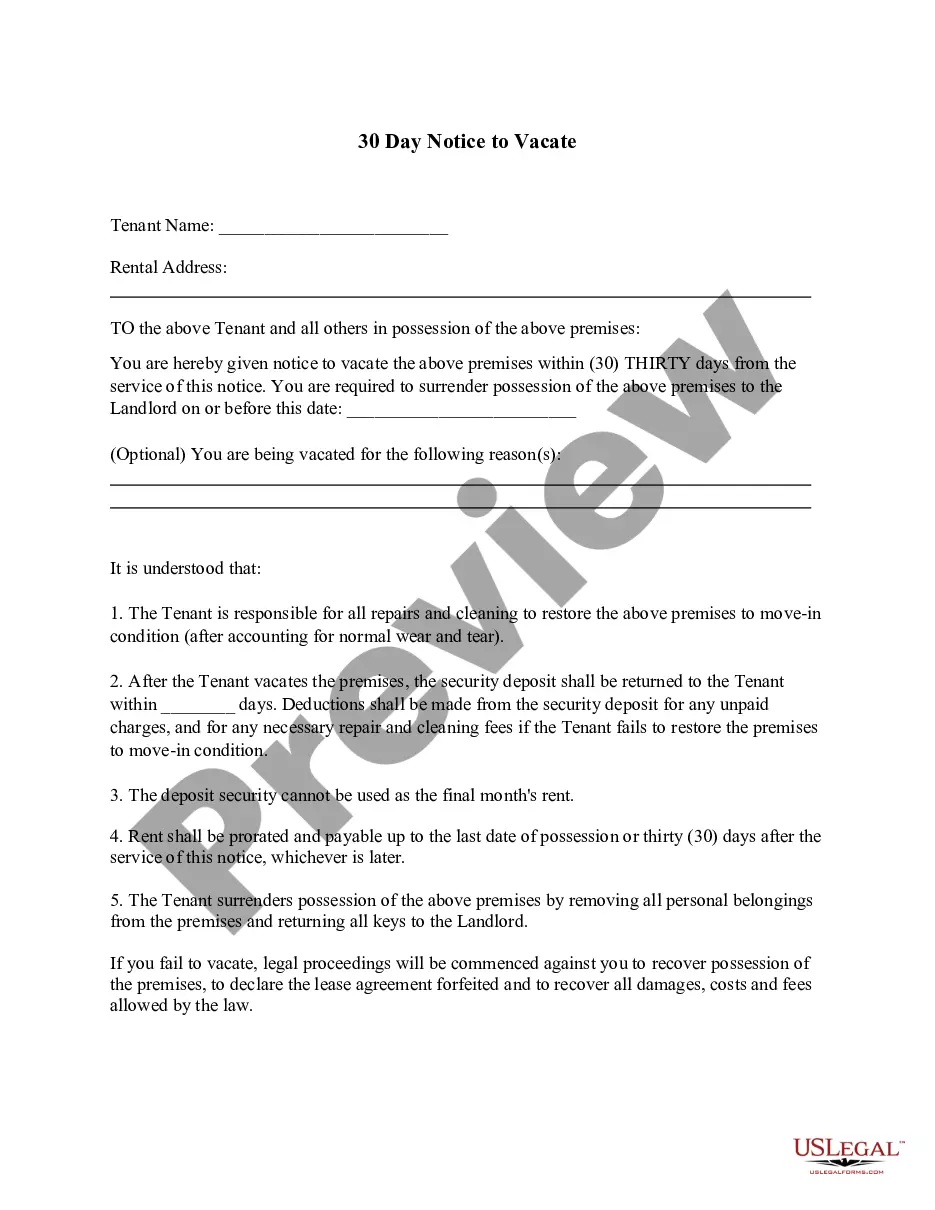
The Florida Landlord Notices for Eviction / Unlawful Detainer Forms Package is a collection of legally compliant notices that landlords are required to send to tenants before initiating eviction proceedings. This package is specifically tailored to meet Florida's legal requirements, allowing landlords to efficiently address issues like overdue rent or lease violations. By using this form package, landlords can ensure they provide the appropriate notices based on their unique circumstances, helping to facilitate a smoother eviction process if necessary.
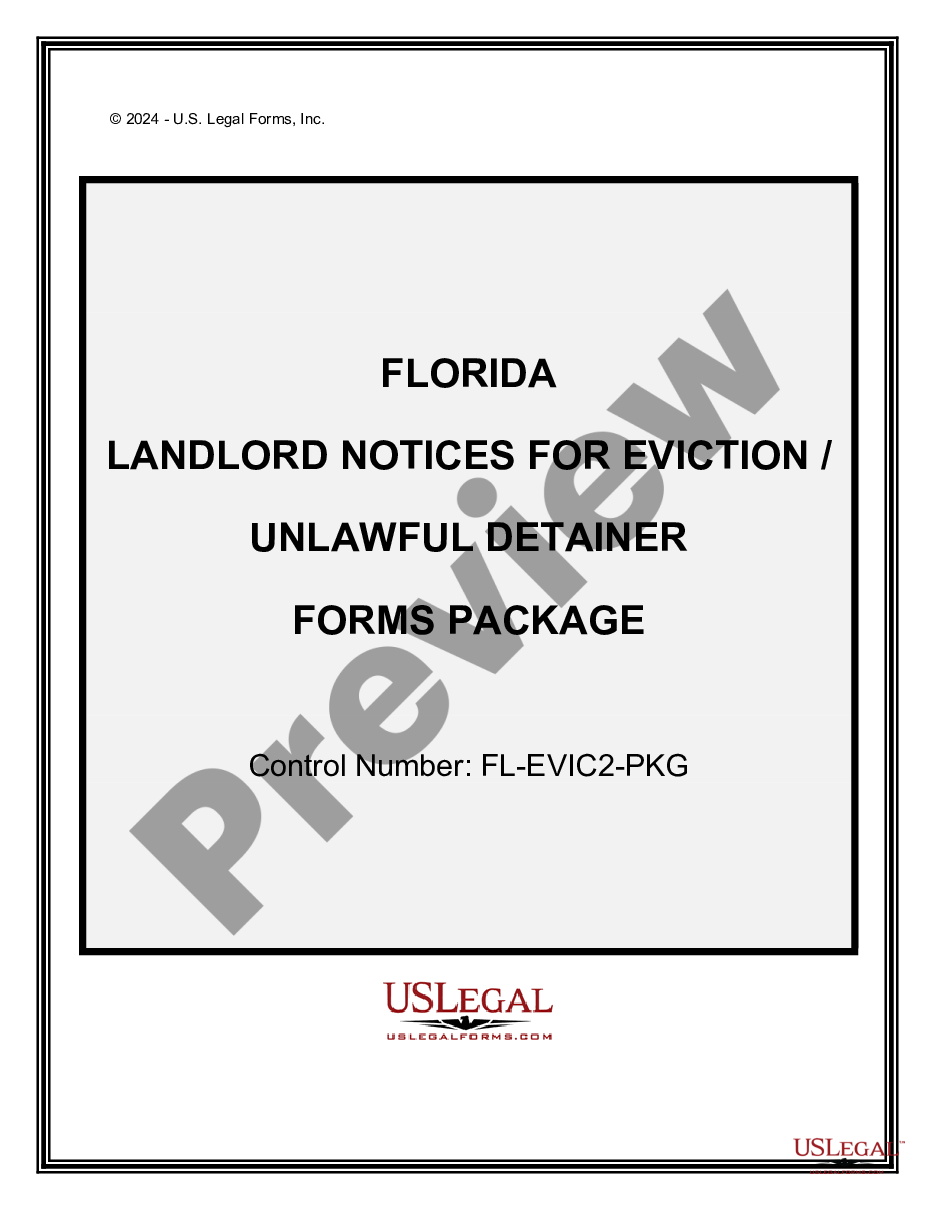
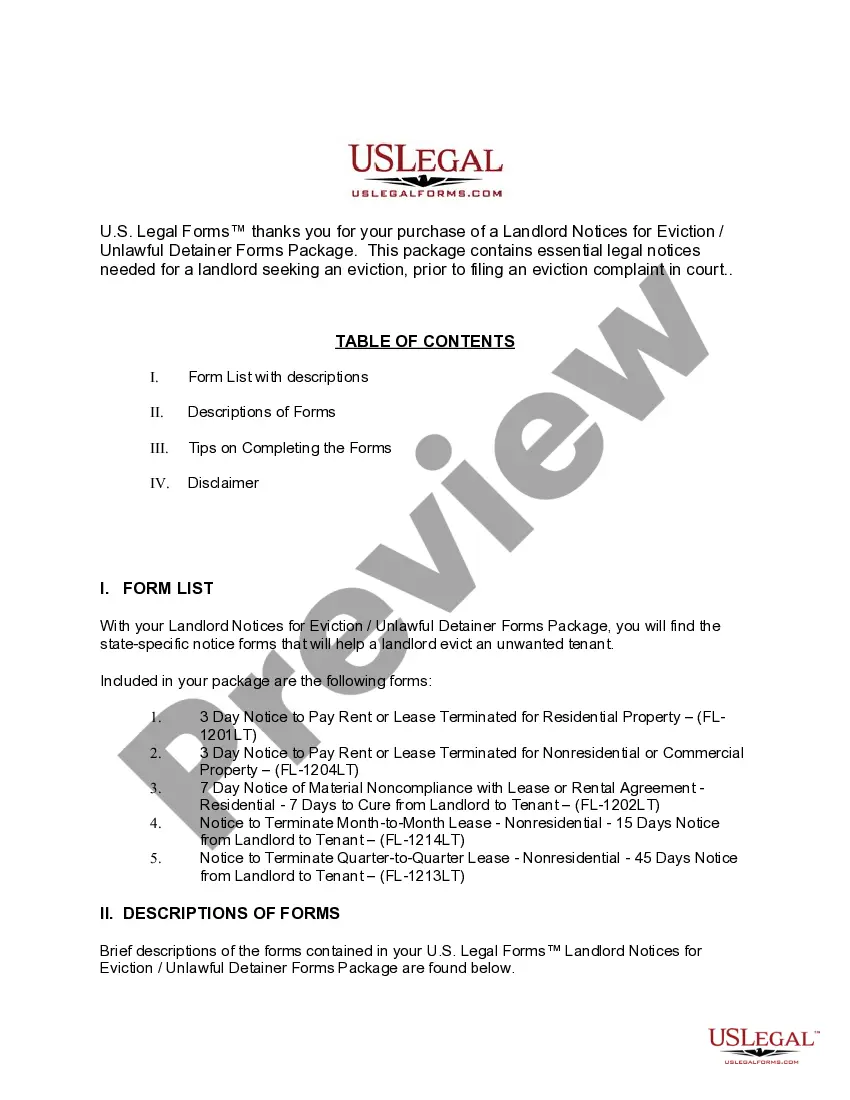
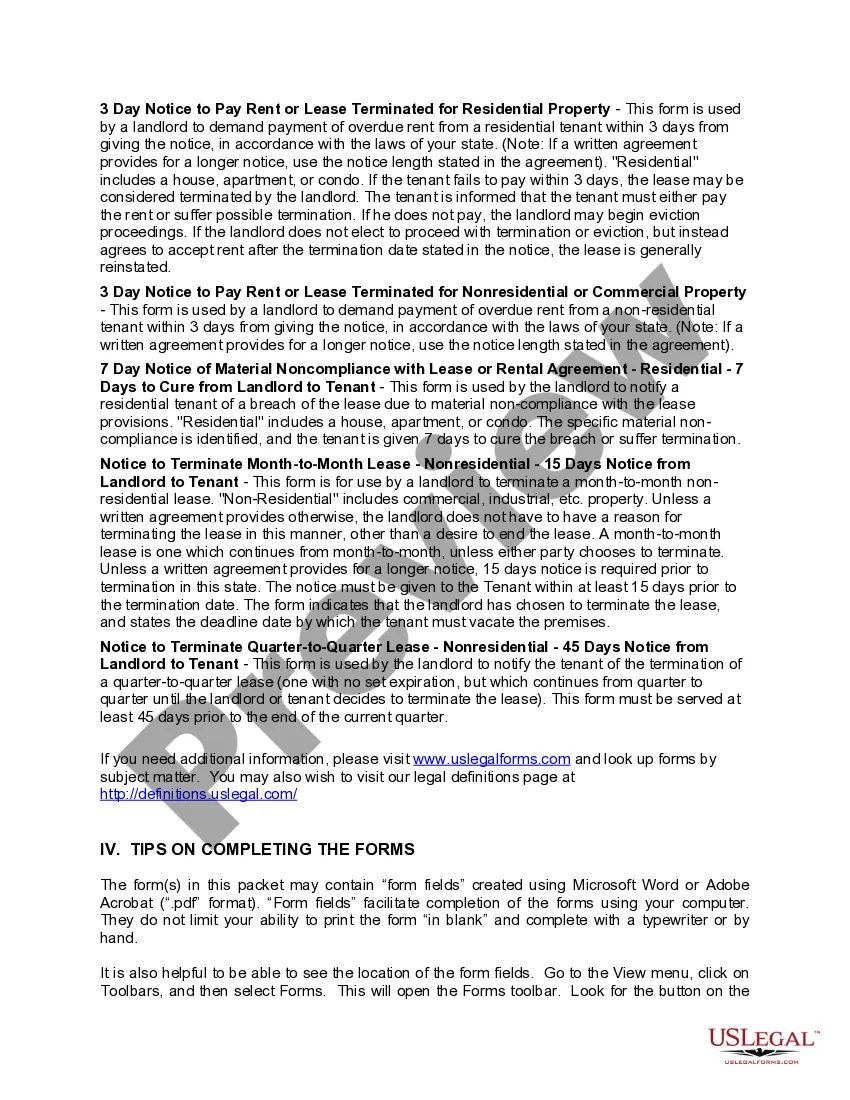
Forms you’ll find in this package
- 3 Day Notice to Pay Rent or Lease Terminated for Residential Property
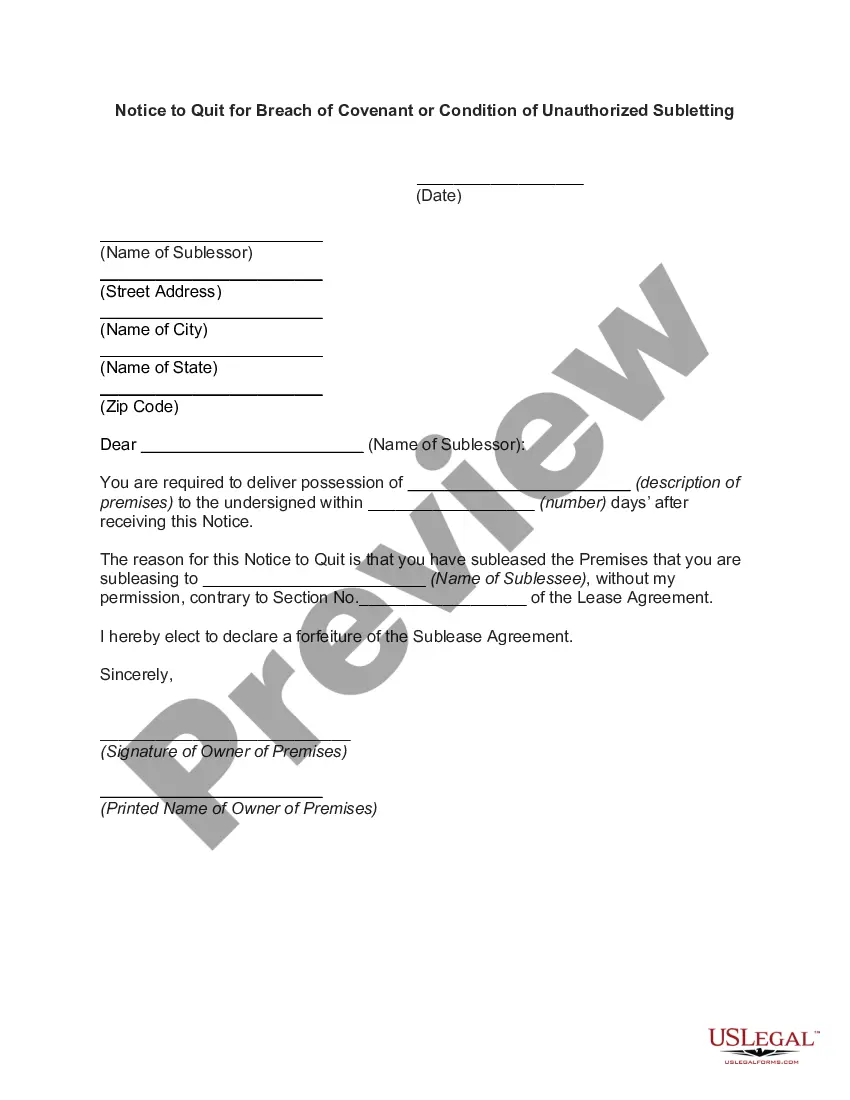
- 7 day Notice of Material Noncompliance with Lease or Rental Agreement - Residential - 7 days to Cure from Landlord to Tenant
- 3 Day Notice to Pay Rent or Lease Terminated for Nonresidential or Commercial Property
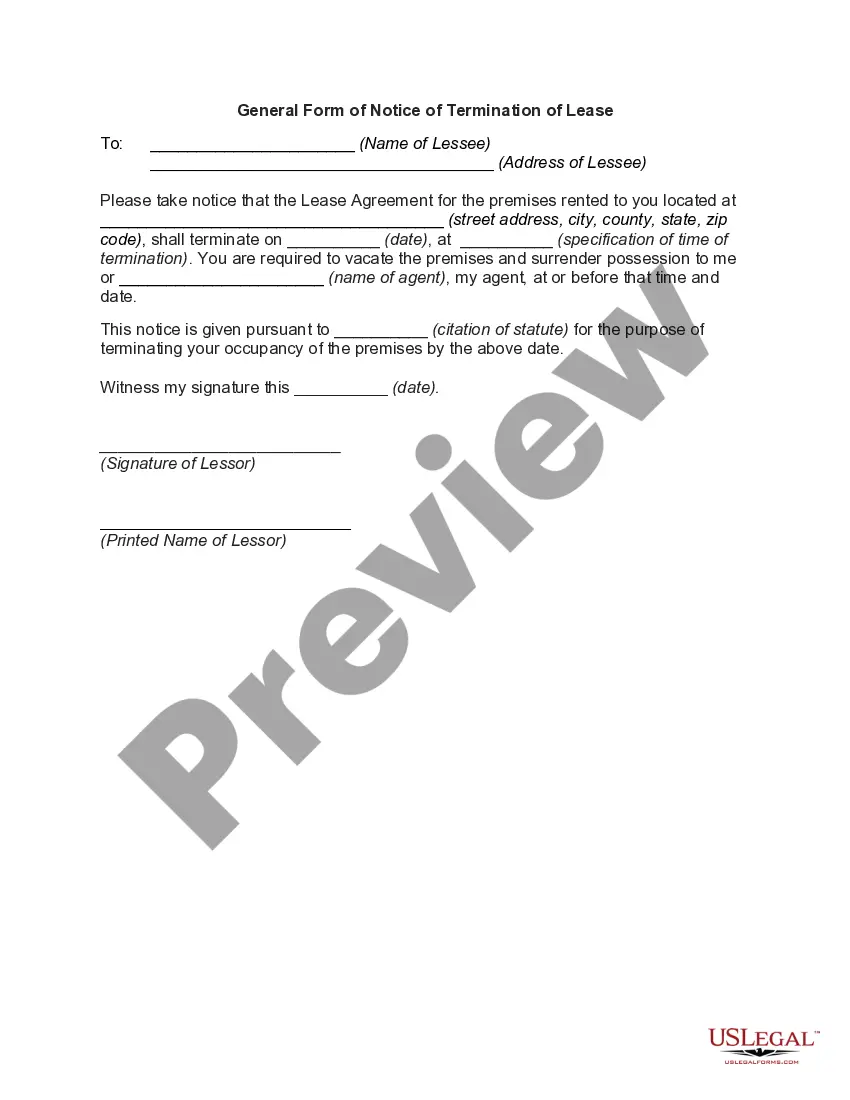
- Notice to Terminate Quarter-to-Quarter Lease - Nonresidential - 45 days Notice from Landlord to Tenant
- Notice to Terminate Month-to-Month Lease - Nonresidential - 15 days Notice from Landlord to Tenant
When this form package is needed
This form package should be used in various scenarios, including:
- When a residential tenant is late on rent payments and you need to request payment within three days.
- When a non-residential tenant is behind on rent and you need to issue a three-day notice.
- When you identify a material breach of lease terms by a residential tenant that requires correction within seven days.
- When you wish to terminate a month-to-month lease for a non-residential property with proper notice.
- When you need to terminate a quarter-to-quarter lease for non-residential property, requiring at least a 45-day notice.
Who needs this form package
- Landlords or property managers of residential properties, including houses, apartments, and condos.
- Landlords of non-residential or commercial properties seeking to enforce lease agreements.
- Individuals unfamiliar with eviction processes but needing to follow state guidelines properly.
- Real estate professionals managing lease agreements in Florida.
Steps to complete these forms
- Review the included forms to determine which notices are applicable to your situation.
- Identify the parties involved, including your name and the tenant's name and address.
- Enter the relevant details such as dates, the nature of the notice, and the specific requirements to cure the breach, if applicable.
- Sign and date the notices as required by Florida law.
- Deliver the completed notices to the tenant using an appropriate method as outlined by Florida law.
Notarization requirements for forms in this package
Notarization is not commonly needed for forms in this package. However, if your state’s laws require it, our notarization service, powered by Notarize, allows you to finalize documents online 24/7 without in-person visits.
Get your form ready online
Our built-in tools help you complete, sign, share, and store your documents in one place.
Make edits, fill in missing information, and update formatting in US Legal Forms—just like you would in MS Word.
Download a copy, print it, send it by email, or mail it via USPS—whatever works best for your next step.
Sign and collect signatures with our SignNow integration. Send to multiple recipients, set reminders, and more. Go Premium to unlock E-Sign.
If this form requires notarization, complete it online through a secure video call—no need to meet a notary in person or wait for an appointment.
We protect your documents and personal data by following strict security and privacy standards.

Make edits, fill in missing information, and update formatting in US Legal Forms—just like you would in MS Word.

Download a copy, print it, send it by email, or mail it via USPS—whatever works best for your next step.

Sign and collect signatures with our SignNow integration. Send to multiple recipients, set reminders, and more. Go Premium to unlock E-Sign.

If this form requires notarization, complete it online through a secure video call—no need to meet a notary in person or wait for an appointment.

We protect your documents and personal data by following strict security and privacy standards.
Common mistakes
- Not providing the correct notice period based on the type of lease (residential vs. non-residential).
- Failing to include required details regarding the breach or payment due.
- Not properly signing or dating the notices before delivery.
- Using outdated forms that do not comply with current Florida law.
Why complete this package online
- Convenience of downloading and printing forms directly from your home or office.
- Editability of forms to customize with your specific details before printing.
- Access to reliably drafted legal documents created by licensed attorneys.
- Ability to get guidance on proper procedures for serving notices.
Looking for another form?
Form popularity
FAQ
The main difference lies in the legal processes involved. Eviction is a broader term that encompasses the entire process of removing a tenant from a rental property, whereas unlawful detainer specifically deals with tenants who remain on the property without consent. Understanding this clarification is vital for landlords using the Florida Landlord Notices for Eviction / Unlawful Detainer Forms Package, as it helps in selecting the right approach.
Yes, individuals can look up evictions in Florida through various online databases or court records. Each county may have different guidelines and systems in place. Accessing eviction records can be crucial for landlords to ensure they rent to reliable tenants. With the Florida Landlord Notices for Eviction / Unlawful Detainer Forms Package, landlords can better prepare for future tenant screenings.
Unlawful detainer refers to a legal action that a landlord initiates when a tenant refuses to leave the property after the lease has ended or after receiving an eviction notice. This action allows the landlord to regain possession of their property legally. Utilizing the Florida Landlord Notices for Eviction / Unlawful Detainer Forms Package can help landlords navigate this process smoothly.
An unlawful detainer action is a type of eviction in Florida, but they are not exactly the same. While both result in the removal of a tenant, an unlawful detainer specifically addresses situations where the tenant remains in the property without the landlord's permission. It’s important for landlords to understand this distinction when using the Florida Landlord Notices for Eviction / Unlawful Detainer Forms Package.
In Florida, eviction notices must be served to the tenant in specific ways, including personal delivery, posting at the residence, or sending via certified mail. The Florida Landlord Notices for Eviction / Unlawful Detainer Forms Package provides sample notices that comply with Florida law. Landlords need to ensure they follow these procedures properly to avoid delays in the eviction process.
The duration of an unlawful detainer process in Florida can vary, typically taking between a few weeks to a couple of months. The timeline largely depends on how quickly the landlord and tenant navigate the court system. With the Florida Landlord Notices for Eviction / Unlawful Detainer Forms Package, landlords can streamline the process, ensuring that all necessary forms are completed accurately and submitted timely.
To serve a notice to vacate in Florida, you must deliver it in a manner specified by law. You can hand it directly to the tenant or mail it via certified mail if they are not available. Using the Florida Landlord Notices for Eviction / Unlawful Detainer Forms Package simplifies this process, as it provides clear directions for proper service. Always keep a record of how and when you serve the notice.
Yes, you can write your own notice to vacate in Florida, but it is crucial to follow legal guidelines. Using the Florida Landlord Notices for Eviction / Unlawful Detainer Forms Package will help ensure your notice meets all required standards. Proper wording and format are essential to avoid issues during an eviction process. It's highly recommended to check state laws or consult with a legal expert to prevent potential delays.
Filing an unlawful detainer in Florida involves a few key steps. First, use the Florida Landlord Notices for Eviction / Unlawful Detainer Forms Package to create your memorandum. Once prepared, file it with your local court and serve it to the tenant. This process initiates the legal proceedings necessary for regaining possession of your property.
To file an eviction notice in Florida, start by preparing the notice according to state laws. Use the Florida Landlord Notices for Eviction / Unlawful Detainer Forms Package to ensure compliance with legal requirements. Once completed, deliver the notice to your tenant, keeping a copy for your records. After proper notice, you can file a complaint in the appropriate county court if the tenant does not respond.