Florida Notice of Dishonored Check - Criminal - Keywords: bad check, bounced check
What is this form?
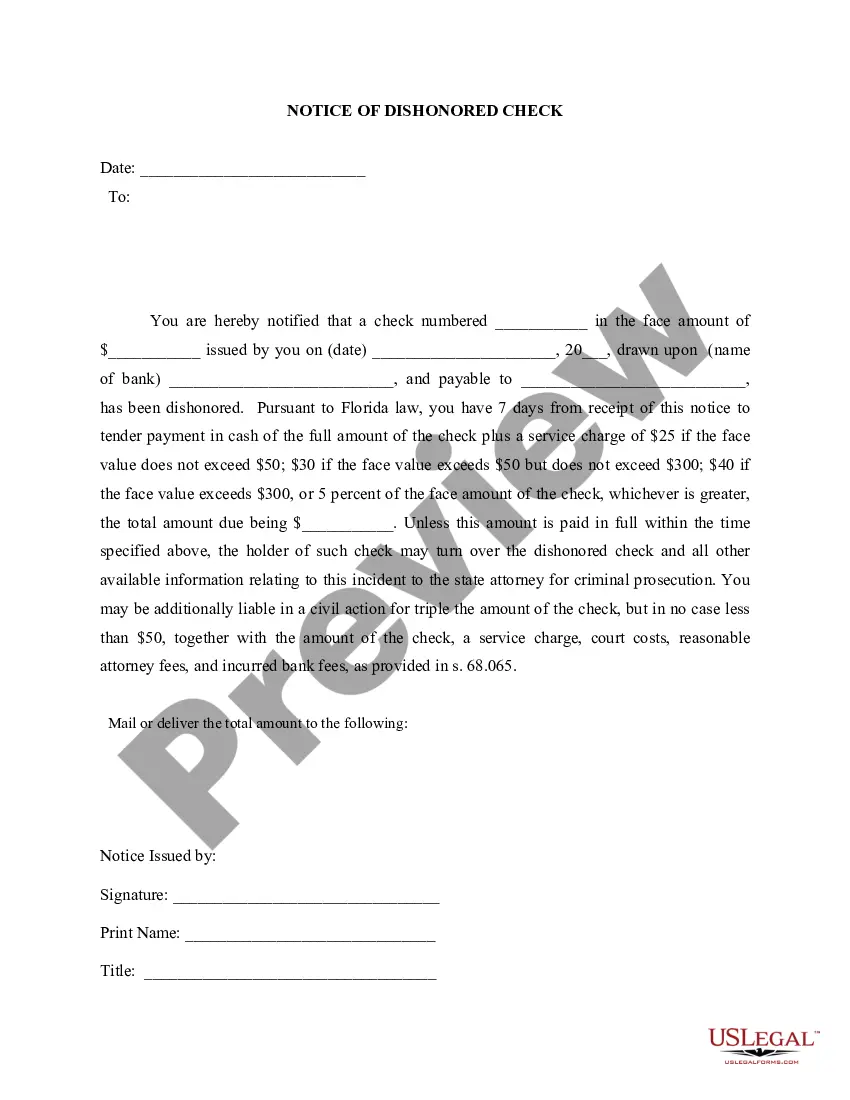
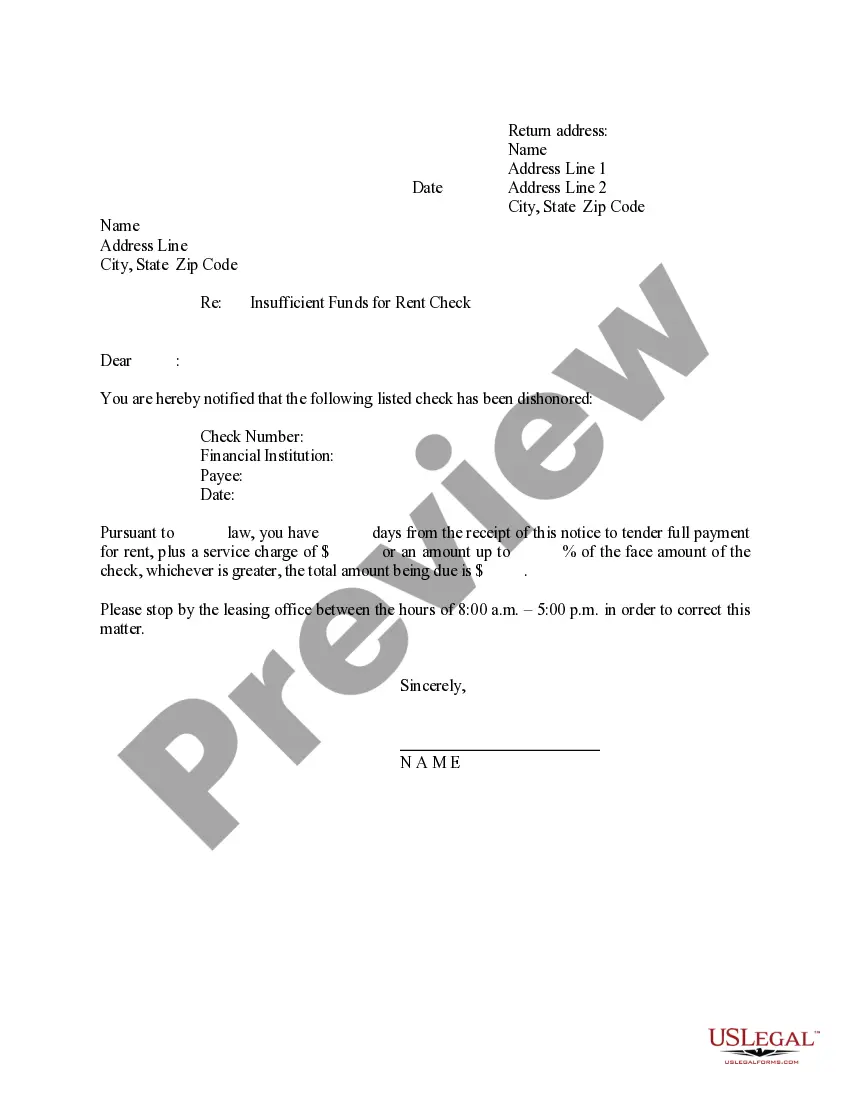
The Notice of Dishonored Check - Criminal is a legal document used to inform a debtor that their check has bounced, commonly referred to as a bad check. This form is essential for any business owner or individual who has received a check that cannot be processed due to insufficient funds or an invalid account. By providing this notice, the recipient seeks to comply with state laws, which may require such notification before pursuing further legal action.
Key components of this form
- Sender's information: Name and address of the person issuing the notice.
- Debtor's information: Name and address of the individual or business that wrote the bad check.
- Check details: Date, amount, and number of the dishonored check.
- Notification wording: Clear statement indicating that the check has been dishonored.
- Deadline for payment: A specified time frame for the debtor to make the payment.
- Consequences: Information on potential legal actions for failure to pay.

When to use this document
This form should be used when you have received a check that has bounced due to the account having insufficient funds or being invalid. If you are a business owner or service provider who has accepted a check as payment and it is returned unpaid, issuing a Notice of Dishonored Check is often the first step in your efforts to recover the funds owed to you. It helps establish a legal trail should you later need to take further action.
Who should use this form
- Business owners who accept checks as payment.
- Individuals who have been issued a dishonored check.
- Anyone looking to formally notify a debtor about a bounced check.
Steps to complete this form
- Identify the sender: Fill in your name and address at the top of the notice.
- Provide debtor information: Enter the name and address of the individual or business that issued the bad check.
- Input check details: Include the date, amount, and check number of the dishonored check.
- State the dishonor: Clearly indicate that the check has bounced and that you are notifying them of this status.
- Set a deadline: Specify a reasonable timeline for the debtor to respond or make the payment.
- Signature: Sign the notice to validate it before sending.
Notarization guidance
Notarization is generally not required for this form. However, certain states or situations might demand it. You can complete notarization online through US Legal Forms, powered by Notarize, using a verified video call available anytime.
Get your form ready online
Our built-in tools help you complete, sign, share, and store your documents in one place.
Make edits, fill in missing information, and update formatting in US Legal Forms—just like you would in MS Word.
Download a copy, print it, send it by email, or mail it via USPS—whatever works best for your next step.
Sign and collect signatures with our SignNow integration. Send to multiple recipients, set reminders, and more. Go Premium to unlock E-Sign.
If this form requires notarization, complete it online through a secure video call—no need to meet a notary in person or wait for an appointment.
We protect your documents and personal data by following strict security and privacy standards.

Make edits, fill in missing information, and update formatting in US Legal Forms—just like you would in MS Word.

Download a copy, print it, send it by email, or mail it via USPS—whatever works best for your next step.

Sign and collect signatures with our SignNow integration. Send to multiple recipients, set reminders, and more. Go Premium to unlock E-Sign.

If this form requires notarization, complete it online through a secure video call—no need to meet a notary in person or wait for an appointment.

We protect your documents and personal data by following strict security and privacy standards.
Mistakes to watch out for
- Failing to include all necessary debtor information.
- Not specifying a deadline for payment.
- Using unclear language that may confuse the debtor.
Why complete this form online
- Convenience: Access and complete your form from anywhere at any time.
- Editability: Easily make changes as needed before finalizing.
- Reliability: Forms are prepared by licensed attorneys, ensuring they meet legal standards.
Legal use & context
- This notice serves as an essential step in the debt recovery process for bounced checks.
- Failure to provide notice may affect your ability to pursue legal remedies.
- The form's enforceability may vary by jurisdiction, so local laws should be consulted.
Key takeaways
- The Notice of Dishonored Check is important for recovery of funds from bounced checks.
- Using this form correctly can help mitigate losses from unpaid checks.
- Ensure compliance with state-specific requirements when sending the notice.
Looking for another form?
Form popularity
FAQ
The bad check law in Florida holds that writing a bounced check without sufficient funds can lead to criminal charges. The law aims to deter individuals from issuing checks they cannot honor. A Florida Notice of Dishonored Check serves as a formal alert regarding insufficient funds, which can lead to legal actions. By being aware of this law, you can take proactive steps to manage your finances responsibly.
In Florida, a bad check can be classified as a felony if the amount exceeds $150. This means that if you write a bounced check for this amount or more, you may face serious legal consequences. Understanding the implications of a Florida Notice of Dishonored Check is essential to avoid severe penalties. It's important to stay informed about this law to protect yourself from potential criminal charges.
Section 817.234 addresses fraud relating to bad checks and outlines the consequences of knowingly issuing a check without sufficient funds. This law categorizes such actions as criminal offenses, which may lead to serious charges, including felony charges if the amount exceeds certain thresholds. If you receive a Florida Notice of Dishonored Check, it is essential to understand Section 817.234, as it highlights the legal obligations and potential ramifications of issuing a bounced check. Legal help or resources from platforms like uslegalforms can provide guidance on navigating this situation.
In Florida, the statute of limitations on a bounced check is generally four years under the Florida Uniform Commercial Code. This means that if a check has bounced, the payee has up to four years to initiate legal action against the check writer for recovery. Knowing this timeline is crucial if you've received a Florida Notice of Dishonored Check, as it helps in determining your options for pursuing the debt. Keep in mind that timely action can increase chances of recovery.
Section 68.065 of the Florida statutes provides a legal framework for civil action concerning worthless checks or drafts. This section allows the payee to file a claim against the issuer of a bounced check, seeking damages that can include the original check amount, along with additional penalties. If you face a Florida Notice of Dishonored Check, understanding Section 68.065 can empower you to take appropriate actions to recover losses effectively. It’s a critical piece for anyone involved in transactions that might lead to bounced checks.
Section 448.08 of the Florida statutes pertains specifically to the penalties related to bad checks. This section allows a payee to seek recovery of associated costs, including damages and fees, should a check bounce due to insufficient funds. When dealing with a Florida Notice of Dishonored Check, this law is vital as it establishes the criteria for legal action and serves as a reminder to payors who may risk legal repercussions. Always consider communicating with the issuing party before escalating the matter legally.
In Florida, the statute for bad checks is defined under Section 673.433, which covers the penalties for issuing a check that is not honored due to insufficient funds or an account closure. This law emphasizes the importance of maintaining sufficient funds in your account to avoid facing legal consequences. If you receive a Florida Notice of Dishonored Check, it typically indicates that legal action may follow if the debt remains unresolved. Understanding this statute can help you navigate potential issues tied to bounced checks.
Bouncing a check in Florida can lead to various consequences, including fees and potential legal action. If a check is returned due to insufficient funds, you may also face civil penalties. To safeguard yourself, consider using resources like USLegalForms to stay informed about your rights and obligations related to bounced checks.
To write a letter about a bounced check, include the date, your contact information, and the relevant details of the check, such as the amount and check number. Clearly state that the check was returned and request that the recipient address the matter promptly.
A letter of insufficient funds should be clear and direct. Begin with the date and your contact details, followed by the check number and amount. Inform the recipient that the funds were insufficient at the time of processing and request an alternative form of payment.