Florida Letter from Landlord to Tenant about time of intent to enter premises
About this form
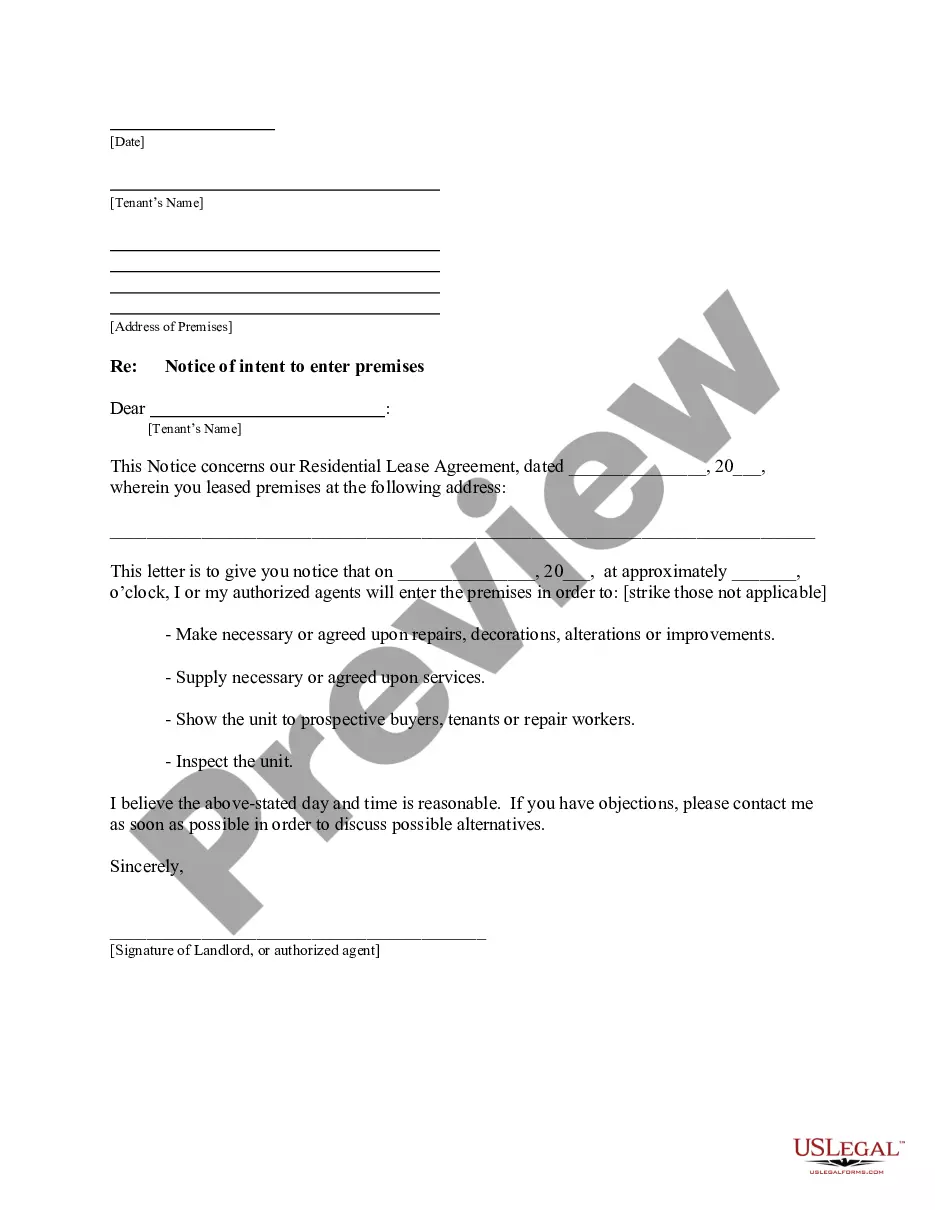
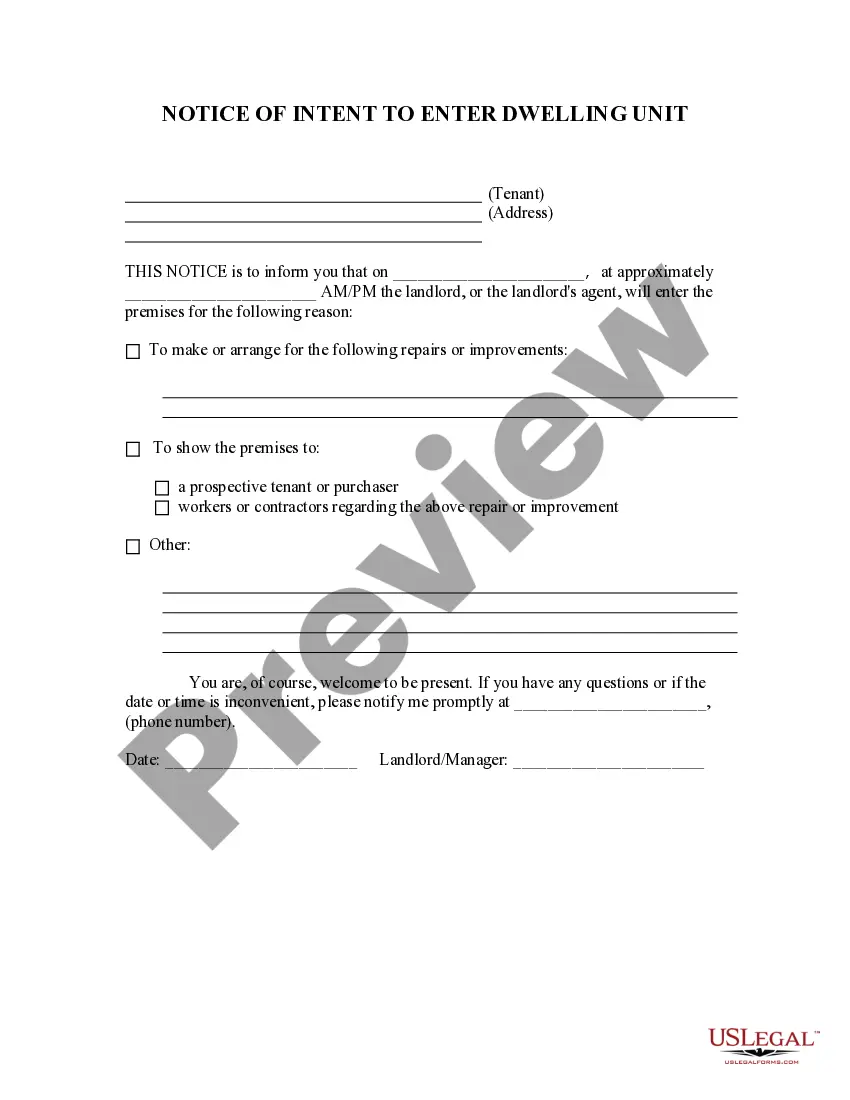
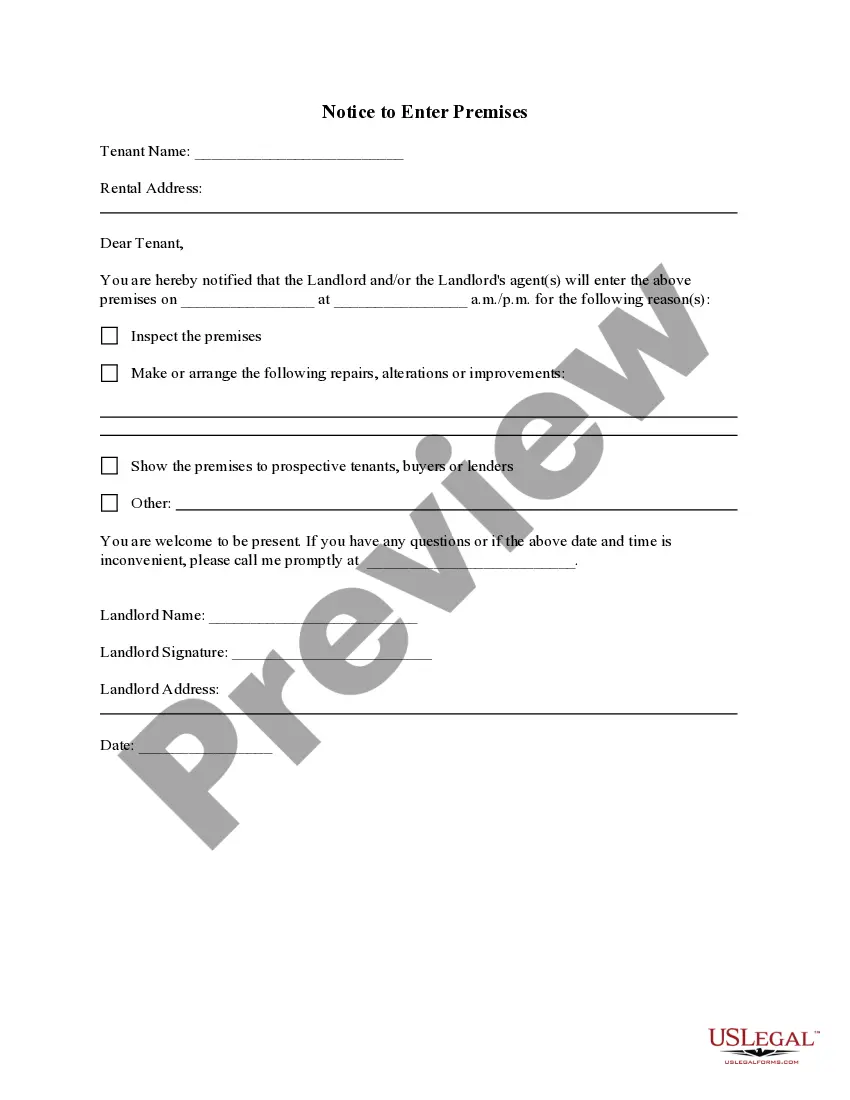
This form is a Letter from Landlord to Tenant about time of intent to enter premises. It serves as a notice to inform the tenant that the landlord or their authorized agent will be entering the rented property. This letter outlines the reasons for entry and the scheduled time, ensuring clear communication between both parties regarding access to the leased premises. This is different from other notices as it specifically focuses on informing tenants about the intent to enter rather than providing general lease notices or agreements.
Key parts of this document
- Date of the residential lease agreement.
- Address of the leased premises.
- Date and time of intended entry.
- Reasons for entering the premises.
- Opportunity for tenant objections.
- Landlord's signature or authorized agent's signature.
When to use this form
This form should be used when a landlord needs to notify a tenant about the intent to enter the rented property for specific reasons such as repairs, inspections, or showing the property to prospective buyers or tenants. Proper notice helps maintain a good landlord-tenant relationship and ensures that tenants are adequately informed about their privacy and the use of their living space.
Who should use this form
- Landlords who manage rental properties.
- Property managers acting on behalf of landlords.
- Tenants who wish to monitor communication regarding their rights to privacy.
How to prepare this document
- Enter the date of the lease agreement.
- Specify the address of the rental property.
- Indicate the date and time of your intended entry.
- Select the applicable reasons for entering the premises.
- Sign the letter as the landlord or authorized agent.
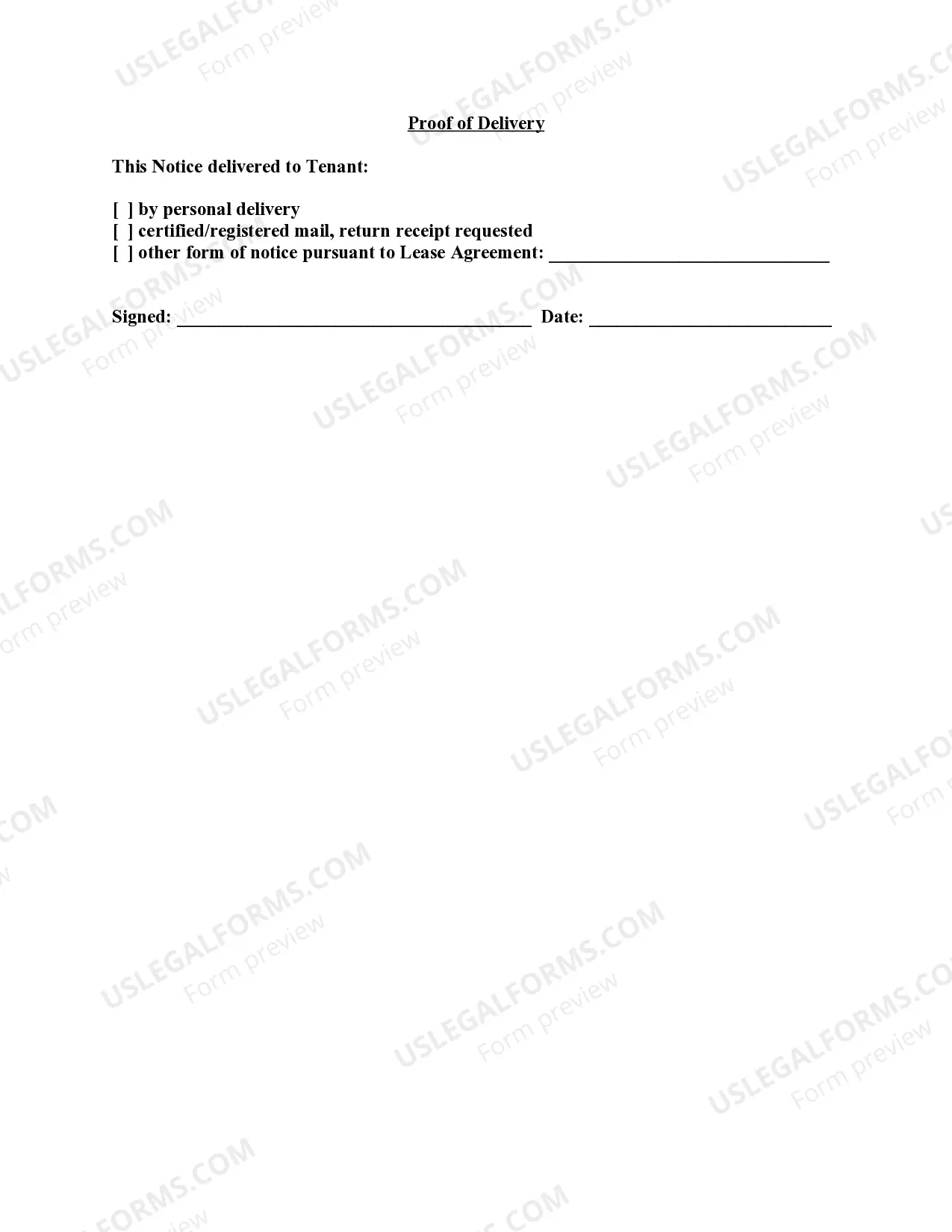
- Deliver the notice to the tenant by the preferred method.
Notarization requirements for this form
This form does not typically require notarization unless specified by local law. It is important to review state regulations to confirm that no additional notarization is needed for the notice to be legally binding.
Get your form ready online
Our built-in tools help you complete, sign, share, and store your documents in one place.
Make edits, fill in missing information, and update formatting in US Legal Forms—just like you would in MS Word.
Download a copy, print it, send it by email, or mail it via USPS—whatever works best for your next step.
Sign and collect signatures with our SignNow integration. Send to multiple recipients, set reminders, and more. Go Premium to unlock E-Sign.
If this form requires notarization, complete it online through a secure video call—no need to meet a notary in person or wait for an appointment.
We protect your documents and personal data by following strict security and privacy standards.

Make edits, fill in missing information, and update formatting in US Legal Forms—just like you would in MS Word.

Download a copy, print it, send it by email, or mail it via USPS—whatever works best for your next step.

Sign and collect signatures with our SignNow integration. Send to multiple recipients, set reminders, and more. Go Premium to unlock E-Sign.

If this form requires notarization, complete it online through a secure video call—no need to meet a notary in person or wait for an appointment.

We protect your documents and personal data by following strict security and privacy standards.
Mistakes to watch out for
- Failing to provide adequate notice as required by law.
- Not specifying the reason for entry in the letter.
- Omitting the date and time of intended entry.
- Neglecting to deliver the notice properly to the tenant.
Benefits of completing this form online
- Convenient access to professionally drafted templates.
- Easy to customize and fill out the form according to your specific needs.
- Quick downloads save time and provide immediate legal resources.
- Reliable legal language that meets state-specific requirements.
Legal use & context
- This form stands as a legally recognized notice which documents the landlord's intent to enter the property.
- Using this form properly helps landlords adhere to tenant rights and privacy laws.
- The form can be used as evidence if disputes arise regarding property access.
What to keep in mind
- This form provides essential notice from landlord to tenant regarding intentions to enter the premises.
- Proper completion and delivery of the form are crucial for legal compliance.
- Understanding the reasons for entry can help maintain a good landlord-tenant relationship.
Looking for another form?


Form popularity
FAQ
A landlord in Florida must provide at least 12 hours of notice before entering a tenant's property, barring emergencies. This is a critical element of the Florida Letter from Landlord to Tenant about time of intent to enter premises. Providing clear notice helps maintain trust between landlords and tenants. Always consult your lease for any additional requirements that may apply.
To write an official letter to a tenant, begin with the date and rental property address. Clearly state the purpose of the letter, such as notifying them of entry, in a professional tone. Include specific details and reference the Florida Letter from Landlord to Tenant about time of intent to enter premises for guidance. Close the letter with your contact information to encourage open communication.
In Florida, tenants are usually required to give 7 days' notice before terminating a lease or requesting repairs. When you communicate with your landlord, a clear and concise message ensures an effective dialogue. You can reference the Florida Letter from Landlord to Tenant about time of intent to enter premises to establish a structured approach. Understanding these notice periods helps in managing expectations on both sides.
Generally, a landlord cannot enter a property without notice in Florida. There are exceptions, such as emergencies that require immediate attention, but standard practice involves providing prior notice. The Florida Letter from Landlord to Tenant about time of intent to enter premises exists to help regulate this communication. To avoid misunderstandings, always follow the notice requirements stated in the lease and state law.
In Florida, the minimum notice required for a landlord to enter a property is typically 12 hours. This is part of the Florida Letter from Landlord to Tenant about time of intent to enter premises. The notice must specify the purpose of entry, ensuring the tenant has adequate time to prepare. Always check your lease agreement as it may contain specific terms regarding entry notice.
A letter of intent to a tenant outlines a landlord's plans to enter the rental premises. This Florida Letter from Landlord to Tenant about time of intent to enter premises typically includes the date, time, and purpose of entry. It serves to inform the tenant of the landlord's intentions and provides clarity on the situation. Crafting this letter correctly can help maintain a positive tenant-landlord relationship.
In Florida, a landlord must provide at least 24 hours’ notice before entering a tenant’s premises, unless it is an emergency situation. This notice should be given in a reasonable manner and can be delivered in writing, verbally, or through a Florida Letter from Landlord to Tenant about time of intent to enter premises. This requirement helps protect tenant privacy while ensuring necessary access for landlords. Always keep communication clear to avoid misunderstandings.
Yes, a tenant can refuse showings in Florida, especially if the landlord does not follow proper notification guidelines. While landlords generally have the right to show the property during reasonable hours, they must provide advance notice. If you're a tenant facing this issue, consider using a Florida Letter from Landlord to Tenant about time of intent to enter premises to confirm agreed-upon times for showings, ensuring a smoother process for all involved.
In Florida, a tenant can refuse entry to a landlord if the landlord does not provide proper notice. According to Florida law, landlords must give reasonable notice, typically 24 hours, before entering a rental property. However, tenants must allow entry in emergencies or if there is a lease provision allowing access. For more clarity on this process, a Florida Letter from Landlord to Tenant about time of intent to enter premises can serve as official notice.
In a letter to tell a tenant to move out nicely, start with a friendly introduction before conveying your message. Use respectful language and provide a reasonable timeframe for them to leave the property. Express your willingness to answer any questions they might have during this transition. A well-framed Florida Letter from Landlord to Tenant about time of intent to enter premises can guide you in crafting a considerate letter.