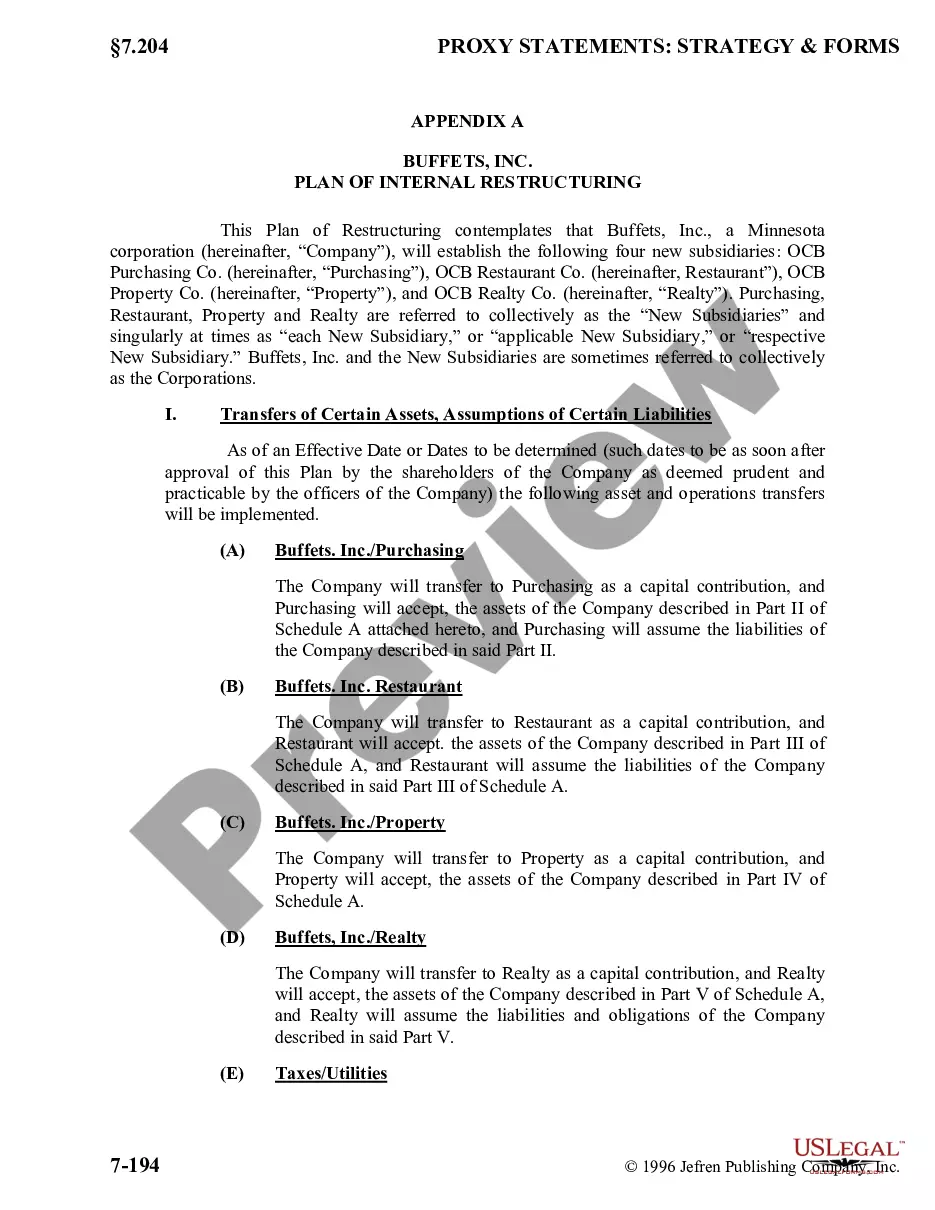
Vermont Discovery Interrogatories for Divorce Proceeding for either Plaintiff or Defendant
What is this form?
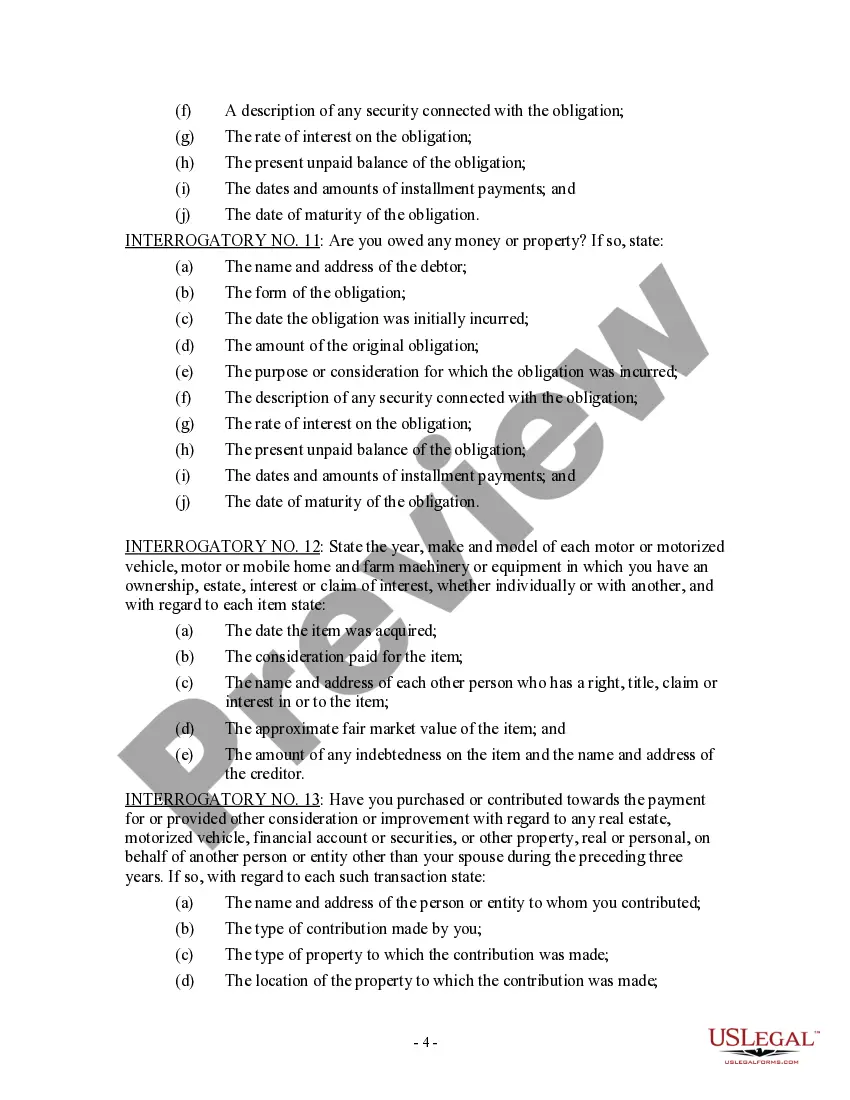
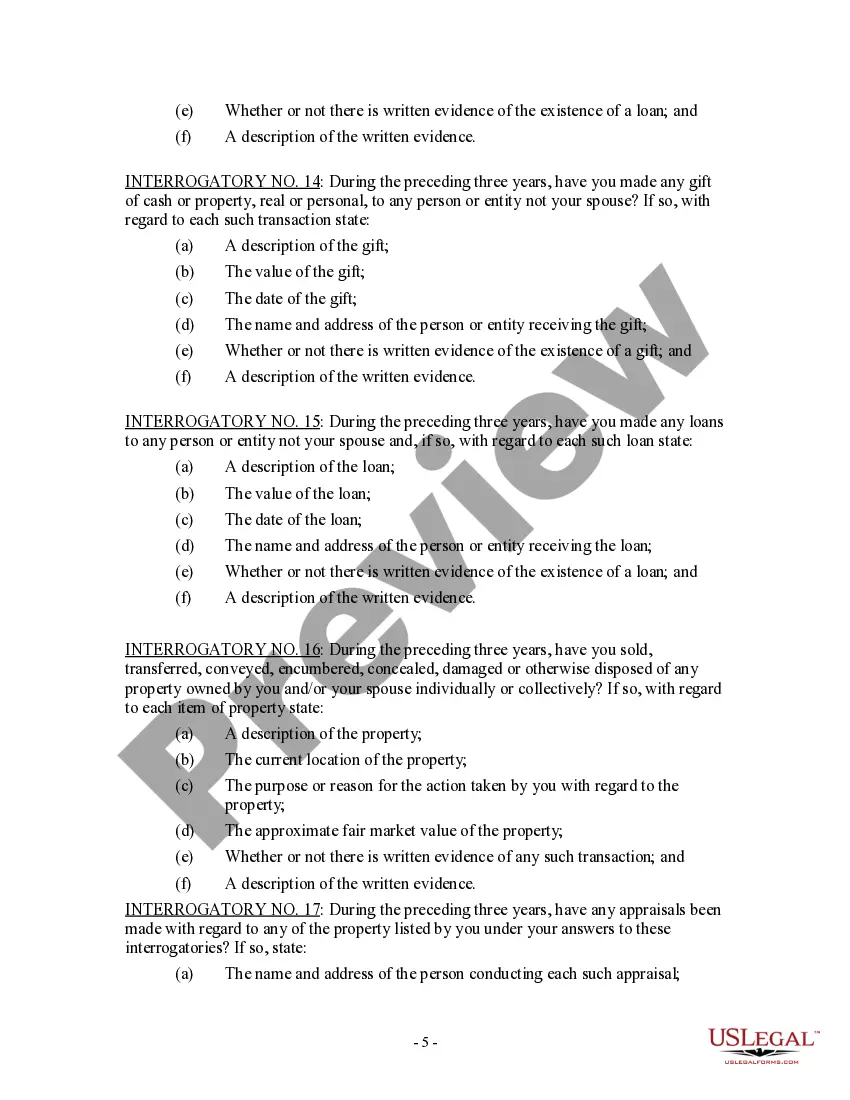
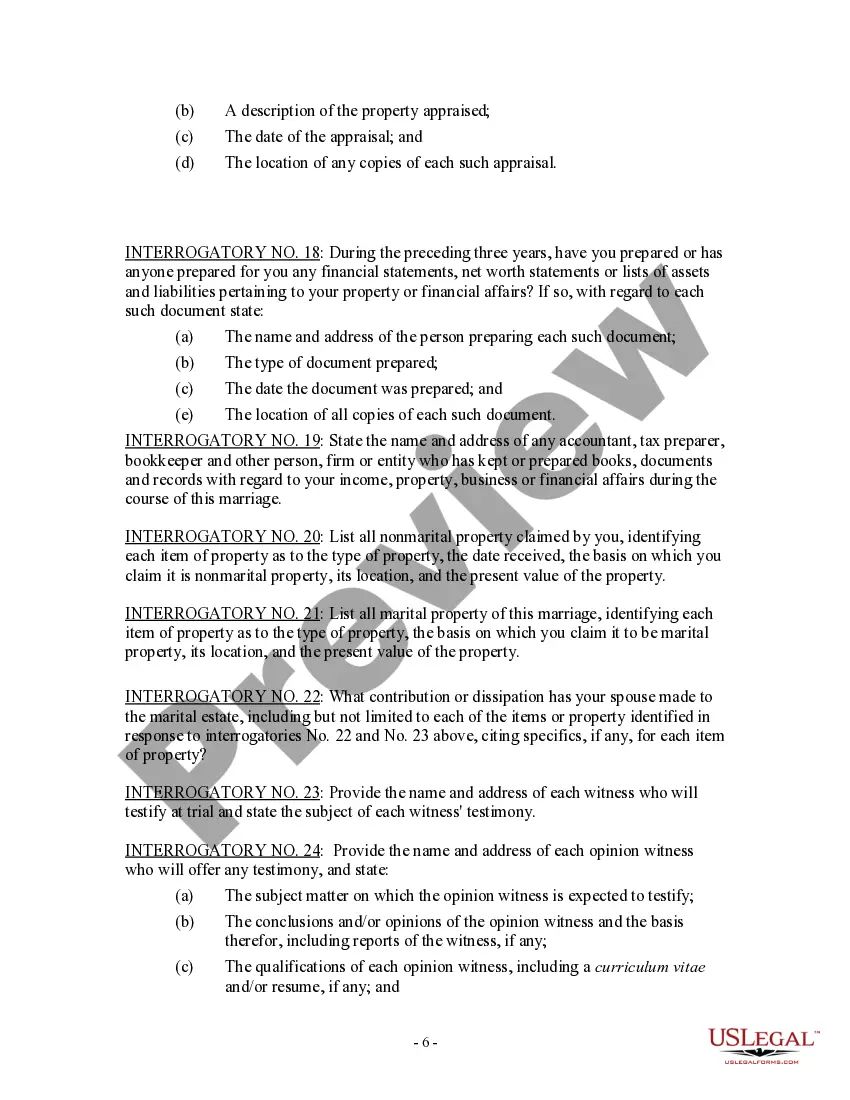
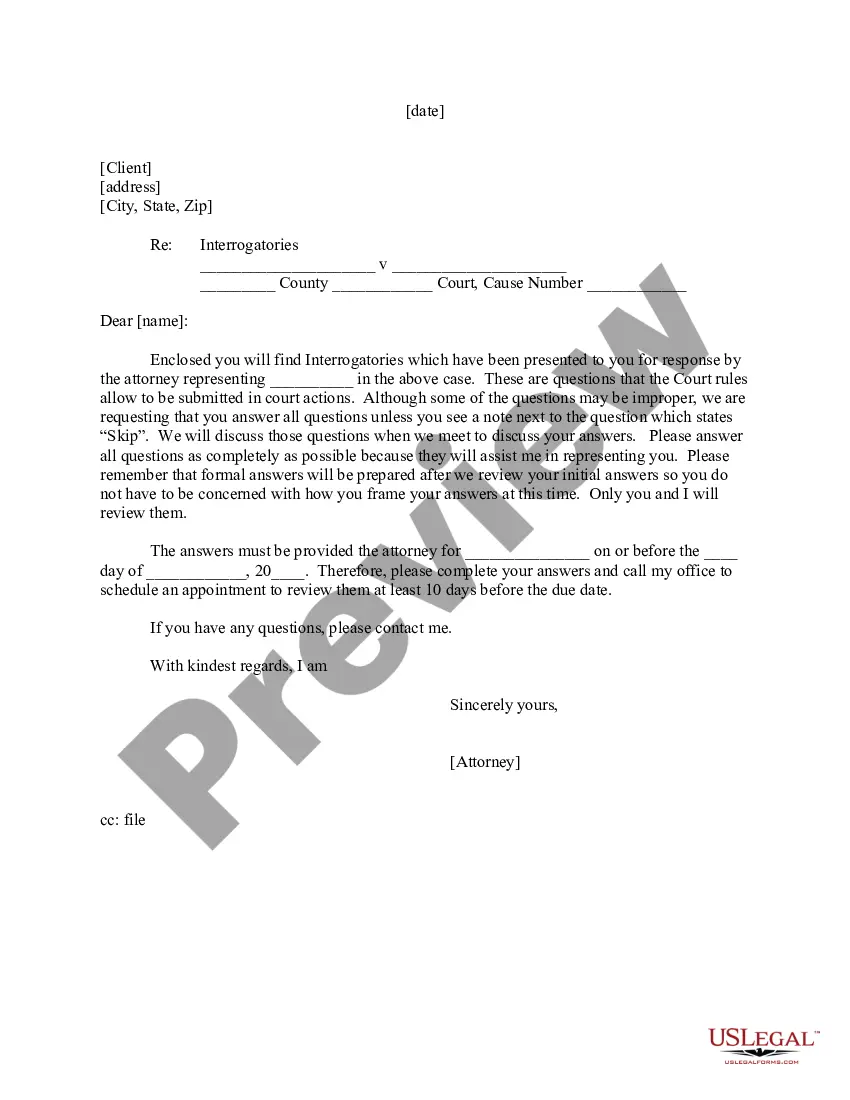
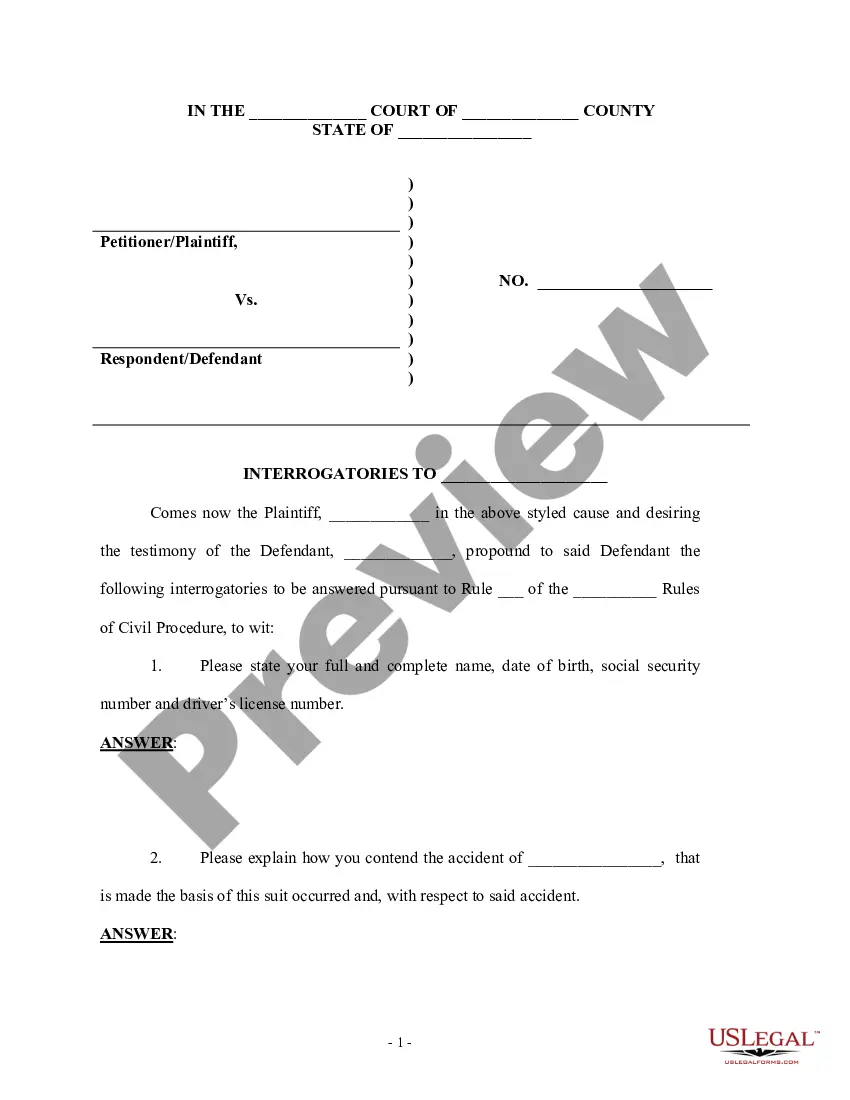
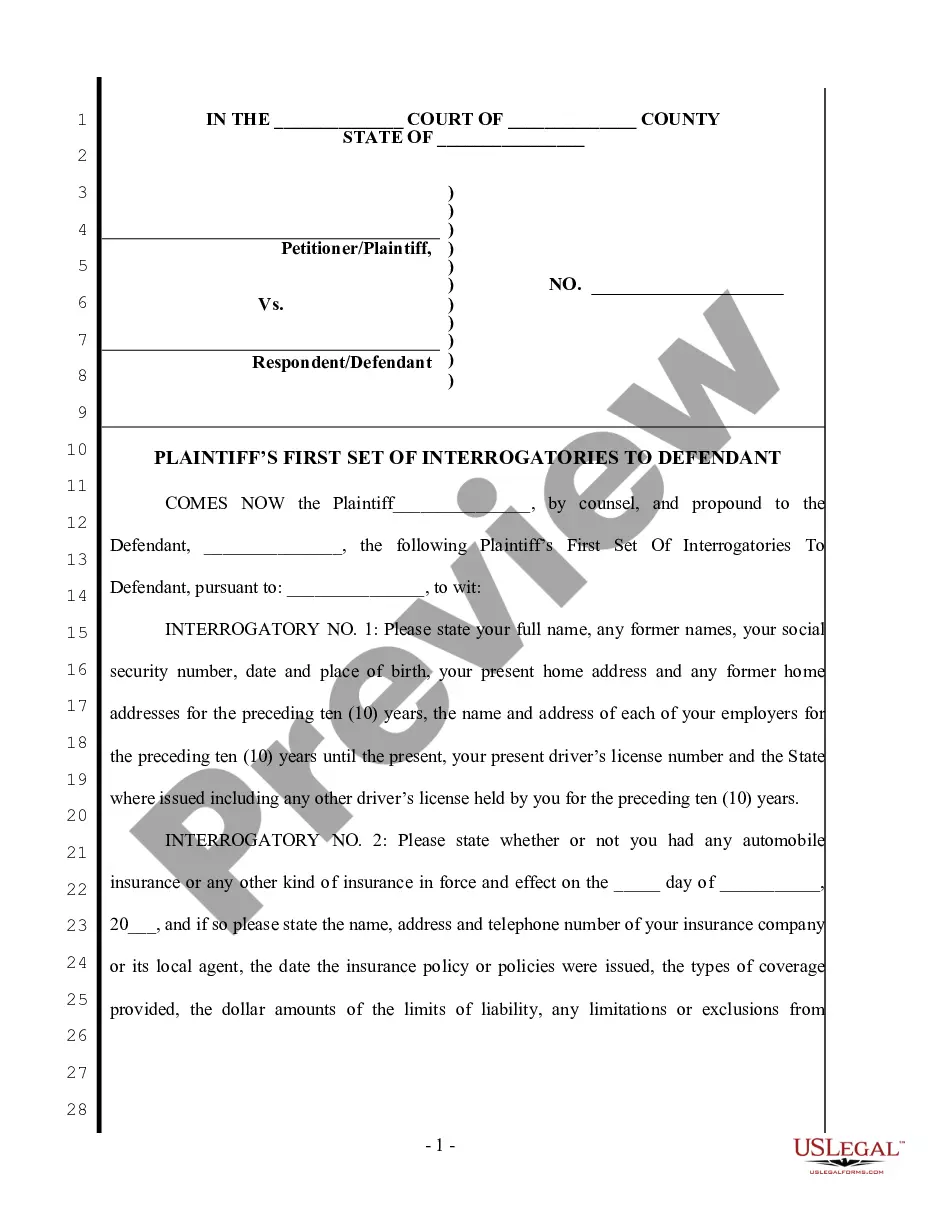
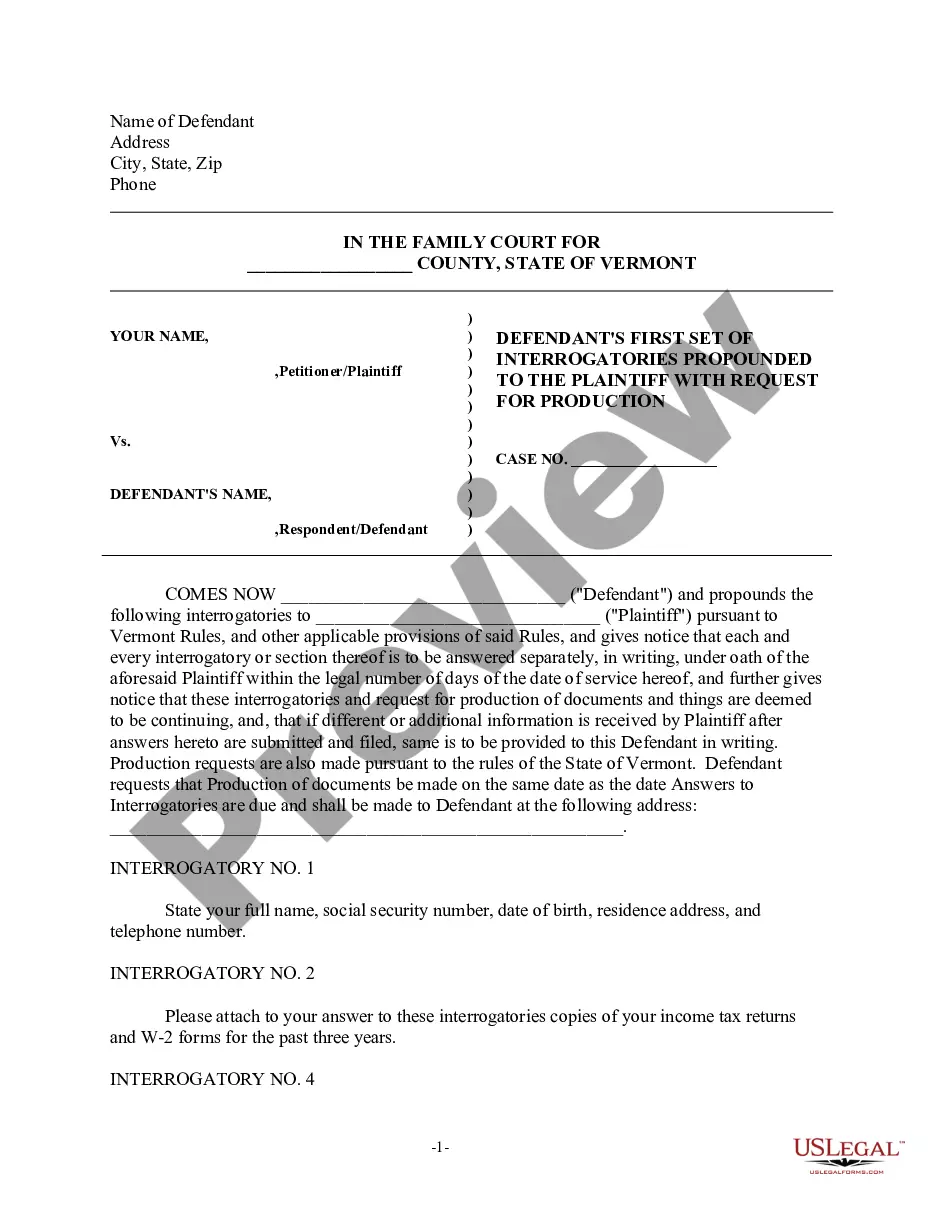
The Discovery Interrogatories for Divorce Proceeding is a legal document designed for either the Plaintiff or Defendant in a divorce case. This form facilitates the exchange of vital information between parties, specifically through a series of questions directed to the responding party. It differs from other discovery tools by combining interrogatories with requests for the production of documents, ensuring both written responses and supporting documentation are provided. This comprehensive approach helps build a complete picture of assets, liabilities, and other important factors in the divorce proceedings.
Key parts of this document
- Identification of parties involved, including full names and addresses.
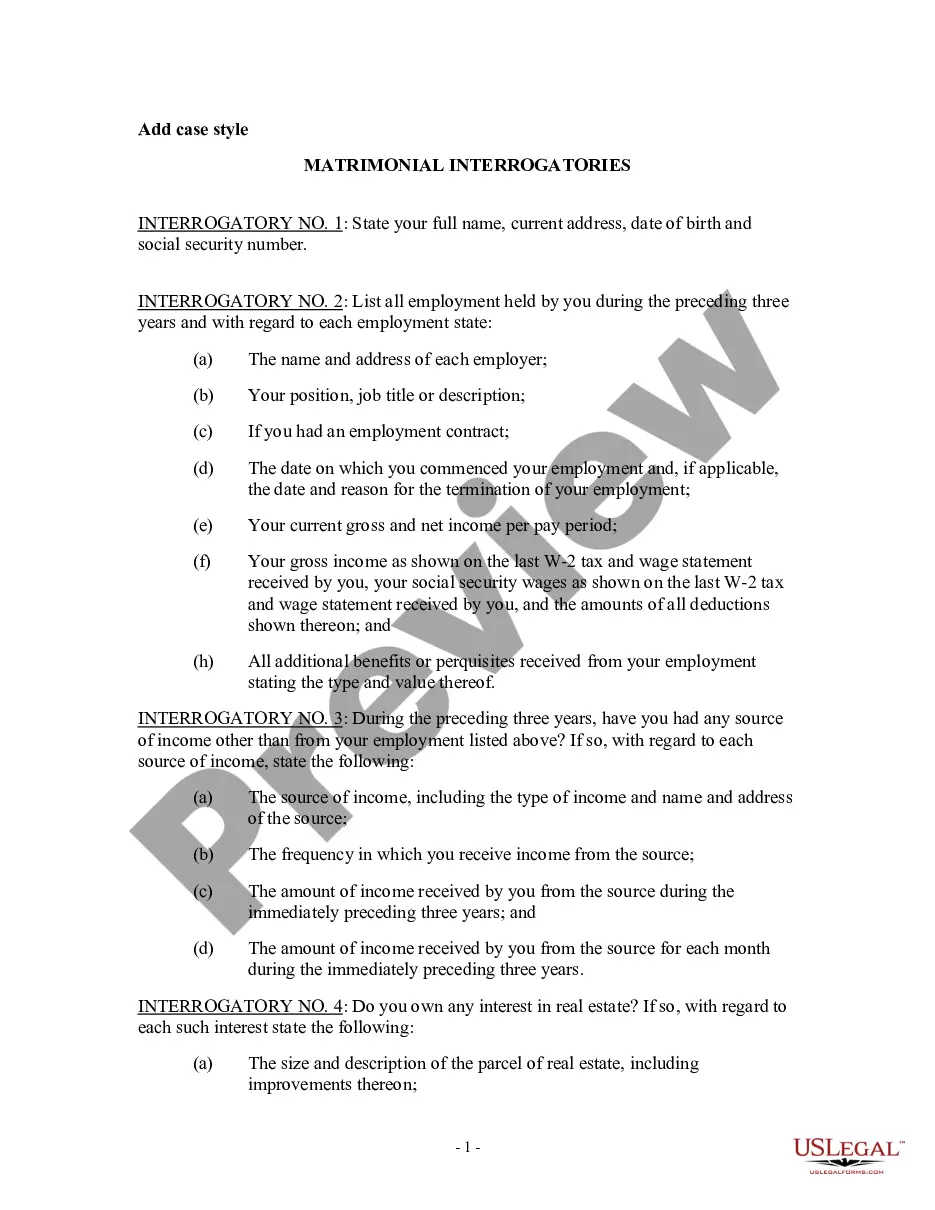
- Employment history over the last three years, detailing income and job status.
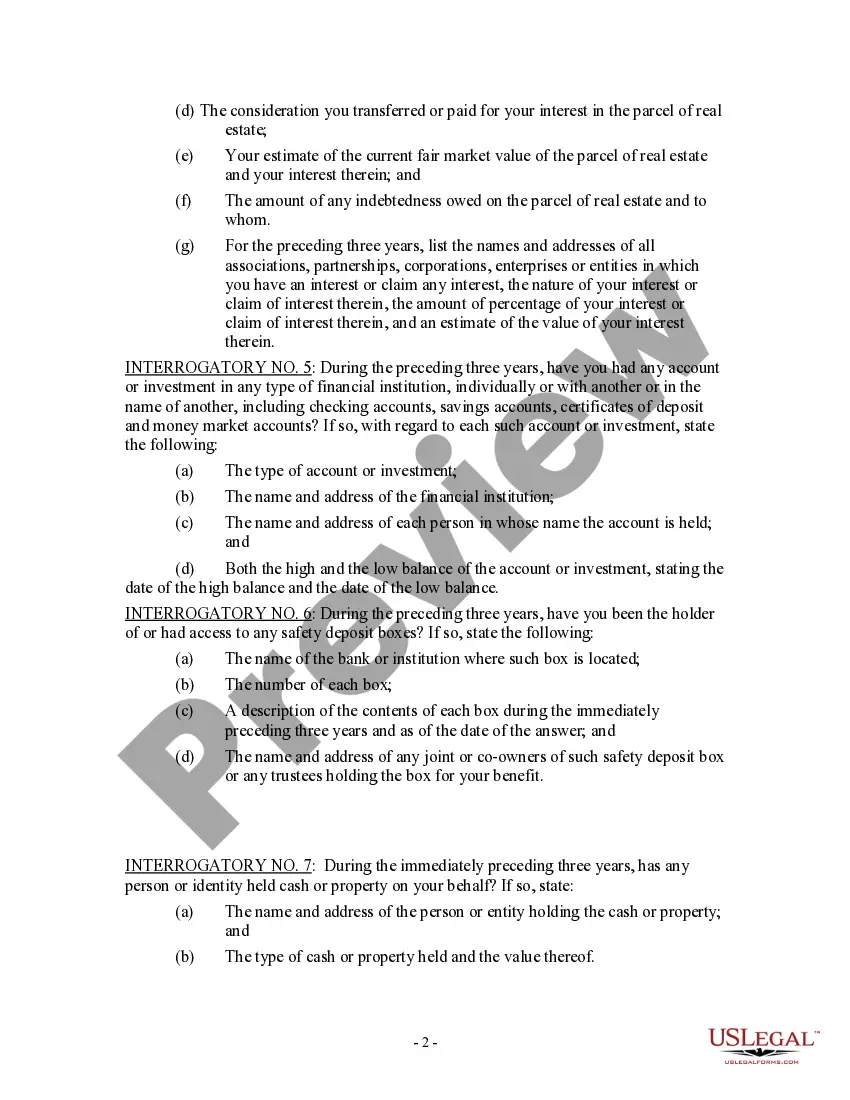
- Information about real estate ownership and related debts.
- Details of bank accounts and financial investments, including balances.
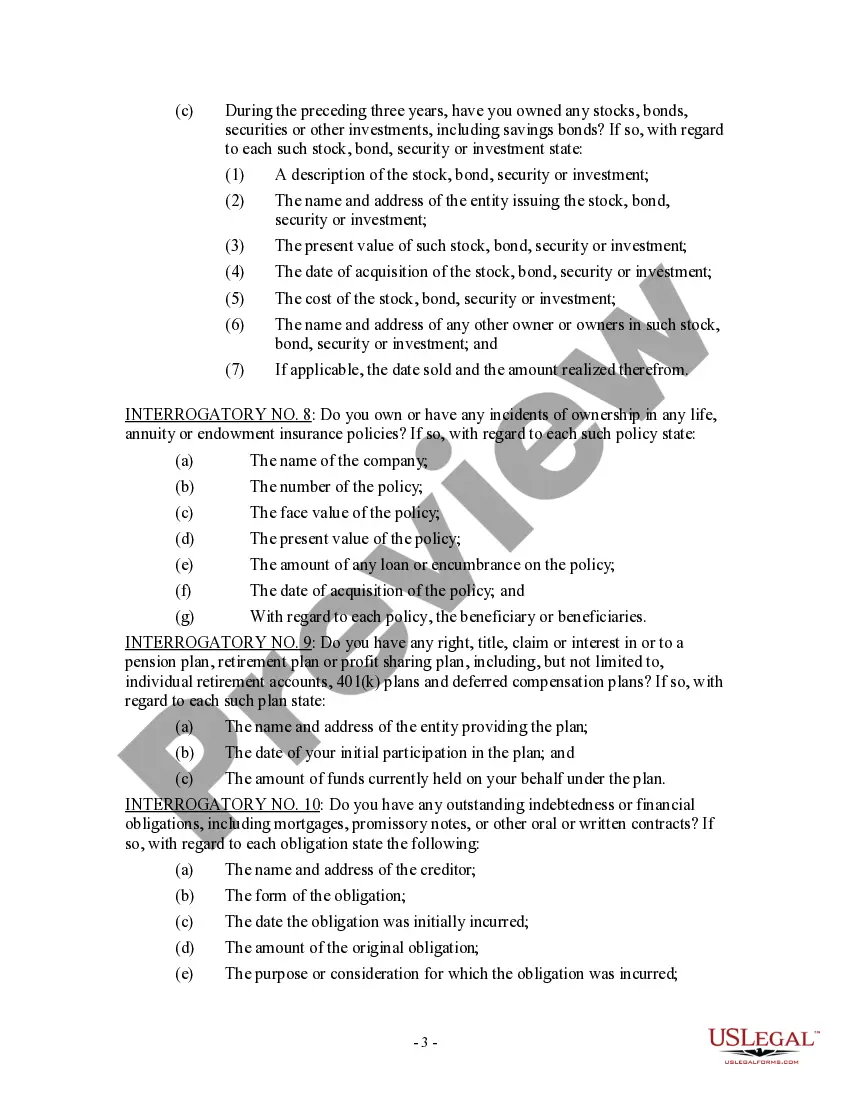
- Disclosure of any outstanding debts and financial obligations.
- Listing of marital and non-marital property and claims.
- Inquiry about gifts, loans, and contributions related to property.
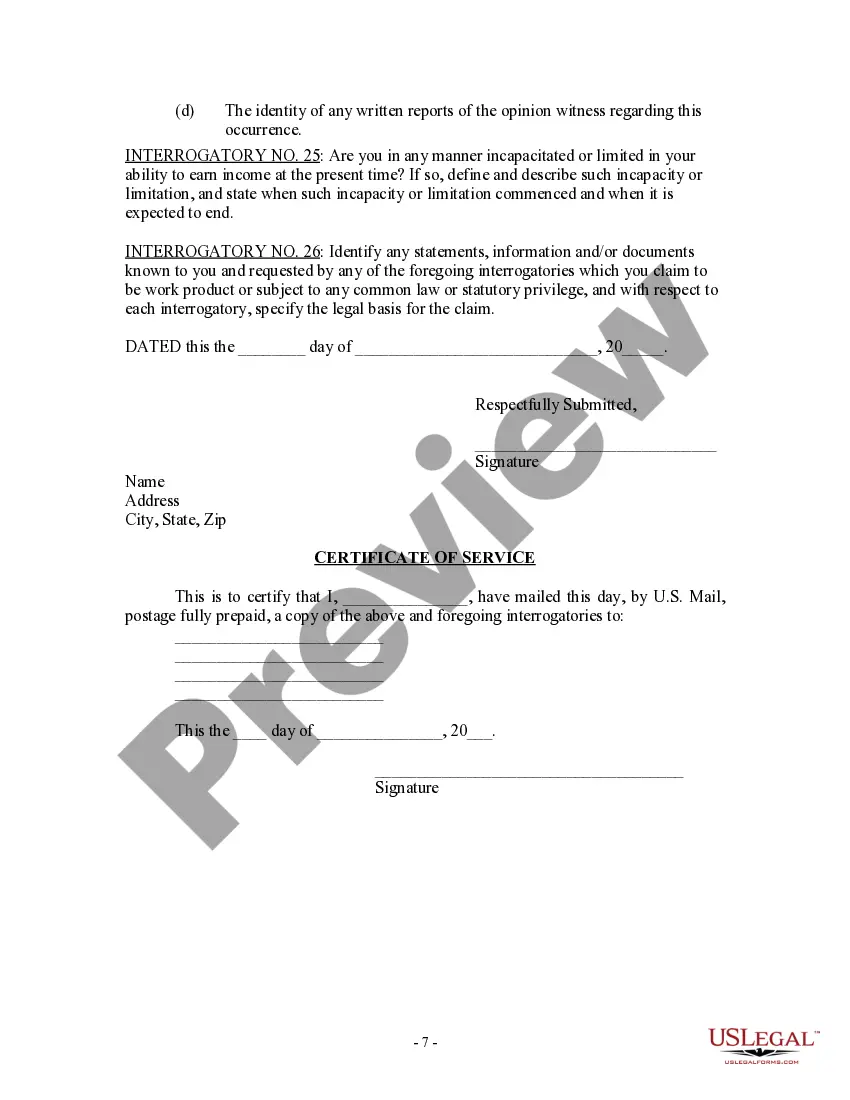
- Witnesses and opinion witnesses' information for potential trial testimonies.
Situations where this form applies
This form is commonly used during divorce proceedings to formally request critical financial information and documentation from the opposing party. It is essential for ensuring full disclosure of assets, debts, and financial situations necessary for equitable distribution in the divorce settlement. Use this form when preparing for discovery, especially if you anticipate litigation or require comprehensive financial transparency from your spouse.
Who needs this form
This form is intended for:
- Individuals initiating a divorce who need to gather information from the other spouse (Plaintiff).
- Defendants in a divorce who are required to respond to interrogatories from the Plaintiff.
- Legal representatives managing divorce cases for their clients.
Completing this form step by step
- Provide your full name, address, and other identifying information at the beginning of the form.
- Answer all interrogatories thoroughly, focusing on honesty and accuracy regarding financial and personal details.
- Attach any necessary documentation that supports your answers, such as financial statements or employment records.
- Ensure that all responses are clear, concise, and relevant to your case.
- Sign and date the form, and include a certificate of service to confirm that the other party received a copy.
Notarization guidance
This form does not typically require notarization unless specified by local law. However, it is important to check your jurisdiction's requirements to ensure compliance with court submissions.
Get your form ready online
Our built-in tools help you complete, sign, share, and store your documents in one place.
Make edits, fill in missing information, and update formatting in US Legal Forms—just like you would in MS Word.
Download a copy, print it, send it by email, or mail it via USPS—whatever works best for your next step.
Sign and collect signatures with our SignNow integration. Send to multiple recipients, set reminders, and more. Go Premium to unlock E-Sign.
If this form requires notarization, complete it online through a secure video call—no need to meet a notary in person or wait for an appointment.
We protect your documents and personal data by following strict security and privacy standards.
Make edits, fill in missing information, and update formatting in US Legal Forms—just like you would in MS Word.
Download a copy, print it, send it by email, or mail it via USPS—whatever works best for your next step.
Sign and collect signatures with our SignNow integration. Send to multiple recipients, set reminders, and more. Go Premium to unlock E-Sign.

If this form requires notarization, complete it online through a secure video call—no need to meet a notary in person or wait for an appointment.

We protect your documents and personal data by following strict security and privacy standards.
Common mistakes to avoid
- Failing to answer all interrogatories completely, leaving out critical information.
- Providing vague or unclear answers that may lead to further disputes.
- Neglecting to attach supporting documents or evidence that bolster responses.
- Missing deadlines for submitting interrogatories, which may affect the case timeline.
- Not adequately reviewing local court rules that govern the completion of interrogatories.
Why complete this form online
- Convenient access to legal forms anytime and anywhere.
- Editable templates that can be tailored to fit your specific case needs.
- Ensures that all legal language is up-to-date and compliant with state laws.
- Reduces the risk of errors by providing easy-to-follow instructions.
- Streamlined processing with instant downloading for immediate use.
Summary of main points
- The Discovery Interrogatories for Divorce Proceeding is essential for gathering critical information during divorce litigation.
- Understanding how to complete this form accurately is vital for a fair and equitable divorce process.
- Customization of the form to reflect specific circumstances is encouraged for effective communication.
Looking for another form?


Form popularity
FAQ
Motions to Compel If a party doesn't respond to interrogatories or requests for production, then the party seeking those answers must file a motion to compel with the court. If the court grants the motion to compel, then the party who objected or failed to answer must then do so.
The plaintiff must respond by the deadline. There are different ways to make sure you get each kind of discovery if the plaintiff does not give it to you by the deadline. If the plaintiff does not respond to the court order, then you can file a Motion to Dismiss and you may win your case.
Responding to Form InterrogatoriesAnswer each question, being careful to answer each subpart, if one exists. Read the question carefully, and answer only what it asks. You may attach exhibits, if necessary. The response must be verified, meaning you must swear that the responses given are true.
Anything a witness or party saw, heard, or did in connection with the dispute. anything anyone said at a particular time and place (for example, in a business meeting related to the dispute or after a car accident that turned into a lawsuit)
Interrogatories are part of the discovery process of divorce. They allow you and your soon-to-be/already ex spouse to ask questions that must be responded to in writing under oath. These answer are then used to determine facts in the case, as well as to question each side if/when the case goes to trial.
You must answer each interrogatory separately and fully in writing under oath, unless you object to it. You must explain why you object. You must sign your answers and objections.
The purpose of discovery is to make the parties aware of the evidence that may be presented at trial. The process prevents trial by ambush, where one side does not learn of the other side's evidence or witnesses until the trial. Taking depositions is one of the most common methods of discovery.
So, can you refuse to answer interrogatories? The answer is, no, you may not. You must answer a Rule 33 interrogatory within 30 days of being served with it. That answer must either permit inspection of the requested information or object to the production of the information for a specific reason.