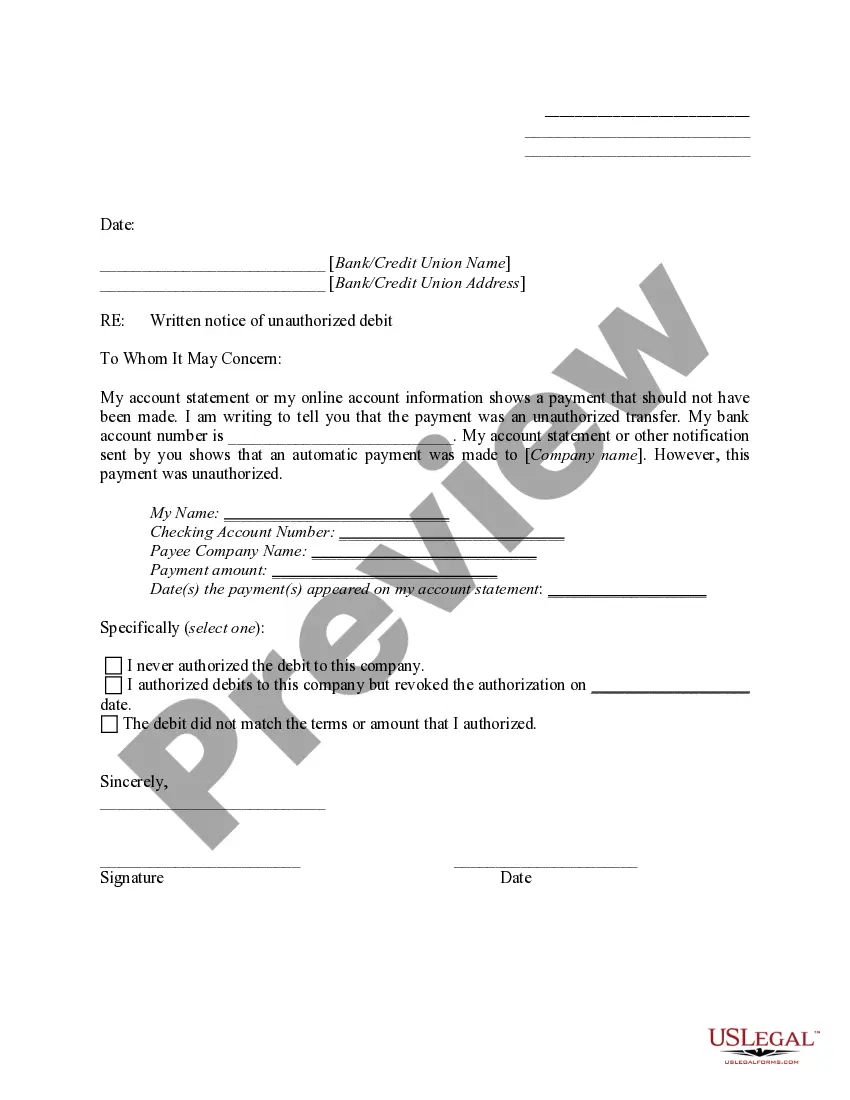
Virginia Rental Lease Pooling Provision
Overview of this form
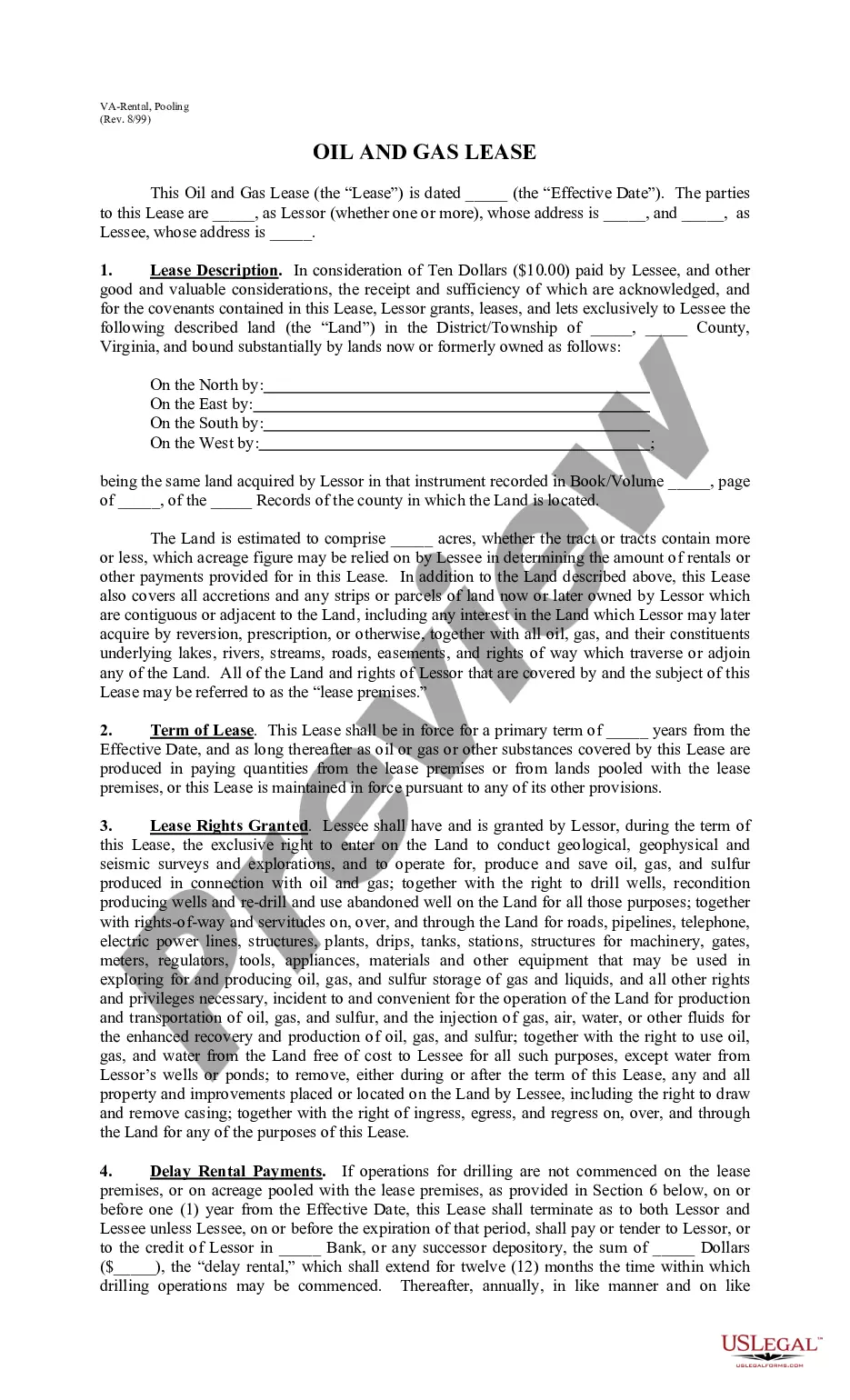
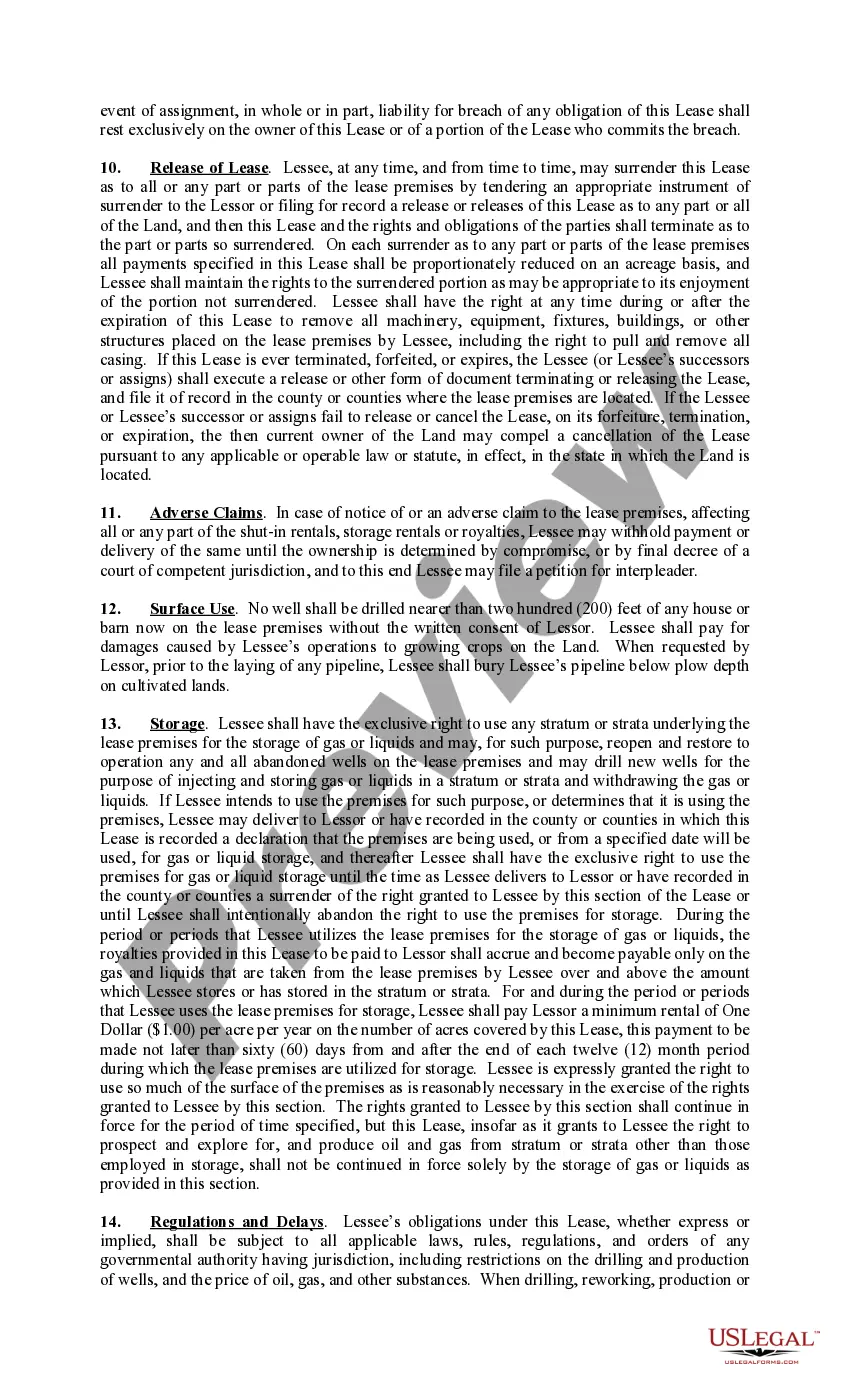
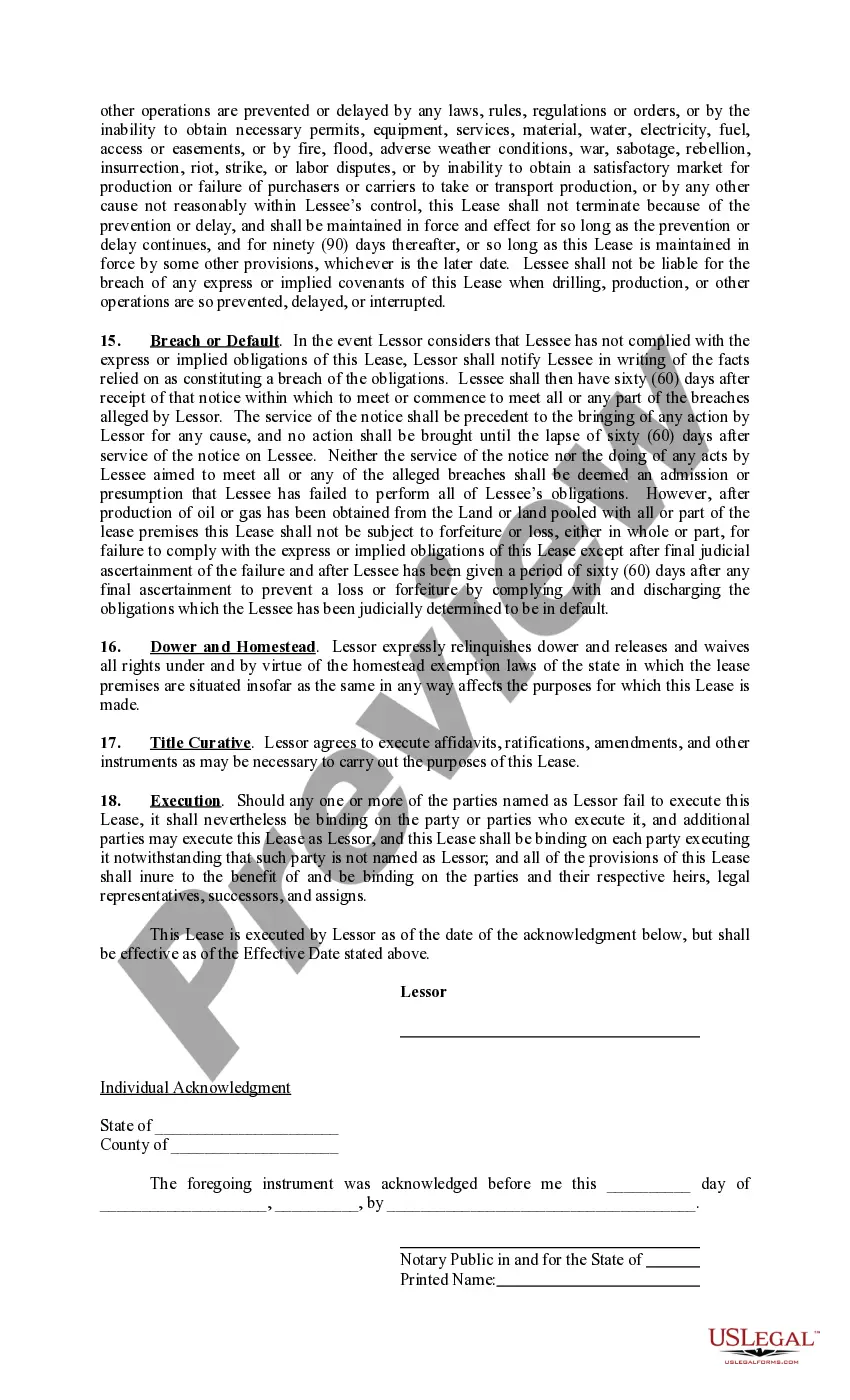
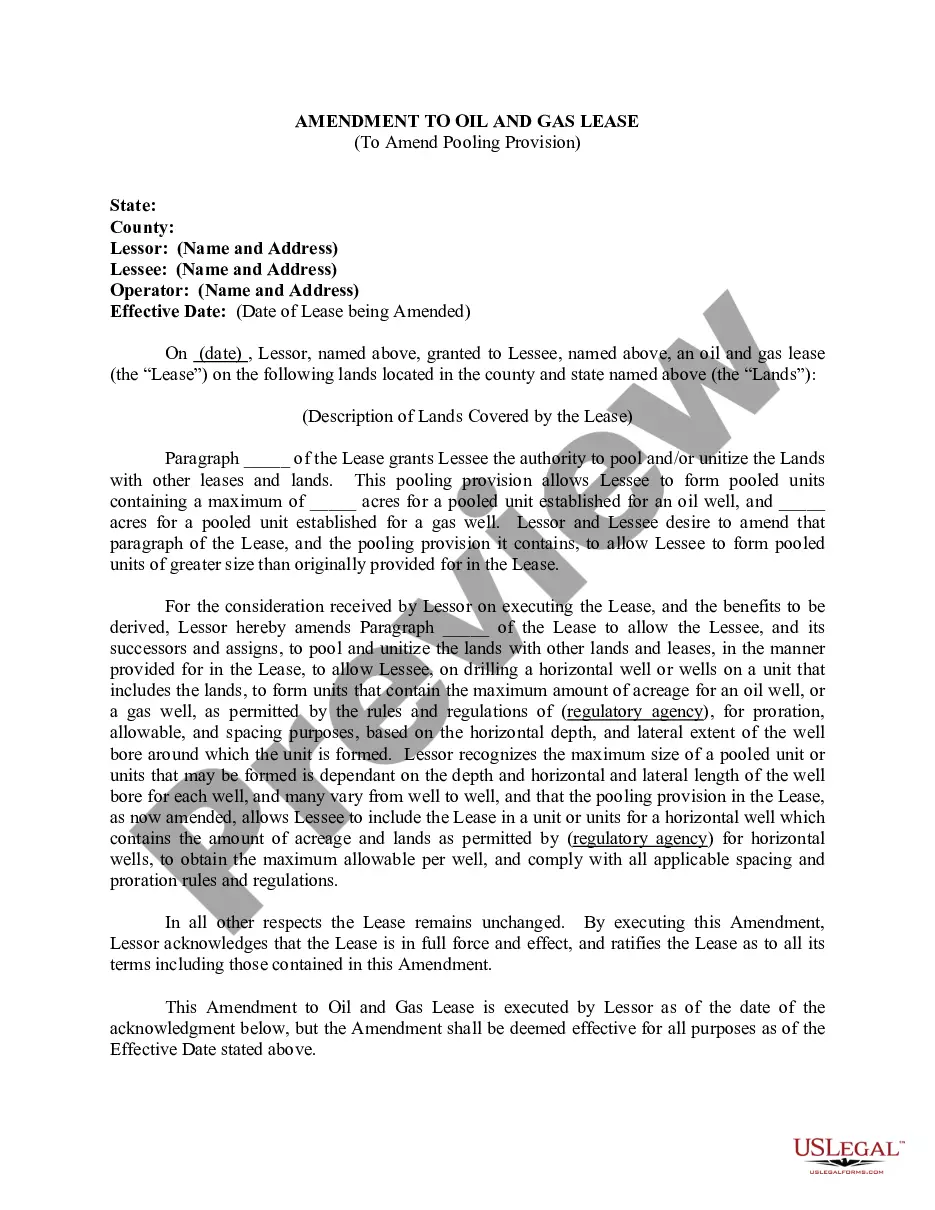
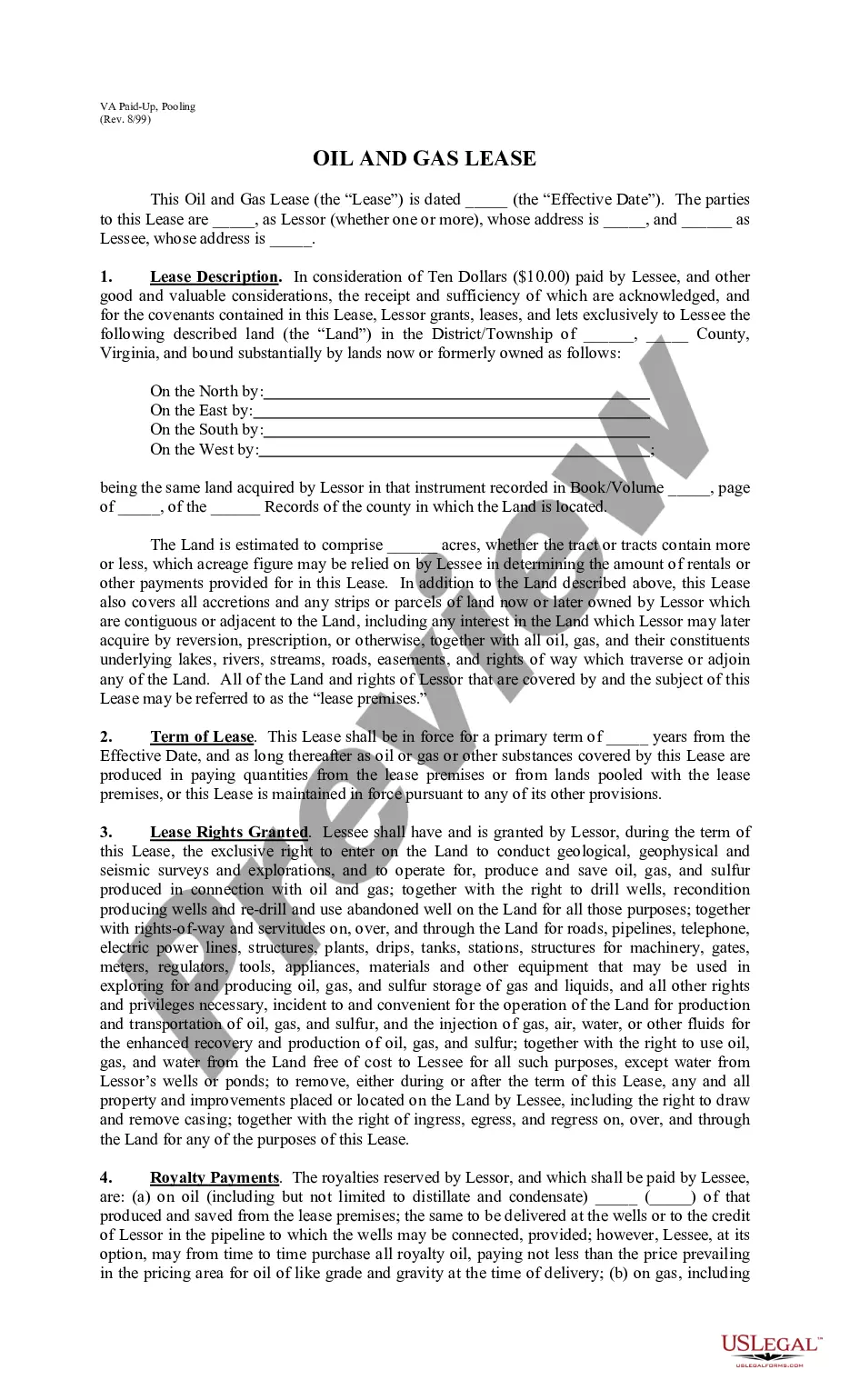
The Rental Lease Pooling Provision is a legal document specific to Virginia that outlines the terms under which a lessor (landowner) grants a lessee (tenant) the right to explore and extract minerals, including oil and gas, from specified lands. This form also incorporates provisions for pooling, which allows multiple properties or rights to be combined for resource exploration or production. Understanding this form is crucial for landowners and lessees looking to navigate the complexities of lease agreements in resource extraction ventures.
Key components of this form
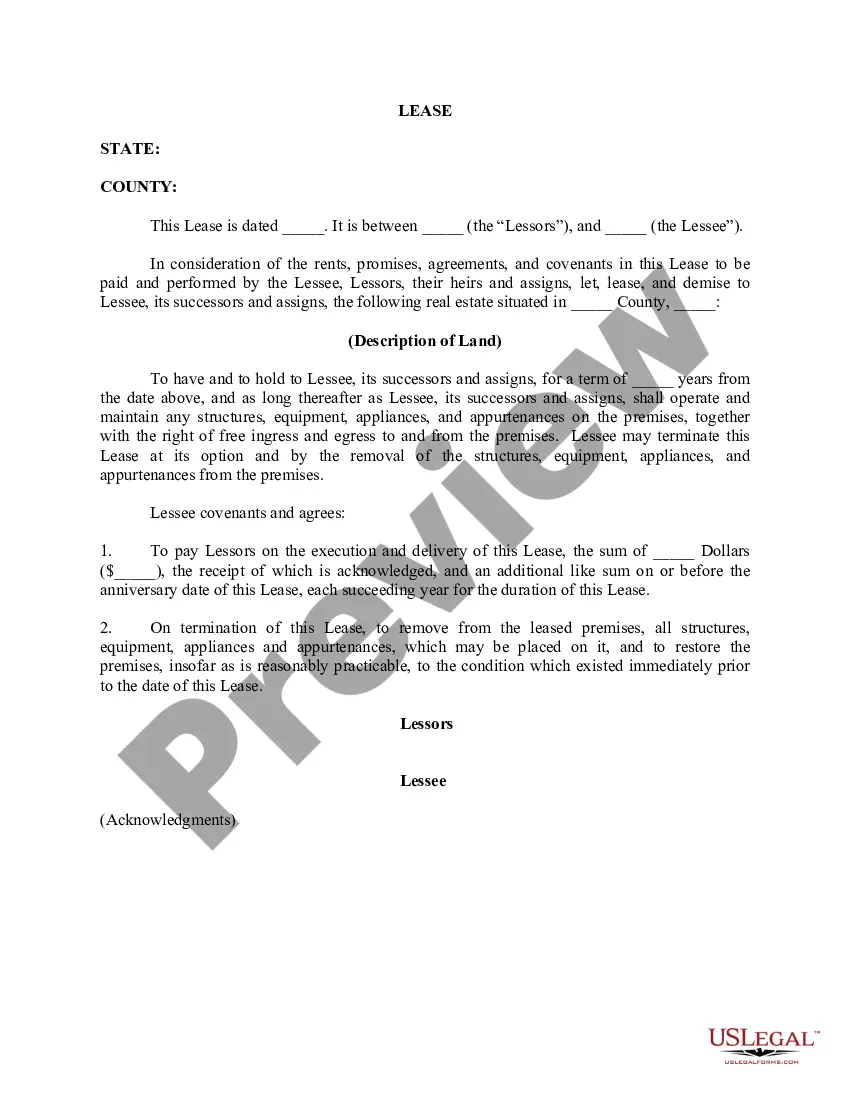
- Lease description, including details about the land and its dimensions.
- Term of lease, specifying the duration and conditions for extension.
- Rights granted to the lessee to explore, extract, and store natural resources.
- Delay rental payments details to ensure lease continuation if operations are delayed.
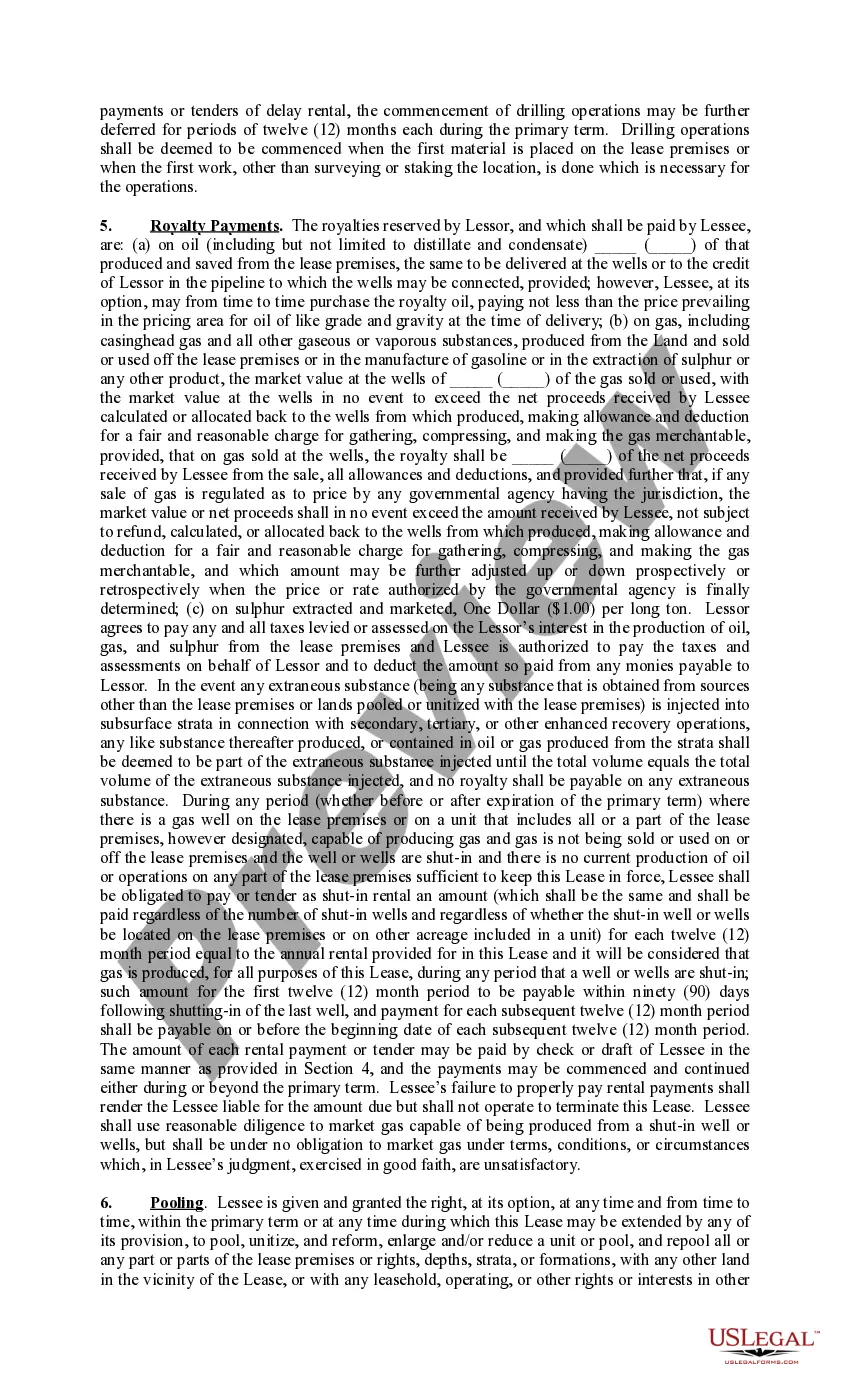
- Royalty payment structure based on production and market values.
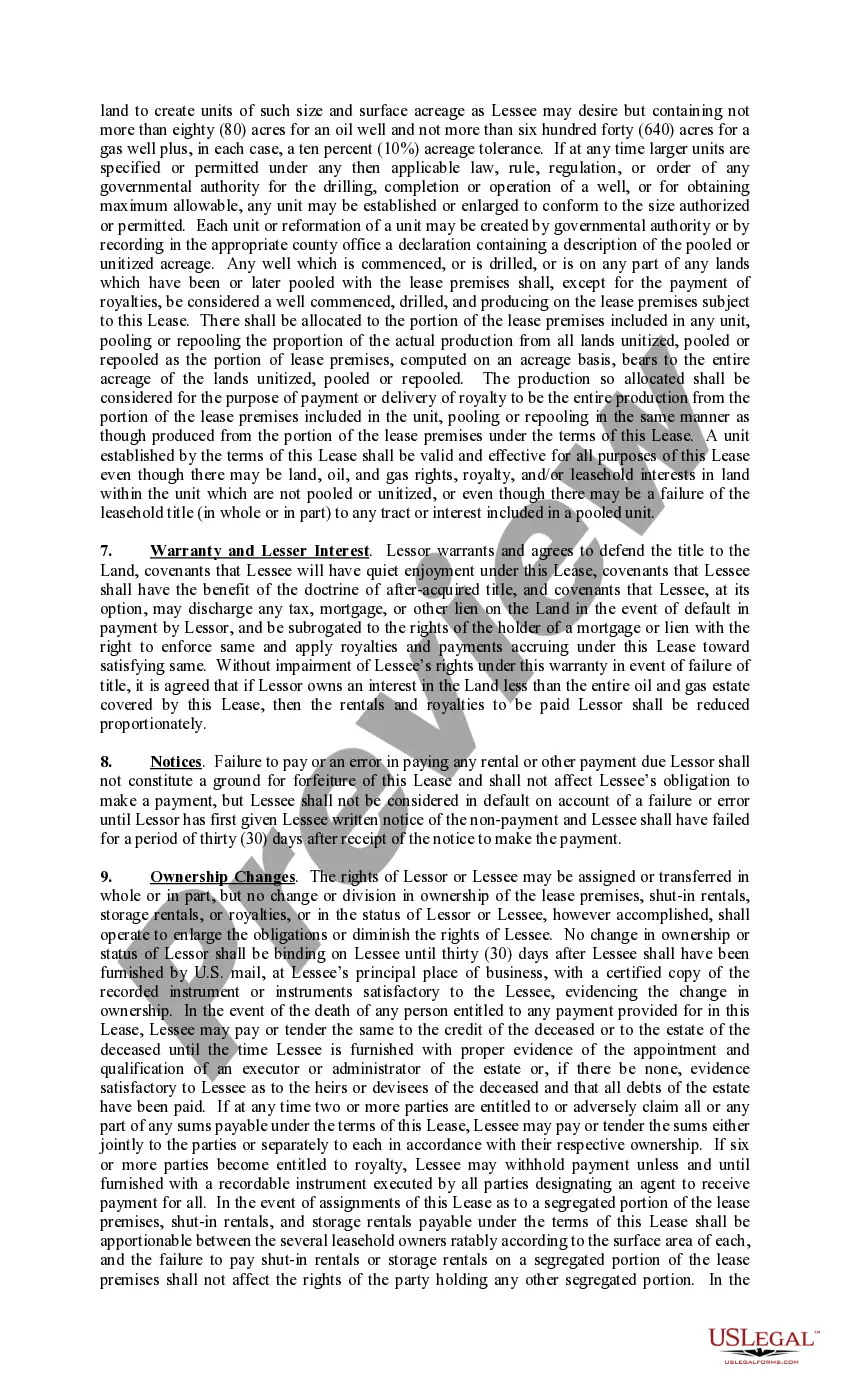
- Pooling rights allowing the lessee to combine operations with adjacent lands or properties.
When this form is needed
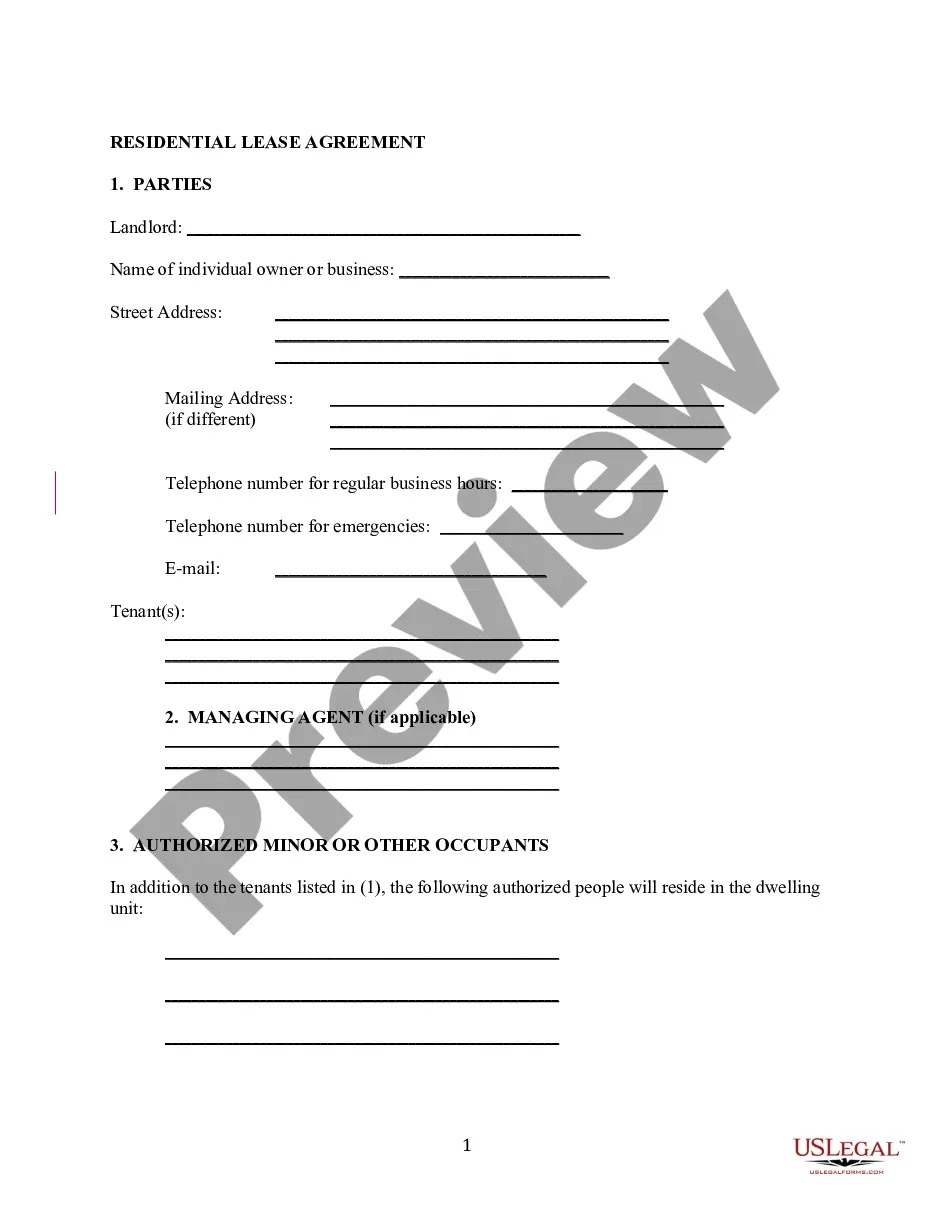
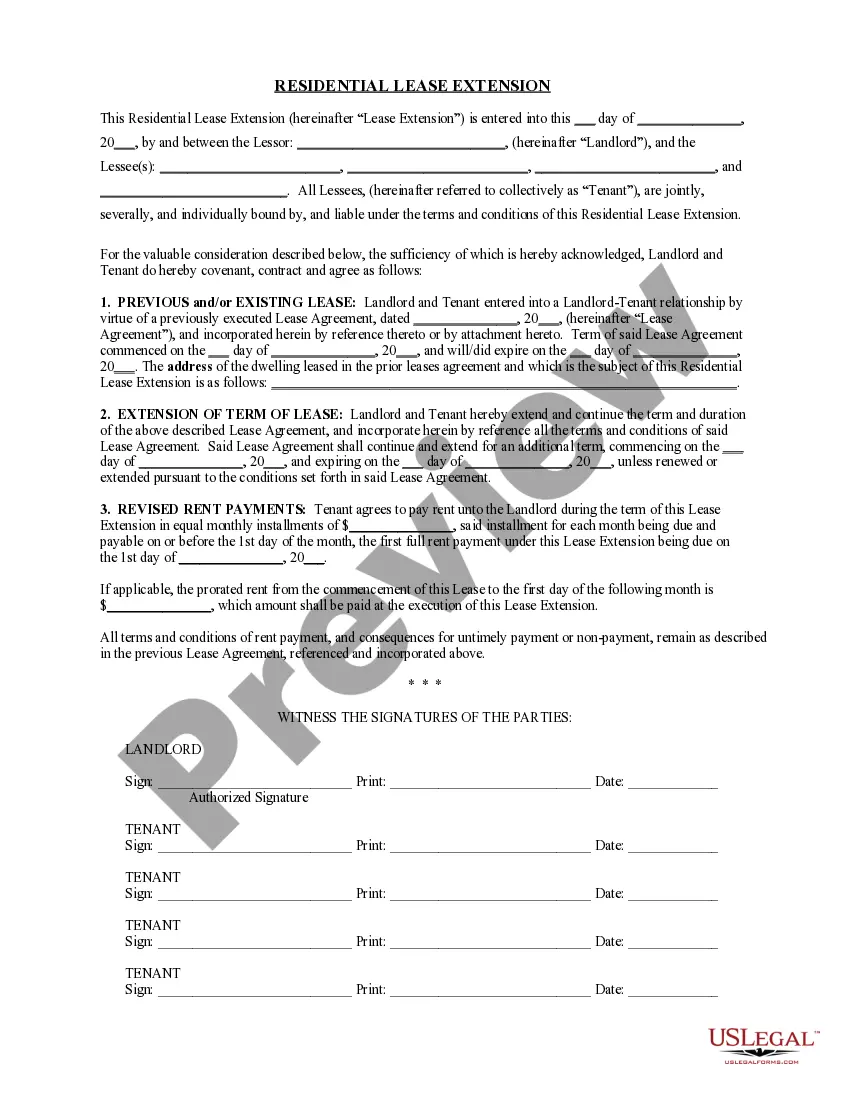
This form is used when a landowner wishes to lease their property for natural resource extraction, specifically in Virginia. Scenarios include landowners negotiating with oil and gas companies for exploration rights, or lessees seeking structured agreements for resource development while ensuring compliance with legal standards. It is essential in managing expectations related to rental payments, royalties, and shared operational rights through pooling provisions.
Who needs this form
- Landowners in Virginia looking to lease their property for mineral extraction.
- Oil and gas companies or lessees seeking legally binding agreements for resource exploration and production.
- Attorneys assisting clients with drafting or negotiating lease agreements in resource-rich areas.
Completing this form step by step
- Identify the parties involved, including the lessor and lessee details.
- Specify the property by accurately describing the land and its boundaries.
- Enter the effective date of the lease and the duration of the primary term.
- Detail the rights being granted for the exploration and extraction of resources.
- Clearly outline the royalty payment structure based on production outputs.
- Include provisions for pooling, defining how and with what properties the pooling may occur.
Notarization guidance
This form does not typically require notarization unless specified by local law. Always check local regulations or consult an attorney to confirm.
Get your form ready online
Our built-in tools help you complete, sign, share, and store your documents in one place.
Make edits, fill in missing information, and update formatting in US Legal Forms—just like you would in MS Word.
Download a copy, print it, send it by email, or mail it via USPS—whatever works best for your next step.
Sign and collect signatures with our SignNow integration. Send to multiple recipients, set reminders, and more. Go Premium to unlock E-Sign.
If this form requires notarization, complete it online through a secure video call—no need to meet a notary in person or wait for an appointment.
We protect your documents and personal data by following strict security and privacy standards.

Make edits, fill in missing information, and update formatting in US Legal Forms—just like you would in MS Word.

Download a copy, print it, send it by email, or mail it via USPS—whatever works best for your next step.

Sign and collect signatures with our SignNow integration. Send to multiple recipients, set reminders, and more. Go Premium to unlock E-Sign.

If this form requires notarization, complete it online through a secure video call—no need to meet a notary in person or wait for an appointment.

We protect your documents and personal data by following strict security and privacy standards.
Avoid these common issues
- Failing to accurately describe the property boundaries, which can lead to disputes.
- Not specifying the correct duration of the lease, causing confusion about renewal terms.
- Omitting potential pooling rights or misinterpreting their impact on leasing agreements.
- Neglecting to outline the payment structure properly, leading to conflict over royalties.
Benefits of using this form online
- Convenience of accessing and downloading a legally vetted document anytime.
- Editability allows for customization specific to individual circumstances.
- Reliability ensuring that the lease complies with current legal standards.
Legal use & context
- This lease form establishes clear legal rights for both lessor and lessee.
- It ensures compliance with Virginia's resource extraction laws, facilitating enforceability.
- Understanding pooling provisions can prevent legal disputes over resource rights.
Main things to remember
- The Rental Lease Pooling Provision is crucial for leasing land for mineral extraction in Virginia.
- Proper completion ensures legal protection and clarity for both parties.
- Pay attention to property descriptions, lease terms, and royalty structures to avoid disputes.
Looking for another form?



Form popularity
FAQ
Names of all tenants. Limits on occupancy. Term of the tenancy. Rent. Deposits and fees. Repairs and maintenance. Entry to rental property. Restrictions on tenant illegal activity.
Lease provisions are usually described as "boilerplate," since many leases use standard language. Boilerplate language in a lease may include the terms of the lease, payment dates, and late fees, among others.
Step 1: Obtain a Written Request. Invite the tenant to submit in writing the request to add another person to the lease. Step 2: Check the Property's Occupancy Limit. Step 3: Acquire a Completed Rental Application. Step 4: Make a Decision. Step 5: Review the Details With the Tenants.
A lease is automatically void when it is against the law, such as a lease for an illegal purpose. In other circumstances, like fraud or duress, a lease can be declared void at the request of one party but not the other.
What are Lease Clauses? Unlike lease rules that you decide, clauses are typically written specifically to comply with state and local landlord-tenant laws and are written in legal jargon.
A lease addendum allows a landlord or tenant to make changes to a current residential or commercial lease agreement.Once both parties agree and sign, the addendum should be added to the original lease.
An addendum must include the basic elements of any landlord/tenant agreement. You should include the date, the address of the rental property and the names of each party just as you would in the original lease.
Make good refers to the clause in a lease that set out how a tenant should leave a property when the lease comes to an end, whether by the expiry of the term or earlier termination. Make good is one of the most commonly disputed provisions of a lease.