Virginia Residential Lease
About this form
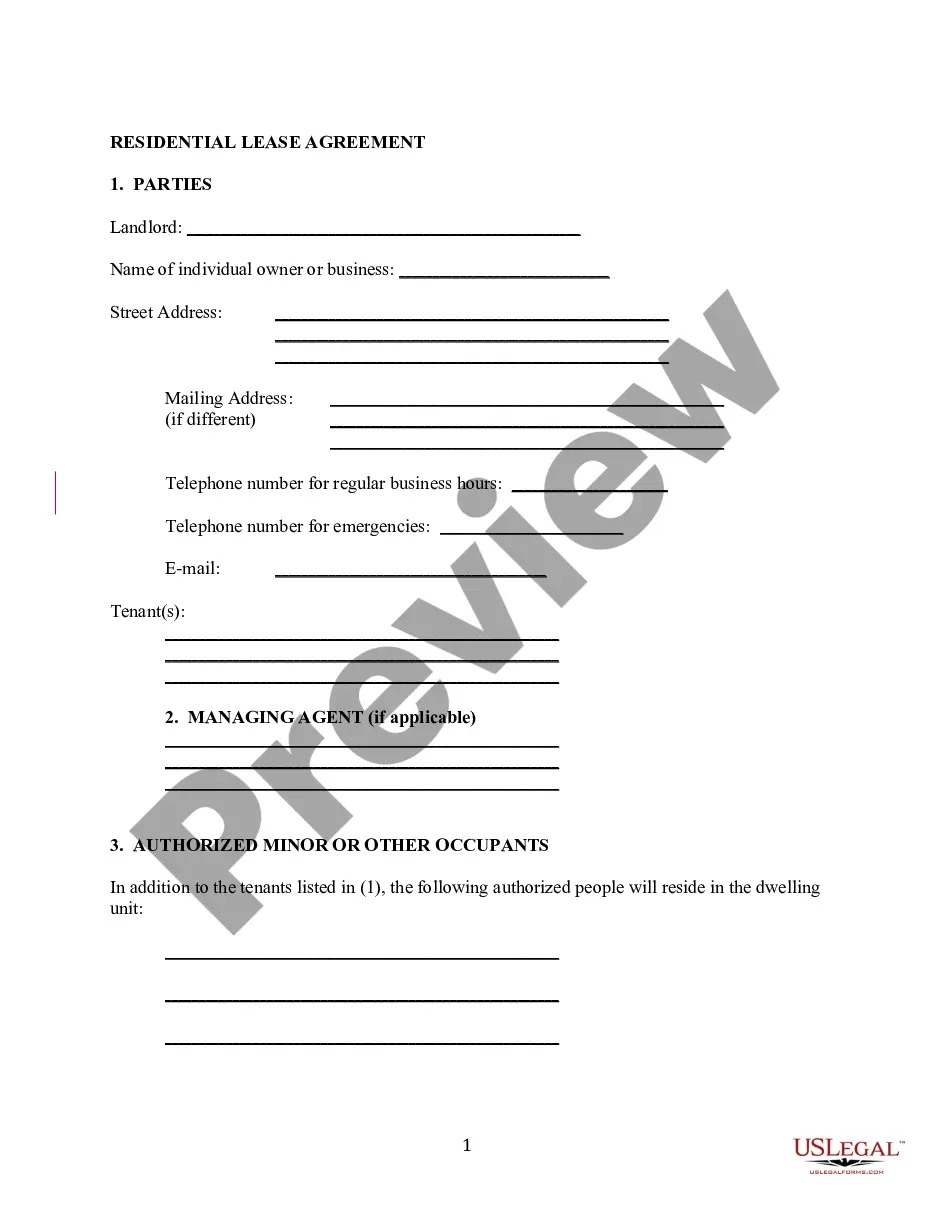
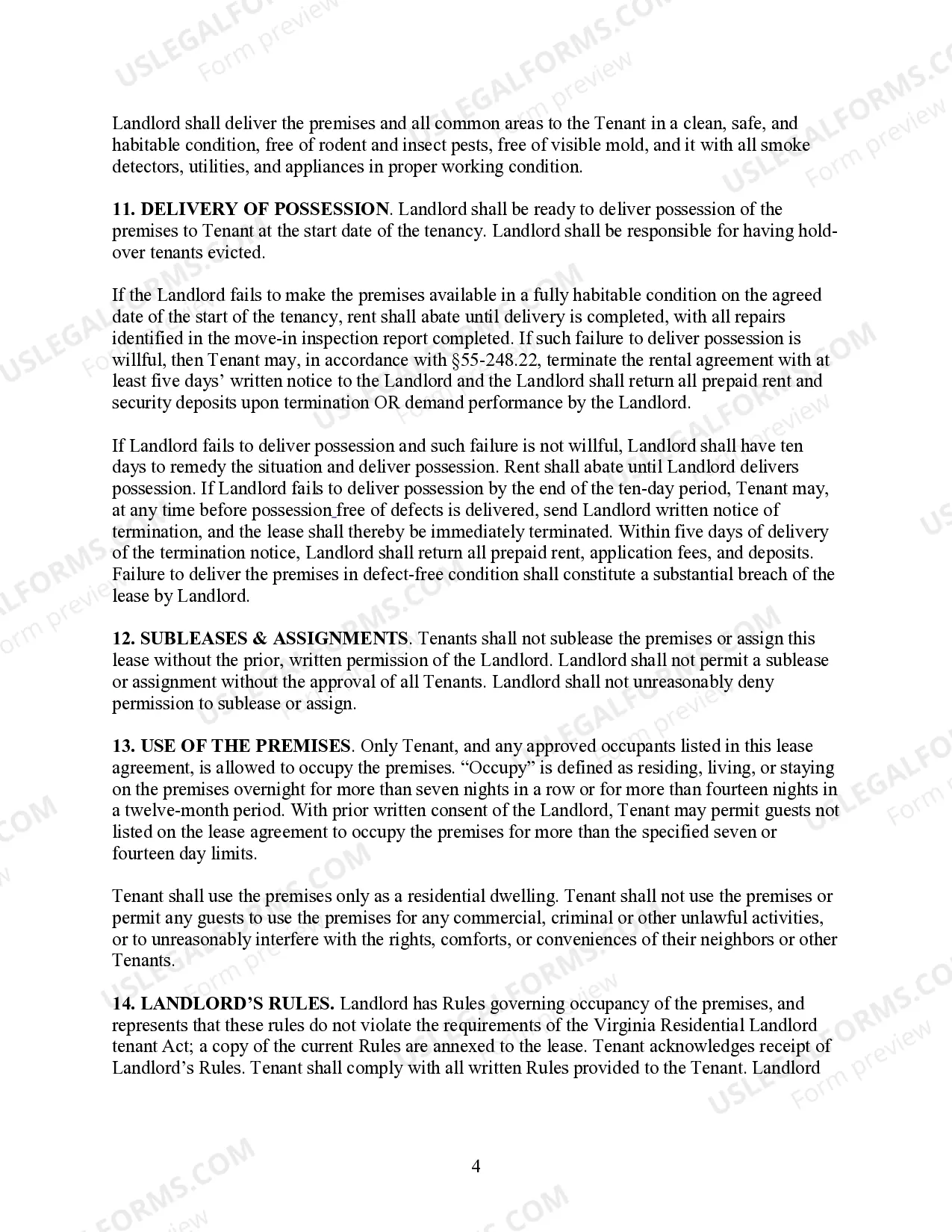
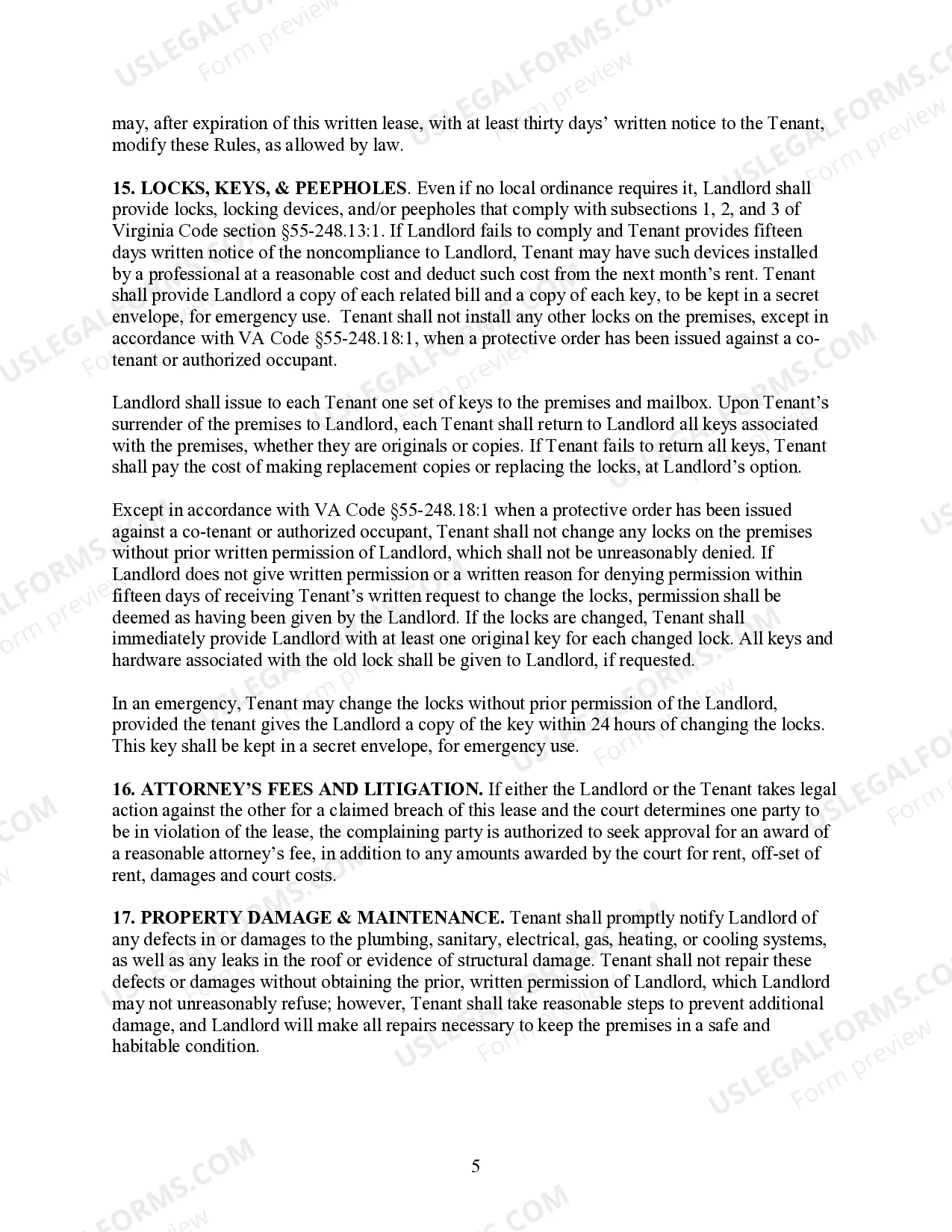
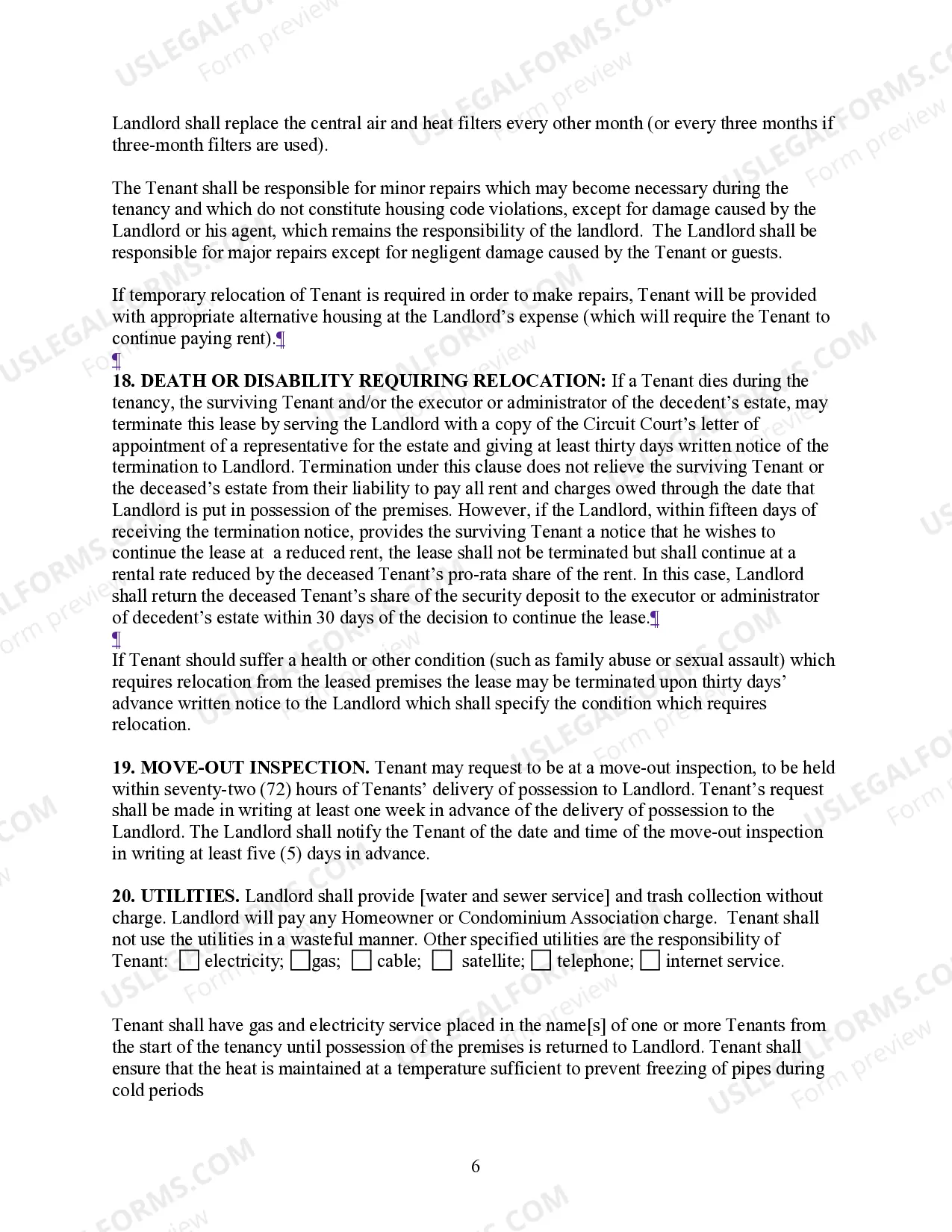
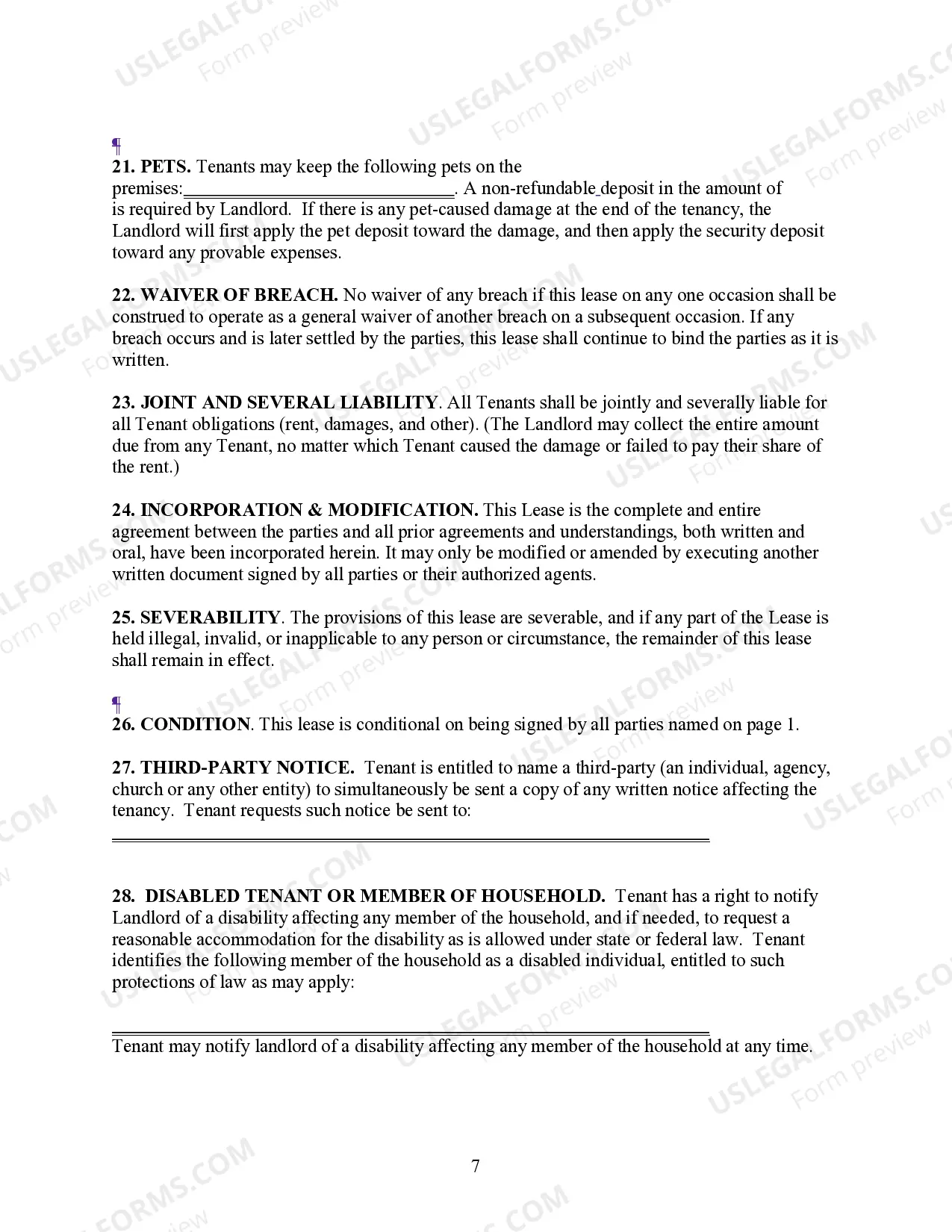
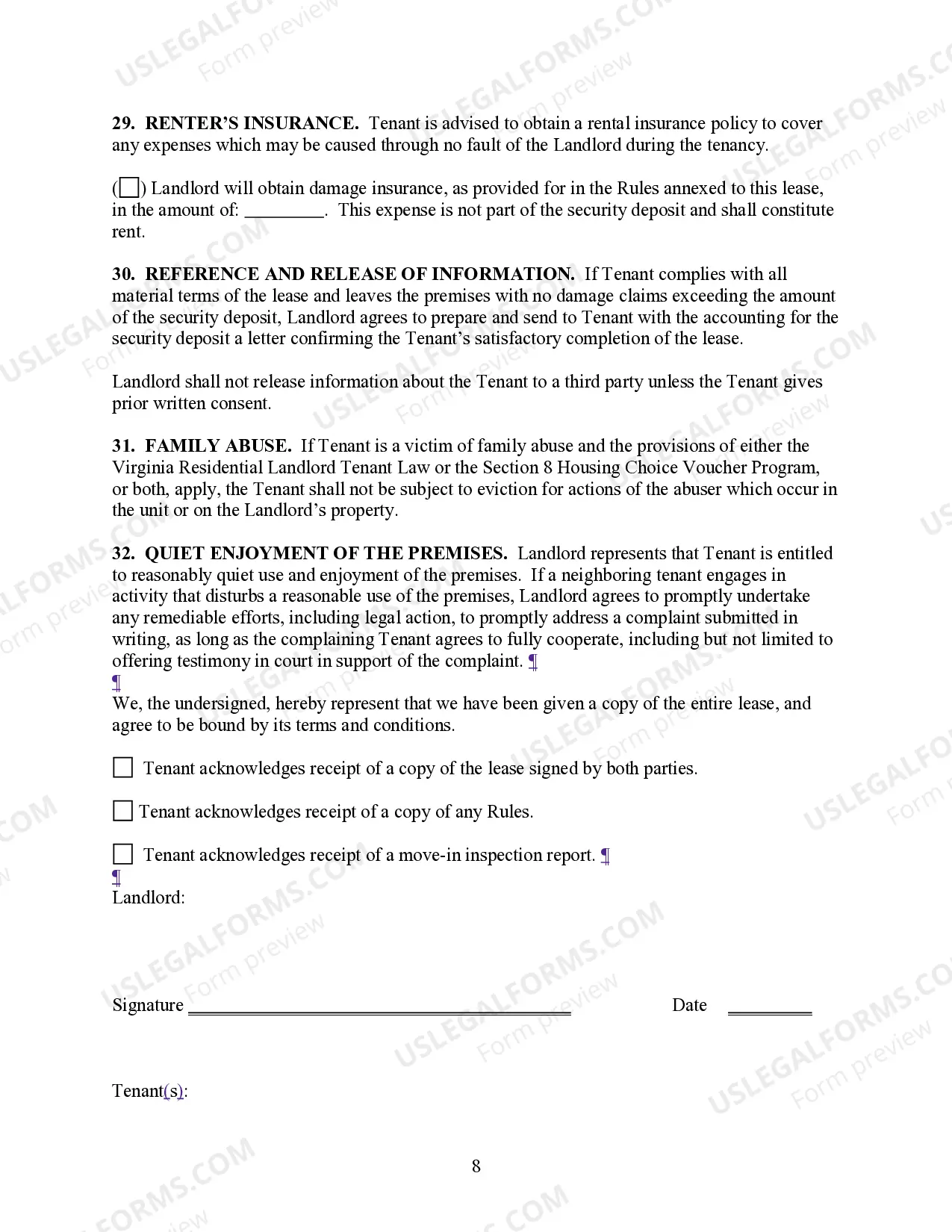
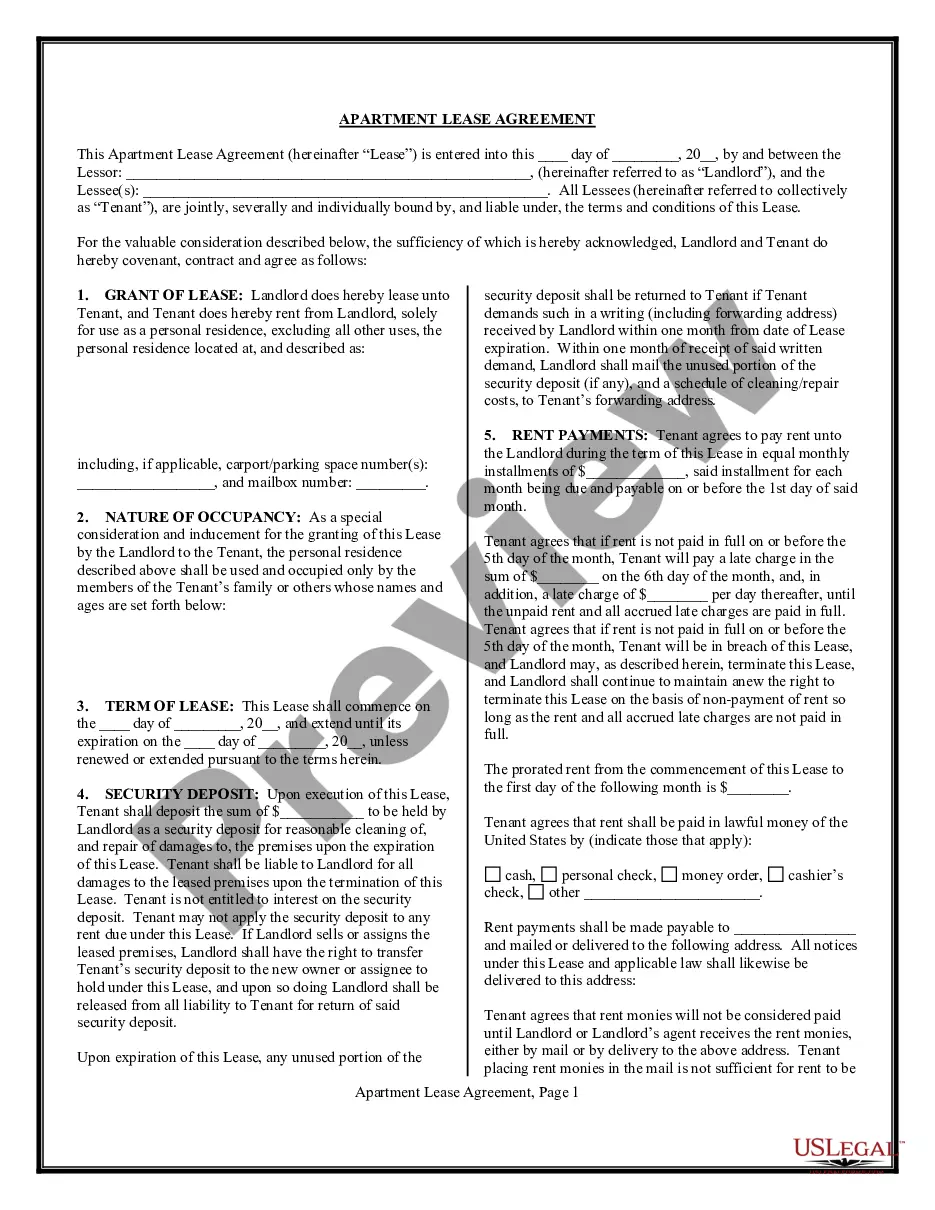
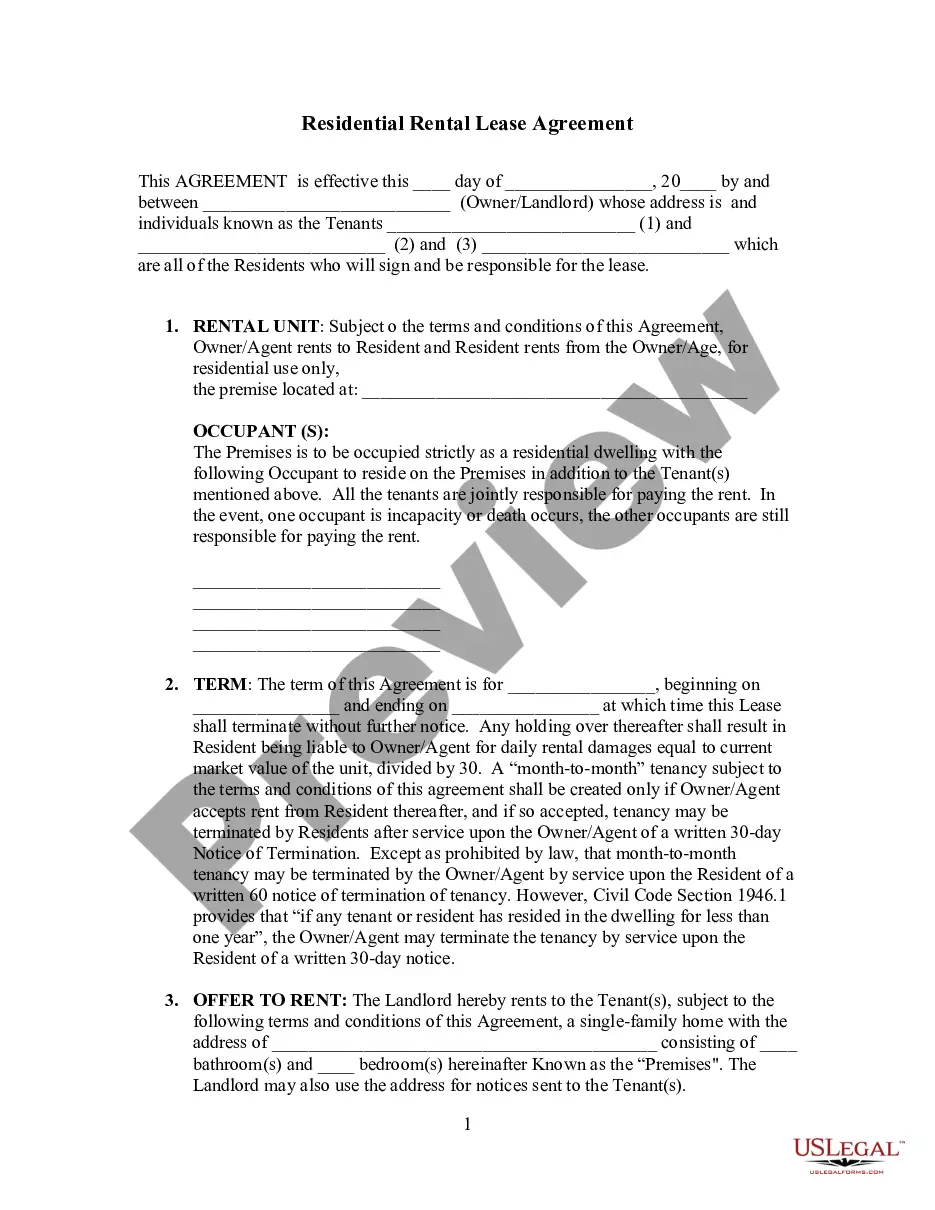
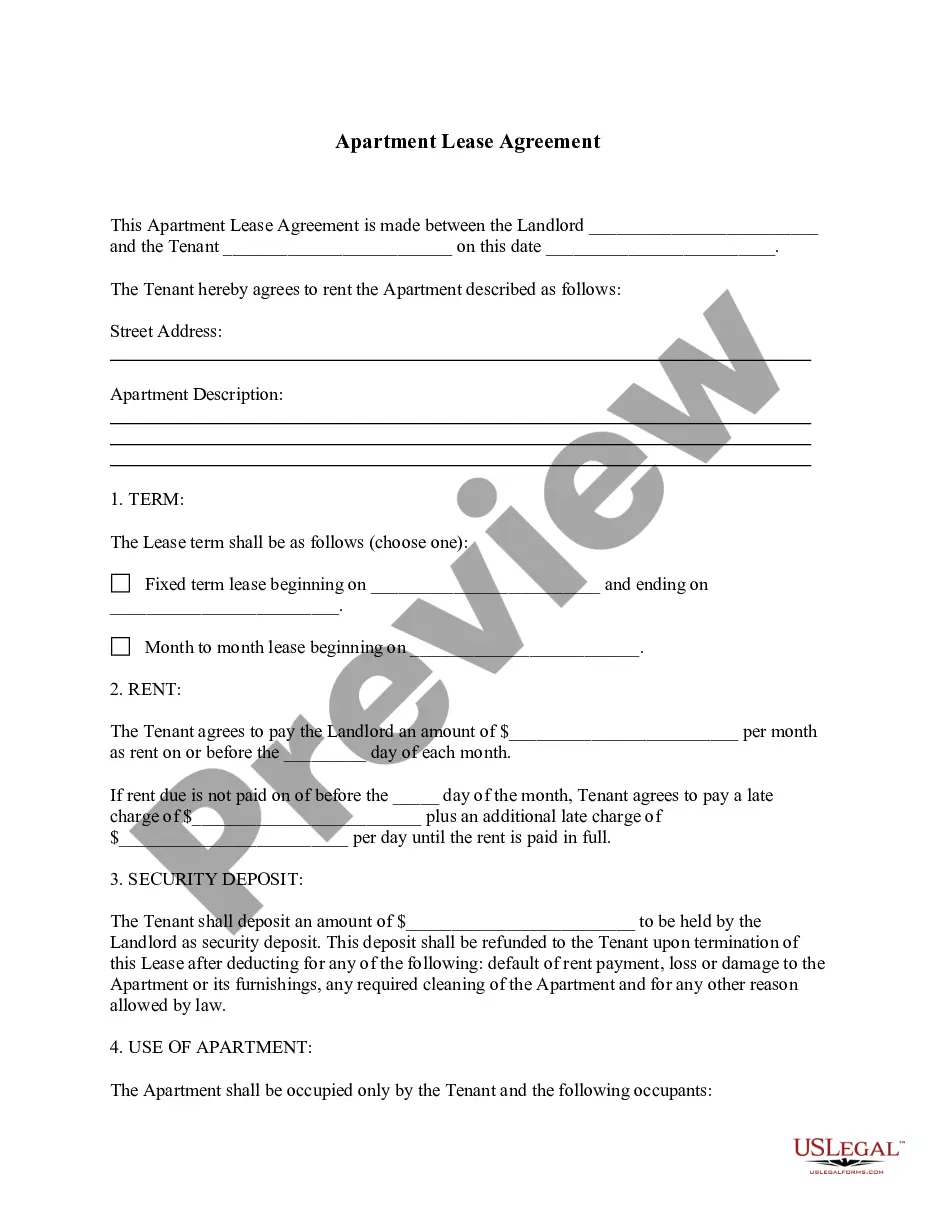
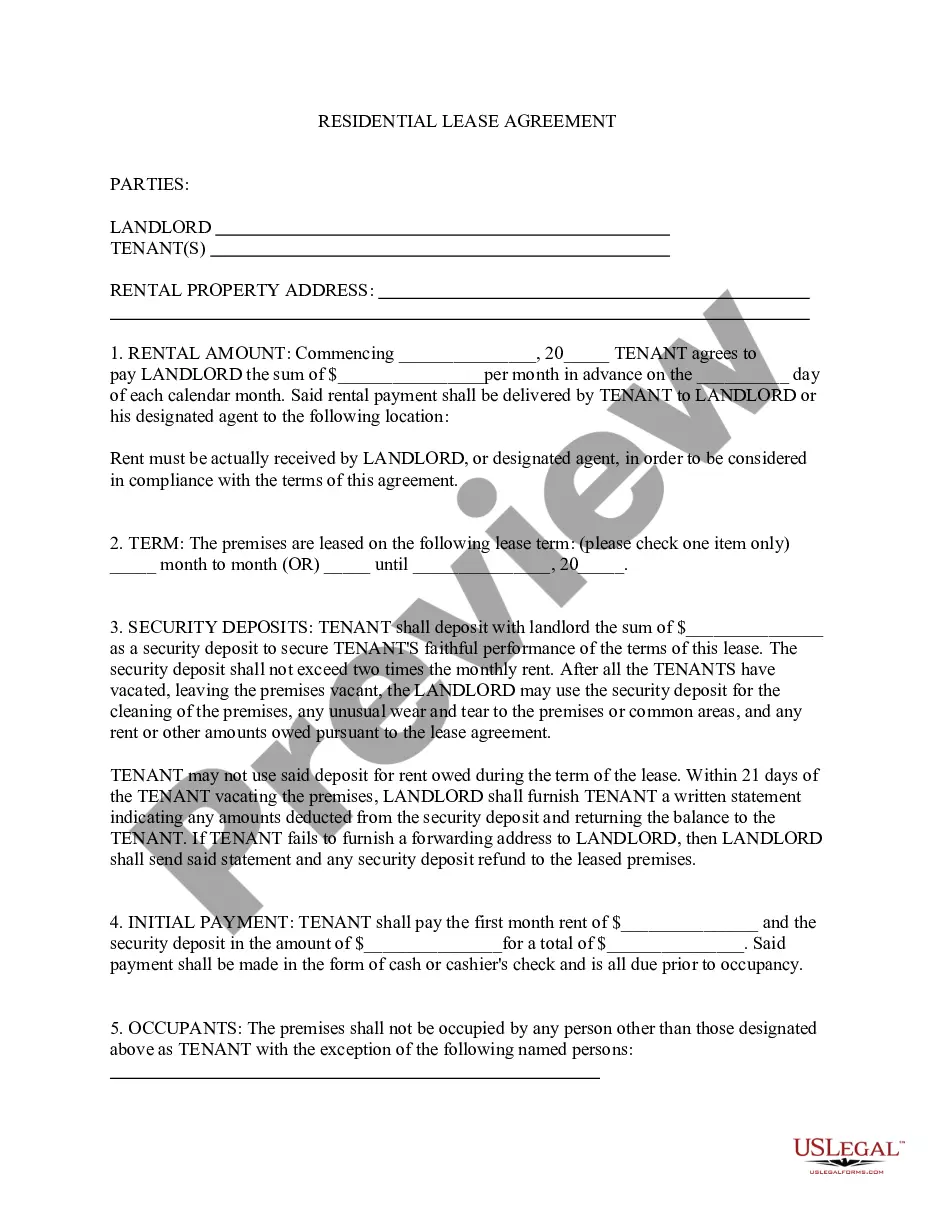
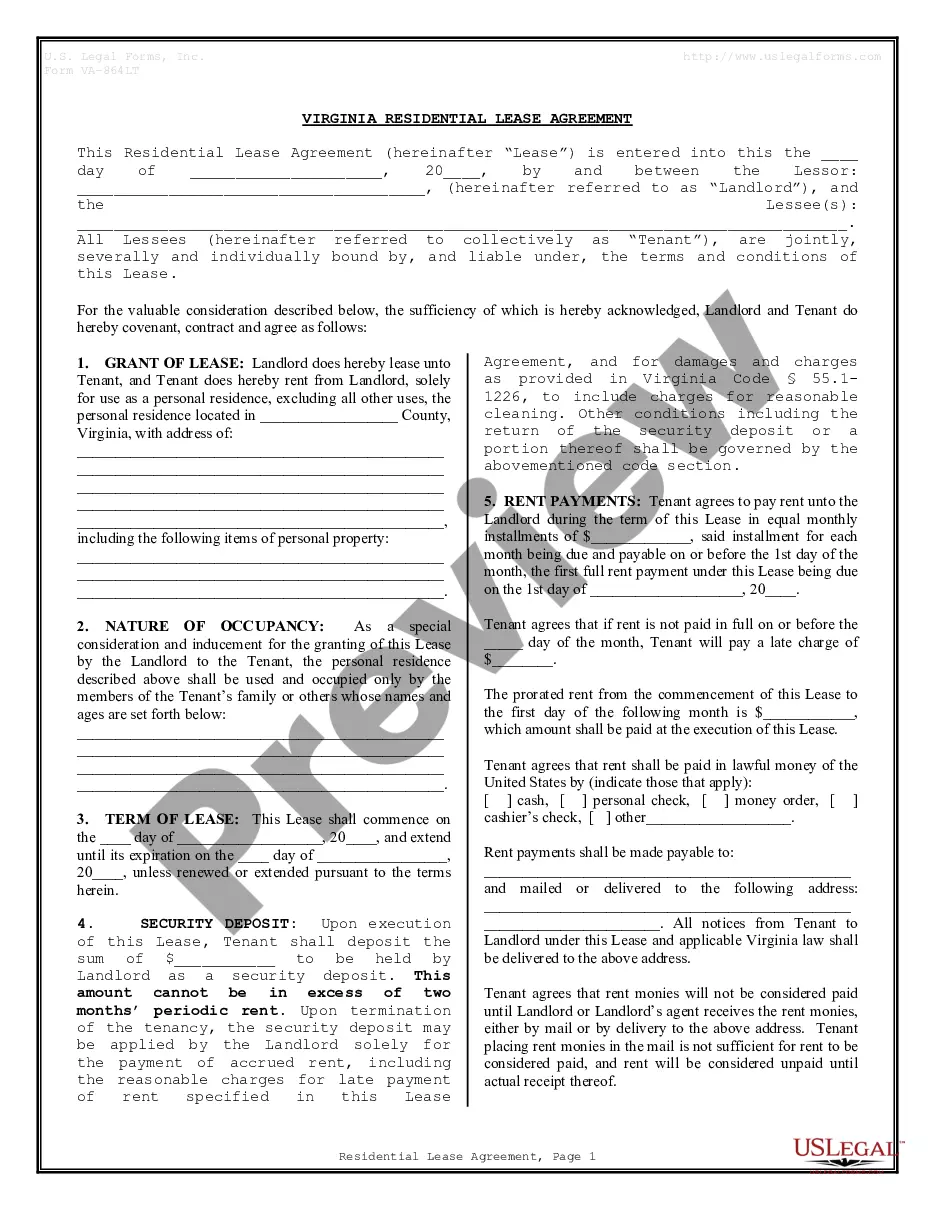
The Residential Lease agreement is a legal document that outlines the terms and conditions under which a landlord leases property to a tenant. This form is essential for establishing clear agreements between the parties regarding rent, responsibilities, and property use, providing both parties with rights and obligations. Unlike other rental agreements, this form includes specific clauses tailored to Virginia law, ensuring compliance with the Virginia Residential Landlord-Tenant Act.
Form components explained
- Parties involved: Names and contact information of the landlord and tenant(s).
- Premises description: Details about the rental property being leased.
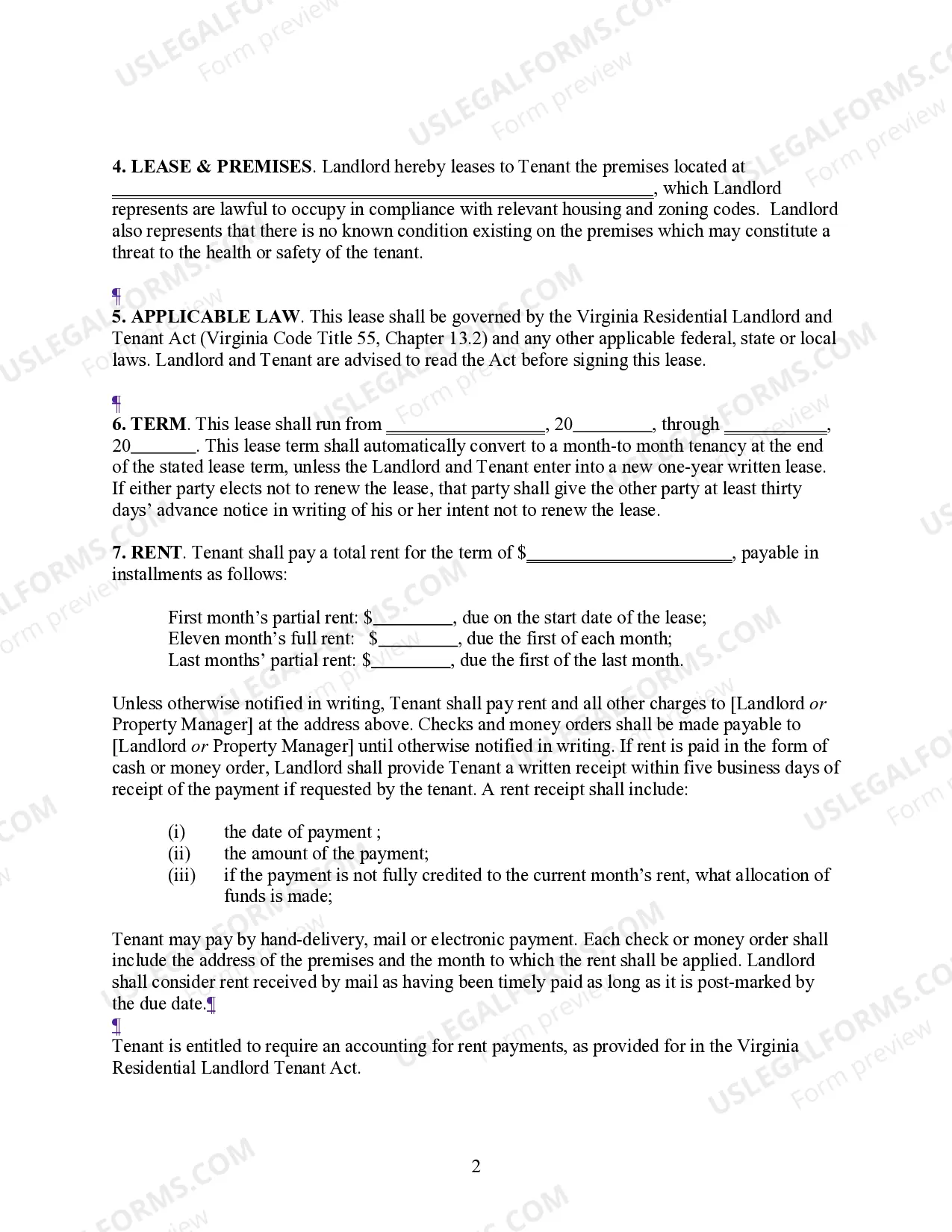
- Lease term: Start and end dates of the lease, including provisions for month-to-month tenancy.
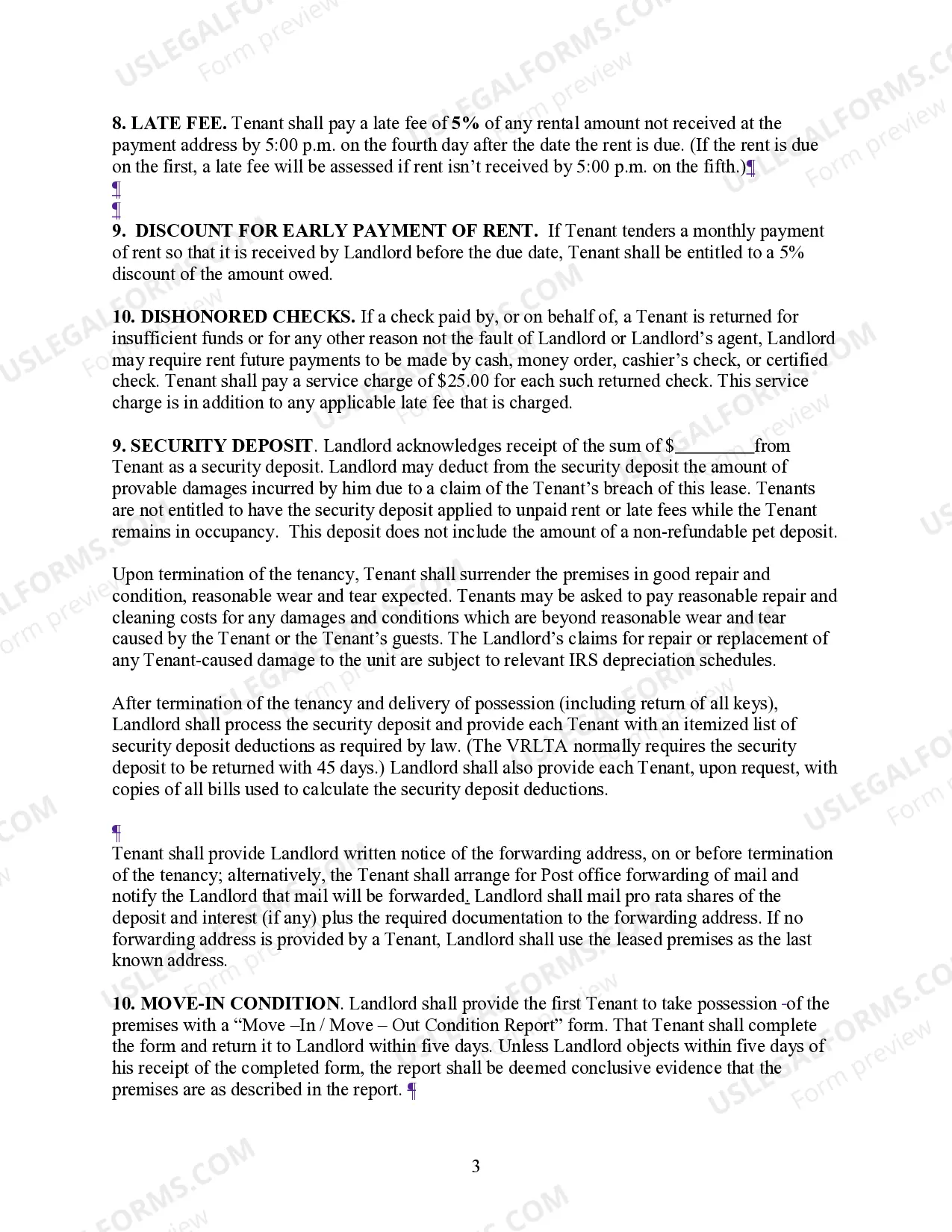
- Rent details: Total rent amount, payment schedule, and late fee information.
- Security deposit: Amount, terms for deductions, and return conditions.
- Pets: Policy concerning pets, including any applicable non-refundable deposits.
- Authorized occupants and guests: Listing of additional individuals allowed to reside on the property.
When this form is needed
This Residential Lease agreement should be used when a landlord intends to rent a residential property in Virginia. It is essential for defining the legal relationship and expectations between the landlord and tenant, especially when there is a formal lease term involved. Use this form to clarify rent, duration of stay, responsibilities regarding repairs and maintenance, and rules regarding pet ownership.
Intended users of this form
- Landlords looking to rent out residential property in Virginia.
- Tenants seeking to rent a property and needing a clear understanding of their rights and obligations.
- Property managers who handle leasing for landlords and require a standardized contract.
Steps to complete this form
- Identify the parties: Write the names and contact information for both the landlord and tenant(s).
- Specify the property: Provide the address and relevant details of the rental premises.
- Enter dates: Fill in the start and end dates of the lease term.
- Detail rent and payment terms: Indicate the total rent amount, due dates, and late fee provisions.
- Complete authorized occupants: List any additional individuals permitted to reside in the property.
- Sign and date the agreement: Ensure all parties sign and date the agreement to make it legally binding.
Does this form need to be notarized?
This form does not typically require notarization unless specified by local law. However, it is always advisable to check with local regulations to ensure compliance with any specific requirements.
Get your form ready online
Our built-in tools help you complete, sign, share, and store your documents in one place.
Make edits, fill in missing information, and update formatting in US Legal Forms—just like you would in MS Word.
Download a copy, print it, send it by email, or mail it via USPS—whatever works best for your next step.
Sign and collect signatures with our SignNow integration. Send to multiple recipients, set reminders, and more. Go Premium to unlock E-Sign.
If this form requires notarization, complete it online through a secure video call—no need to meet a notary in person or wait for an appointment.
We protect your documents and personal data by following strict security and privacy standards.

Make edits, fill in missing information, and update formatting in US Legal Forms—just like you would in MS Word.

Download a copy, print it, send it by email, or mail it via USPS—whatever works best for your next step.

Sign and collect signatures with our SignNow integration. Send to multiple recipients, set reminders, and more. Go Premium to unlock E-Sign.

If this form requires notarization, complete it online through a secure video call—no need to meet a notary in person or wait for an appointment.

We protect your documents and personal data by following strict security and privacy standards.
Common mistakes
- Failing to include all parties' names and contact details.
- Not specifying the property address clearly.
- Omitting important dates, such as the start and end of the lease.
- Neglecting to detail payment terms accurately, leading to disputes about rent.
- Not updating information after modifications or renewals.
Benefits of using this form online
- Convenience: Easily fill out and download the form from anywhere at any time.
- Editability: Customize the form to your specific needs before printing.
- Reliability: Obtain a legally sound document drafted by licensed attorneys.
Looking for another form?
Form popularity
FAQ
Lease automatically may renew on a month-to-month basis unless landlord or tenant gives written notice of non-renewal before the end of the set term.
A Virginia standard residential lease agreement is used by landlords and property managers to make legally binding rental arrangements with their tenants. Under the terms of the lease, the tenant is granted occupancy for a standard term of twelve (12) months for which they must pay monthly rent.
What is Common Law Lease Form for? The Common Law Lease Form is used to record the real estate leasing transaction in the State of Virginia. The document specifies the terms and conditions of the transaction, guarantees individual rights of the parties and determines their responsibilities and obligations.
Is Virginia a Landlord-Friendly State? Overall, this is considered a landlord-friendly state since the Virginia landlord-tenant law doesn't impose any rent control policies for landlords.
Once it is signed by both the landlord and the tenant, the lease is a legally binding contract.
May be week-to-week, month-to-month, six months, one year, or any other length. Lease automatically may terminate at the end of a set term, or renew in absence of advance written notice of non-renewal: Notice period may be 30, 60, 90 days.
One-year leases are by far and large the most popular length for leases. They're good if you have high-quality tenants and an effective tenant screening process in place. In this case, year-long leases are good because it secures good tenants for a long period of time.
Lease agreements tend to last in 12-month periods for up to five or ten years. Rental agreements are much shorter and typically last only thirty days. It is also worth noting that residential lease agreements typically use the term rent.