Utah Aging Parent Package
About this form package
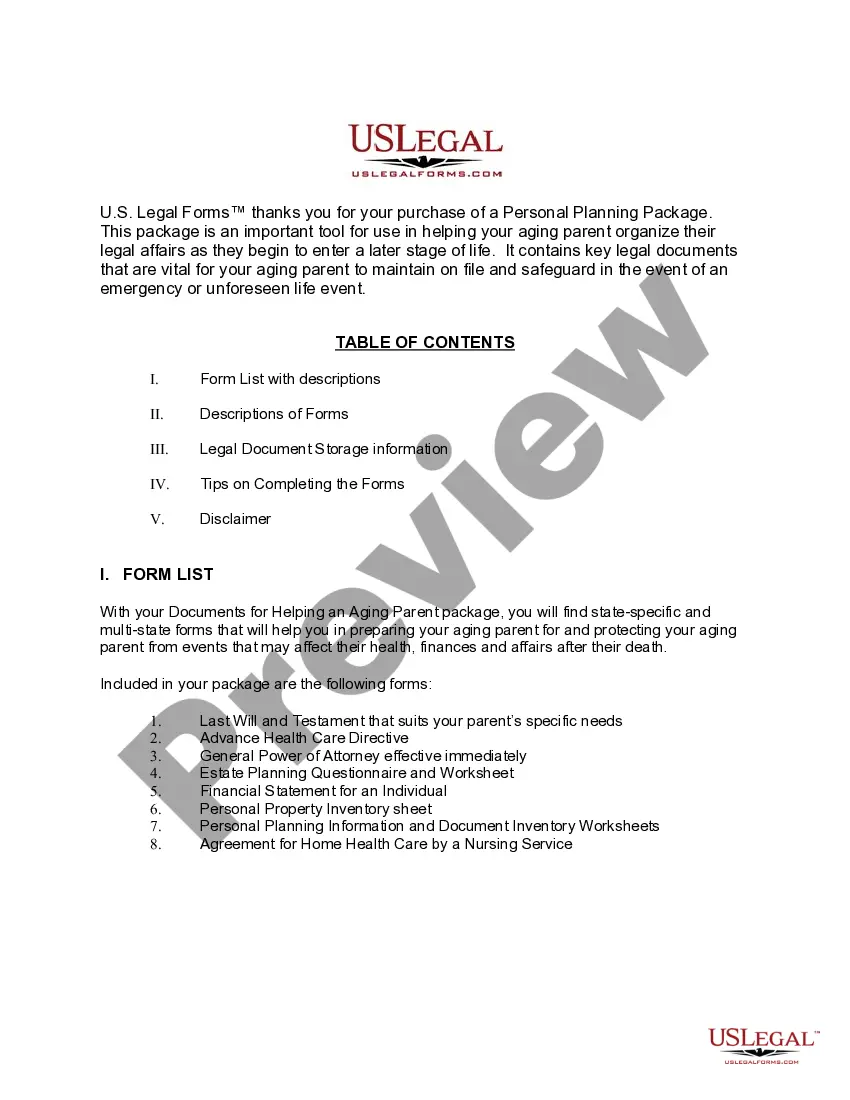
The Utah Aging Parent Package is designed to assist families in organizing the legal affairs of aging parents as they navigate later stages of life. This comprehensive package contains a selection of state-specific and multi-state legal documents tailored to protect the health, finances, and affairs of aging individuals. Unlike generic forms, this package addresses the unique legal needs of aging parents, ensuring peace of mind for both parents and their families.
Documents contained in this package
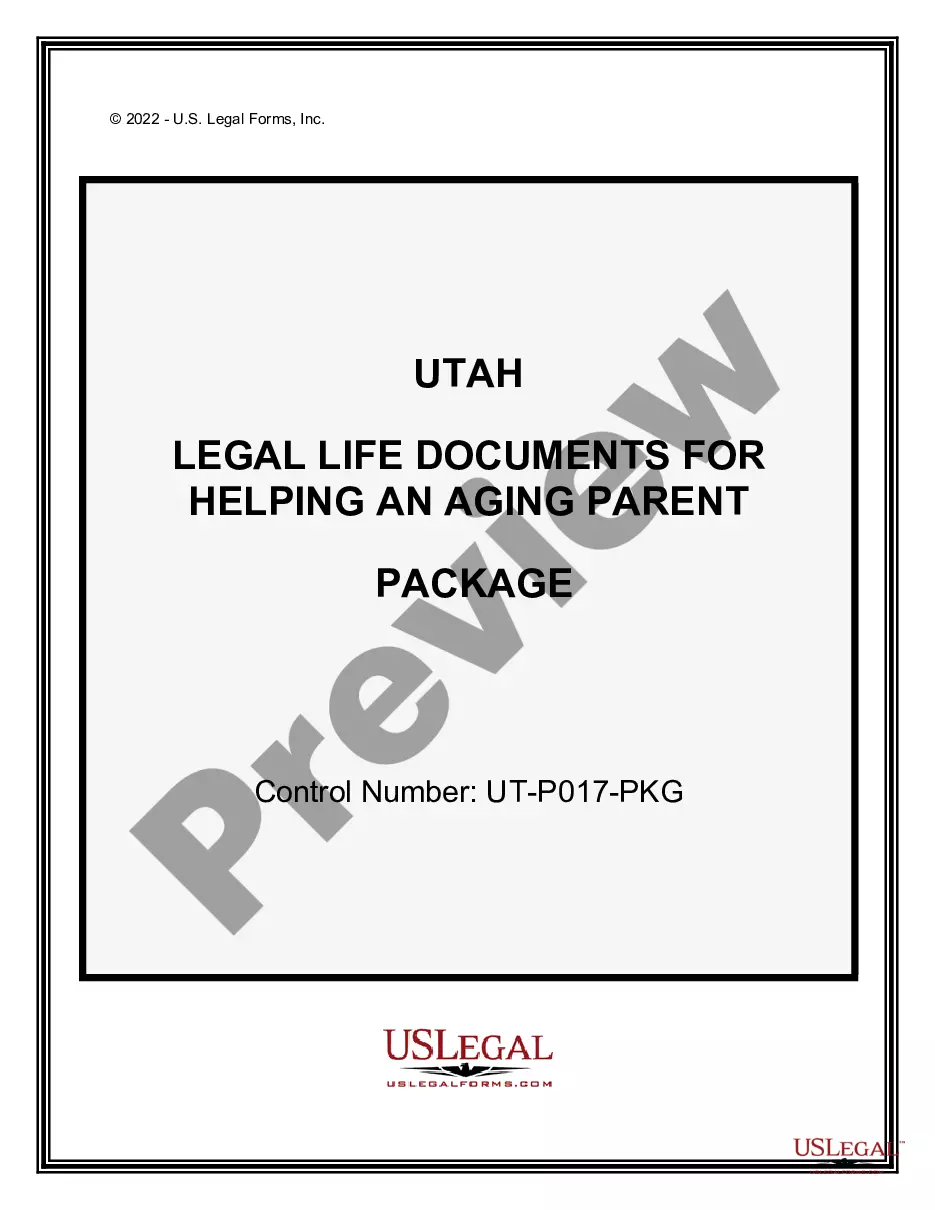
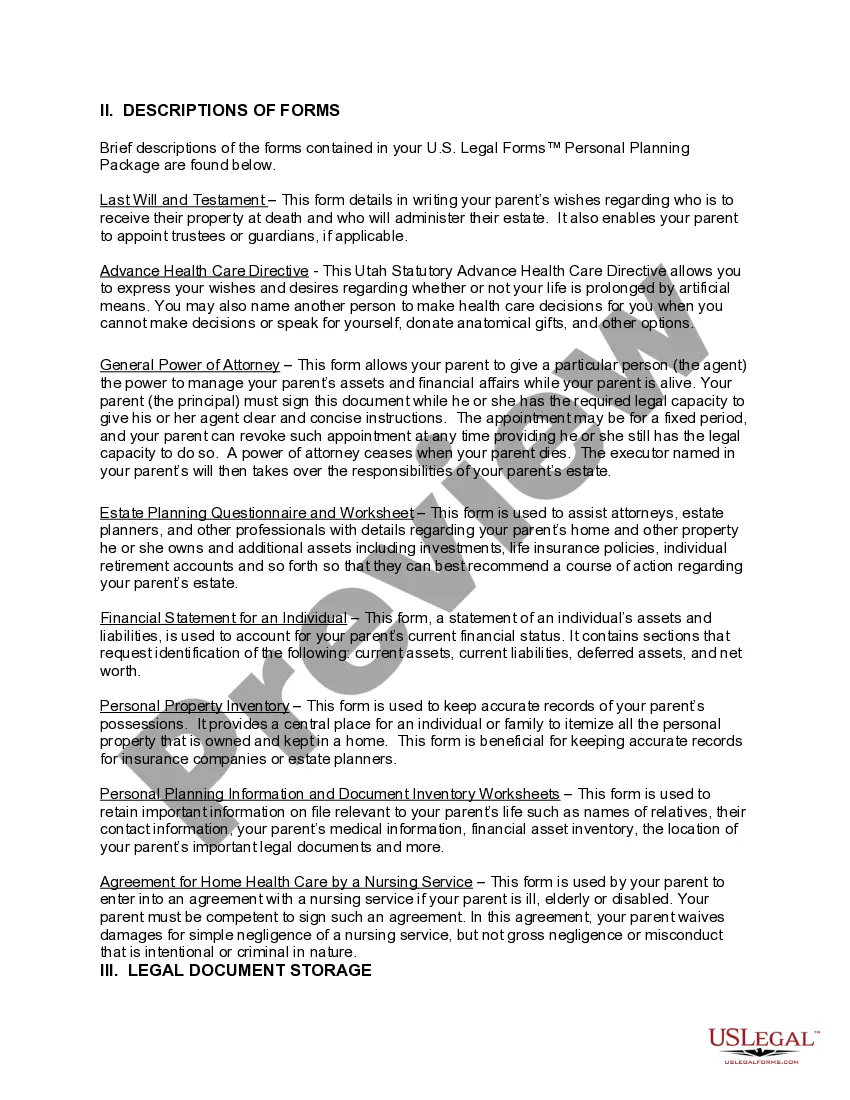
- Last Will and Testament
- General Durable Power of Attorney for Property and Finances or Financial Effective Immediately
- Statutory Declaration for Mental Health Treatment
- Statutory Advance Health Care Directive
- Estate Planning Questionnaire and Worksheets
- Personal Care Agreement for Home Healthcare by a Nursing Service
- Personal Property Inventory
- Financial Statement Form - Husband and Wife Joint
- Personal Planning Information and Document Inventory Worksheets - A Legal Life Document
When to use this form package
This form package is essential in various situations, including:
- When preparing important legal documents as your parent ages.
- During healthcare transitions, such as entering assisted living or home care.
- When addressing estate planning and healthcare decisions.
- In emergencies where immediate access to legal documents is required.
Intended users of this form package
- Children or guardians assisting aging parents with legal affairs.
- Aging individuals looking to organize their wills and healthcare directives.
- Family members involved in healthcare decisions for elderly relatives.
- Anyone managing the estate of a loved one.
Completing these forms step by step
- Review the included forms and select those that apply to your parent's situation.
- Gather necessary information, such as financial details and personal preferences.
- Fill out each form carefully, ensuring accuracy and completeness.
- Have your parent sign the necessary documents while they are in good legal standing.
- Store the completed forms in a secure location, such as a safe deposit box or home safe.
Notarization guidance for this package
Some included forms must be notarized to ensure validity. US Legal Forms provides secure online notarization powered by Notarize, allowing you to complete the process through a verified video call anytime.
Get your form ready online
Our built-in tools help you complete, sign, share, and store your documents in one place.
Make edits, fill in missing information, and update formatting in US Legal Forms—just like you would in MS Word.
Download a copy, print it, send it by email, or mail it via USPS—whatever works best for your next step.
Sign and collect signatures with our SignNow integration. Send to multiple recipients, set reminders, and more. Go Premium to unlock E-Sign.
If this form requires notarization, complete it online through a secure video call—no need to meet a notary in person or wait for an appointment.
We protect your documents and personal data by following strict security and privacy standards.

Make edits, fill in missing information, and update formatting in US Legal Forms—just like you would in MS Word.

Download a copy, print it, send it by email, or mail it via USPS—whatever works best for your next step.

Sign and collect signatures with our SignNow integration. Send to multiple recipients, set reminders, and more. Go Premium to unlock E-Sign.

If this form requires notarization, complete it online through a secure video call—no need to meet a notary in person or wait for an appointment.

We protect your documents and personal data by following strict security and privacy standards.
Avoid these common issues
- Failing to update documents as circumstances change, such as financial or health status.
- Not discussing the content of the documents with your parent beforehand.
- Missing signatures or not witnessing documents where required.
- Storing important documents in easily accessible but insecure locations.
Benefits of using this package online
- Convenience: Download and complete forms from the comfort of your home.
- Editability: Customize documents to fit your parent's specific needs.
- Reliability: Forms are drafted by licensed attorneys experienced in Utah's legal requirements.
Legal use & context
- These documents are legally binding when completed and signed as required.
- Properly executed documents can help prevent disputes among family members.
- Utilizing this package standardizes legal processes related to aging parents.
Summary of main points
- The Utah Aging Parent Package offers comprehensive support for managing legal matters for aging relatives.
- It's crucial to ensure all forms are completed accurately and stored securely.
- Keeping the documents updated is essential as personal circumstances change.
Looking for another form?

Form popularity
FAQ
Medicaid. Medicaid offers a number of programs in different states that can be used to pay a family caregiver. Veteran Services. Tax Deductions. Local Resources. Long-Term Care Insurance Policies. Paid Leave. Remote Work.
Does Medicare Pay for Caregivers? Your Guide to At-Home Healthcare. Medicare typically doesn't pay for in-home caregivers for personal care or housekeeping if that's the only care you need. Medicare may pay for short-term caregivers if you also need medical care to recover from surgery, an illness, or an injury.
Some caregivers worry about what other people will think of them if they refuse to care for elderly parents.Their answer is, yesI can refuse to care for elderly parents.
Provide Solutions That Allow Them to Have Control. Fritzi Gros-Daillon, MS CAPS, CSA, SHSS Age Safe America. Show Empathy. Pamela D. Accept Your Own Limits. Stay Positive. Support Their Autonomy. Be Mindful of Their Role Reversal. Enlist the Help of Professionals if Necessary. Let Them Feel Like They are Making Decisions.
Even if you have power of attorney over your mother's affairs, giving you access to her bank account, you are not legally or ethically entitled to do that. You are acting for the benefit of the principal your mother and she has expressly forbidden you from charging for doctors' visits.
The first and most common Medicaid option is Medicaid Waivers.With this option, the care recipient can choose to receive care from a family member, such as an adult child, and Medicaid will compensate the adult child for providing care for the elderly parent.
Support Their Independence. Acknowledge Their Concerns. Avoid Confrontation. Use I Statements. Pick Your Battles. Involve Authority Figures. Step Back to Give Some Space. Provide an Empathic Approach.
Evaluate Your Parent's Situation. Before anything, take a look at your parent's living conditions, activities, and mental health. Focus On The Positives. Make It About You. Enlist Experts (If You Have To) Give Options. Start Small.
Evaluate Your Parent's Situation. Before anything, take a look at your parent's living conditions, activities, and mental health. Focus On The Positives. Make It About You. Enlist Experts (If You Have To) Give Options. Start Small.