Community Property Trust
About this form
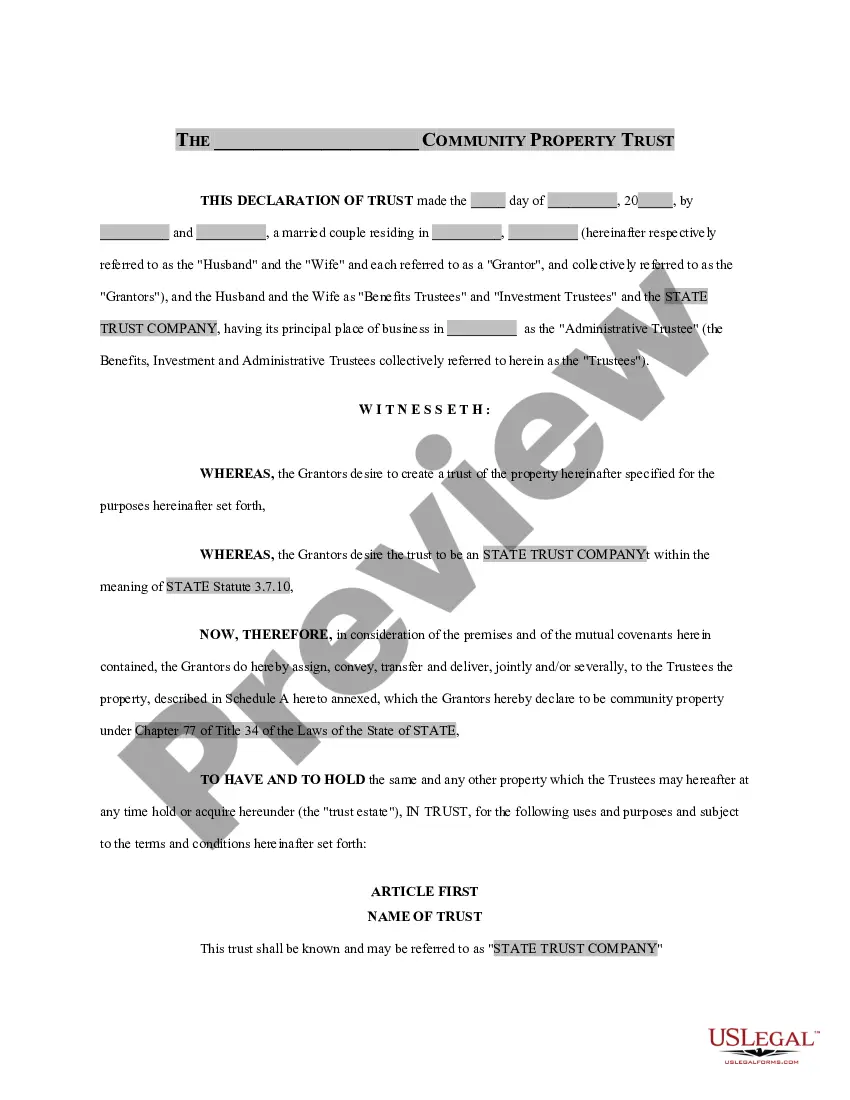
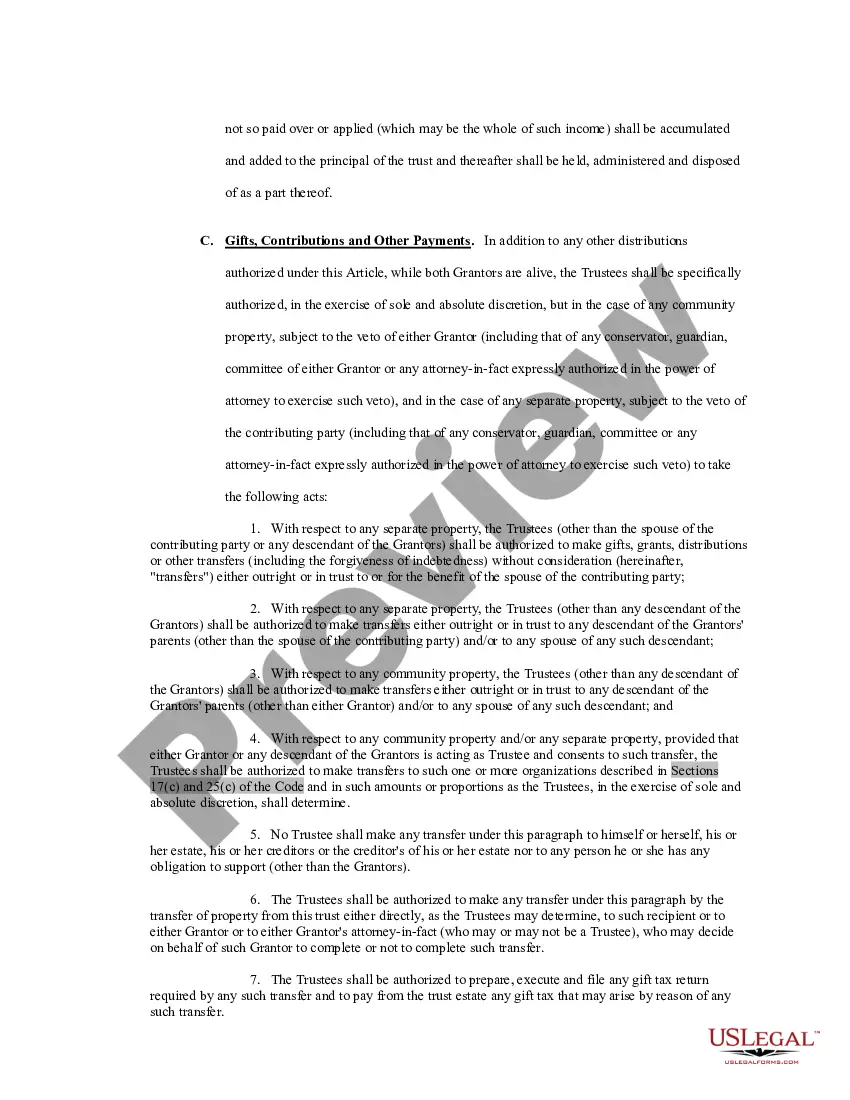
The Community Property Trust is a legal document designed for married couples to manage and protect their community property effectively. This trust functions similarly to those in community property states, allowing spouses in non-community property states to enjoy similar benefits. It holds assets placed into the trust by both spouses, establishing clear guidelines for property management and distribution. Unlike standard wills or trust agreements, a Community Property Trust provides specific provisions that cater to married couples, enhancing asset protection and potentially reducing tax liabilities.
Key parts of this document
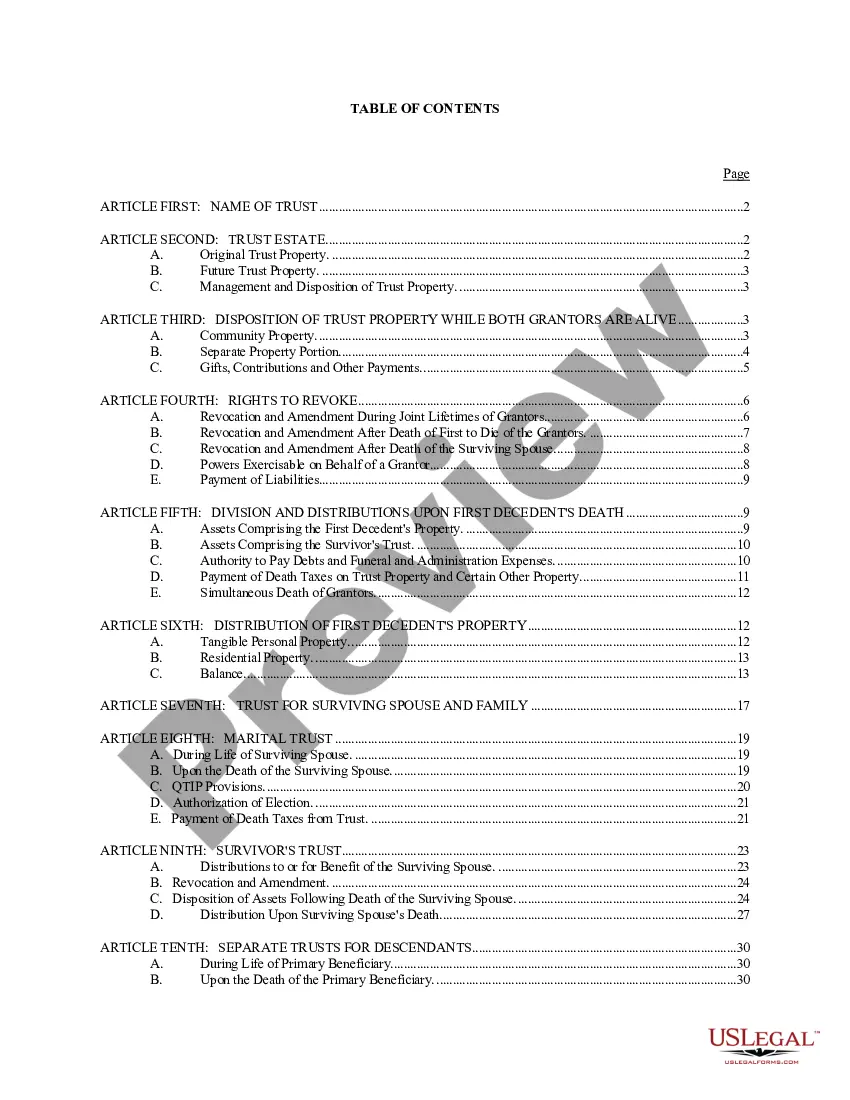
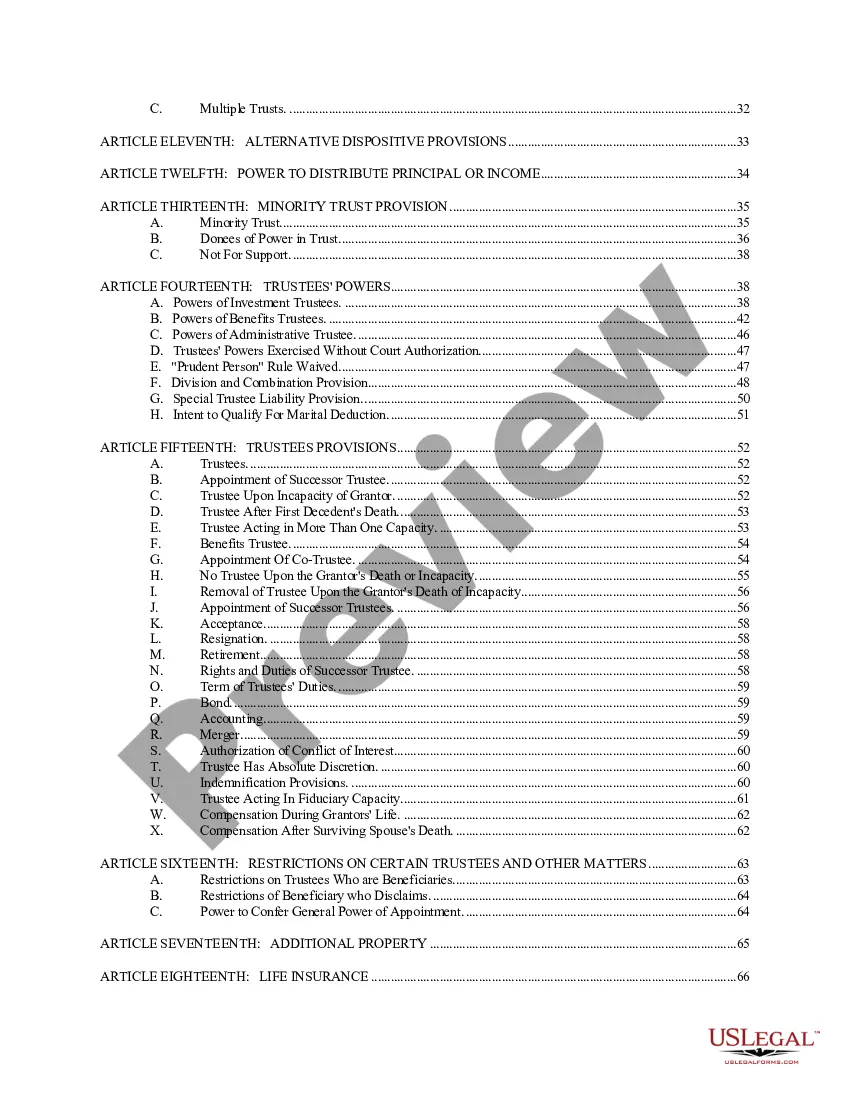
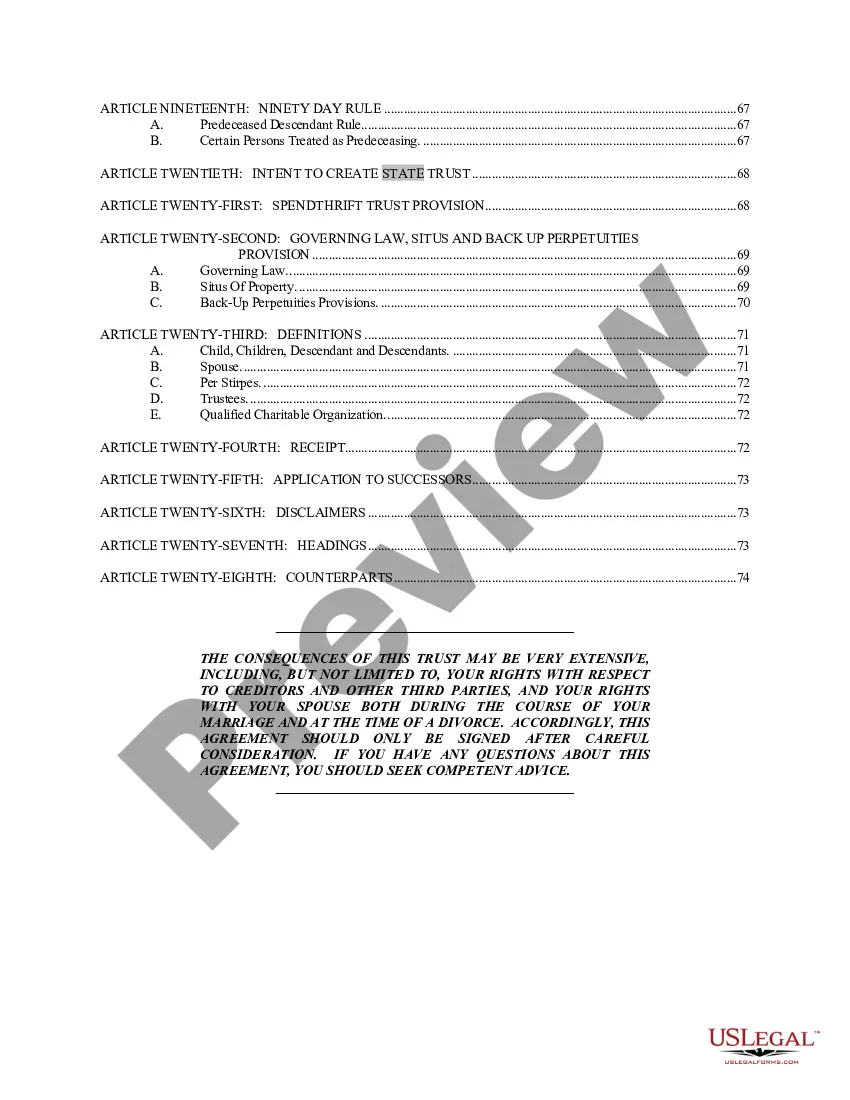
- Article First - Name of Trust: Designates the official name of the trust.
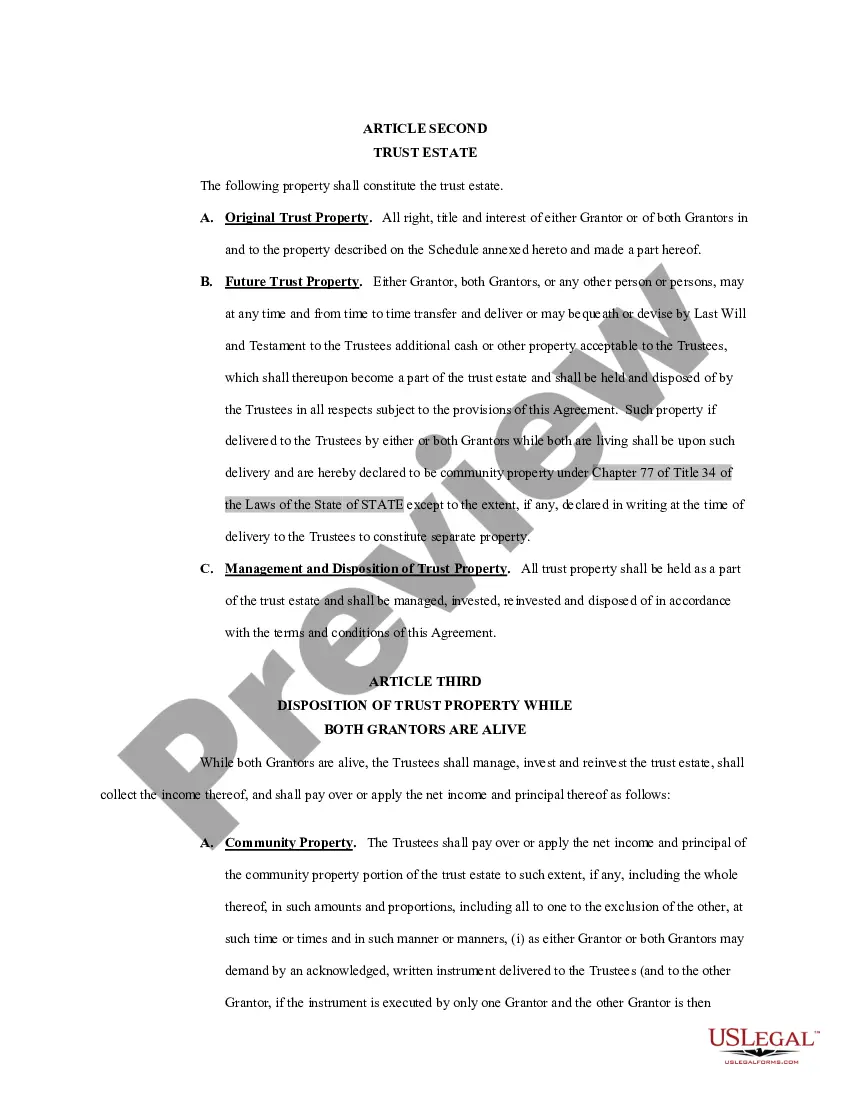
- Article Second - Trust Estate: Defines the initial and future property included in the trust.
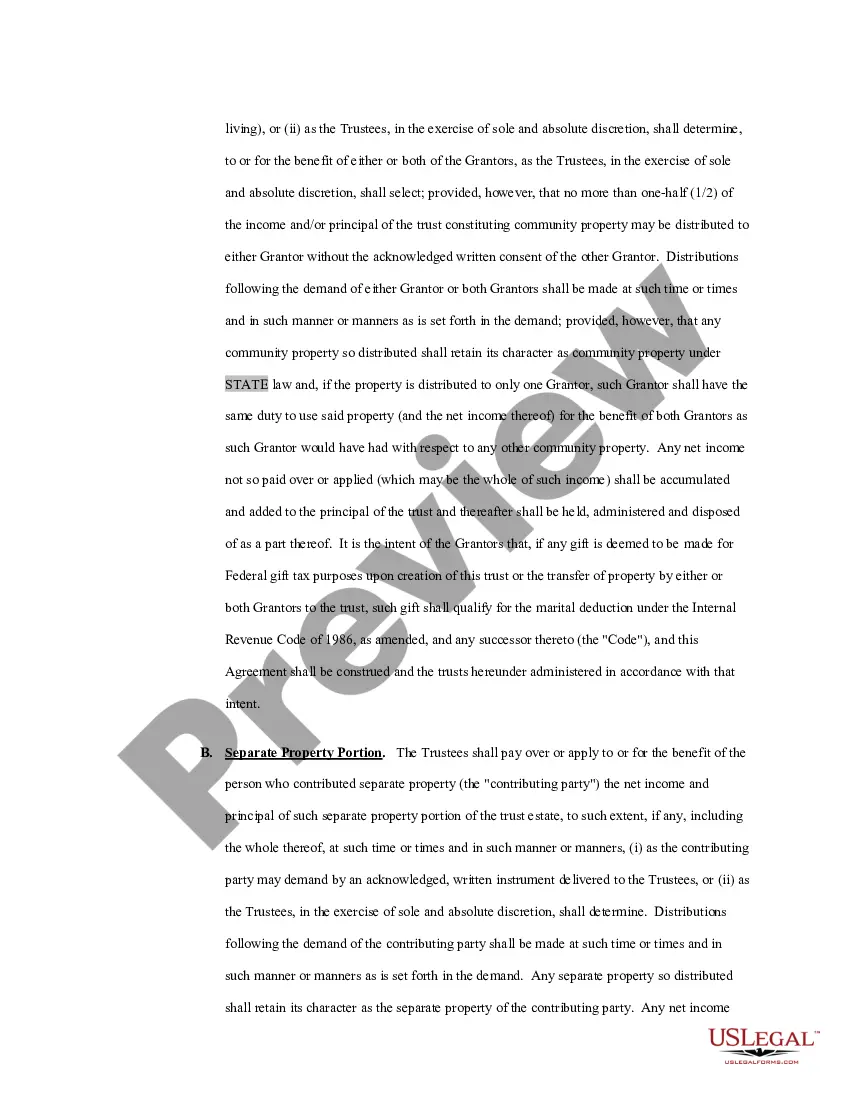
- Article Third - Disposition of Trust Property: Outlines how property is managed while both grantors are alive.
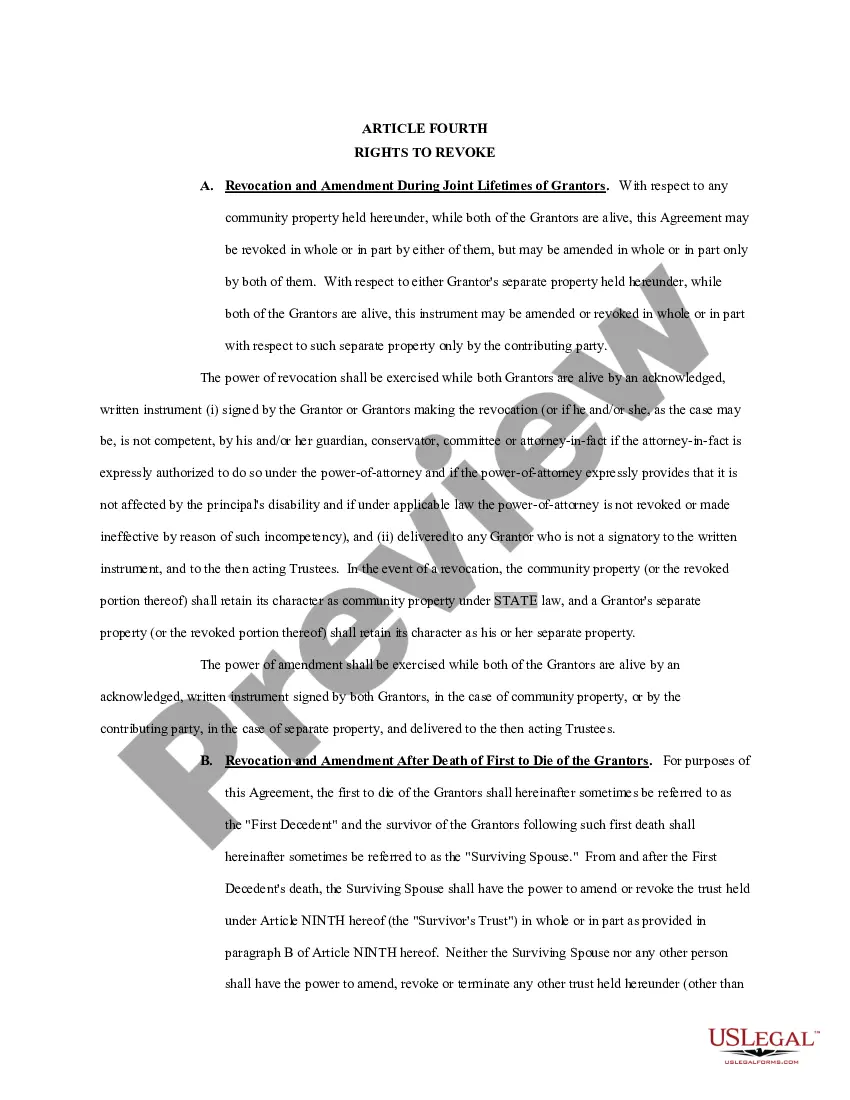
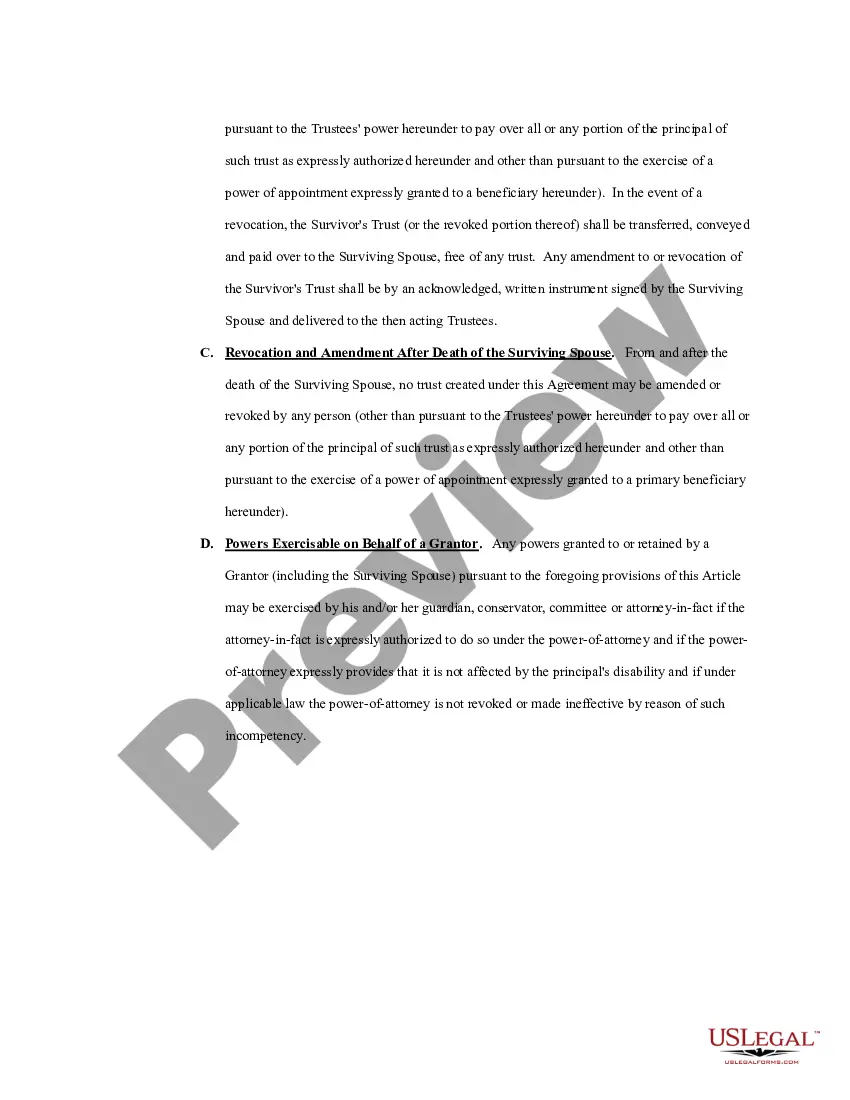
- Article Fourth - Rights to Revoke: Details the process for revocation or amendment during both grantors' lifetimes.
- Article Fifth - Division and Distributions Upon the First Decedent's Death: Specifies how assets are managed and distributed upon the death of the first spouse.
- Article Sixth - Distribution of First Decedentâs Property: Identifies specific property and its distribution following the first decedentâs death.

When this form is needed
This Community Property Trust is particularly useful in scenarios where a married couple resides in a state that does not automatically recognize community property rights. It allows them to designate how their assets will be managed together and how they will be distributed upon death or incapacity. Couples seeking estate planning solutions that equalize property rights, and facilitate smoother asset transition to surviving spouses or heirs should consider using this form.
Intended users of this form
- Married couples living in non-community property states who seek to protect their joint assets.
- Couples wanting to achieve equitable distributions upon death or during life.
- Individuals concerned about estate taxes and how property is treated after one spouse's death.
- Those looking for a clear legal framework for managing shared property.
How to prepare this document
- Identify the parties involved: List the names of both spouses as Grantors.
- Specify the property: Detail the assets being placed into the trust and identify any future contributions.
- Enter necessary details: Fill in the name of the trust, terms for revocation, and management directives.
- Include signatures: Ensure both spouses sign the document where indicated.
- Seek legal guidance if necessary: Consulting an attorney can ensure compliance with specific state laws and individual needs.
Is notarization required?
This form must be notarized to be legally valid. Online notarization is integrated with US Legal Forms, providing secure video call services and 24/7 availability, ensuring a smooth and efficient process without the need for travel.
Get your form ready online
Our built-in tools help you complete, sign, share, and store your documents in one place.
Make edits, fill in missing information, and update formatting in US Legal Forms—just like you would in MS Word.
Download a copy, print it, send it by email, or mail it via USPS—whatever works best for your next step.
Sign and collect signatures with our SignNow integration. Send to multiple recipients, set reminders, and more. Go Premium to unlock E-Sign.
If this form requires notarization, complete it online through a secure video call—no need to meet a notary in person or wait for an appointment.
We protect your documents and personal data by following strict security and privacy standards.

Make edits, fill in missing information, and update formatting in US Legal Forms—just like you would in MS Word.

Download a copy, print it, send it by email, or mail it via USPS—whatever works best for your next step.

Sign and collect signatures with our SignNow integration. Send to multiple recipients, set reminders, and more. Go Premium to unlock E-Sign.

If this form requires notarization, complete it online through a secure video call—no need to meet a notary in person or wait for an appointment.

We protect your documents and personal data by following strict security and privacy standards.
Typical mistakes to avoid
- Failing to specify all trust assets accurately, which can lead to legal disputes later.
- Neglecting to include provisions for amendments or revocation clearly.
- Not updating the trust after significant life events, such as the birth of children or changes in financial status.
- Overlooking the necessity of notarization according to state law.
Advantages of online completion
- Convenience of creating a legally binding trust from the comfort of your home.
- Editability allows you to customize the document according to your personal needs.
- Access to legal forms prepared by licensed attorneys ensures reliability and compliance with state requirements.
- Fast download options make it easy to set up your Community Property Trust quickly.
Looking for another form?



Form popularity
FAQ
Benefits of Community Property Trusts A community property trust holds assets a married couple jointly owns. Each spouse has equal interests in the property and can use them during their lifetime. When one spouse dies, the property gets a new basis equal to the fair market value at the time of the death.
California is a community property state, so any property acquired during the marriage is generally subject to equal distribution between the spouses in the event of divorce. In California, trusts established before marriage are generally considered separate property.
A Florida Community Property Trust (FLCPT) is a joint trust that holds the assets of a married couple, and, while both spouses are alive, the assets generally may be used for their benefit.
California is a community property state. This means everything you earn or acquire during your marriage belongs to each spouse equally. Attempts to put more assets than are rightfully yours into a trust will not override the community property law.
How to Protect Assets from Divorce. In many states, including California, property owned by a spouse before he or she is married is considered separate property and is not divided between spouses when they divorce. Trusts, if established before the marriage, are also considered separate property.
Property you didn't earn, like a gift or inheritance one of you received while married, is not community property. Generally, a loan to pay for one spouse's education or training (student debt) is treated like that spouse's separate property. After you divorce, that spouse will be responsible for their student debt.
In California, trusts established before marriage are considered separate property. Other trusts ? including domestic or foreign asset protection trusts, revocable trusts and irrevocable trusts ? also protect assets in the event of divorce.
What happens to a Living Trust after a divorce? All trusts require three things: a Creator (Trustor or Grantor), a Trustee, and trust property. Once the court orders a property division between the two former spouses, the trust no longer has assets in it and it evaporates as a matter of law.