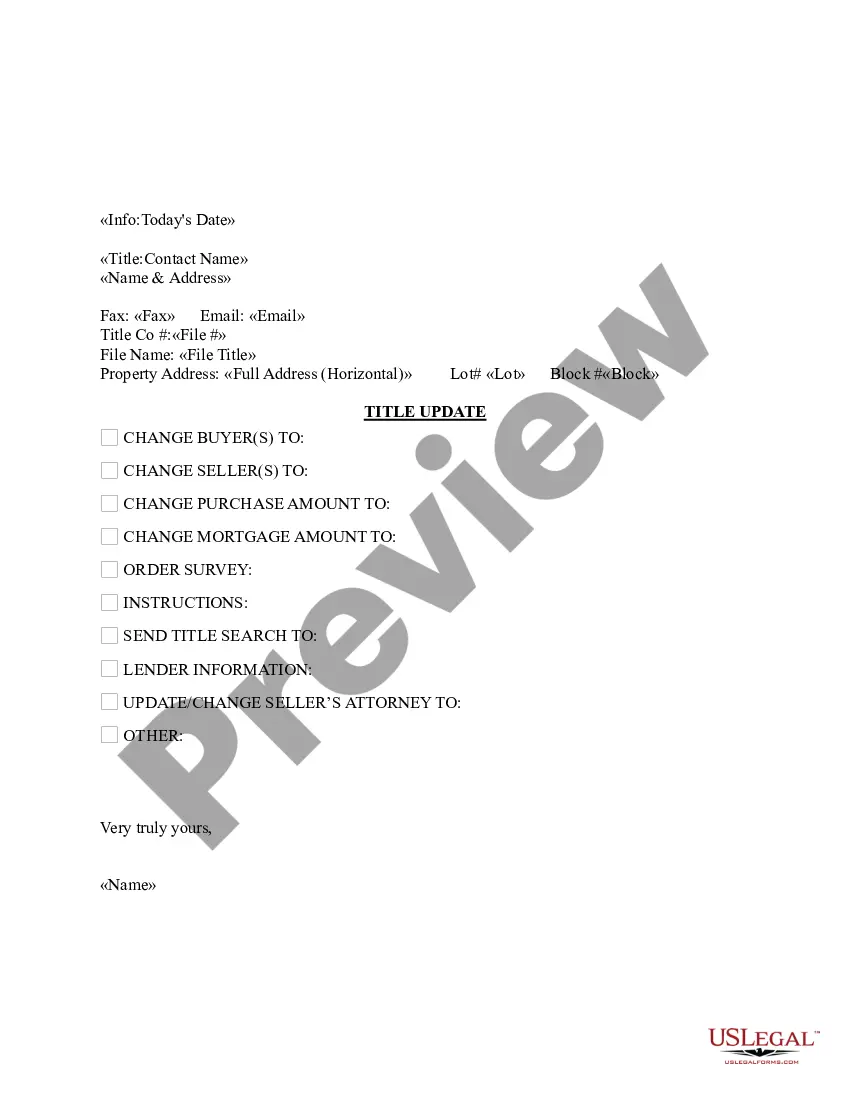
Letter: Title Update
What this document covers
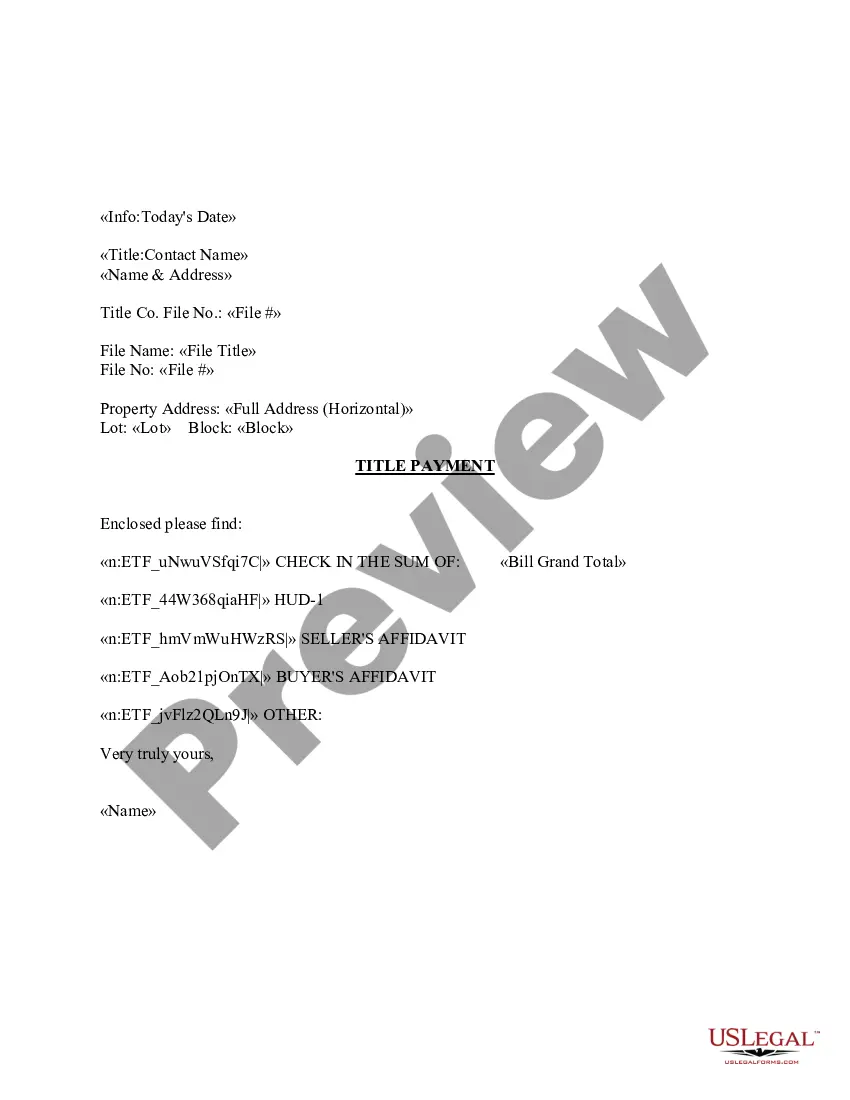
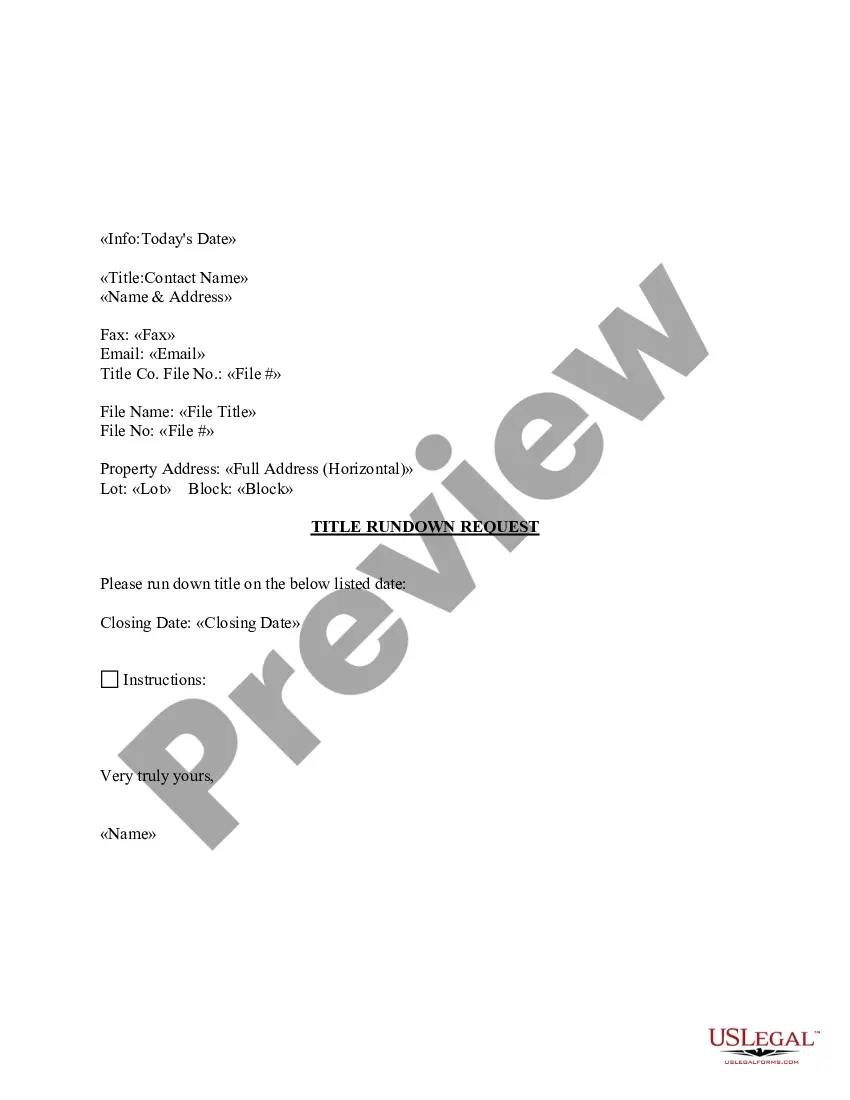
The Letter: Title Update is a legal document used to formally request updates to the title of a property. This letter can address changes to the buyer(s), seller(s), or purchase amount, ensuring that the title accurately reflects the current information. It is distinct from other real estate documents because it focuses specifically on updating existing titles rather than creating new ones or transferring ownership.
Key components of this form
- Today's Date: The date when the letter is being issued.
- Contact Information: Name, address, and email of the person writing the letter.
- Title Company Details: Information pertaining to the title company responsible for the property title.
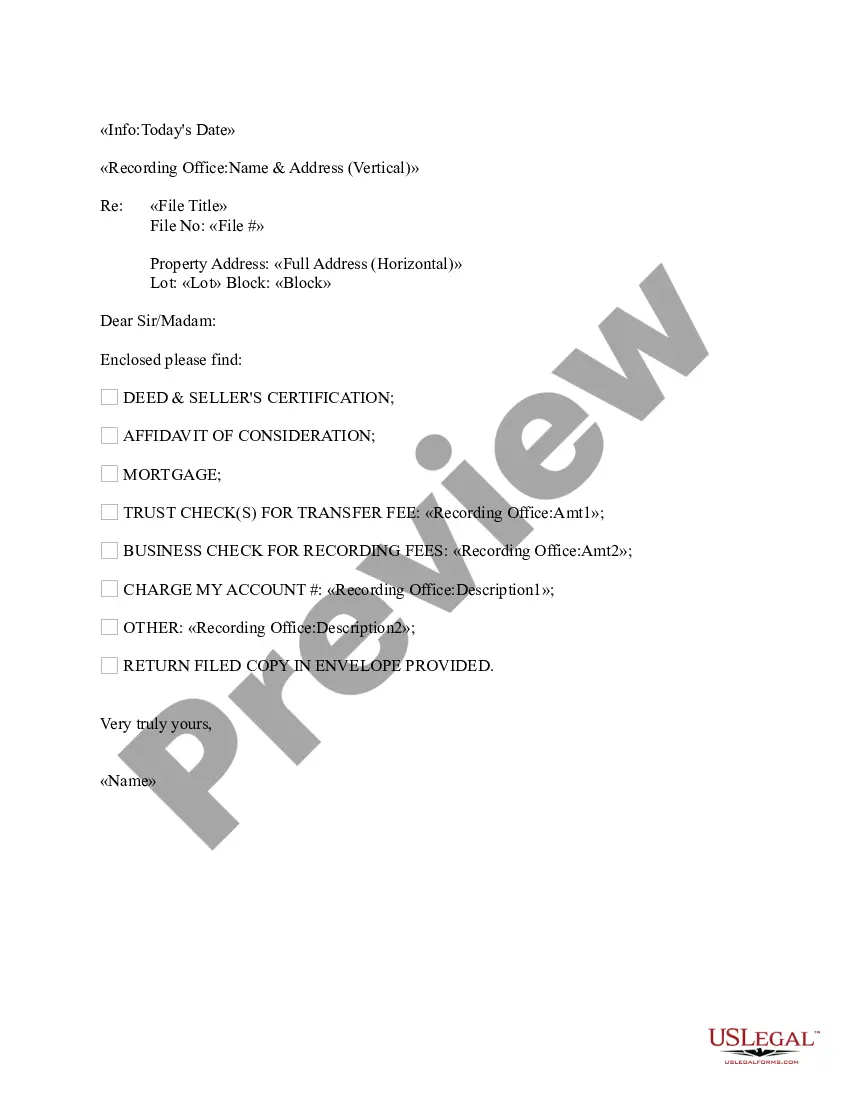
- Property Information: Complete address of the property, including lot and block number.
- Changes Requested: Sections that specify changes to the buyer(s), seller(s), and purchase amount.
When to use this form
This form should be used when there is a need to update the title of a property due to various reasons, such as a change in ownership after a sale, errors in the recorded title details, or updates due to changes in the sale agreement. When such changes occur, it is important to ensure the title accurately reflects the current circumstances to avoid future disputes.
Intended users of this form
- Property owners needing to update their title details.
- Real estate agents assisting clients with title changes.
- Buyers or sellers involved in a transaction where title information requires modification.
Completing this form step by step
- Identify and enter the current date at the top of the letter.
- Fill in the contact information, including your name, address, and email.
- Provide the details of the title company involved in the property transaction.
- Specify the full address of the property alongside the lot and block number.
- Clearly indicate the changes needed in the title: names of buyer(s), seller(s), and any amendments to the purchase amount.
- Sign the letter to formalize the request.
Notarization guidance
This form does not typically require notarization unless specified by local law. However, it is recommended to check specific state requirements or consult with your title company for confirmation.
Get your form ready online
Our built-in tools help you complete, sign, share, and store your documents in one place.
Make edits, fill in missing information, and update formatting in US Legal Forms—just like you would in MS Word.
Download a copy, print it, send it by email, or mail it via USPS—whatever works best for your next step.
Sign and collect signatures with our SignNow integration. Send to multiple recipients, set reminders, and more. Go Premium to unlock E-Sign.
If this form requires notarization, complete it online through a secure video call—no need to meet a notary in person or wait for an appointment.
We protect your documents and personal data by following strict security and privacy standards.

Make edits, fill in missing information, and update formatting in US Legal Forms—just like you would in MS Word.

Download a copy, print it, send it by email, or mail it via USPS—whatever works best for your next step.

Sign and collect signatures with our SignNow integration. Send to multiple recipients, set reminders, and more. Go Premium to unlock E-Sign.

If this form requires notarization, complete it online through a secure video call—no need to meet a notary in person or wait for an appointment.

We protect your documents and personal data by following strict security and privacy standards.
Common mistakes
- Forgetting to include the complete address of the property.
- Neglecting to sign the letter, which can render it void.
- Incorrectly filling out the buyer(s) or seller(s) information.
- Failing to submit the letter to the correct title company or office.
Benefits of completing this form online
- Convenient download and completion at your own pace.
- Edit and customize the form to meet your specific needs.
- Access to templates drafted by licensed attorneys for reliability.
Looking for another form?
Form popularity
FAQ
There are three basic categories or recommendation letters: academic recommendations, employment recommendations, and character recommendations.
It's a document you send to medical schools to inform them about your recent activities and experiences that have occurred since submitting your secondaries OR since interviewing at their school. The update letter should be sent to all schools that have neither offered you an interview nor have rejected you.
In your request, you should include the following context for them to feel comfortable and prepared when writing your recommendation: An up-to-date resume. Your current role or what you're doing now. What the recommendation is for. Why you're qualified. Relevant work habits, academic successes or skills.
Your update letter shouldn't be long at all. Stick to one page in length or just under one page. Medical school admissions committees have many primary and secondary application materials to read, so be courteous of their time.
Recommendations and references have a similar role in a selective process. Typically, recommendations are formal, confidential letters provided to a graduate school or other academic-based program while references are used by employers to confirm qualifications before making an offer.
A letter of recommendation is a formal document confirming and recommending a person's work, skills, or academic performance and potential. Typically, a recommendation letter is required for: University admissions. Fellowships or internship positions.
The most common types of letters you might hear other students talk about sending are update letters, letters of intent, and letters of interest. An update letter provides more information to improve your application. The improvement might be new coursework or a substantial project through one of your extracurriculars.
The key distinction between update letters and LOIs are that: Update letters disclose updates on achievements, awards, and endeavors to the admissions committee, whereas. A letter of interest or a letter of intent (LOIs) reaffirm and strengthen your interest in the school.