Employment Non- Disclosure, Non- Solicitation, and Intellectual Property Assignment Agreement
What is this form?
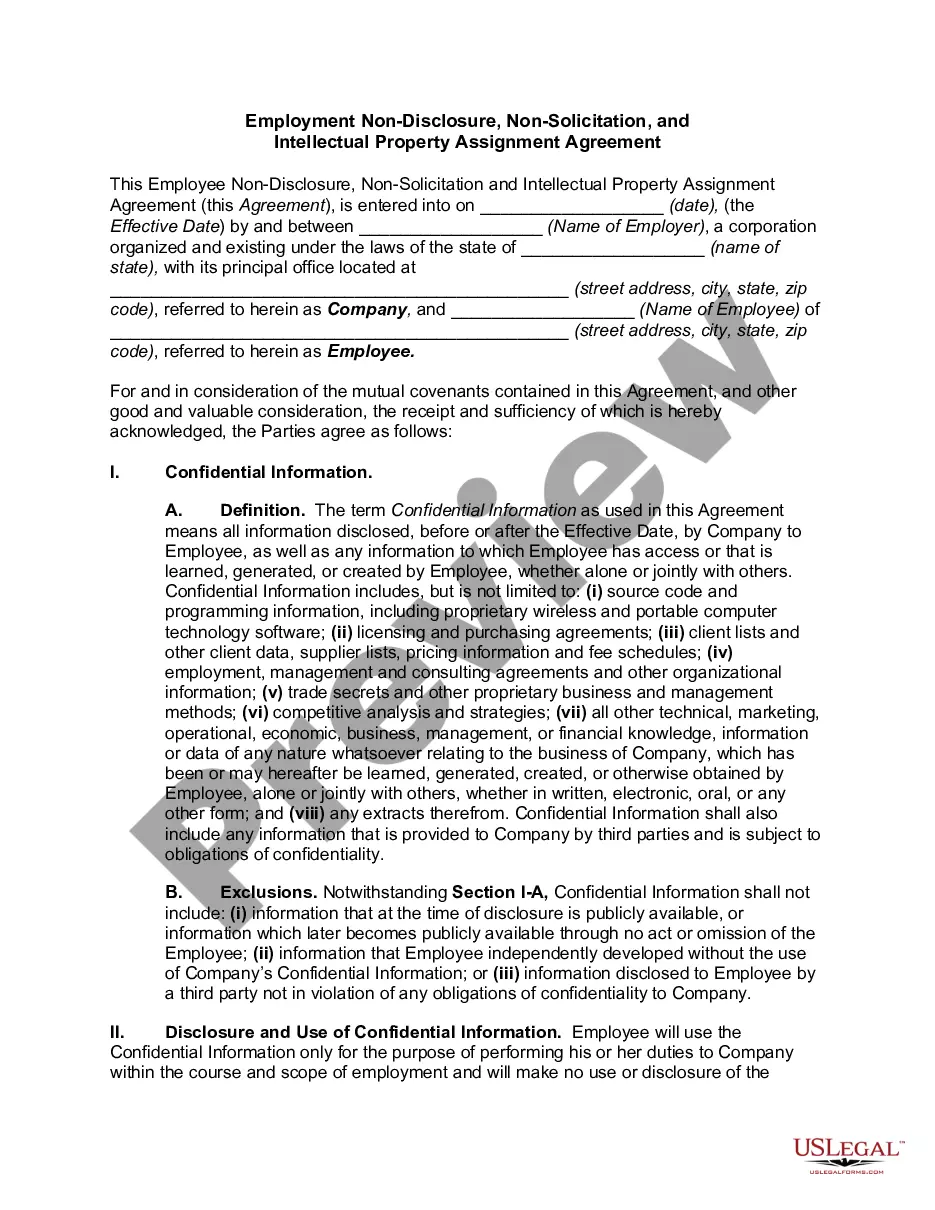
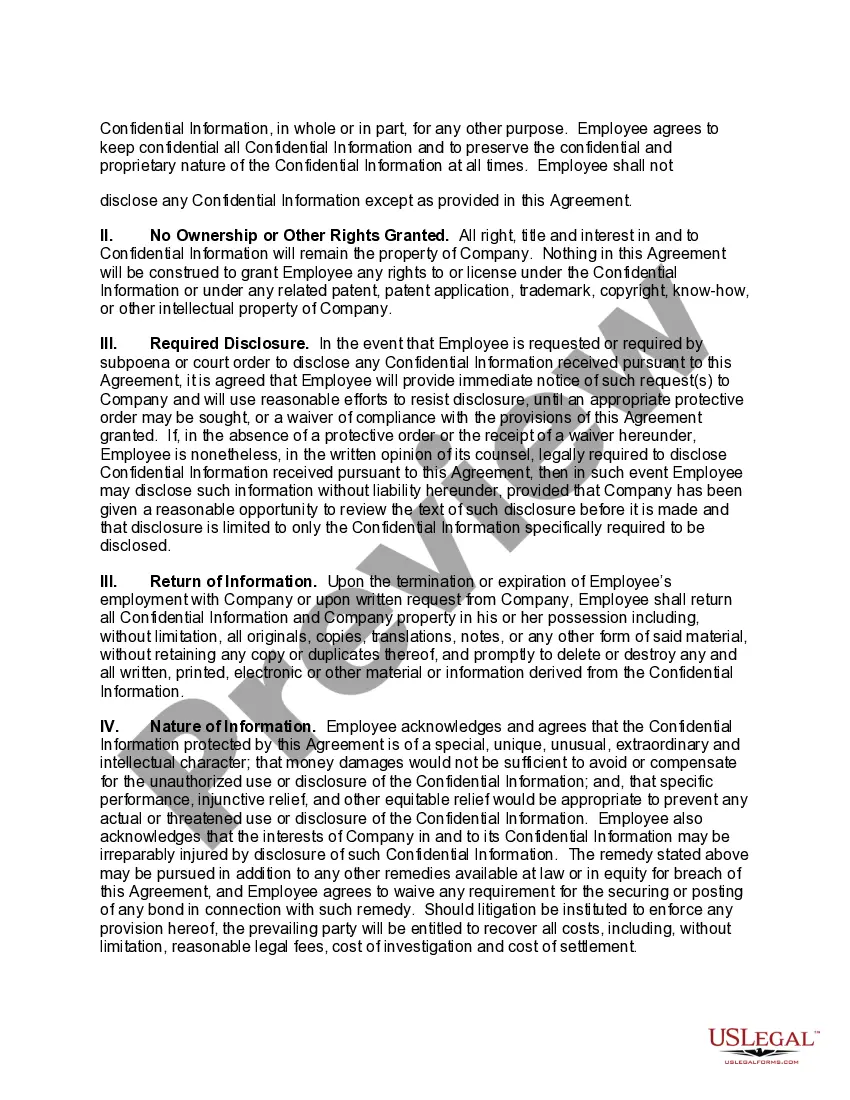
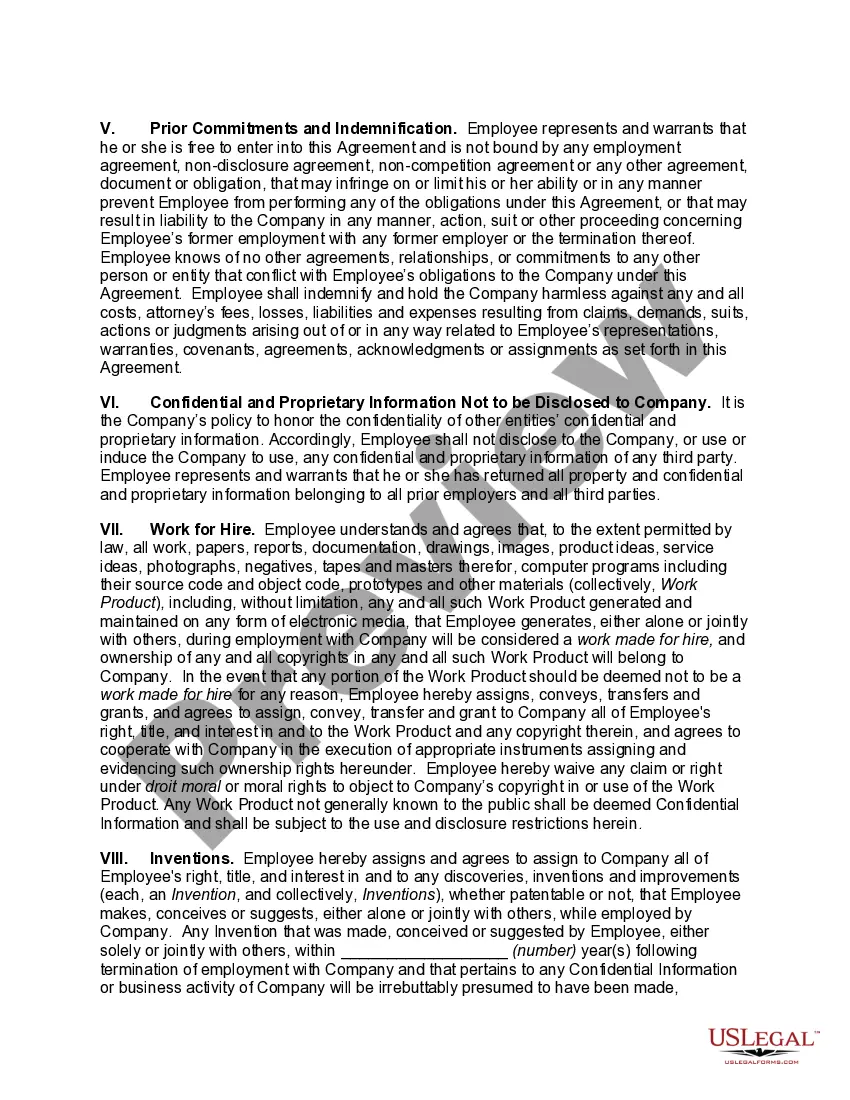
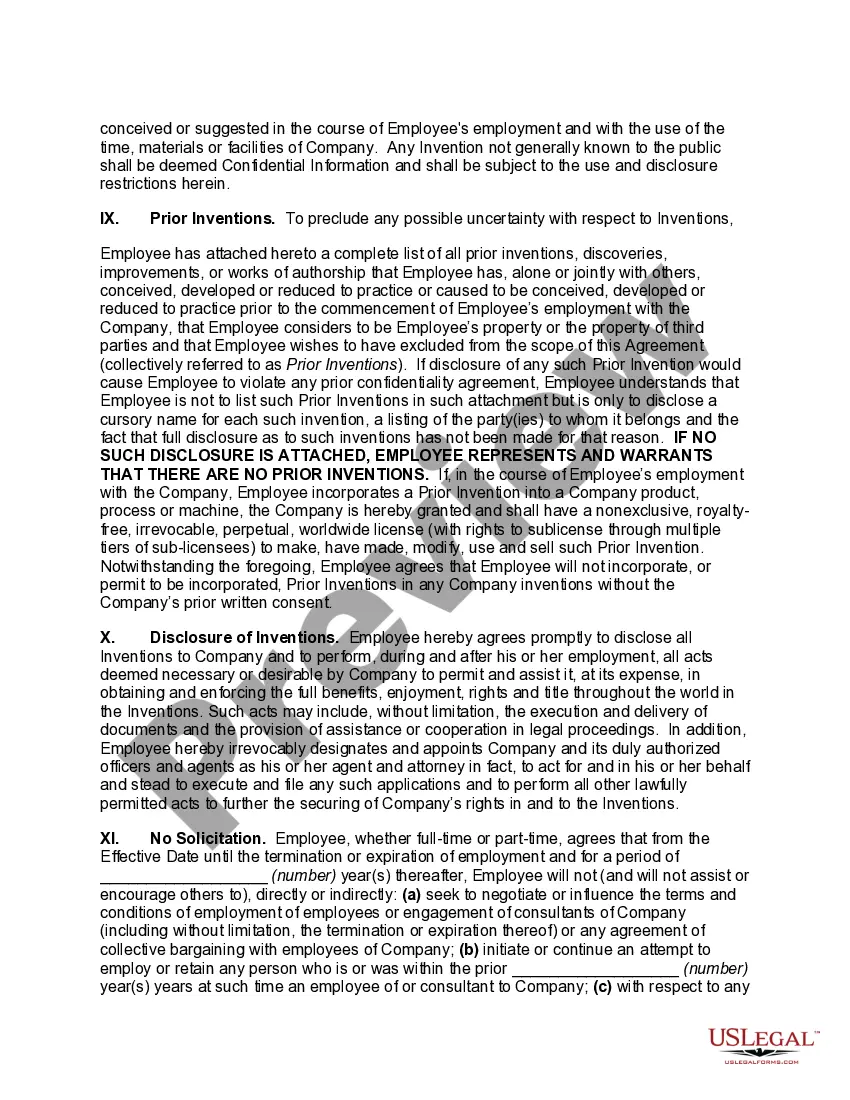
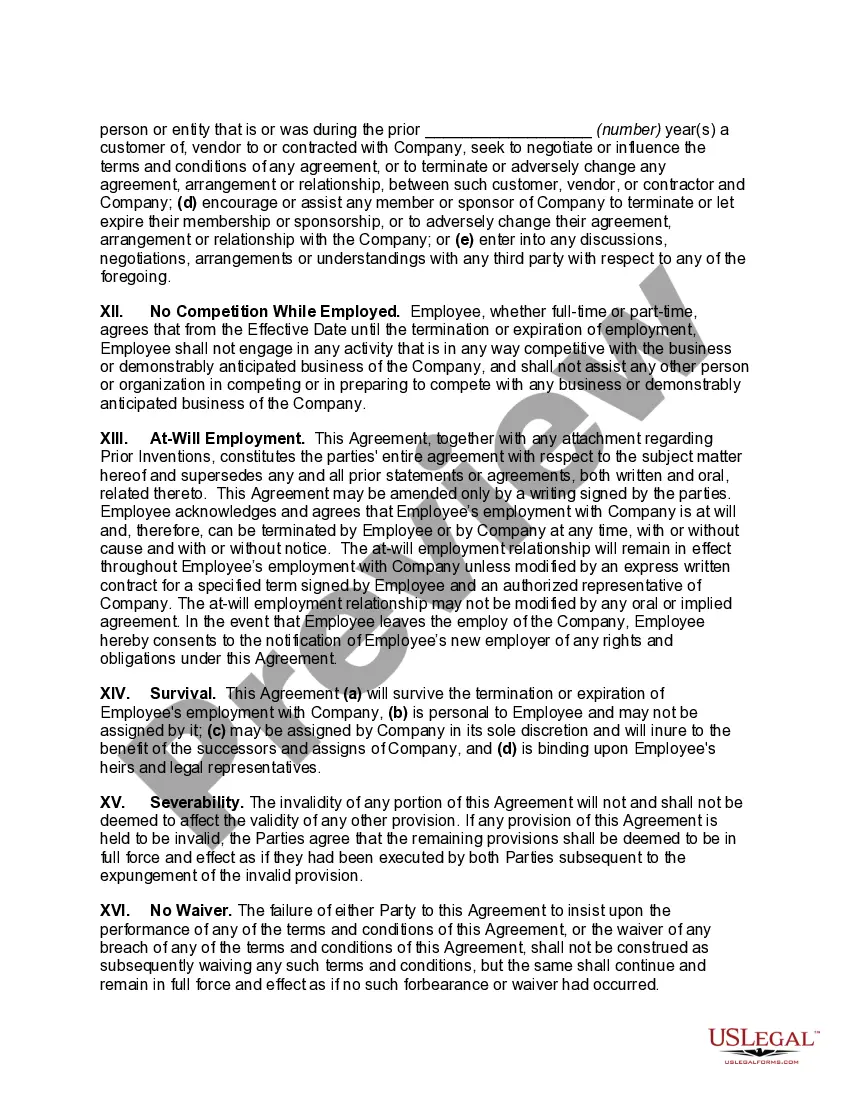
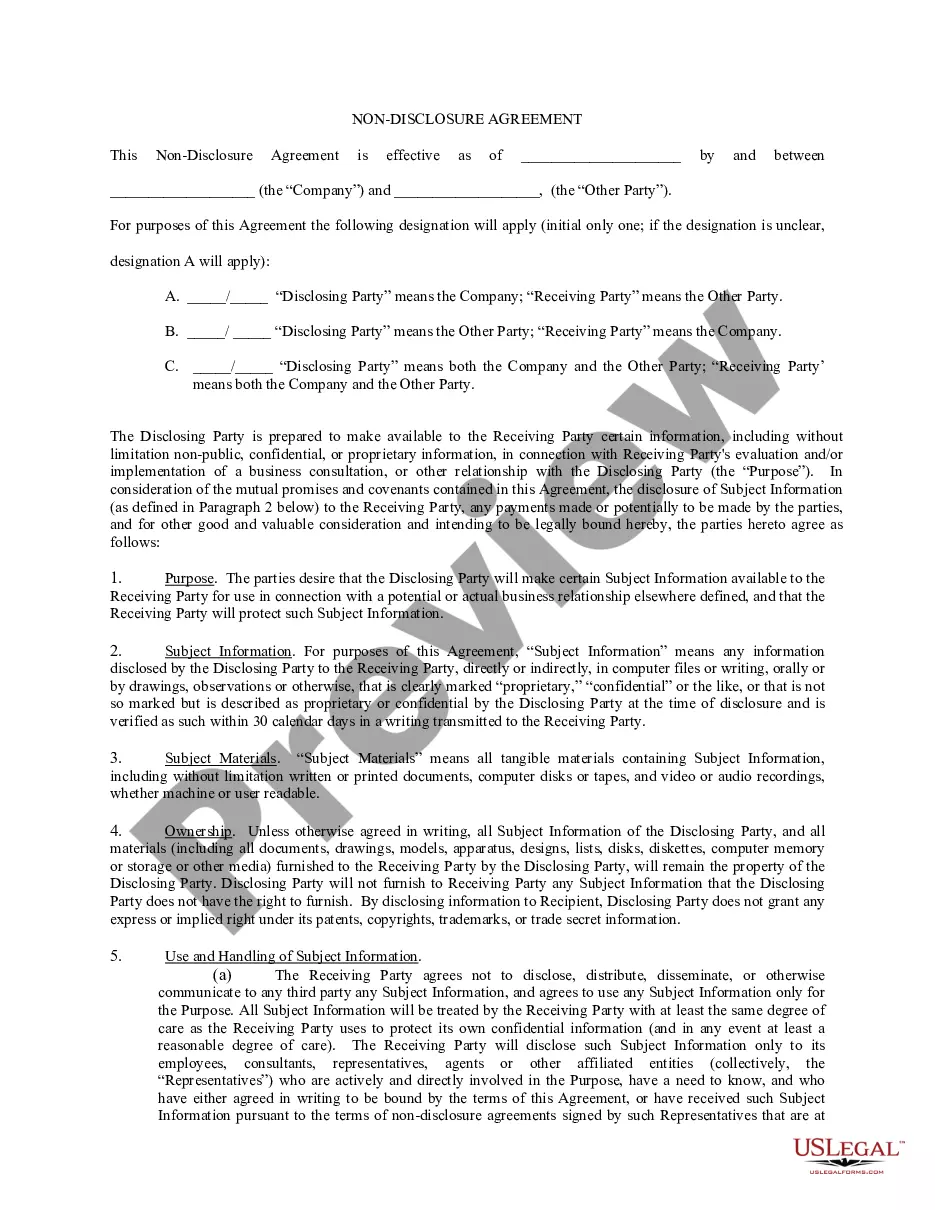
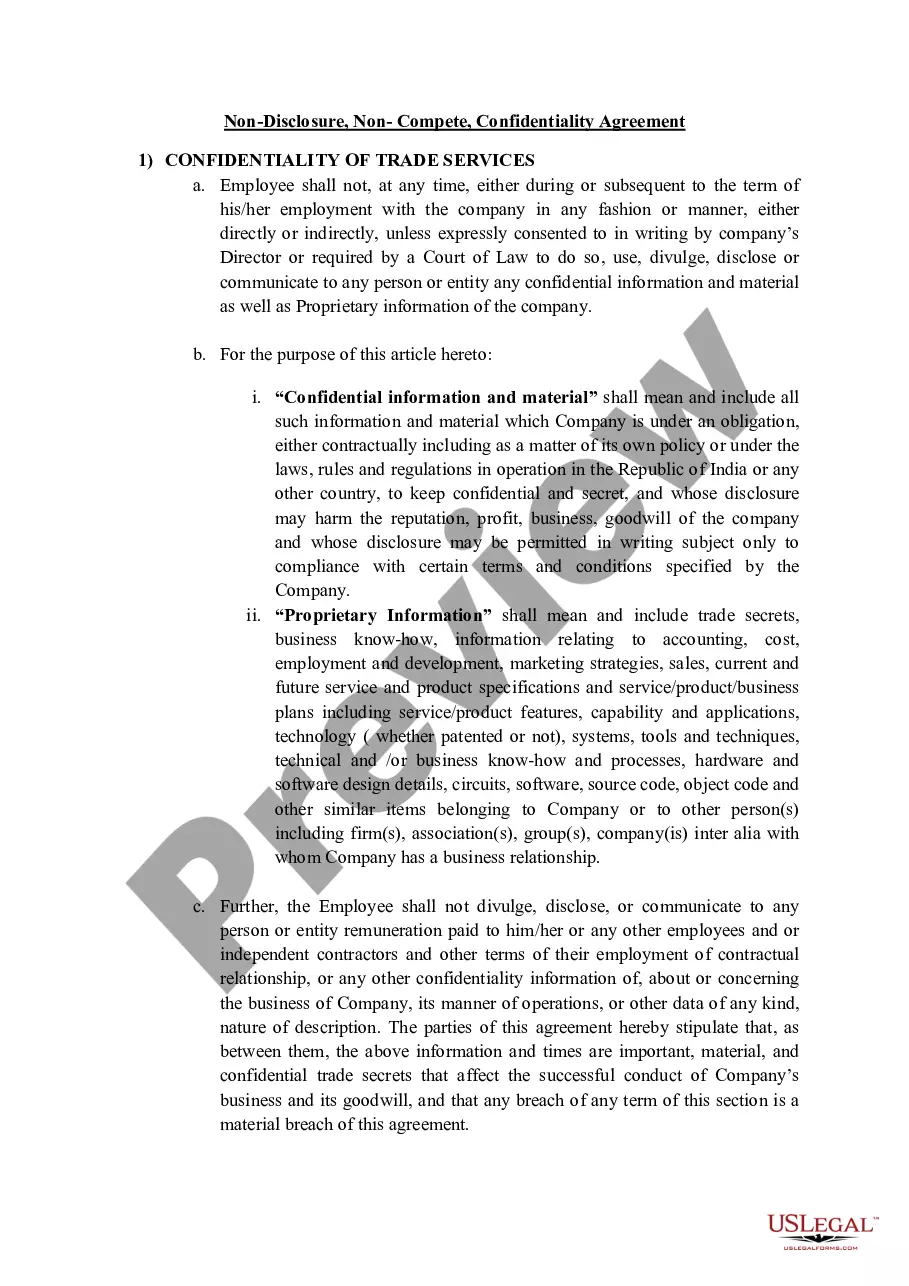
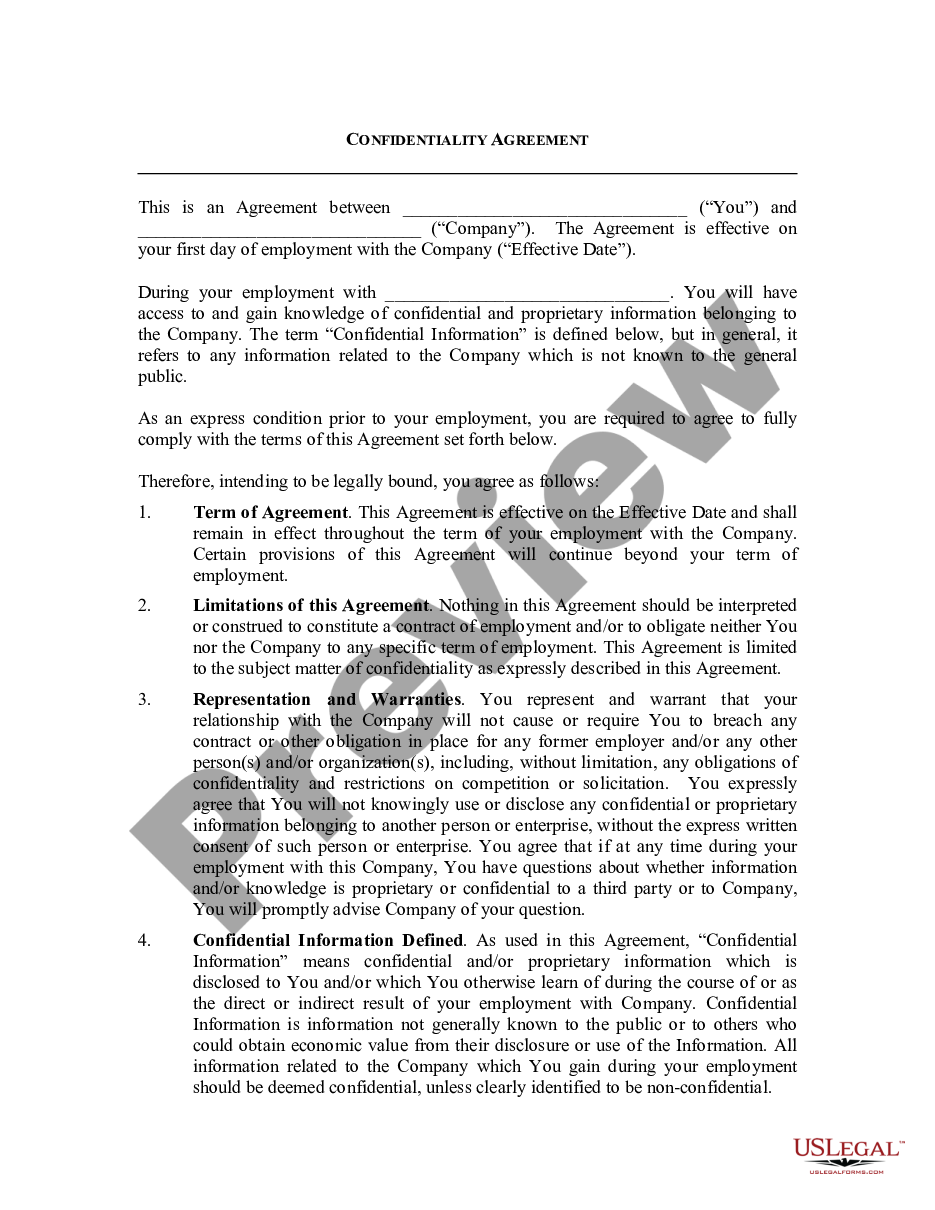
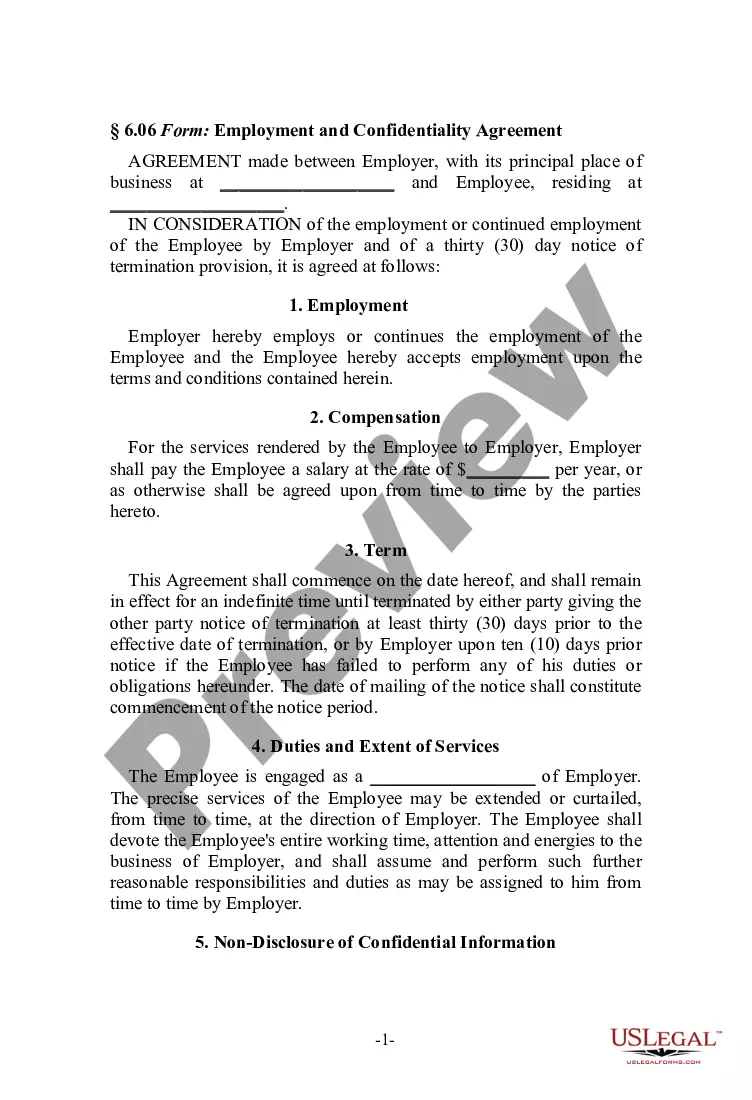
The Employment Non-Disclosure, Non-Solicitation, and Intellectual Property Assignment Agreement is a legal contract that establishes the terms under which an employee agrees to protect the confidentiality of sensitive information obtained during employment. This form differs from other employment agreements by specifically addressing non-disclosure of proprietary information, non-solicitation of clients or employees, and the assignment of intellectual property rights created while employed. It is essential for companies to safeguard their business interests and trade secrets.
Key parts of this document
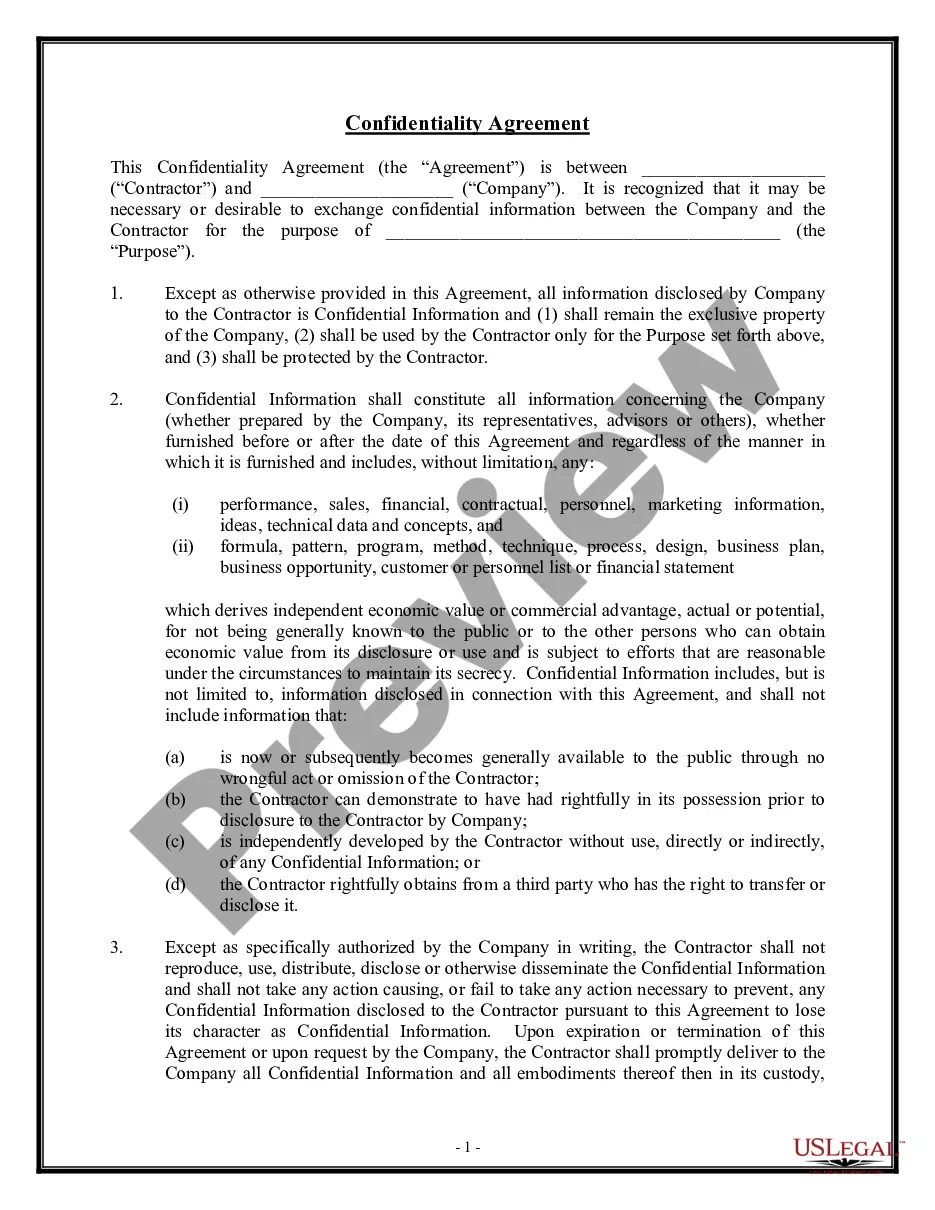
- Definition of confidential information, including trade secrets and proprietary business methods.
- Employee's obligations regarding the use and protection of confidential information.
- Ownership of intellectual property created during employment, designated as a work made for hire.
- Non-solicitation clause to prevent poaching of employees or clients.
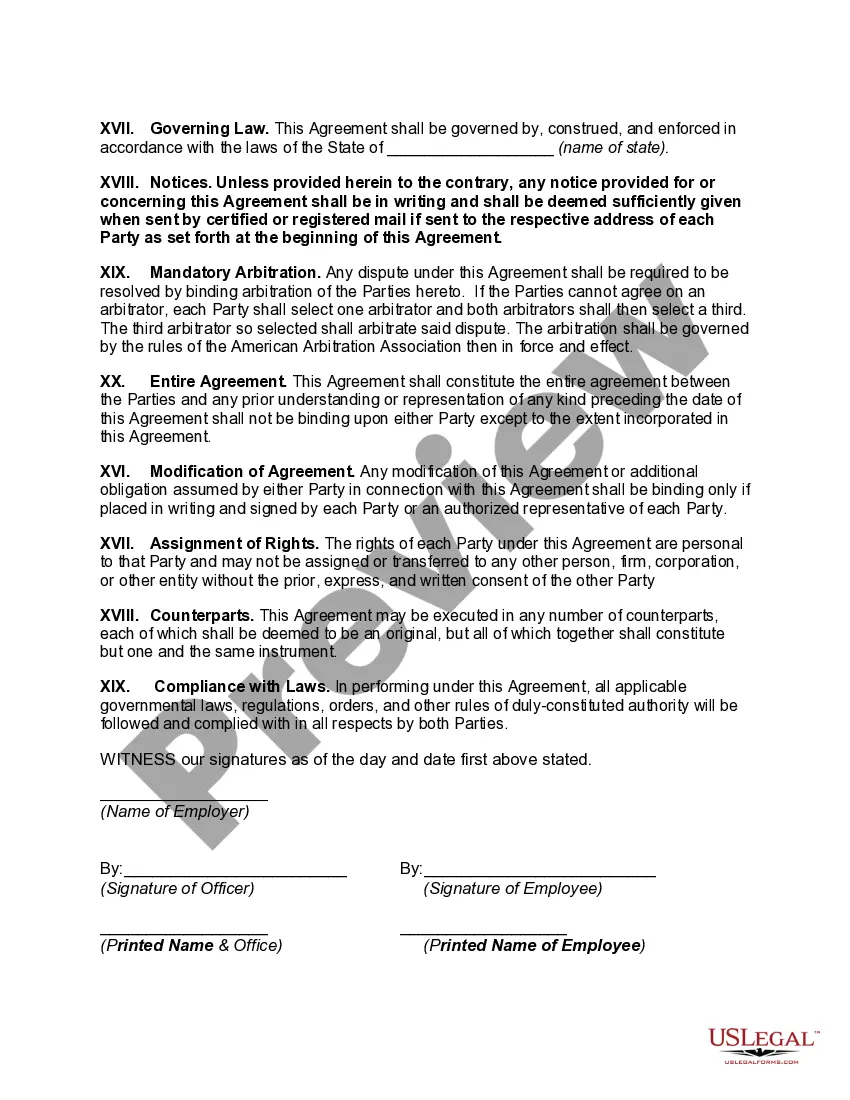
- At-will employment and survival clauses that outline the duration and enforceability of the agreement.
When to use this document
This agreement is necessary when an employer wishes to ensure that employees are legally bound to keep sensitive information confidential. It is often used in industries that rely heavily on intellectual property, proprietary technology, or customer relationships, such as technology firms, consultancies, and manufacturing companies. Use this form when hiring new employees, especially in roles where they will have access to confidential information or are expected to create work product for the company.
Who needs this form
- Employers looking to protect their business interests and proprietary information.
- Employees who are entering into a new employment agreement with obligations regarding confidentiality and intellectual property.
- Legal professionals drafting or reviewing employment agreements for their clients.
- Companies in industries sensitive to competitive intelligence and trade secret protection.
Steps to complete this form
- Identify the parties involved in the agreement: the employer and the employee.
- Specify the effective date of the agreement.
- Clearly define what constitutes confidential information and intellectual property.
- Enter the non-solicitation terms, including the duration of the restriction.
- Ensure signatures are obtained from both the employer and the employee.
Is notarization required?
This form does not typically require notarization unless specified by local law. It is important to check for any state-specific requirements that may mandate notarization for such agreements.
Get your form ready online
Our built-in tools help you complete, sign, share, and store your documents in one place.
Make edits, fill in missing information, and update formatting in US Legal Forms—just like you would in MS Word.
Download a copy, print it, send it by email, or mail it via USPS—whatever works best for your next step.
Sign and collect signatures with our SignNow integration. Send to multiple recipients, set reminders, and more. Go Premium to unlock E-Sign.
If this form requires notarization, complete it online through a secure video call—no need to meet a notary in person or wait for an appointment.
We protect your documents and personal data by following strict security and privacy standards.

Make edits, fill in missing information, and update formatting in US Legal Forms—just like you would in MS Word.

Download a copy, print it, send it by email, or mail it via USPS—whatever works best for your next step.

Sign and collect signatures with our SignNow integration. Send to multiple recipients, set reminders, and more. Go Premium to unlock E-Sign.

If this form requires notarization, complete it online through a secure video call—no need to meet a notary in person or wait for an appointment.

We protect your documents and personal data by following strict security and privacy standards.
Common mistakes to avoid
- Failing to clearly define what constitutes confidential information.
- Not specifying the duration of the non-solicitation clause.
- Overlooking the need for both parties to sign the agreement.
- Neglecting to address prior inventions or intellectual property rights effectively.
Benefits of completing this form online
- Convenience: Downloadable and easily accessible anytime without visiting a lawyer's office.
- Editability: Customize the template to fit specific needs and circumstances.
- Reliability: Drafted by licensed attorneys ensuring legal soundness and compliance.
Looking for another form?
Form popularity
FAQ
Intellectual property created during employment can only be owned by an employer if the intellectual property was created in the course of employment. This means that the employee must have created the intellectual property while they were completing their employed duties.
Don't sign. Build your book independently. Carve out pre-existing relationships. Require for cause termination as the trigger. Provide for a payoff. Turn clients into friends. Don't treat clients as trade secrets. Invest in your own business.
Don't sign. Build your book independently. Carve out pre-existing relationships. Require for cause termination as the trigger. Provide for a payoff. Turn clients into friends. Don't treat clients as trade secrets. Invest in your own business.
An intellectual property assignment agreement provides assurance to investors that the founders have legally transferred to the company the intellectual property required to run the business.
To prevent employees from revealing sensitive information that could jeopardize your business, you might have them sign an employee confidentiality agreement. Businesses use employee confidentiality agreements to protect their innovative ideas, effective processes, unique products, or customer information.
An employer will often require an employee to sign an NDA because it allows their company to operate at a higher level, with less risk.Understand, your employer is not asking you to sign an NDA out of mistrust, they are asking you to sign one because it is essential to conducting business smoothly and efficiently.
Every employee who has the ability to access confidential information or trade secrets should be required to sign a reasonable NDA, Sterman said. This reminds employees of their obligations to the company and signals how valuable the company considers its information, she added.
You can use an NDA with your employees to protect your company's confidential data. The NDA requires the Receiving Party of confidential information, in this case your employees, to maintain secrecy and not to misuse the information. Trust is like blood pressure.
Non-disclosure agreements are an important legal framework used to protect sensitive and confidential information from being made available by the recipient of that information. Companies and startups use these documents to ensure that their good ideas won't be stolen by people they are negotiating with.