Guardianship Questionnaire
Overview of this form
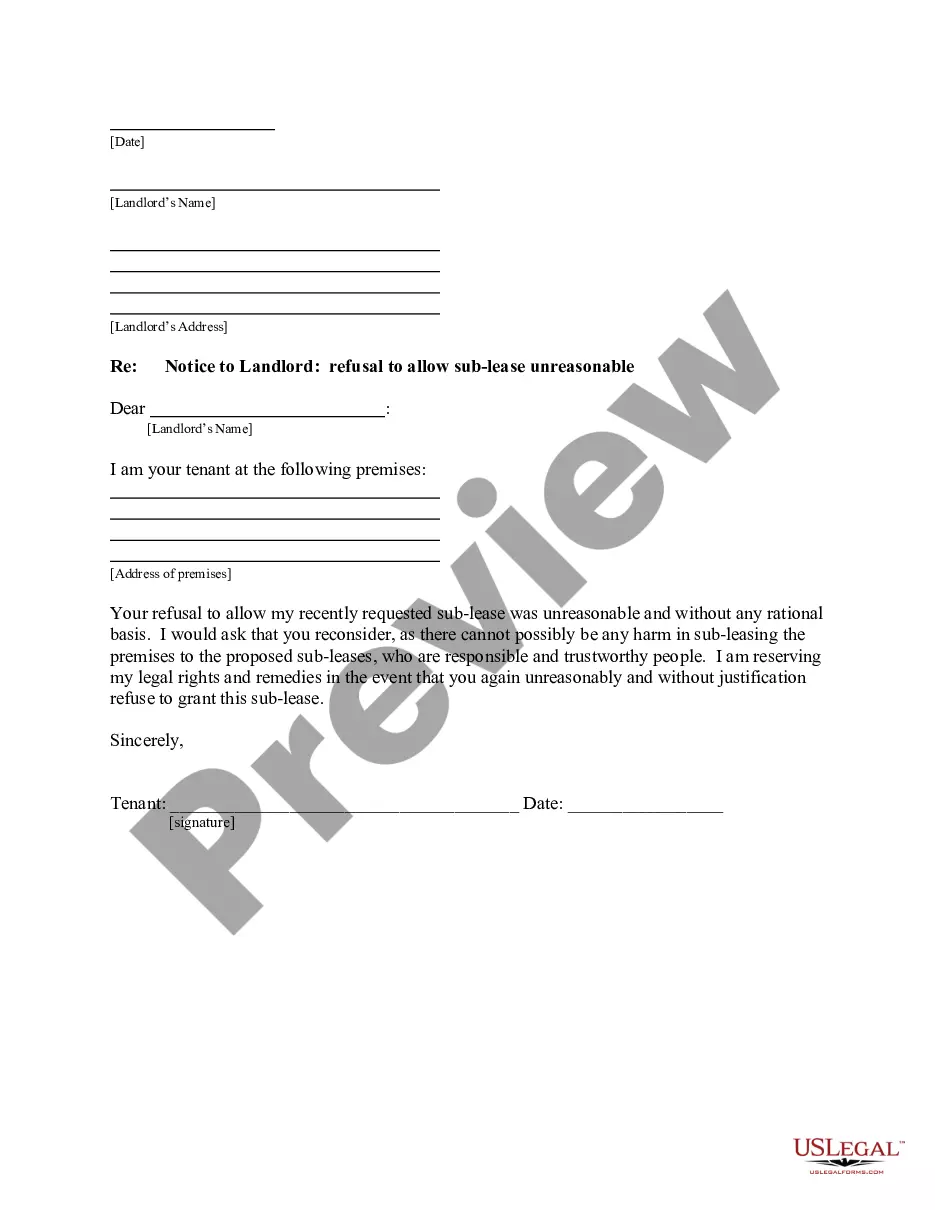
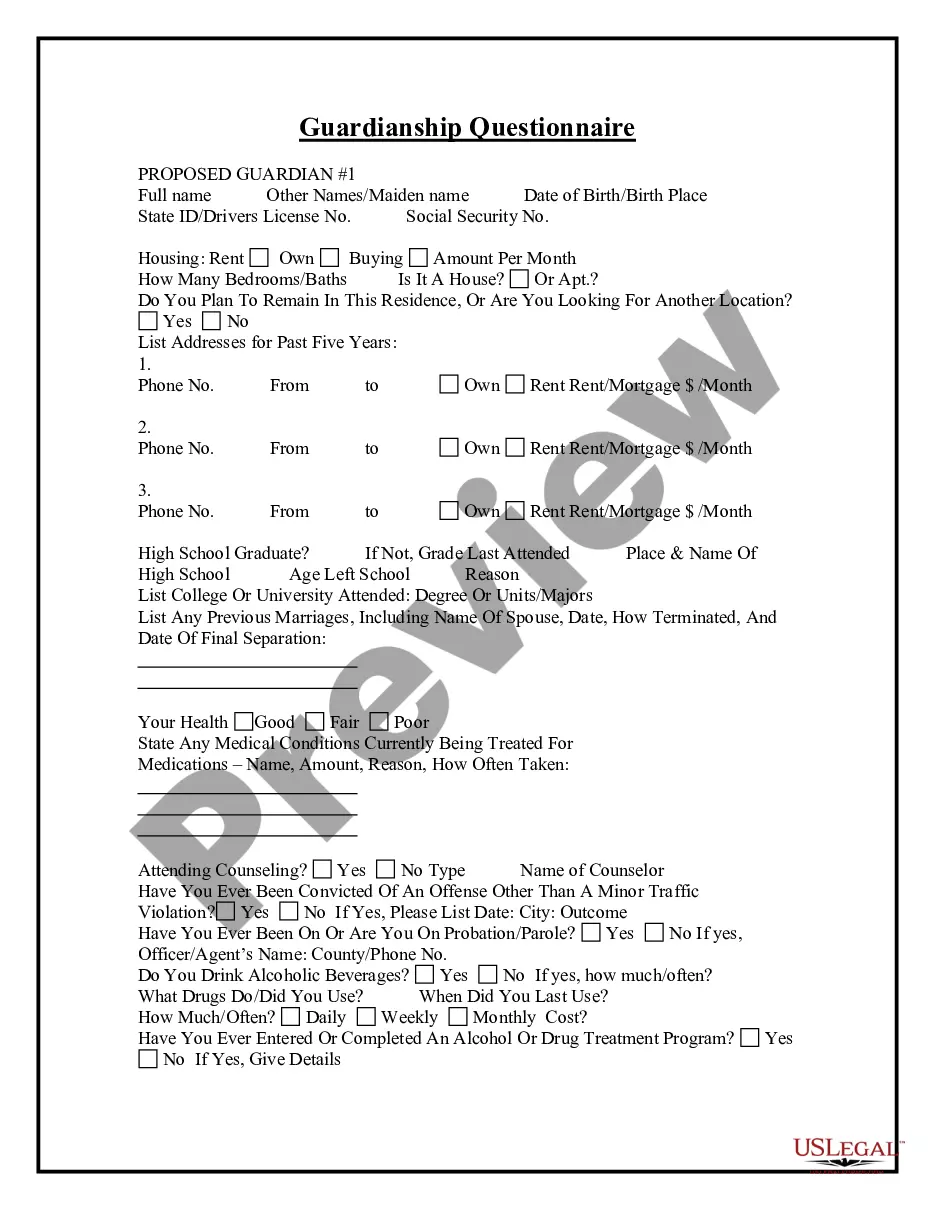
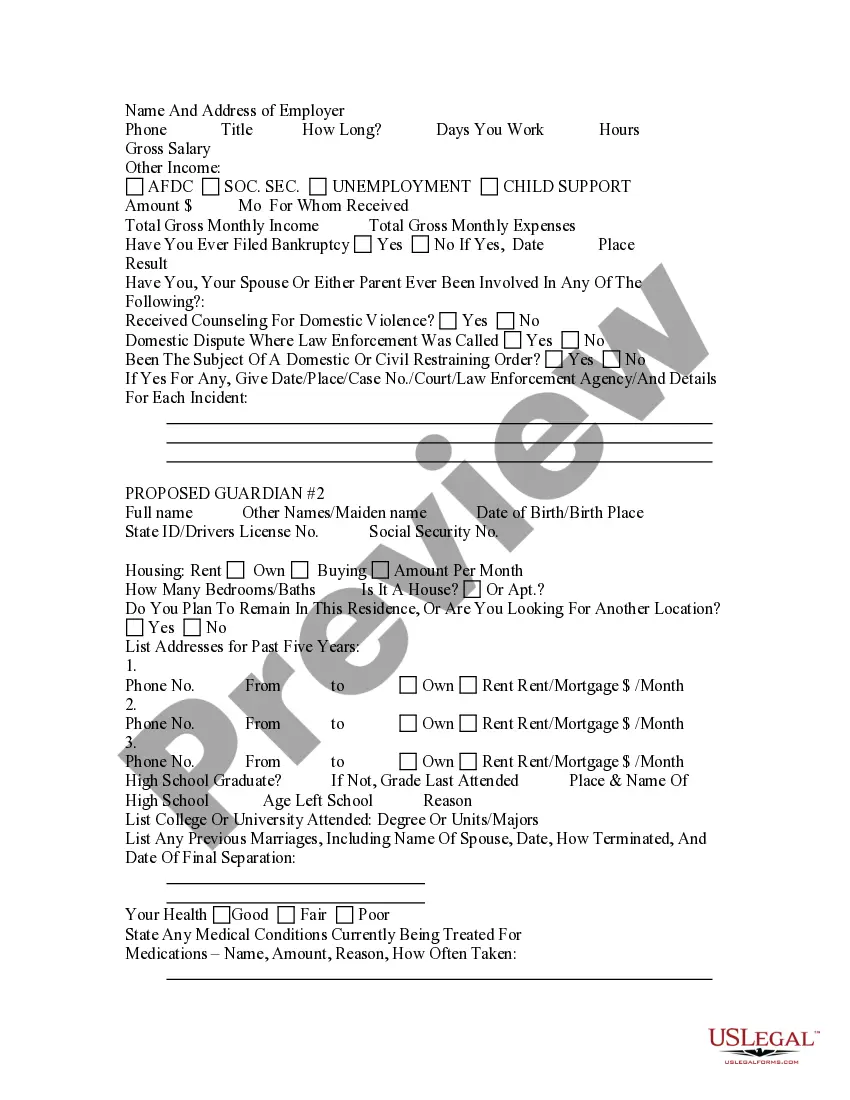
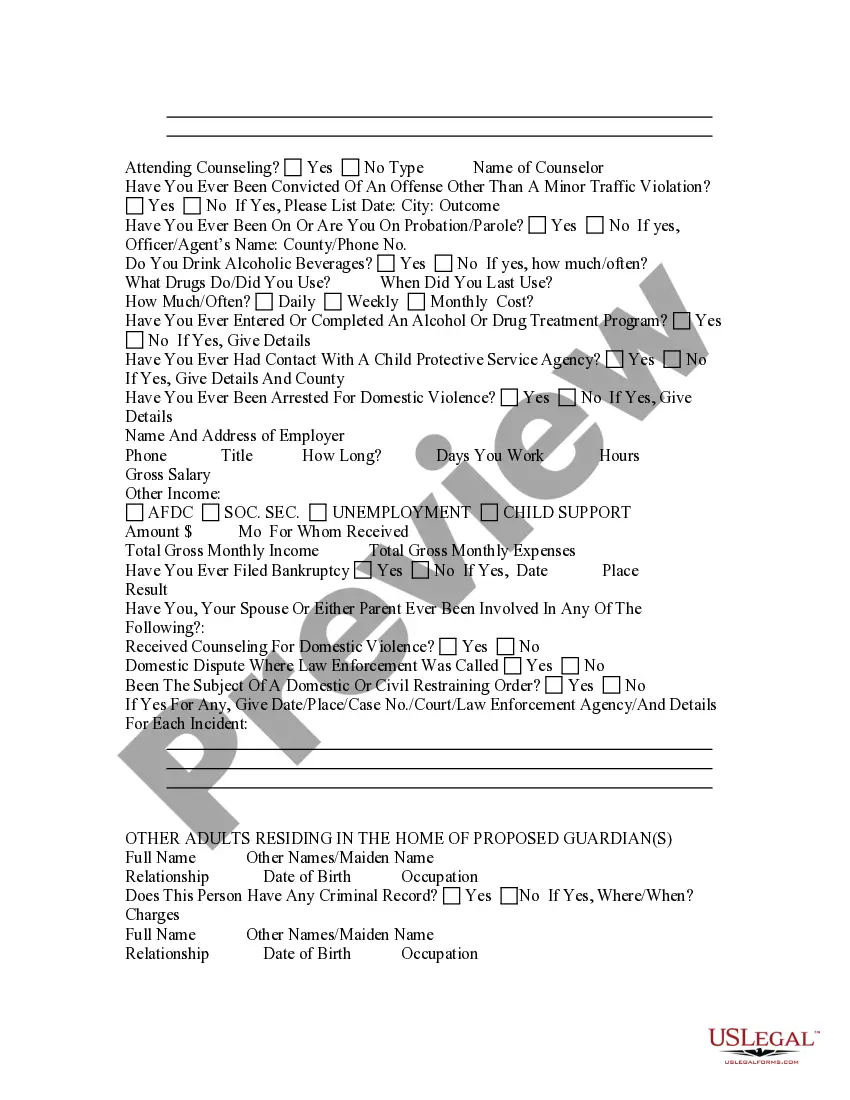
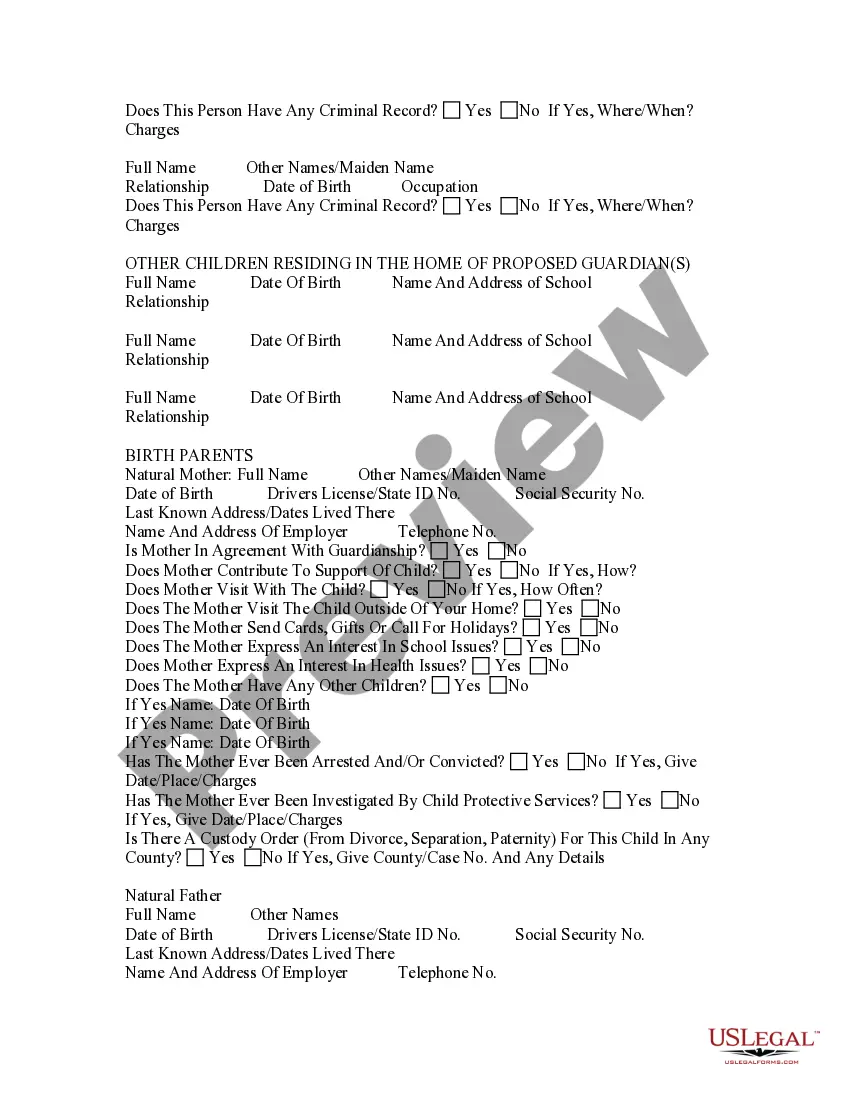
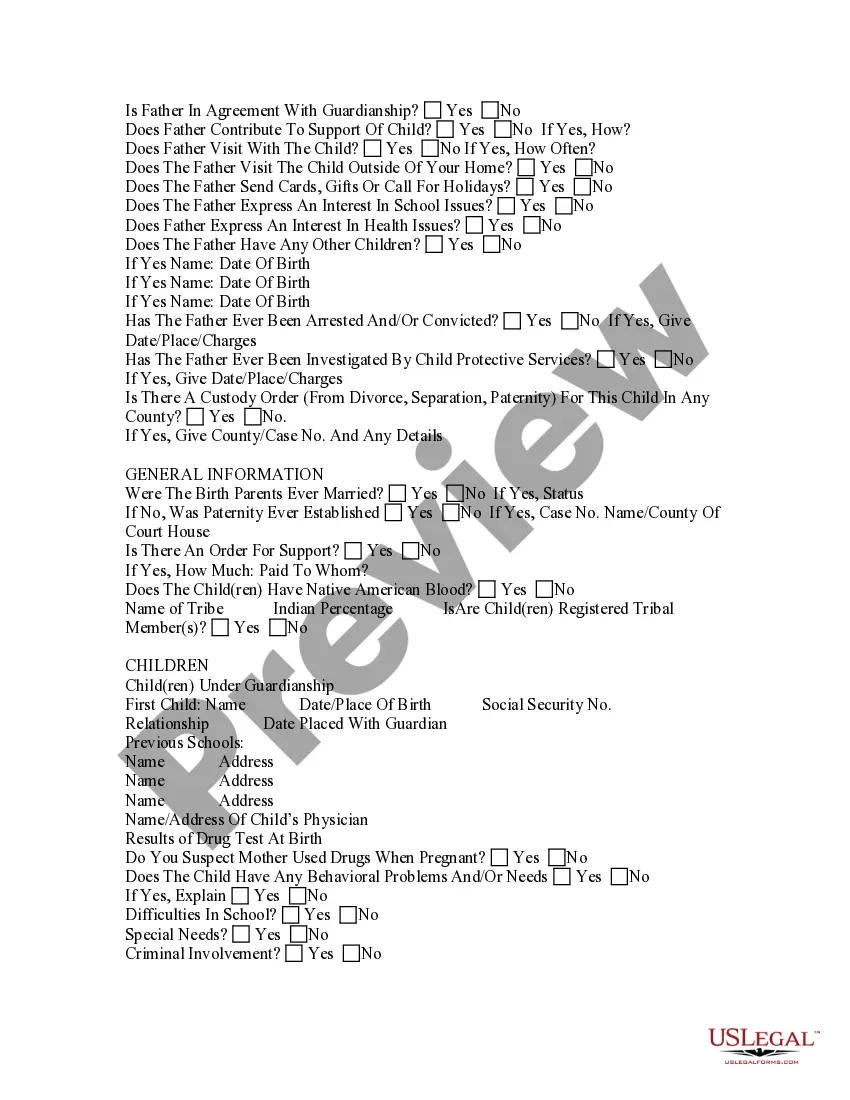
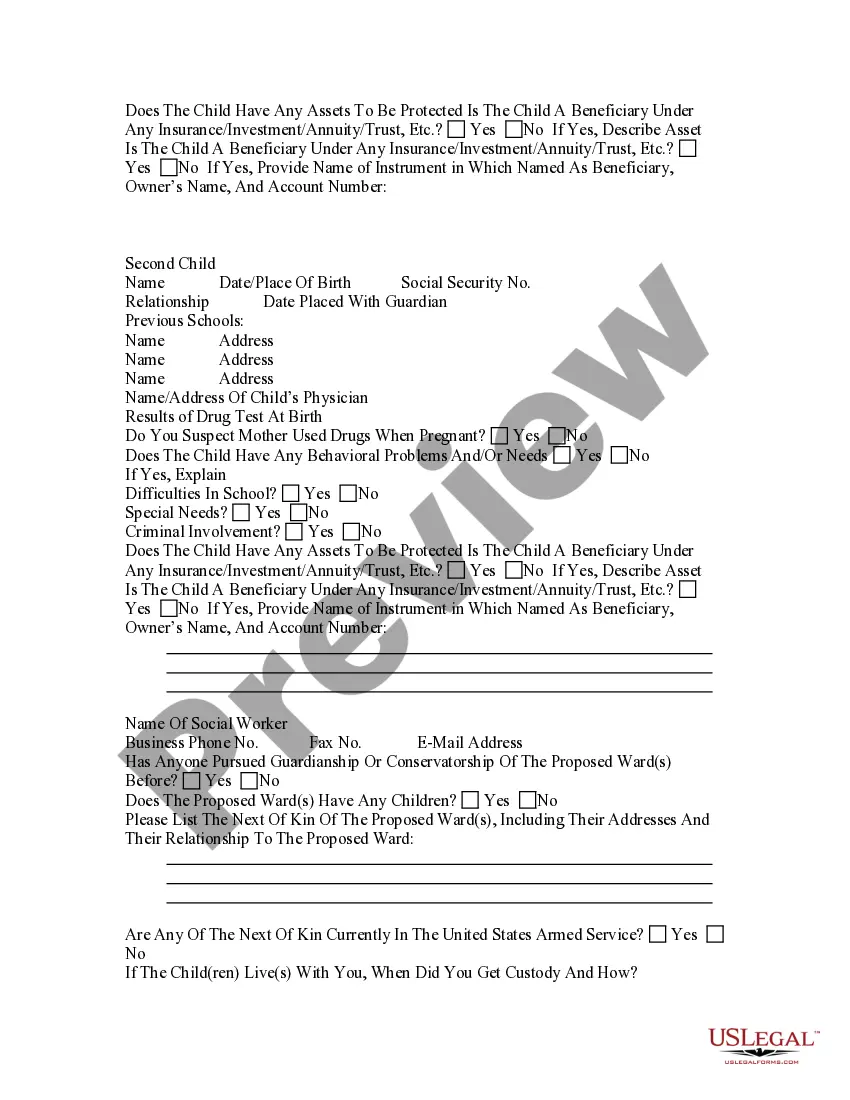
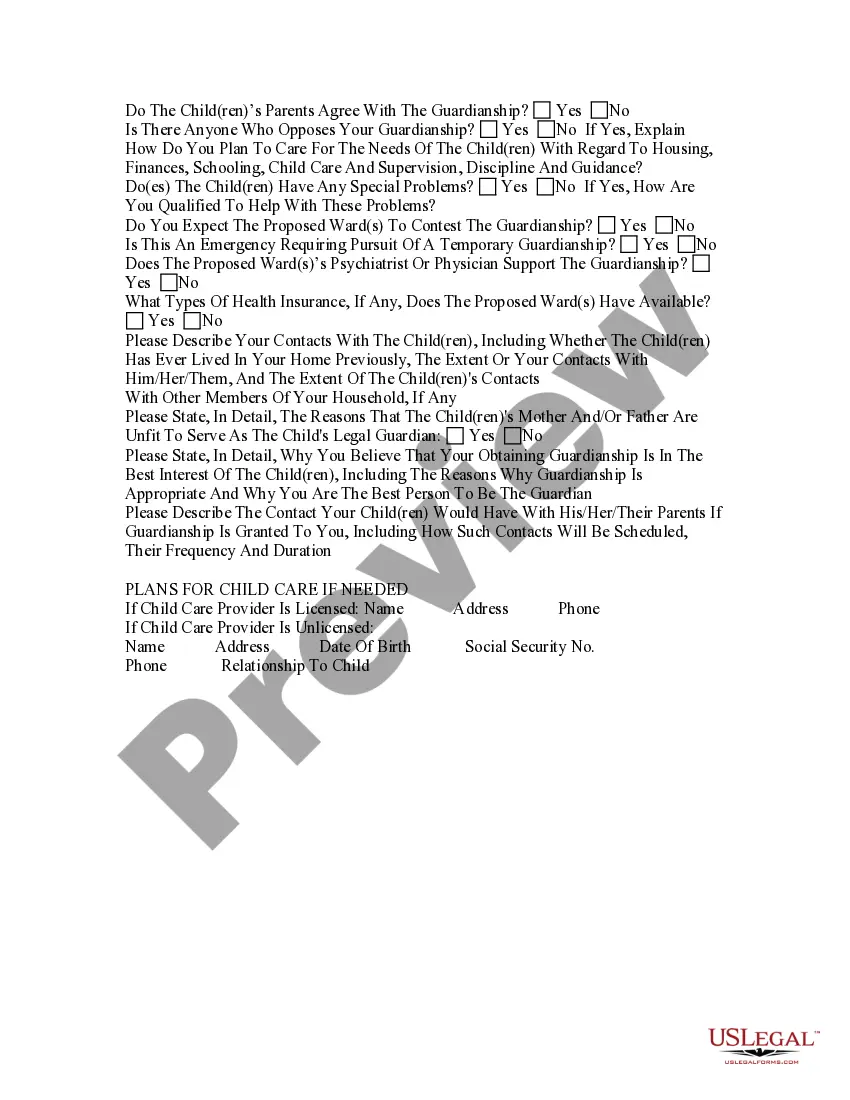
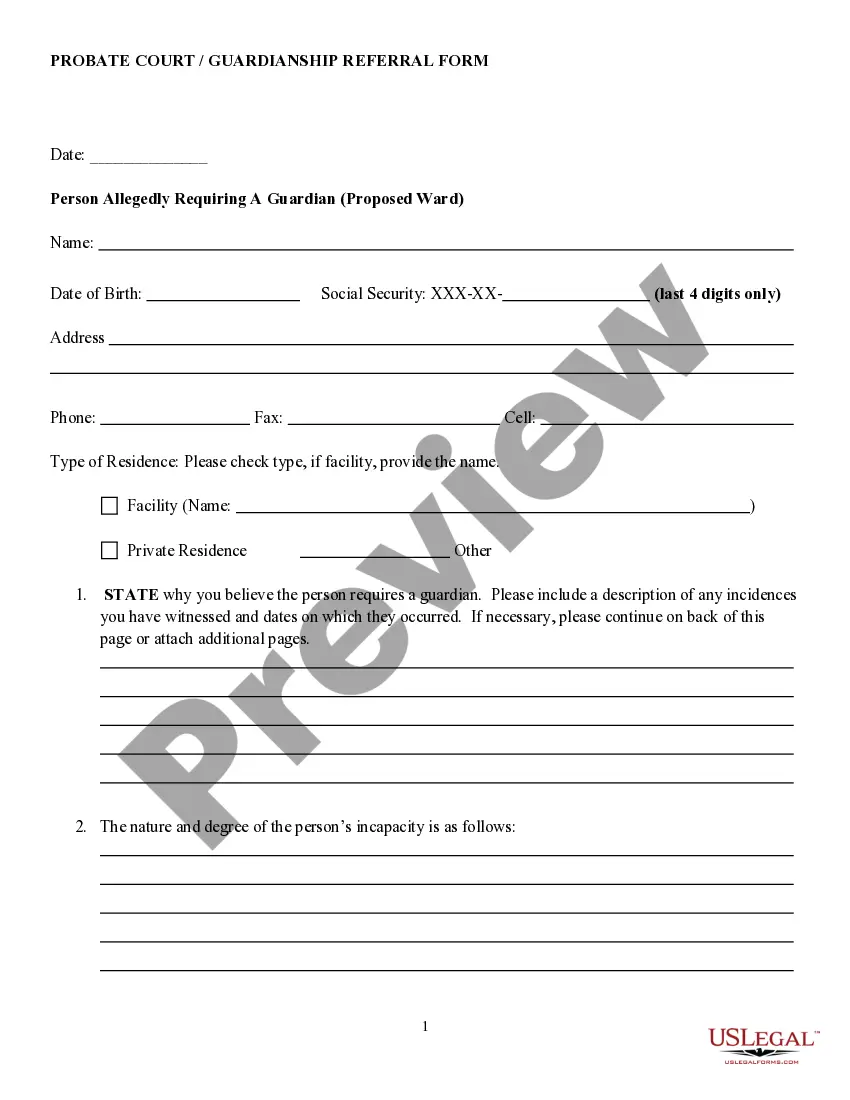
The Guardianship Questionnaire is a legal form designed to help individuals and attorneys gather essential information relevant to guardianship matters. This form aids in identifying key issues that may affect the legal rights and obligations of the parties involved. Unlike other forms, this questionnaire not only assists those seeking guardianship but also serves as a valuable tool for attorneys in their initial consultations with clients, ensuring effective preparation and case evaluation.
Main sections of this form
- Contact information of the parties involved
- Details about any previous domestic or civil restraining orders
- Information on significant life events impacting guardianship
- Questions to assess the needs and circumstances of the individual in need of a guardian


When to use this form
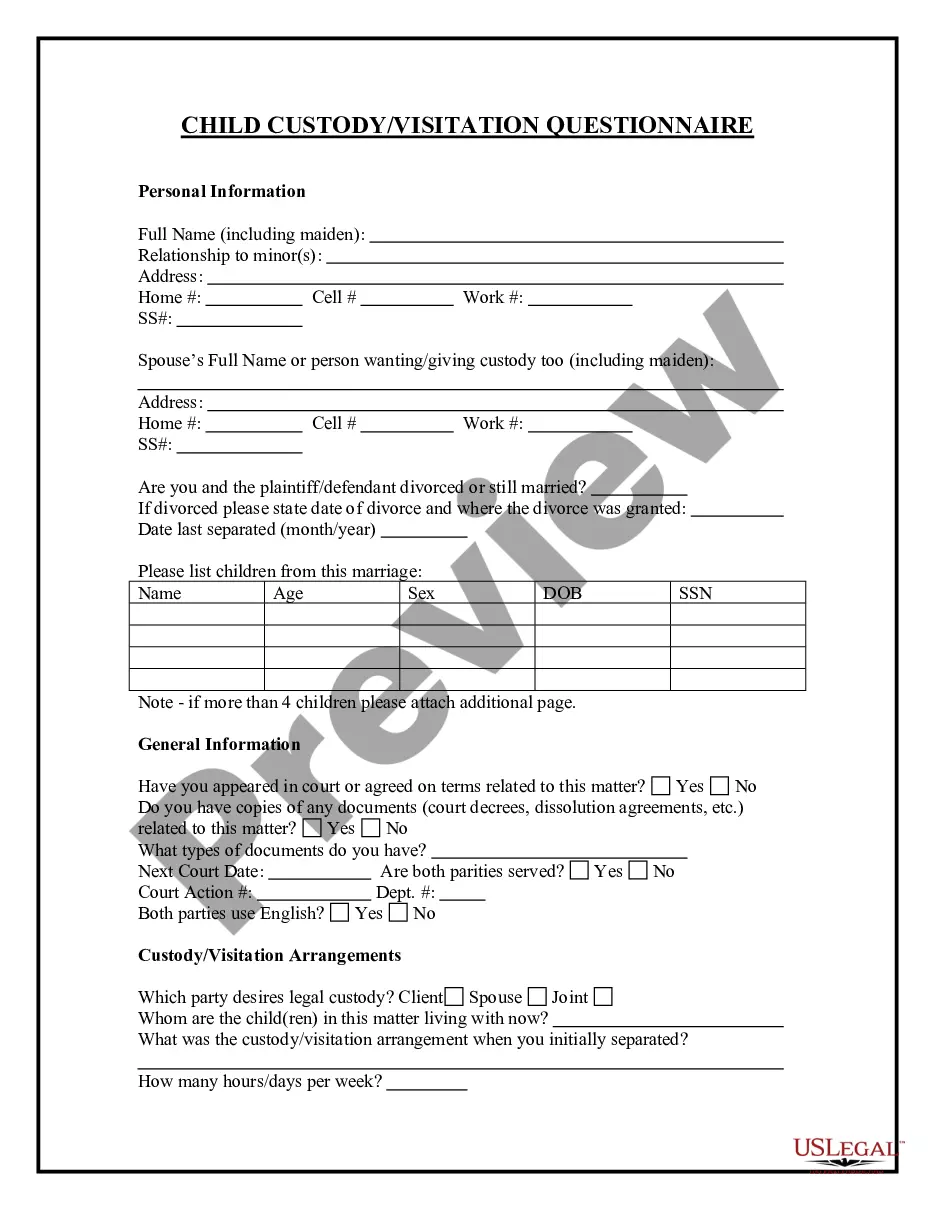
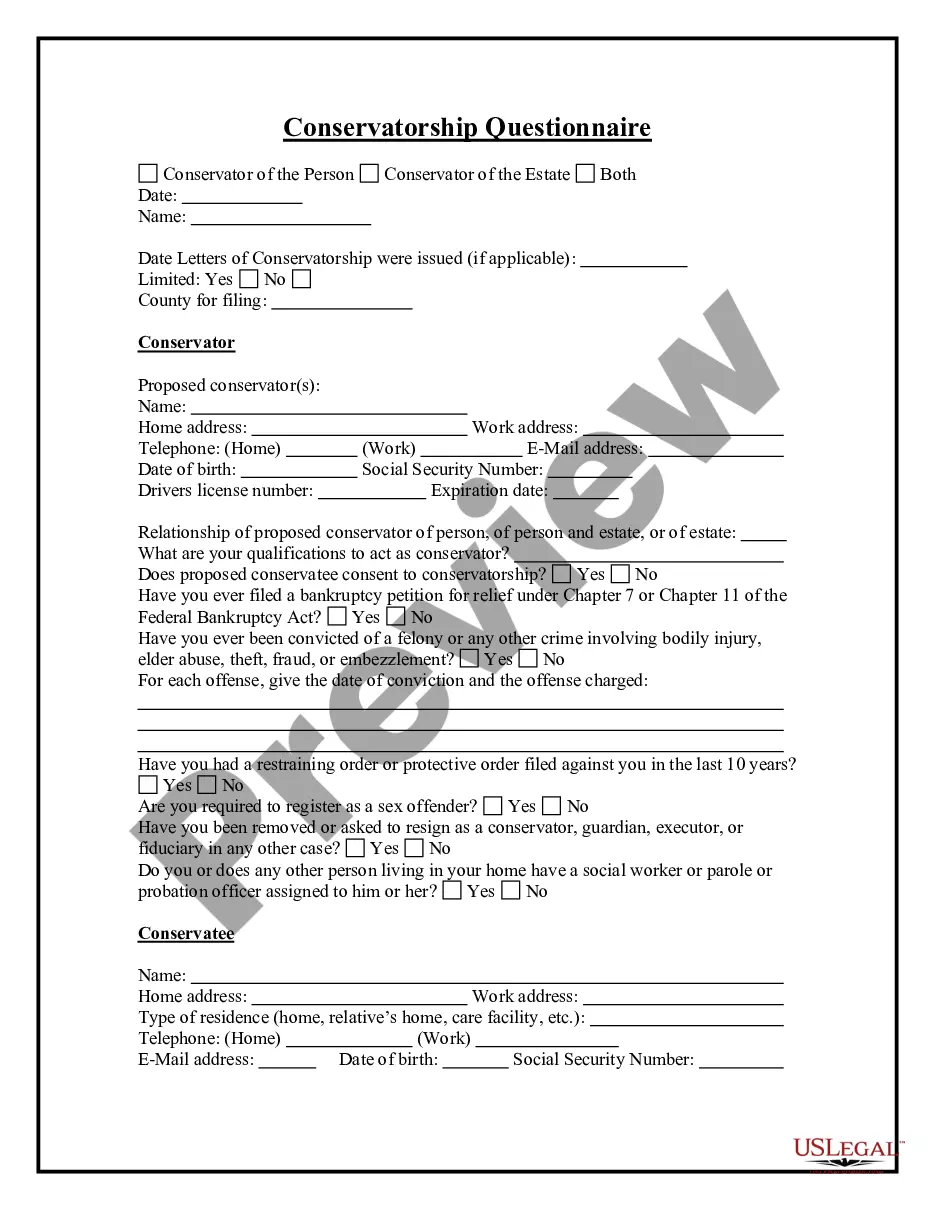
This form is typically used in situations where an individual seeks to establish a guardianship over another person, such as a minor child or an adult unable to care for themselves. It is particularly useful when preparing for court proceedings or consultations with an attorney, as it helps organize relevant information and potential legal challenges.
Who this form is for
- Individuals seeking to appoint a guardian for a child or incapacitated adult
- Attorneys in the process of evaluating a new client's guardianship case
- Family members or caregivers looking to gather information for a guardianship petition
How to complete this form
- Identify the parties involved by entering their names and contact details.
- Review and answer all questions regarding any previous domestic or civil restraining orders.
- Summarize relevant background information that may affect the guardianship case.
- Detail any significant life events that could influence the need for guardianship.
- Complete the questionnaire thoroughly before consulting with an attorney.
Notarization requirements for this form
Notarization is required for this form to take effect. Our online notarization service, powered by Notarize, lets you verify and sign documents remotely through an encrypted video session, available 24/7.
Get your form ready online
Our built-in tools help you complete, sign, share, and store your documents in one place.
Make edits, fill in missing information, and update formatting in US Legal Forms—just like you would in MS Word.
Download a copy, print it, send it by email, or mail it via USPS—whatever works best for your next step.
Sign and collect signatures with our SignNow integration. Send to multiple recipients, set reminders, and more. Go Premium to unlock E-Sign.
If this form requires notarization, complete it online through a secure video call—no need to meet a notary in person or wait for an appointment.
We protect your documents and personal data by following strict security and privacy standards.

Make edits, fill in missing information, and update formatting in US Legal Forms—just like you would in MS Word.

Download a copy, print it, send it by email, or mail it via USPS—whatever works best for your next step.

Sign and collect signatures with our SignNow integration. Send to multiple recipients, set reminders, and more. Go Premium to unlock E-Sign.

If this form requires notarization, complete it online through a secure video call—no need to meet a notary in person or wait for an appointment.

We protect your documents and personal data by following strict security and privacy standards.
Avoid these common issues
- Leaving out important information about previous legal issues.
- Failing to complete all sections of the questionnaire.
- Rushing through the form without considering the implications of each question.
Why complete this form online
- Convenient access to the form any time, allowing for completed answers at your own pace.
- Editability enables users to adjust responses easily before finalizing.
- Reliability since the form is drafted by licensed attorneys to meet legal standards.
Quick recap
- The Guardianship Questionnaire is essential for organizing information related to guardianship matters.
- It aids both individuals seeking guardianship and attorneys preparing for cases.
- Completing the form thoroughly can save time and reduce costs associated with obtaining legal assistance.
Looking for another form?
Form popularity
FAQ
The legal guardianship document is a formal declaration to the court system that another party is responsible for the well-being of the minors. No one can predict when an accident or other disaster may occur. Some include a legal guardianship document in their wills to determine who will raise their children.
Print a temporary guardianship form. Fill it out completely. Have the temporary guardianship form notarized. This essential step assures anyone receiving the form (such as medical personnel) that it is indeed your signature on the form.
State The Reason For The Letter The letter should be addressed to the person who is being granted temporary custody. It should state the reason for the letter and give permission to the addressee to have guardianship over the sender's child or children in the beginning. The child's full name should be stated.
Print a temporary guardianship form. Fill it out completely. Have the temporary guardianship form notarized. This essential step assures anyone receiving the form (such as medical personnel) that it is indeed your signature on the form.
You can establish guardianship of a child by filing papers in court. Initially, file a petition stating your interest in obtaining guardianship along with a filing fee. You'll also want to file a letter of consent from the child's parents.
The names of the forms are usually: Petition for Appointment of Guardian (or Petition for Appointment of Guardian of Minor) Petition for Conservatorship (when dealing with an incompetent adult) Order Appointing Guardian.
What is Guardianship? Guardianship means obtaining the legal authority to make decisions for another person. A guardian is the person appointed by the court to make decisions on behalf of someone else. The person over whom the guardianship is granted (the child or the adult) is referred to as the protected person.
When writing a will, most people appoint one legal guardian for their children, but you may want to name two people if they're a couple. You can also appoint guardians for each of your children separately, giving you full control over who they would live with if something happened to you.