Order Granting Motion for Summary Judgment and Final Judgment of Dismissal with Prejudice
Overview of this form
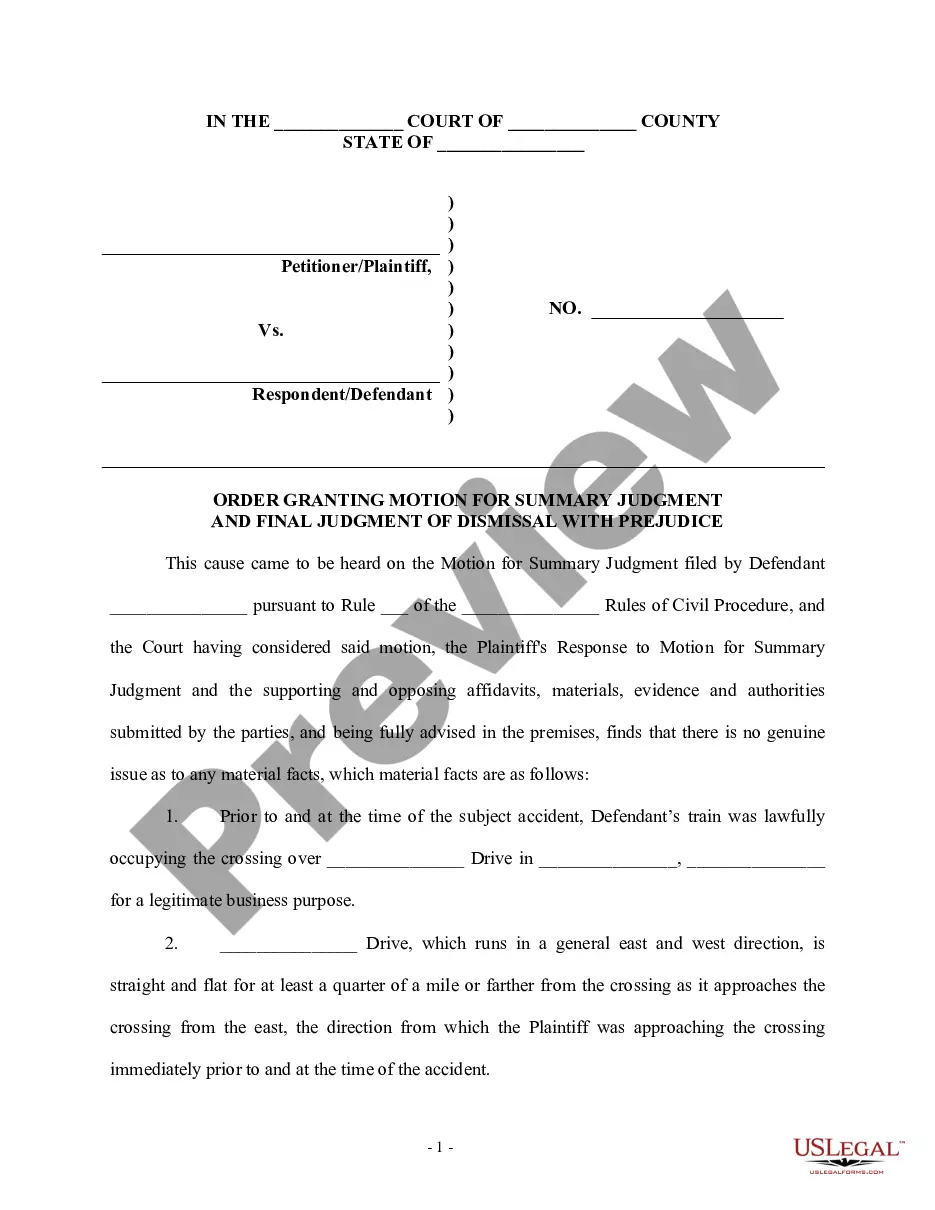
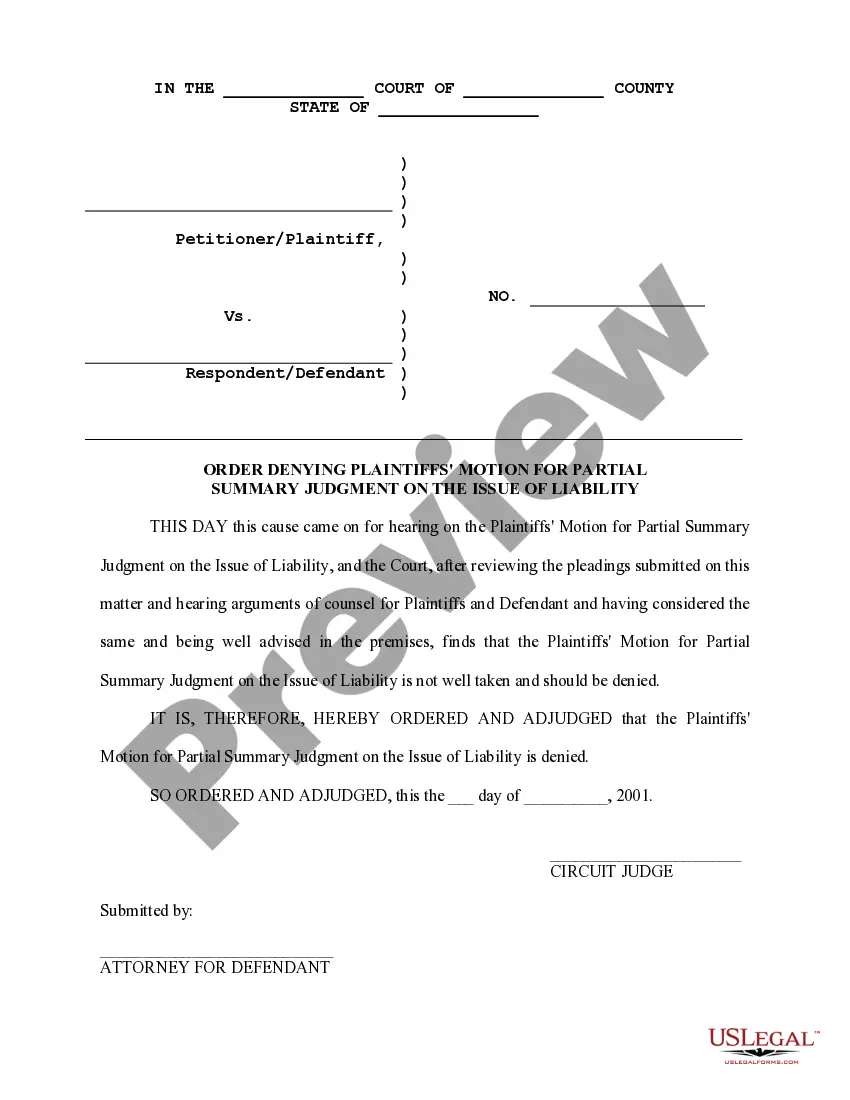
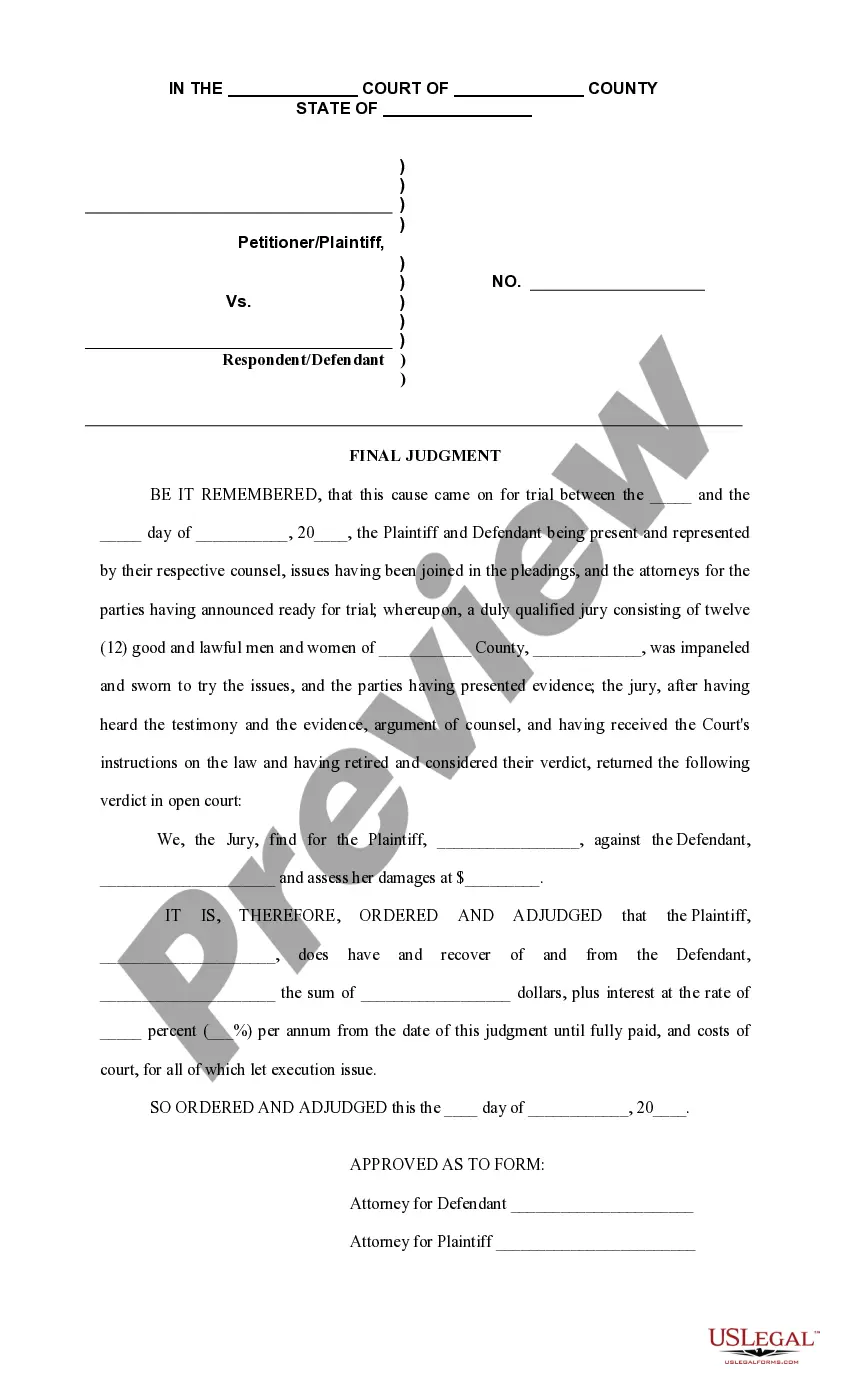
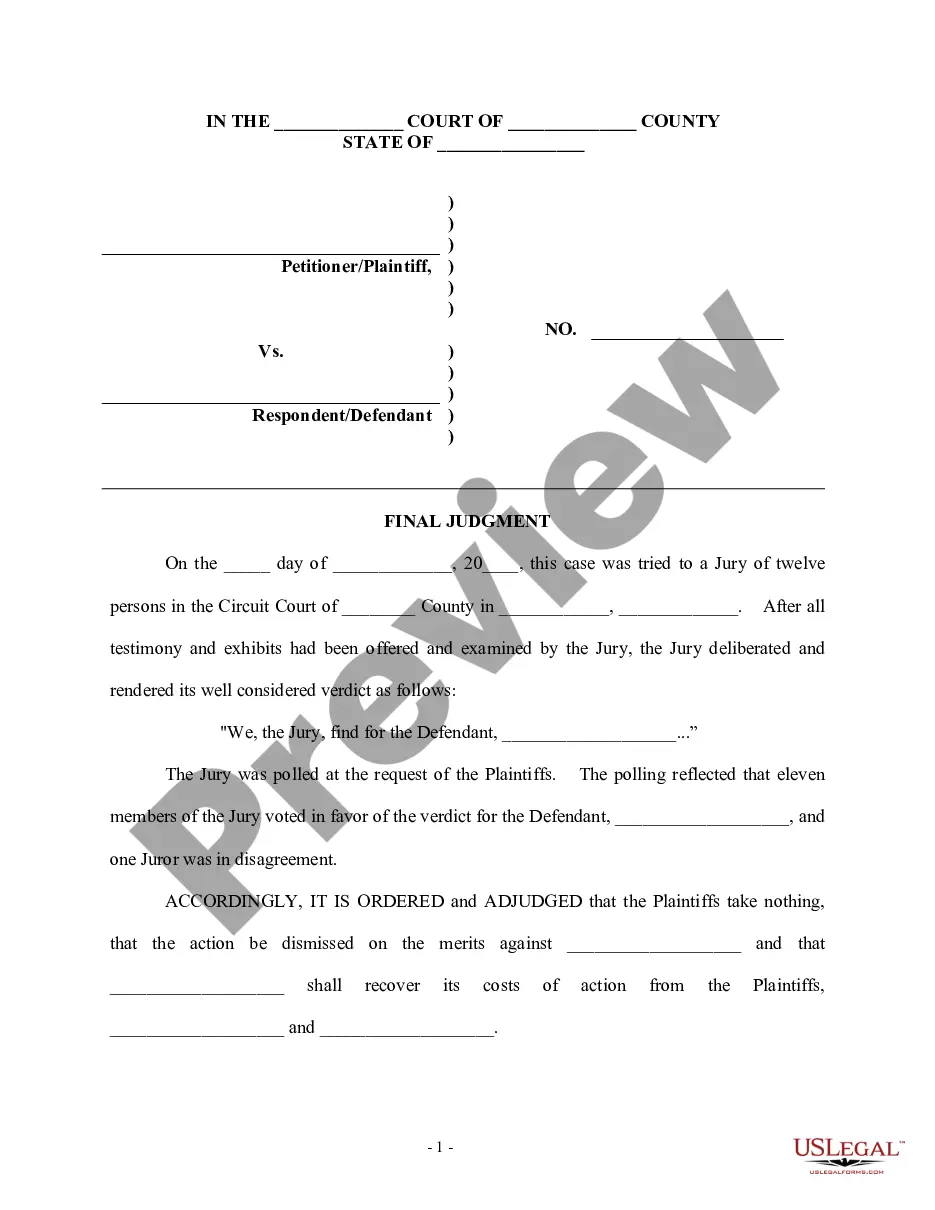
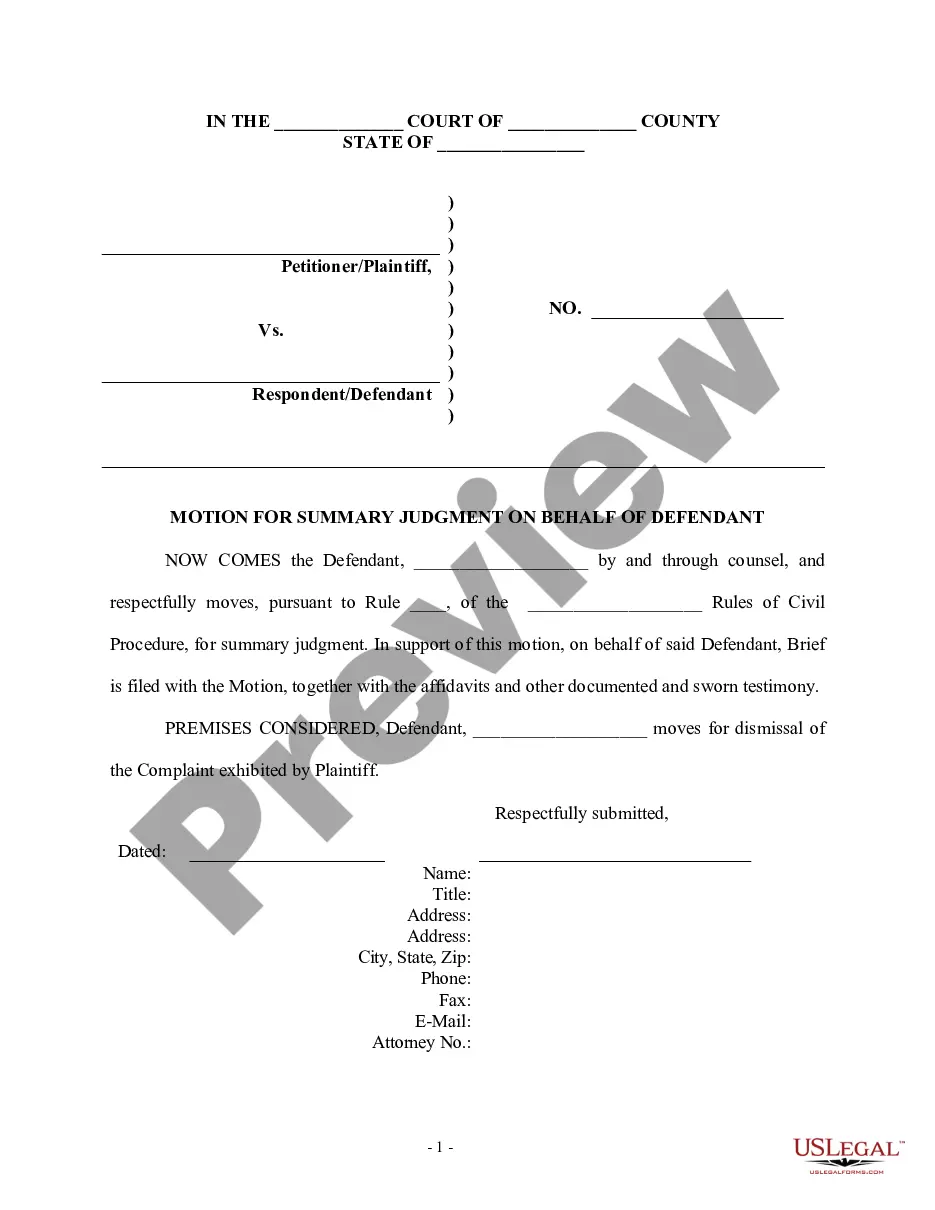
The Order Granting Motion for Summary Judgment and Final Judgment of Dismissal with Prejudice is a legal document issued by a judge that dismisses a plaintiff's case against a defendant. This form indicates that the court has ruled in favor of the defendant based on the evidence presented, concluding that there is no genuine issue of material fact that would require a trial. It differs from other legal judgments because it specifically addresses cases being dismissed with prejudice, meaning the plaintiff is barred from bringing the same claim again in the future.
Main sections of this form
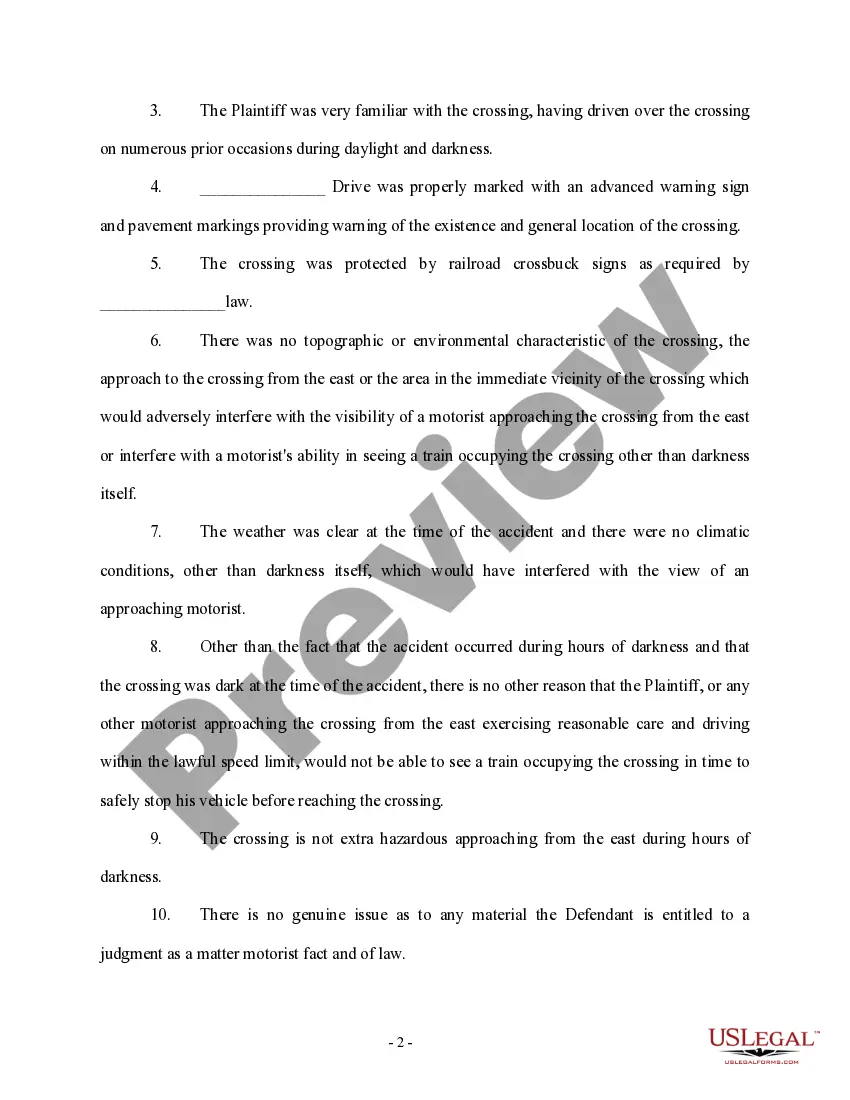
- Details about the lawful occupation of the crossing prior to the accident.
- Statements regarding the visibility of the crossing and safety measures in place.
- Acknowledgments of the plaintiff's familiarity with the crossing and the conditions at the time of the accident.
- Legal conclusions stating there are no genuine issues of material fact for a trial.
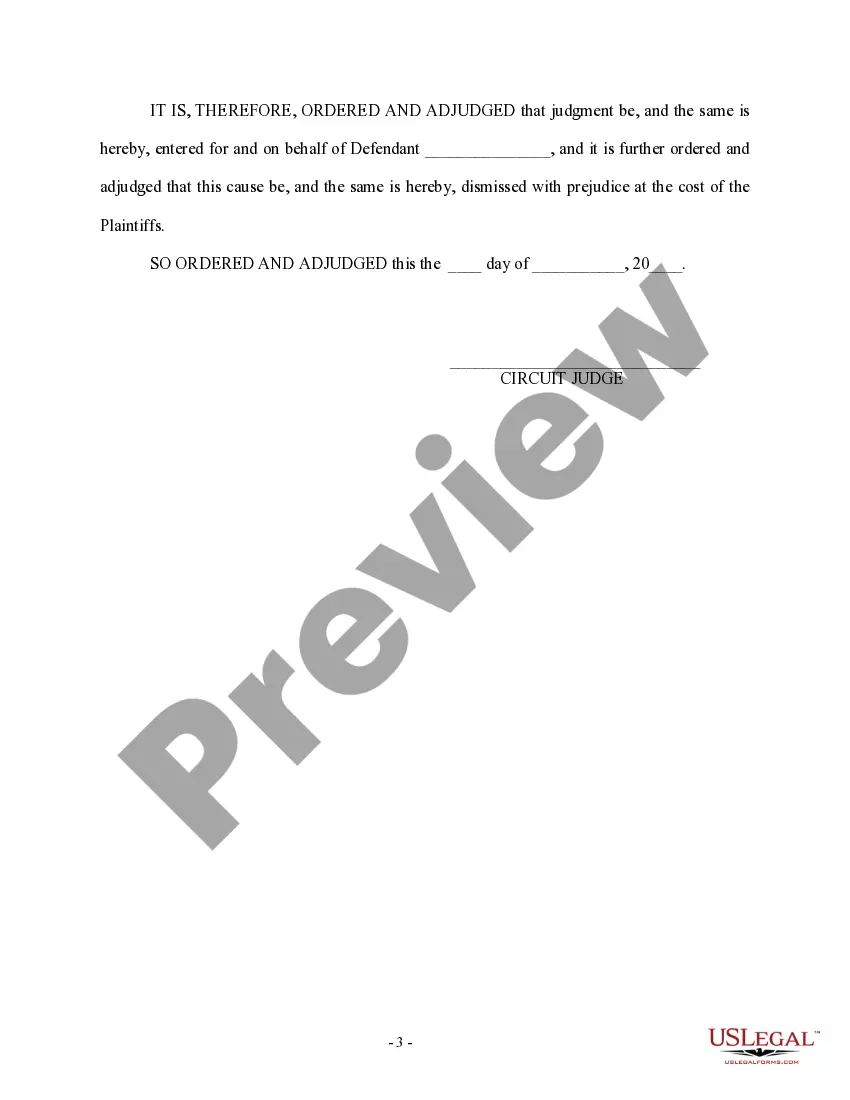
- Judgment in favor of the defendant and dismissal of the case with prejudice.
When to use this document
This form is applicable in situations where a defendant seeks to dismiss a plaintiffâs lawsuit through a motion for summary judgment. It is often used when the evidence shows that there is no factual dispute requiring a trial, such as cases involving personal injury claims at a railway crossing. If you believe that the plaintiff cannot establish a claim against you due to lack of evidence or specific legal defenses, this form may be appropriate.
Who should use this form
- Defendants in civil lawsuits who are seeking to dismiss the plaintiff's claims.
- Legal representatives or attorneys who are acting on behalf of a defendant.
- Individuals who have been involved in accidents and wish to formally contest allegations without proceeding to trial.
How to prepare this document
- Identify the parties involved by entering the names of the defendant and plaintiff.
- Specify the location of the crossing where the incident occurred.
- Provide factual details regarding the accident and the conditions at the time.
- Review and confirm that there are no key issues of fact that require trial determination.
- Obtain the necessary judicial signatures to formalize the order.
Is notarization required?
This form does not typically require notarization unless specified by local law. However, it is advisable to confirm regulations in your jurisdiction to ensure compliance.
Get your form ready online
Our built-in tools help you complete, sign, share, and store your documents in one place.
Make edits, fill in missing information, and update formatting in US Legal Forms—just like you would in MS Word.
Download a copy, print it, send it by email, or mail it via USPS—whatever works best for your next step.
Sign and collect signatures with our SignNow integration. Send to multiple recipients, set reminders, and more. Go Premium to unlock E-Sign.
If this form requires notarization, complete it online through a secure video call—no need to meet a notary in person or wait for an appointment.
We protect your documents and personal data by following strict security and privacy standards.

Make edits, fill in missing information, and update formatting in US Legal Forms—just like you would in MS Word.

Download a copy, print it, send it by email, or mail it via USPS—whatever works best for your next step.

Sign and collect signatures with our SignNow integration. Send to multiple recipients, set reminders, and more. Go Premium to unlock E-Sign.

If this form requires notarization, complete it online through a secure video call—no need to meet a notary in person or wait for an appointment.

We protect your documents and personal data by following strict security and privacy standards.
Avoid these common issues
- Failing to include relevant factual details that support the motion for summary judgment.
- Not providing proper citations to laws or regulations that apply to the case.
- Leaving out critical signatures or judicial endorsements, which can invalidate the order.
Benefits of completing this form online
- Convenient access to professionally drafted legal documents at any time.
- Editable templates that allow you to customize the form to fit your case.
- Reliable and up-to-date legal language crafted by licensed attorneys.
Legal use & context
- This form serves as an official court order and must comply with local filing rules.
- Using the form correctly can prevent future litigation on the same issue.
- The dismissal with prejudice is binding, ensuring the plaintiff cannot retry the case.
Key takeaways
- The form is essential for defendants wishing to secure a summary judgment in civil cases.
- Completing the form accurately is crucial to ensure a binding outcome.
- The order dismisses the case with prejudice, preventing future litigation on the same issue.
Looking for another form?




Form popularity
FAQ
It is a judge-issued document that ends a plaintiff’s case by granting a motion for summary judgment, finding there is no genuine issue of material fact requiring trial. The form then provides a final judgment of dismissal with prejudice, meaning the plaintiff cannot refile the same claim. It is used when the defendant seeks dismissal after the court determines no trial is needed, such as certain civil personal injury claims.
Generally, a summary judgment ends a case when there are no genuine issues of material fact for trial. Whether it’s a dismissal with prejudice depends on the court’s final order. In this form, the grant of summary judgment is paired with a final judgment of dismissal with prejudice, which prevents re-filing the same claim.
A dismissal with prejudice is intended to be final and permanent, barring the plaintiff from bringing the same claim again based on the same facts. The final order in this form accomplishes that outcome, ending the case. Appeals may address the decision, but the underlying dismissal with prejudice remains binding.
Yes, if a motion for summary judgment is granted, it can produce a final order disposing of the case or its remaining claims. In this form, the granted motion also results in a final judgment of dismissal with prejudice, meaning the case ends without a trial and the claim cannot be refiled.
Yes. When the court enters a final judgment of dismissal with prejudice, the case is closed and the plaintiff cannot bring the same claim again. This form uses that final outcome after granting a summary judgment, ensuring the claims are resolved and cannot be refiled.
This form differs from a dismissal without prejudice because it results in a final judgment of dismissal with prejudice, permanently barring re-filing of the same claim. A dismissal without prejudice would allow future refiling. The key distinction is the 'with prejudice' final outcome after the summary judgment ruling.