Quitclaim Deed (Short Form)
About this form
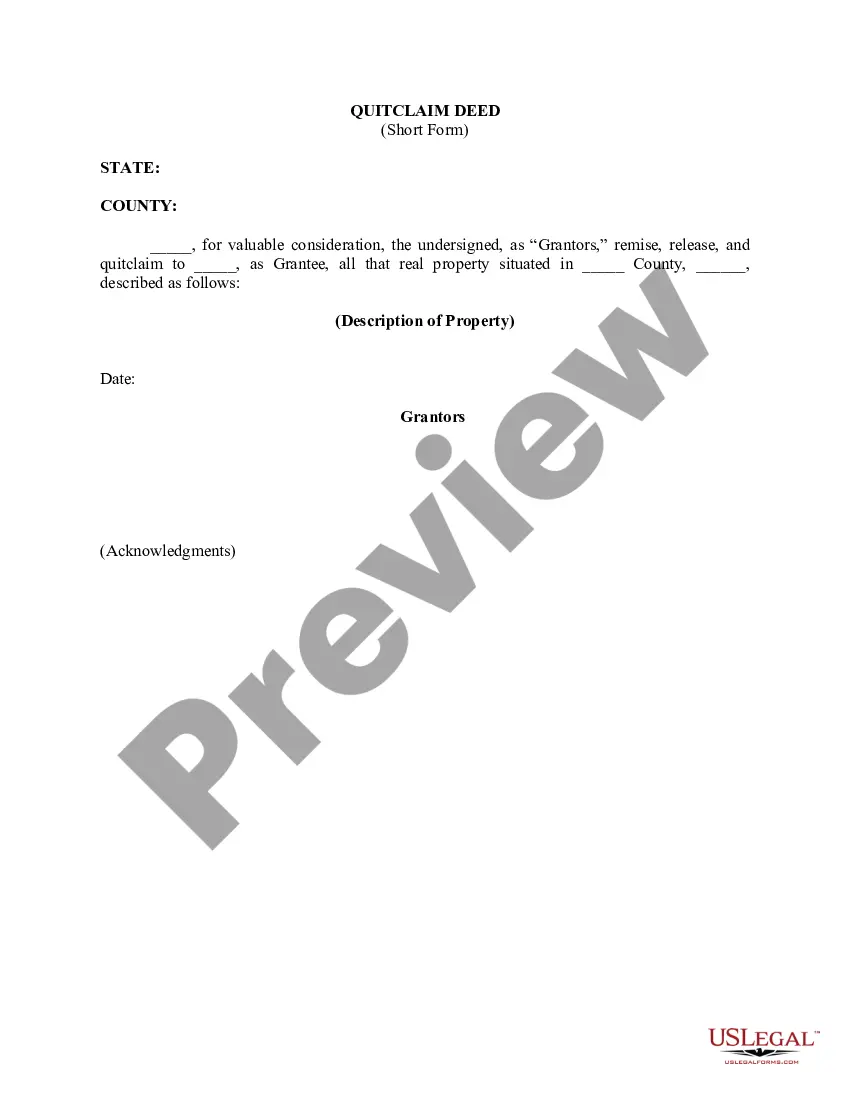
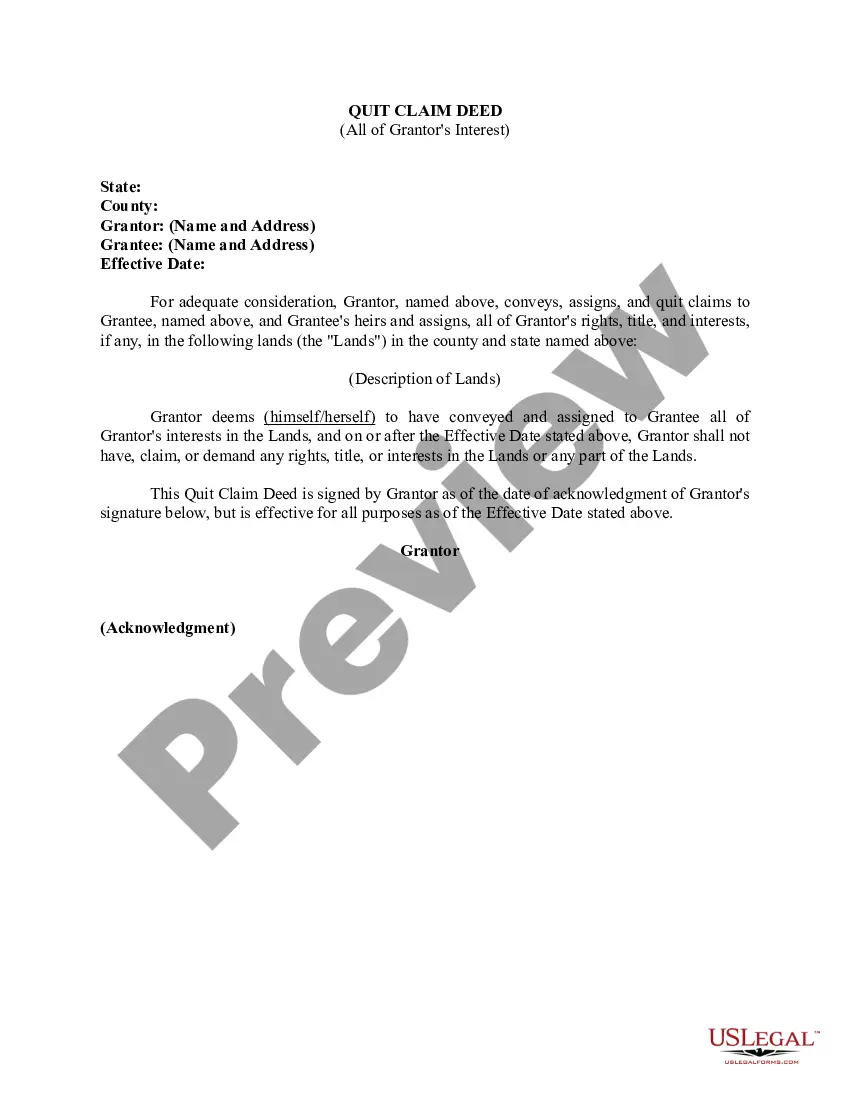
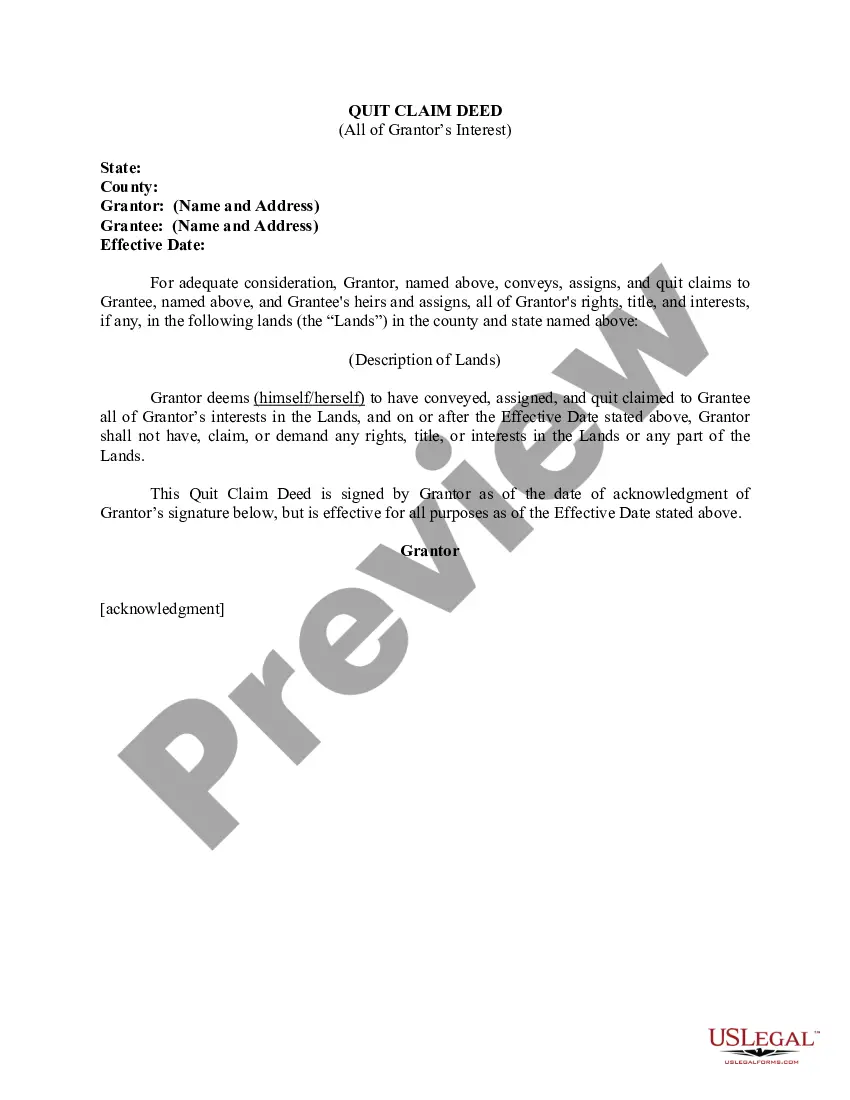
A quitclaim deed is a legal instrument used to transfer interest in real property. The Quitclaim Deed (Short Form) serves the same purpose as a standard quitclaim deed but is more concise, making it easier to complete and file. Unlike a warranty deed, a quitclaim deed does not guarantee that the title is free of defects, so it is primarily used in situations where the parties know each other, such as between family members or friends.
Form components explained
- Grantor information: Identifies the person transferring property rights.
- Grantee information: Identifies the person receiving the property rights.
- Property description: Provides specific details about the real property being transferred.
- Consideration: States that the transfer is made for valuable consideration.
- Date: The date when the deed is executed.
- Acknowledgments: Section for notarization or witness signatures, where applicable.
Situations where this form applies
This quitclaim deed is useful in various situations, including:
- Transferring property among family members, such as in divorce settlements.
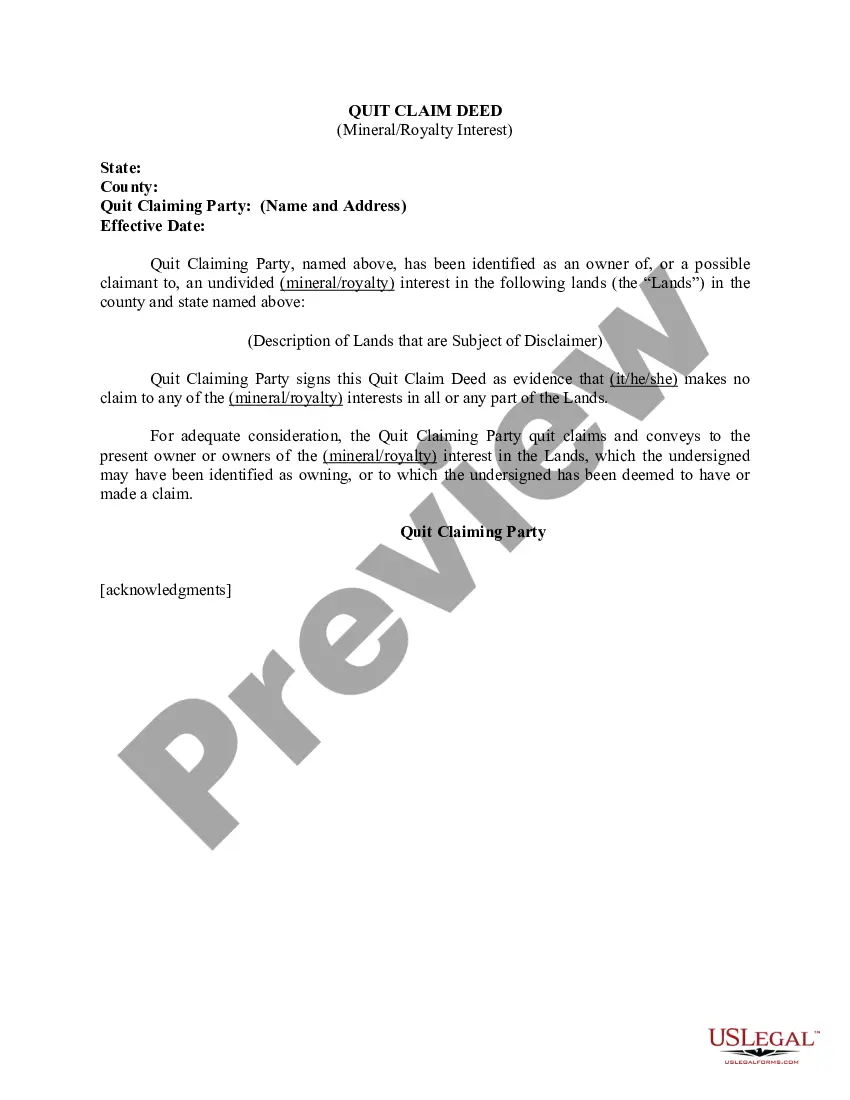
- Clearing up title issues by relinquishing claims on a property.
- Transferring property as a gift.
- Recording changes of ownership in a business partnership.
Who this form is for
This form is appropriate for:
- Individuals transferring real estate without a warranty title.
- Family members and close acquaintances involved in property transactions.
- People who need to correct or clarify property title issues.
- Anyone looking to simplify property transfers without legal complications.
Completing this form step by step
- Identify the parties: Enter the names of the grantors (those giving up interest) and the grantee (those receiving interest).
- Describe the property: Provide a detailed description of the property being transferred.
- State the consideration: Specify the value exchanged for the property, if applicable.
- Enter the date: Write the date the deed is executed.
- Review acknowledgment section: Ensure proper space is available for notarization or witness signatures, if necessary.
Notarization requirements for this form
This form needs to be notarized to ensure legal validity. US Legal Forms provides secure online notarization powered by Notarize, allowing you to complete the process through a verified video call, available anytime.
Get your form ready online
Our built-in tools help you complete, sign, share, and store your documents in one place.
Make edits, fill in missing information, and update formatting in US Legal Forms—just like you would in MS Word.
Download a copy, print it, send it by email, or mail it via USPS—whatever works best for your next step.
Sign and collect signatures with our SignNow integration. Send to multiple recipients, set reminders, and more. Go Premium to unlock E-Sign.
If this form requires notarization, complete it online through a secure video call—no need to meet a notary in person or wait for an appointment.
We protect your documents and personal data by following strict security and privacy standards.

Make edits, fill in missing information, and update formatting in US Legal Forms—just like you would in MS Word.

Download a copy, print it, send it by email, or mail it via USPS—whatever works best for your next step.

Sign and collect signatures with our SignNow integration. Send to multiple recipients, set reminders, and more. Go Premium to unlock E-Sign.

If this form requires notarization, complete it online through a secure video call—no need to meet a notary in person or wait for an appointment.

We protect your documents and personal data by following strict security and privacy standards.
Common mistakes
- Failing to include a complete property description.
- Not obtaining signatures from all grantors.
- Leaving the consideration section blank or not indicating it clearly.
- Neglecting to have the deed notarized when required.
Why use this form online
- Convenience: Easily access and download the form at your convenience.
- Editability: Fill in your information accurately online before downloading it.
- Time-saving: Quickly generate the required documentation without the need for an attorney.
- Reliability: The forms are created by licensed attorneys to meet legal standards.
What to keep in mind
- The Quitclaim Deed (Short Form) is ideal for transferring property with no warranties of title.
- Use this form in family transfers, estate settlements, or correcting title issues.
- Complete each section carefully to avoid common mistakes.
- Check state-specific requirements for any unique regulations regarding property transfers.
Looking for another form?

Form popularity
FAQ
The grant deed is the most common instrument of conveyance in California. It may be written or typed, but is valid as long as it lists a grantor and a grantee, a description of the property being transferred and a statement transferring an ownership interest from the grantor to the grantee.
Fill out the form. Complete the form using a typewriter or by printing neatly using black ink. Sign in front of a notary. Get a Preliminary Change of Ownership Report (PCOR). File the forms. Give the deed to the grantee.
Research quit claim deed requirements in your area. Obtain the proper form. Get a legal description of your property. Fill out the form. File the form with the county. When to Use a Quit Claim Deed. Questions?
When done properly, a deed is recorded anywhere from two weeks to three months after closing. However, there are many instances where deeds are not properly recorded. Title agents commit errors, lose deeds, and even go out of business. Even county offices sometimes fail to record deeds that were properly submitted.
A person who signs a quitclaim deed to transfer property they do not own results in no title at all being transferred since there is no actual ownership interest. The quitclaim deed only transfers the type of title you own.
The Quit Claim Deed form uses the terms of Grantor (Seller or Owner of said property) and Grantee (Buyer of said property) for the two parties involved. First, the parties must fill in the date. Then, write in the name of the county and state in which the property is located.
Quitclaim deeds are most often used to transfer property between family members. Examples include when an owner gets married and wants to add a spouse's name to the title or deed, or when the owners get divorced and one spouse's name is removed from the title or deed.
Write the Deed Fill out the quit claim deed form, which can be obtained online, or write your own using the form as a guide. The person giving up the interest in the property is the grantor, and the person receiving the interest is the grantee.
Filing a quitclaim deed is a right of any property owner. You can file a quitclaim deed without refinancing your mortgage, but you are still responsible for the payments. Transferring the mortgage without refinancing is possible through an assumption of the loan, which requires lender approval.