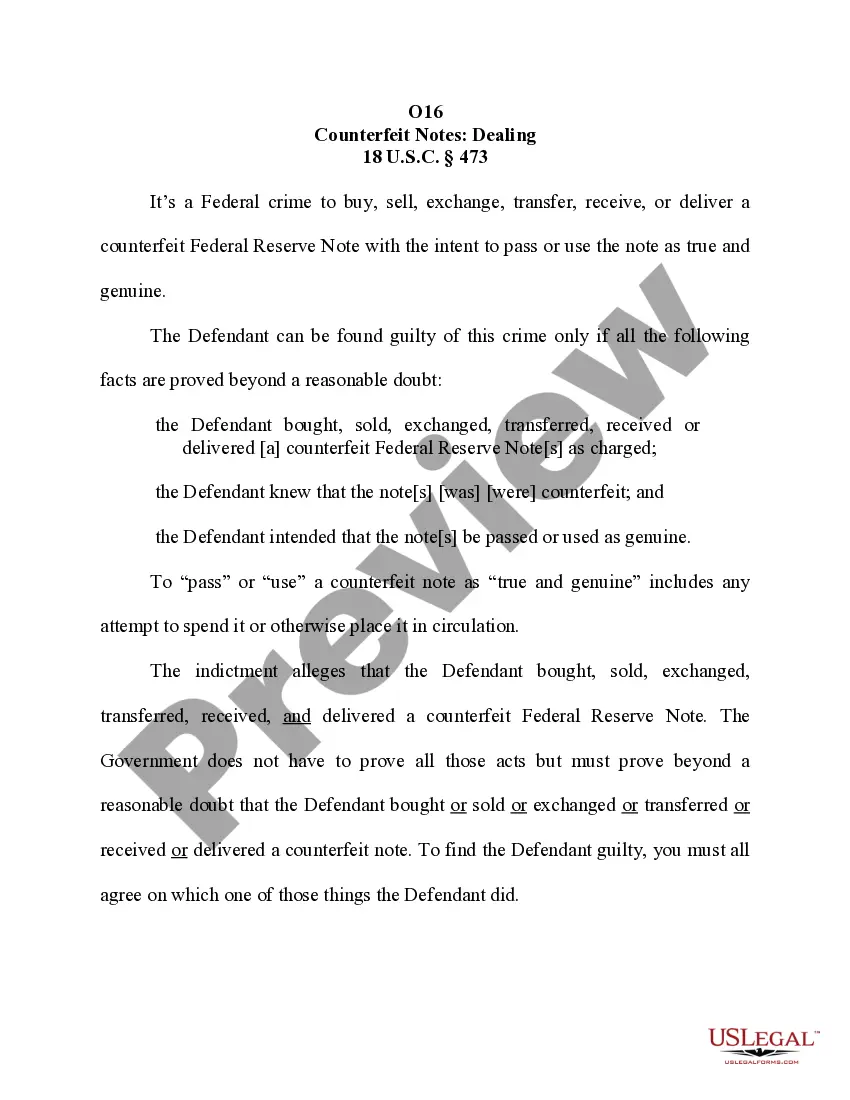
Counterfeit Notes: Dealing
What is this form?
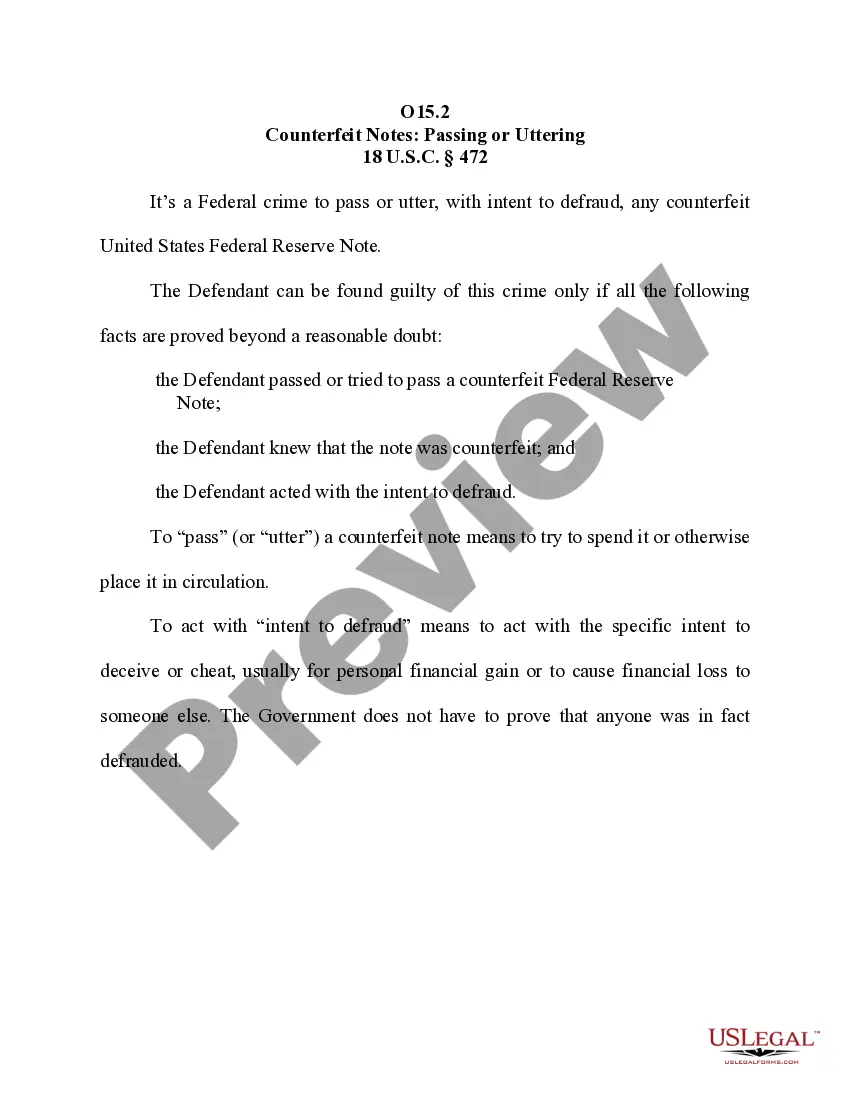
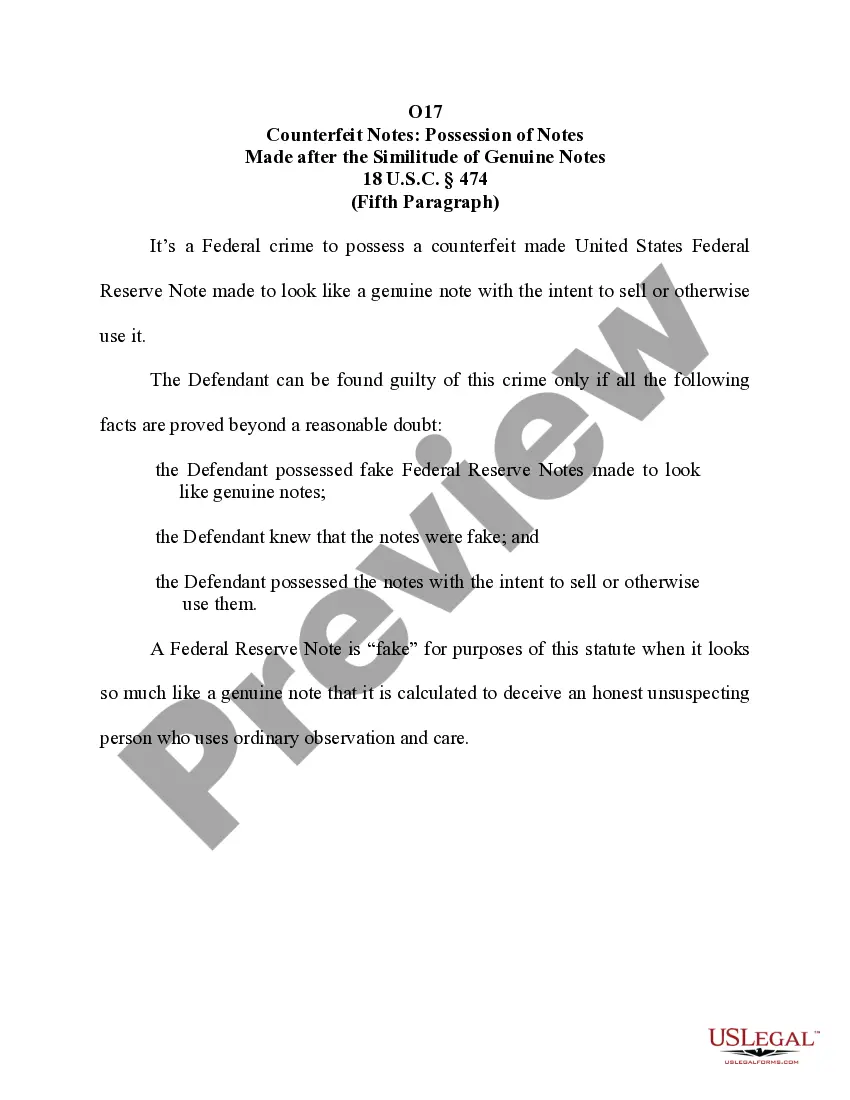
The Counterfeit Notes: Dealing form addresses the legal implications of handling counterfeit Federal Reserve Notes. Using this form ensures a clear understanding of the federal laws surrounding counterfeit currency, specifically under 18 U.S.C. § 473. It serves to guide users through the legal process related to the buying, selling, or transferring of counterfeit notes, ensuring compliance and legal awareness.
What’s included in this form
- Definition of key actions: Includes terms such as buying, selling, exchanging, transferring, receiving, and delivering counterfeit notes.
- Intent: Clarifies the necessity for the defendant to have intended to use or pass the notes as genuine.
- Government's burden of proof: Outlines what the government must demonstrate to convict the defendant beyond a reasonable doubt.
- Agreement requirement: States that jurors must agree on specific actions taken by the defendant regarding the counterfeit note.
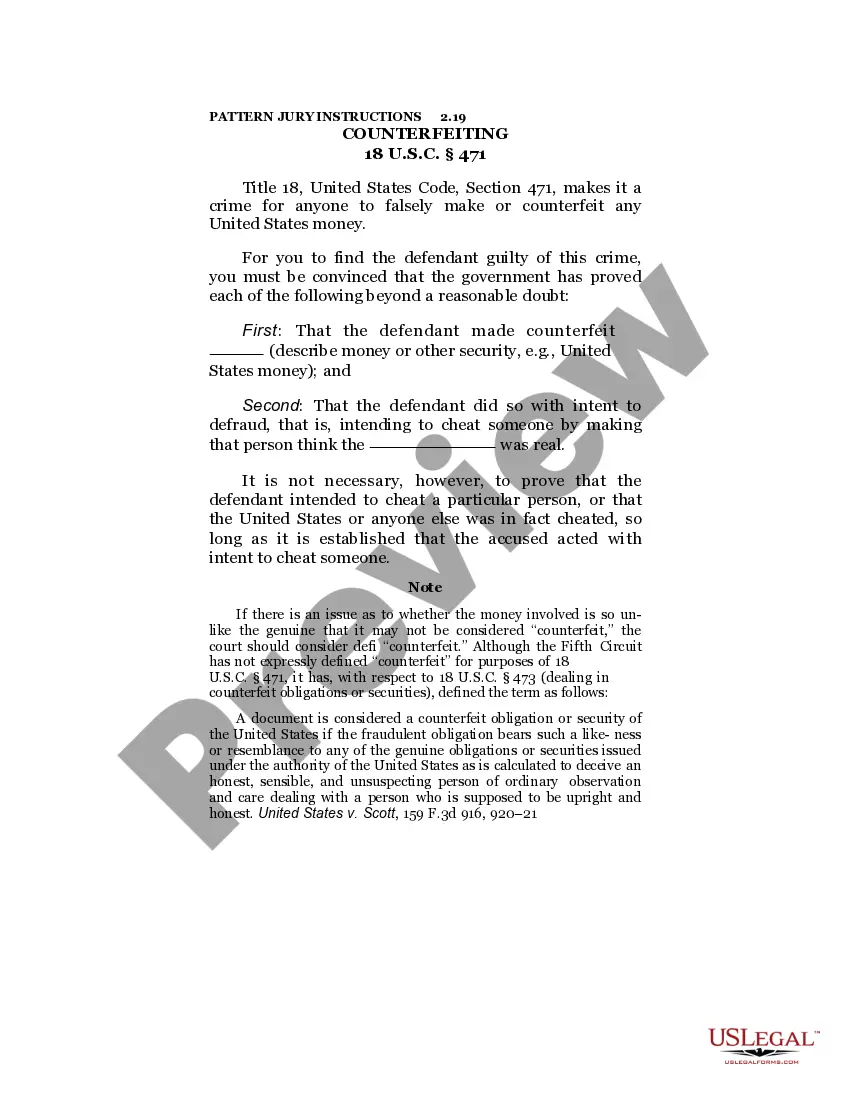
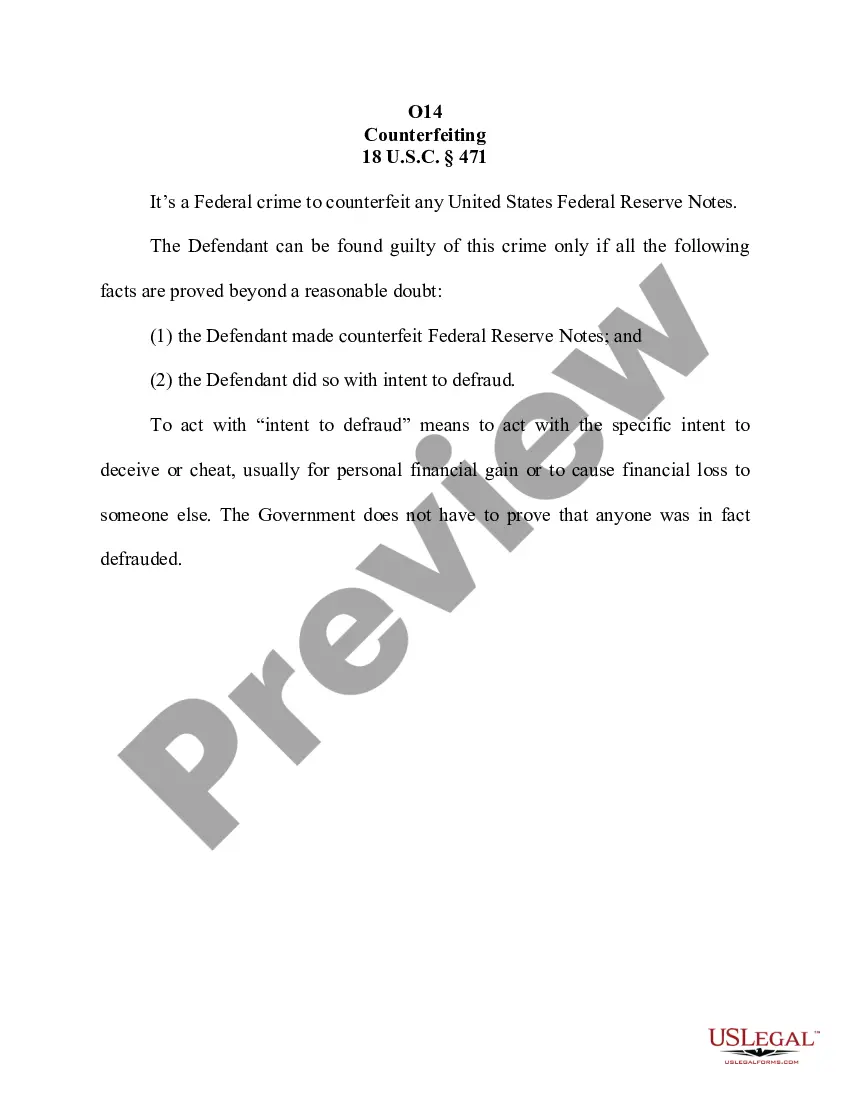
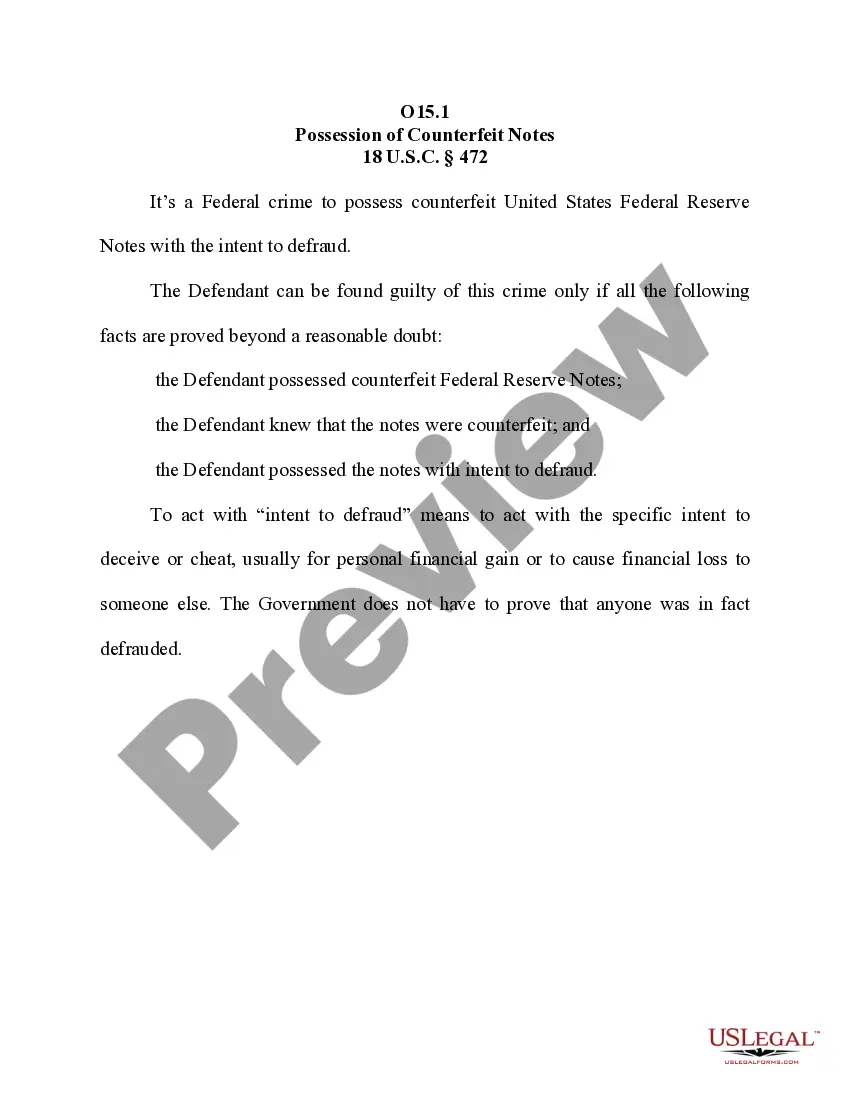
Situations where this form applies
This form is essential in scenarios where an individual is accused of handling counterfeit Federal Reserve Notes. It can be used during legal proceedings to assert the details of the case and clarify the legal obligations and potential consequences under U.S. federal law. It's also useful for individuals seeking to understand their rights and defenses in such cases.
Who needs this form
- Individuals facing charges related to counterfeit currency.
- Legal professionals representing clients in cases of unlawful handling of counterfeit notes.
- Anyone involved in the investigation or legal proceedings concerning counterfeit Federal Reserve Notes.
How to complete this form
- Identify the defendant and the associated counterfeit note or notes.
- Specify the actions taken by the defendant regarding the counterfeit notes (e.g., bought, sold, exchanged).
- Provide evidence or statements that demonstrate the defendant's knowledge of the notes being counterfeit.
- Clarify the intent of the defendant in relation to the use of the counterfeit notes.
- Ensure that all necessary parties review and agree on the facts before submission or trial.
Notarization requirements for this form
This form does not typically require notarization unless specified by local law. However, it is advisable to check specific regulations that may apply in your jurisdiction.
Get your form ready online
Our built-in tools help you complete, sign, share, and store your documents in one place.
Make edits, fill in missing information, and update formatting in US Legal Forms—just like you would in MS Word.
Download a copy, print it, send it by email, or mail it via USPS—whatever works best for your next step.
Sign and collect signatures with our SignNow integration. Send to multiple recipients, set reminders, and more. Go Premium to unlock E-Sign.
If this form requires notarization, complete it online through a secure video call—no need to meet a notary in person or wait for an appointment.
We protect your documents and personal data by following strict security and privacy standards.

Make edits, fill in missing information, and update formatting in US Legal Forms—just like you would in MS Word.

Download a copy, print it, send it by email, or mail it via USPS—whatever works best for your next step.

Sign and collect signatures with our SignNow integration. Send to multiple recipients, set reminders, and more. Go Premium to unlock E-Sign.

If this form requires notarization, complete it online through a secure video call—no need to meet a notary in person or wait for an appointment.

We protect your documents and personal data by following strict security and privacy standards.
Mistakes to watch out for
- Failing to provide sufficient evidence of intent regarding the counterfeit notes.
- Not clearly specifying the actions taken by the defendant.
- Overlooking local laws that may affect the handling of the case.
Benefits of using this form online
- Convenient access to templates drafted by licensed attorneys.
- Ability to complete the form at your own pace from any location.
- Instant downloadable format for easy printing and submission.
- Reliable resources and support for navigating the legal process.
Legal use & context
- This form serves as a crucial tool in defending against charges of dealing with counterfeit notes.
- Understanding federal laws regarding counterfeit currency is essential for compliance and legal protection.
- Proper use of this form can assist in clarifying legal standing in court proceedings.
Main things to remember
- The Counterfeit Notes: Dealing form is essential for understanding the legal implications of handling counterfeit currency.
- It clarifies key legal terms and the burden of proof required for convictions.
- Proper completion of the form involves clear identification of actions and intent related to the defendant.
Looking for another form?






Form popularity
FAQ
The banks use their counterfeit currency detection measures and technologies to determine whether or not the note is genuine. Any money encountered is confiscated, and the Secret Service is called in. This keeps the counterfeit money out of circulation.
Hold the note to light to see an embedded thread running vertically to the left of the portrait. The thread is imprinted with the letters USA and the numeral 100 in an alternating pattern and is visible from both sides of the note. The thread glows pink when illuminated by ultraviolet light.
Federal Reserve Banks do not accept deposits of counterfeit or unlawfully altered currency or coin.
The government does not replace your money with a genuine bill during an investigation, so your primary options to recoup losses are insurance policies. If you do not have an insurance policy that covers the receipt of dollars, your business must absorb the loss.
In the USA, however, banknotes will be removed from your account. You will have to get in contact with the police and explain how and where you got this counterfeit money. If they find out you tried to deposit notes willingly, you will face legal actions and can even be jailed.
Inform the security guard of the ATM about the note. Make sure that to keep the ATM receipt of the transaction. Deposit the notes in the bank branch. The customer will be given original note in lieu of note.
Banks are required to confiscate the counterfeit money and turn it over to the Secret Service, which investigates and takes the counterfeit bills out of circulation.
Once a counterfeit note is in your possession, you cannot exchange it for a genuine one. It is also important to keep in mind that knowingly passing one on is illegal.