Copyright - Validity - Ideas and Expression
What is this form?
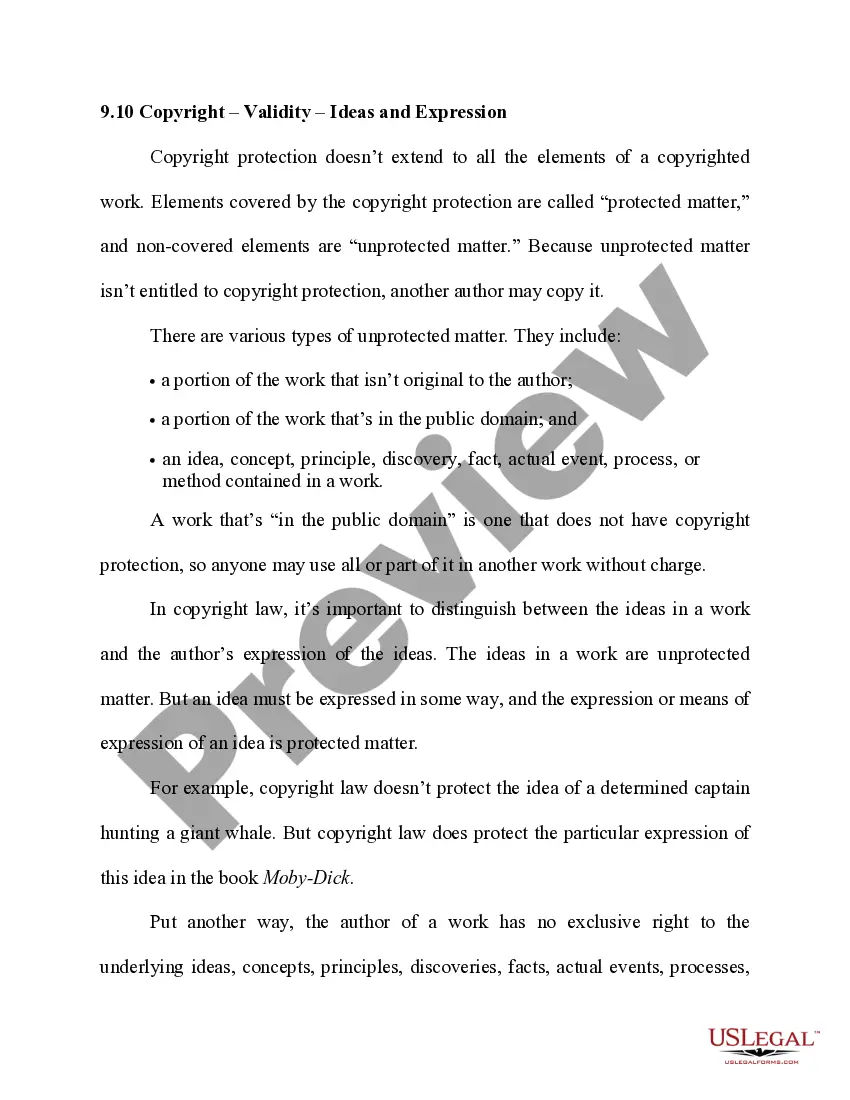
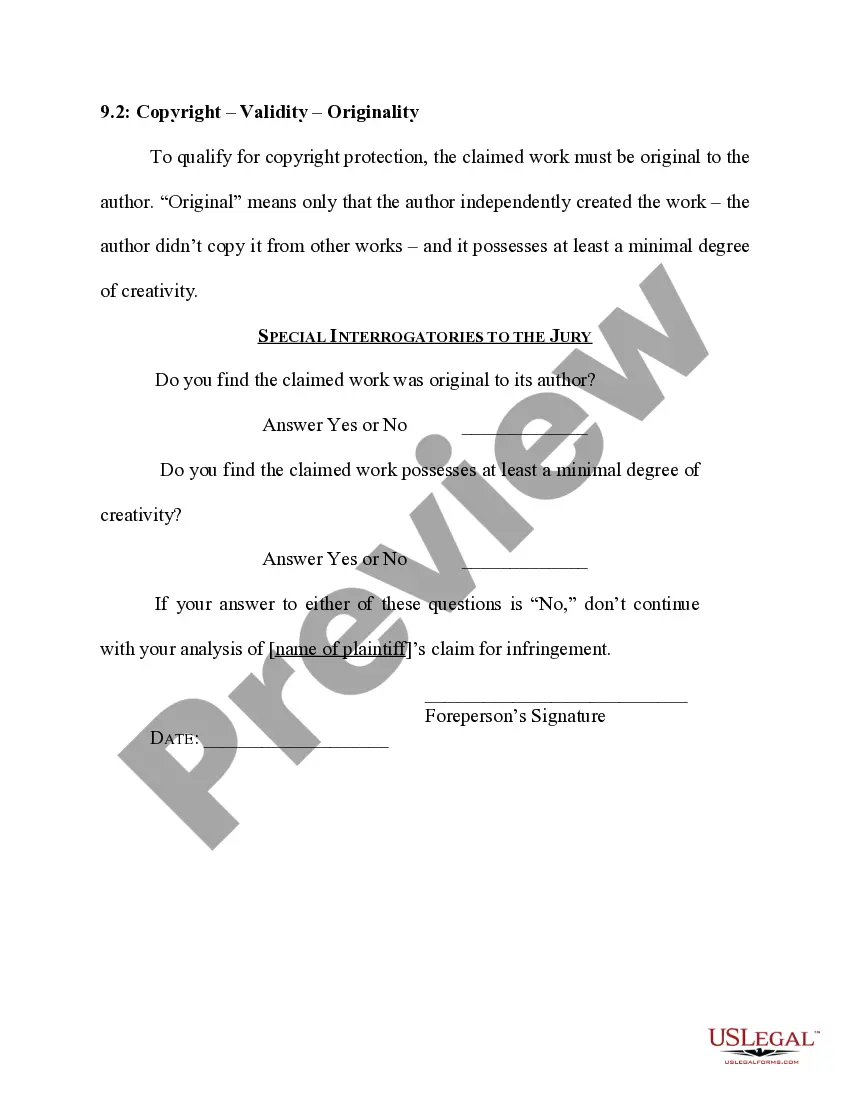
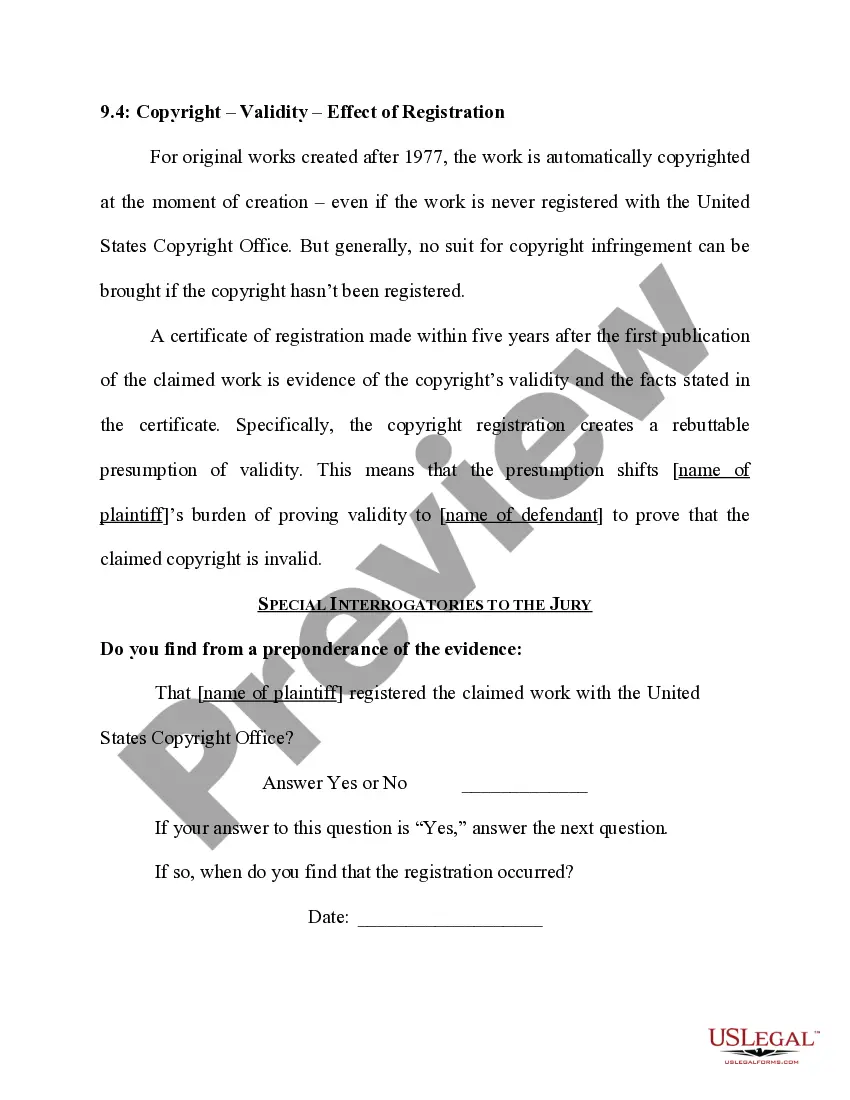
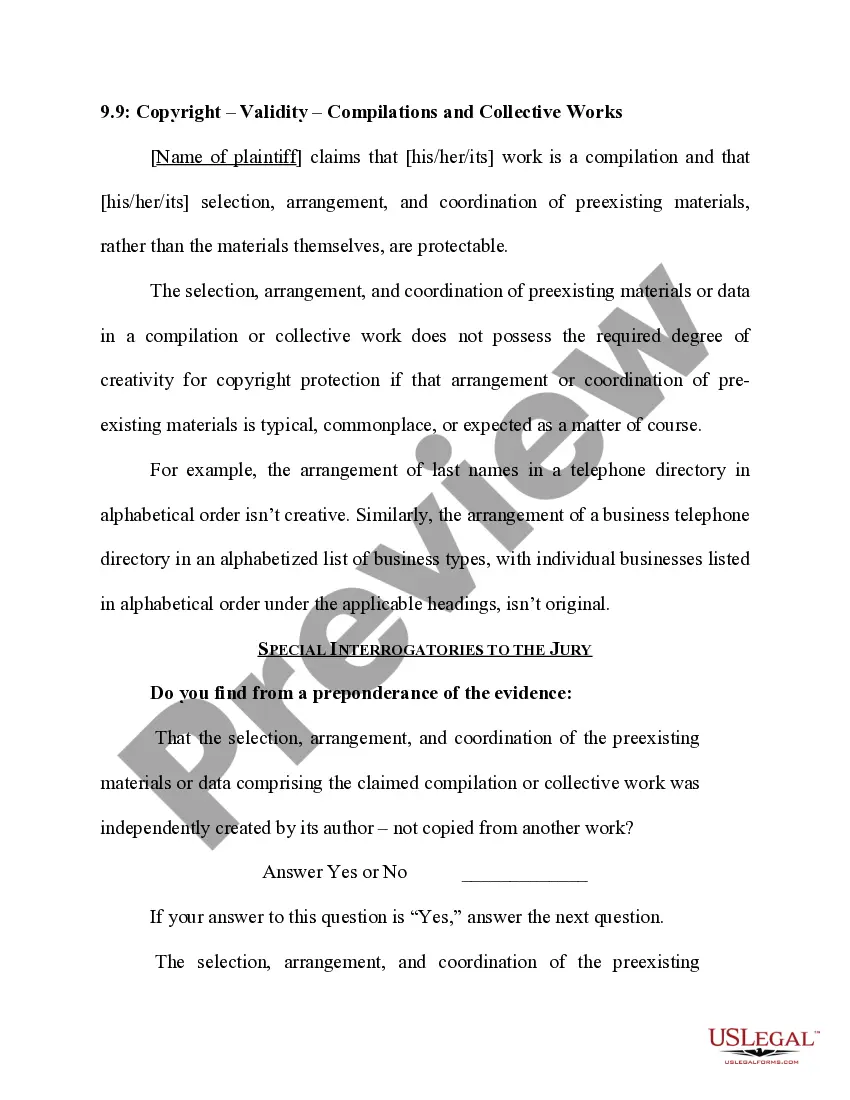
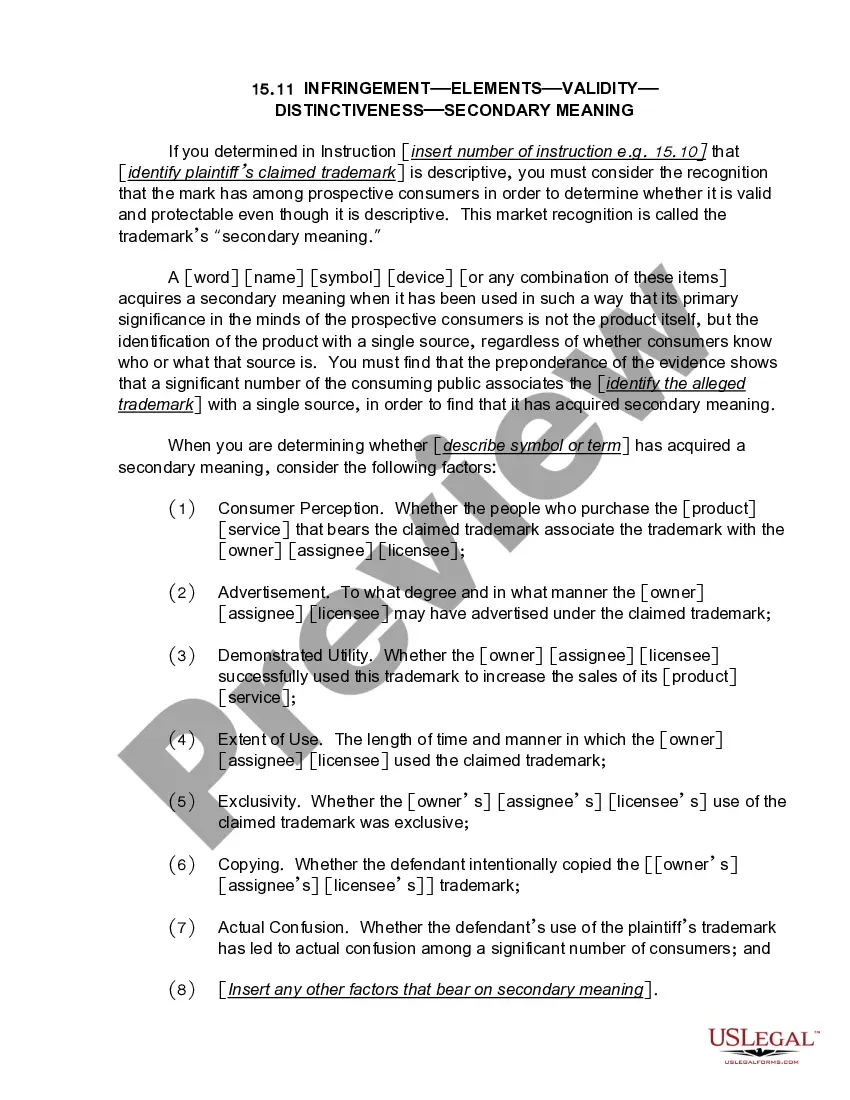
This legal form pertains to copyright validity concerning ideas and expressions. It provides guidelines on what elements are protected under copyright law and distinguishes between protected and unprotected matter. Unlike other forms that may focus solely on copyright registration, this form reviews the legal standards set by the 11th Circuit Federal Court of Appeals and is essential for understanding copyright infringement claims.
Key components of this form
- Definition of protected and unprotected matter in copyright law.
- Clarification on elements that cannot receive copyright protection, such as ideas and public domain works.
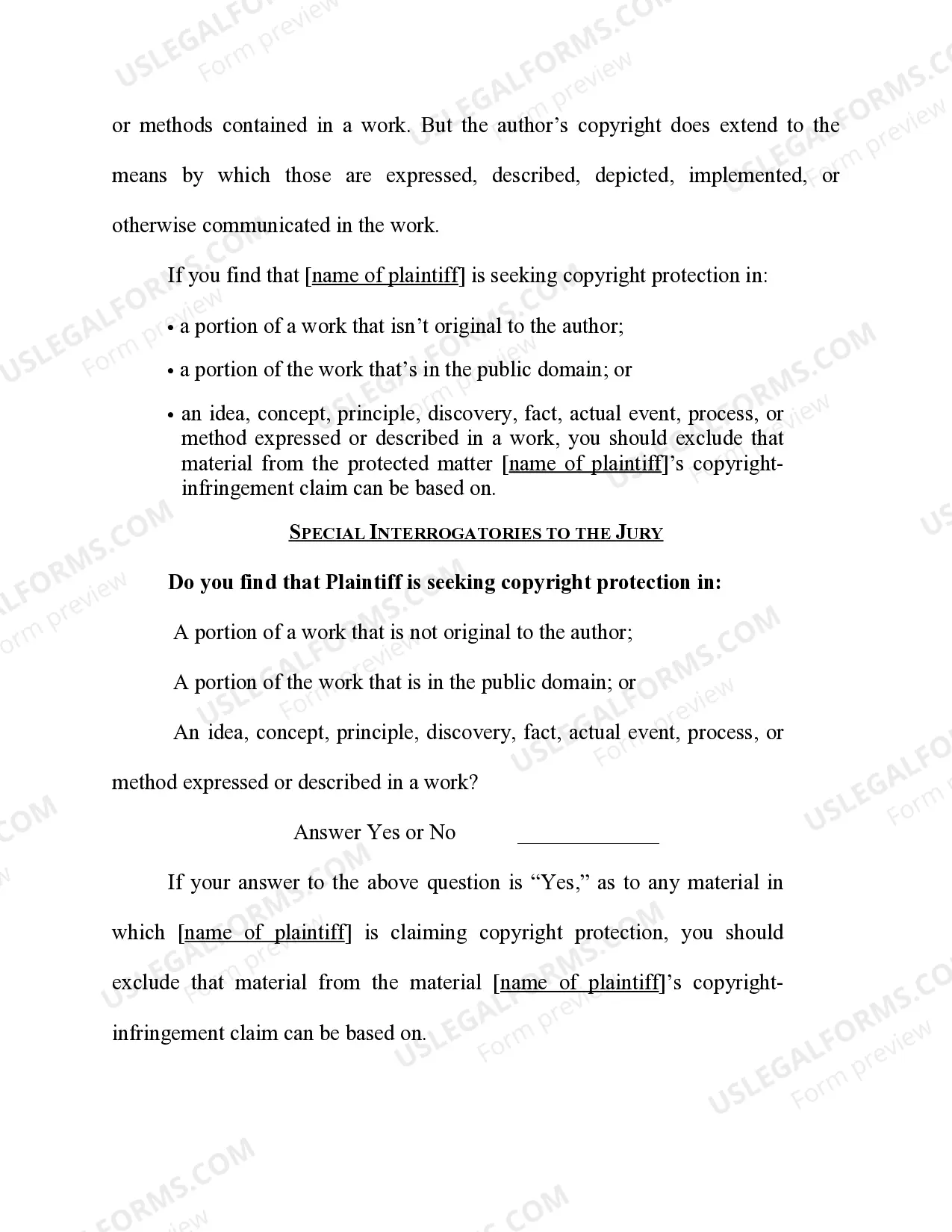
- Special interrogatories that guide the jury in determining the validity of copyright claims.
- Instructions for excluding unprotected material from infringement claims.
When to use this form
This form is used in legal contexts where a plaintiff is attempting to assert copyright claims based on specific works. It is especially relevant when determining whether certain aspects of a work qualify for protection or if they fall into the public domain or other categories of unprotected matter.
Intended users of this form
- Legal professionals handling copyright infringement cases.
- Authors or creators seeking to understand the limits of their copyright claims.
- Individuals or entities involved in copyright litigation.
Steps to complete this form
- Identify the parties involved, including the plaintiff and defendant.
- Review the work in question and determine which elements may be unprotected.
- Answer the special interrogatories based on the findings regarding copyright validity.
- Clearly outline any portions of the work that are claimed as original or protected.
- Obtain the signatures of relevant parties if necessary for legal documentation.
Does this form need to be notarized?
Notarization is not commonly needed for this form. However, certain documents or local rules may make it necessary. Our notarization service, powered by Notarize, allows you to finalize it securely online anytime, day or night.
Get your form ready online
Our built-in tools help you complete, sign, share, and store your documents in one place.
Make edits, fill in missing information, and update formatting in US Legal Forms—just like you would in MS Word.
Download a copy, print it, send it by email, or mail it via USPS—whatever works best for your next step.
Sign and collect signatures with our SignNow integration. Send to multiple recipients, set reminders, and more. Go Premium to unlock E-Sign.
If this form requires notarization, complete it online through a secure video call—no need to meet a notary in person or wait for an appointment.
We protect your documents and personal data by following strict security and privacy standards.

Make edits, fill in missing information, and update formatting in US Legal Forms—just like you would in MS Word.

Download a copy, print it, send it by email, or mail it via USPS—whatever works best for your next step.

Sign and collect signatures with our SignNow integration. Send to multiple recipients, set reminders, and more. Go Premium to unlock E-Sign.

If this form requires notarization, complete it online through a secure video call—no need to meet a notary in person or wait for an appointment.

We protect your documents and personal data by following strict security and privacy standards.
Common mistakes
- Failing to properly distinguish between ideas and expressions.
- Claiming copyright on works that contain public domain elements.
- Not properly addressing the special interrogatories as required.
Why use this form online
- Convenient access to the form for immediate use and customization.
- Editability allows users to tailor the content to specific legal needs.
- Reliability of legally vetted language prepared by licensed attorneys.
Legal use & context
- The form is used to clarify and litigate copyright issues in a court of law.
- Understanding the distinction between protected and unprotected matter is critical for effective copyright claims.
- This form supports adherence to the legal standards as interpreted by the 11th Circuit Federal Court of Appeals.
Summary of main points
- Copyright protection is limited to the specific expression of ideas, not the ideas themselves.
- Public domain works and unoriginal material cannot be claimed under copyright.
- It is essential to answer special interrogatories carefully to establish the scope of copyright claims.
Looking for another form?




Form popularity
FAQ
There are only four simple components you need to include: The copyright symbol © or the word ?copyright? The name of the copyright owner or author of the work. The year the content was published, which can be different from the year of creation.
Copyright exists from the moment the work is created. You will have to register, however, if you wish to bring a lawsuit for infringement of a U.S. work. See Circular 1, Copyright Basics, section ?Copyright Registration.?
A copyright notice should at least include: the copyright symbol (©); your name as author and your website's name. It can also be the name of an organization, a business, or a corporate name; a current year or year range; a statement of ownership (?All Rights Reserved?).
What copyright law protects is the expression of ideas. The underlying reason for this is that ideas are part of the public domain and therefore no one can have a monopoly in an idea. This basic copyright principle applies no matter how novel or great an idea may be.
Here's a standard copyright statement that you can add to your YouTube videos: ?Copyright @ name & year. Any illegal reproduction of this content will result in immediate legal action.?
Copyright does not protect ideas, concepts, systems, or methods of doing something. You may express your ideas in writing or drawings and claim copyright in your description, but be aware that copyright will not protect the idea itself as revealed in your written or artistic work.
What are some examples of copyright works? A novel. A poem. A photograph. A movie. Lyrics to a song. A musical composition in the form of sheet music. A sound recording. A painting.
The copyright disclaimer typically has four parts: the copyright symbol, the year of the page's publication, the name of the website's owner, and a statement reserving the rights of the site's owners to the site's content. The last part is optional, although it's encouraged for clarity and completeness.