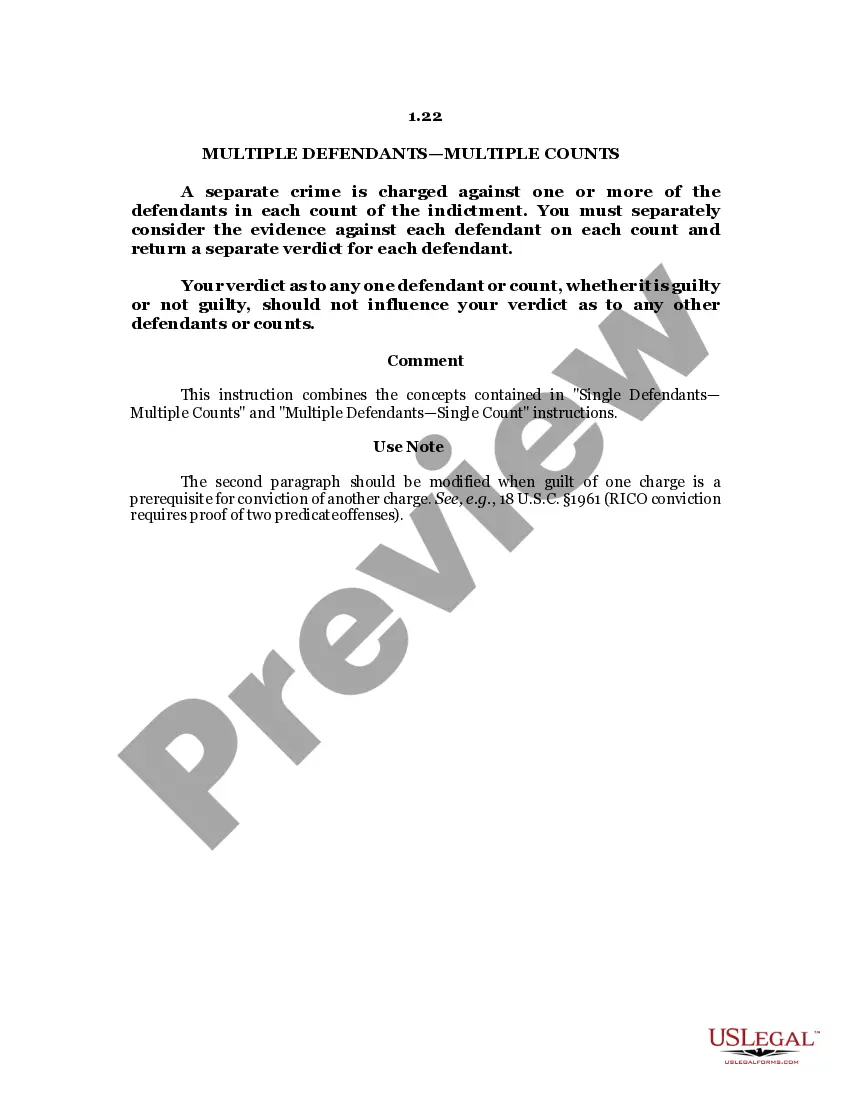
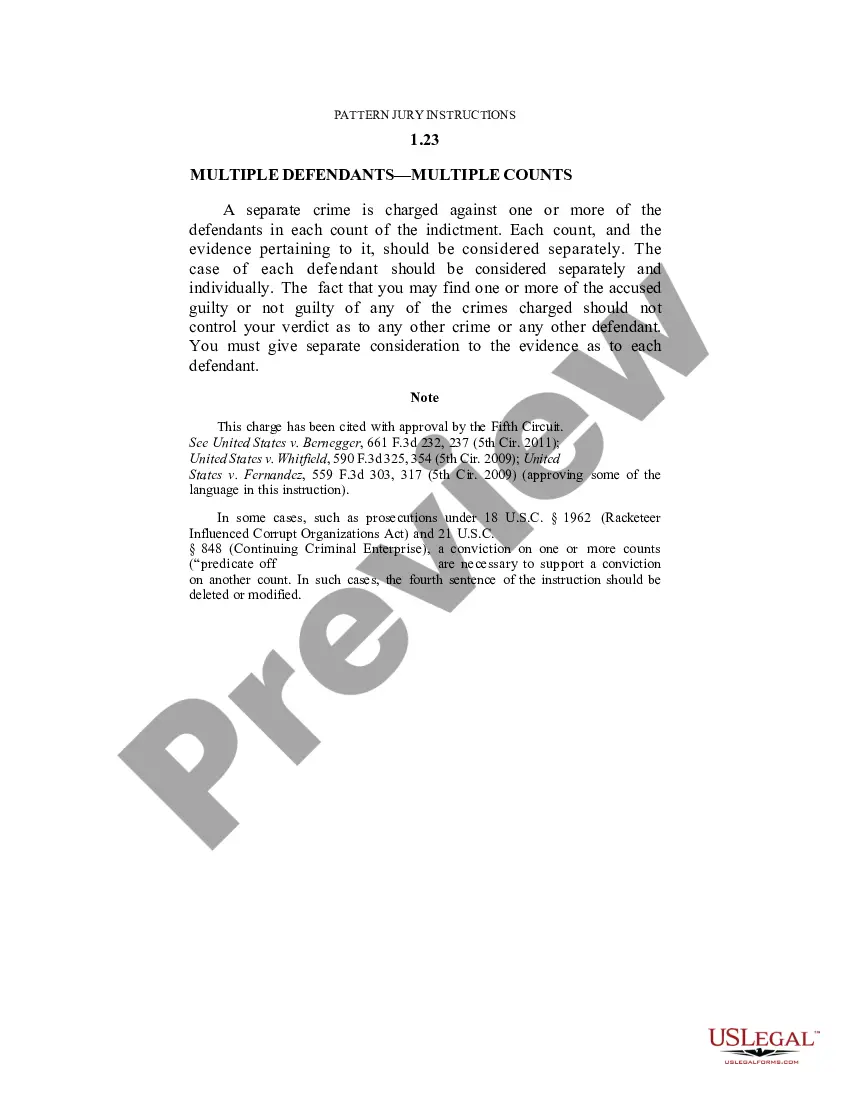
MULTIPLE DEFENDANTS-MULTIPLE COUNTS
What this document covers
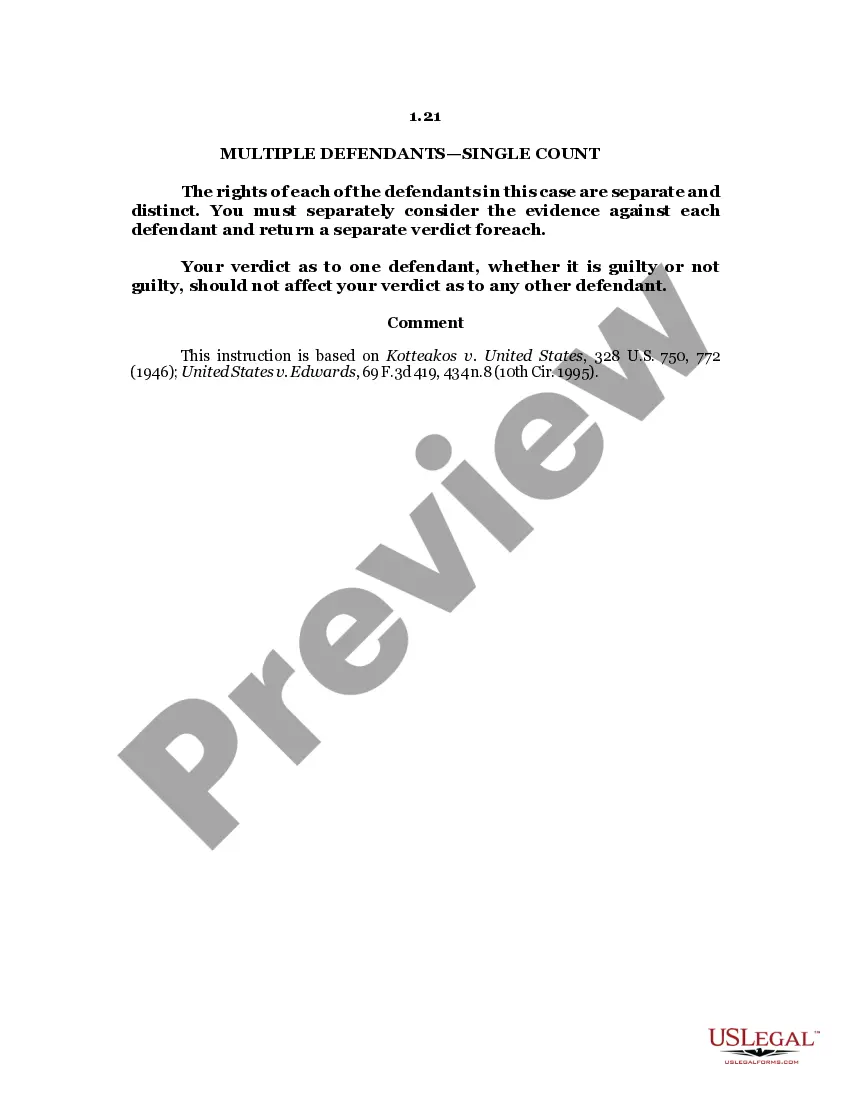
The Multiple Defendants-Multiple Counts form is a legal template used in criminal trials where separate crimes are charged against one or more defendants. It guides jurors to evaluate each count and defendant independently, ensuring that the verdict for one does not influence the verdict for another. This form is crucial for maintaining impartiality and clarifying the juror's responsibilities in cases involving multiple defendants and counts.
Form components explained
- A distinct charge for each count against one or more defendants.
- Instructions for jurors to consider evidence separately for each defendant and count.
- Guidelines to avoid influence of one defendant's verdict on another.
- Modification notes for cases where guilt from one count is necessary for another.
Situations where this form applies
This form should be used in criminal cases where there are multiple defendants facing different charges. It is applicable during jury deliberations when jurors need to render verdicts on various counts without prejudice or influence from other cases. This ensures a clear and fair assessment of each case presented.
Who this form is for
- Jurors serving in a criminal trial with multiple defendants.
- Attorneys preparing jury instructions for complex cases.
- Judges overseeing trials with multiple charges against various defendants.
Completing this form step by step
- Identify the defendants involved in the case.
- List each count of the indictment with corresponding charges.
- Review the evidence presented for each count separately.
- Deliberate to reach a verdict for each defendant on each count.
- Document the verdicts clearly, ensuring there is no cross-influence.
Does this document require notarization?
In most cases, this form does not require notarization. However, some jurisdictions or signing circumstances might. US Legal Forms offers online notarization powered by Notarize, accessible 24/7 for a quick, remote process.
Get your form ready online
Our built-in tools help you complete, sign, share, and store your documents in one place.
Make edits, fill in missing information, and update formatting in US Legal Forms—just like you would in MS Word.
Download a copy, print it, send it by email, or mail it via USPS—whatever works best for your next step.
Sign and collect signatures with our SignNow integration. Send to multiple recipients, set reminders, and more. Go Premium to unlock E-Sign.
If this form requires notarization, complete it online through a secure video call—no need to meet a notary in person or wait for an appointment.
We protect your documents and personal data by following strict security and privacy standards.

Make edits, fill in missing information, and update formatting in US Legal Forms—just like you would in MS Word.

Download a copy, print it, send it by email, or mail it via USPS—whatever works best for your next step.

Sign and collect signatures with our SignNow integration. Send to multiple recipients, set reminders, and more. Go Premium to unlock E-Sign.

If this form requires notarization, complete it online through a secure video call—no need to meet a notary in person or wait for an appointment.

We protect your documents and personal data by following strict security and privacy standards.
Avoid these common issues
- Failing to consider each defendant's case independently.
- Confusing the charges between different counts or defendants.
- Not adhering to the requirement of separate verdicts.
Why use this form online
- Convenient access to legally drafted forms anytime.
- Easy to download and fill out, saving time.
- Reliable guidance from licensed attorneys embedded in the form.
Key takeaways
- Each count against defendants must be considered separately.
- Verdicts should not influence one another to maintain impartiality.
- Jurors are pivotal in ensuring fairness in multi-defendant cases.
Looking for another form?






Form popularity
FAQ
Counts refer to the basis for bringing a case, including each cause of action in civil cases or charge in criminal cases. Lawsuits can involve multiple counts in which someone can be held liable. For example, assault and battery are separate causes of action that often are both present in a lawsuit.
: in all/several ways.
Counts refer to the basis for bringing a case, including each cause of action in civil cases or charge in criminal cases. Lawsuits can involve multiple counts in which someone can be held liable. For example, assault and battery are separate causes of action that often are both present in a lawsuit.
In cases where someone is charged with multiple counts of the same crime, the judge often has to decide if the convicted defendant will serve the sentence concurrently or consecutively. A concurrent sentence means that time for two or more of the convictions will all be served at once.
In criminal cases, each count alleges a different crime. For example, a person accused of shooting and killing two people could be charged with two counts of murder and two counts of armed criminal action. Statements identifying probable cause must support each count.