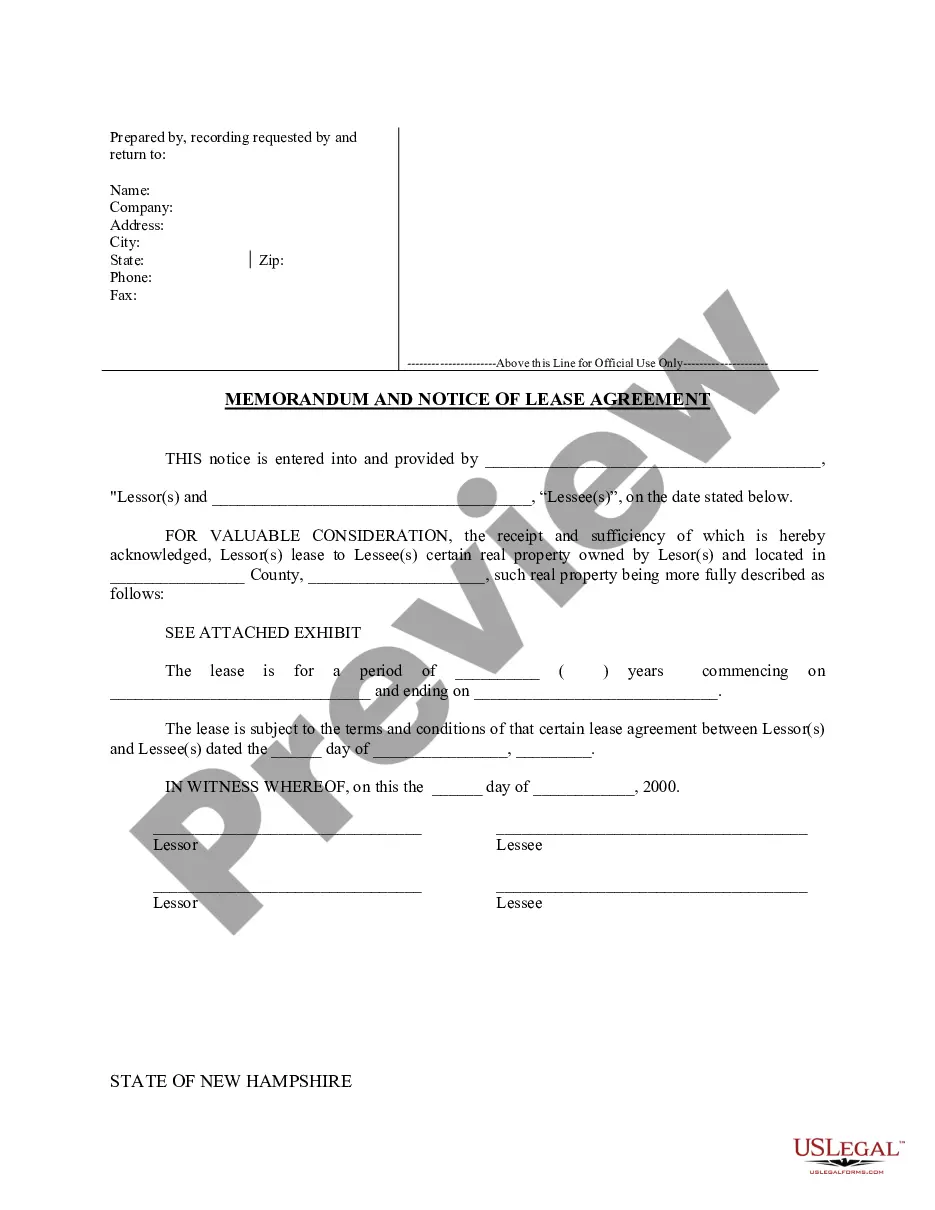
Accident Report For Workers Comp Compliance
Overview of this form
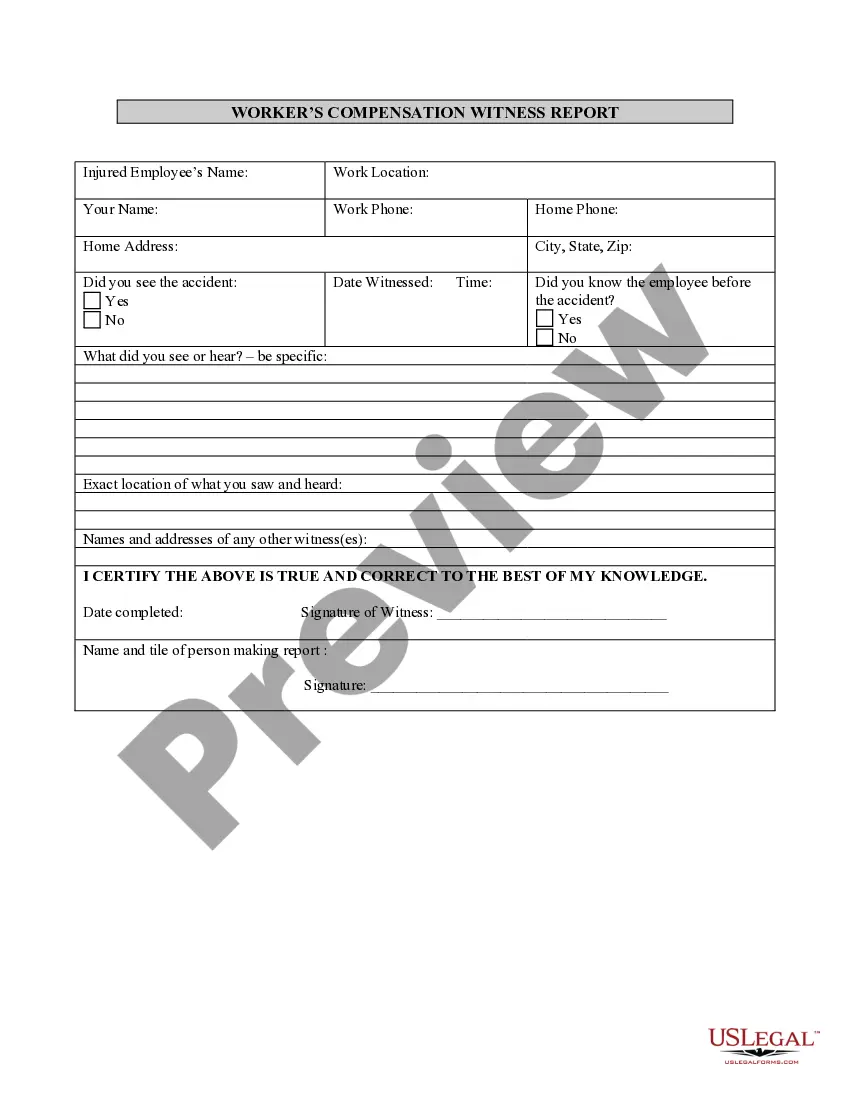
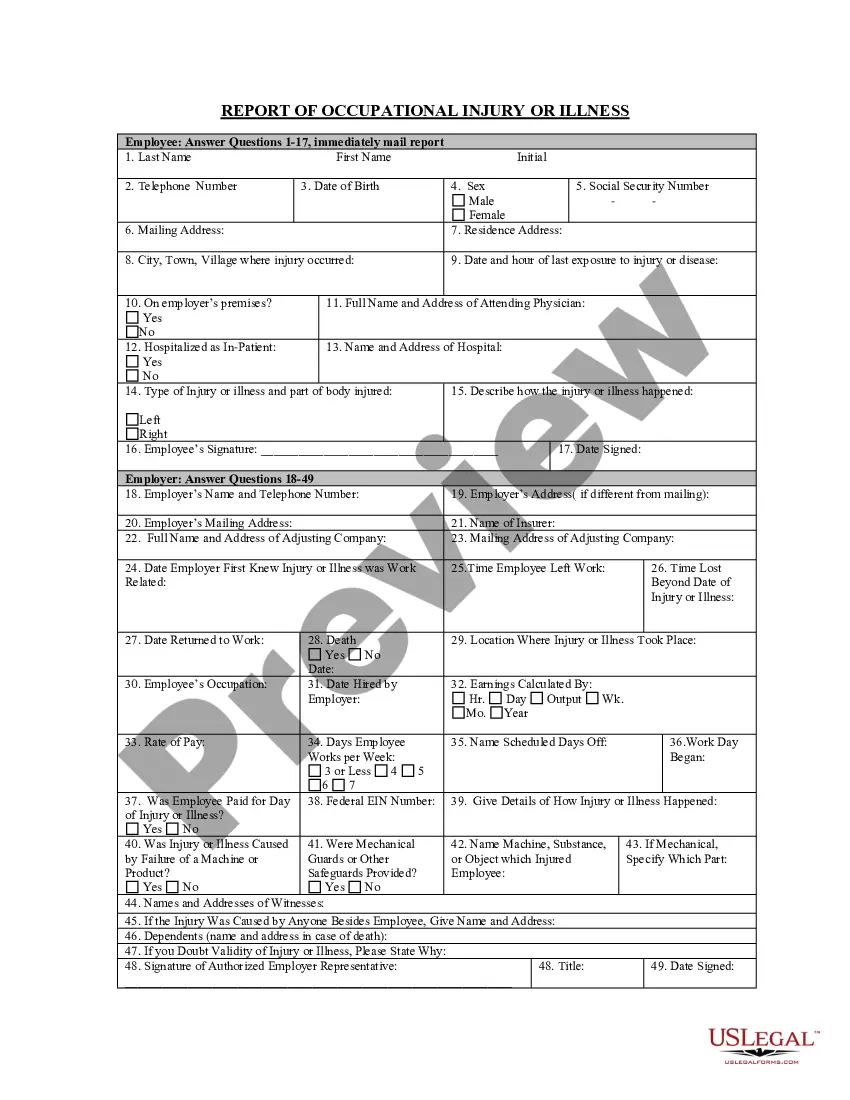
The Accident Report for Workers Comp Compliance is an essential document that employers must complete following workplace accidents or illnesses. This form is designed to gather detailed information about the incident to comply with Workers' Compensation laws and provide documentation to insurance companies. It ensures that incidents are recorded accurately and assist in future preventive measures, distinguishing it from general incident reports which may lack specific compliance requirements.
Main sections of this form
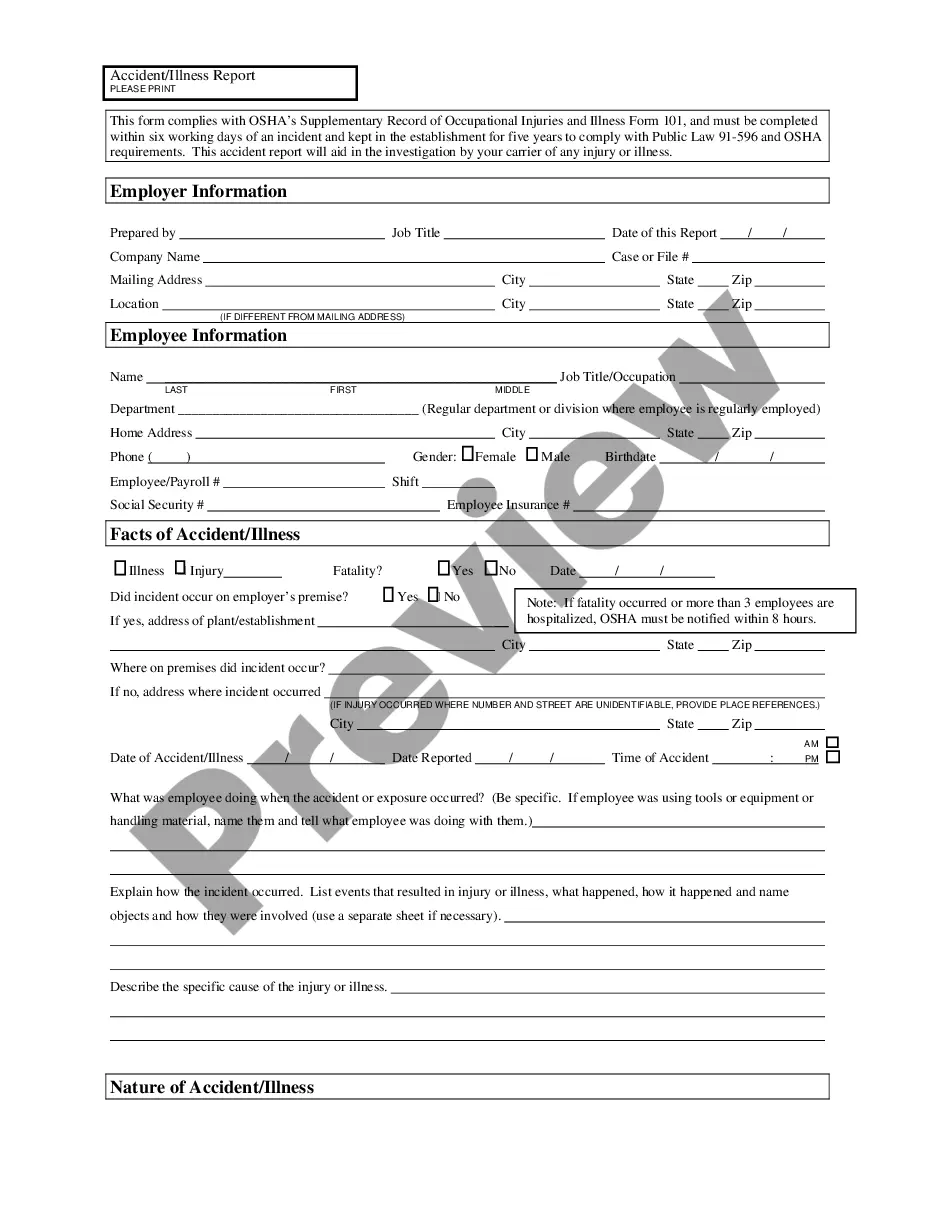
- Employer and employee information, including job title and contact details.
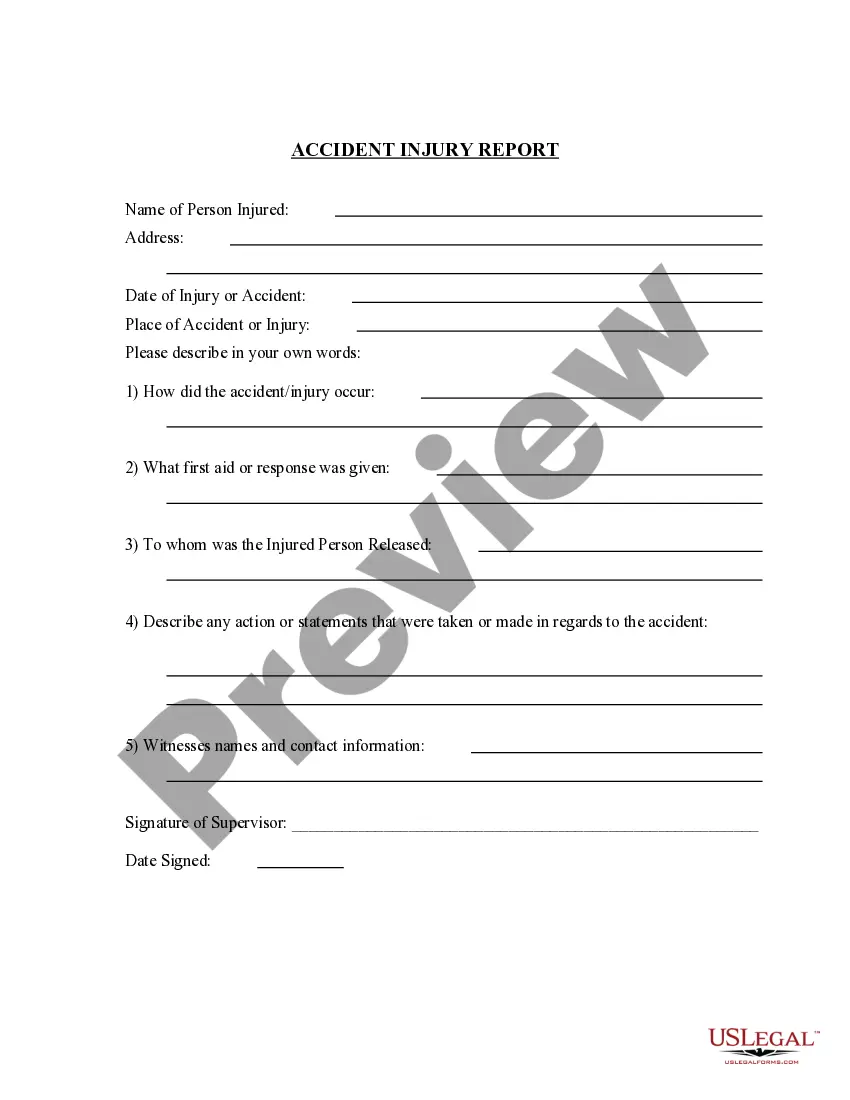
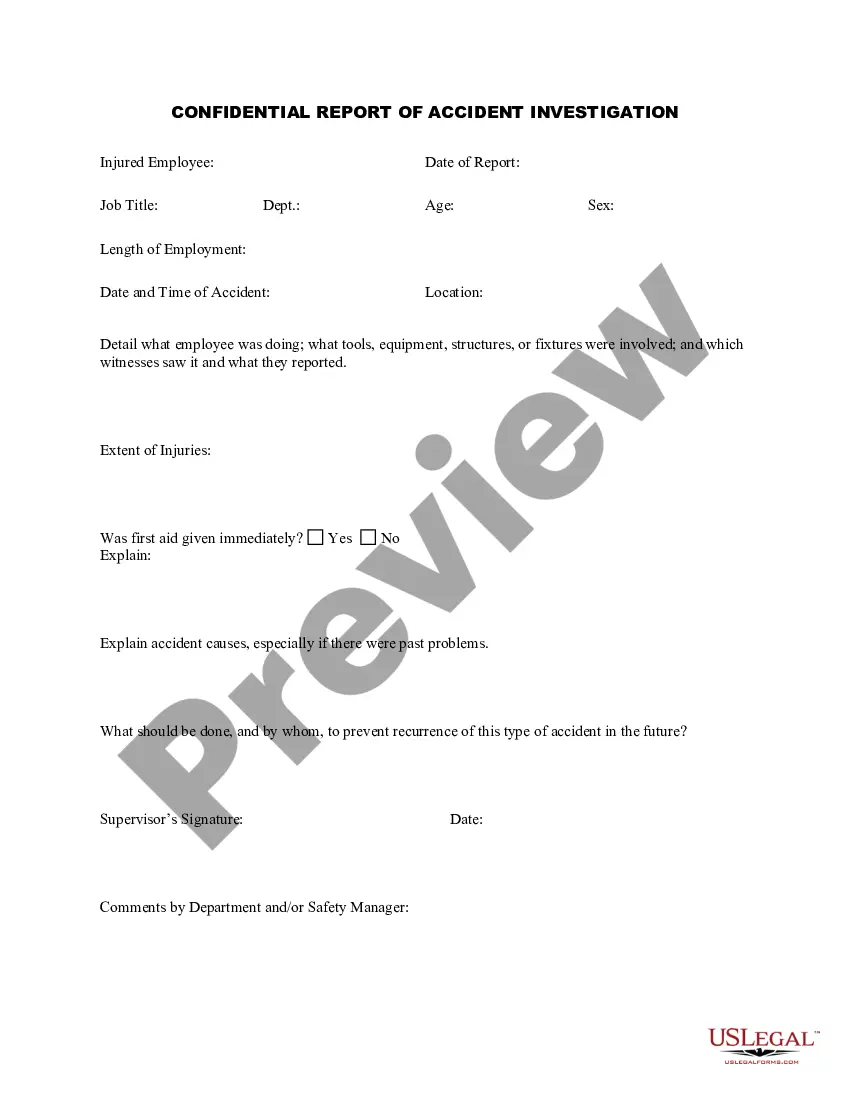
- Facts surrounding the accident or illness, detailing what occurred, where, and the circumstances involved.
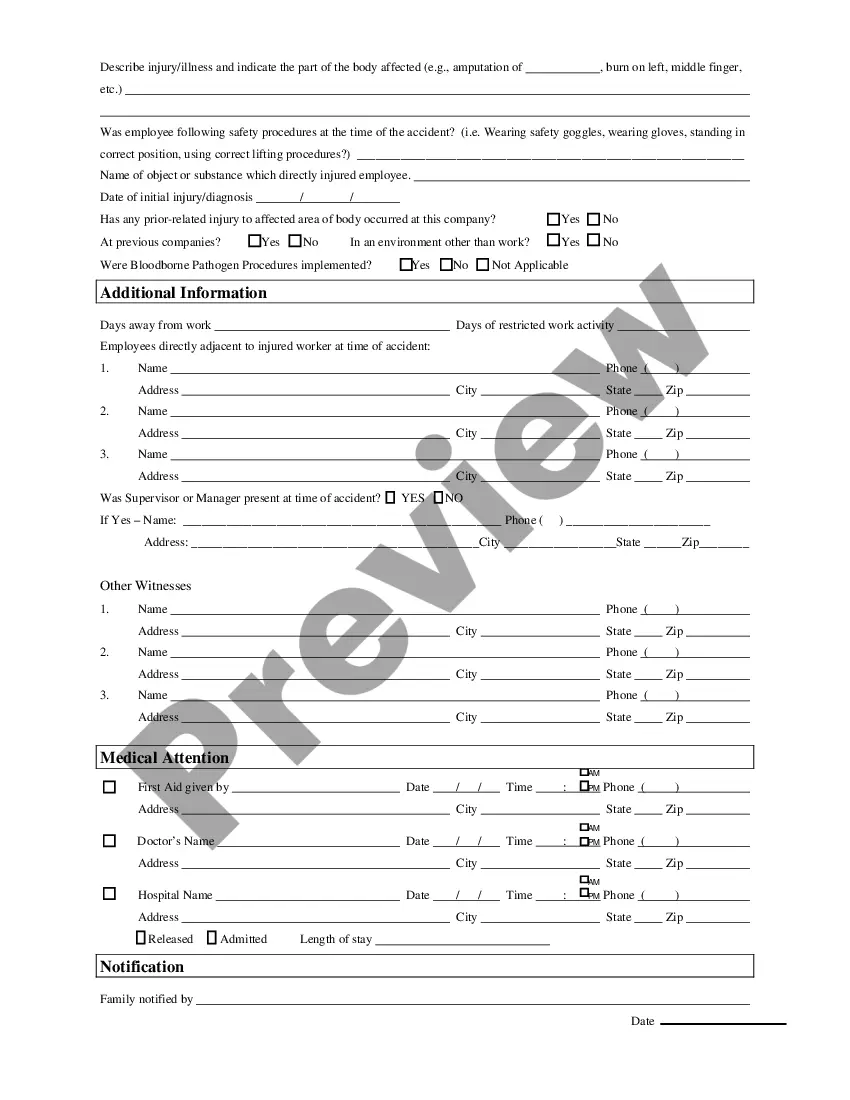
- Nature of the accident or illness, specifying body parts affected and safety protocol adherence.
- Medical attention received, including first aid and hospital details.
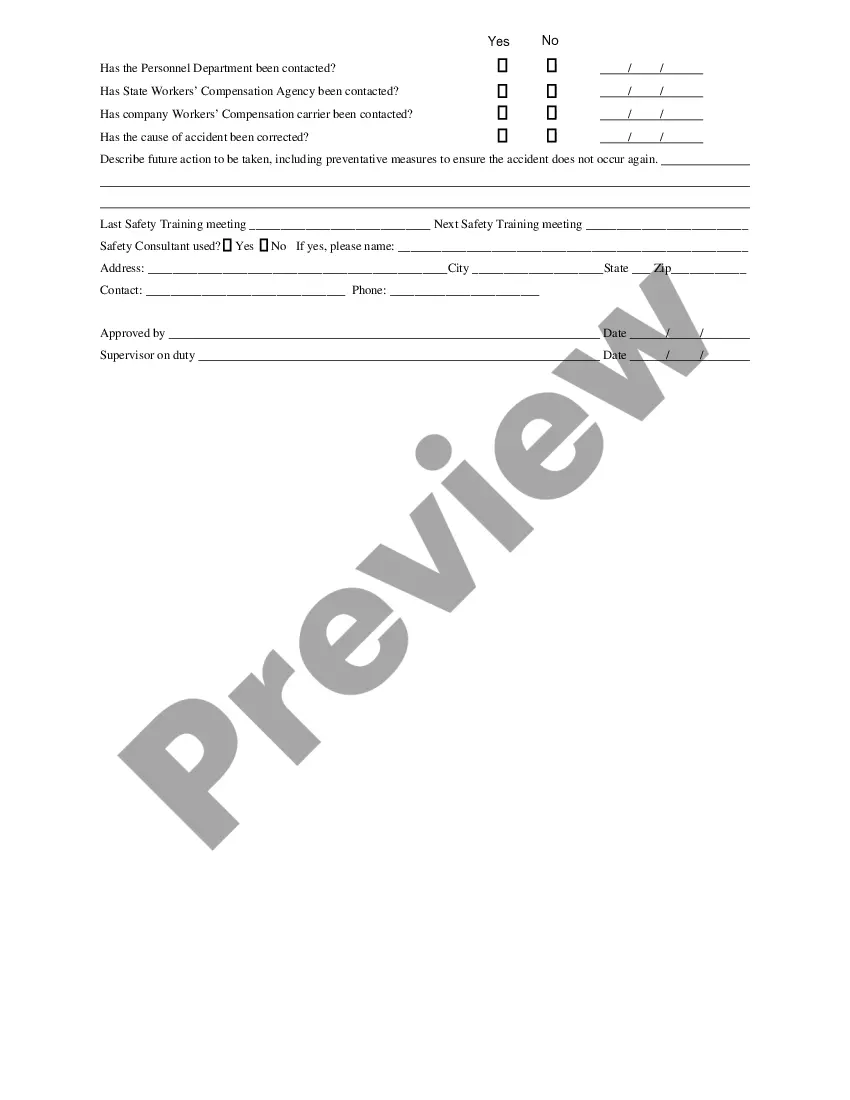
- Additional information on witnesses and corrective actions taken post-incident.

When this form is needed
This form should be used whenever an employee experiences an injury or illness in the workplace that may require reporting under Workers' Compensation laws. It is crucial to complete it within six working days of the incident, ensuring timely reporting and thorough documentation necessary for investigations by insurance companies and enforcement agencies.
Intended users of this form
- Employers who operate under Workers' Compensation laws.
- Human resources or safety officers responsible for workplace safety and compliance.
- Employees injured or ill as a result of work-related activities.
Instructions for completing this form
- Fill in the employer information at the top of the form, including the company name and contact details.
- Provide the employee's details, including name, job title, and address.
- Document the facts of the accident or illness, detailing what occurred and the circumstances leading to the incident.
- Record the nature of the injury or illness, including specific body parts affected and safety procedures in place at the time.
- List all witnesses and note any medical attention given, including first aid or hospital visits related to the incident.
Does this form need to be notarized?
This form does not typically require notarization unless specified by local law. It functions primarily as a record for the employer and insurance purposes.
Get your form ready online
Our built-in tools help you complete, sign, share, and store your documents in one place.
Make edits, fill in missing information, and update formatting in US Legal Forms—just like you would in MS Word.
Download a copy, print it, send it by email, or mail it via USPS—whatever works best for your next step.
Sign and collect signatures with our SignNow integration. Send to multiple recipients, set reminders, and more. Go Premium to unlock E-Sign.
If this form requires notarization, complete it online through a secure video call—no need to meet a notary in person or wait for an appointment.
We protect your documents and personal data by following strict security and privacy standards.

Make edits, fill in missing information, and update formatting in US Legal Forms—just like you would in MS Word.

Download a copy, print it, send it by email, or mail it via USPS—whatever works best for your next step.

Sign and collect signatures with our SignNow integration. Send to multiple recipients, set reminders, and more. Go Premium to unlock E-Sign.

If this form requires notarization, complete it online through a secure video call—no need to meet a notary in person or wait for an appointment.

We protect your documents and personal data by following strict security and privacy standards.
Mistakes to watch out for
- Failing to complete the form within six working days of the incident.
- Omitting crucial details about the accident or injuries sustained.
- Not including all witnesses or medical attention received.
- Neglecting to review compliance with state-specific regulations.
Benefits of completing this form online
- Convenience of downloading and filling out the form at your own pace.
- Editability allows for easy corrections before finalizing the report.
- Reliable version control to ensure that the latest legal requirements are met.
Looking for another form?


Form popularity
FAQ
Before you talk to an insurance adjuster, understand their role. Avoid giving lots of details about the accident or your material damages. Avoid giving a lot of details about the injury. Do not sign anything or give a recorded statement. Don't settle on the first offer. With all that in mind2026
Be factual with the information you provide. Be concise with the information you provide. Keep descriptions simple and to the point. Be sure to monitor your audit results.
While not as reliable as medical testimony, the testimony of a witness from your work can also help prove your claim. If the fellow employee was present when you were injured and can testify that you were on the clock at the time, it may help substantiate your claim.
For emergencies, immediately call 911. For non-emergency situations, contact and coordinate care with pre-arranged medical facilities as established with your workers' compensation insurance carrier's medical provider network. In-network care helps ensure prompt and efficient care for the employee.
As a general rule of thumb, you should never discuss anything except the basic facts of the accident, including where it occurred, the date and time it occurred, what type of accident it was, and which body parts were injured.
Payroll journal and summary. Your check book (if it's your only means of keeping records. Federal Tax Report- 941's that cover the period. State Unemployment Tax reports or individual earnings records. All overtime payroll records (charged at reduced rates)
At the end of your annual policy period, a final premium audit is conducted to determine if you paid the appropriate amount for your workers' compensation insurance. Your final premium audit is based on actual payroll, operations and job classifications for the expired coverage period.
The cancellation of any current workers compensation coverage. If an employer is not compliant with their audit the insurance company will take that as a sign of being uncooperative and will cancel or set for non-renewal their current policy. The application of a monetary penalty.
Your workers' comp policy requires audits to verify your estimated payroll. These audits help make sure you're paying the right amount for the right coverage. Depending on your state, workers' compensation audits can also be a legal requirement.