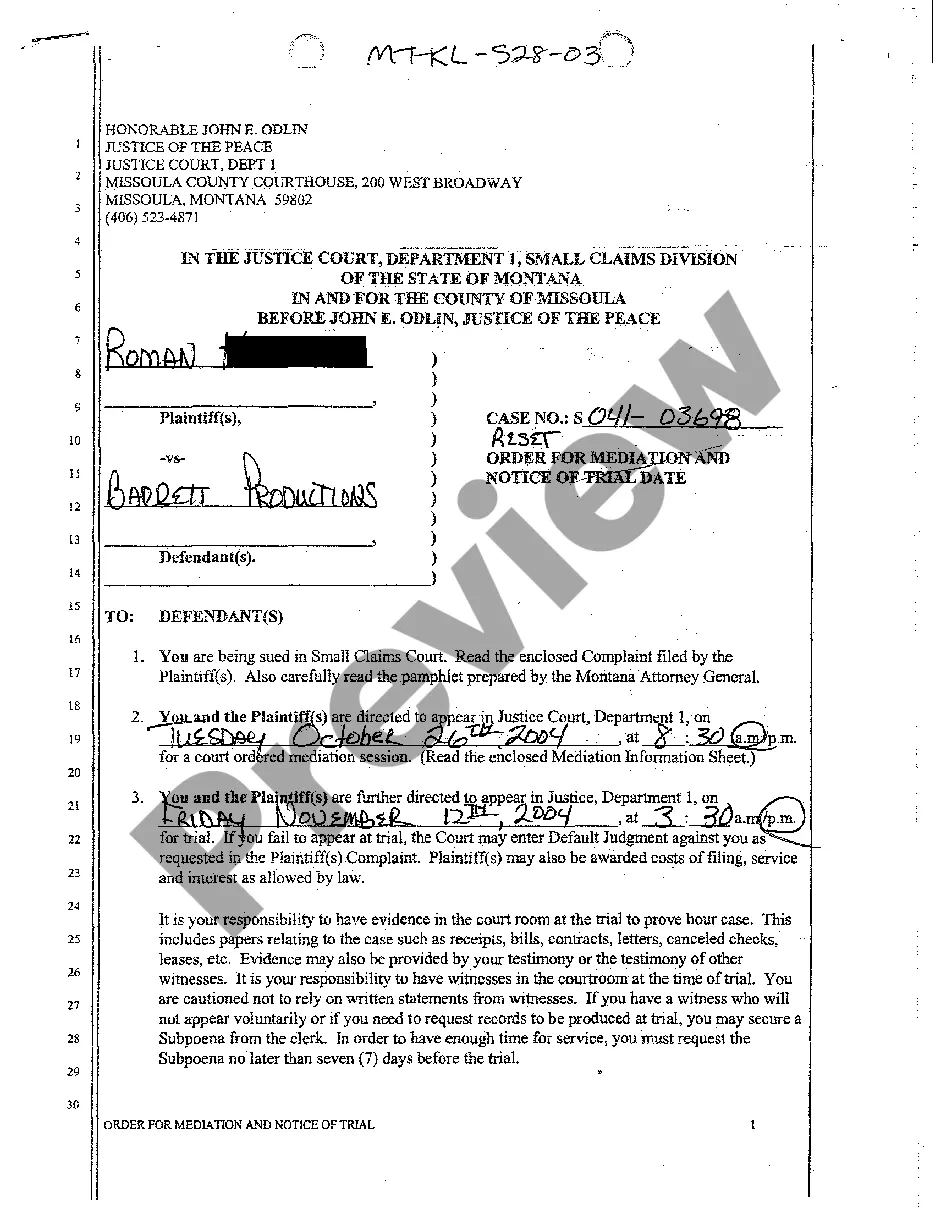
Liquidation Proposal
About this form
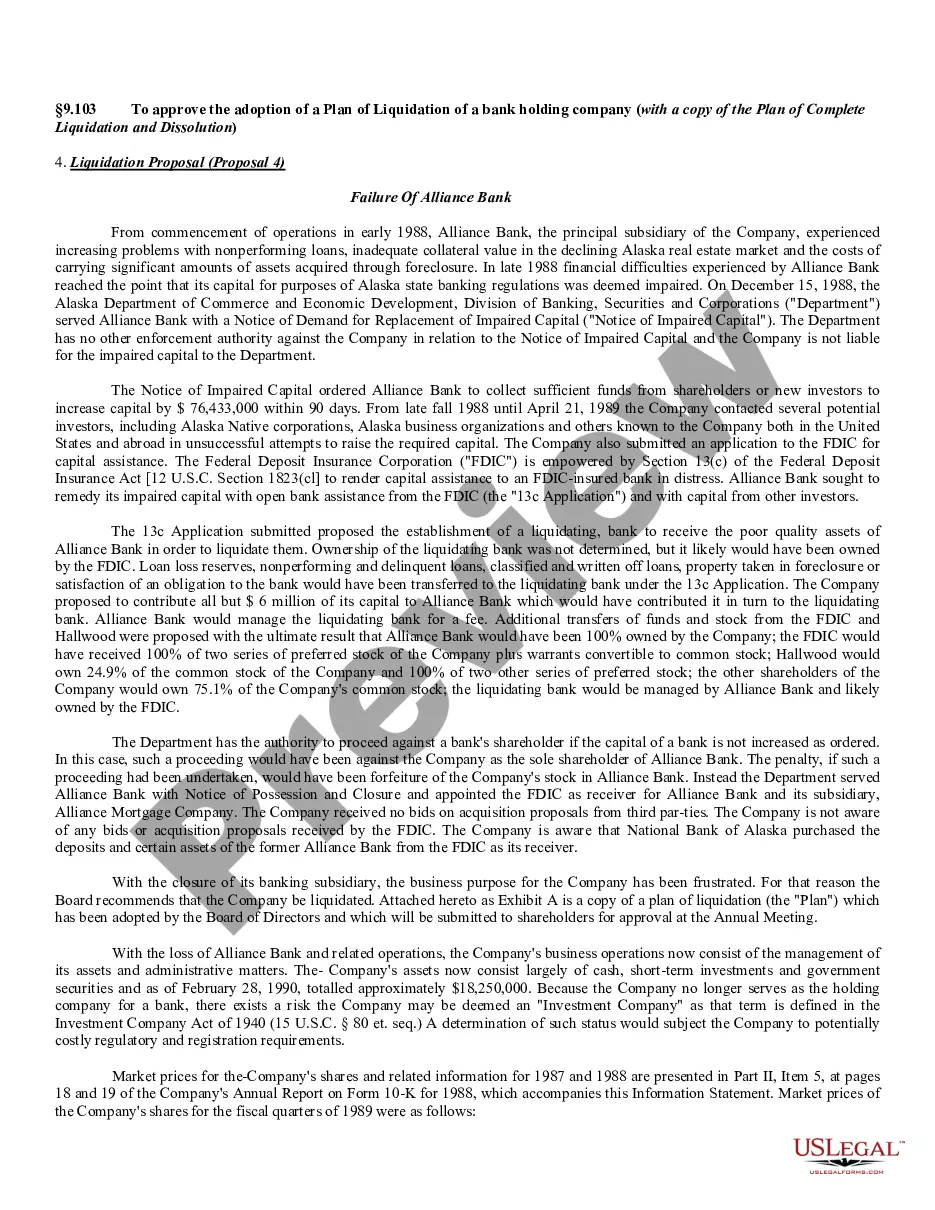
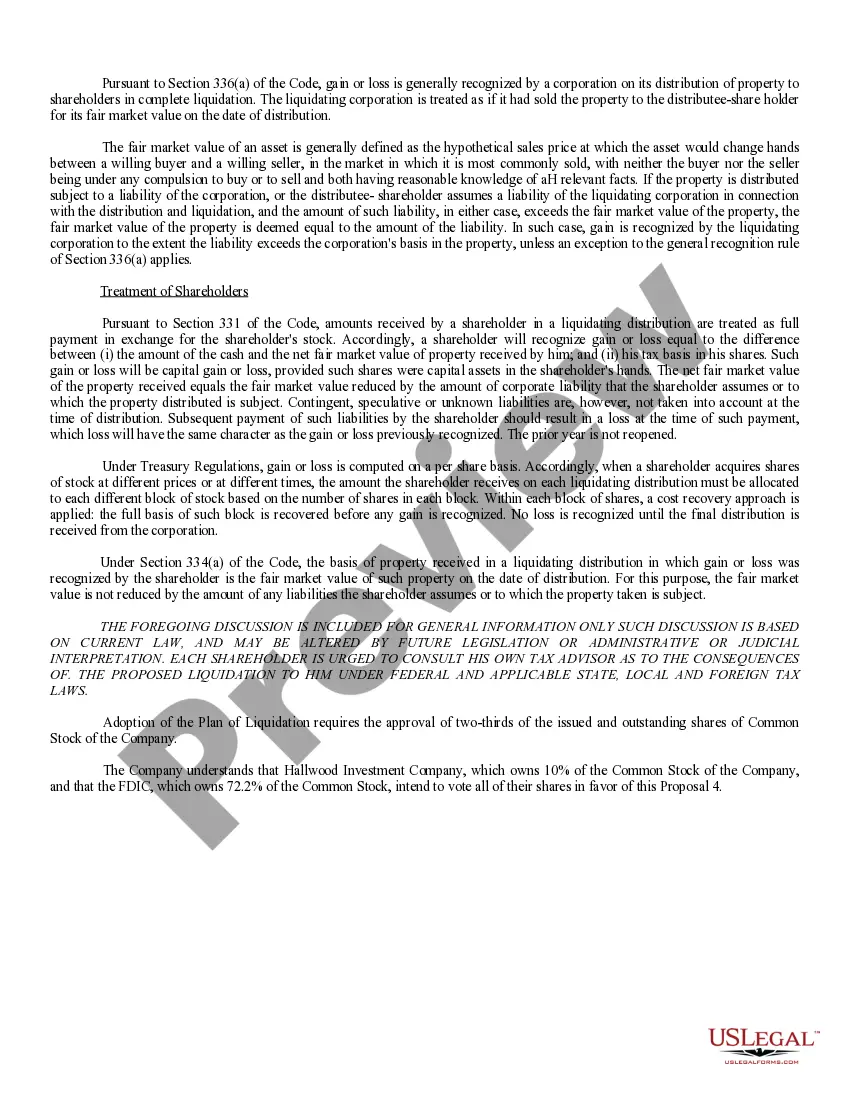
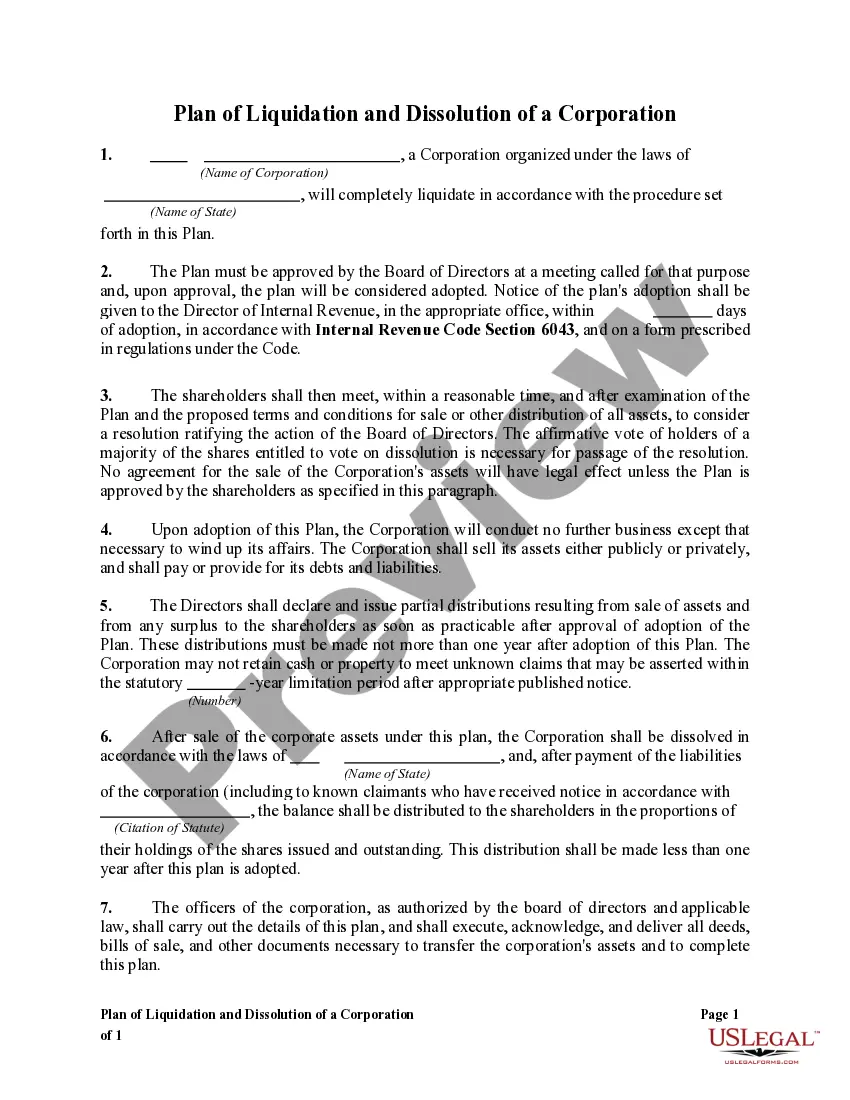
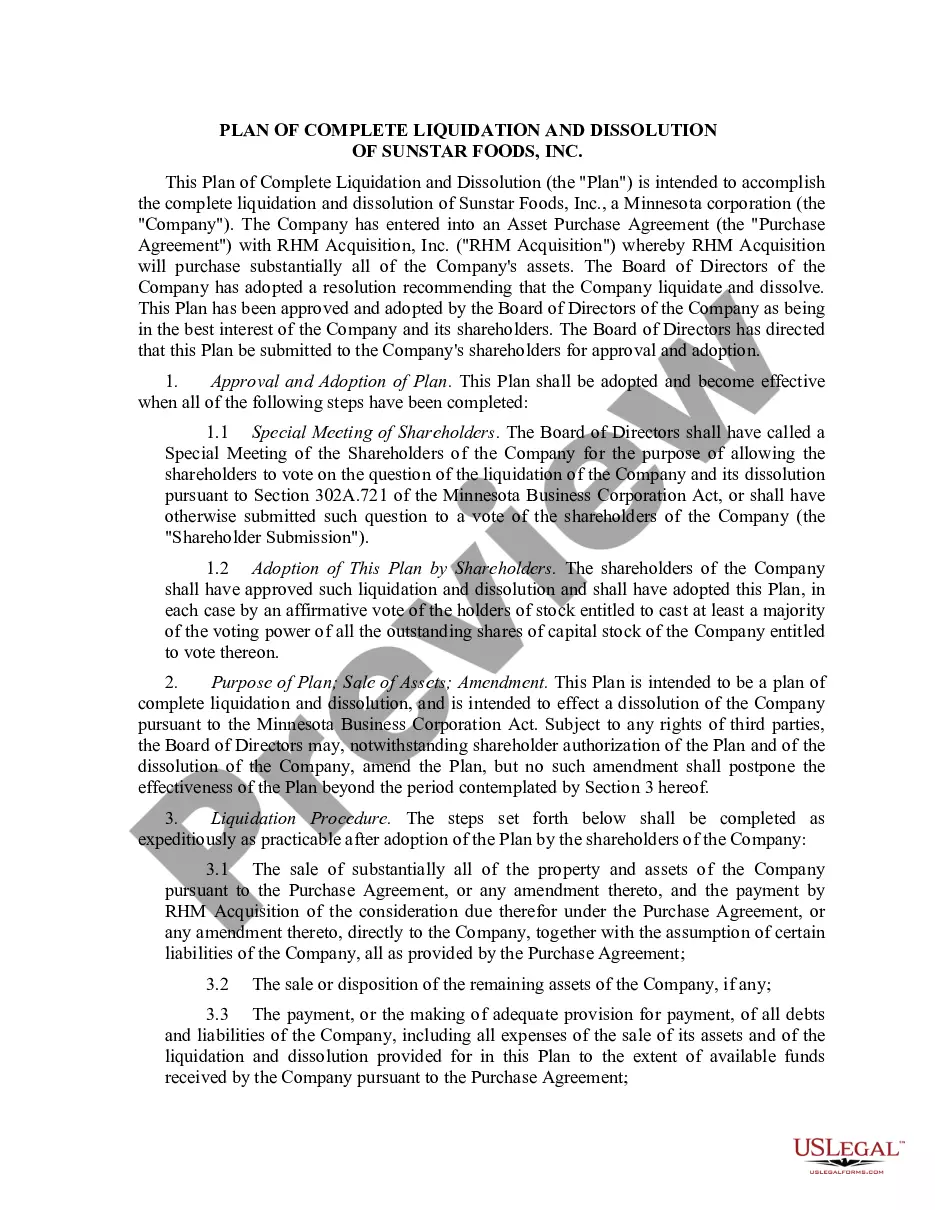
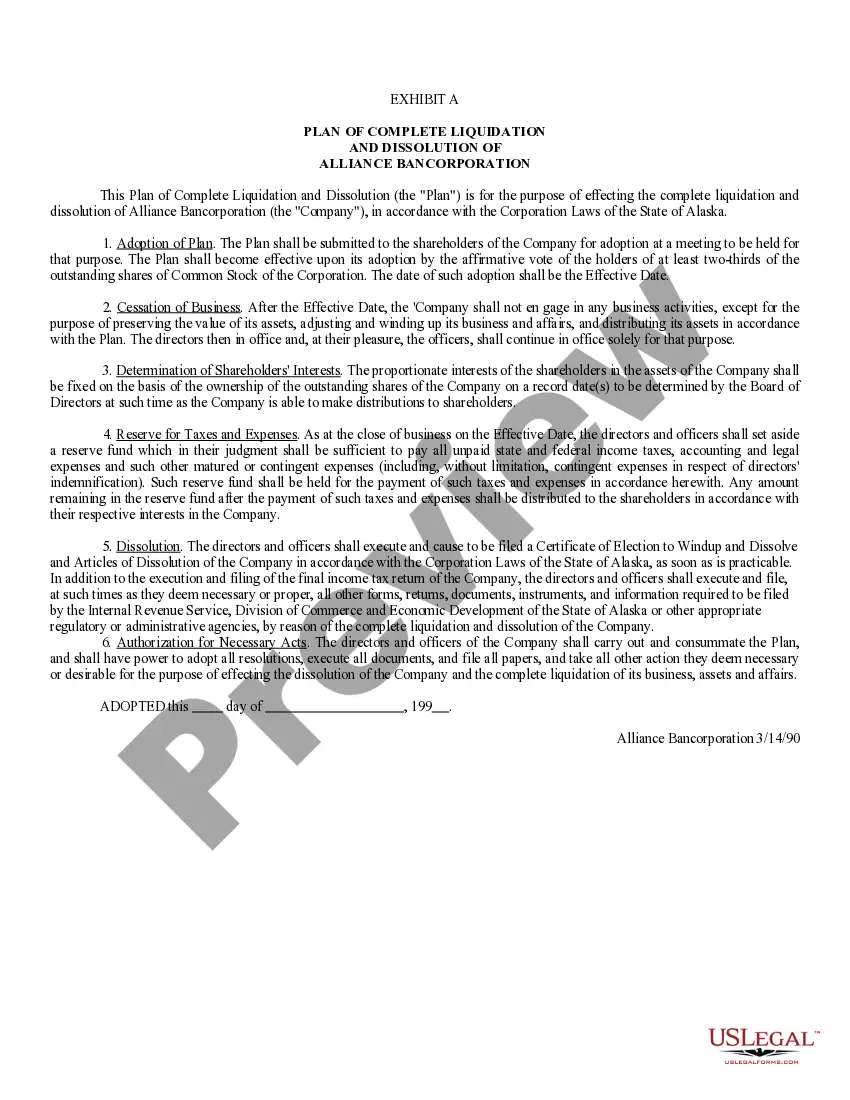
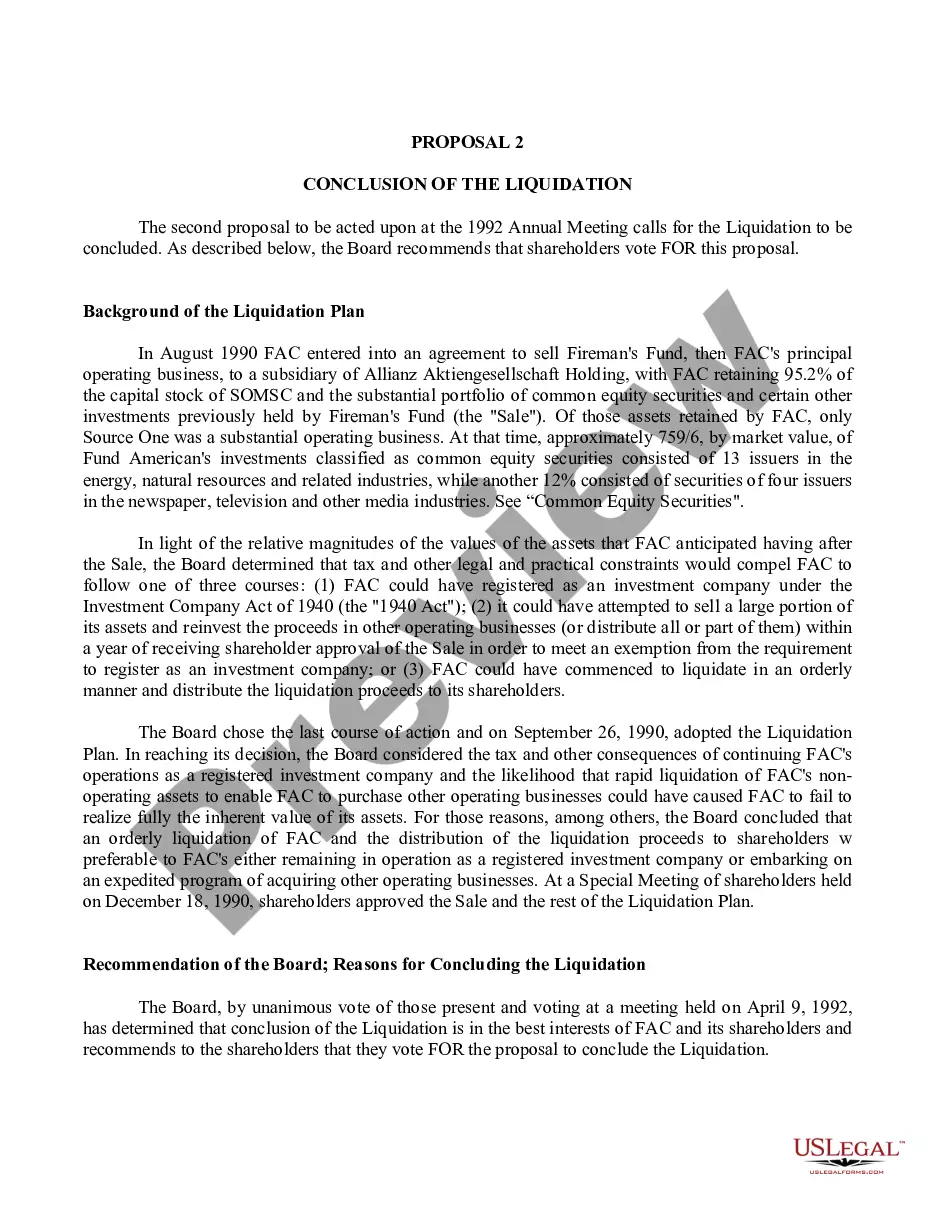
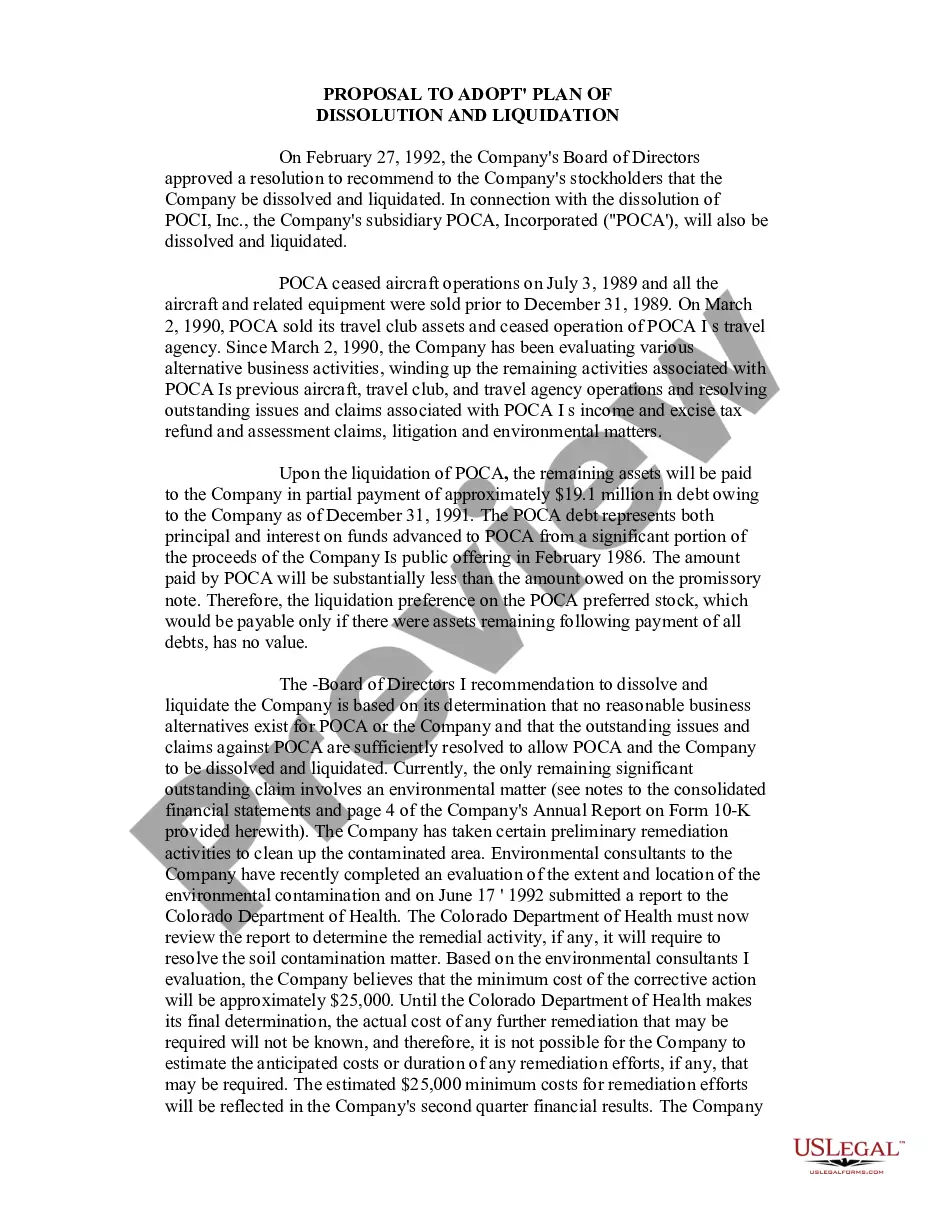
The Liquidation Proposal is a legal document used by corporations to outline a plan for the liquidation of their assets and the dissolution of the company. This form provides a structured approach for notifying shareholders and complying with legal requirements. Unlike other corporate resolutions, the Liquidation Proposal specifically addresses steps needed to wind up operations and distribute assets properly to shareholders and creditors.
Main sections of this form
- Details of the company's financial status and reasons for liquidation.
- A copy of the adopted Plan of Liquidation.
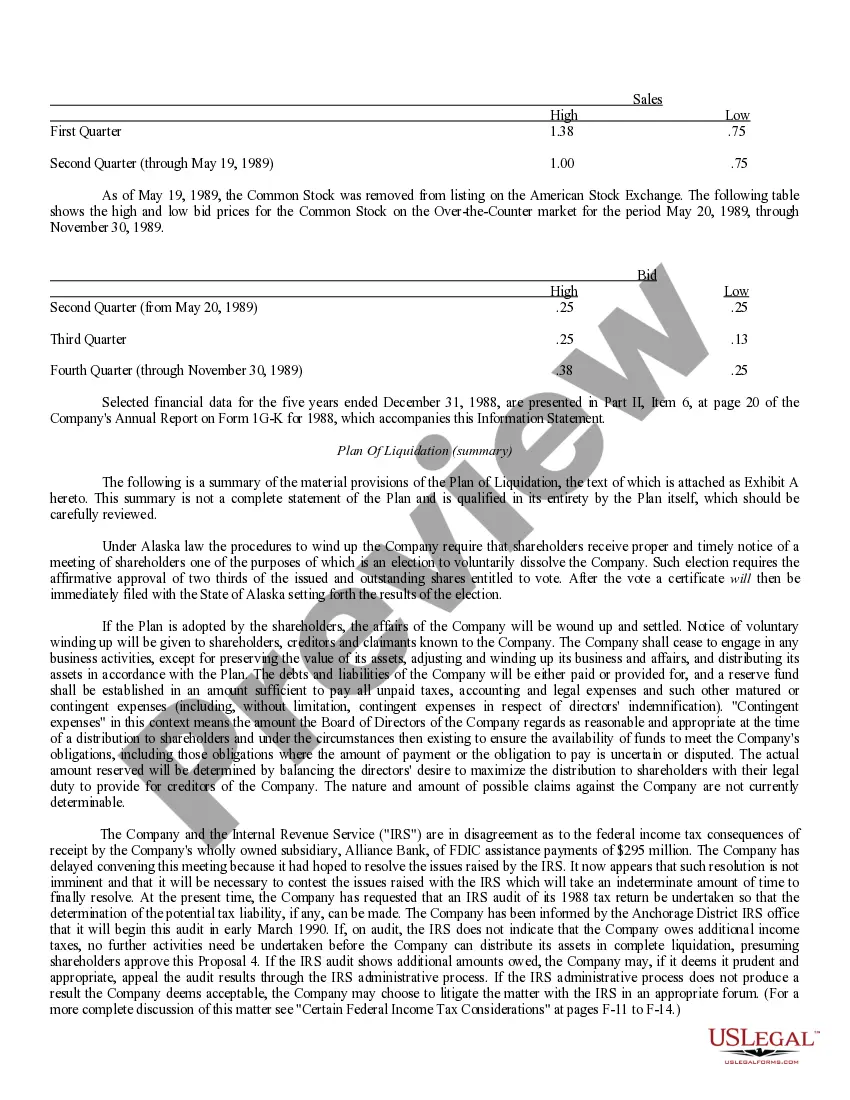
- Procedures for shareholder meetings and approval processes.
- Provisions for settling debts and liabilities before asset distribution.
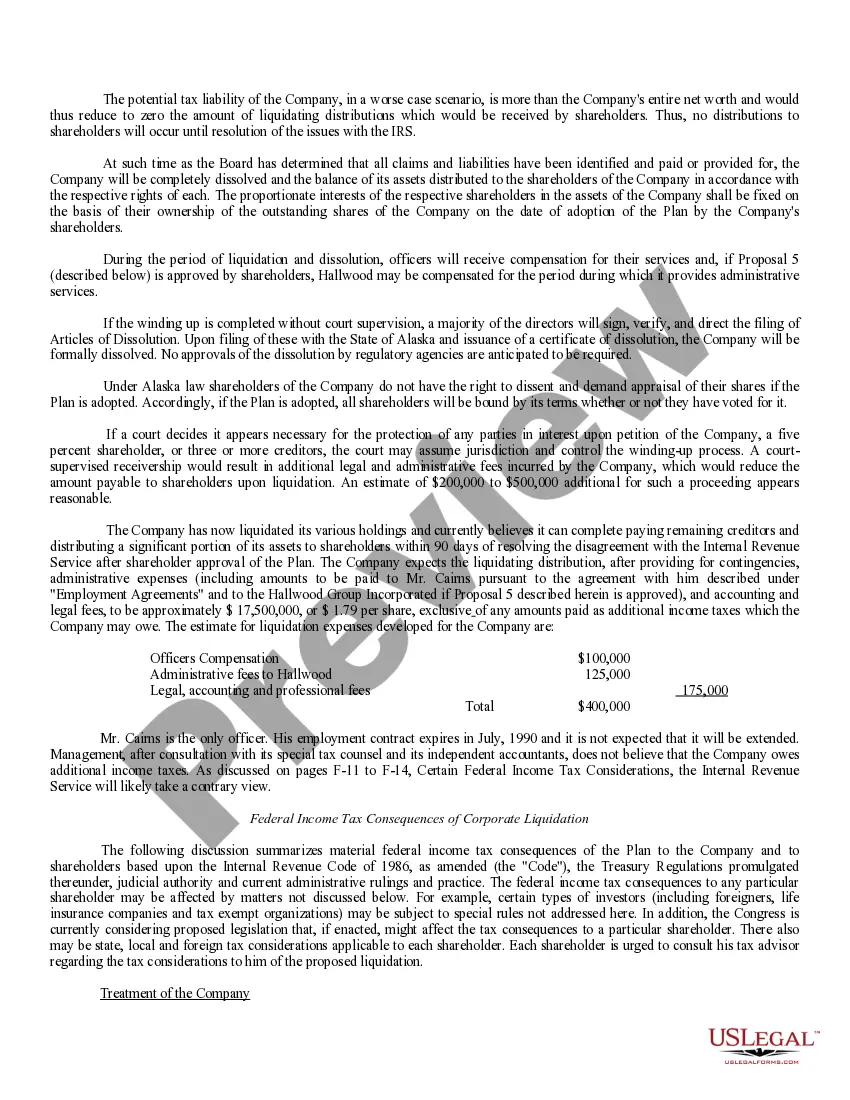
- Information regarding the treatment of tax liabilities and potential claims.
- Process for filing Articles of Dissolution with the state authorities.
When this form is needed
This form should be used when a corporation decides to dissolve and liquidate its assets. It is applicable in situations where the company can no longer operate profitably, has suffered significant financial losses, or has been compelled by regulatory action. Utilizing this form ensures that the company complies with legal protocols and effectively communicates with its shareholders and stakeholders about the liquidation process.
Who should use this form
- Corporate directors and officers responsible for managing the liquidation process.
- Shareholders seeking a formal proposal concerning the dissolution of their corporation.
- Legal professionals assisting corporations in compliance with state regulations regarding liquidation.
- Financial advisors guiding companies through the winding-up and distribution of assets.
Completing this form step by step
- Gather financial documentation reflecting the current status of the company.
- Draft a detailed plan outlining the assets to be liquidated and the reasons for dissolution.
- Schedule a meeting with shareholders to discuss the proposal and obtain approval.
- File the necessary documents, including the Plan of Liquidation, with the state authorities.
- Notify all creditors and stakeholders about the liquidation process and settle any outstanding obligations.
- Distribute remaining assets to shareholders according to their ownership stakes after all liabilities are satisfied.
Notarization requirements for this form
This form does not typically require notarization to be legally valid. However, some jurisdictions or document types may still require it. US Legal Forms provides secure online notarization powered by Notarize, available 24/7 for added convenience.
Get your form ready online
Our built-in tools help you complete, sign, share, and store your documents in one place.
Make edits, fill in missing information, and update formatting in US Legal Forms—just like you would in MS Word.
Download a copy, print it, send it by email, or mail it via USPS—whatever works best for your next step.
Sign and collect signatures with our SignNow integration. Send to multiple recipients, set reminders, and more. Go Premium to unlock E-Sign.
If this form requires notarization, complete it online through a secure video call—no need to meet a notary in person or wait for an appointment.
We protect your documents and personal data by following strict security and privacy standards.

Make edits, fill in missing information, and update formatting in US Legal Forms—just like you would in MS Word.

Download a copy, print it, send it by email, or mail it via USPS—whatever works best for your next step.

Sign and collect signatures with our SignNow integration. Send to multiple recipients, set reminders, and more. Go Premium to unlock E-Sign.

If this form requires notarization, complete it online through a secure video call—no need to meet a notary in person or wait for an appointment.

We protect your documents and personal data by following strict security and privacy standards.
Typical mistakes to avoid
- Failing to obtain the required shareholder approvals before proceeding with liquidation.
- Not adequately addressing outstanding debts and liabilities prior to asset distribution.
- Neglecting to notify all interested parties, including creditors and regulatory bodies, about the liquidation process.
- Assuming tax implications are settled without consulting legal or tax professionals.
Why use this form online
- Convenient access to the template anytime and anywhere.
- Edit and customize the form to fit specific company circumstances easily.
- Reliable structure ensures compliance with state laws and regulations.
- Quick download allows for immediate initiation of the liquidation process.
Legal use & context
- This form is legally binding once approved by the shareholders of the corporation.
- Liquidation must comply with state corporate laws and regulations regarding dissolution.
- Shareholders do not have the right to dissent or demand appraisal once the plan is adopted.
- The process may be subject to IRS scrutiny regarding tax implications from the liquidation.
Looking for another form?



Form popularity
FAQ
Liquidate means converting property or assets into cash or cash equivalents by selling them on the open market. Liquidation similarly refers to the process of bringing a business to an end and distributing its assets to claimants.
After the costs of liquidation, secured creditors and preferential creditors are paid first, and then unsecured creditors. Creditors with valid specific security over stock and equipment (such as retention of title clauses or leases) generally have priority to recover those items where they can be clearly identified.
Liquidation is important if a business fails due to anything from a lack of visionary management to increasing debts; from almost-zero revenue inflow to rising costs of unnecessary assets. Absence of profit planning and control on the continuity of losses for extended periods also call for liquidation.
Plan of Liquidation means a plan (including by operation of law) that provides for, contemplates or the effectuation of which is preceded or accompanied by (whether or not substantially contemporaneously) (i) the sale, lease, conveyance or other disposition of all or substantially all of the assets of the referent
The different processes of closing a business.Simply put, a dissolution is a (typically) voluntary legal closure of a business while a liquidation involves the selling of a company's assets in order to pay creditors.
In that process, the corporation notifies creditors of the impending cessation of business and does all acts appropriate to liquidate its business, such as collecting and selling assets, discharging liabilities, and distributing any remaining assets to shareholders.6 The corporation may, but is rarely required to,
The term "dissolution" refers to the systemic closing down of a business entity, while "winding up" refers to the selling of assets and payment of debts prior to closing a business. Dissolution and winding up, as well as other aspects of closing a business, often require the assistance of a legal professional.