Proposal to approve restricted stock plan
About this form
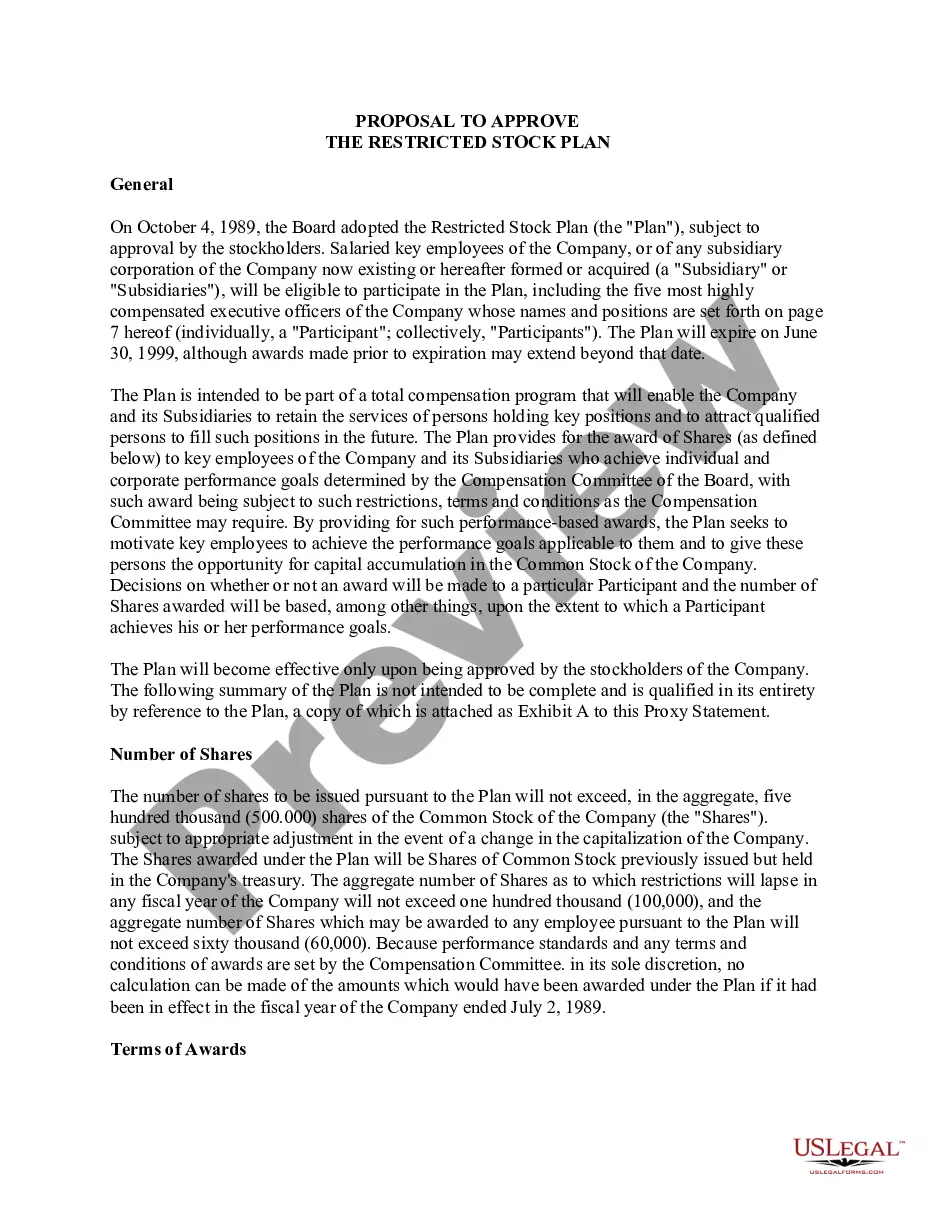
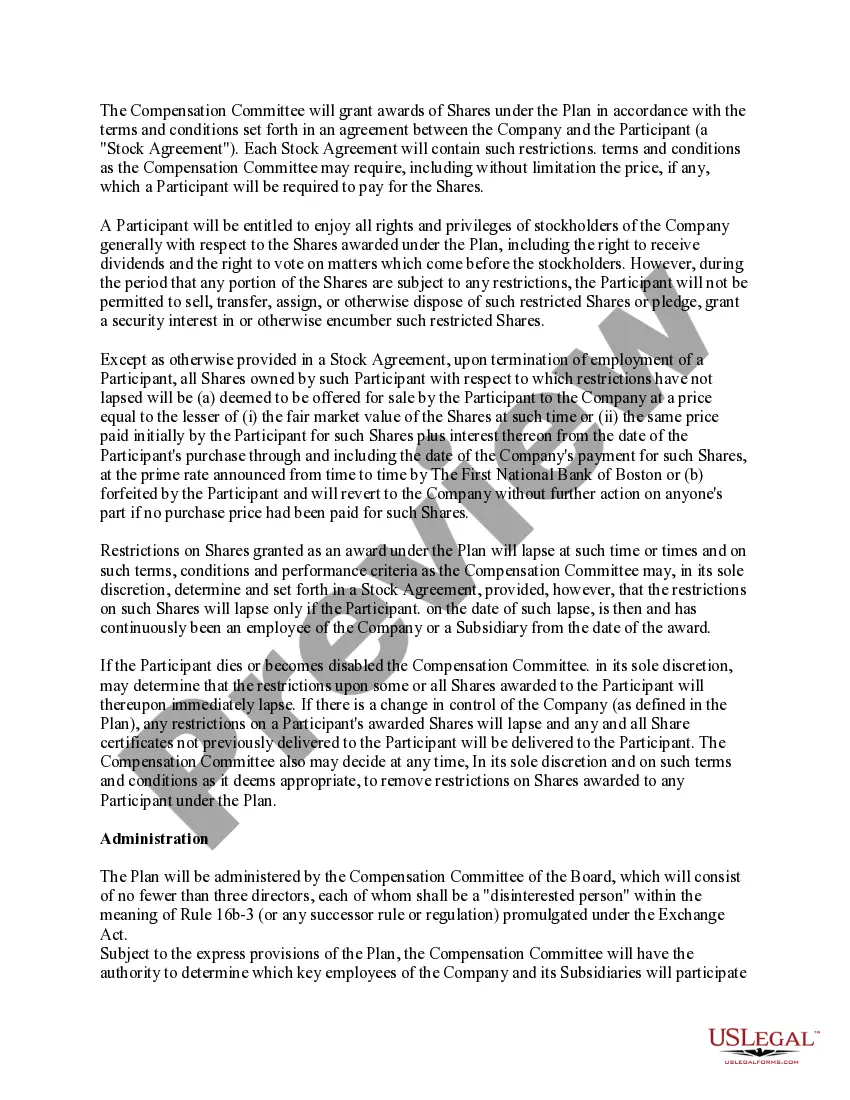
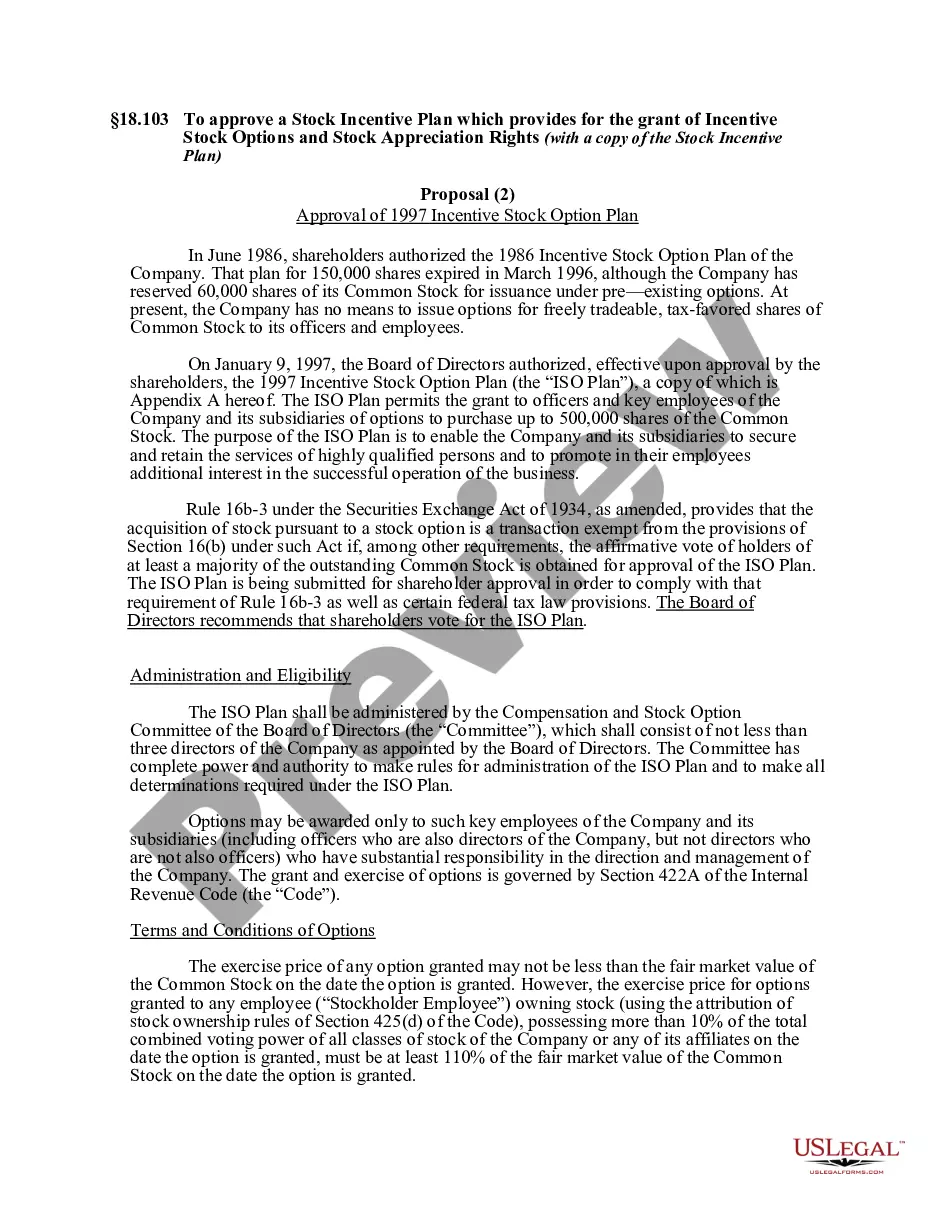
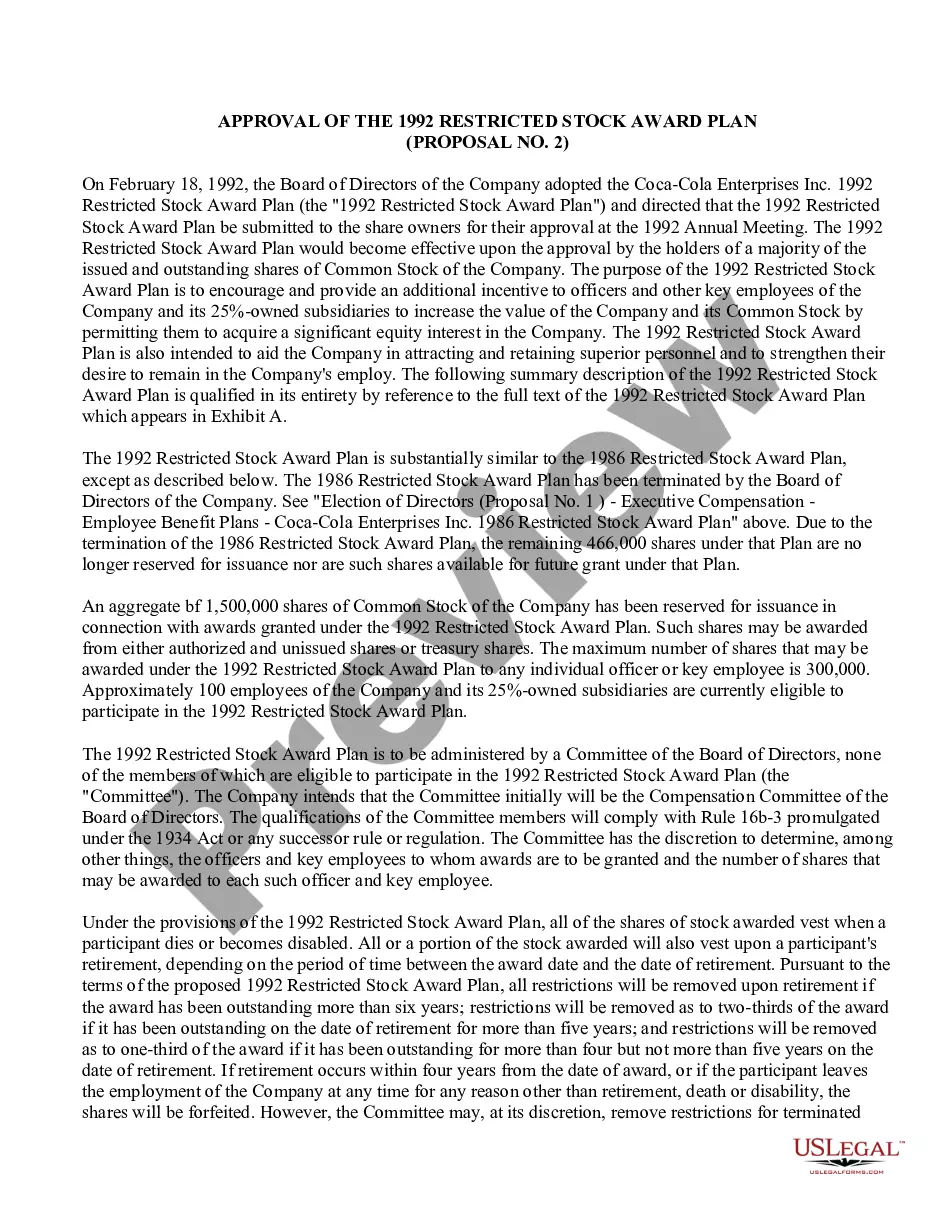
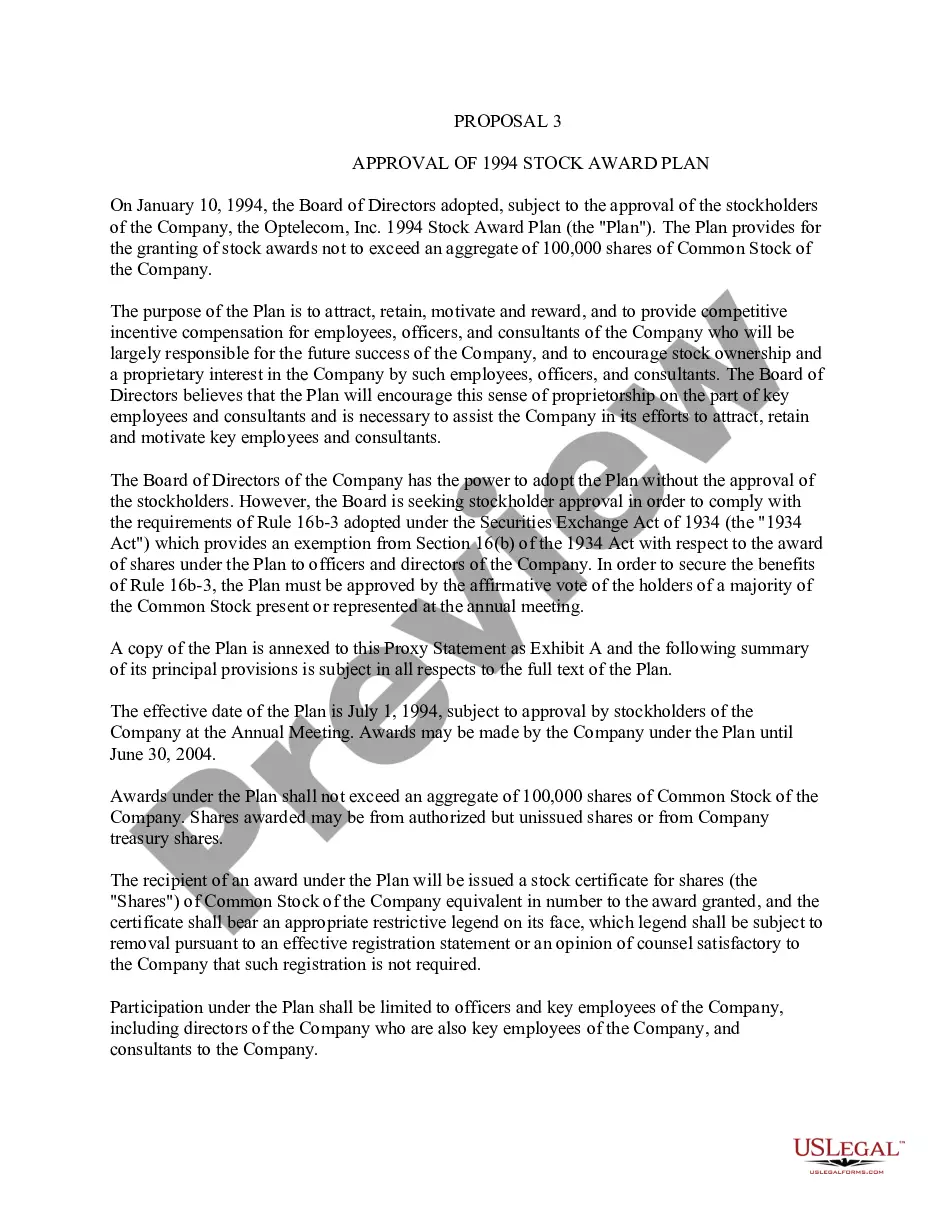
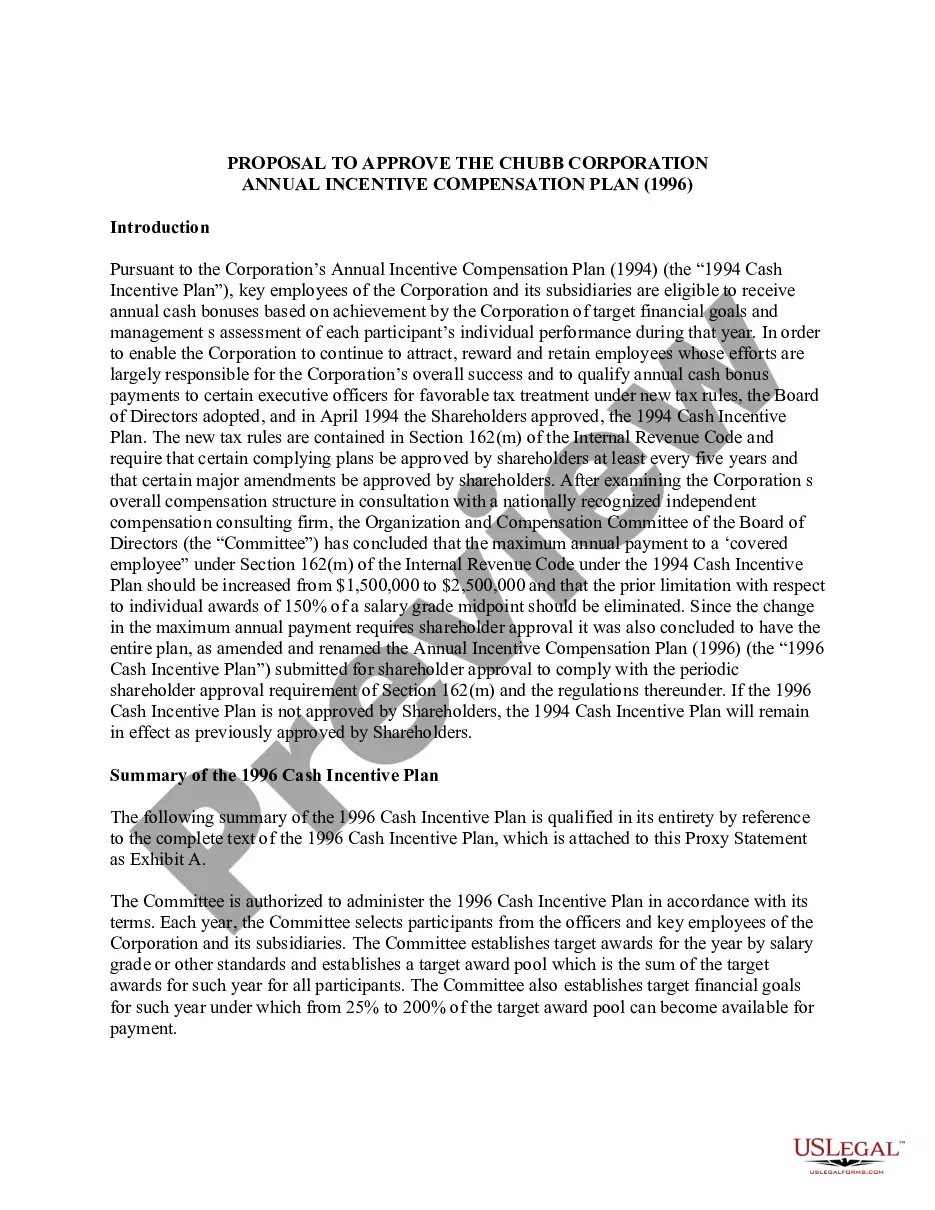
The Proposal to Approve Restricted Stock Plan is a legal document used by corporations to seek approval from stockholders for a restricted stock plan. This form is essential for businesses that wish to implement an incentive compensation structure through stock awards. Unlike other compensation forms, this proposal outlines specific details regarding the eligibility of participants and the terms under which shares will be awarded and vested, emphasizing performance-based goals.
Key parts of this document
- General overview of the restricted stock plan and its purpose.
- Eligibility criteria for participants, including key employees and executive officers.
- Details on the number of shares available and the limits on annual awards.
- Terms and conditions related to share awards, including forfeiture clauses.
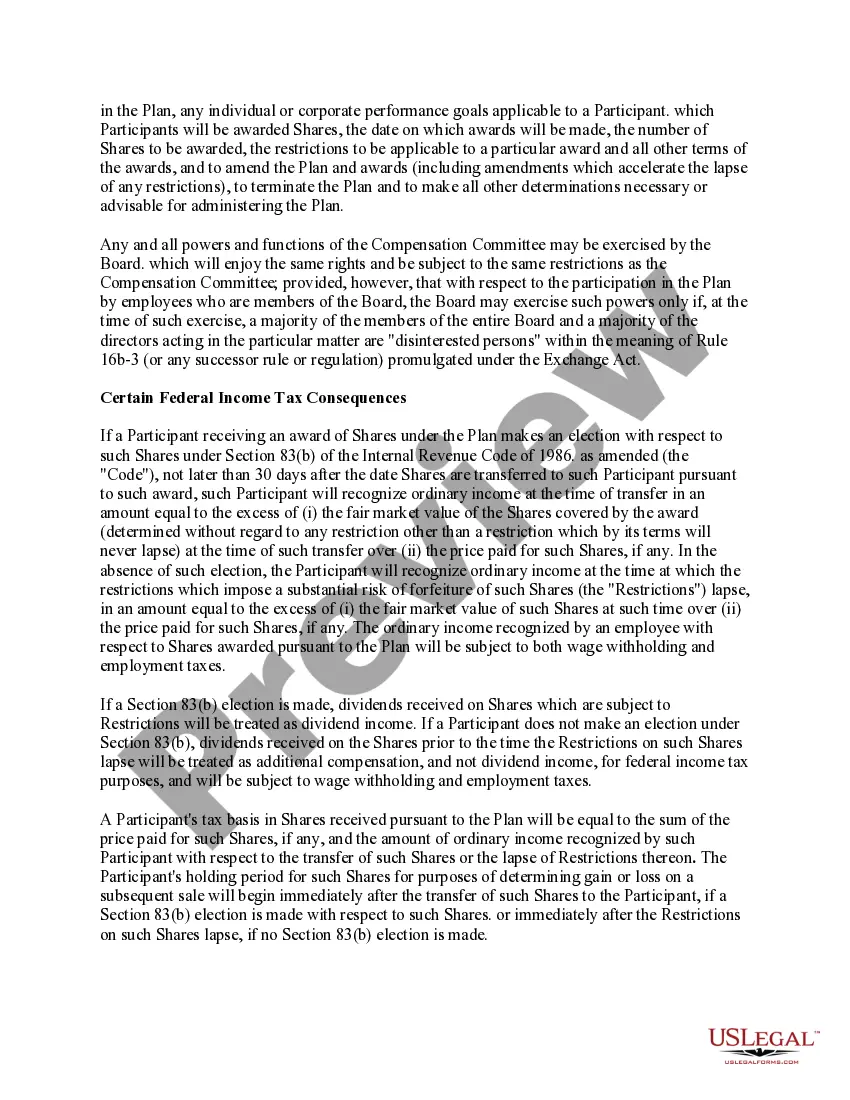
- Procedures for administering the plan by the Compensation Committee.
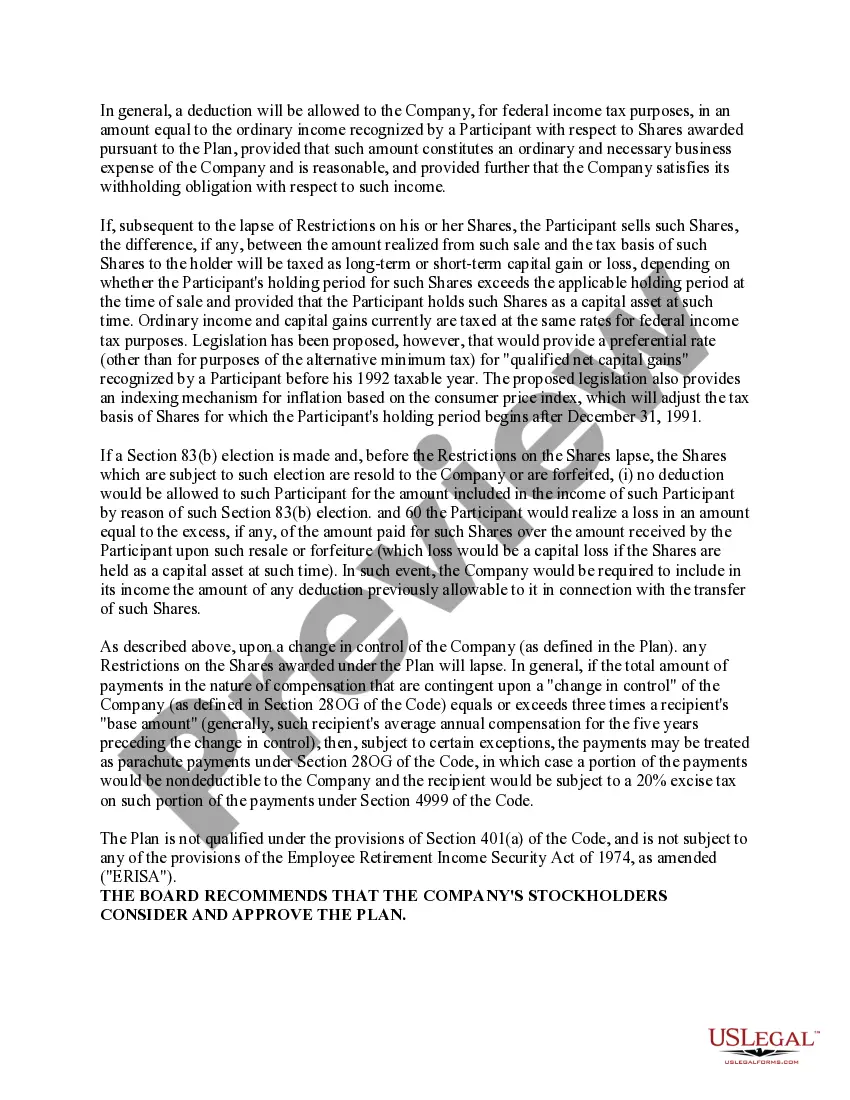
- Tax implications associated with shares awarded under the plan.

Situations where this form applies
This form is used when a corporation intends to adopt a restricted stock plan that rewards key employees with shares based on performance metrics. It is applicable when a company seeks to retain or attract talent through equity compensation, particularly during times of change, such as mergers or to enhance employee motivation in achieving corporate goals.
Who should use this form
- Corporations looking to implement a restricted stock plan.
- Human resources departments responsible for employee compensation.
- Board members and executive officers involved in corporate governance.
- Legal professionals advising corporations on compensation matters.
How to complete this form
- Identify the corporation name and provide details about the restricted stock plan.
- Specify the eligibility criteria for participants in the plan.
- Detail the total number of shares available for awards and the terms of vesting.
- Outline the procedures by which the Compensation Committee will administer the plan.
- Include any necessary tax considerations for participants receiving shares.
Does this form need to be notarized?
In most cases, this form does not require notarization. However, some jurisdictions or signing circumstances might. US Legal Forms offers online notarization powered by Notarize, accessible 24/7 for a quick, remote process.
Get your form ready online
Our built-in tools help you complete, sign, share, and store your documents in one place.
Make edits, fill in missing information, and update formatting in US Legal Forms—just like you would in MS Word.
Download a copy, print it, send it by email, or mail it via USPS—whatever works best for your next step.
Sign and collect signatures with our SignNow integration. Send to multiple recipients, set reminders, and more. Go Premium to unlock E-Sign.
If this form requires notarization, complete it online through a secure video call—no need to meet a notary in person or wait for an appointment.
We protect your documents and personal data by following strict security and privacy standards.

Make edits, fill in missing information, and update formatting in US Legal Forms—just like you would in MS Word.

Download a copy, print it, send it by email, or mail it via USPS—whatever works best for your next step.

Sign and collect signatures with our SignNow integration. Send to multiple recipients, set reminders, and more. Go Premium to unlock E-Sign.

If this form requires notarization, complete it online through a secure video call—no need to meet a notary in person or wait for an appointment.

We protect your documents and personal data by following strict security and privacy standards.
Avoid these common issues
- Failing to clearly outline the eligibility criteria for participants.
- Not specifying the terms of share vesting and restrictions accurately.
- Omitting tax implications that can affect participants.
- Neglecting to include the details of the administration process.
Benefits of completing this form online
- Immediate access to templates that save time compared to drafting from scratch.
- Easy customization to fit specific corporate needs and circumstances.
- Secure storage of documents plus simple download and printing options.
Legal use & context
- This form provides a legal framework for offering restricted stock as part of employee compensation.
- It ensures compliance with federal and state securities laws relating to stock awards.
- Properly executed, the proposal protects the company from legal challenges regarding equity compensation strategies.
Main things to remember
- The Proposal to Approve Restricted Stock Plan is essential for soliciting shareholder approval of a stock plan.
- Clear terms about participation and performance criteria are critical for the plan's success.
- Caution should be exercised to comply with state-specific regulations and legal standards.
Looking for another form?

Form popularity
FAQ
RSUs give an employee interest in company stock but they have no tangible value until vesting is complete.Upon vesting, they are considered income, and a portion of the shares is withheld to pay income taxes. The employee receives the remaining shares and can sell them at their discretion.
Fulfill the SEC holding period requirements. From the date the shares are fully paid for, you must hold them at least six months. Comply with federal reporting requirements. Check trading volume. Remove the stock legend. Conduct an ordinary brokerage transaction. File required notices with the SEC.
Appointment of auditors (if there are any) Appointment or re-appointment of directors. Removal of a director or the auditor. Adoption of the annual accounts and the reports of the directors and auditors. Declaration of dividends.
The Company's board of directors must approve all stock option grants, including the name of the recipient, the number of shares, the vesting schedule and the exercise price. This can be done either in a board meeting or via unanimous written consent.
Restricted shares are shares that are already included in the number of outstanding shares.Typically, these shares are owned by insiders such as employees and initial investors.
So that's the basic accounting for restricted stock under GAAP. The key takeaways are:The value recognized for each restricted share is the same as its current share price (for non-dividend paying stock). Restricted stock is recognized on the income statement over the service period.
A Restricted Stock Plan is a common way to share stock with employees in public companies.Customarily, restricted stock will carry a vesting schedule so that employees will forfeit some or all of the shares unless they remain with the company for a specified number of years (e.g. 3 or 4).
When you receive an RSU, you don't have any immediate tax liability. You only have to pay taxes when your RSU vests and you receive an actual payout of stock shares. At that point, you have to report income based on the fair market value of the stock.
The details of RSU accounting are beyond the scope of this brief discussion, but, in general, RSUs that can be settled only in shares receive accounting treatment similar to restricted stock. The fair value of the award, based on the stock price at the time of the grant, is expensed over the service period.