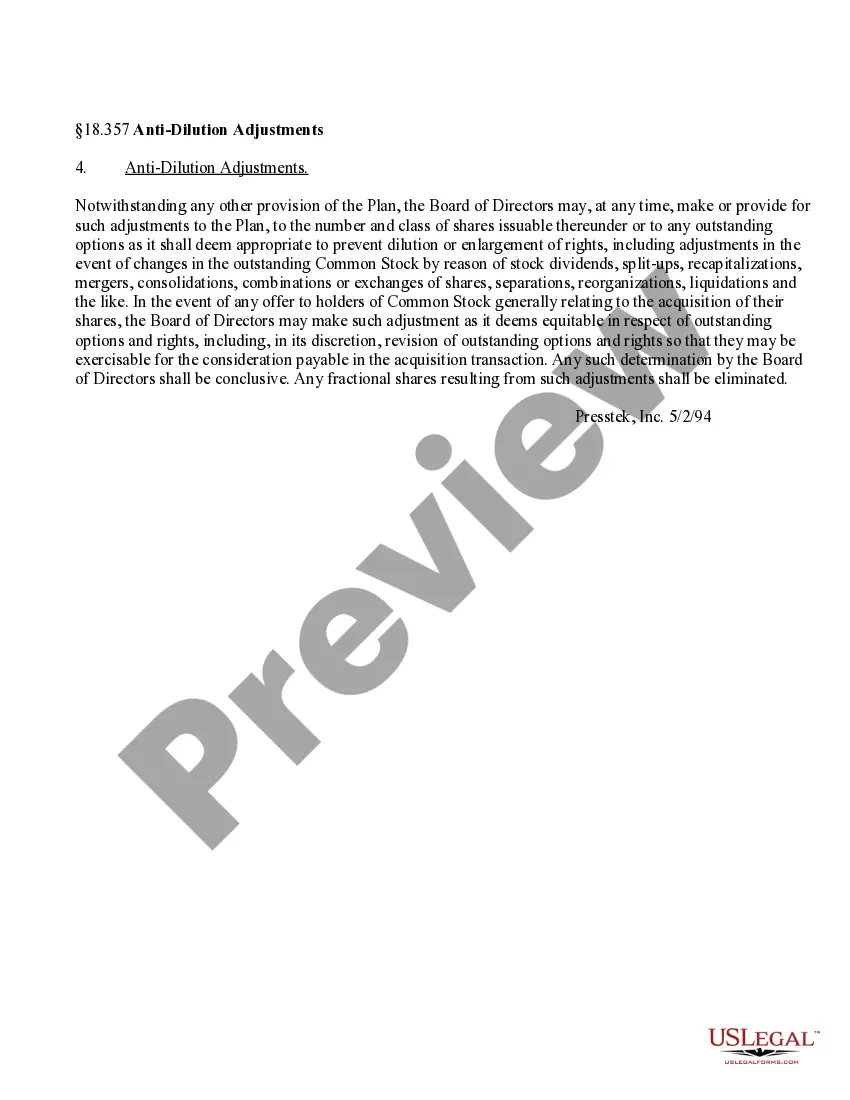
Anti-Dilution Adjustments
Overview of this form
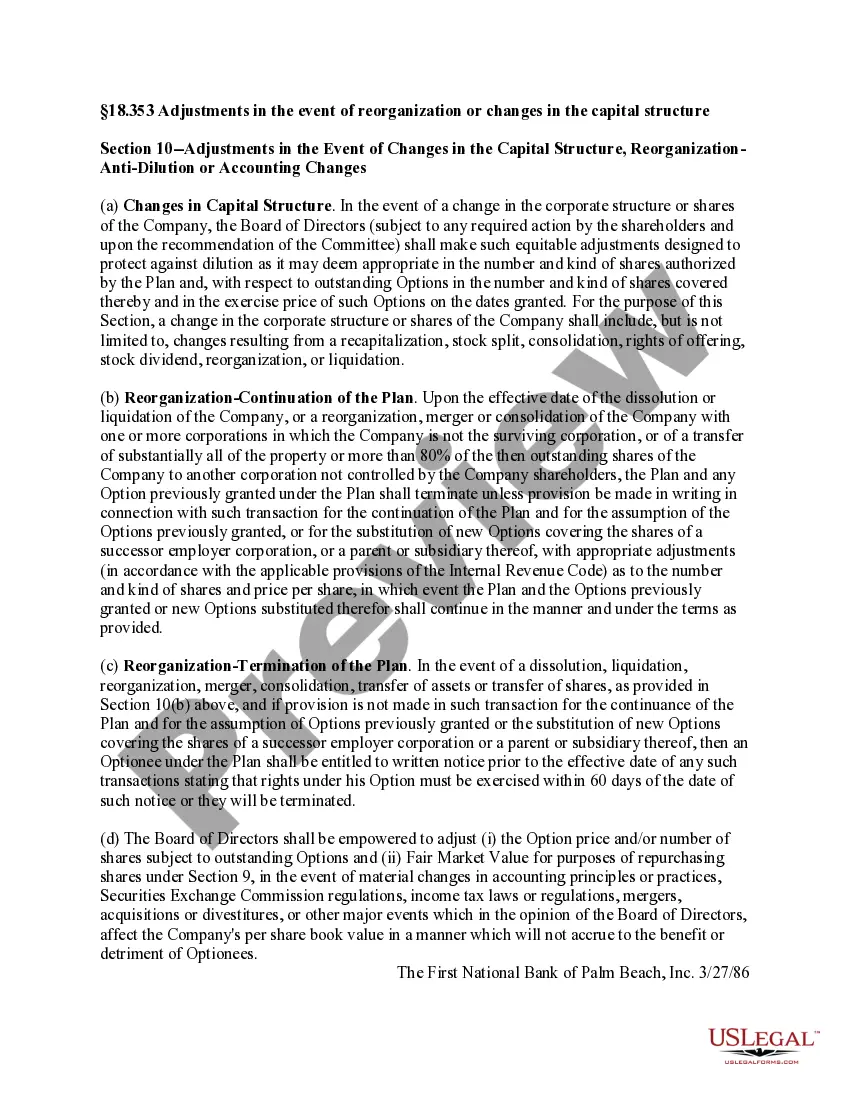
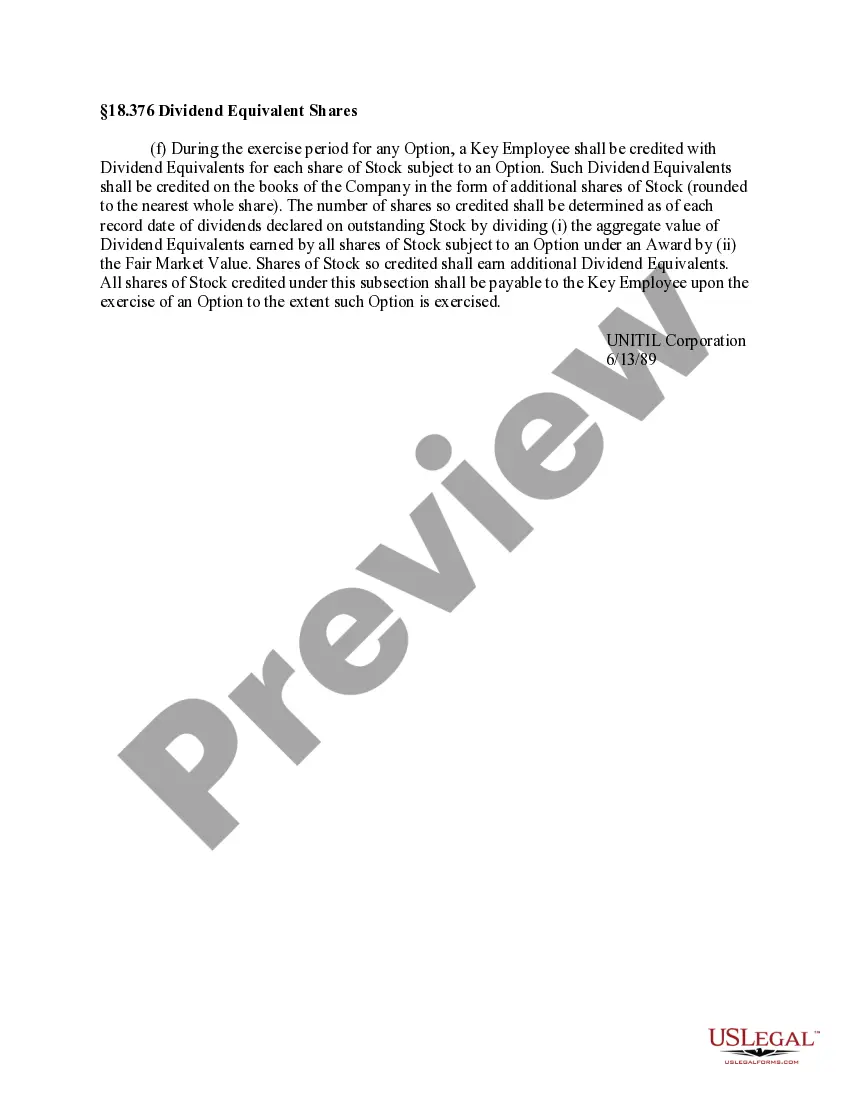
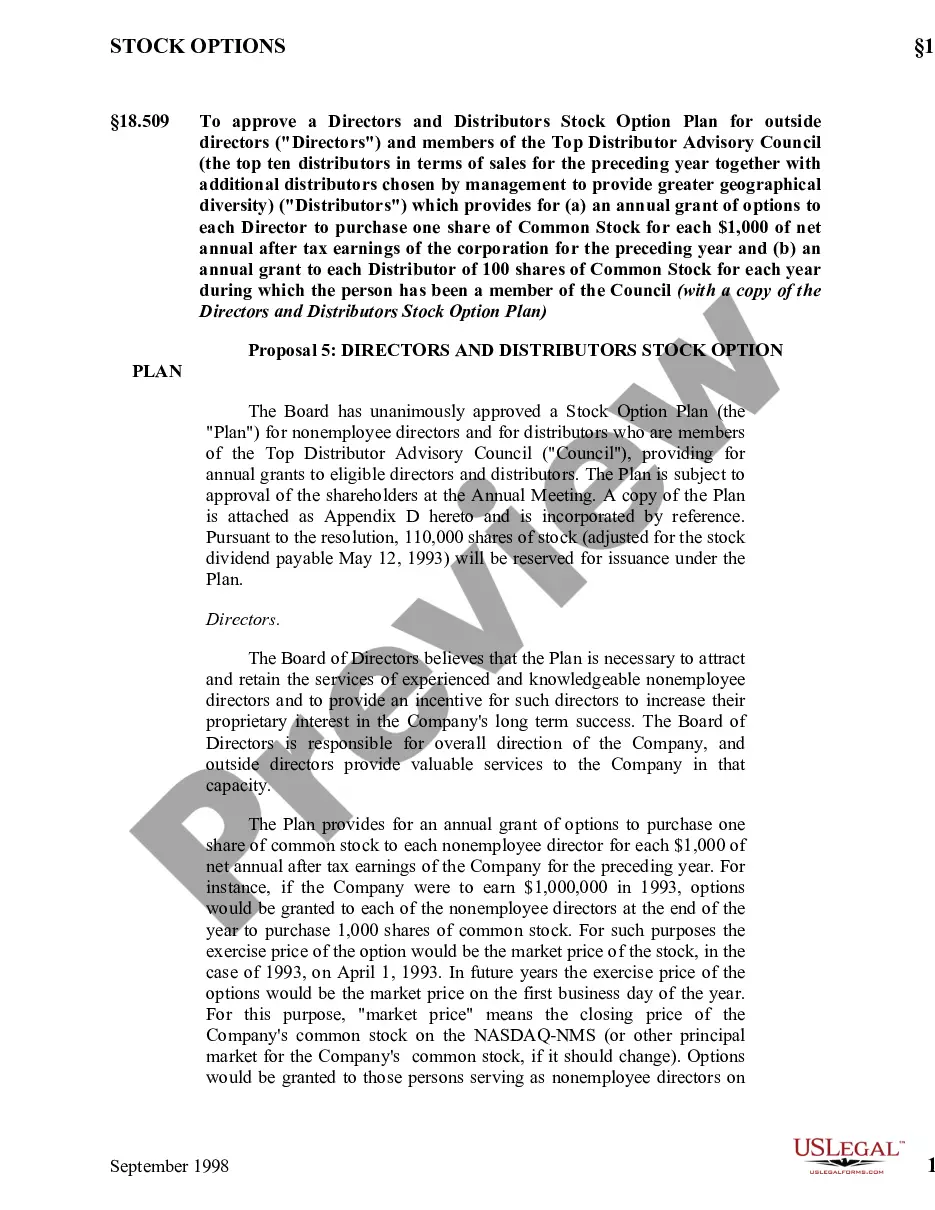
The Anti-Dilution Adjustments form is a legal document that allows a company's Board of Directors to make necessary adjustments to a stock option plan to prevent the dilution of stockholder rights. This form is used primarily when there are changes in the company's share structure, such as stock dividends, mergers, or recapitalizations. Unlike standard stock option agreements, this form specifically addresses modifications in response to corporate actions that could affect stock ownership and rights.
Form components explained
- Provisions for adjustments to number and class of shares.
- Guidelines for protecting shareholder rights during stock changes.
- Procedures for handling fractional shares resulting from adjustments.
- Discretionary authority of the Board to revise outstanding options.
- Legal validity of the Board's determinations on adjustments.
When to use this form
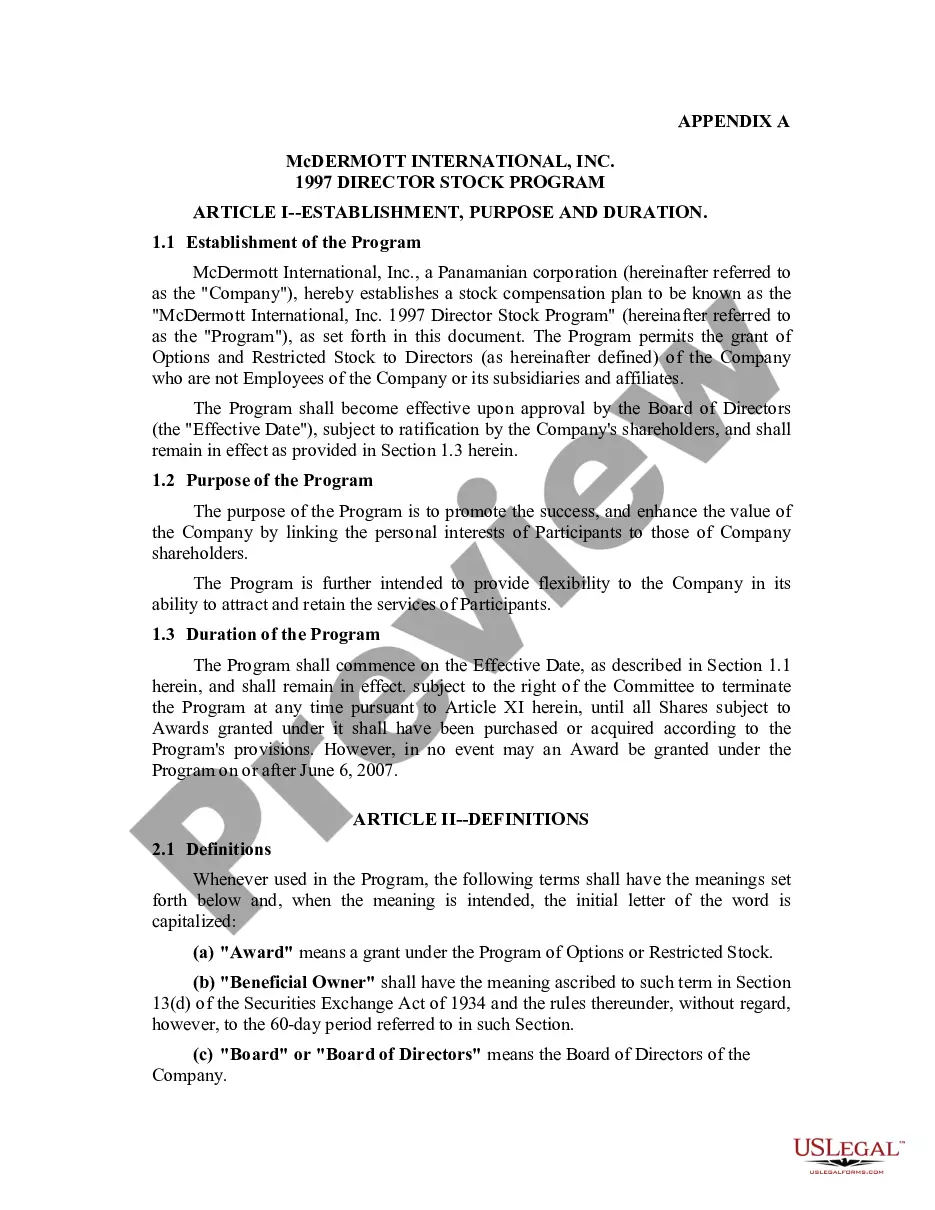
This form is necessary in scenarios where a company undergoes significant changes that could impact its share structure. Common situations include stock dividends, mergers, consolidations, or when initiating an acquisition offer. Businesses may also use this form to ensure that existing shareholders maintain equitable ownership interests in light of major corporate transactions.
Intended users of this form
- Corporate Boards of Directors overseeing stock options.
- Legal teams handling mergers or acquisitions.
- Finance professionals managing share adjustments.
- Shareholders concerned about their rights and ownership during corporate changes.
Instructions for completing this form
- Identify the parties involved, typically the company and its Board of Directors.
- Specify the details of the stock option plan being adjusted.
- Outline the circumstances leading to the need for adjustments.
- Detail the specific adjustments to be made to the shares or options.
- Obtain signatures from the required Board members to validate the adjustments.
Notarization requirements for this form
This form does not typically require notarization unless specified by local law. However, it is always recommended to check state-specific regulations to ensure compliance.
Get your form ready online
Our built-in tools help you complete, sign, share, and store your documents in one place.
Make edits, fill in missing information, and update formatting in US Legal Forms—just like you would in MS Word.
Download a copy, print it, send it by email, or mail it via USPS—whatever works best for your next step.
Sign and collect signatures with our SignNow integration. Send to multiple recipients, set reminders, and more. Go Premium to unlock E-Sign.
If this form requires notarization, complete it online through a secure video call—no need to meet a notary in person or wait for an appointment.
We protect your documents and personal data by following strict security and privacy standards.

Make edits, fill in missing information, and update formatting in US Legal Forms—just like you would in MS Word.

Download a copy, print it, send it by email, or mail it via USPS—whatever works best for your next step.

Sign and collect signatures with our SignNow integration. Send to multiple recipients, set reminders, and more. Go Premium to unlock E-Sign.

If this form requires notarization, complete it online through a secure video call—no need to meet a notary in person or wait for an appointment.

We protect your documents and personal data by following strict security and privacy standards.
Common mistakes to avoid
- Failing to document all necessary adjustments comprehensively.
- Overlooking the need for board approval for adjustments.
- Not addressing how fractional shares will be managed.
- Neglecting to update the form with current corporate changes.
- Using outdated forms that do not reflect recent legal requirements.
Benefits of completing this form online
- Instant access to legally drafted documents by licensed attorneys.
- Ease of editing and customizing the form for specific needs.
- Streamlined process, saving time compared to traditional methods.
- Secure and reliable option to ensure compliance with legal standards.
Legal use & context
- This form helps protect shareholder rights during adjustments in share ownership.
- Ensures legal compliance regarding corporate actions affecting stock options.
- Functions as a safeguard against dilution of ownership interests.
- Facilitates the proper execution of board decisions regarding adjustments.
Summary of main points
- The Anti-Dilution Adjustments form helps companies manage strategic changes that affect their stock options.
- Proper usage ensures shareholder rights are maintained during corporate actions.
- It is essential for Boards of Directors to follow legal protocols when completing this form.
- Using an online form streamlines the drafting process, ensuring accuracy and compliance.
Looking for another form?

Form popularity
FAQ
Stock dilution is legal because, in theory, the issuance of new shares shouldn't affect actual shareholder value.In practice, however, the issuance of new shares can destroy shareholder value. This normally happens when the issuing company: Sells the newly issued shares at an undervalued price.
Full Ratchet and Weighted Average Dilution Protection Outlined in a company's funding and investment agreements, the most common form of anti-dilution provision protects convertible stock or other convertible securities in the company, by mandating adjustments to the conversion if more shares are offered.
Antidilutive is a term that describes the effects of certain actions, such as securities retirement, securities conversion, or other corporate actions (e.g., acquisitions made through the issuance of common stock or other securities) on the earnings per share (EPS) or voting power of existing shareholders.
Anti-Dilution Share section. 200bDefinition200b Anti-dilution provisions in a term sheet adjust the number of common shares into which preferred shares convert in the event of a down round or other stock dilution. The purpose of these provisions is to protect investors' stock ownership percentage in a company.
Outlined in a company's funding and investment agreements, the most common form of anti-dilution provision protects convertible stock or other convertible securities in the company, by mandating adjustments to the conversion if more shares are offered.
An anti-dilution provision grants an investor the right to convert their preferred shares at the new price.If the company that issued the shares goes public and issues shares at $15, the value of your investment would've gone down. An anti-dilution provision would protect investors from drops in value due to dilution.
Anti-dilution provisions act as a buffer to protect investors against their equity ownership positions becoming diluted or less valuable. This can happen when the percentage of an owner's stake in a company decreases because of an increase in the total number of shares outstanding.
Anti-dilution provisions are clauses built into convertible preferred stocks to help shield investors from their investment potentially losing value. Dilution can occur when the percentage of an owner's stake in a company decreases because of an increase in the total number of shares outstanding.
Focus On Structure. If you want to lessen dilution, structure your business well. Only take on investors whose resumes add to the quality of your venture. Decide against numerous investors, just because they will pay more than they should for a small stake in your business.