Model State Structured Settlement Protection Act
Overview of this form
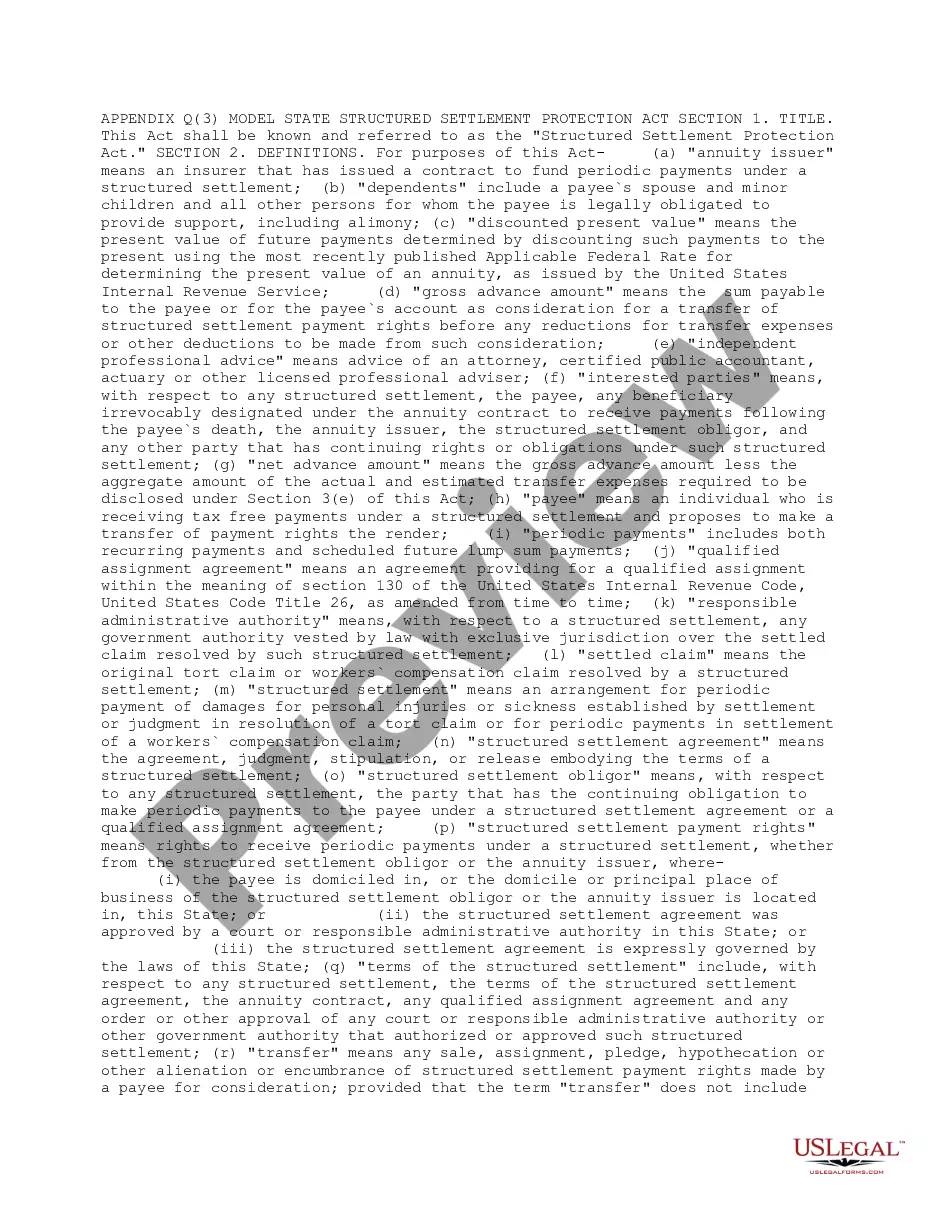
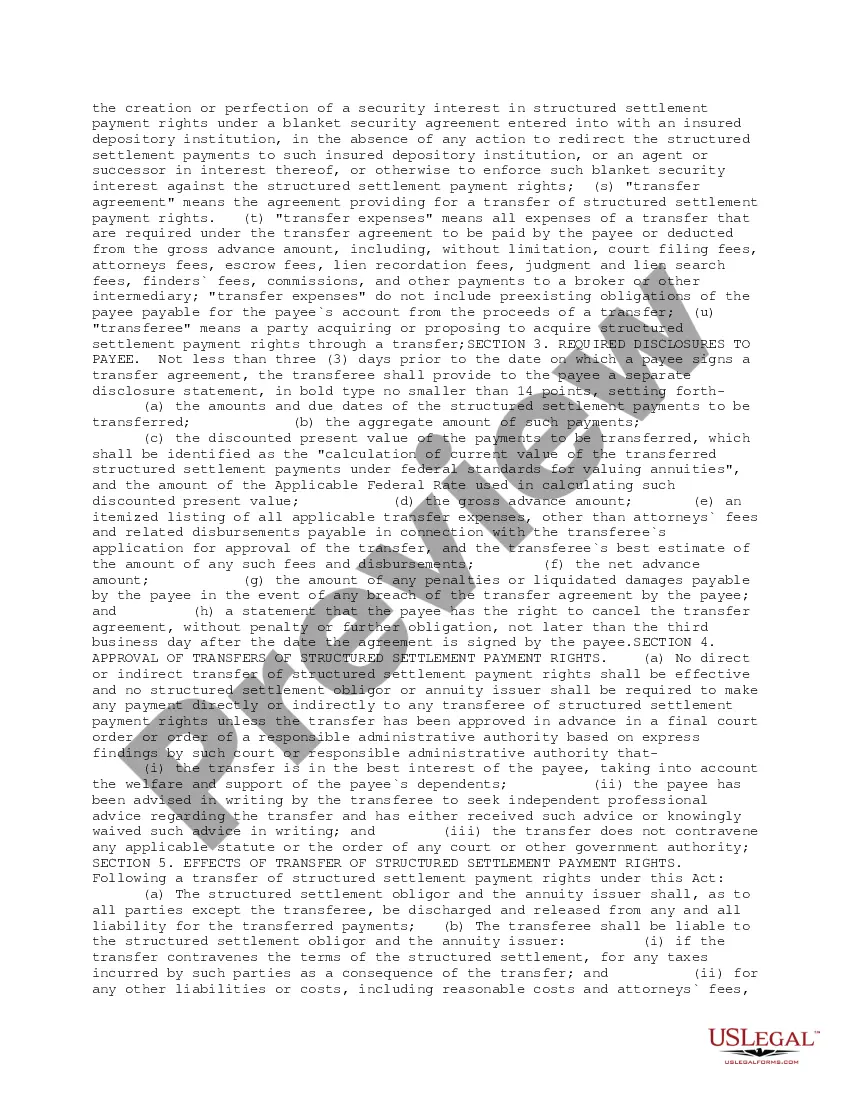
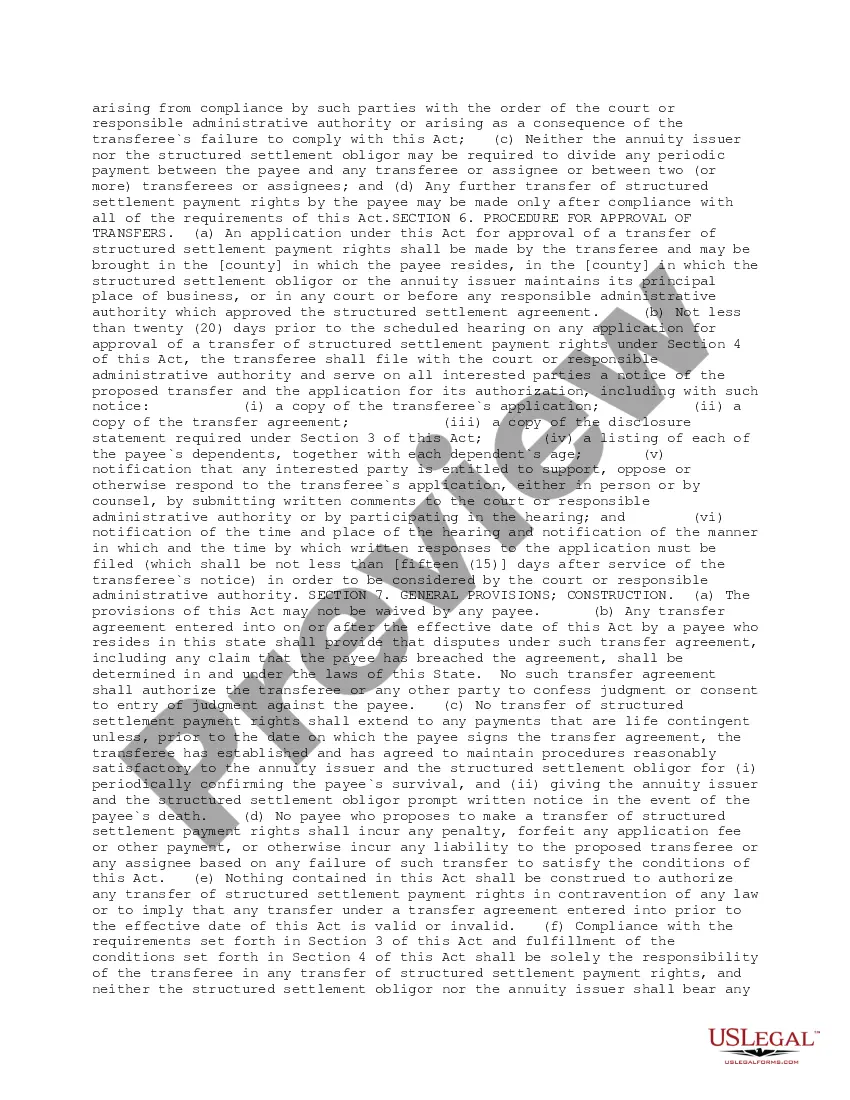
The Model State Structured Settlement Protection Act is designed to protect individuals receiving structured settlement payments. This legal framework ensures that the transfer of these payment rights, often linked to personal injury settlements, is conducted fairly and transparently. This form provides the statutory guidelines for protective measures to prevent exploitation of recipients, differing from other legal forms by specifically addressing structured settlements.
Main sections of this form
- Overview of structured settlement benefits.
- Disclosure requirements for transfer companies.
- Assessment criteria for court approval of transfers.
- Protections for the seller, including income tax implications.
- Information on the recourse available to settlement recipients.


Situations where this form applies
This form should be used when an individual receiving structured settlement payments wishes to sell or transfer their future payment rights. It is crucial when seeking legal approval for this transfer to ensure compliance with state laws and protection against potentially predatory practices by buyers of structured settlements.
Who this form is for
- Individuals currently receiving structured settlement payments.
- Legal representatives aiding clients in transferring structured settlement rights.
- Financial advisors providing guidance to settlement recipients.
- Settlement payment buyers seeking legal compliance for transactions.
Completing this form step by step
- Gather necessary documentation regarding your structured settlement.
- Read the disclosure statements provided by the purchasing company.
- Complete the form, detailing information about the payment rights and the transfer agreement.
- Consult with a legal representative to ensure all legal standards are met.
- Submit the completed form to the appropriate court for approval.
Notarization guidance
Notarization is required for this form to take effect. Our online notarization service, powered by Notarize, lets you verify and sign documents remotely through an encrypted video session, available 24/7.
Get your form ready online
Our built-in tools help you complete, sign, share, and store your documents in one place.
Make edits, fill in missing information, and update formatting in US Legal Forms—just like you would in MS Word.
Download a copy, print it, send it by email, or mail it via USPS—whatever works best for your next step.
Sign and collect signatures with our SignNow integration. Send to multiple recipients, set reminders, and more. Go Premium to unlock E-Sign.
If this form requires notarization, complete it online through a secure video call—no need to meet a notary in person or wait for an appointment.
We protect your documents and personal data by following strict security and privacy standards.

Make edits, fill in missing information, and update formatting in US Legal Forms—just like you would in MS Word.

Download a copy, print it, send it by email, or mail it via USPS—whatever works best for your next step.

Sign and collect signatures with our SignNow integration. Send to multiple recipients, set reminders, and more. Go Premium to unlock E-Sign.

If this form requires notarization, complete it online through a secure video call—no need to meet a notary in person or wait for an appointment.

We protect your documents and personal data by following strict security and privacy standards.
Avoid these common issues
- Failing to provide complete information about the structured settlement.
- Not understanding the implications of selling structured settlement rights.
- Neglecting to read the disclosures from the buyer.
- Submitting the form without necessary legal consultation.
Advantages of online completion
- Easy access to legally accurate and up-to-date forms.
- Convenience of completing forms from home at any time.
- Editability allows for personalized or specific needs.
- Peace of mind with forms drafted by licensed attorneys.
Looking for another form?









Form popularity
FAQ
How Do Structured Settlement Purchasing Companies Make Money? Factoring companies generally take anywhere from 9 to 18 percent to cover their operating costs and turn a profit.
A structured settlement is when part or all of the settlement amount is paid to the plaintiff over a period of years. Part of the settlement will generally be paid to the plaintiff and his/her lawyer immediately after the settlement as a lump sum, and the rest will be structured over a period of years.
How much does JG Wentworth charge? The cost of selling your annuity or settlement to JG Wentworth varies based on the details of the agreement. Typically, JG Wentworth's fees range from 9% to 15% of the asset's total value.
When Are Settlements Tax-Free? Because structured settlements for compensatory damages are tax-exempt, so too are proceeds from selling future payments. Structured settlement payments and revenue from selling these payments are also exempt from state taxes and taxes on dividends and capital gains.
The qualified assignment fee (ranging from $0 to $750) is commissionable with some companies. In other cases it is not. Insurance laws in effect in most states expressly prohibit reduction of commissions or rebating. There are different market based structured settlement options for both plaintiffs and attorney.
Structured settlements are tax-free financial vehicles used to compensate for personal injuries and losses.Structured settlements are annuities awarded as recompense in a civil lawsuit. These financial vehicles are meant to provide a long-term income stream to maintain a claimant's financial needs.
Typically, this fee amounts to approximately 9 to 15 percent of the total value of the annuity or structured settlement. This may seem high, but it is the cost of the service and enables you to cover your needs now. Life does not always work on schedule and you may have the following needs: Unpaid medical bills.
Unlike stocks, bonds and mutual funds, structured settlements do not fluctuate with market changes. Payments are guaranteed by the insurance company that issued the annuity. A structured settlement often yields, in total, more than a lump-sum payout would because of the interest your annuity may earn over time.