Exit Interview Form for Manager
Understanding this form
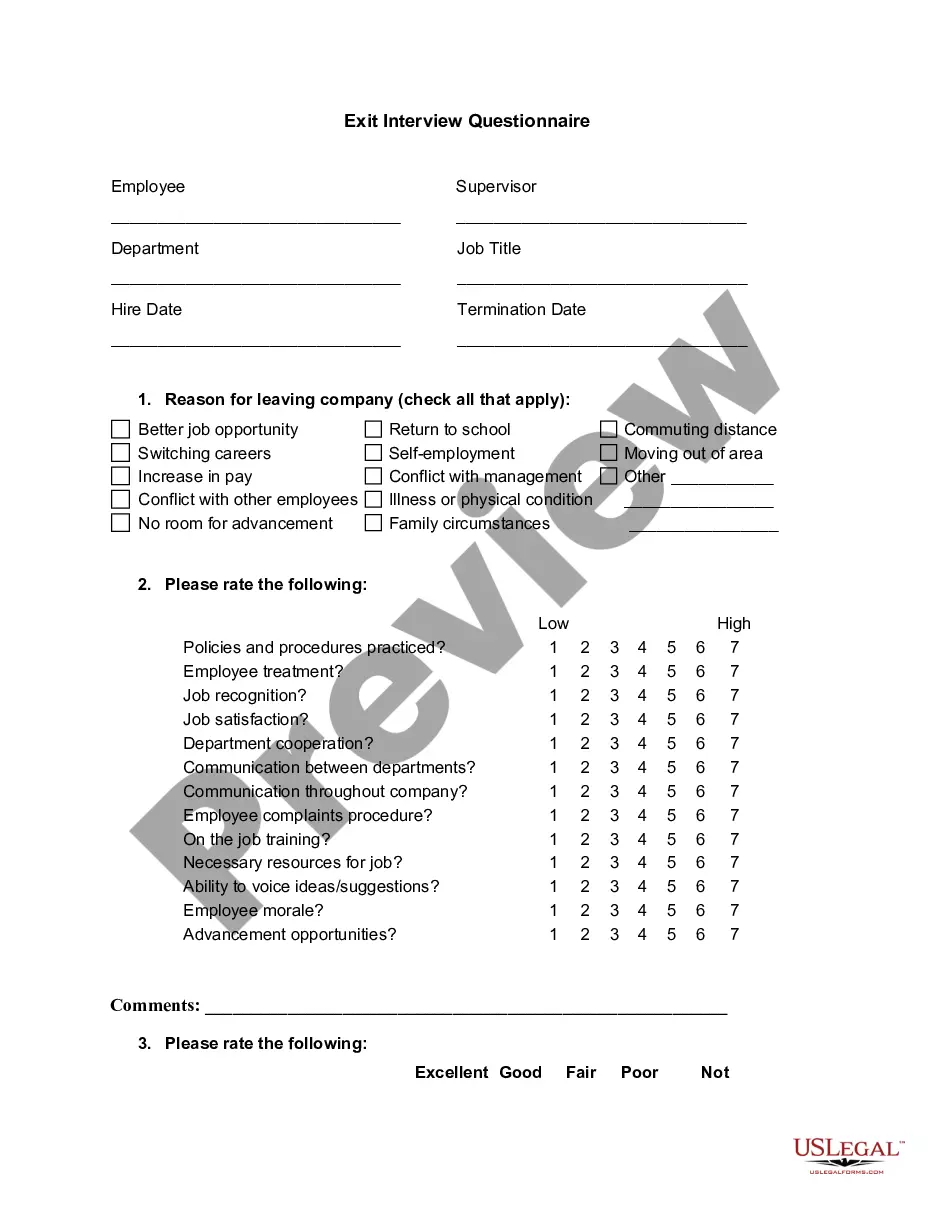
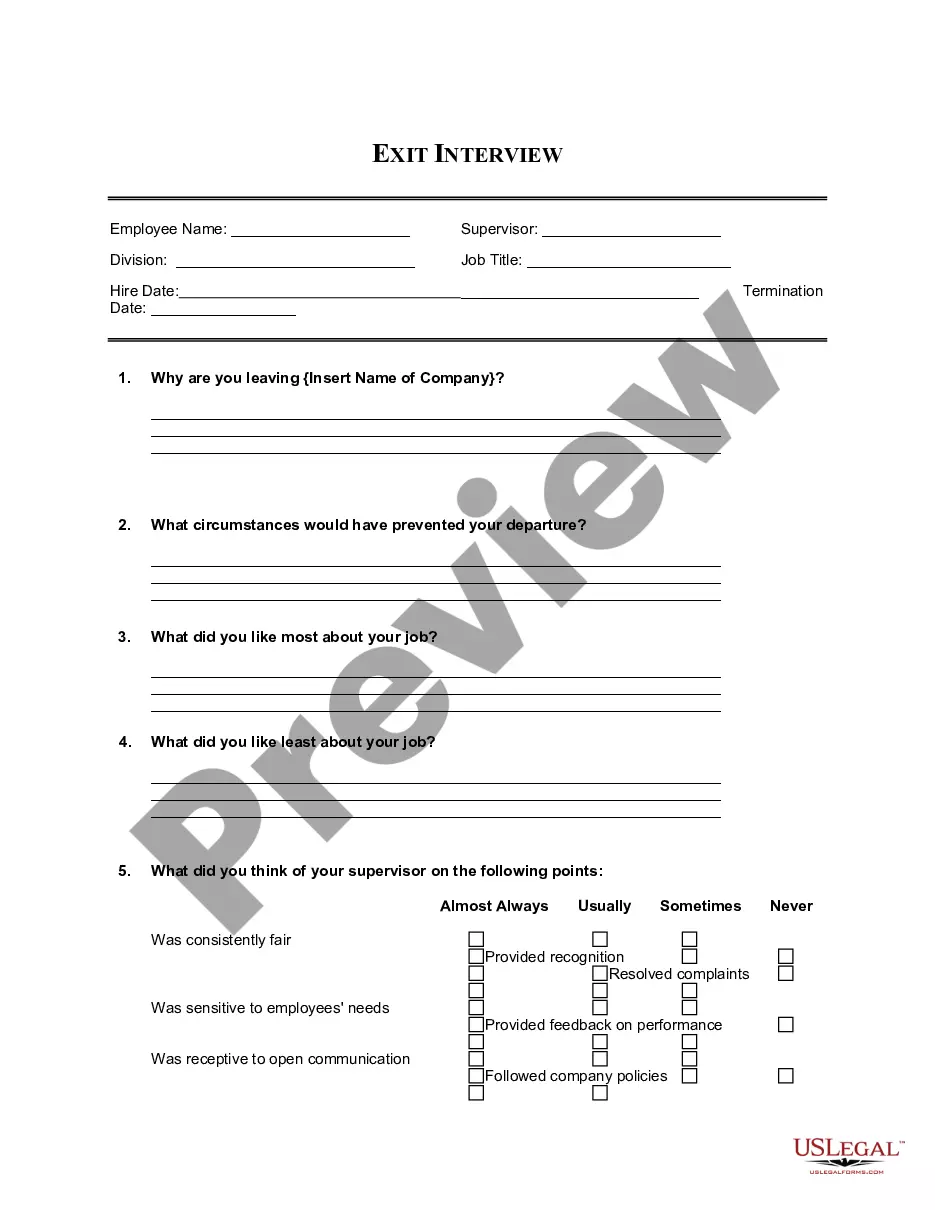
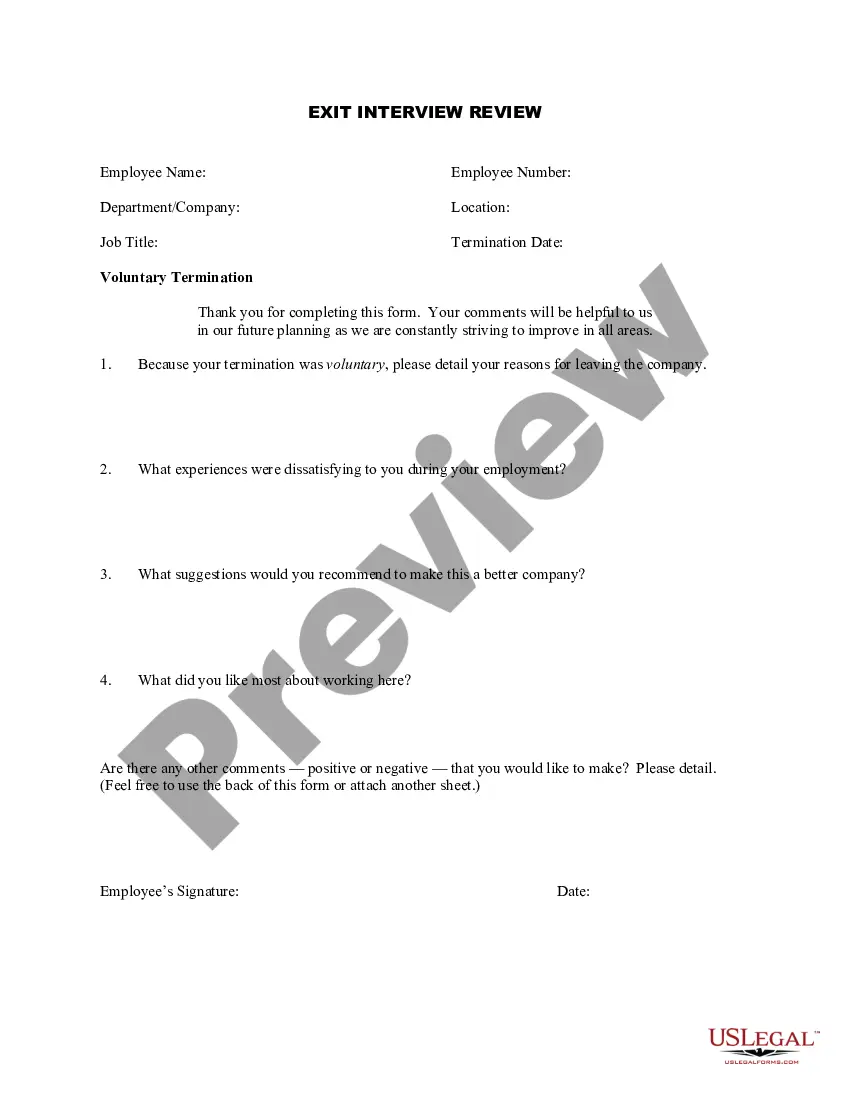
The Exit Interview Form for Manager is a critical document used by employers to evaluate an employee's experience within the company upon their departure. This form captures insights regarding the employeeâs role, performance, and overall satisfaction, ensuring that employers can identify areas for improvement and enhance workplace culture. Unlike basic exit interviews, this form is tailored for managerial feedback, highlighting key aspects of leadership and organizational dynamics.
Key components of this form
- Employee information fields: Name, Job Title, Department, and Employment Dates.
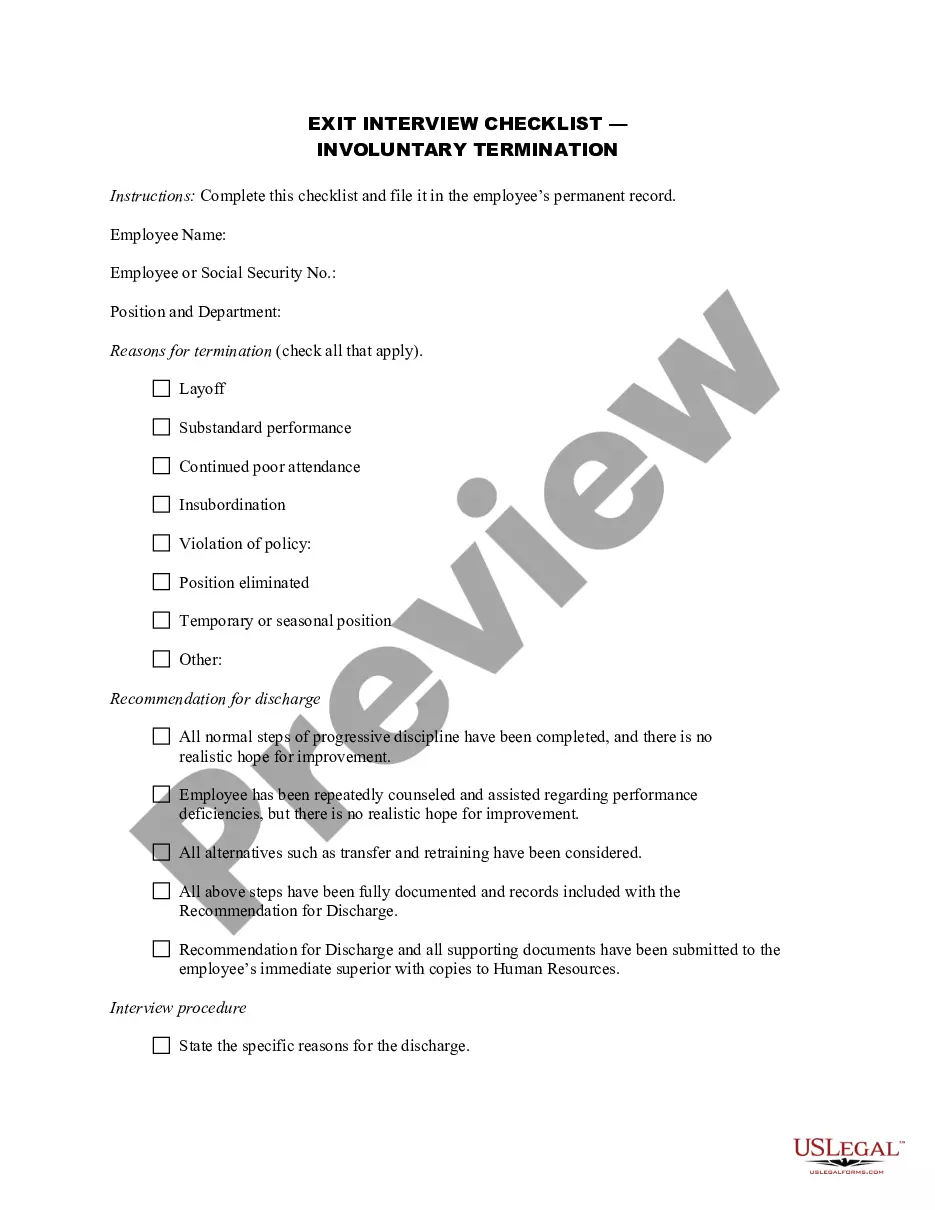
- Reason for leaving: Options to specify if the employee resigned, was laid off, or discharged.
- Questions regarding employee relations: Evaluating interactions between the employee and management.
- Salary and benefits inquiries: Collecting information about employee satisfaction with compensation and job progression.
- Final manager comments: Space for the manager to provide any additional observations or recommendations based on the employee's exit.
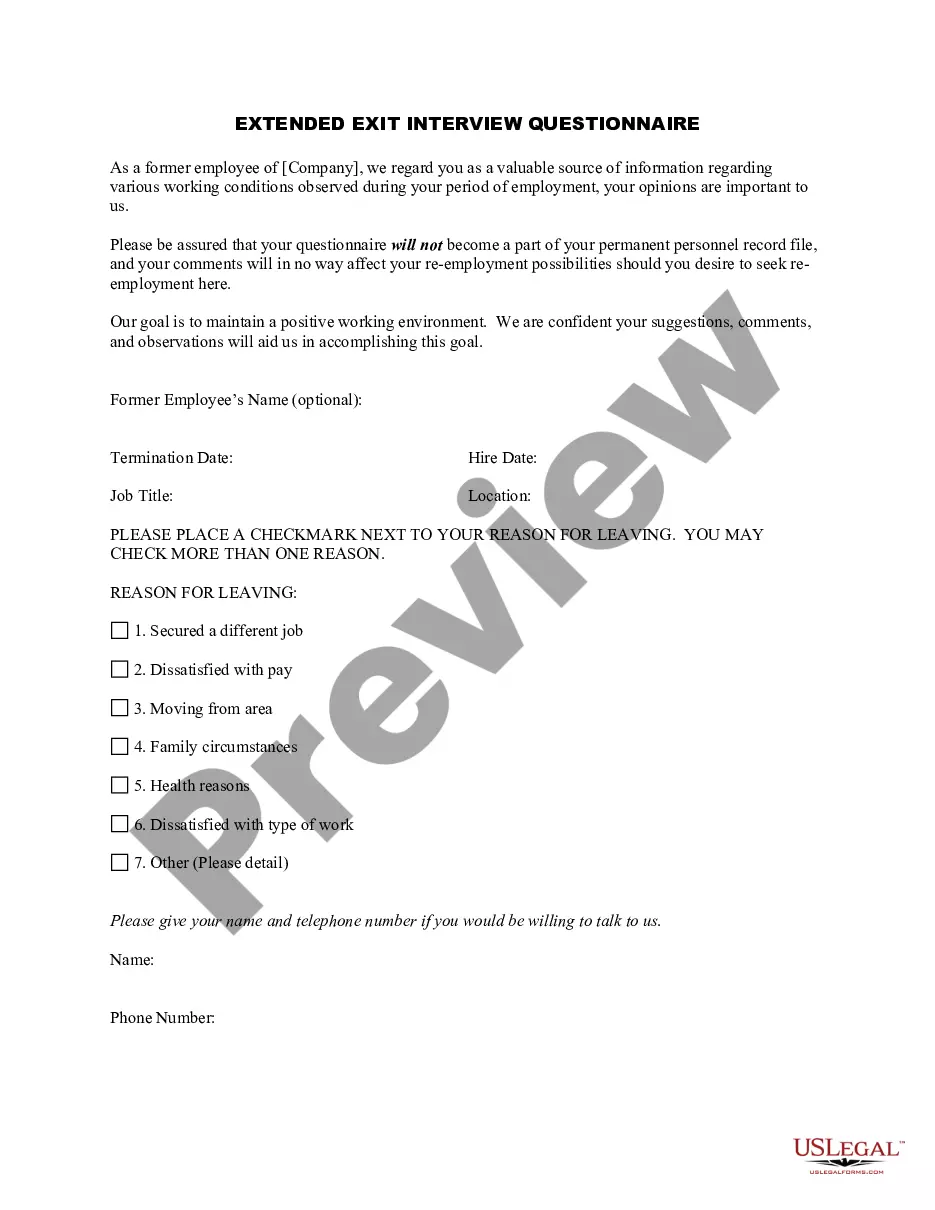
When to use this form
This form should be utilized when an employee resigns, is laid off, or is discharged from their position. It serves as a structured means to gather insights for improving employee retention, enhancing workplace culture, and identifying potential issues within the organization. The feedback collected can be pivotal during organizational planning and development initiatives.
Who should use this form
- Managers or supervisors responsible for conducting exit interviews with departing employees.
- Human resources professionals involved in employee retention strategies and organizational assessments.
- Company leadership looking to implement systematic feedback mechanisms for enhancing the work environment.
Completing this form step by step
- Enter the employee's name, job title, and department in the designated fields.
- Select the reason for the employee's departure from the provided options.
- Respond to questions about employee relations and provide the manager's signature.
- Collect feedback about salary satisfaction and potential future employment with the company.
- Ensure all fields are filled out completely before submitting the form to HR or the relevant department.
Notarization requirements for this form
This form does not typically require notarization unless specified by local law. However, having a notarized document may add an additional layer of legitimacy and accountability.
Get your form ready online
Our built-in tools help you complete, sign, share, and store your documents in one place.
Make edits, fill in missing information, and update formatting in US Legal Forms—just like you would in MS Word.
Download a copy, print it, send it by email, or mail it via USPS—whatever works best for your next step.
Sign and collect signatures with our SignNow integration. Send to multiple recipients, set reminders, and more. Go Premium to unlock E-Sign.
If this form requires notarization, complete it online through a secure video call—no need to meet a notary in person or wait for an appointment.
We protect your documents and personal data by following strict security and privacy standards.

Make edits, fill in missing information, and update formatting in US Legal Forms—just like you would in MS Word.

Download a copy, print it, send it by email, or mail it via USPS—whatever works best for your next step.

Sign and collect signatures with our SignNow integration. Send to multiple recipients, set reminders, and more. Go Premium to unlock E-Sign.

If this form requires notarization, complete it online through a secure video call—no need to meet a notary in person or wait for an appointment.

We protect your documents and personal data by following strict security and privacy standards.
Common mistakes
- Failing to collect all necessary signatures before submission.
- Leaving critical questions unanswered, which may lead to incomplete feedback.
- Not providing clear answers to qualitative questions about employee experience.
- Assuming all employees provide the same information; each exit should be uniquely assessed.
Why complete this form online
- Immediate access to the latest form templates created by licensed attorneys.
- Convenience of filling out and storing forms electronically.
- Ability to edit the form as needed, ensuring tailored and relevant responses.
- Secure storage of completed forms, maintaining confidentiality.
Legal use & context
- This form serves as a legal record of the exit process and employee feedback, which can be referenced in future employment matters.
- Ensures compliance with employment laws by documenting the reasons behind employee departures.
- Helps the organization understand turnover trends and make informed improvements to workplace policies.
Summary of main points
- The Exit Interview Form for Manager is essential for capturing feedback from departing employees.
- It aids in identifying strengths and weaknesses within management practices.
- Proper completion of the form is crucial for accurate data collection and future organizational improvements.
Looking for another form?
Form popularity
FAQ
Why are you leaving? What were the best and worst parts of your job? How happy were you with things like salary, benefits, perks, time off, the office environment, etc? How do you feel about your managers or supervisors? How do you feel about the support/training/feedback you received?
This place is 'going downhill/a sinking ship/lost without me So-and-so was mean to me/did something bad/hates it here, too SHOW ME THE MONEY! @%! Never, ever again. You could have made me stay, you know. Nobody likes working here.
Choose your interview format. Giving your departing employees a questionnaire to fill out could be less time-consuming and help avoid some uncomfortable discussions. Choose your interviewer. The person who's most familiar with your employee's work is their direct supervisor. Decide what to ask. Decide what not to ask.
Exit interviews, when conducted with care, can provide a flow of thoughtful feedback and insight on all three fronts. They can increase employee engagement and retention by revealing what works or doesn't work inside the organization.
Why are you leaving? What were the best and worst parts of your job? How happy were you with things like salary, benefits, perks, time off, the office environment, etc? How do you feel about your managers or supervisors? How do you feel about the support/training/feedback you received?
Typical exit interview questions include why you are leaving, why you decided to accept a new position, your likes and dislikes in the office, whether you would change anything about the company, whether you would recommend the company to others, and what suggestions you might have for improvement.
Do take the interview seriously. When attending this interview, you are still part of that organization. Do give constructive feedback. Do write notes before. Do remain professional at all times. Do say thank you.
Understand why people leave your organization. Increase managers' accountability for employee retention. Collect actionable data for increasing retention and organizational effectiveness. Identify and monitor any illegal or unethical practices. Promote goodwill in the workforce.