Motion JNOV
Understanding this form
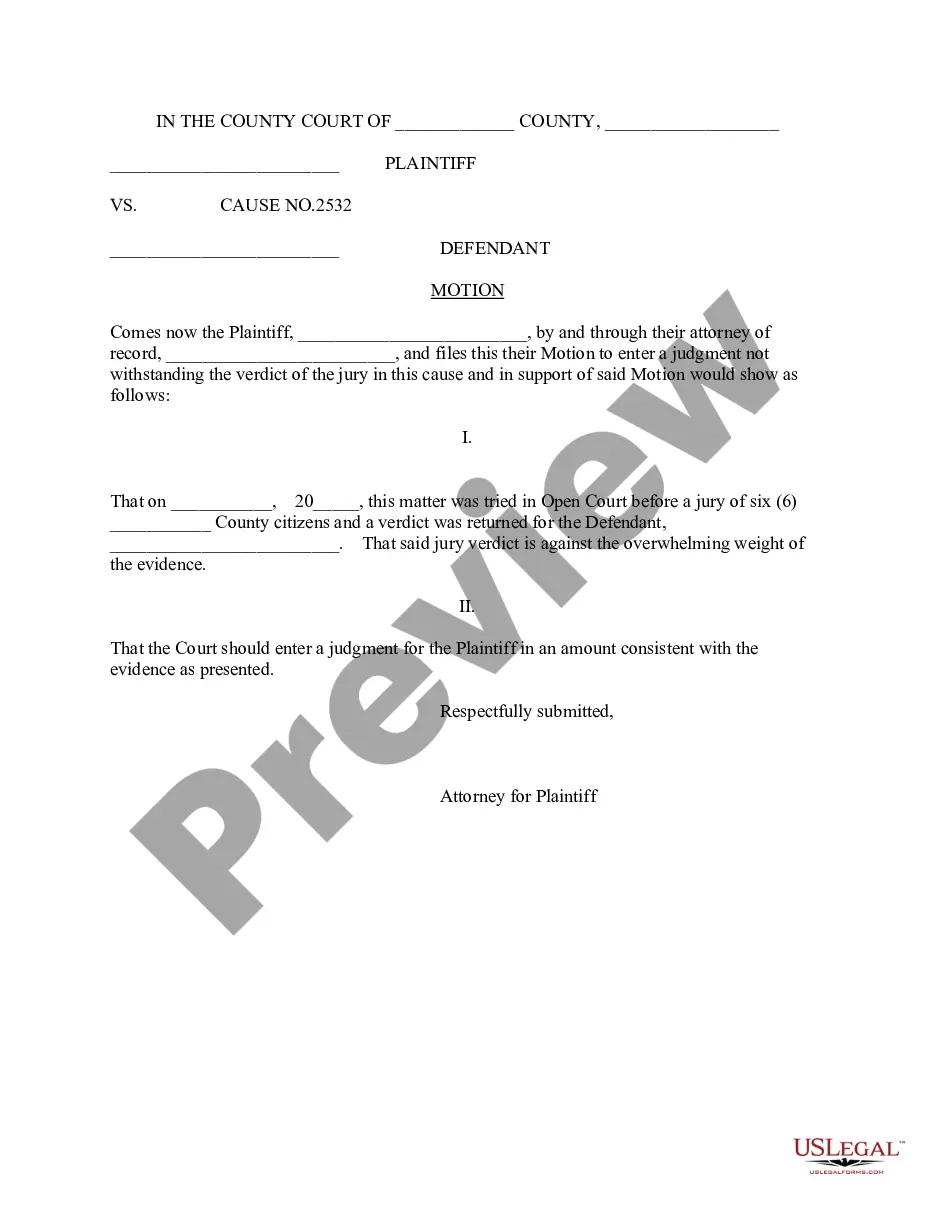
The Motion JNOV (Judgment Notwithstanding the Verdict) is a legal document filed by the plaintiff in a civil case after a jury has rendered a verdict. This motion argues that the jury's decision is not supported by the overwhelming evidence presented during the trial. It differs from other post-trial motions as it specifically seeks to overturn a jury's verdict, asking the court to enter judgment in favor of the plaintiff instead.
Form components explained
- Caption: The title area that identifies the parties involved, including the case number.
- Introduction: States the plaintiff's identity and legal representation.
- Factual Background: Details about the trial date and the jury's verdict.
- Argument for JNOV: A section where the plaintiff asserts that the jury's verdict is against the overwhelming weight of the evidence.
- Prayer for Relief: Requests the court to issue a judgment based on the evidence presented during trial.
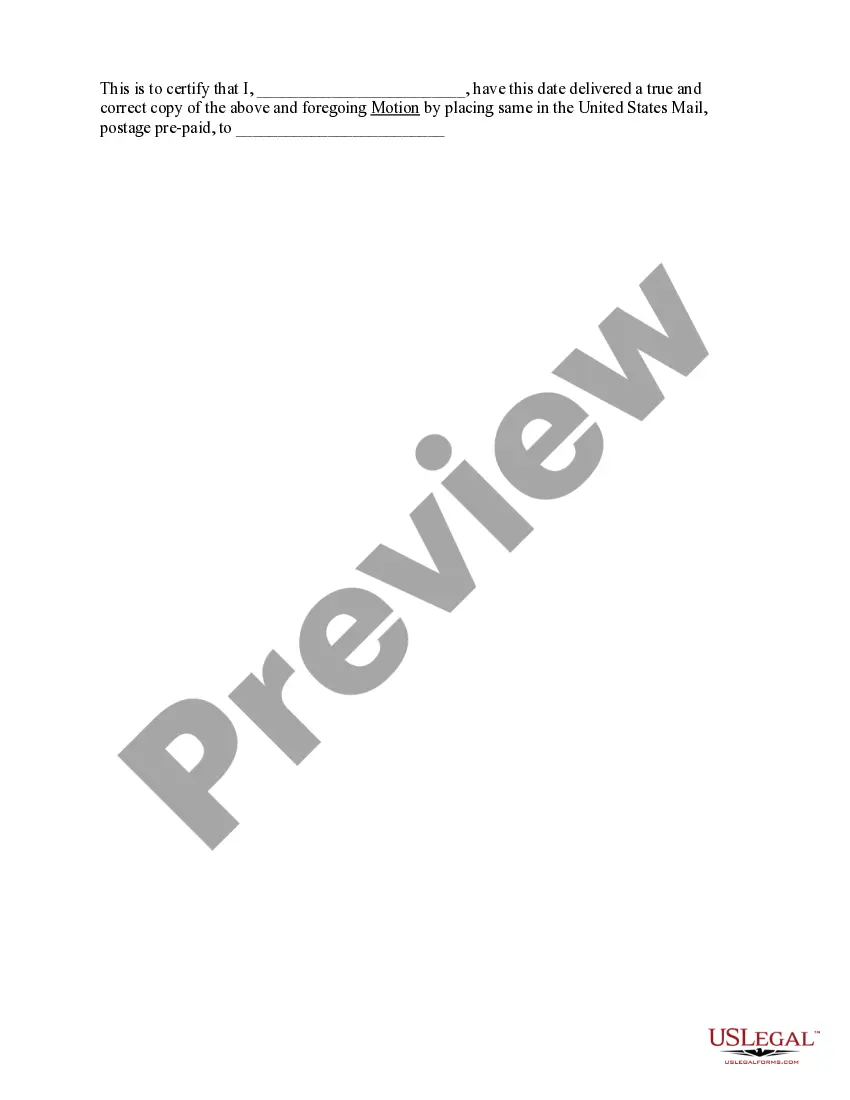
- Certificate of Service: Confirms that a copy of the motion has been delivered to the defendant.
When to use this form
This form is used when a plaintiff believes that the jury's verdict is unjust or unsupported by the evidence. It is relevant in situations where the plaintiff seeks to have a court review and potentially overturn that verdict to provide a more favorable judgment based on the facts presented during the trial.
Who this form is for
- Plaintiffs who have received an unfavorable jury verdict in a civil trial.
- Attorneys representing plaintiffs seeking to challenge a jury's decision.
- Individuals involved in a legal dispute where they believe the jury's conclusion is clearly erroneous.
How to prepare this document
- Identify the parties involved in the case by filling in the names in the caption section.
- Specify the trial date where the jury verdict was rendered.
- Enter the jury's verdict and explain why it is against the overwhelming weight of evidence.
- Request the court to grant judgment in favor of the plaintiff based on the factual claims.
- Include the date of completion and your attorney's information for formal submission.
Notarization guidance
This form usually doesn’t need to be notarized. However, local laws or specific transactions may require it. Our online notarization service, powered by Notarize, lets you complete it remotely through a secure video session, available 24/7.
Get your form ready online
Our built-in tools help you complete, sign, share, and store your documents in one place.
Make edits, fill in missing information, and update formatting in US Legal Forms—just like you would in MS Word.
Download a copy, print it, send it by email, or mail it via USPS—whatever works best for your next step.
Sign and collect signatures with our SignNow integration. Send to multiple recipients, set reminders, and more. Go Premium to unlock E-Sign.
If this form requires notarization, complete it online through a secure video call—no need to meet a notary in person or wait for an appointment.
We protect your documents and personal data by following strict security and privacy standards.

Make edits, fill in missing information, and update formatting in US Legal Forms—just like you would in MS Word.

Download a copy, print it, send it by email, or mail it via USPS—whatever works best for your next step.

Sign and collect signatures with our SignNow integration. Send to multiple recipients, set reminders, and more. Go Premium to unlock E-Sign.

If this form requires notarization, complete it online through a secure video call—no need to meet a notary in person or wait for an appointment.

We protect your documents and personal data by following strict security and privacy standards.
Common mistakes to avoid
- Failing to include the correct case number in the caption.
- Not clearly stating the reasons why the jury's verdict should be overturned.
- Missing signatures or certification of service to the defendant.
- Submitting the motion after the deadline set by local laws.
Benefits of using this form online
- Convenient access to the latest legal form templates prepared by licensed attorneys.
- Editable online format allows for quick adjustments and personalization.
- Secure and reliable storage of your completed forms for future reference.
- Instant download options provide immediate access to your legal documents.
What to keep in mind
- The Motion JNOV is designed to overturn a jury's verdict that is perceived as unjust.
- Proper completion of this form requires attention to detail regarding factual and legal arguments.
- Understanding the procedural rules in your state is essential for effective use.
Looking for another form?
Form popularity
FAQ
After you complete your motion, you must file it with the court.You must then serve (mail) a copy of your filed motion (including all exhibits and the date, time, and place of hearing) to all other parties in the case. If a party is represented by an attorney, mail the motion directly to the attorney's office.
A JNOV is proper when the court finds that the party bearing the BURDEN OF PROOF fails to make out a PRIMA FACIE case (a case that on first appearance will prevail unless contradicted by evidence). To be granted relief by a JNOV, a party must make a motion seeking that relief.
There's no exact time limit on how fast a judge must do his work. In the states and federal courts I am familiar with, the lawyer files a motion and sets it for hearing about six weeks later, more or less, depending on the court's docket.
Motions for judgment on the pleadings are governed by the same standard as a motion to dismiss for failure to state a claim under Rule 12(b)(6).Thus, counsel is able to timely respond to a lawsuit but, yet, preserve his client's rights to seek dismissal for the plaintiff's failure to state a claim.
Motion to Dismiss an attempt to get the judge to dismiss a charge or the case. Motion to Suppress an attempt to keep certain statements or evidence from being introduced as evidence. Motion for Change of Venue may be made for various reasons including pre-trial publicity.
Complaint. A lawsuit begins when a plaintiff (the party suing) files a complaint against a defendant (the party being sued.) Answer. The answer is the defendant's written response to the plaintiff's complaint. Counterclaim. Cross-claim. Amended Pleadings.
A party may file a motion for judgment on the pleadings on the basis that no answer has been filed, or that the pleadings disclose that there are no material issues of fact to be resolved and that party is entitled to judgment as a matter of law.
Motions are not pleadings but are requests for the judge to make a legal ruling. Some of the most common pre-trial motions include: Motion to Discover. A motion by which one party seeks to gain information from the adverse party.
A motion for a judgment notwithstanding the verdict is often filed together with a motion for a new trial by the losing party in response to the jury's verdict. A judge's decision to grant or deny a motion for JNOV is often reviewable on appeal.