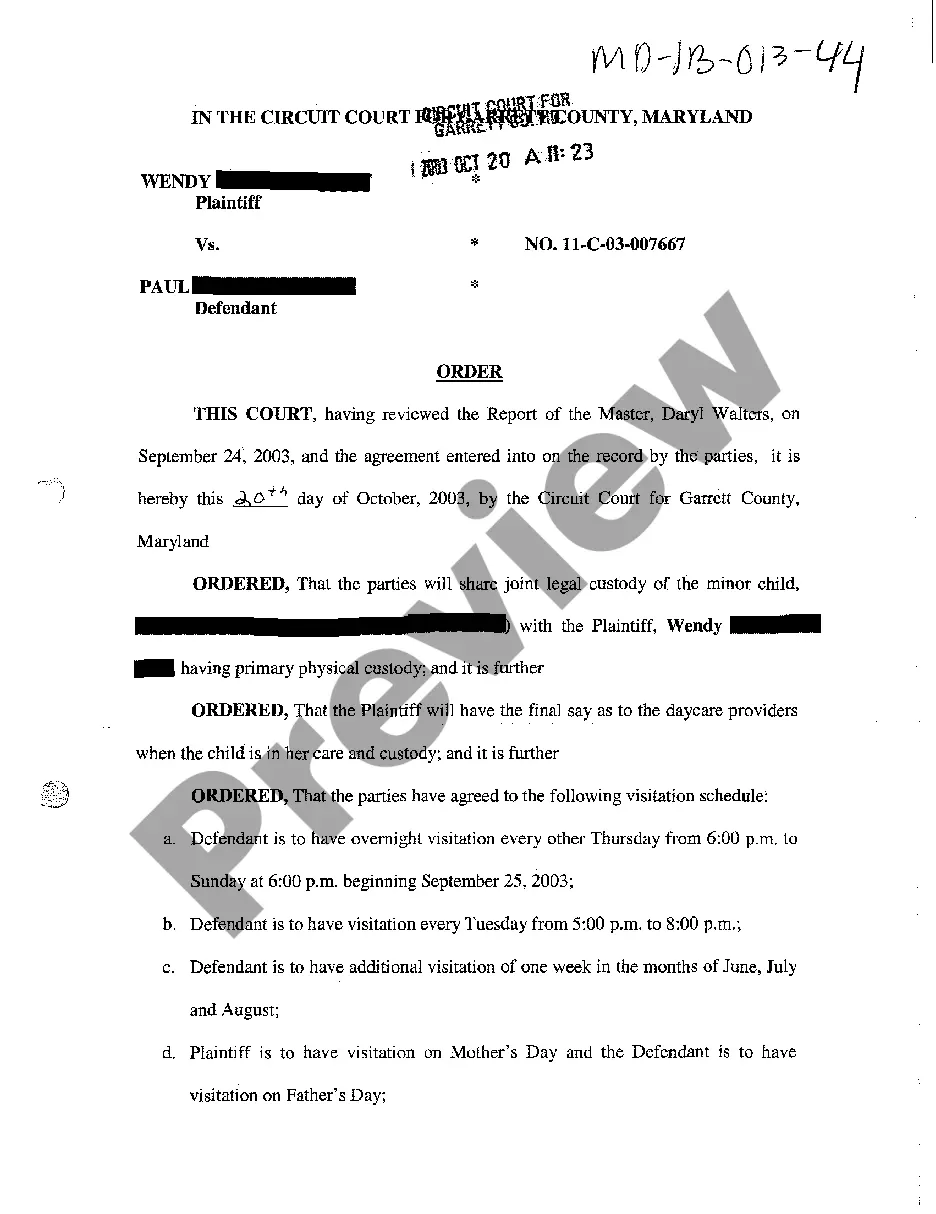
Knowingly
About this form
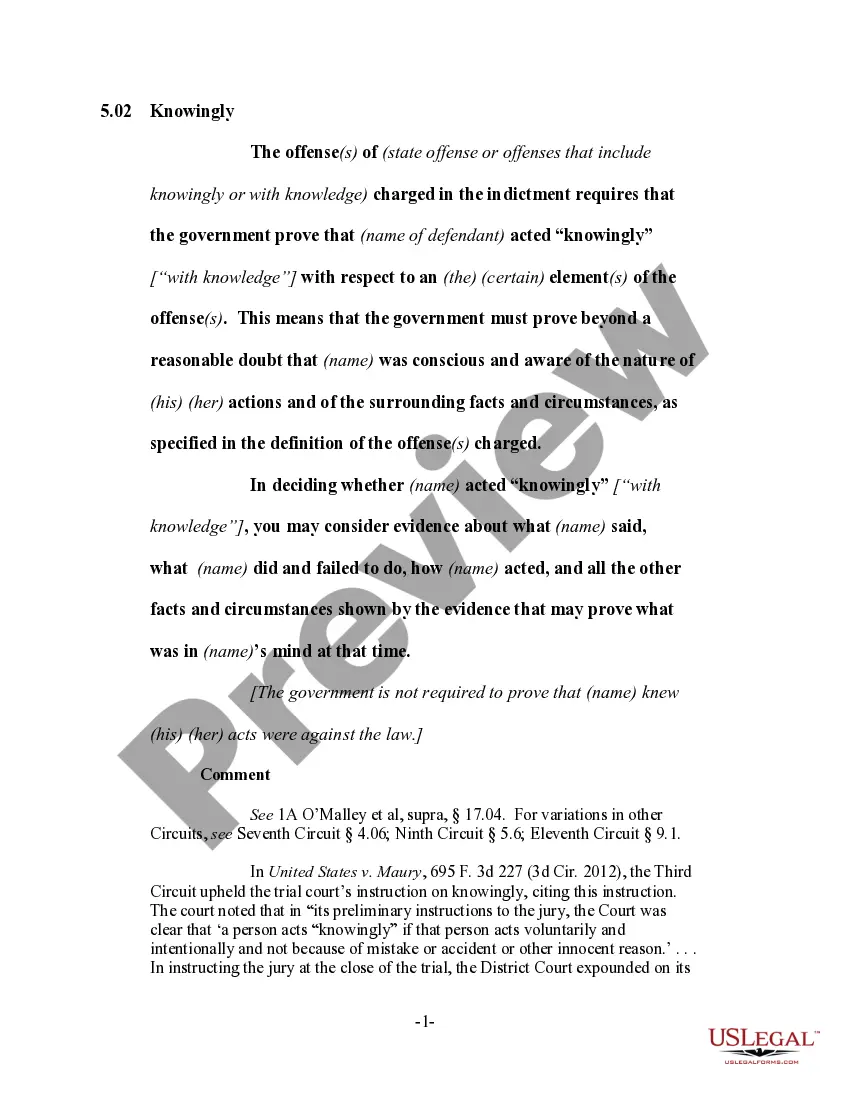
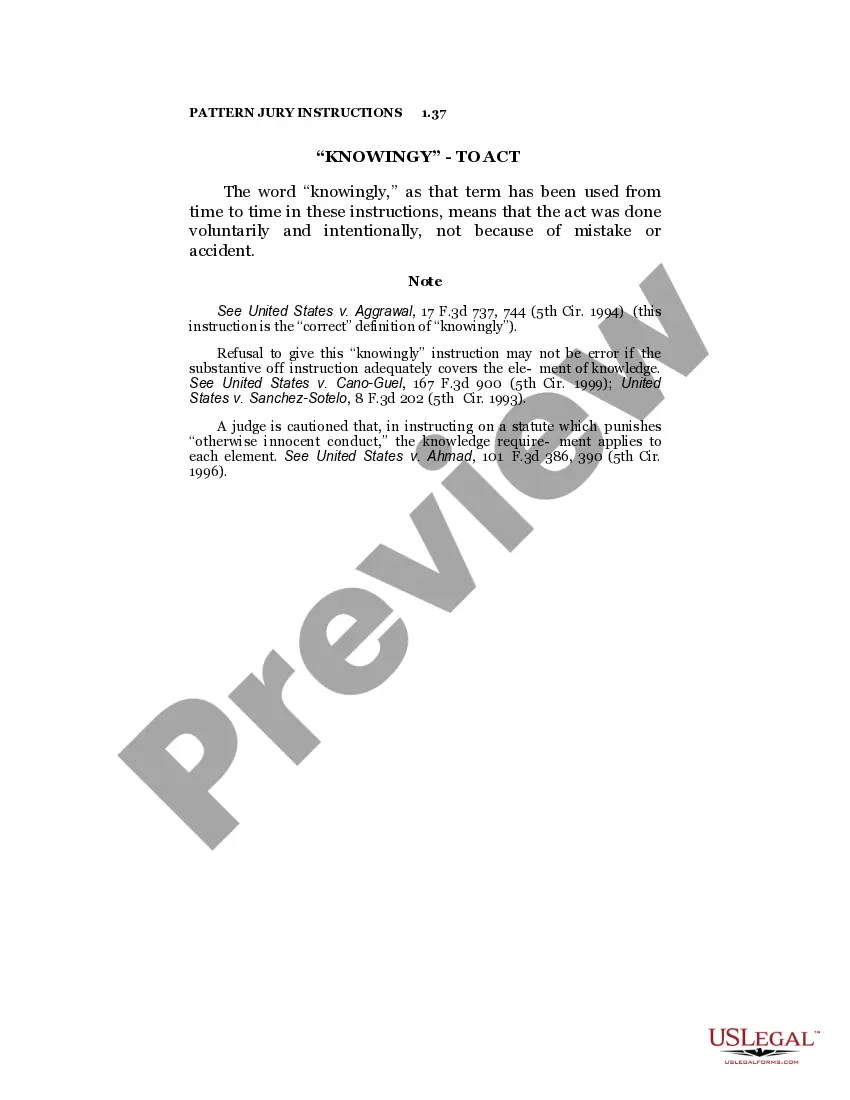
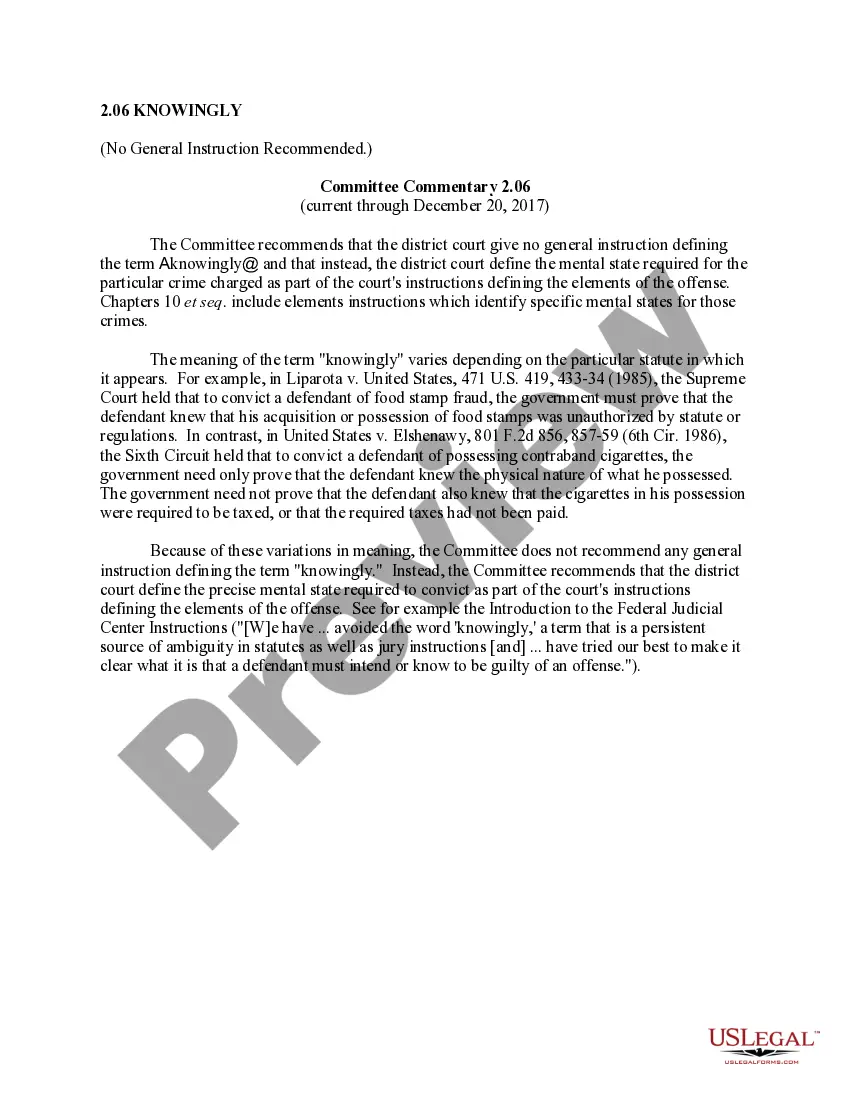
The Knowingly form is a legal instruction used in the context of criminal jury trials. It clarifies the standard of proof required for the prosecution to establish that a defendant acted "knowingly" or "with knowledge" regarding specific elements of the offense charged. This form is essential in distinguishing between different mental states in criminal law, particularly in demonstrating a defendant's awareness of the nature of their actions and the circumstances surrounding them. Unlike other forms, it specifically addresses how the law interprets "knowingly" as a mental state without necessarily requiring the defendant to know their actions were unlawful.
Key parts of this document
- Definition of "knowingly": outlines what it means for a defendant to act with knowledge regarding the crime.
- Evidence consideration: detailed instructions on how jurors should evaluate a defendant's mental state based on behaviors and statements.
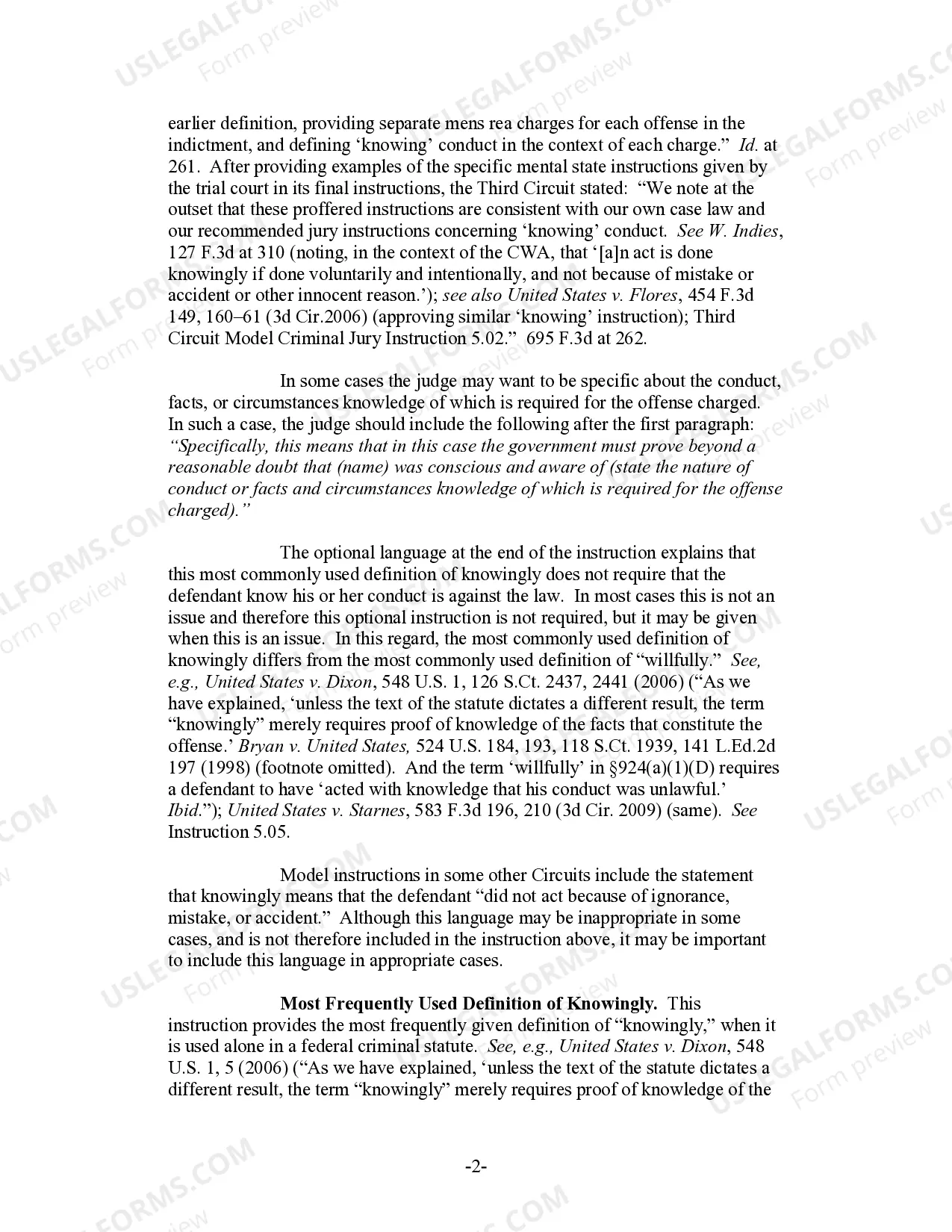
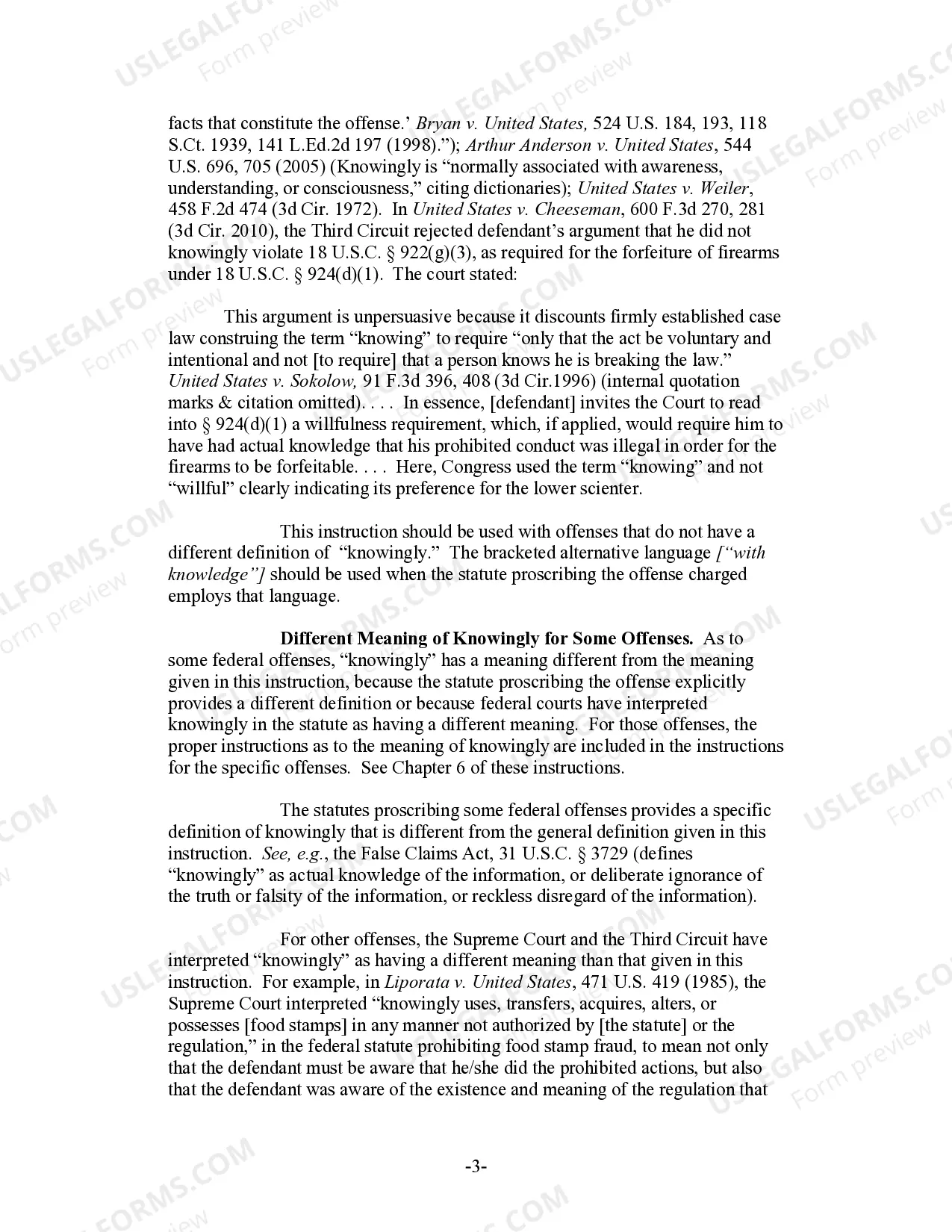
- Clarification of legal requirements: specifies that knowledge of the law being broken is not necessary for a conviction.
- Variations based on jurisdiction: notes that definitions and interpretations may vary in different circuits.
- Instructions for specific cases: allows for customization based on the unique elements of an offense.
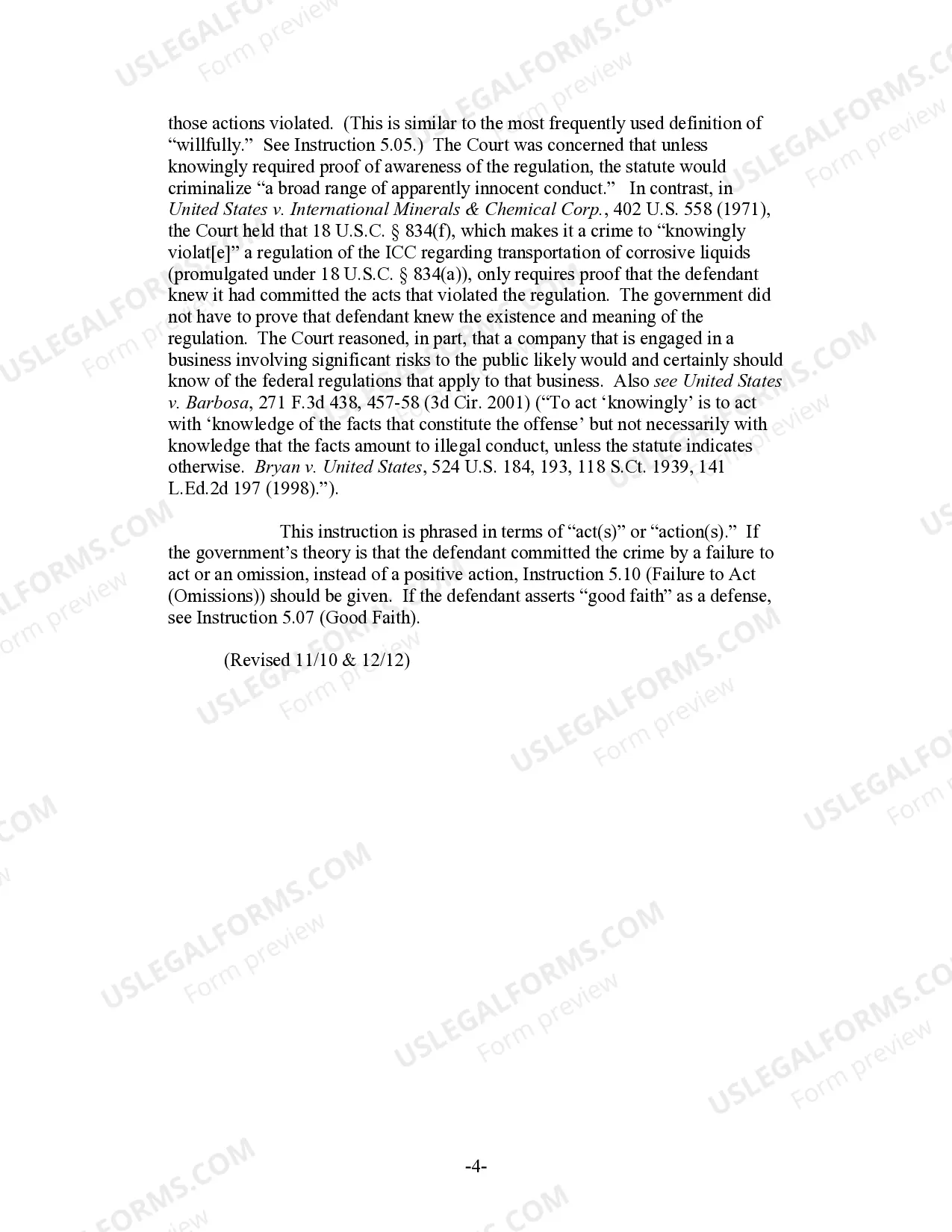

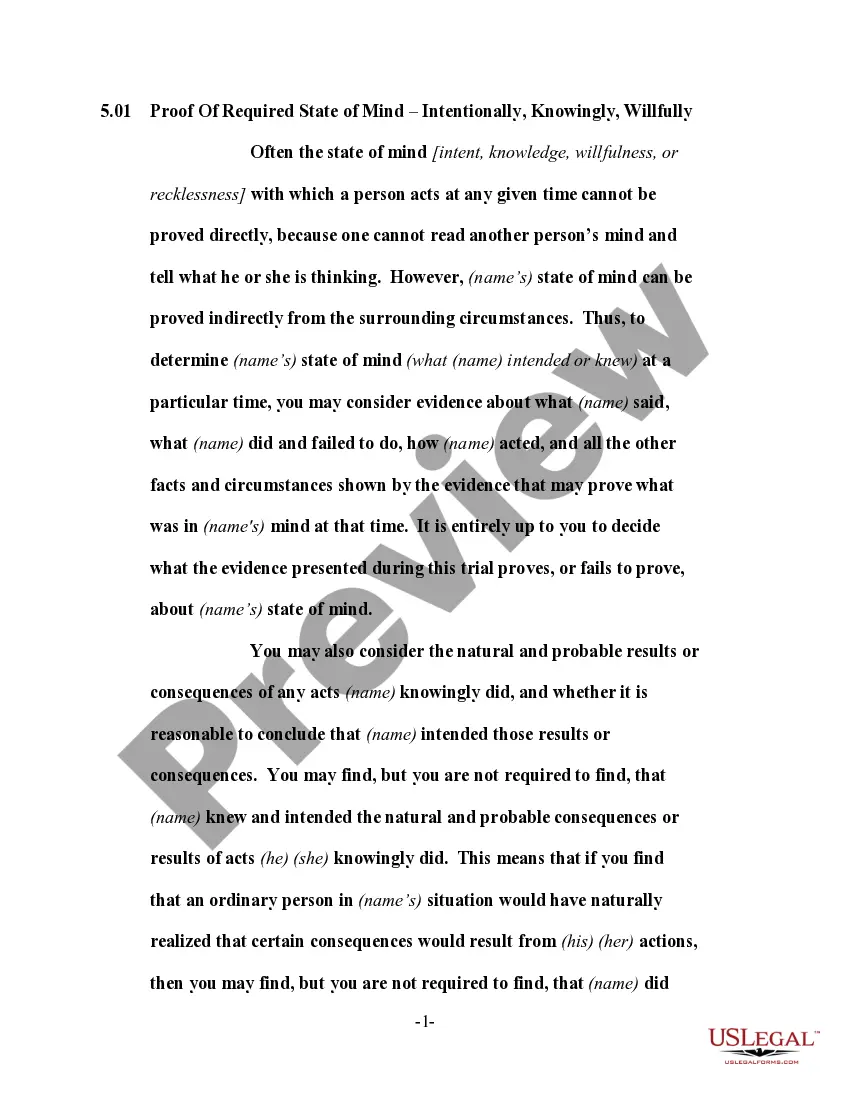
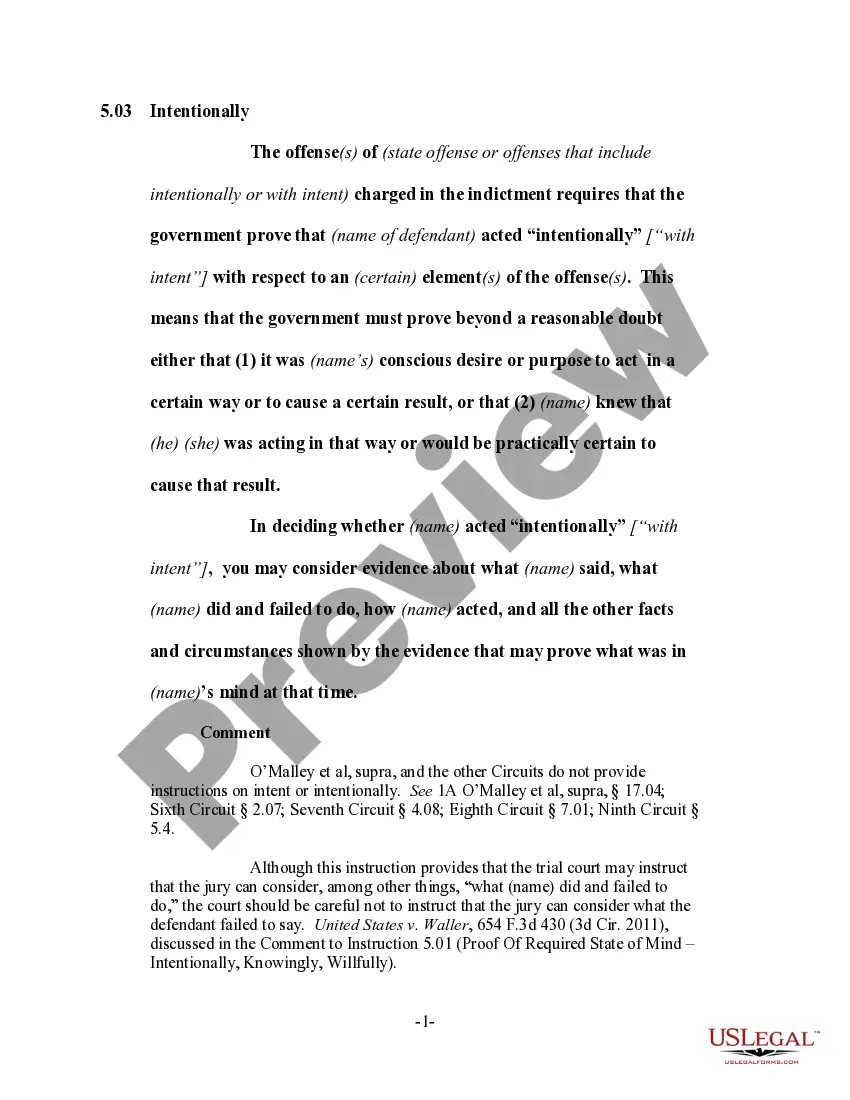
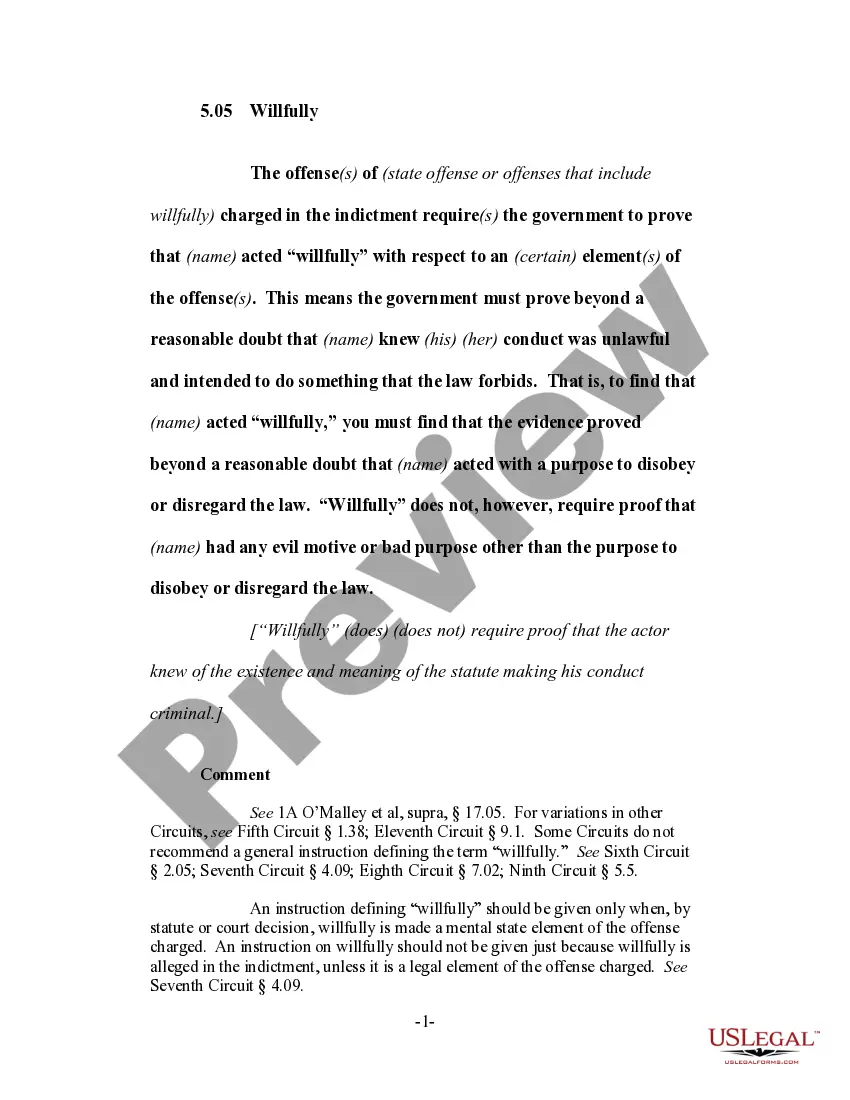
When to use this document
This form should be used in criminal trials where the prosecution must establish the mental state of "knowingly" as part of their case. It is applicable when the defendant's awareness of their actions is a critical element in determining guilt, particularly in offenses where the nature of the conduct and the related facts are crucial to establishing intent. Examples include drug offenses, fraud cases, or any situation where the knowledge of one's actions directly relates to the charges being faced.
Intended users of this form
- Judges who need to provide jury instructions in a criminal trial.
- Prosecutors aiming to clarify the mental state required for conviction.
- Defense attorneys seeking to understand the implications of "knowingly" in a criminal defense strategy.
- Legal scholars studying criminal law and jury instructions.
Instructions for completing this form
- Identify the offense(s): clarify the specific crime(s) for which the defendant is being charged.
- Draft the definition: clearly articulate what "knowingly" means within the context of the offense.
- Gather evidence: compile relevant statements and actions of the defendant that demonstrate their mental state.
- Include specific facts: if applicable, specify the knowledge required regarding particular facts or circumstances relevant to the offense.
- Customize instructions: adjust the language as necessary to fit the specific legal standards of the jurisdiction.
Is notarization required?
This form usually doesn’t need to be notarized. However, local laws or specific transactions may require it. Our online notarization service, powered by Notarize, lets you complete it remotely through a secure video session, available 24/7.
Get your form ready online
Our built-in tools help you complete, sign, share, and store your documents in one place.
Make edits, fill in missing information, and update formatting in US Legal Forms—just like you would in MS Word.
Download a copy, print it, send it by email, or mail it via USPS—whatever works best for your next step.
Sign and collect signatures with our SignNow integration. Send to multiple recipients, set reminders, and more. Go Premium to unlock E-Sign.
If this form requires notarization, complete it online through a secure video call—no need to meet a notary in person or wait for an appointment.
We protect your documents and personal data by following strict security and privacy standards.

Make edits, fill in missing information, and update formatting in US Legal Forms—just like you would in MS Word.

Download a copy, print it, send it by email, or mail it via USPS—whatever works best for your next step.

Sign and collect signatures with our SignNow integration. Send to multiple recipients, set reminders, and more. Go Premium to unlock E-Sign.

If this form requires notarization, complete it online through a secure video call—no need to meet a notary in person or wait for an appointment.

We protect your documents and personal data by following strict security and privacy standards.
Mistakes to watch out for
- Failing to provide a clear definition of "knowingly": ensure the jury understands the legal meaning.
- Overlooking the requirement for evidence: not including sufficient evidence to support claims of knowledge.
- Neglecting jurisdictional variations: using a standard form without adapting for local legal nuances.
- Assuming knowledge of illegality is necessary: misunderstanding the distinction between "knowingly" and "willfully."
Benefits of using this form online
- Easy access to professionally drafted instructions tailored by licensed attorneys.
- Convenient download options allow for immediate use in legal proceedings.
- Editable templates ensure that you can customize the form to meet specific case needs.
- Secure format helps protect sensitive information while maintaining legal integrity.
Looking for another form?



Form popularity
FAQ
Committing a Crime "Knowingly" Many criminal laws require a person to "knowingly" engage in illegal activity. Which part of the offense needs to be done knowingly depends on the crime. For example, a drug trafficking law might require that the person "knowingly" import an illegal drug into the United States.
§ 561.314 Knowingly. The term knowingly, with respect to conduct, a circumstance, or a result, means that a person has actual knowledge, or should have known, of the conduct, the circumstance, or the result.
In other words, a person acts knowingly if he is aware that it is practically certain that his conduct will cause a specific result. For example: I fire my pistol into a crowd of people, knowing that the result will almost certainly be that a person is shot.
Black's Law Dictionary defines ?knowingly? as ?with knowledge; consciously; intelligently; willfully; inten- tionally. An individual acts 'knowingly' when he acts with awareness of the nature of his conduct.?
Knowing criminal intent based upon knowing means an awareness of the consequences. For example, stabbing someone with a knife is done knowingly by an adult when it can be proved that he knew that a knife would pierce the skin of another and cause injury.
For example, stabbing someone with a knife is done knowingly by an adult when it can be proved that he knew that a knife would pierce the skin of another and cause injury. It might also include writing a check with insufficient funds in the account to cover the amount of the check.
As in other situations, to commit an act "knowingly" is to do so with knowledge or awareness of the facts or situation, and not because of mistake, accident or some other innocent reason. See Fifth Circuit Pattern Jury Instructions, § 1.35 (1990). Knowledge of the criminal statute governing the conduct is not required.