General Ledger
Understanding this form
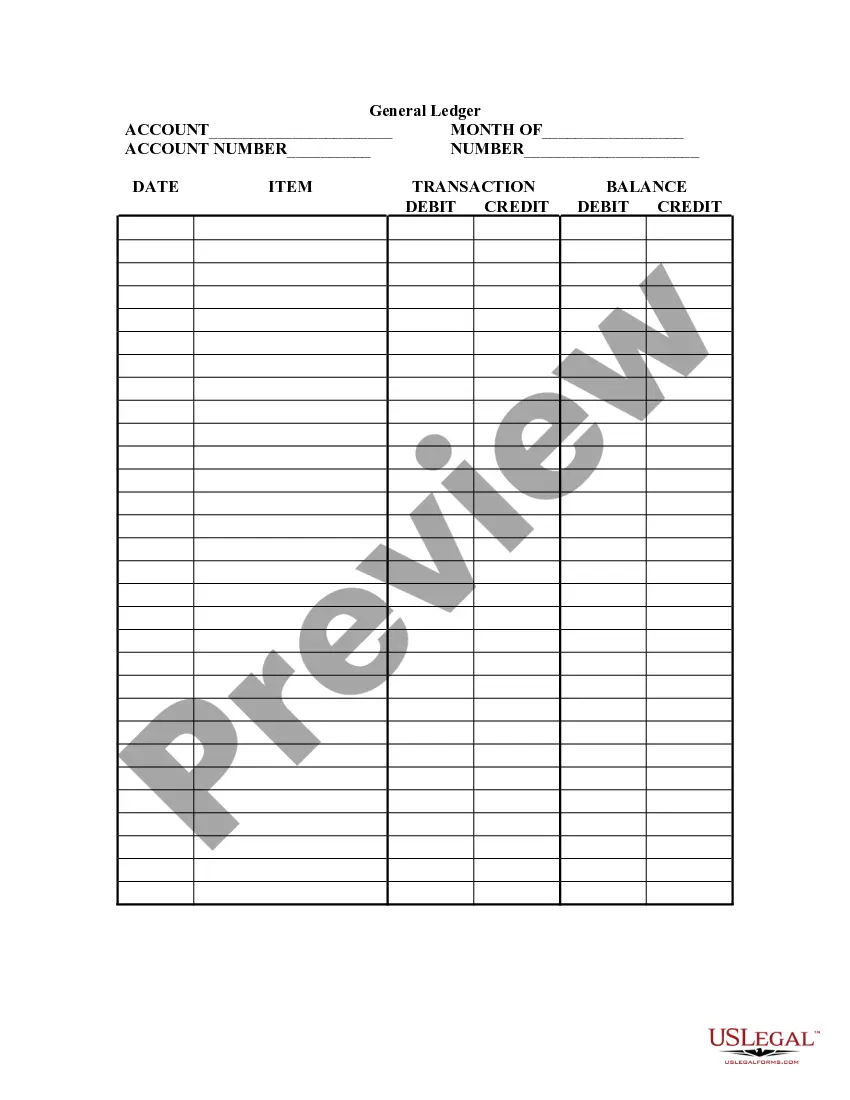
A general ledger is a comprehensive record summarizing all financial transactions for a business. It serves as the main accounting record, detailing the balancing of assets, liabilities, revenues, and expenses. The general ledger records both debit and credit transactions, distinguishing it from other financial documents like journals or trial balances. By maintaining an accurate general ledger, companies can ensure their financial accountability and be prepared for audits or tax assessments.
Form components explained
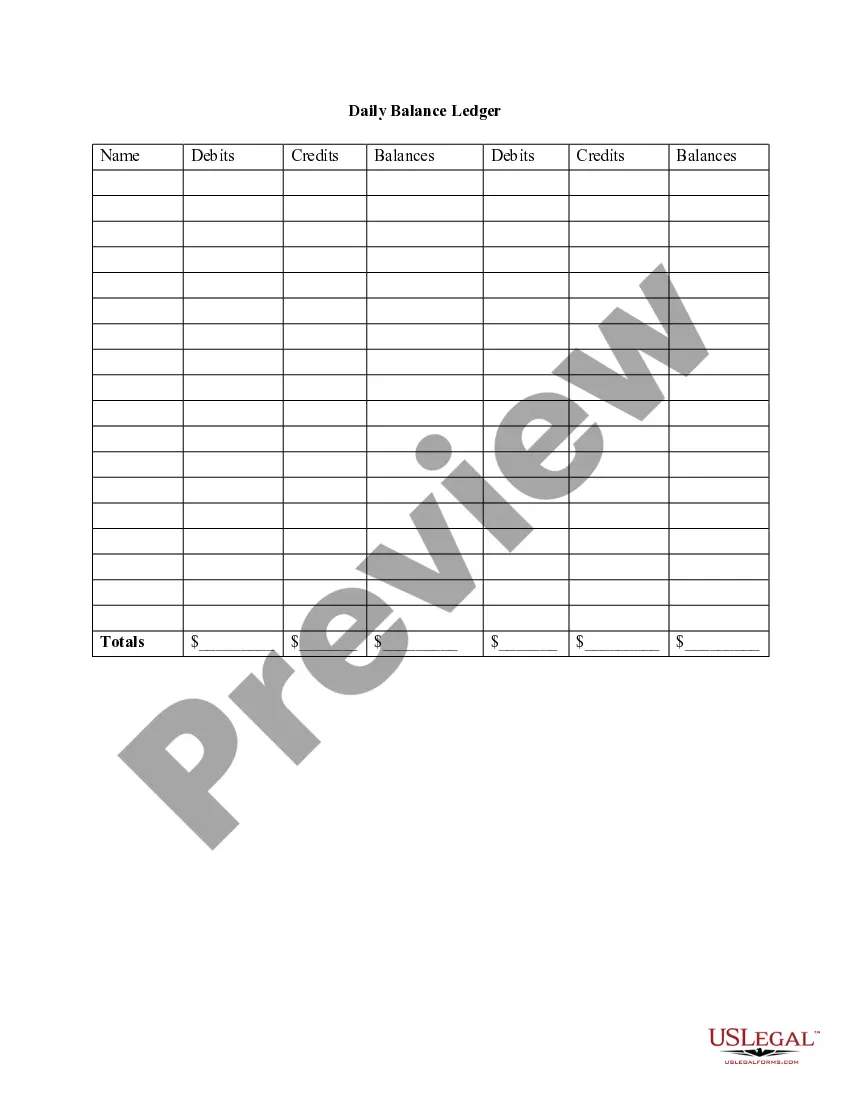
- Account Name: The name of the specific account being recorded.
- Account Number: A unique identifier for the account.
- Transaction Date: The date on which the transaction occurred.
- Description of Transaction: A brief explanation of the transaction's nature.
- Debit and Credit Fields: Spaces to record debit and credit amounts for each transaction.
- Balance: The running total of the account after each transaction is recorded.

When to use this form
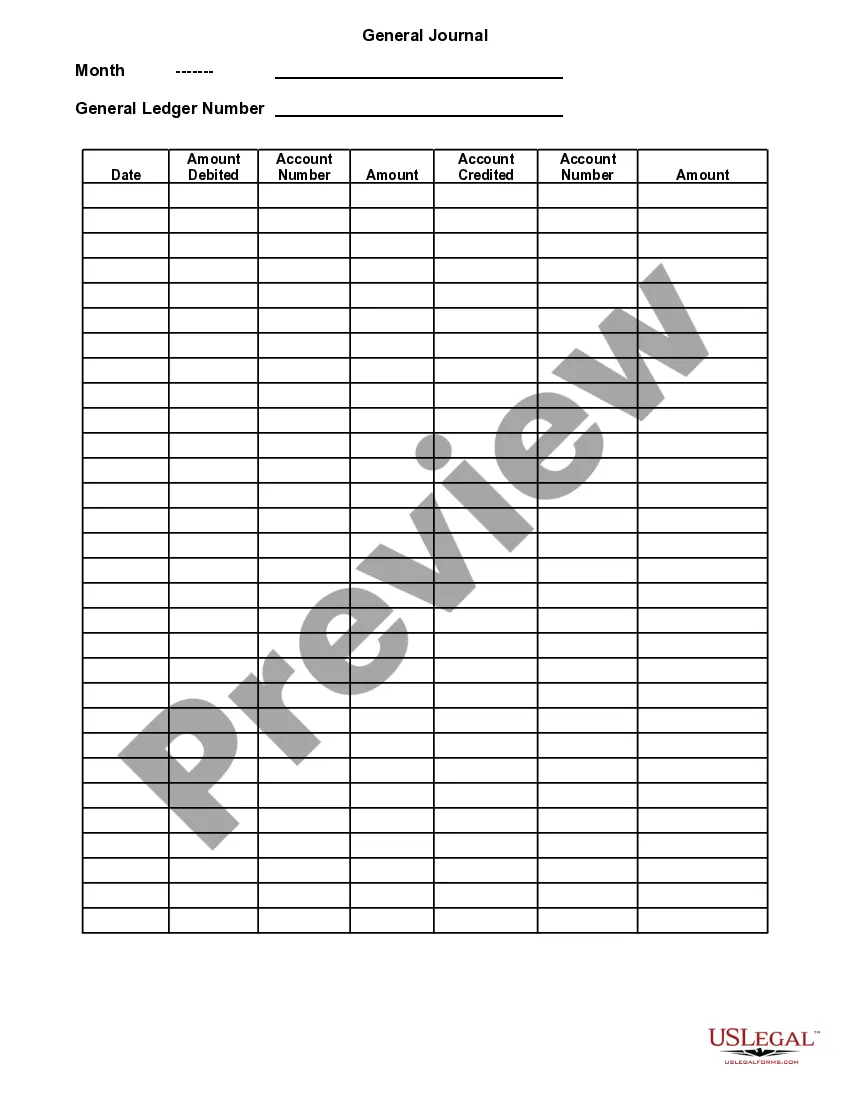
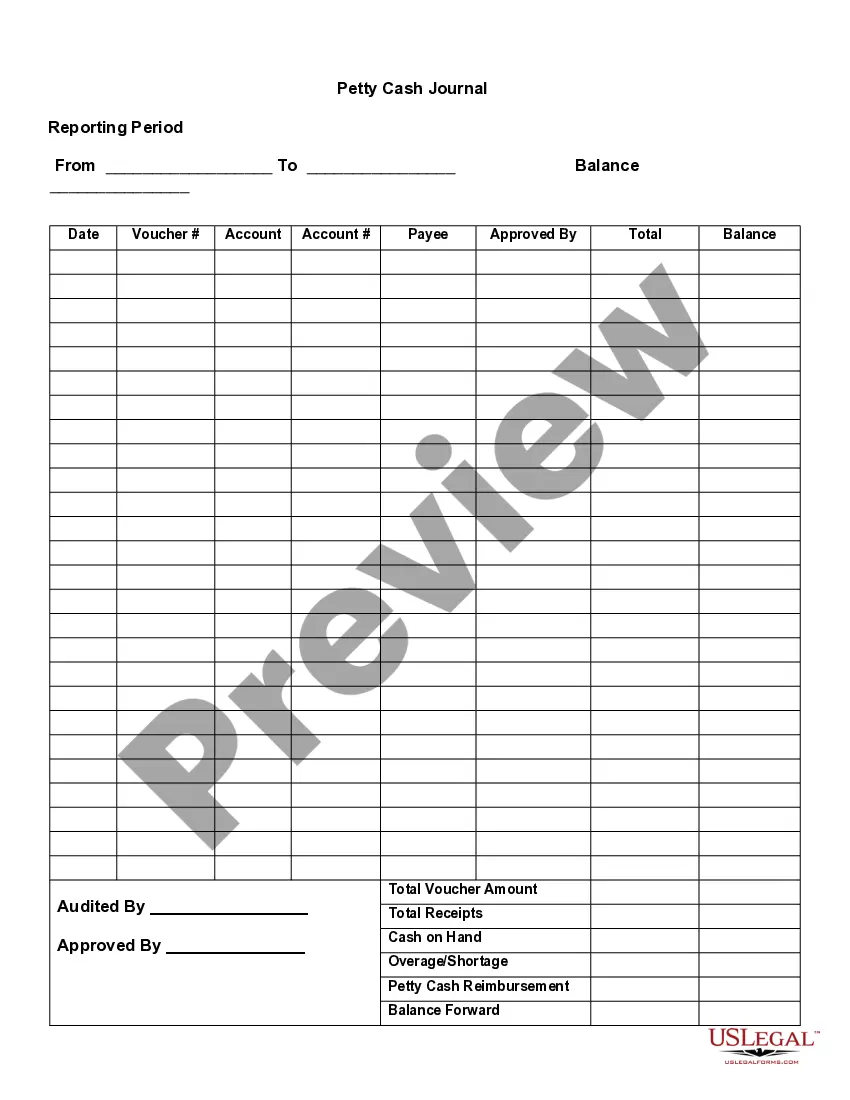
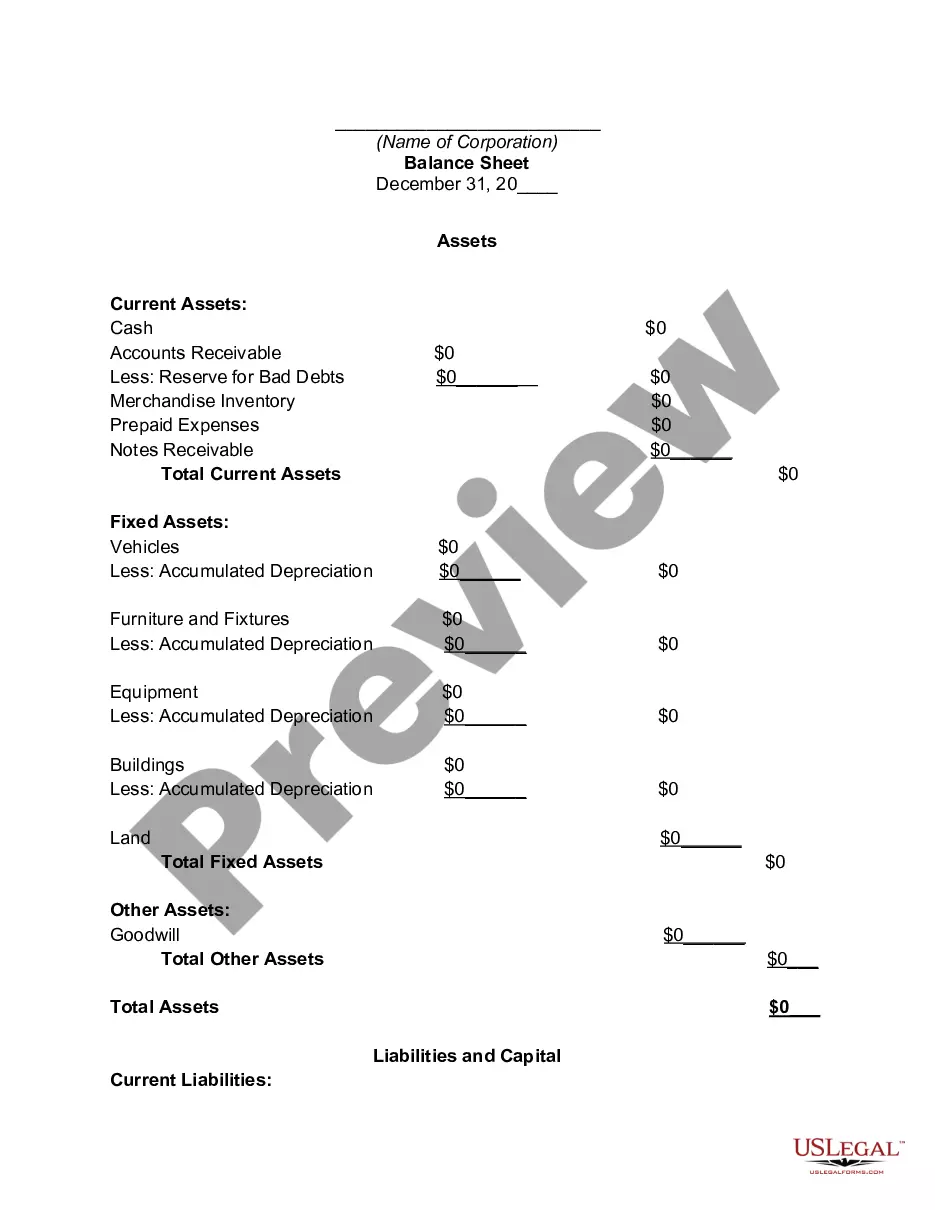
The general ledger is used in various scenarios, including monthly financial reporting, preparing for audits, and during tax season. It is essential for tracking the overall financial health of a business, reconciling bank statements, and ensuring compliance with accounting standards. Small businesses and larger enterprises alike rely on this form to provide a clear picture of their financial activities.
Intended users of this form
- Business owners who manage their company accounts.
- Accountants and bookkeepers responsible for maintaining financial records.
- Finance professionals preparing audit reports.
- Individuals managing personal finances that require detailed transaction records.
- Organizations looking to ensure transparency and compliance in financial reporting.
Completing this form step by step
- Identify the account to be recorded, including its name and number.
- Enter the month for which the ledger is prepared.
- Fill in the date of each transaction as it occurs.
- Provide a brief description of each transaction for clarity.
- Record the debit and credit amounts associated with each transaction.
- Calculate and enter the running balance after each transaction.
Does this form need to be notarized?
This form usually doesn’t need to be notarized. However, local laws or specific transactions may require it. Our online notarization service, powered by Notarize, lets you complete it remotely through a secure video session, available 24/7.
Get your form ready online
Our built-in tools help you complete, sign, share, and store your documents in one place.
Make edits, fill in missing information, and update formatting in US Legal Forms—just like you would in MS Word.
Download a copy, print it, send it by email, or mail it via USPS—whatever works best for your next step.
Sign and collect signatures with our SignNow integration. Send to multiple recipients, set reminders, and more. Go Premium to unlock E-Sign.
If this form requires notarization, complete it online through a secure video call—no need to meet a notary in person or wait for an appointment.
We protect your documents and personal data by following strict security and privacy standards.
Make edits, fill in missing information, and update formatting in US Legal Forms—just like you would in MS Word.
Download a copy, print it, send it by email, or mail it via USPS—whatever works best for your next step.
Sign and collect signatures with our SignNow integration. Send to multiple recipients, set reminders, and more. Go Premium to unlock E-Sign.

If this form requires notarization, complete it online through a secure video call—no need to meet a notary in person or wait for an appointment.
We protect your documents and personal data by following strict security and privacy standards.
Mistakes to watch out for
- Failing to record transactions in a timely manner, which can lead to discrepancies.
- Mixing personal and business transactions within the same ledger.
- Neglecting to double-check calculations, leading to inaccurate balances.
- Not providing enough detail in transaction descriptions, making it hard to understand records.
Why use this form online
- Convenient access: Download and fill out the form anytime.
- Editability: Easily make adjustments as transactions change.
- Security: Keep your financial records safe with digital documentation.
- Compliance: Ensure that your records meet legal standards for financial reporting.
Looking for another form?


Form popularity
FAQ
The description could be an expense, revenue, liability, asset or equity entry. What is a general ledger with example? There are many examples of a general ledger as they record every financial transaction of a firm. Furniture account, salary account, debtor account, owner's equity, etc., are some examples.
The three types of ledgers are: General ledger. Sales ledger or debtor's ledger. Purchase ledger or creditor's ledger.
General Ledger (Accounting) It's typically divided into five main categories: assets, liabilities, equity, revenue, and expenses.
Contents of a General Ledger The general ledger is comprised of all the individual accounts needed to record the assets, liabilities, equity, revenue, expense, gain, and loss transactions of a business. In most cases, detailed transactions are recorded directly in these general ledger accounts.
An accounting ledger is an account or record used to store bookkeeping entries for balance-sheet and income-statement transactions. Accounting ledger journal entries can include accounts like cash, accounts receivable, investments, inventory, accounts payable, accrued expenses, and customer deposits. What is an accounting ledger? - Sage Advice US sage.com ? en-us ? blog ? glossary ? what-is... sage.com ? en-us ? blog ? glossary ? what-is...
Types of ledger accounts Asset accounts: prepaid expenses, cash, accounts receivable, assets, and cash. Liability accounts: lines of credit, accounts payable, debt, and notes payable. Revenue accounts. Expense accounts. Equity accounts. Profit and loss accounts.
When creating a general ledger, divide each account (e.g., asset account) into two columns. The left column should contain your debits while the right side contains your credits. Put your assets and expenses on the left side of the ledger. Your liabilities, equity, and revenue go on the right side. Small Business General Ledger Accounts, Examples, & More patriotsoftware.com ? blog ? accounting ? a... patriotsoftware.com ? blog ? accounting ? a...
General ledger (GL) accounts are twenty digit numbers, made up of three segments: a fund (2 digits), a major (9 digits), and a subclass (7 digits), and take the following form: XX X.
As a General Ledger (GL) records all of the transactions that affect a company's accounting elements, such as Assets, Liabilities, Equity, Expenses, and Revenue, it is the data source used to construct the Balance Sheet and the Income Statement.