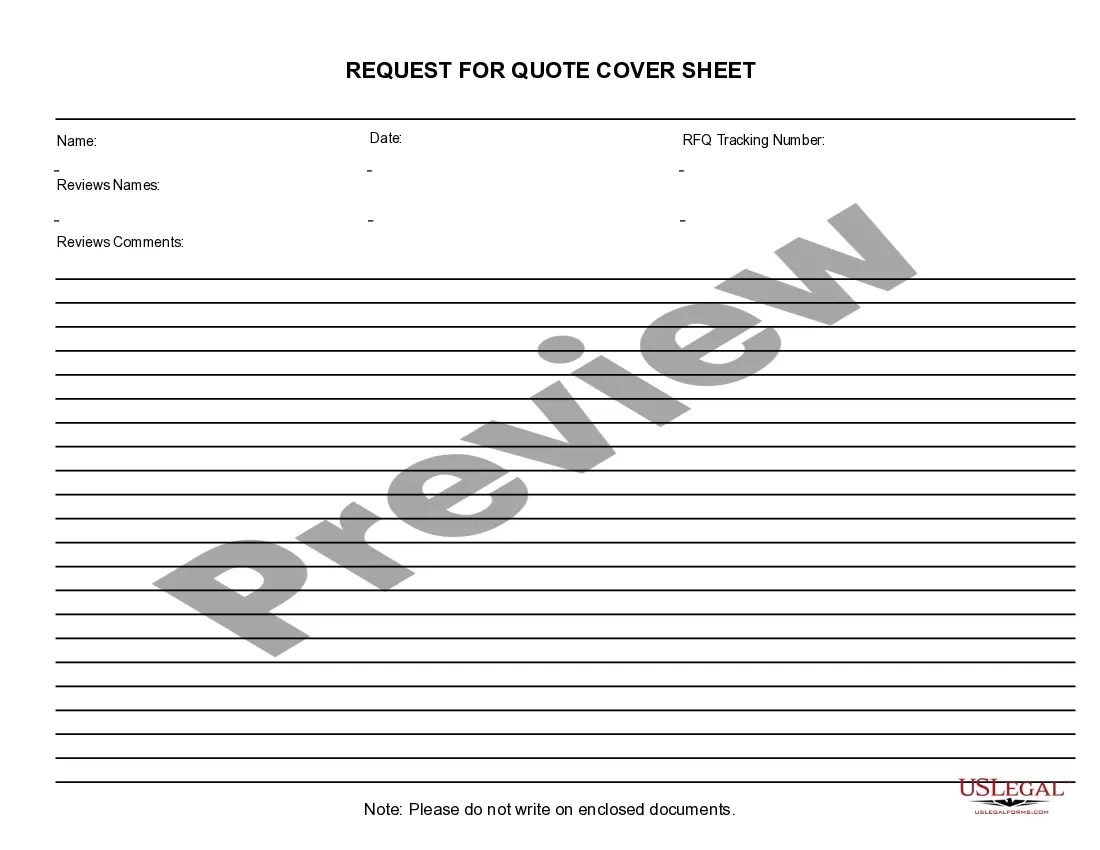
Request for Quote Cover Sheet
Overview of this form
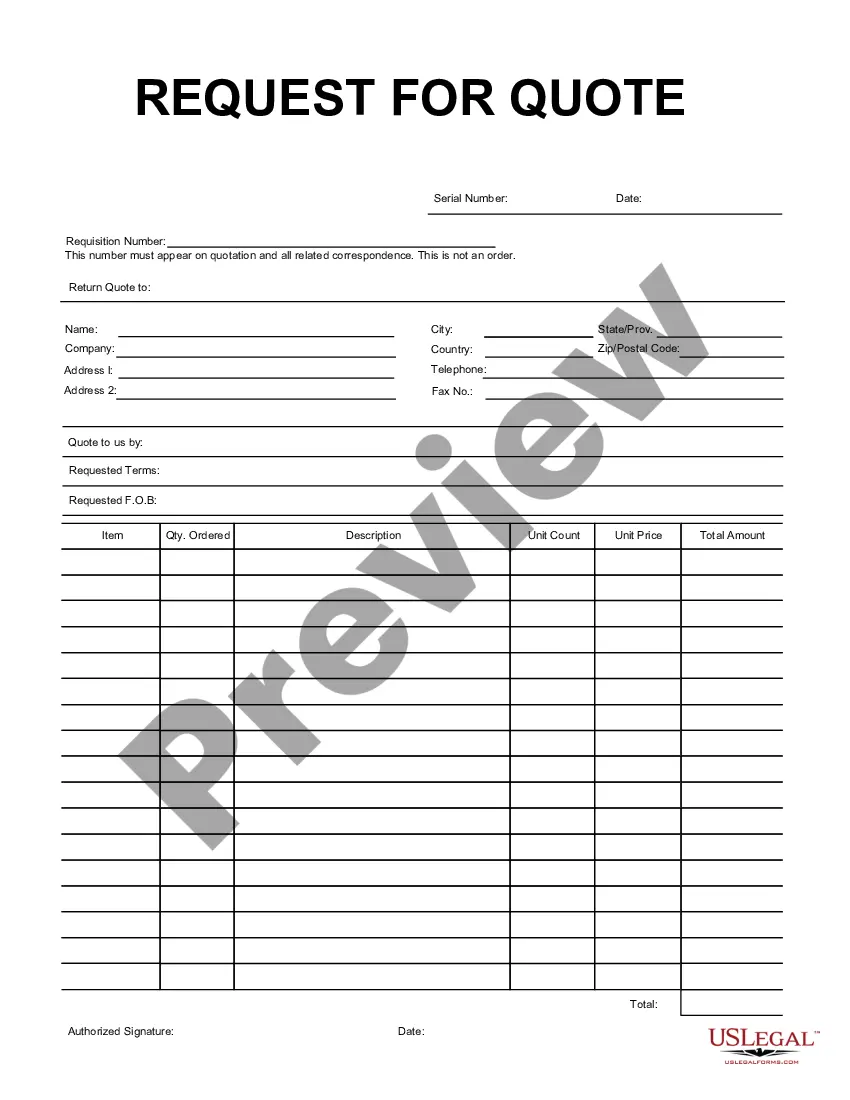
The Request for Quote Cover Sheet is a business form designed to accompany requests for quotes from vendors, suppliers, or contractors. This form serves to streamline the communication process, ensuring clear and organized documentation of the quote request. Unlike general correspondence, this cover sheet provides a standardized format that enhances clarity and professionalism in business transactions.
Key components of this form
- Contact information of the requester, including name, address, and phone number
- Details regarding the requested quote, such as specifications and deadlines
- Instructions for the vendor or contractor on how to respond
- Space for notes or additional information relevant to the request

Common use cases
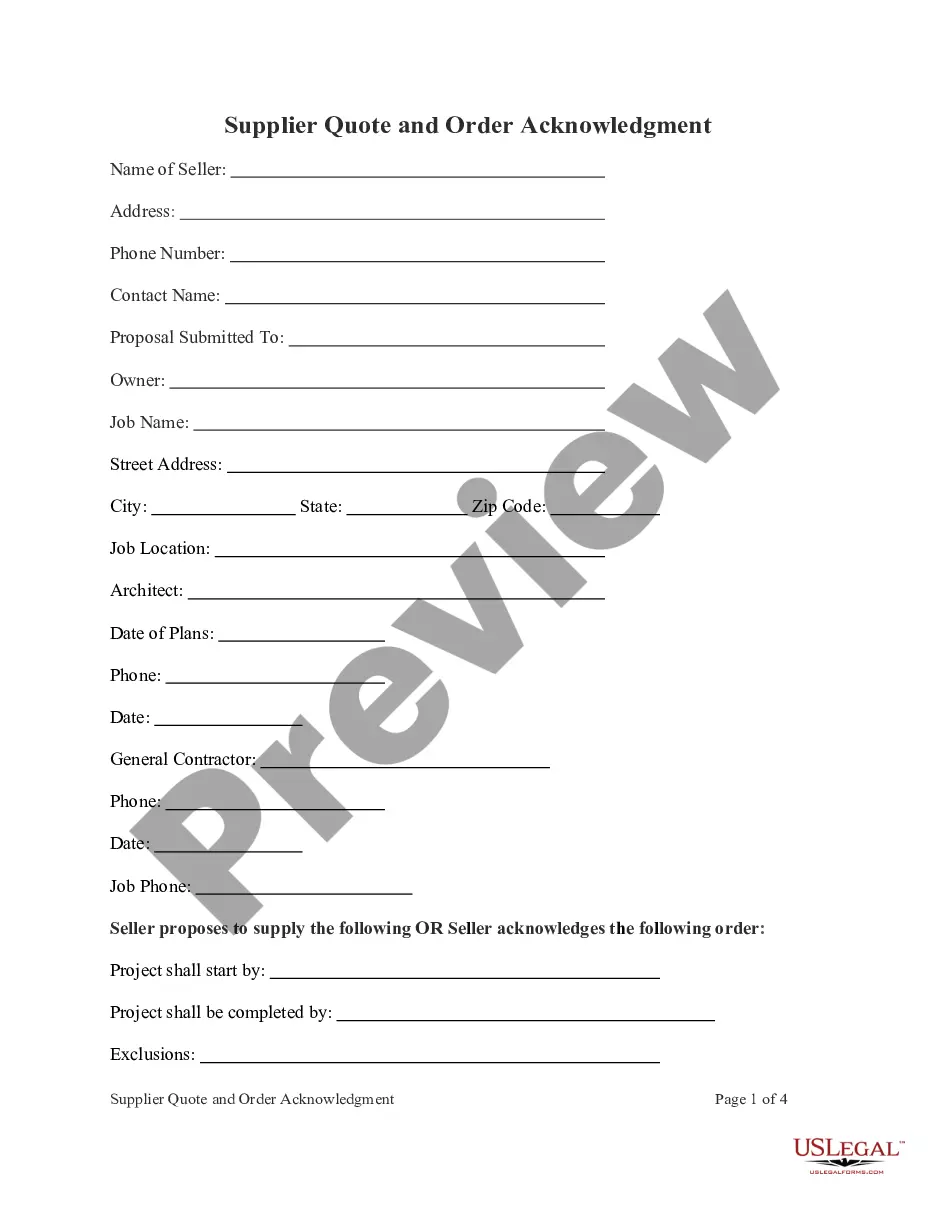
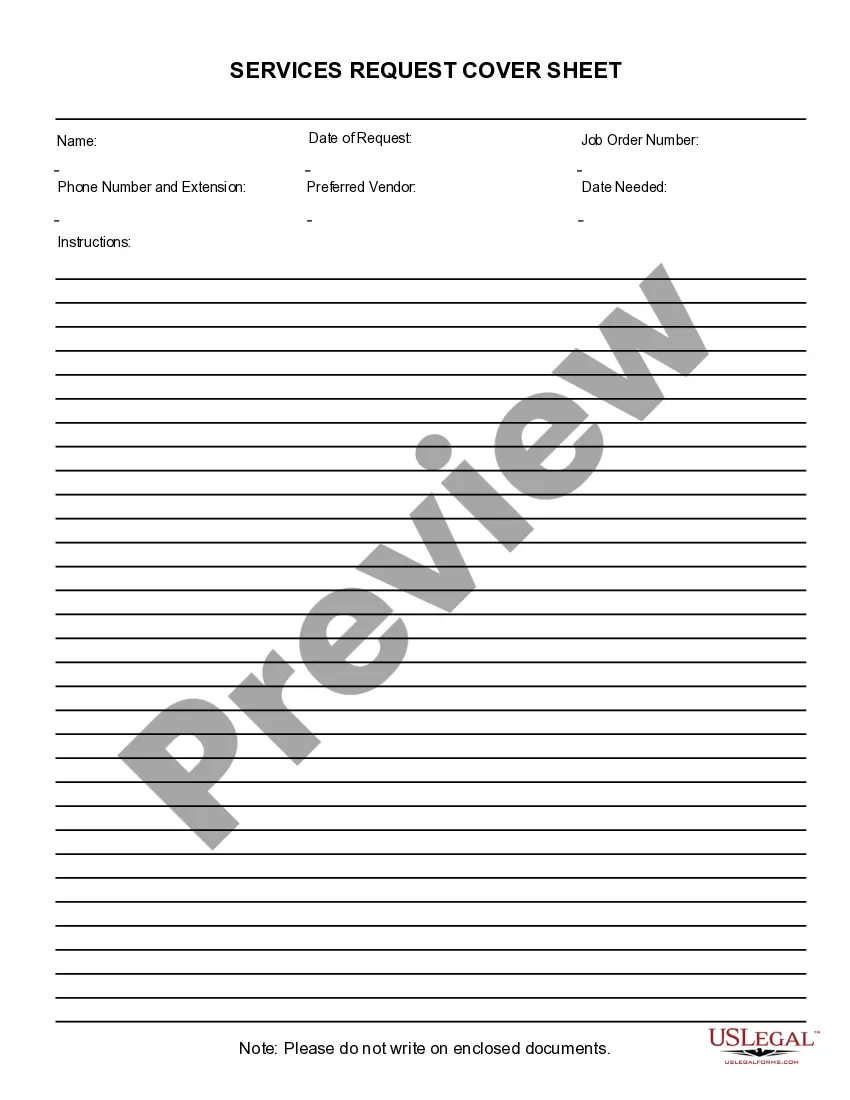
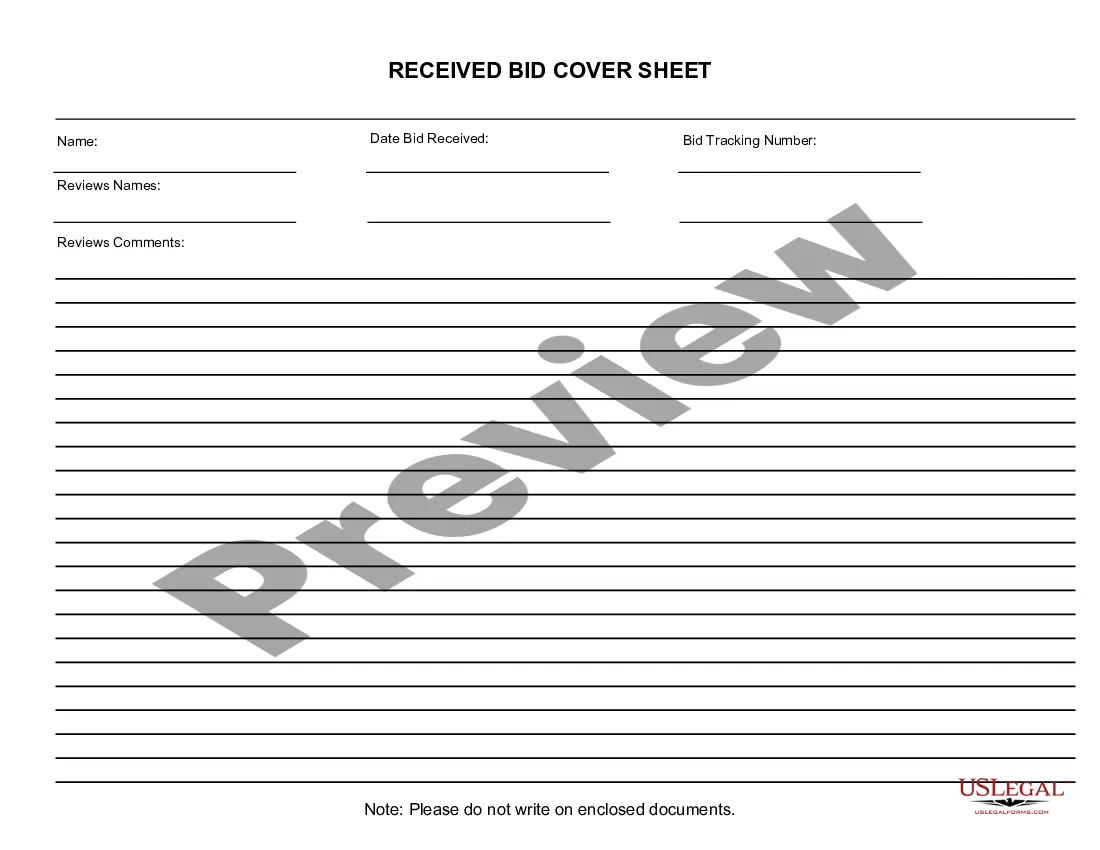
This form is useful when you need to request pricing or services from suppliers or contractors. It can be used for a variety of projects, from sourcing materials for construction to obtaining quotes for software services. Whenever you are initiating a formal request for quotes, the Request for Quote Cover Sheet ensures that your communication is complete and professional.
Who this form is for
- Business owners seeking quotes from vendors or suppliers
- Managers responsible for procurement in an organization
- Contractors needing to collect bids for projects
- Individuals coordinating group purchases or services
Instructions for completing this form
- Identify and enter your contact information at the top of the form.
- Clearly describe the items or services you are requesting quotes for.
- Specify any relevant deadlines or special requirements.
- Provide clear instructions on how you would like vendors to respond.
- Review the completed form for accuracy before sending it out.
Does this form need to be notarized?
Notarization is generally not required for this form. However, certain states or situations might demand it. You can complete notarization online through US Legal Forms, powered by Notarize, using a verified video call available anytime.
Get your form ready online
Our built-in tools help you complete, sign, share, and store your documents in one place.
Make edits, fill in missing information, and update formatting in US Legal Forms—just like you would in MS Word.
Download a copy, print it, send it by email, or mail it via USPS—whatever works best for your next step.
Sign and collect signatures with our SignNow integration. Send to multiple recipients, set reminders, and more. Go Premium to unlock E-Sign.
If this form requires notarization, complete it online through a secure video call—no need to meet a notary in person or wait for an appointment.
We protect your documents and personal data by following strict security and privacy standards.
Make edits, fill in missing information, and update formatting in US Legal Forms—just like you would in MS Word.
Download a copy, print it, send it by email, or mail it via USPS—whatever works best for your next step.
Sign and collect signatures with our SignNow integration. Send to multiple recipients, set reminders, and more. Go Premium to unlock E-Sign.
If this form requires notarization, complete it online through a secure video call—no need to meet a notary in person or wait for an appointment.
We protect your documents and personal data by following strict security and privacy standards.
Common mistakes to avoid
- Not providing enough detail about the items or services requested.
- Leaving out important deadlines or specifications.
- Failing to proofread the form before distribution.
Benefits of completing this form online
- Easy access and immediate download for quick use.
- Editability in digital formats such as Adobe Acrobat or Word.
- Standardized formatting that saves time in preparing requests.
Looking for another form?



Form popularity
FAQ
Background information. Detailed description of the project. Specific requirements about preferred systems, tools, materials, or products. Project deadline along with explicit dates and milestones.
Step 1 : Select up to 10 companies to whom you wish to request a quote. Step 2 : Add specifications, a quantity, additional details for the products / services. Step 3 : Enter your email and your contact information. Step 4 : Include: Date and time of closure. Step 5 : View your request before sending.
Stay focused on the customer's problem and the solution you deliver. Keep it short and fluff free 2060 for the customer, the RFP isn't an invitation for you to give a sales pitch, it's a fact-finding mission.
A request for quote (RFQ), also known as an invitation for bid (IFB), is a process in which a company solicits select suppliers and contractors to submit price quotes and bids for the chance to fulfill certain tasks or projects.Companies may send RFQs alone or before a request for proposal (RFP).
I would like to request a quote for _________. I would be interested to know the price of ________. Please could you send me a quote for_______. Please could you provide me with a quote for ______? I would be grateful if you could send me a quote for the following_______.
I would like to request a quote for _________. I would be interested to know the price of ________. Please could you send me a quote for_______. Please could you provide me with a quote for ______? I would be grateful if you could send me a quote for the following_______.
Be the first page of your RFP response followed by your executive summary and proposal. Introduce your company to the key decision makers and those reviewing your bid. Be conversational, genuine and confident 2060 but not an overt sales pitch.
Establish the project's boundaries. Identify key stakeholders and advisors. Talk to stakeholders and define your project needs. Write the RFP. ( Create a draft of your scoring criteria. Circulate the RFP. Review responses. Research novel technologies as necessary.
Define your project and needs. Write an introduction. Explain your company's and project's history. Describe your project's requirements. Explain how vendors should respond. Outline your selection criteria. Note your timelines. Proofread and revise your RFP.