Jury Instruction - Caution - Multiple Defendants - Multiple Counts
What is this form?
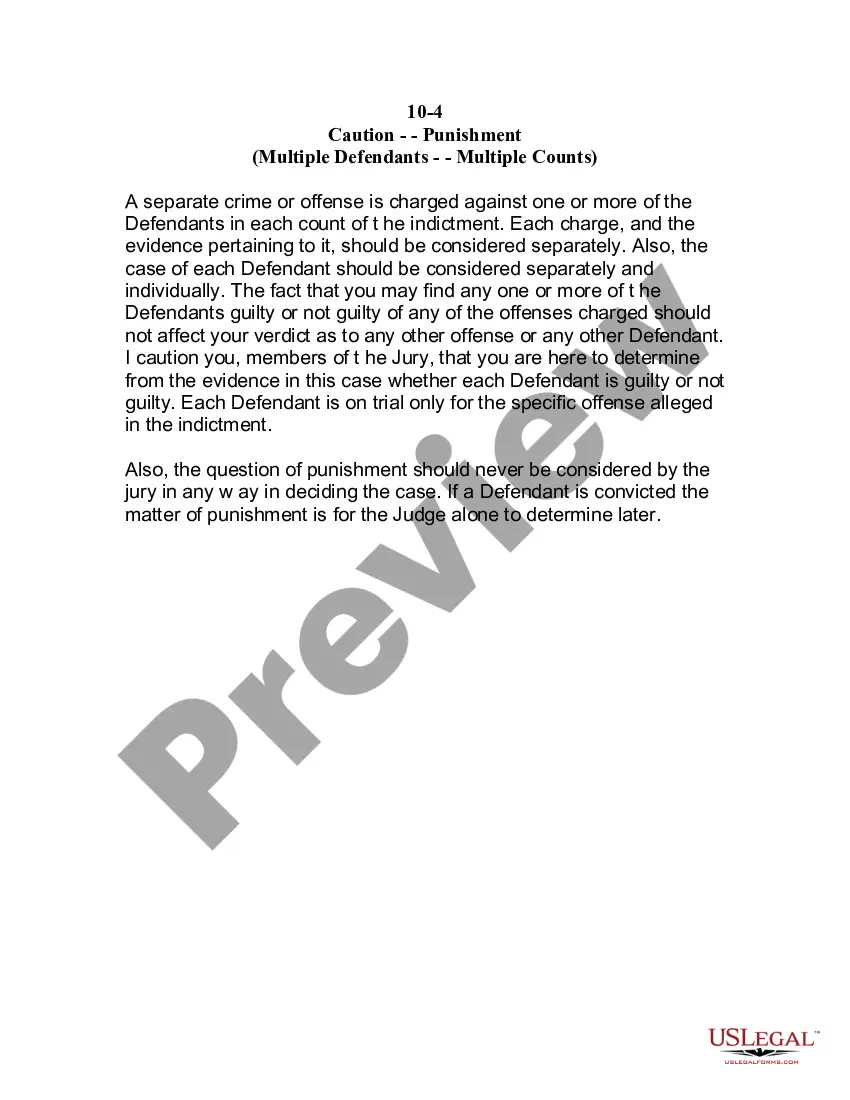
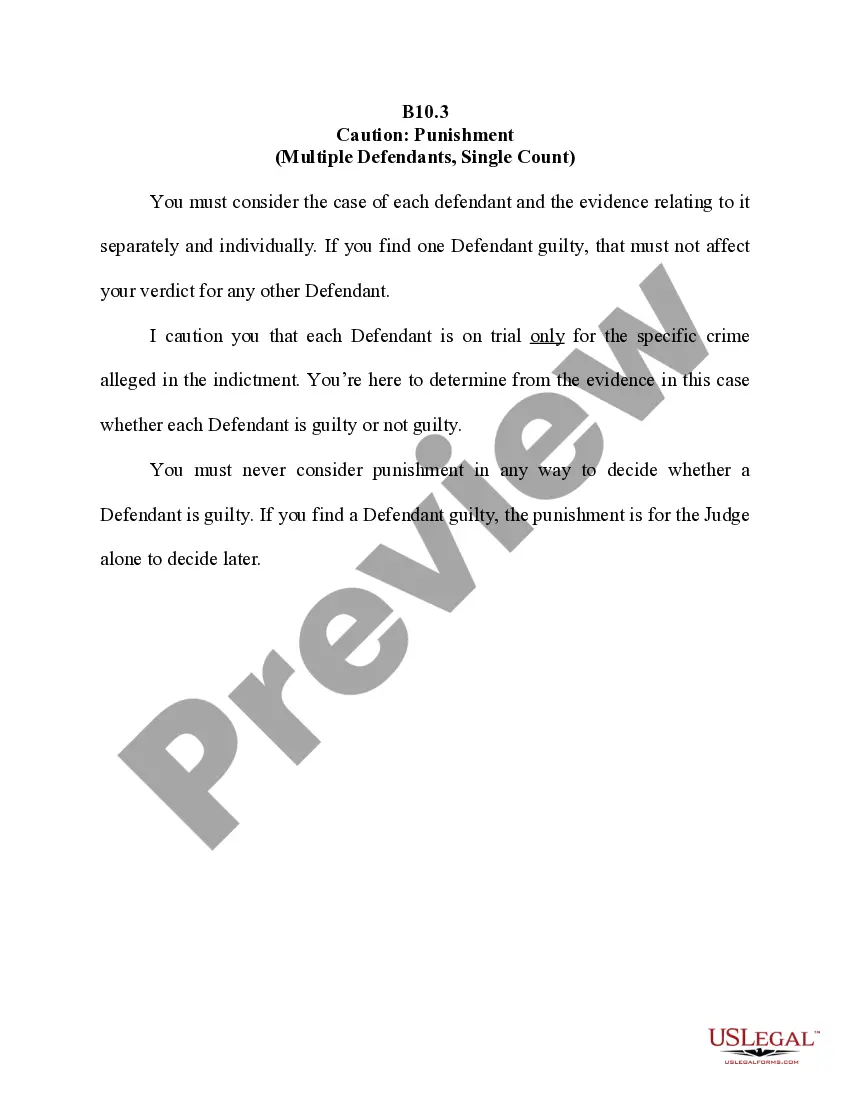
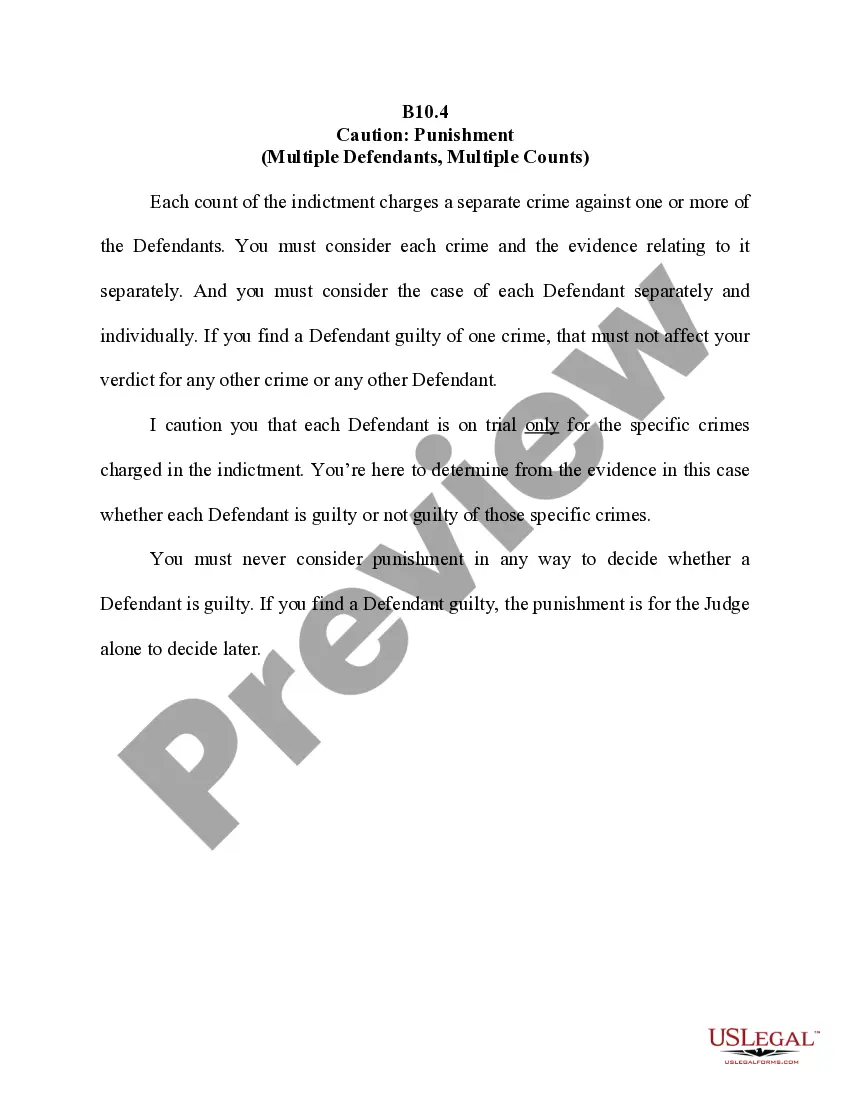
This form, titled Jury Instruction - Caution - Multiple Defendants - Multiple Counts, provides essential jury instructions for cases involving multiple defendants and charges. It guides jurors on how to assess the individual guilt or innocence of each defendant without letting one case influence another. This is particularly important in complex cases with overlapping allegations, ensuring fair deliberation and justice is upheld in the courtroom. Unlike other jury instructions that may focus solely on single defendants or uncomplicated cases, this form addresses the intricacies of multi-defendant scenarios effectively.
Main sections of this form
- Caution on assessing multiple charges and defendants independently.
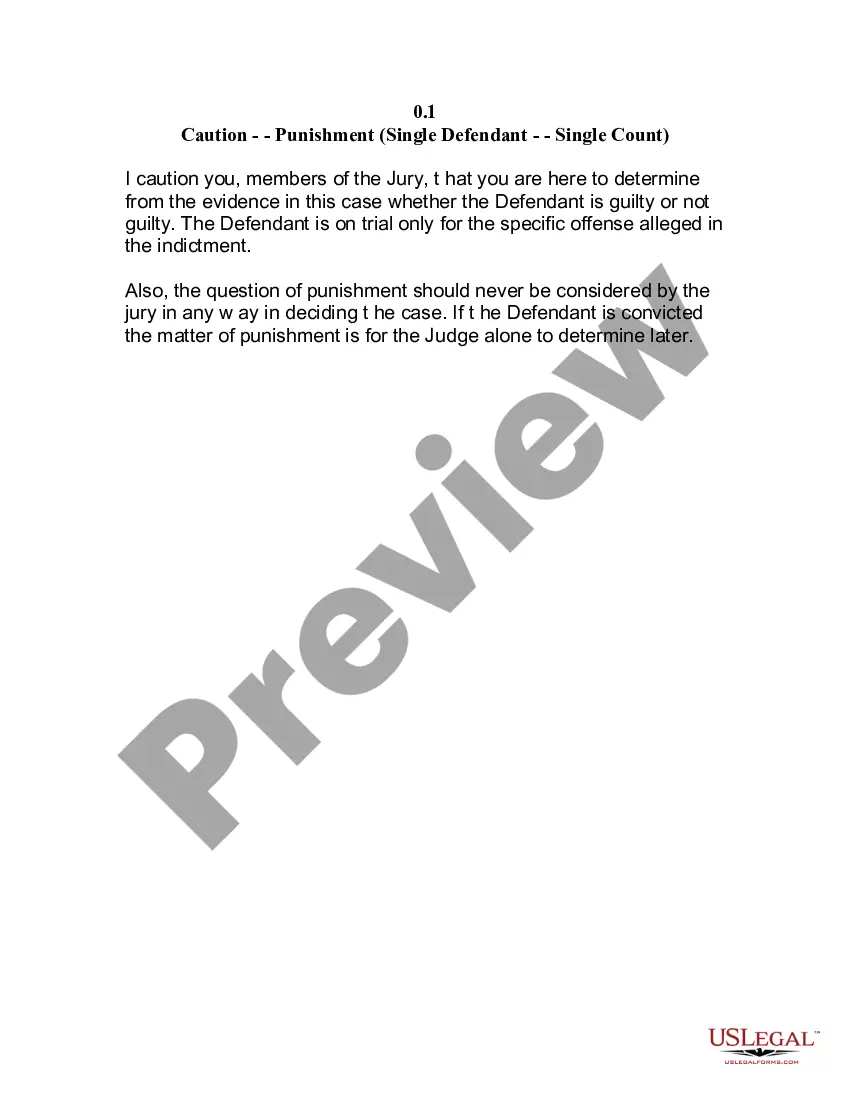
- Instruction to disregard any potential punishment in deliberations.
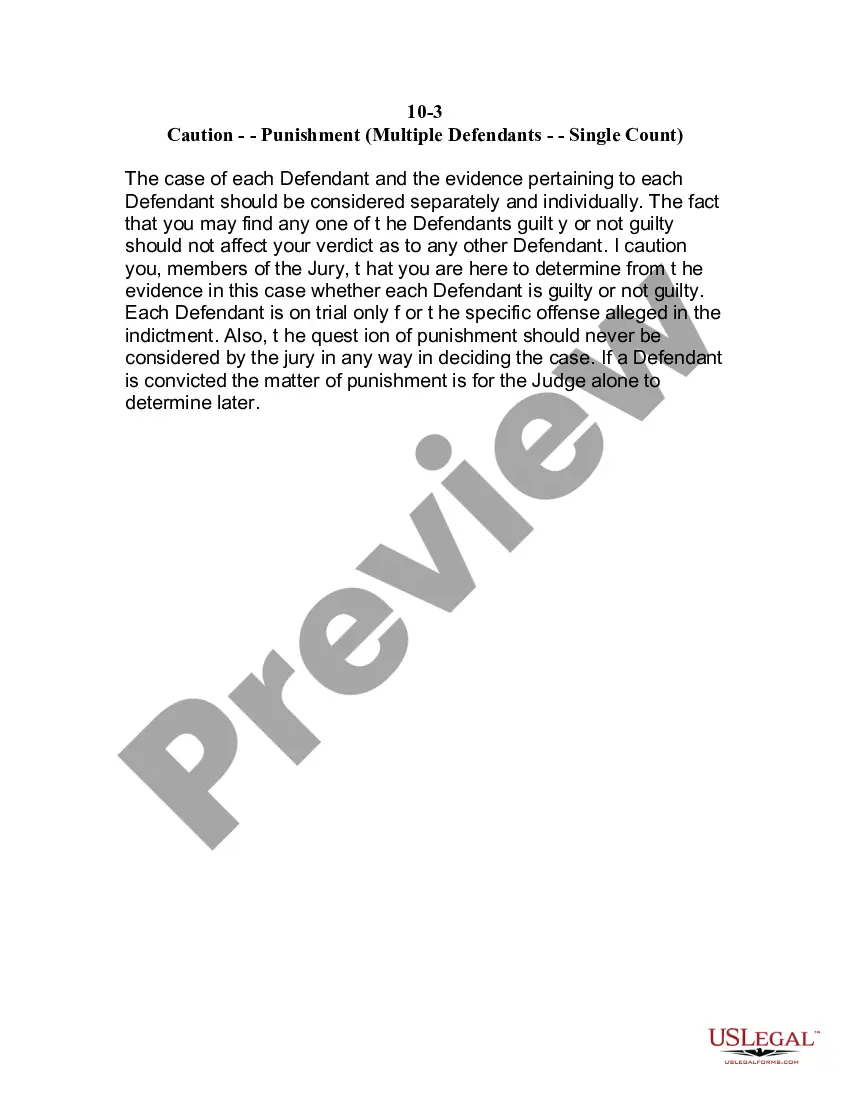
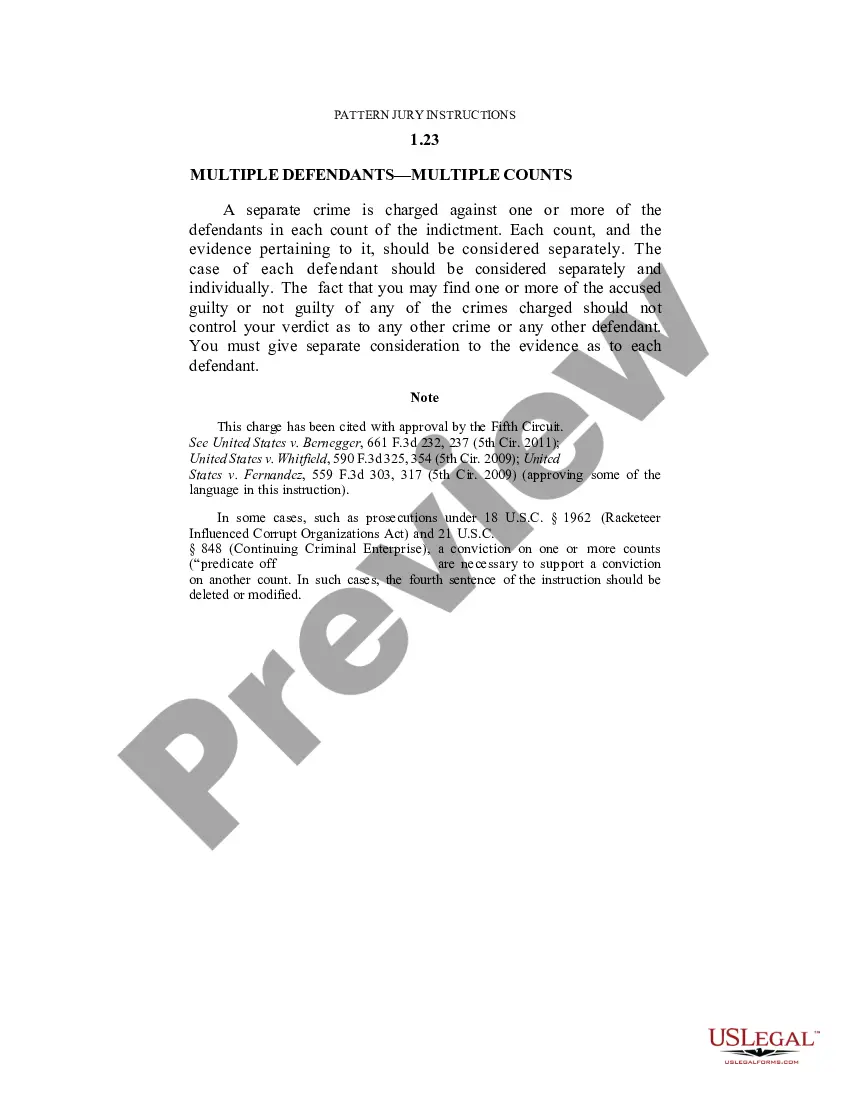
- Emphasis on the separate consideration of each charge and each defendant.
- References to legal precedents supporting the use of these instructions.

Common use cases
This jury instruction form is essential in cases where multiple defendants face various charges. It is particularly needed when the jury must evaluate each defendant's actions and charges based only on the evidence presented during the trial. Use this form in situations where there are potential complexities in deliberation due to multiple counts which could confuse jurors, or where the determination of one defendant's guilt may unintentionally influence judgments regarding another defendant's case.
Who can use this document
- Judges presiding over trials with multiple defendants and counts.
- Attorneys involved in cases requiring precise jury instruction to ensure fair deliberation.
- Court staff managing trial documentation for cases with complex legal structures.
Completing this form step by step
- Review the charges outlined in the indictment to understand the case structure.
- Instruct the jury on the individual consideration of each count and defendant.
- Highlight that the jury should not consider the matter of punishment during their deliberations.
- Ensure jurors understand that their verdict for one defendant does not affect or inform their verdict for another.
Does this form need to be notarized?
Notarization is generally not required for this form. However, certain states or situations might demand it. You can complete notarization online through US Legal Forms, powered by Notarize, using a verified video call available anytime.
Get your form ready online
Our built-in tools help you complete, sign, share, and store your documents in one place.
Make edits, fill in missing information, and update formatting in US Legal Forms—just like you would in MS Word.
Download a copy, print it, send it by email, or mail it via USPS—whatever works best for your next step.
Sign and collect signatures with our SignNow integration. Send to multiple recipients, set reminders, and more. Go Premium to unlock E-Sign.
If this form requires notarization, complete it online through a secure video call—no need to meet a notary in person or wait for an appointment.
We protect your documents and personal data by following strict security and privacy standards.

Make edits, fill in missing information, and update formatting in US Legal Forms—just like you would in MS Word.

Download a copy, print it, send it by email, or mail it via USPS—whatever works best for your next step.

Sign and collect signatures with our SignNow integration. Send to multiple recipients, set reminders, and more. Go Premium to unlock E-Sign.

If this form requires notarization, complete it online through a secure video call—no need to meet a notary in person or wait for an appointment.

We protect your documents and personal data by following strict security and privacy standards.
Common mistakes to avoid
- Failing to emphasize the independence of each counting and defendant when issuing instructions.
- Neglecting to inform the jury about the separate deliberation requirement.
- Inadvertently allowing discussions of potential punishment among jurors during deliberations.
Advantages of online completion
- Convenient download and access to the form anytime and anywhere.
- Edit and customize the instructions as necessary to fit the specifics of the case.
- Reliability ensured by legal templates drafted by licensed attorneys.
Legal use & context
- The instructions provided in this form are model instructions and should be tailored to fit the case context.
- These instructions are legally approved, as noted in prior case law, though certain elements may need adaptation based on specific legal circumstances.
Looking for another form?






Form popularity
FAQ
There are currently 677 U.S. District Court judgeships. The number of federal district judge positions is set by the U.S. Congress in Title 28 of the U.S. Code, Section 133, which authorizes a set number of judge positions, or judgeships, making changes and adjustments in these numbers from time to time.
Sovereign immunity has carried over to modern times in the form of a general rule that you cannot sue the government -- unless the government says you can. Fortunately, the Federal Tort Claims Act ("FTCA") allows certain kinds of lawsuits against federal employees who are acting within the scope of their employment.
Each case is assigned to a panel of three judges. All parties in the case submit briefs to the court presenting their legal arguments for why the lower court ruling should be upheld or struck down.
The court consists of sixteen judges nominated by the President and confirmed by the Senate for a term of fifteen years. After 1982, the court retained all the original jurisdiction of the Court of Claims and continues, uninterrupted, a judicial tradition more than 140 years old.
Court of Appeals Judges They usually sit in a panel of three judges and determine whether or not the law was applied correctly in the district court, also known as trial court, as well as appeals from decisions of federal administrative agencies and some original proceedings filed directly with the courts of appeals.
Which usually happens when a person wins a case in the Court of Federal Claims? The person receives a formal apology from Congress. The person's federal income taxes are refunded. The person is paid an amount to settle the claim.
Citizens or subjects of any foreign government which accords to citizens of the United States the right to prosecute claims against their government in its courts may sue the United States in the United States Court of Federal Claims if the subject matter of the suit is otherwise within such court's jurisdiction.
States can only sue if they have some unique interest as states.If the federal government says that states can't regulate hunting or fishing within their boundaries, for example, the states can sue because the federal government is interfering with the state's constitutionally reserved sovereignty.
The United States Court of Federal Claims has jurisdiction over a wide range of claims against the government including, but not limited to, contract disputes, bid protests, takings claims, tax refund suits, patent and copyright matters, Indian claims, civilian and military pay cases, and vaccine cases.