Sample Executive Stock Purchase Agreement between Pic N Save Corporation and Purchasers
What this document covers
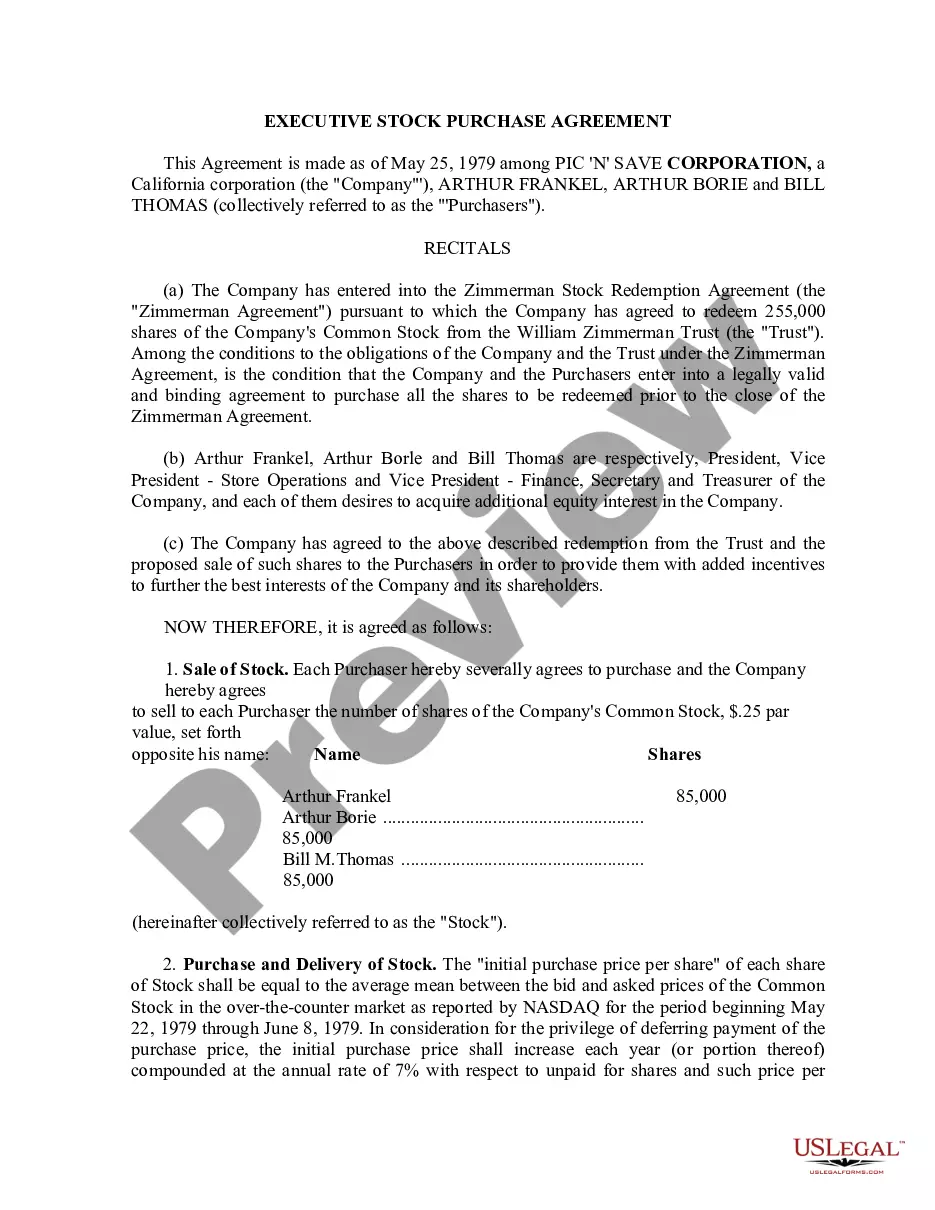
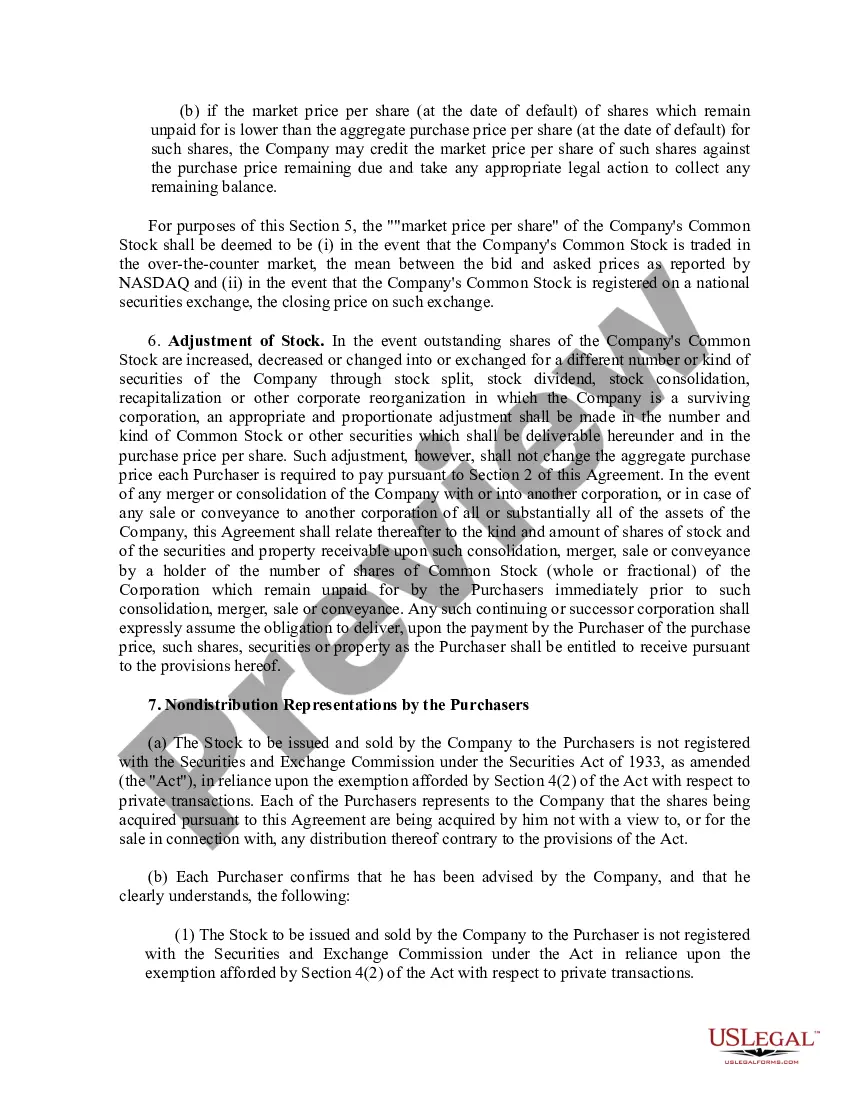
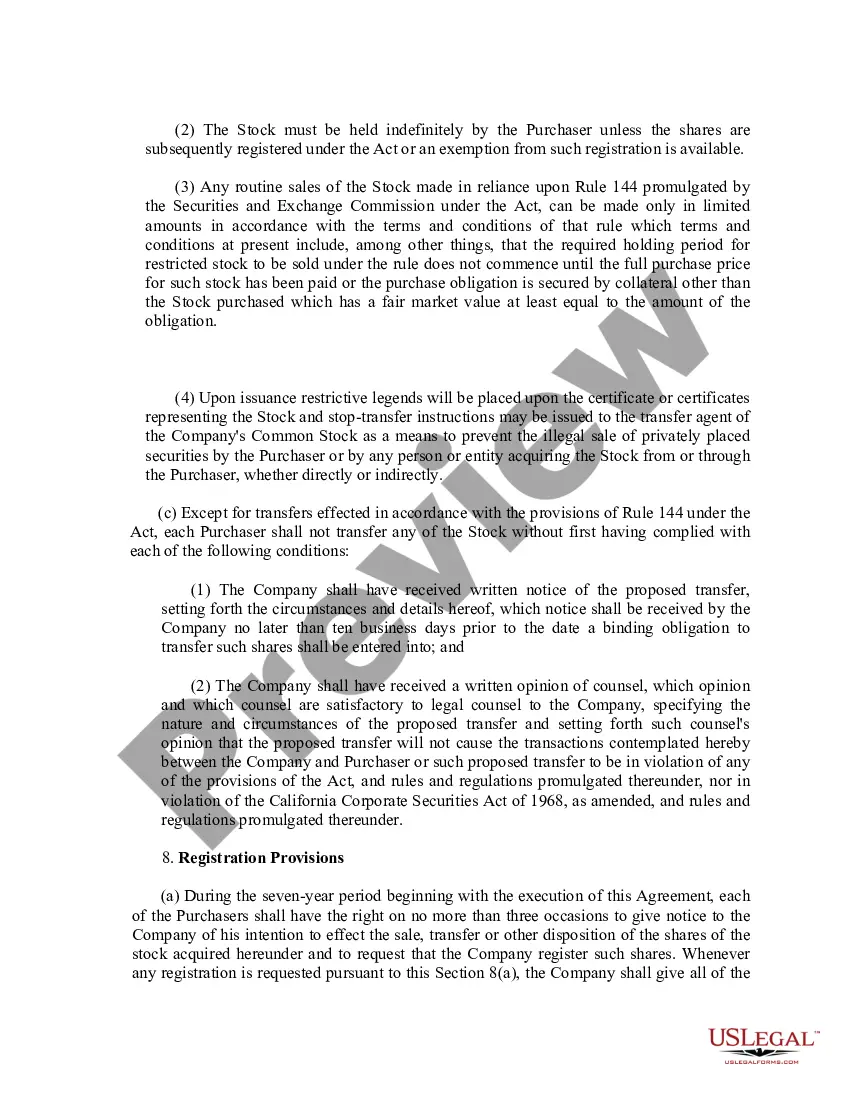
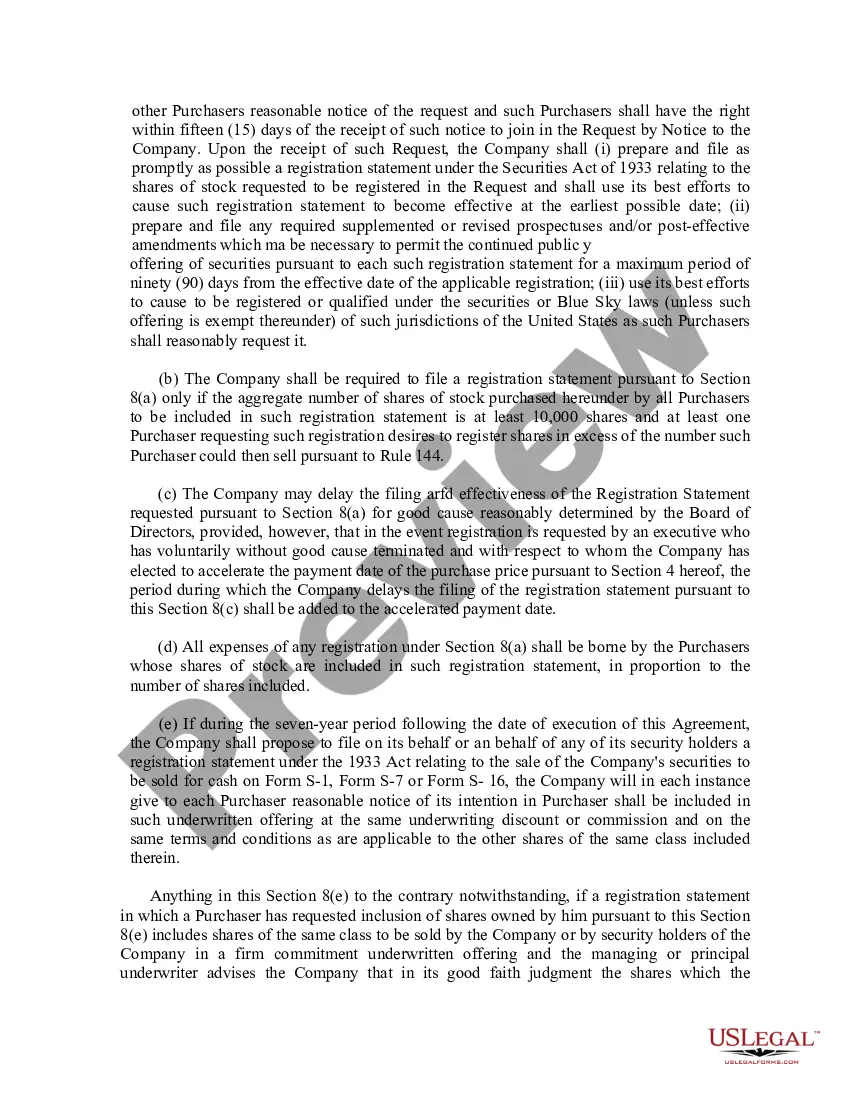
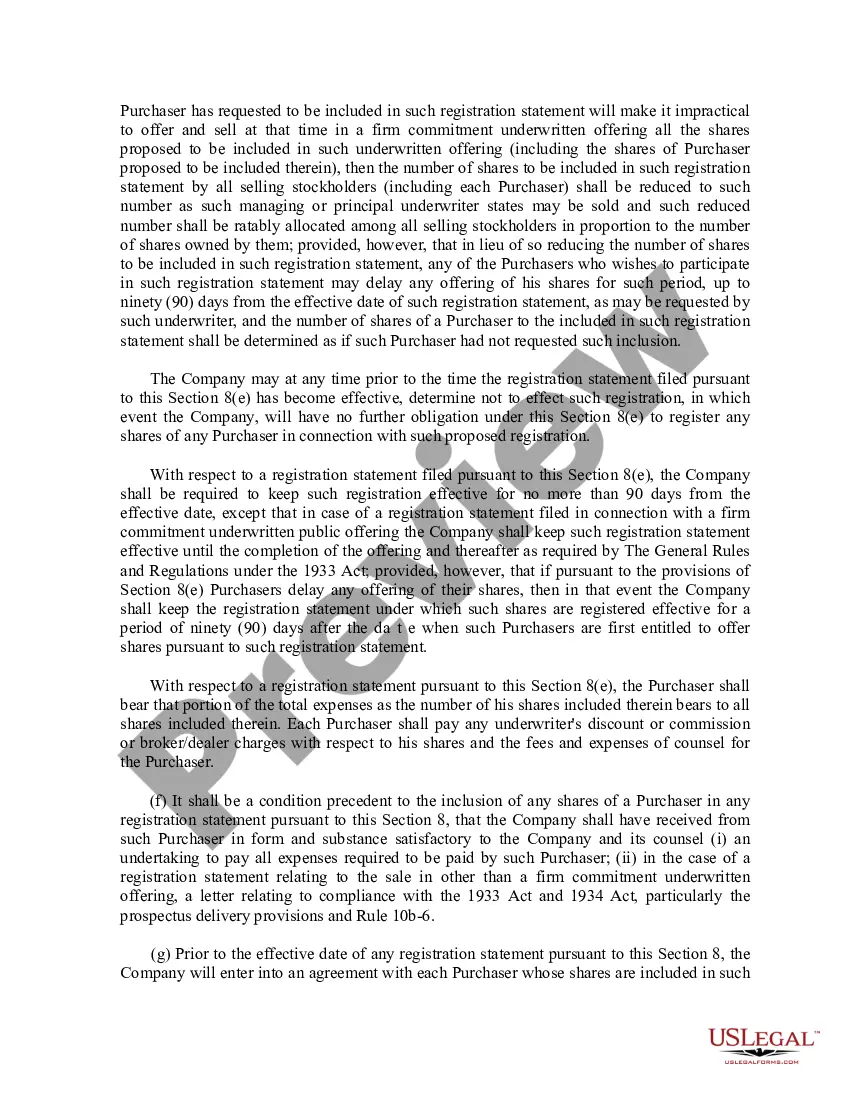
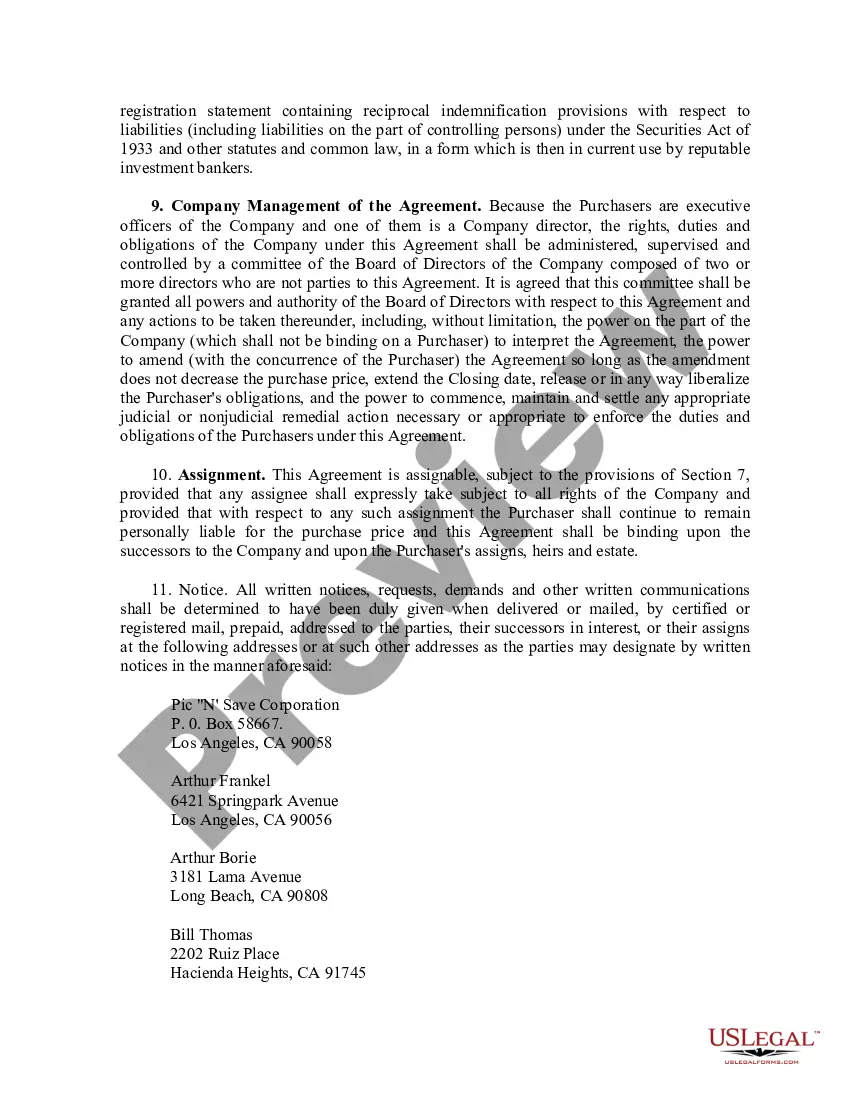
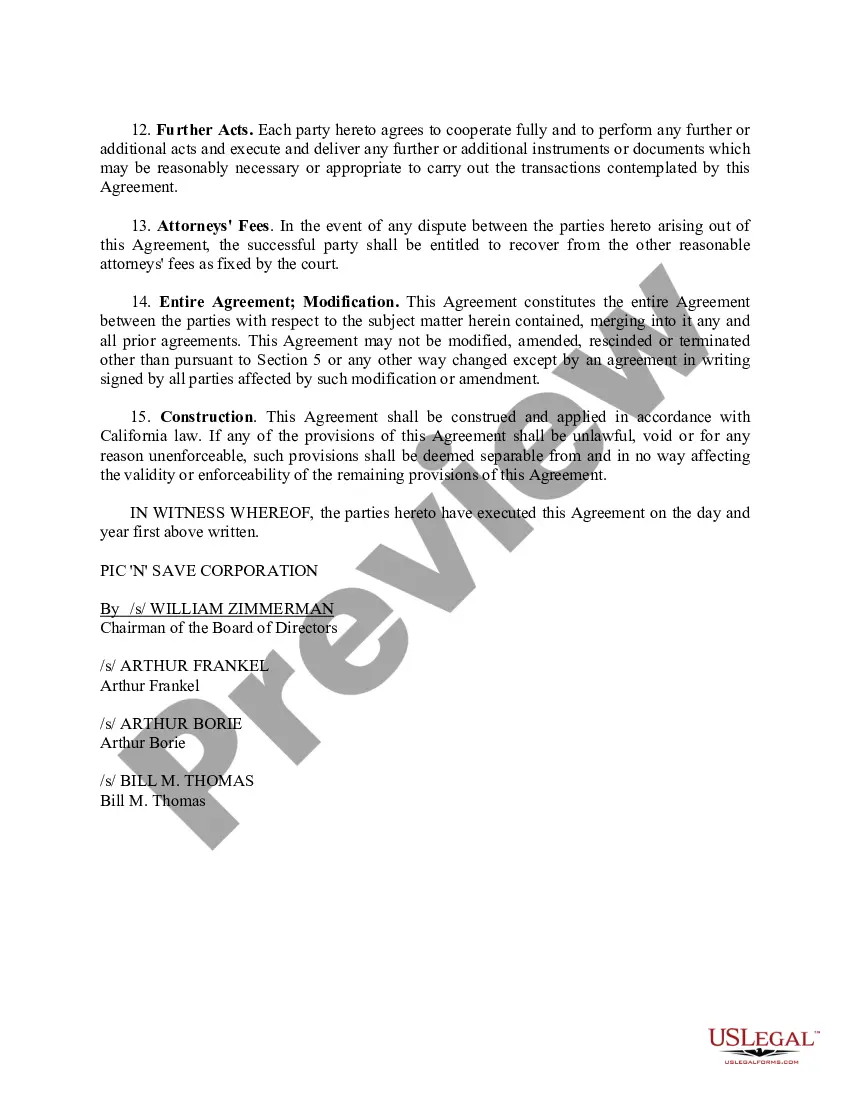
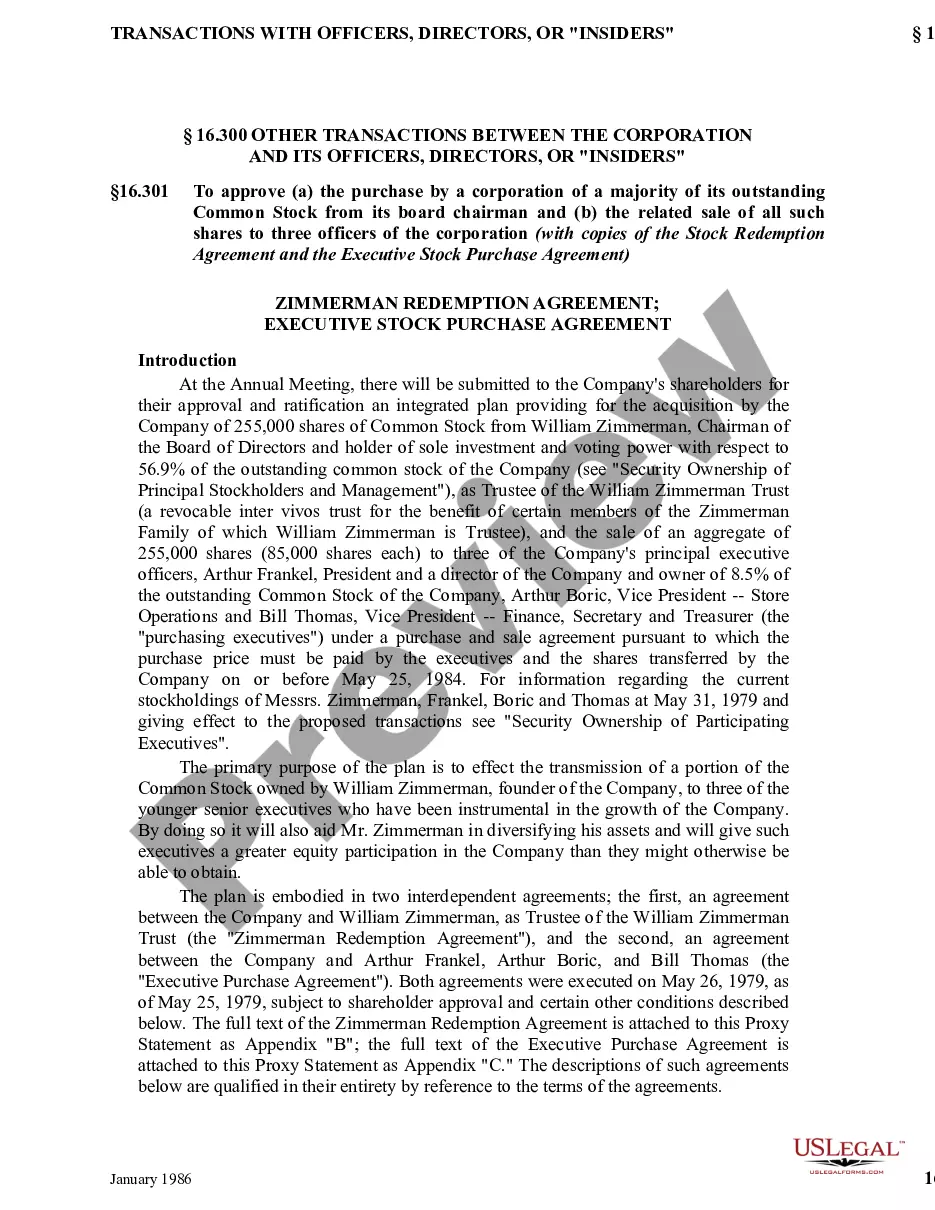
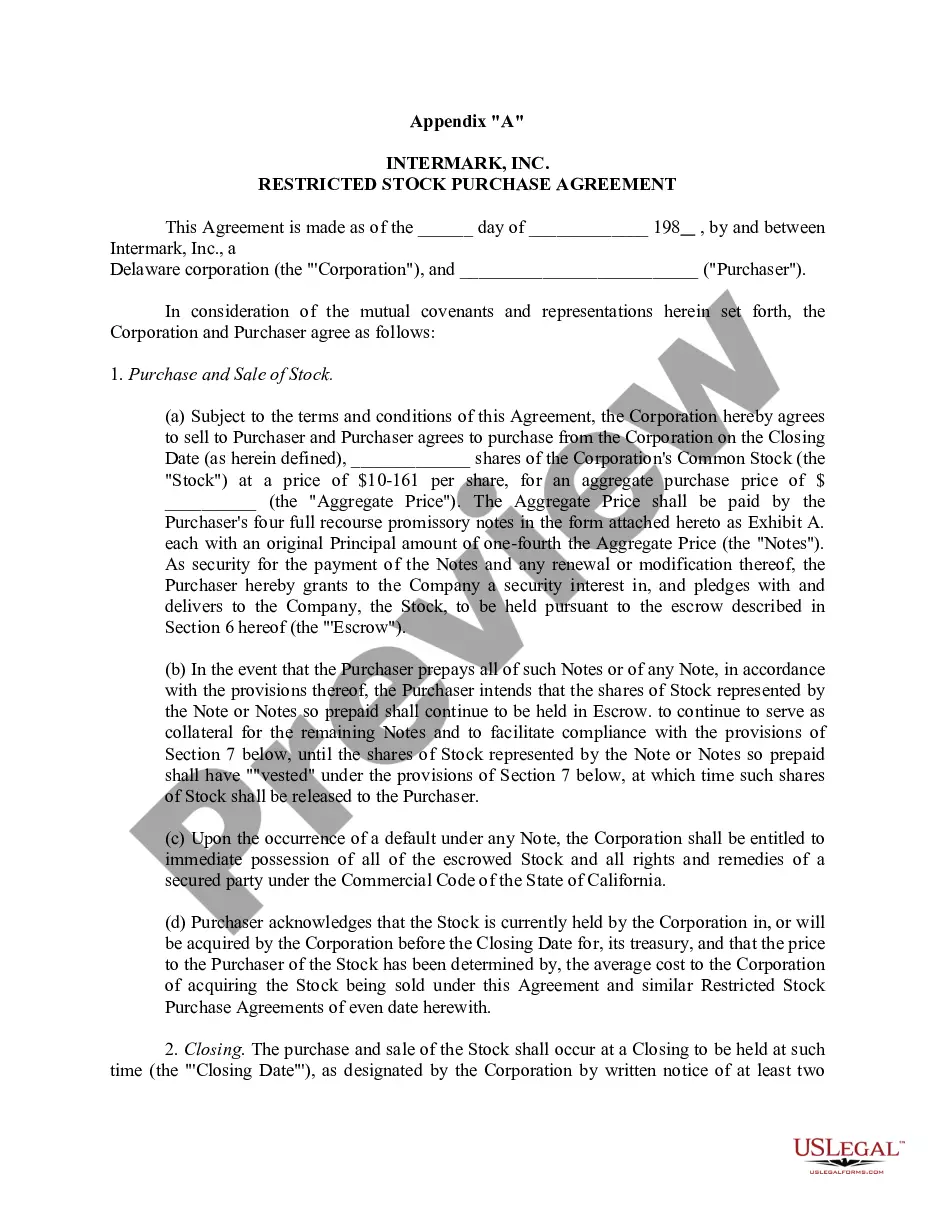
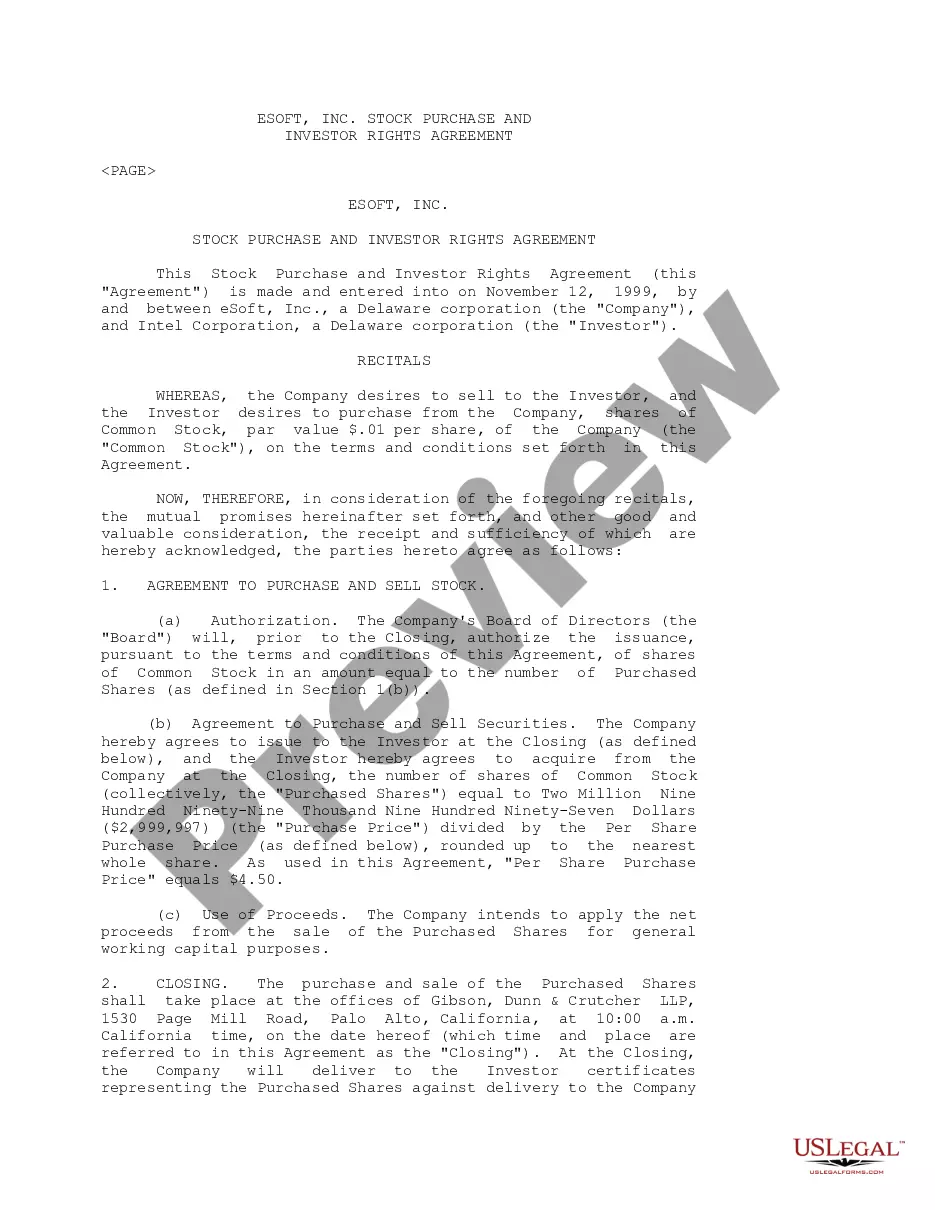
This Sample Executive Stock Purchase Agreement is a legal document that outlines the terms under which Pic N Save Corporation sells shares of its common stock to specific purchasers, namely Arthur Frankel, Arthur Borie, and Bill Thomas. This agreement is typically used during corporate restructuring to provide executives with the opportunity to increase their equity stake in a company, thereby aligning their interests with shareholders and incentivizing performance. It includes essential provisions regarding the purchase price, conditions of sale, and rights of the parties involved.
Main sections of this form
- Sale of Stock: Details the number of shares being purchased by each executive and the initial purchase price.
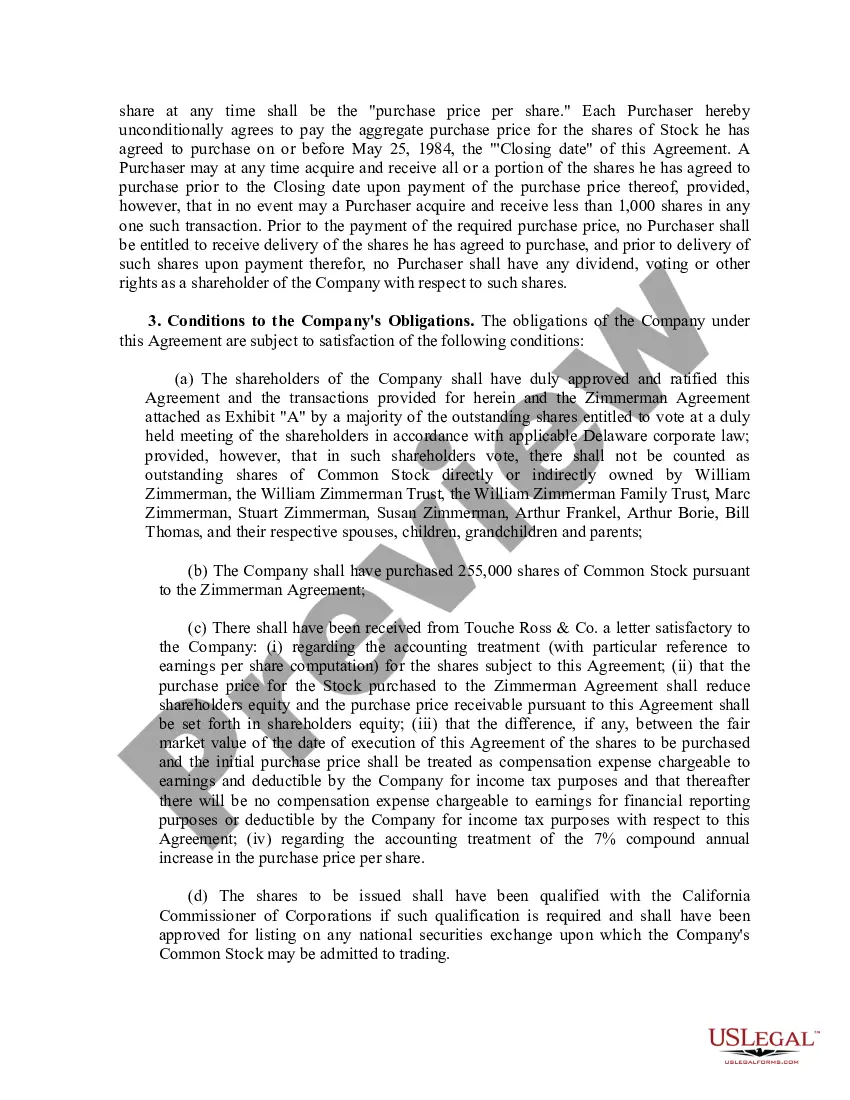
- Purchase and Delivery: Outlines the payment terms and conditions for receiving the shares.
- Conditions: Lists the obligations that must be fulfilled by the company before executing the sale.
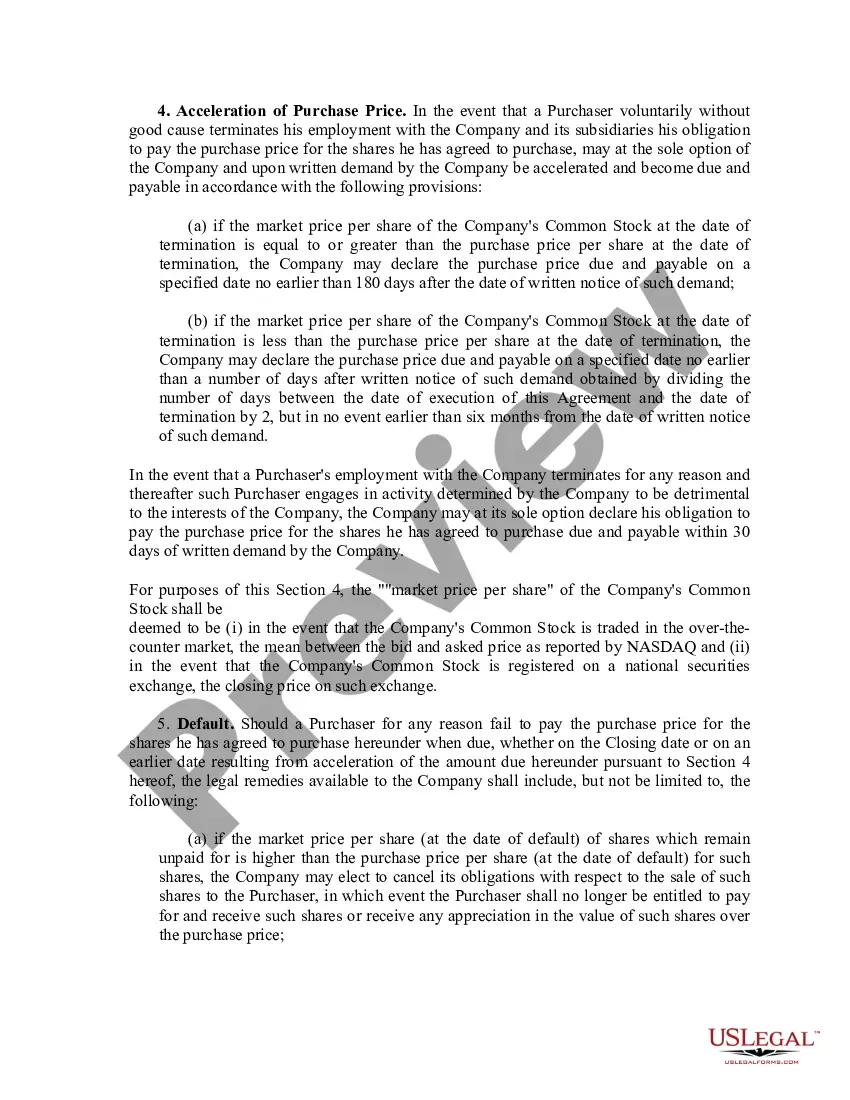
- Acceleration of Purchase Price: Describes circumstances under which the purchase price can be accelerated due to employment termination.
- Default Provisions: Specifies remedies available to the company in case of a default by a purchaser.

When this form is needed
This form is used when a corporation intends to sell its shares to executive officers as part of an incentive plan or during a stock redemption process. It is relevant in situations where a company wants to retain executive talent by allowing them to hold equity, thus promoting their commitment to the business's success.
Who can use this document
This form is suitable for:
- Corporate executives seeking to purchase stock in their company.
- Corporations looking to incentivize their management team by allowing them to buy shares.
- Legal advisors drafting agreements for stock purchases within corporations.
How to complete this form
Follow these steps to complete this form:
- Identify the parties: Clearly state the names and roles of the company and the purchasers.
- Detail the transaction: Specify the number of shares being purchased and the associated purchase price calculations.
- Outline conditions: List any conditions that must be met before the agreement takes effect.
- Incorporate payment terms: Include terms regarding the timing and method of payment for the shares.
- Ensure signatures: Have all parties sign the agreement to confirm their acceptance of the terms.
Does this document require notarization?
This form does not typically require notarization unless specified by local law.
Get your form ready online
Our built-in tools help you complete, sign, share, and store your documents in one place.
Make edits, fill in missing information, and update formatting in US Legal Forms—just like you would in MS Word.
Download a copy, print it, send it by email, or mail it via USPS—whatever works best for your next step.
Sign and collect signatures with our SignNow integration. Send to multiple recipients, set reminders, and more. Go Premium to unlock E-Sign.
If this form requires notarization, complete it online through a secure video call—no need to meet a notary in person or wait for an appointment.
We protect your documents and personal data by following strict security and privacy standards.

Make edits, fill in missing information, and update formatting in US Legal Forms—just like you would in MS Word.

Download a copy, print it, send it by email, or mail it via USPS—whatever works best for your next step.

Sign and collect signatures with our SignNow integration. Send to multiple recipients, set reminders, and more. Go Premium to unlock E-Sign.

If this form requires notarization, complete it online through a secure video call—no need to meet a notary in person or wait for an appointment.

We protect your documents and personal data by following strict security and privacy standards.
Common mistakes
- Failing to properly identify all parties involved in the agreement.
- Not stating the correct number of shares or purchase price, leading to confusion.
- Overlooking necessary conditions that must be met before finalizing the sale.
- Neglecting to obtain signatures from all involved parties, rendering the agreement non-enforceable.
Advantages of online completion
- Convenience of downloading the form and customizing it to meet specific needs.
- Access to legal templates drafted by licensed attorneys, ensuring compliance with law.
- Ability to review and edit the details before finalizing the contract.
- Cost savings compared to hiring a lawyer for drafting agreements from scratch.
- This agreement is legally binding as long as it is duly executed by all parties and meets the necessary legal requirements.
- It is crucial to ensure compliance with corporate regulations and local laws to avoid potential disputes.
- While it allows for stock purchases, it should be executed in good faith and in the best interest of all shareholders.
Key takeaways
- The agreement is designed for corporate executives purchasing stock from their company.
- Clear conditions for sale, payment, and consequences of default are outlined.
- This form is applicable in various states without specific modifications.
Looking for another form?
Form popularity
FAQ
The target company's short-term share price tends to rise because the shareholders only agree to the deal if the purchase price exceeds their company's current value. Over the long haul, an acquisition tends to boost the acquiring company's share price.
If the buyout is an all-cash deal, shares of your stock will disappear from your portfolio at some point following the deal's official closing date and be replaced by the cash value of the shares specified in the buyout. If it is an all-stock deal, the shares will be replaced by shares of the company doing the buying.
An all-cash, all-stock offer is a proposal by one company to buy another company's outstanding shares from its shareholders for cash. The acquirer may sweeten the deal to entice the target company's shareholders by offering a premium over its current stock price.
In a stock acquisition, a buyer acquires a target company's stock. An individual who owns stock in a company is called a shareholder and is eligible to claim part of the company's residual assets and earnings (should the company ever be dissolved).directly from the selling shareholders.
An acquisition is when one company purchases most or all of another company's shares to gain control of that company. Purchasing more than 50% of a target firm's stock and other assets allows the acquirer to make decisions about the newly acquired assets without the approval of the company's other shareholders.
The accountant records each purchase through a journal entry. To record the stock purchase, the accountant debits Investment In Company and credits Cash. At the end of each period, the accountant evaluates the value of the investment.
After a merge officially takes effect, the stock price of the newly-formed entity usually exceeds the value of each underlying company during its pre-merge stage. In the absence of unfavorable economic conditions, shareholders of the merged company usually experience favorable long-term performance and dividends.
In this type of acquisition, shareholders of the target company receive shares in the acquiring company as payment, rather than cash.All-stock deals can be favorable for the shareholders of target companies if the merger is successful and results in an increase in the value of the acquiring company's stock.
How a merger or acquisition is paid for often reveals how an acquirer views the relative value of a company's stock price. M&As can be paid for by cash, equity, or a combination of the two, with equity being the most common.Conversely, if its stock is undervalued, it will choose to pay with cash.