Director's indemnification Agreement Regarding a Publicly Held Corporation
What is this form?
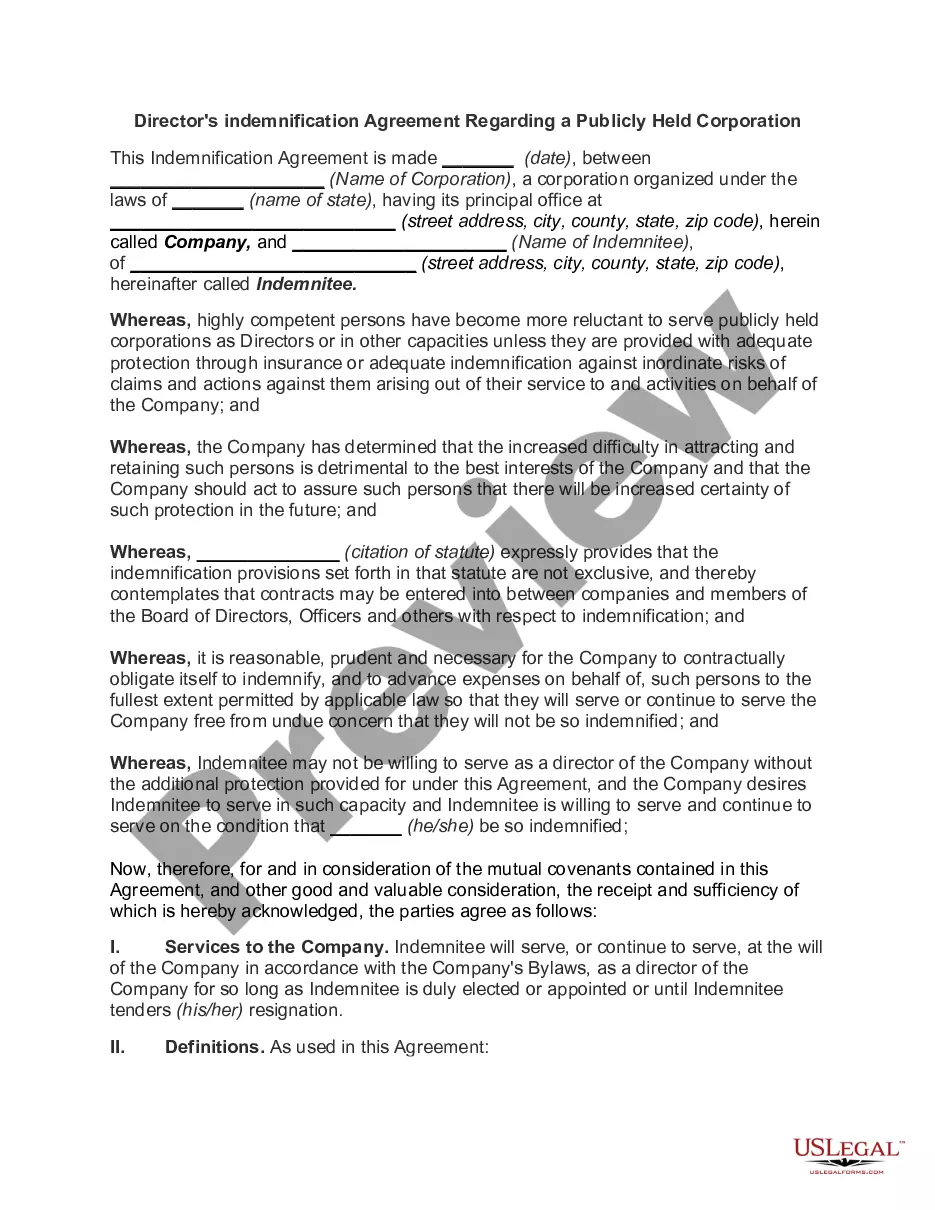
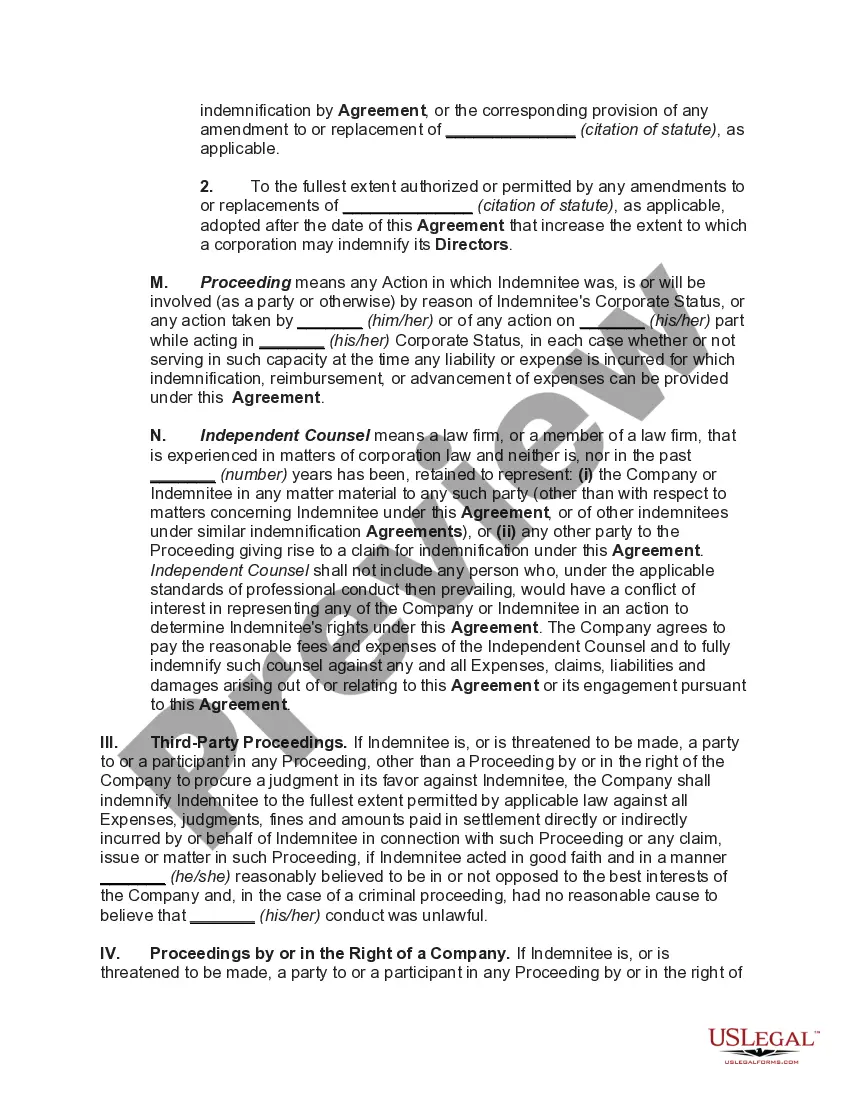
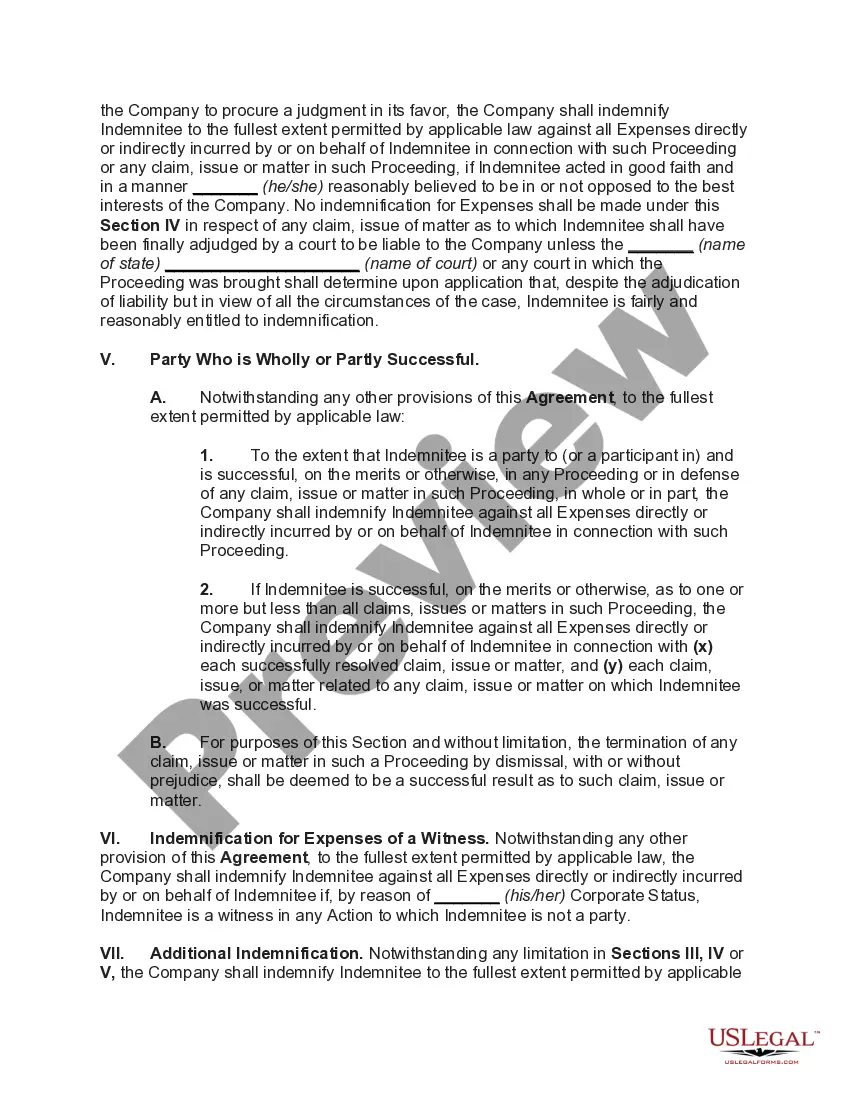
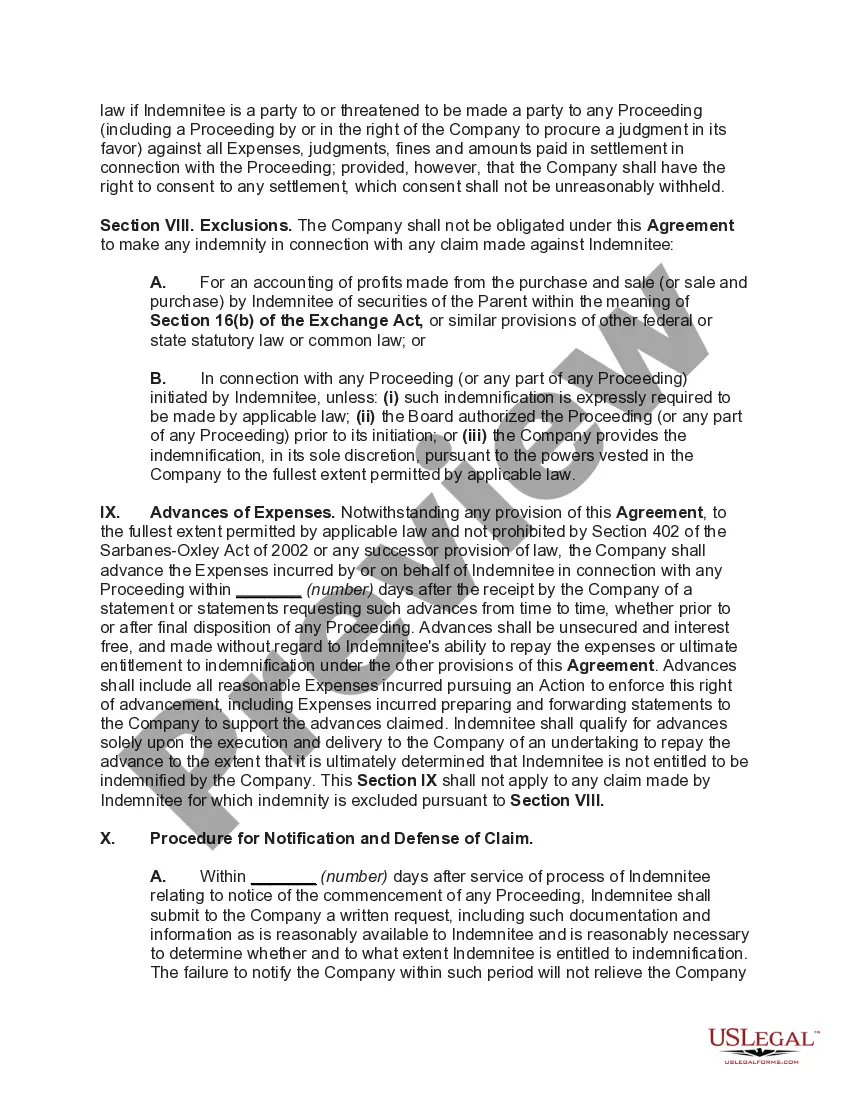
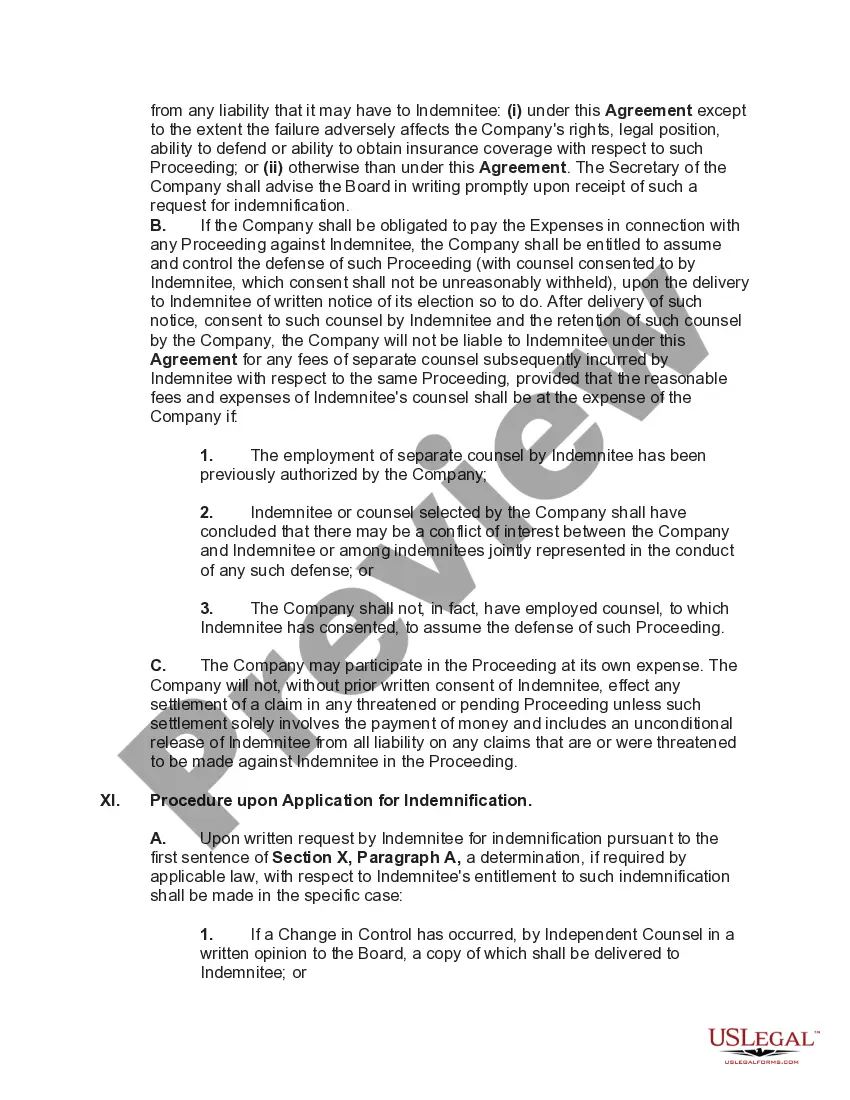
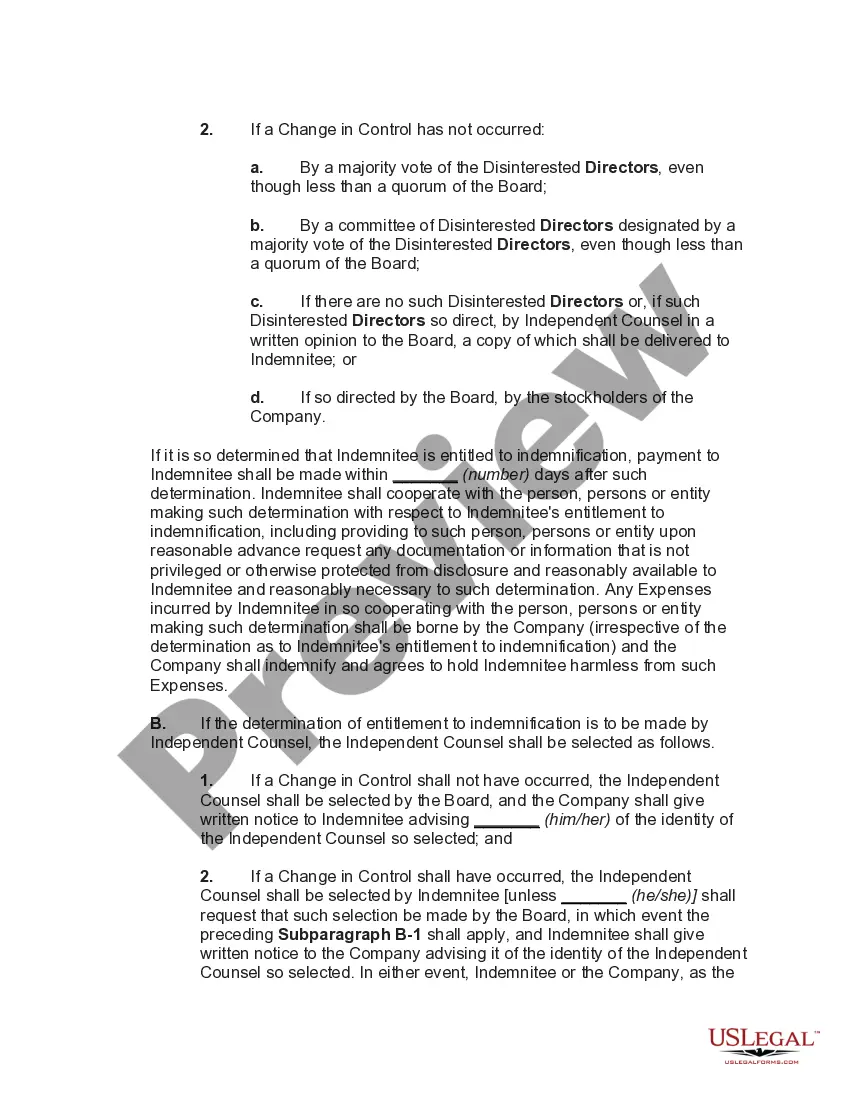
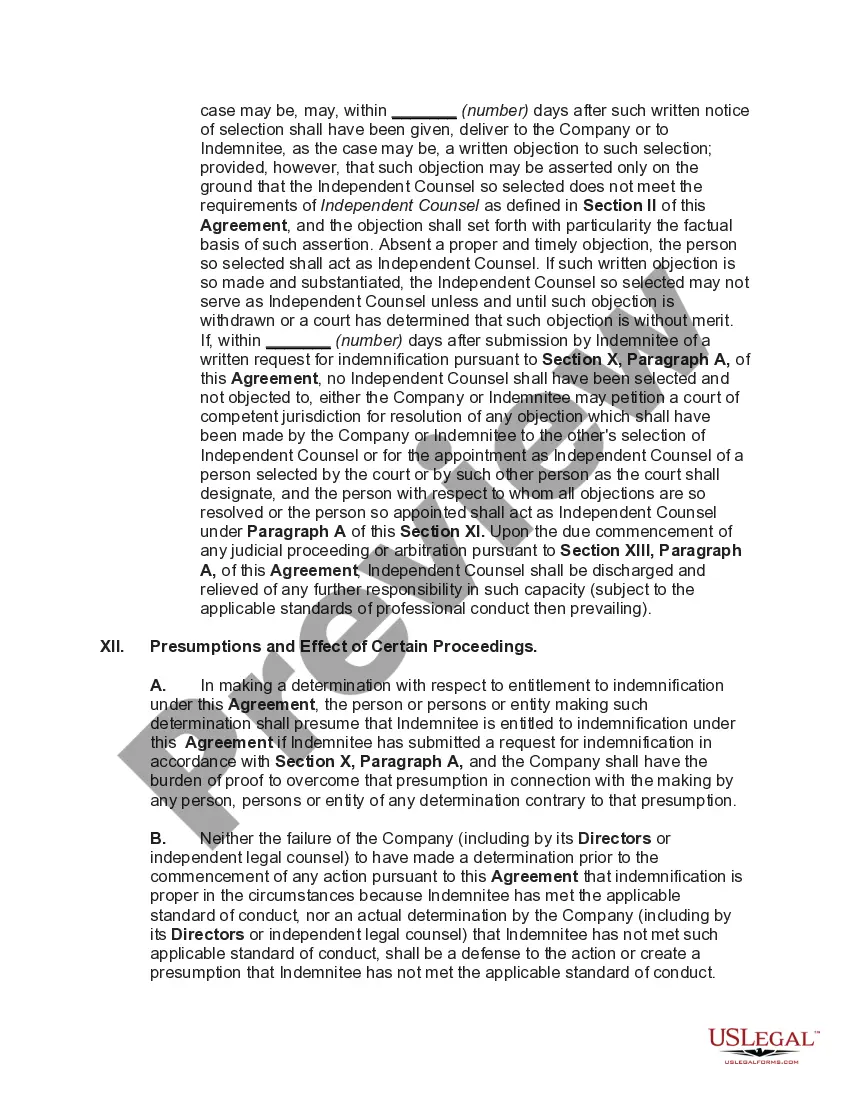
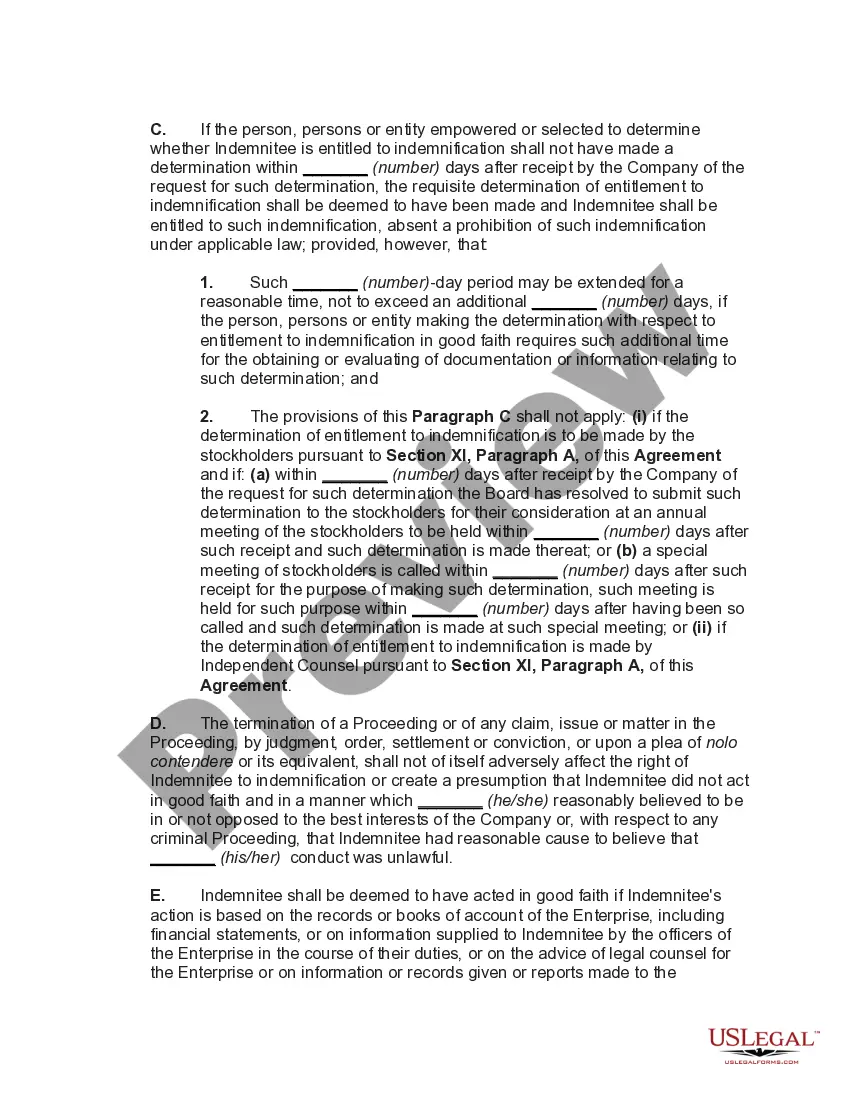
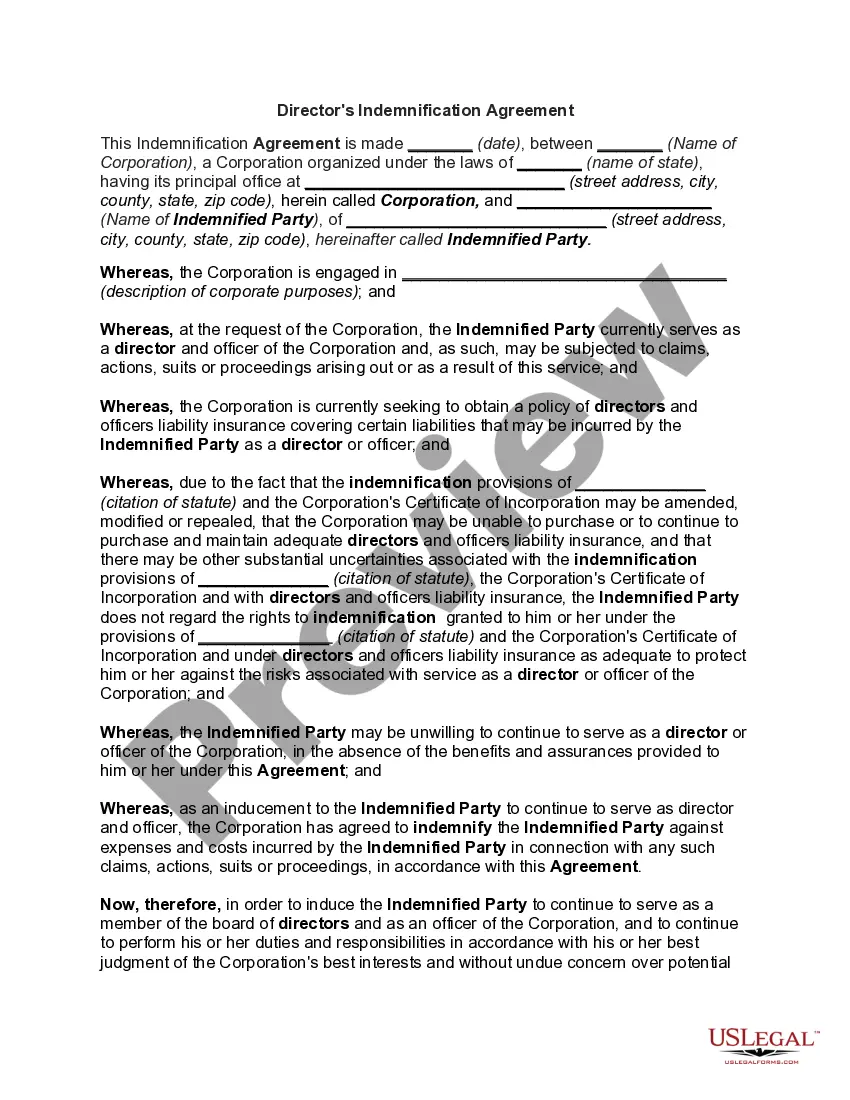
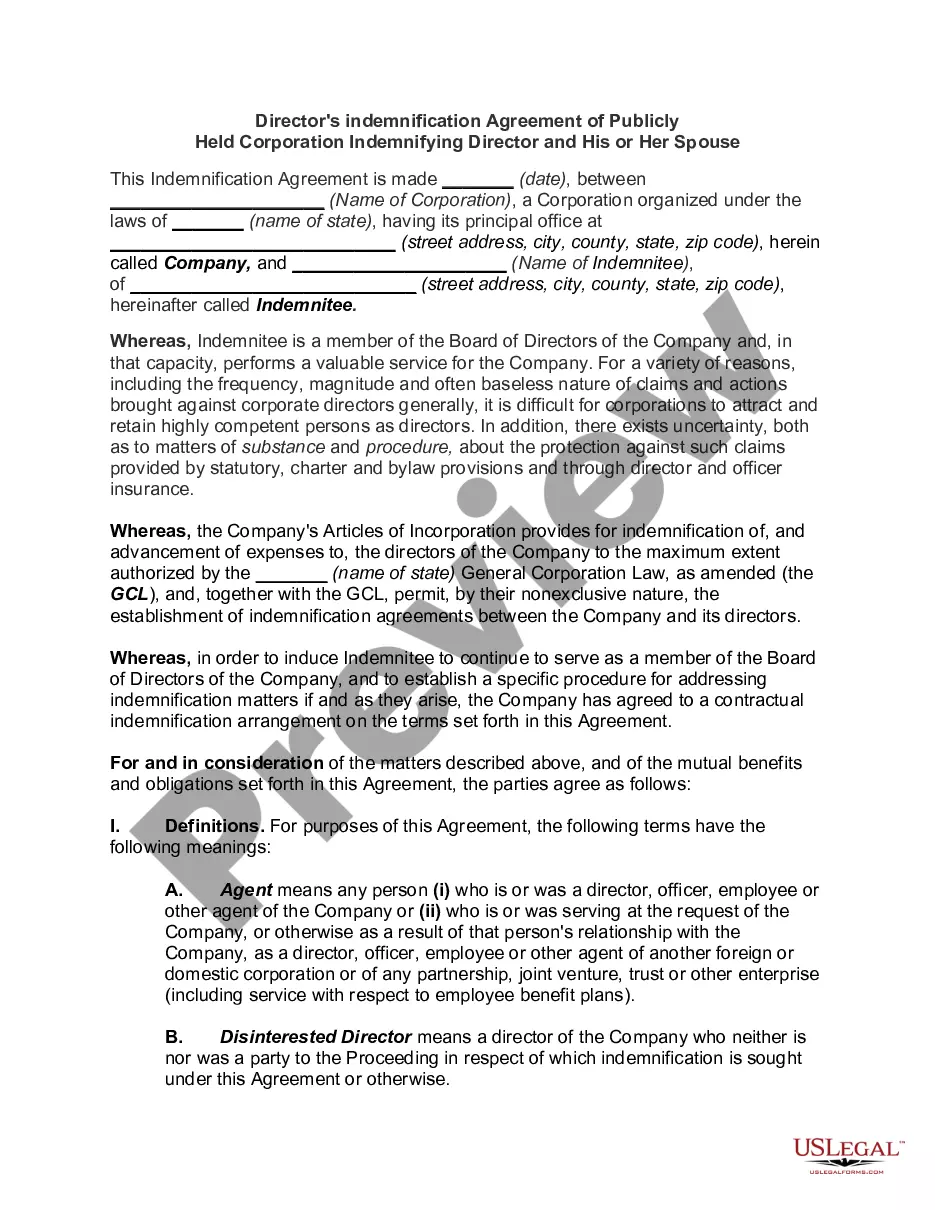
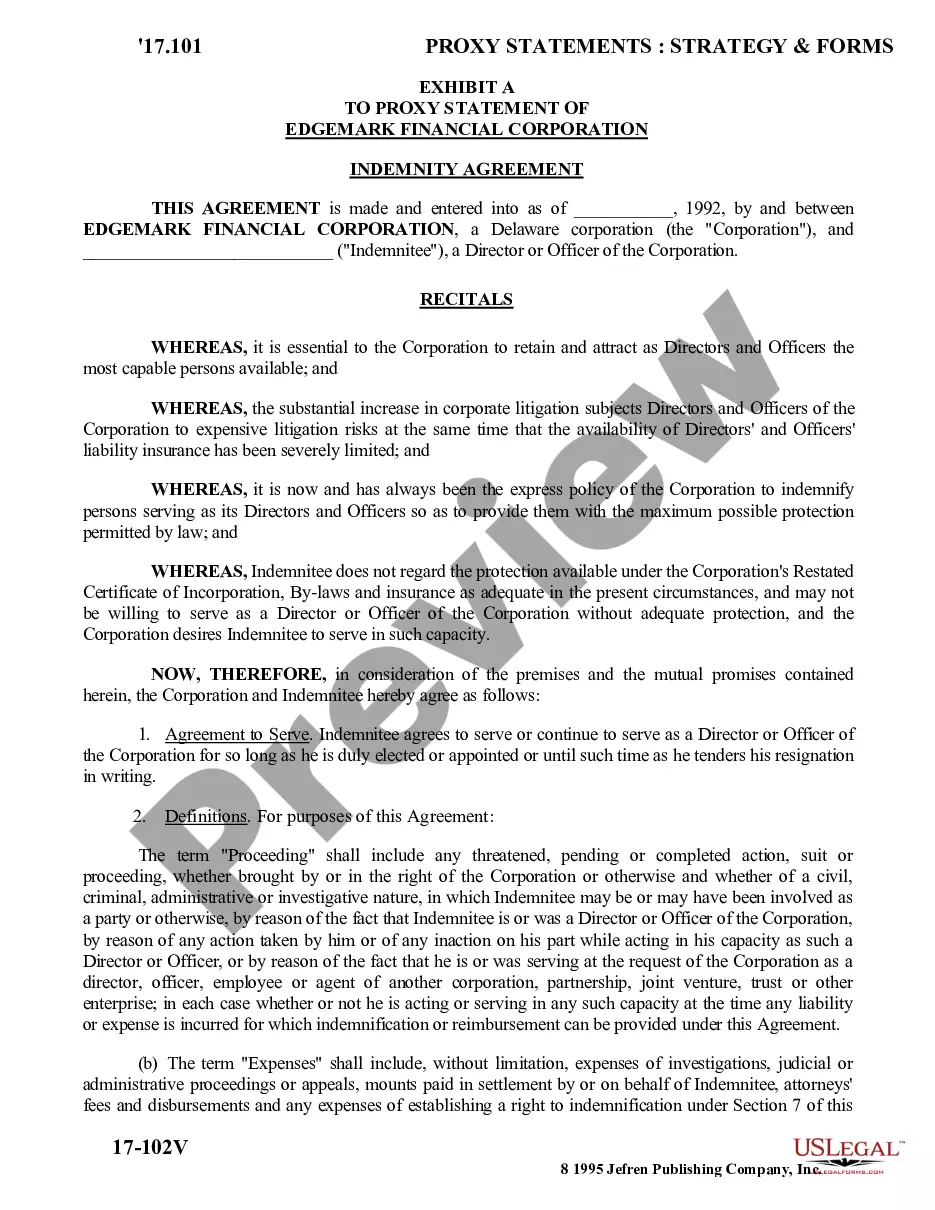
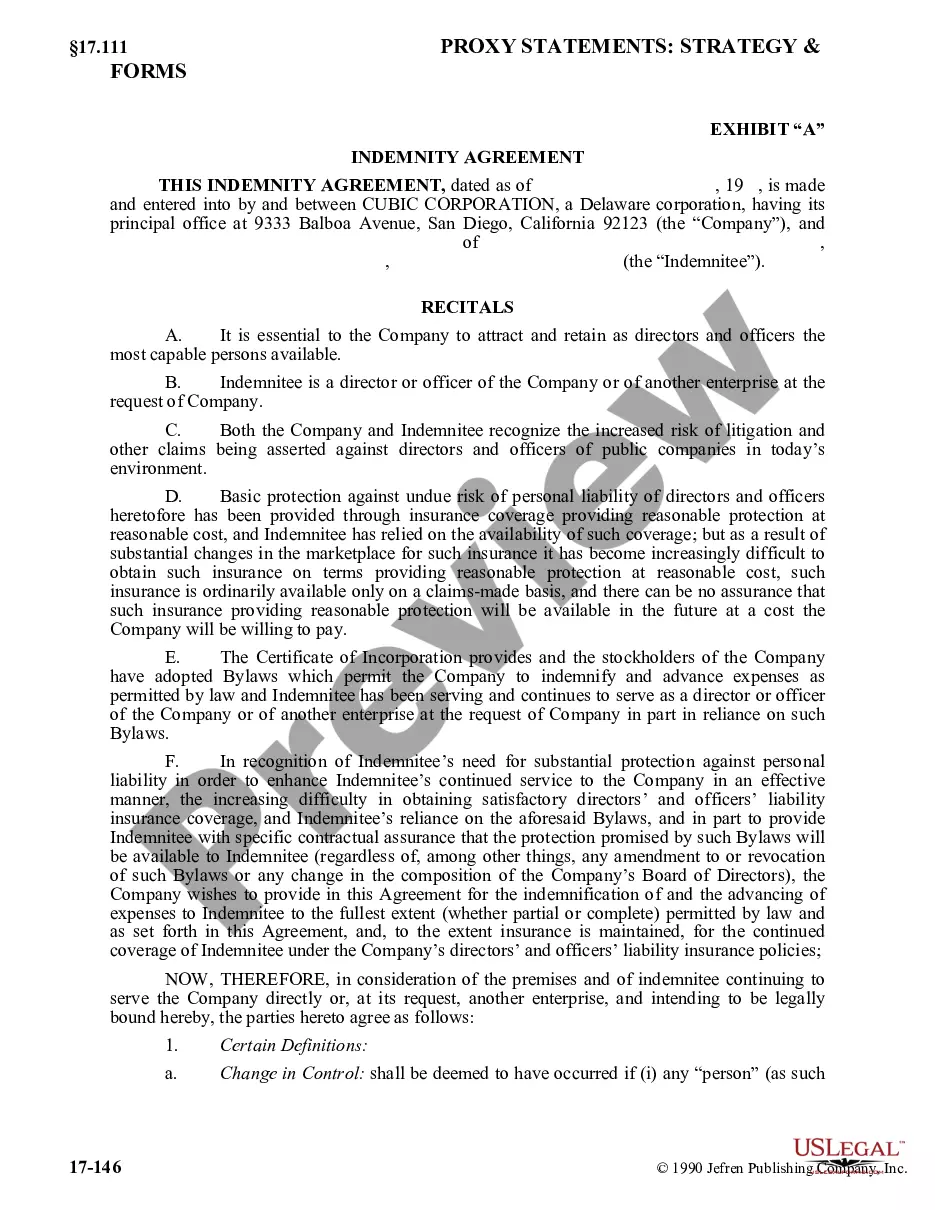
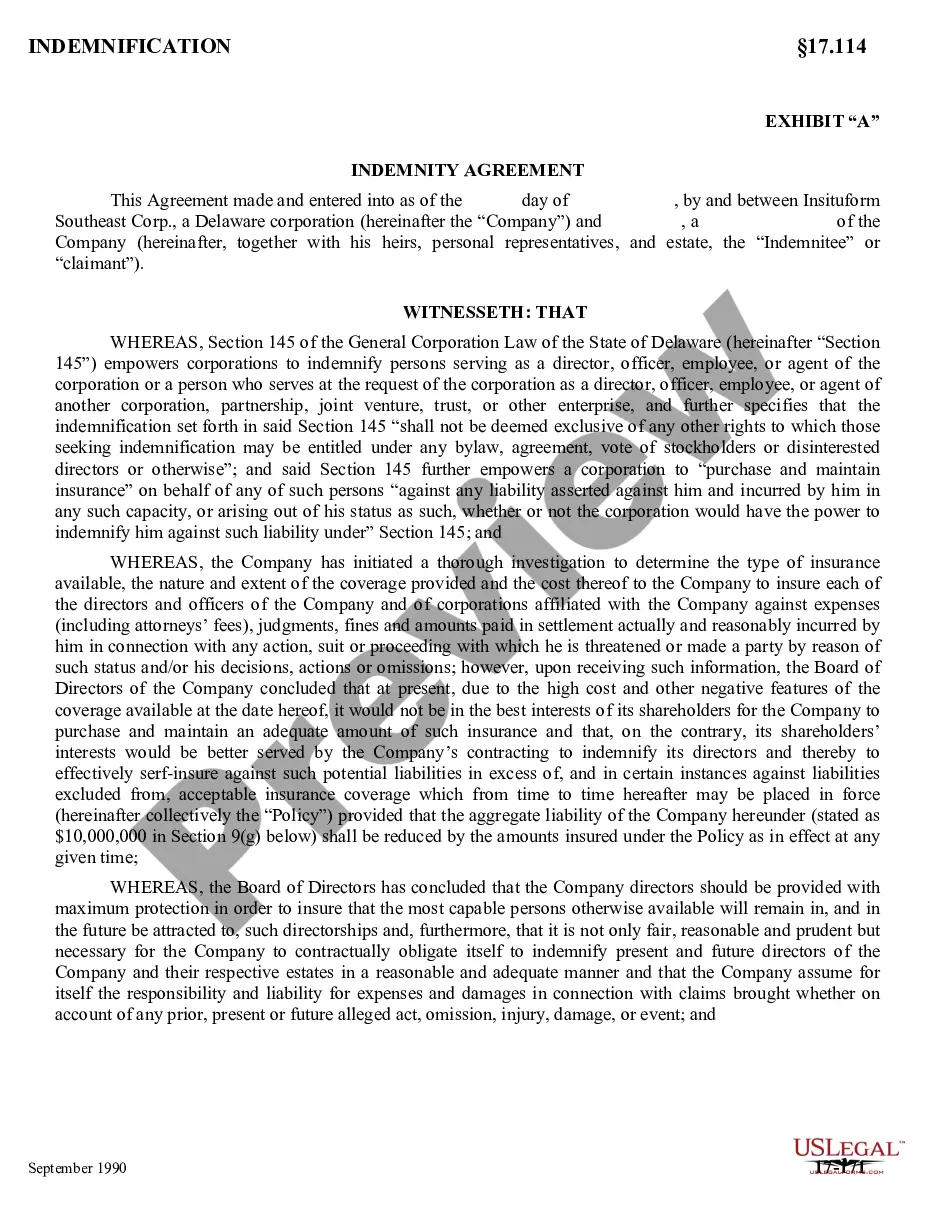
The Director's Indemnification Agreement Regarding a Publicly Held Corporation is a legal document that outlines the terms under which a corporation agrees to provide indemnification to its directors. This agreement offers more comprehensive protection than standard corporate bylaws, ensuring directors are defended against claims related to their corporate actions. By establishing mandatory obligations for indemnification, the agreement enhances the security and confidence of individuals serving on a corporation's board.
Key components of this form
- Identification of the parties, including the corporation and the indemnified director.
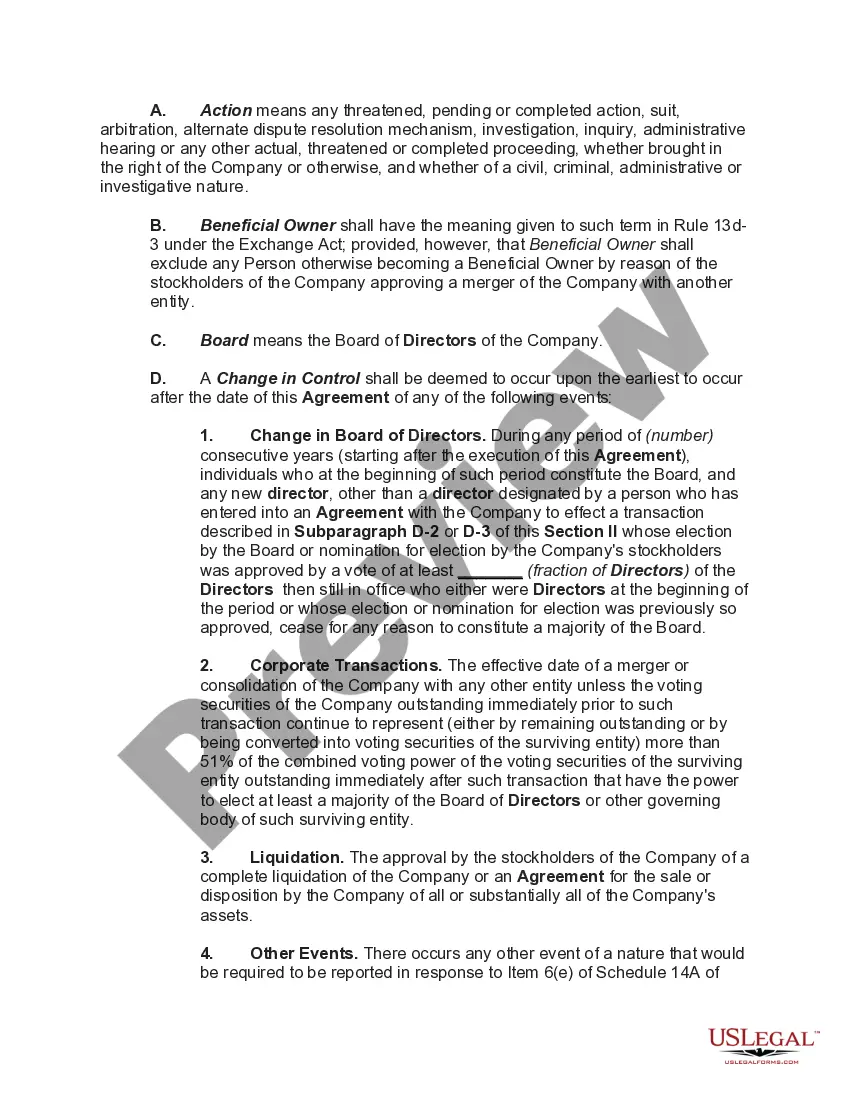
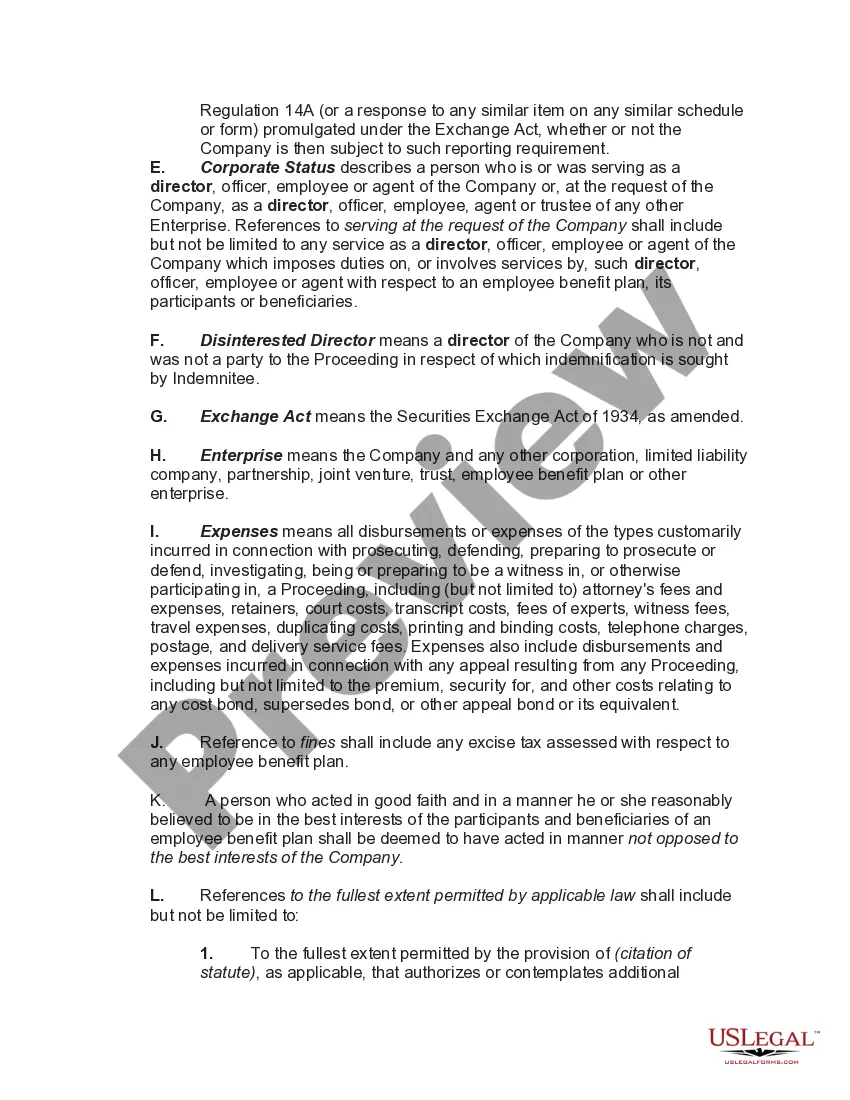
- Definitions outlining key terms used in the agreement.
- Provisions for indemnification in third-party and corporate lawsuits.
- Clauses detailing the process for legal expense advances.
- Requirements for notification and procedures for seeking indemnification.

Common use cases
This form is utilized when a corporation wants to establish clear indemnification terms for its directors, particularly in publicly held companies. It is recommended when:
- The board of directors requires assurance against personal liability arising from their corporate actions.
- There is a desire to attract qualified individuals to serve on the board by providing additional legal protections.
- Changes in management or corporate structure might put directors' previous actions at risk of scrutiny or claims.
Who can use this document
- Corporate executives and directors of publicly held corporations.
- Companies looking to bolster their governance practices and protect their leadership.
- Legal teams drafting indemnification agreements for corporate bylaws.
Instructions for completing this form
- Fill in the date of the agreement and the name of the corporation at the beginning of the document.
- Provide the full names and addresses of both the corporation and the indemnitee (the director).
- Define key terms as required in the definitions clause.
- Specify which statutes govern the indemnification provisions and detail how expenses will be advanced.
- Obtain signatures from authorized representatives of the corporation and the indemnitee.
Does this document require notarization?
This form usually doesn’t need to be notarized. However, local laws or specific transactions may require it. Our online notarization service, powered by Notarize, lets you complete it remotely through a secure video session, available 24/7.
Get your form ready online
Our built-in tools help you complete, sign, share, and store your documents in one place.
Make edits, fill in missing information, and update formatting in US Legal Forms—just like you would in MS Word.
Download a copy, print it, send it by email, or mail it via USPS—whatever works best for your next step.
Sign and collect signatures with our SignNow integration. Send to multiple recipients, set reminders, and more. Go Premium to unlock E-Sign.
If this form requires notarization, complete it online through a secure video call—no need to meet a notary in person or wait for an appointment.
We protect your documents and personal data by following strict security and privacy standards.

Make edits, fill in missing information, and update formatting in US Legal Forms—just like you would in MS Word.

Download a copy, print it, send it by email, or mail it via USPS—whatever works best for your next step.

Sign and collect signatures with our SignNow integration. Send to multiple recipients, set reminders, and more. Go Premium to unlock E-Sign.

If this form requires notarization, complete it online through a secure video call—no need to meet a notary in person or wait for an appointment.

We protect your documents and personal data by following strict security and privacy standards.
Mistakes to watch out for
- Failing to fully define key terms, which may lead to misunderstandings.
- Not specifying the governing law, making enforcement difficult.
- Omitting necessary signatures, which can invalidate the agreement.
Benefits of using this form online
- Convenience of immediate download and access from anywhere.
- Editability allows users to customize terms as needed.
- Reliability of professionally drafted forms, ensuring legal compliance.
What to keep in mind
- The Director's Indemnification Agreement offers essential protection for directors against legal claims.
- Proper completion ensures enforceability and clarity of indemnification terms.
- State laws should be considered when drafting the agreement to ensure compliance.
Looking for another form?
Form popularity
FAQ
A director and officer indemnification agreement is a contract that allows executives to protect themselves from claims made against them while performing job. Indemnification means that in the event a lawsuit is filed against a company, the indemnified party is "held harmless" from claims.
In a lawsuit or proceeding brought by a third party ? those outside of the company and not in a derivative manner on behalf of the corporation ? directors and officers may be indemnified for actual and reasonably incurred expenses, including attorney's fees, judgments, fees and amounts paid in settlement.
However, public entities, such as the City, generally will not mutually indemnify, and will take the position that they cannot do so under state law. This is because an indemnification is a contingent claim in an unknown dollar amount.
Section 145(b) empowers a corporation to indemnify its directors against expenses incurred in connection with the defense or settlement of an action brought by or in the right of the corporation, subject to the standard of conduct determination, and except that no indemnification may be made as to any claim to which
Indemnification is, generally speaking, a reimbursement by a company of its Ds&Os for expenses or losses they have incurred in connection with litigation or other proceedings relating to their service to the company.
Indemnification is an undertaking by the company to defend the director and officer against the cost of certain claims, including legal fees, litigation awards and settlement costs.
An indemnification agreement, also called an indemnity agreement, hold harmless agreement, waiver of liability, or release of liability, is a contract that provides a business or a company with protection against damages, loss, or other burdens.
Directors' and officers' liability insurance ? also known as D&O insurance ? covers the cost of compensation claims made against your business's directors and key managers (officers) for alleged wrongful acts.