Software Interface Requirements
What this document covers
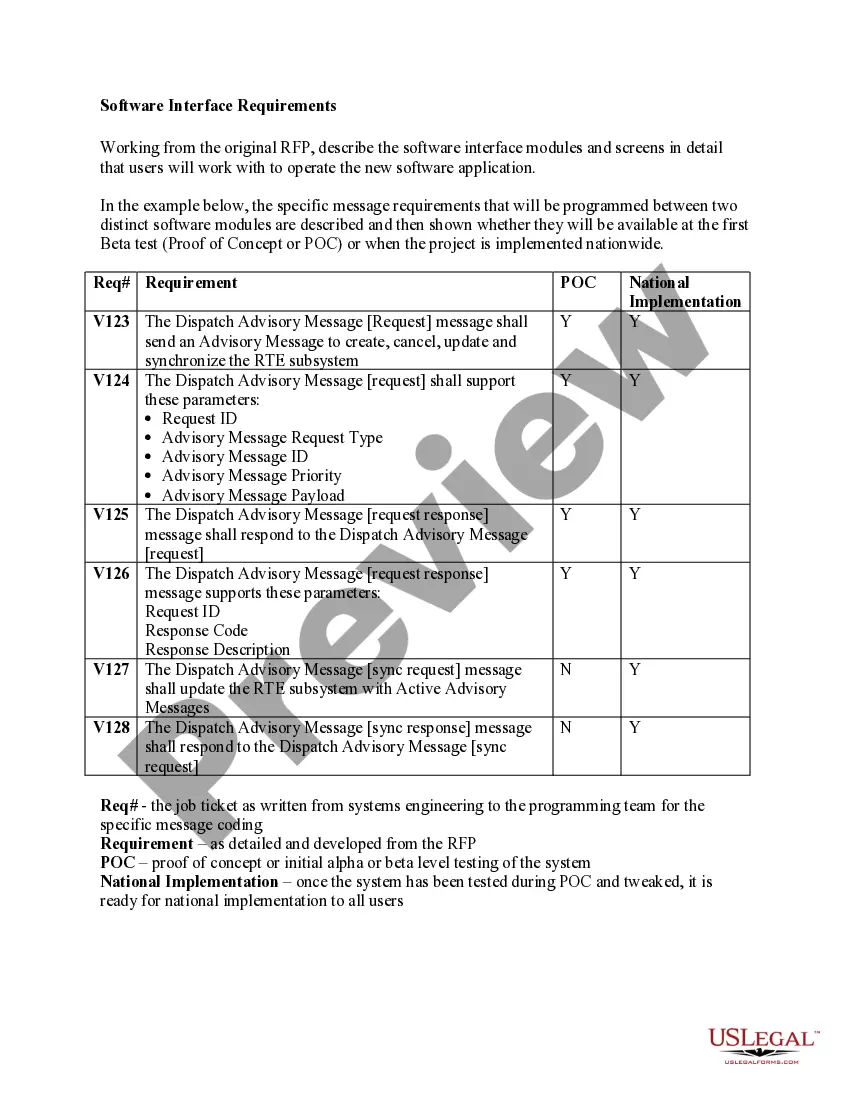
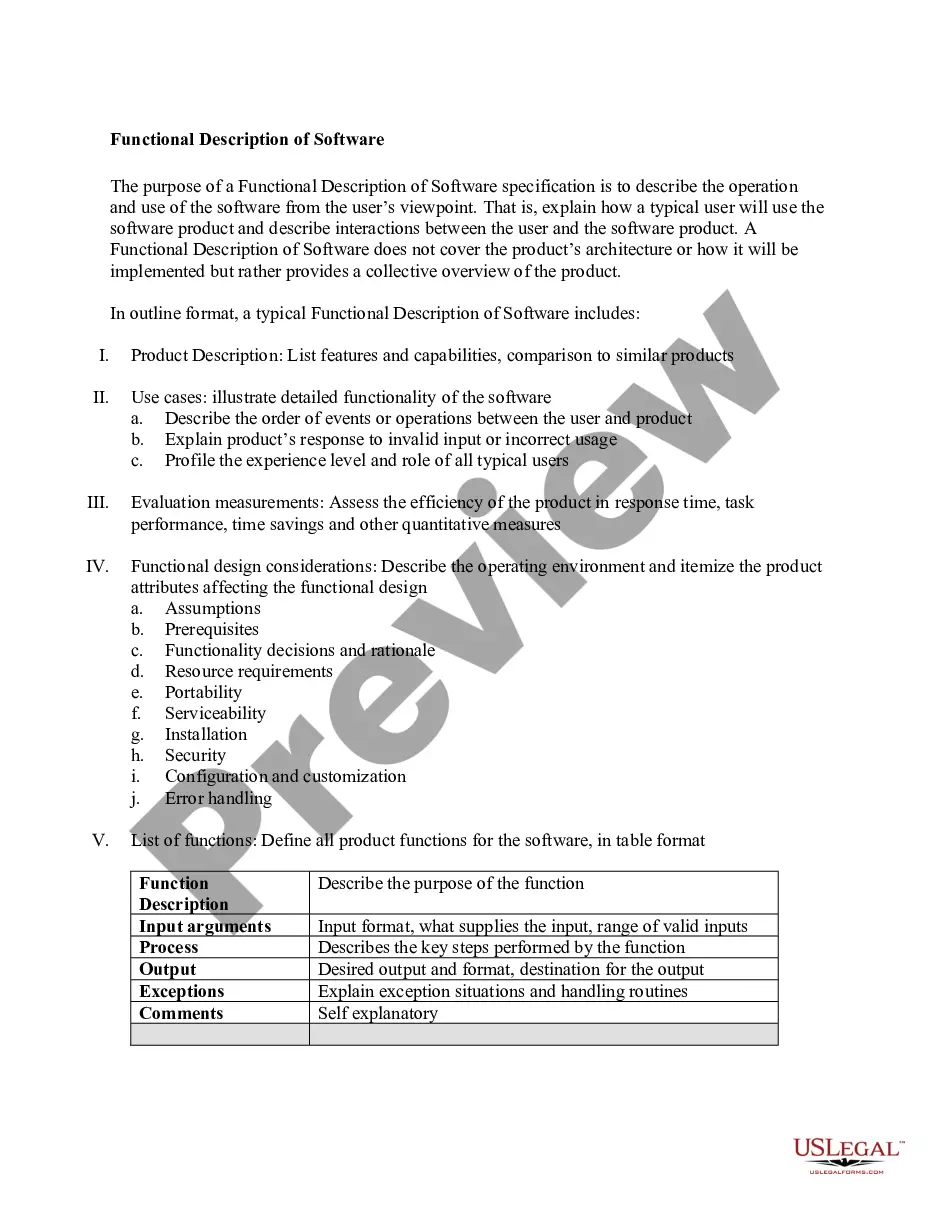
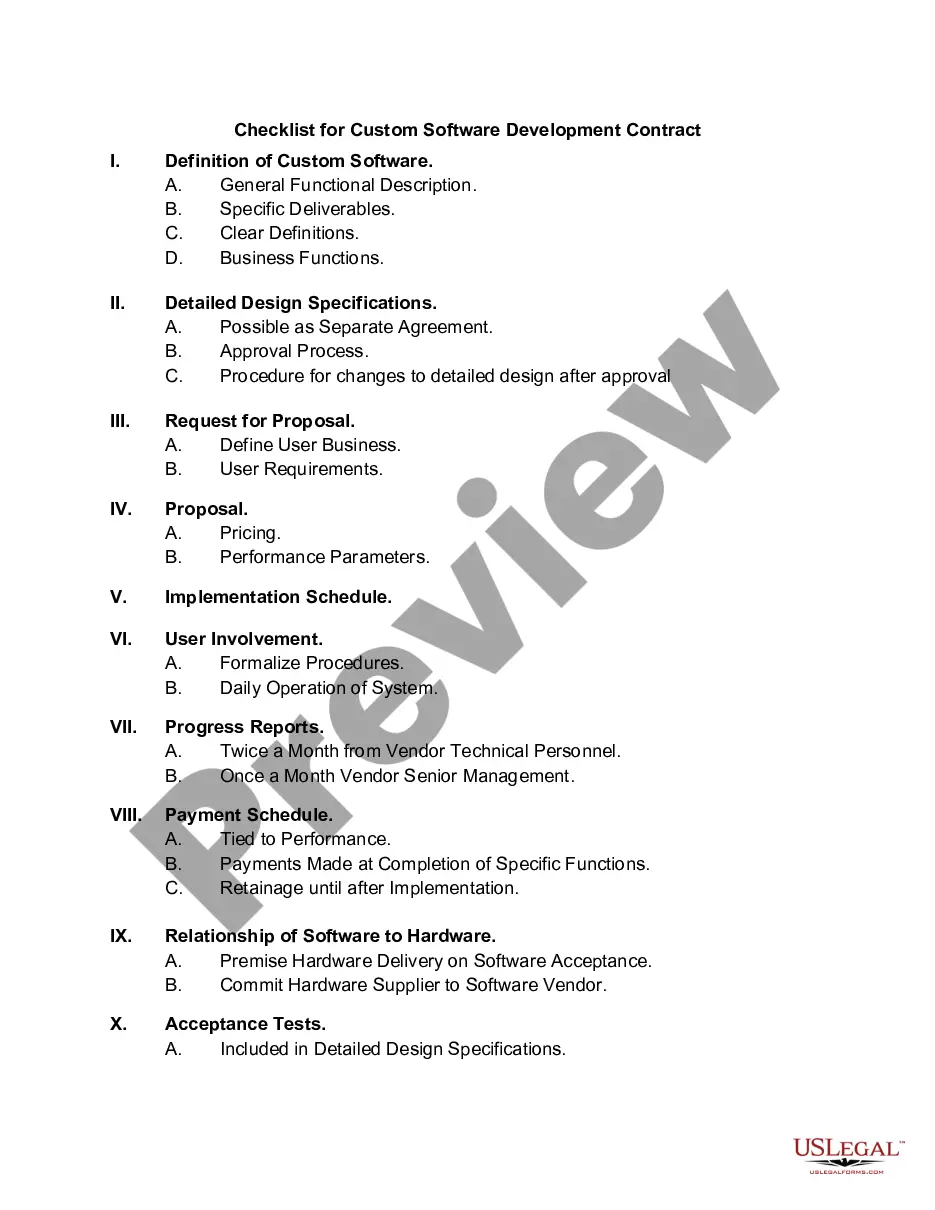
The Software Interface Requirements form is a detailed document that outlines the specific requirements for software interface modules and screens used in a new software application. This form provides clear guidelines on how different software components interact, distinguishing it from other technical specifications by focusing on communication between modules during various phases of implementation, such as beta testing and nationwide rollout.
Form components explained
- Requirements Overview: A summary of the requirements derived from the original Request For Proposal (RFP).
- Message Specifications: Details on specific messages that will be exchanged between software modules.
- Beta Testing Details: Information on which requirements will be available during beta testing (Proof of Concept).
- National Implementation Readiness: Outline of requirements that will be operational during national implementation.
- Parameter Support: List of parameters supported by each message type, enhancing clarity on necessary data exchanges.
When to use this form
This form is essential for software development teams when they are defining how different software modules will communicate with each other. It should be utilized during the planning stages of software design, especially when preparing for beta testing and the eventual national rollout of the application. Using this form ensures that all technical requirements are clearly documented, reducing miscommunication and facilitating smoother implementation processes.
Who should use this form
- Software Developers: Those responsible for creating or modifying software applications.
- Project Managers: Individuals overseeing software development projects who need to ensure all requirements are met.
- Systems Engineers: Professionals who design and integrate complex systems and need to ensure compatibility between software modules.
- Quality Assurance Teams: Personnel tasked with testing the software and verifying that it meets the outlined requirements.
How to prepare this document
- Review the original RFP: Understand the project's overall goals and specific software requirements.
- Detail module interactions: Clearly describe how each software module will communicate with one another.
- Define message specifications: Specify the types of messages exchanged between modules, including all necessary parameters.
- Outline implementation phases: Indicate which requirements will be available during beta testing and when they will be implemented nationwide.
- Collaborate with stakeholders: Share the completed form with development, engineering, and testing teams for feedback and validation.
Notarization requirements for this form
In most cases, this form does not require notarization. However, some jurisdictions or signing circumstances might. US Legal Forms offers online notarization powered by Notarize, accessible 24/7 for a quick, remote process.
Get your form ready online
Our built-in tools help you complete, sign, share, and store your documents in one place.
Make edits, fill in missing information, and update formatting in US Legal Forms—just like you would in MS Word.
Download a copy, print it, send it by email, or mail it via USPS—whatever works best for your next step.
Sign and collect signatures with our SignNow integration. Send to multiple recipients, set reminders, and more. Go Premium to unlock E-Sign.
If this form requires notarization, complete it online through a secure video call—no need to meet a notary in person or wait for an appointment.
We protect your documents and personal data by following strict security and privacy standards.

Make edits, fill in missing information, and update formatting in US Legal Forms—just like you would in MS Word.

Download a copy, print it, send it by email, or mail it via USPS—whatever works best for your next step.

Sign and collect signatures with our SignNow integration. Send to multiple recipients, set reminders, and more. Go Premium to unlock E-Sign.

If this form requires notarization, complete it online through a secure video call—no need to meet a notary in person or wait for an appointment.

We protect your documents and personal data by following strict security and privacy standards.
Common mistakes
- Failing to include all necessary parameters in message specifications.
- Not distinguishing between phases of implementation, leading to confusion about when certain requirements apply.
- Omitting stakeholder input during the drafting process, which may result in crucial requirements being overlooked.
Benefits of completing this form online
- Convenience: Access and complete the Software Interface Requirements form anywhere, anytime.
- Editability: Easily update requirements as project needs evolve without hassle.
- Reliability: Ensure accuracy with a form drafted by licensed attorneys, reducing the risk of legal issues.
Legal use & context
- This form serves as a foundational document for software development projects, capturing essential requirements for interface communication.
- Clear documentation of interface requirements can prevent disputes and clarify expectations between software development teams and clients.
- It is a best practice to regularly review interface requirements during project lifecycle to accommodate any changes in scope or technology.
Summary of main points
- The Software Interface Requirements form is crucial for defining communication between software modules.
- Utilizing this form enhances clarity during both beta testing and national implementation phases.
- Engaging relevant stakeholders ensures comprehensive requirement coverage and decreases project risks.
Looking for another form?


Form popularity
FAQ
The main types of requirements are: Functional Requirements. Performance Requirements. System Technical Requirements. Specifications.
Requirements fall into three categories: business, user and software. See examples of each one, as well as what constitutes functional and nonfunctional kinds of software requirements. A comprehensive set of requirements is crucial for any software project.
The user interface must be secure, convenient and extensible. Security requirements include the need to protect authorization information from unauthorized access, the maintenance of customer confidentiality and tracking of payments in progress. The problem of protecting of each party from fraud must also be addressed.
There are three types of software requirements:- functional requirements, non-functional requirements, and domain requirements.
External Interface Requirements These requirements include user interfaces (interaction logic between software and user), screen layouts, buttons, functions on every screen, hardware interfaces (here a team describes what devices the software is created for), and other relevant particularities.
Functions offered by the system such as timing constraints, constraints on the development process, standards, etc. e.g. reliability, response time and storage requirements. Constraints are I/ O device capability, system representations, etc.
A complete Software Requirement Specifications must be: Clear. Correct. Consistent. Coherent. Comprehensible. Modifiable. Verifiable. Prioritized.