Quitclaim Deed Curing Encroachment
Overview of this form
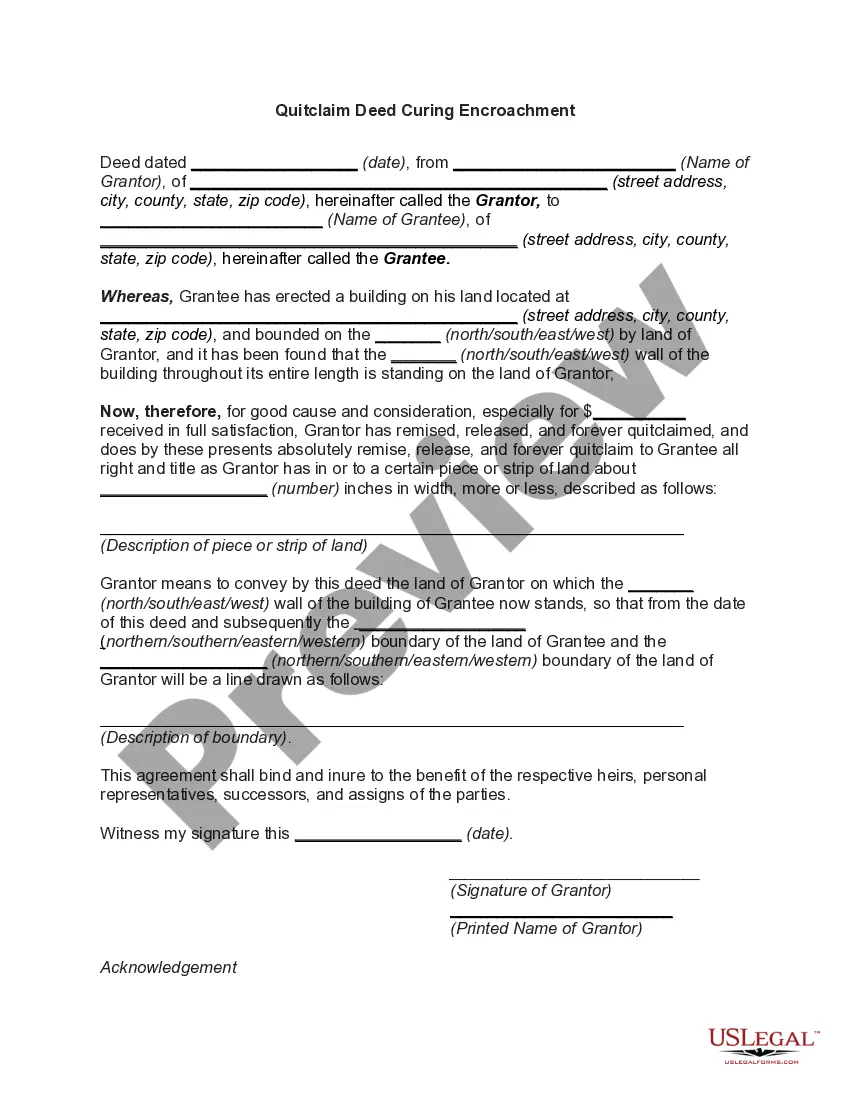
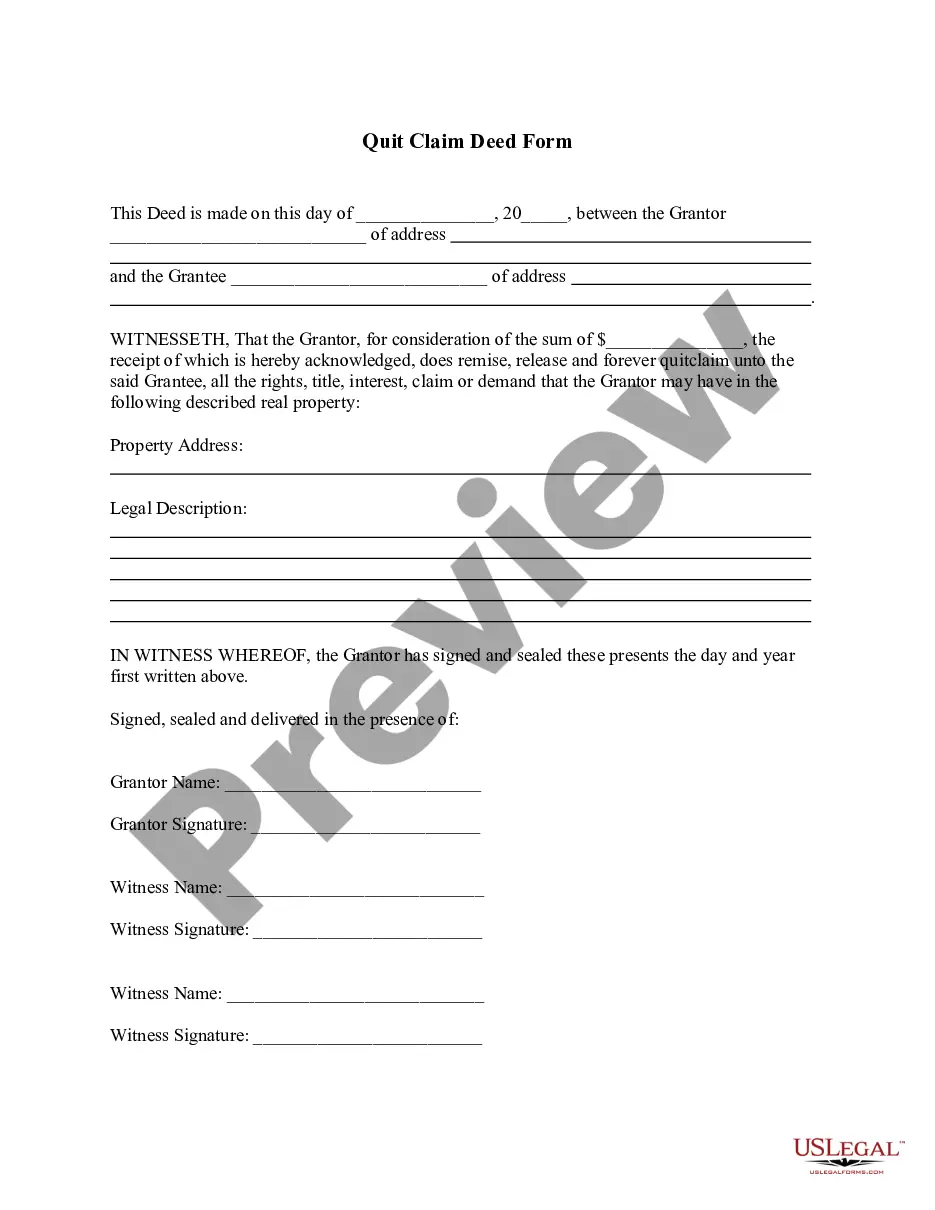
The Quitclaim Deed Curing Encroachment form is a legal instrument used to transfer ownership of a specific portion of land when a property owner has unintentionally or intentionally encroached on a neighboring property. Unlike a warranty deed, which guarantees a clear title, a quitclaim deed does not offer such assurances, making it crucial in situations where boundaries have been crossed. This form helps clarify ownership rights and can prevent future disputes between neighbors regarding property lines.
What’s included in this form
- Date of the deed
- Names and addresses of the Grantor and Grantee
- Description of the property encroached upon
- Specifying the portion of land being conveyed
- Boundary descriptions for clarity
- Signatures and acknowledgments of the parties involved


Situations where this form applies
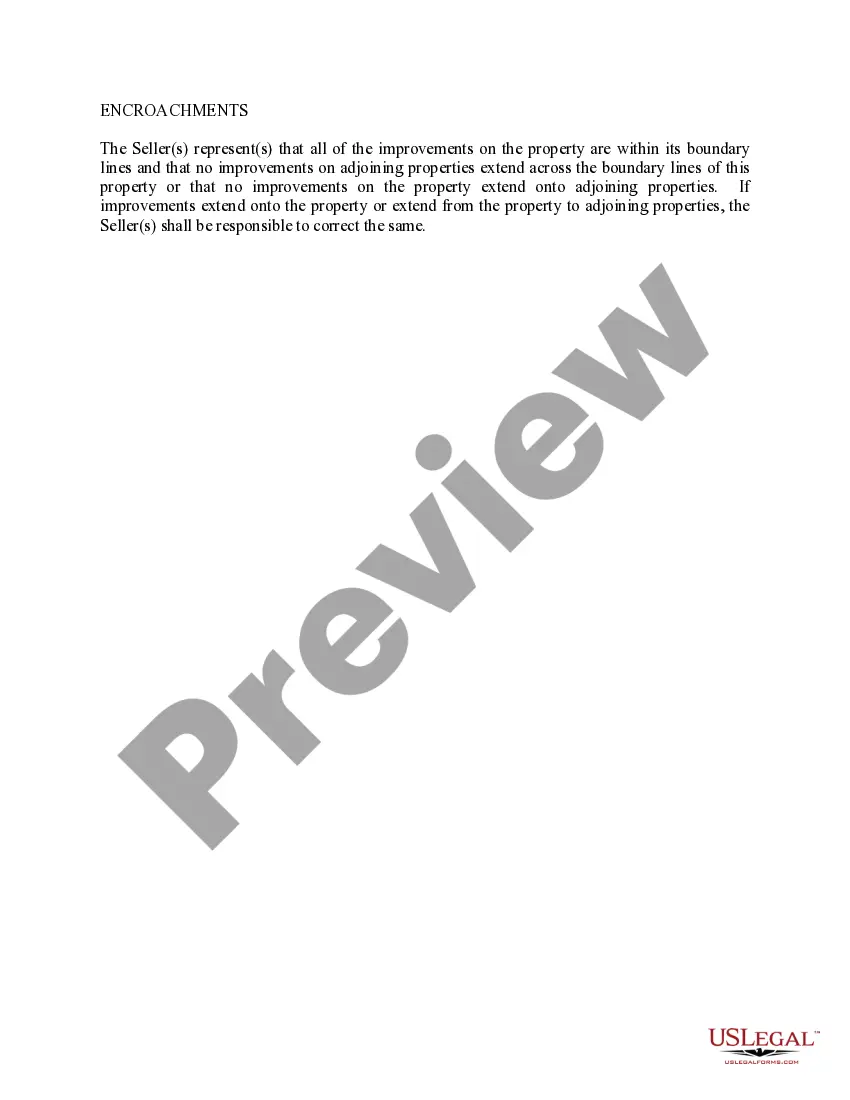
This form should be used when a property owner has built or placed a structure that extends over the property line onto a neighbor's land. It is particularly relevant when both parties agree to rectify the situation amicably. This deed can help prevent legal disputes that may arise from continued encroachment and clarifies ownership with regard to the encroached area.
Who can use this document
This form is suitable for:
- Property owners who have encroached on a neighbor's land
- Neighbors wanting to formalize an agreement regarding property boundaries
- Real estate professionals handling property transactions involving boundary issues
- Individuals seeking a simple solution to resolve property disputes
How to prepare this document
- Identify the parties involved: the Grantor (property owner) and the Grantee (neighbor).
- Clearly describe the encroached property and the portion being conveyed.
- Enter the date of the transaction and specify the consideration received.
- Attach specific boundary descriptions to clarify property lines.
- Ensure both parties sign the document, with necessary acknowledgments.
Does this document require notarization?
This form needs to be notarized to ensure legal validity. US Legal Forms provides secure online notarization powered by Notarize, allowing you to complete the process through a verified video call, available anytime.
Get your form ready online
Our built-in tools help you complete, sign, share, and store your documents in one place.
Make edits, fill in missing information, and update formatting in US Legal Forms—just like you would in MS Word.
Download a copy, print it, send it by email, or mail it via USPS—whatever works best for your next step.
Sign and collect signatures with our SignNow integration. Send to multiple recipients, set reminders, and more. Go Premium to unlock E-Sign.
If this form requires notarization, complete it online through a secure video call—no need to meet a notary in person or wait for an appointment.
We protect your documents and personal data by following strict security and privacy standards.

Make edits, fill in missing information, and update formatting in US Legal Forms—just like you would in MS Word.

Download a copy, print it, send it by email, or mail it via USPS—whatever works best for your next step.

Sign and collect signatures with our SignNow integration. Send to multiple recipients, set reminders, and more. Go Premium to unlock E-Sign.

If this form requires notarization, complete it online through a secure video call—no need to meet a notary in person or wait for an appointment.

We protect your documents and personal data by following strict security and privacy standards.
Common mistakes to avoid
- Failing to provide accurate property descriptions, leading to confusion about boundaries.
- Not having all necessary signatures, making the form invalid.
- Leaving out the date of the deed, which can affect legal timelines.
- Not consulting local laws for specific requirements or variations.
Why use this form online
- Convenience of completing the form from home without scheduling appointments.
- Editability allows users to customize the document according to their needs.
- Access to professionally drafted templates ensures legal compliance.
- Immediate download allows for fast processing of property issues.
Legal use & context
- A quitclaim deed is often used to clarify property boundaries.
- This form is enforceable in legal disputes if properly executed.
- The form's effectiveness may vary based on state laws and regulations.
Key takeaways
- The Quitclaim Deed Curing Encroachment resolves disputes over property boundaries.
- It allows property owners to formally transfer interests in the property.
- Understanding local laws is crucial for proper legal compliance.
Looking for another form?
Form popularity
FAQ
Recording a property interest transfer means that everyone is on notice that the prior owner no longer is responsible for the real estate but that the new owner is in charge.In short, recording a property deed is not just the law; it's a good idea and offers both parties legal protections.
It's usually a very straightforward transaction, but it's possible for a quitclaim deed to be challenged. If a quitclaim deed is challenged in court, the issue becomes whether the property was legally transferred and if the grantor had the legal right to transfer the property.
If the quitclaim deed requires the signature of all co-owners, the deed is invalid unless all co-owners have signed it and the deed is then delivered to the grantee.If one individual owns real estate and desires to add a co-owner such as a spouse, a quitclaim deed might be used.
A person who signs a quitclaim deed to transfer property they do not own results in no title at all being transferred since there is no actual ownership interest. The quitclaim deed only transfers the type of title you own.
Methods include: discharge by the recording of a satisfaction of the mortgage removing the realty from the lien of the mortgage by recording a release; discharge by court order; and, in some limited cases, discharge by a filing by a third party, such as a title insurer, a court-appointed personal representative, or an
Once a quit claim deed has been completed and filed with the County Clerk's Office, the title will officially pass from the grantor to the grantee. The only way to reverse a quit claim deed is to go to court and prove that the grantor was forced to sign the document under duress.
Many title issues can be resolved by filing one of three common documents: A quit claim deed removes an heir and clears up title among co-owners or spouses. A release of lien/judgment removes a paid mortgage or spousal or child support lien. A deed of reconveyance records payment of a mortgage under a deed of trust.
Determine if the error is harmless or fatal to the transfer of title. Decide what instrument is best suited to the error. Draft a corrective deed, affidavit, or new deed. Obtain the original signature(s) of the Grantor(s). Re-execute the deed with proper notarization and witnessing.
Re-recording of the original document. With corrections made in the body of the original document. A cover sheet detailing the changes. Must be re-signed and re-acknowledged. Correction Deed. A new deed reflecting the corrections/changes. Must meet all recording requirements of a deed.