Encroachments Clauses: Contract for Real Property
Overview of this form
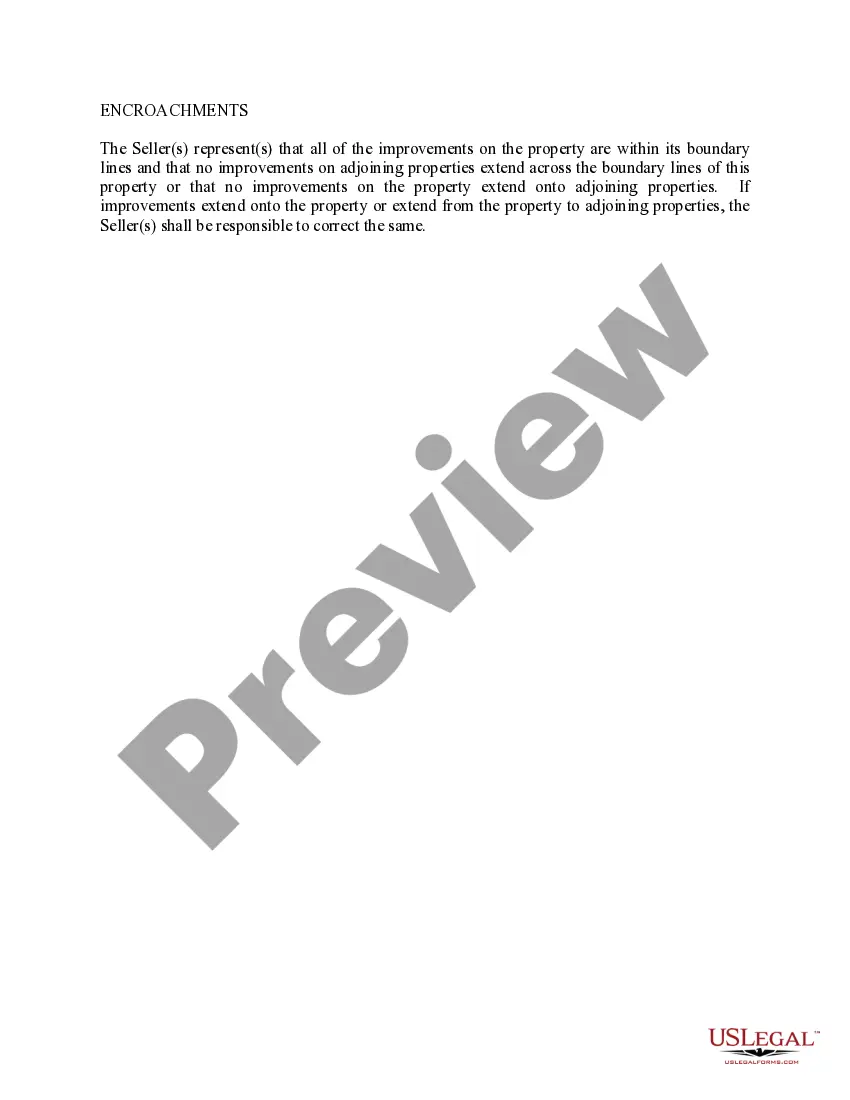
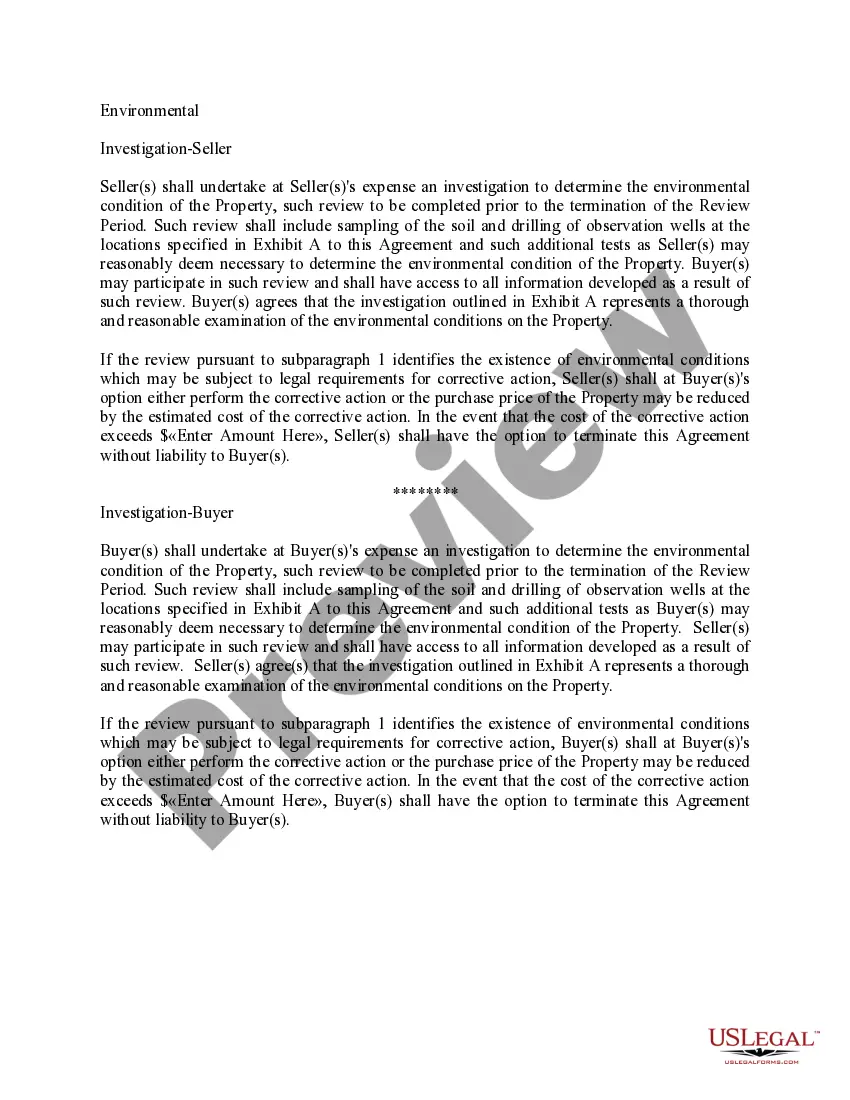
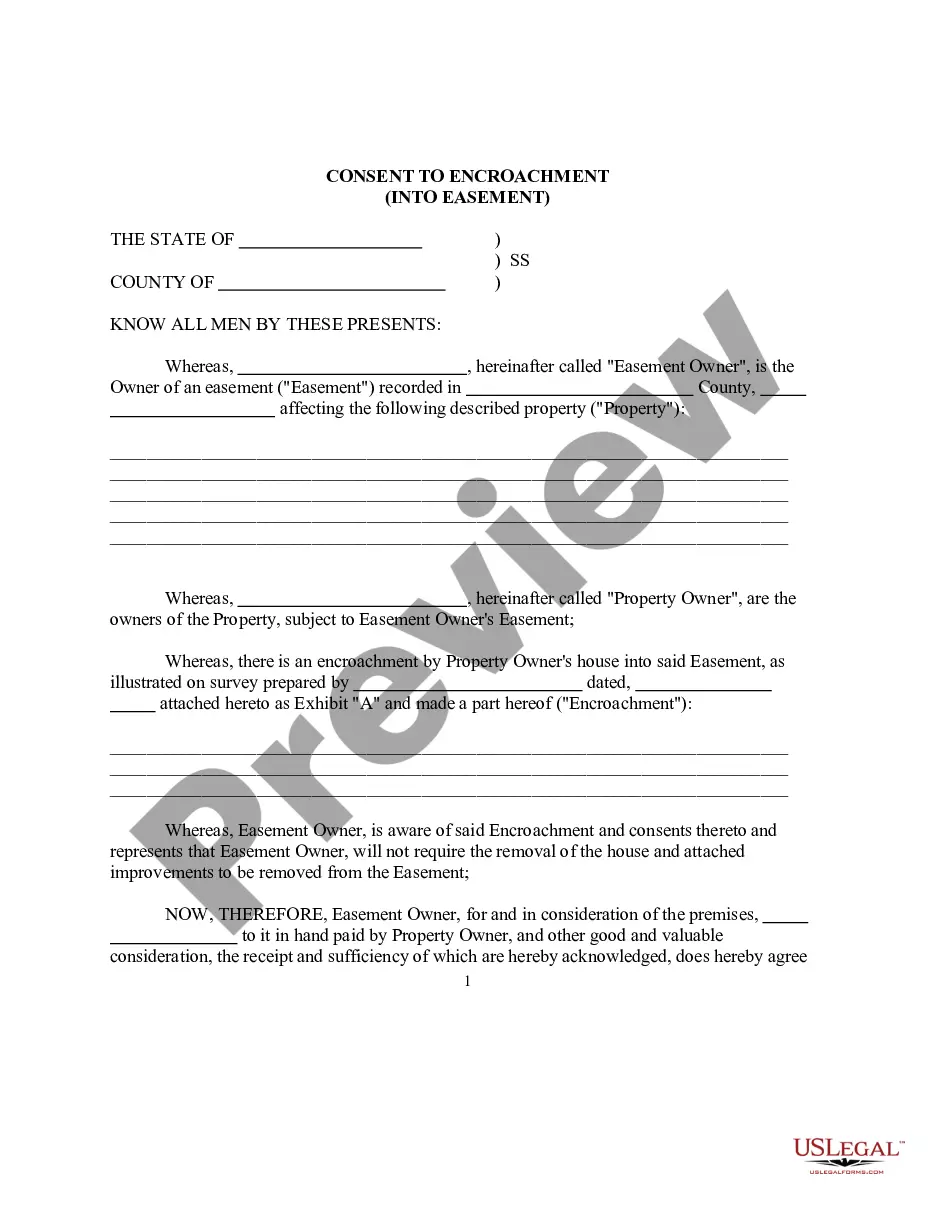
The Encroachments Clauses: Contract for Real Property is a legal document that helps property sellers confirm that their improvements are within their property boundaries, ensuring no encroachments on neighboring properties. This form is essential for creating clear, enforceable agreements in real estate transactions, distinguishing it from other contracts that may not focus specifically on boundary issues.
Form components explained
- Seller's representation about property improvements being within boundary lines.
- Clarification that no structures from neighboring properties extend onto the seller's property.
- Responsibility clause for the seller to correct any improvements that do not comply.
When to use this document
This form should be used in real estate transactions where property boundaries are in question. It is particularly useful when there is a concern about encroachments, such as when a buyer wants assurance that no parts of the seller's property extend onto neighboring land. This may arise during the sale of residential, commercial, or agricultural real estate.
Who can use this document
This form is intended for:
- Property sellers who want to ensure their sale contract includes specific representations about property boundaries.
- Real estate agents coordinating transactions where boundary issues may be a concern.
- Buyers seeking legal protection against potential encroachment disputes.
How to prepare this document
- Identify the seller and property involved in the transaction.
- Review the property boundaries and confirm there are no encroachments.
- Specify any improvements that may extend beyond the property lines.
- Include representations and warranties regarding these improvements.
- Sign and date the form to make it legally binding.
Notarization requirements for this form
This form does not typically require notarization unless specified by local law. However, notarization may add an extra layer of authenticity to the agreement and may be advised in certain transactions.
Get your form ready online
Our built-in tools help you complete, sign, share, and store your documents in one place.
Make edits, fill in missing information, and update formatting in US Legal Forms—just like you would in MS Word.
Download a copy, print it, send it by email, or mail it via USPS—whatever works best for your next step.
Sign and collect signatures with our SignNow integration. Send to multiple recipients, set reminders, and more. Go Premium to unlock E-Sign.
If this form requires notarization, complete it online through a secure video call—no need to meet a notary in person or wait for an appointment.
We protect your documents and personal data by following strict security and privacy standards.

Make edits, fill in missing information, and update formatting in US Legal Forms—just like you would in MS Word.

Download a copy, print it, send it by email, or mail it via USPS—whatever works best for your next step.

Sign and collect signatures with our SignNow integration. Send to multiple recipients, set reminders, and more. Go Premium to unlock E-Sign.

If this form requires notarization, complete it online through a secure video call—no need to meet a notary in person or wait for an appointment.

We protect your documents and personal data by following strict security and privacy standards.
Avoid these common issues
- Failing to accurately assess property boundaries before signing.
- Not disclosing known encroachments in the form.
- Using the form without legal advice in complex situations.
Why complete this form online
- Convenience of downloading and completing the form at your own pace.
- Editability to customize the form to fit your specific needs.
- Access to templates drafted by licensed attorneys ensures reliability.
Looking for another form?


Form popularity
FAQ
To begin with, you should, talk to your neighbors about it. They might be able to remove the property encroachment, or you might come to some alternate arrangement. Resolving any disputes out of court can save both of you legal fees, as well as the stress of hiring attorneys and going to court.
Here are some encroachment examples to watch out for: Your neighbor builds a fence, and it extends onto your land. A structural addition to your neighbor's home extends beyond the legal property boundaries. An overgrown garden or hedge crosses onto your land.
An encroachment permit is permissive authority for the permittee or the permittee's authorized agent to enter State highway right-of-way, for example to construct, alter, repair, improve facilities, or conduct specified activities.
People often confuse encroachment is sometimes confused with easement. Both involve a property owner making extensions over their neighbor's property. While encroachments are the unauthorized use of the neighbor's property, easements are agreed upon by both parties.
The purpose of an encroachment clause is to provide clarity about when an income beneficiary may access trust capital before the will says they're entitled to it.
Hereby expressly understands and agrees that the fence encroaches upon the premises and that the fence may remain so long as it shall stand in good condition.
Encroachment in real estate is defined as one property owner violating their neighbor's rights by building or extending some feature and crossing onto their neighbor's property lines. Sometimes the encroachment is intentional.
TL;DR: Encroachments occur when one property extends past the border onto someone else's property. An encroachment also runs the risk of legal taking someone else's land if not disputed.