Loan Agreement for Business
What is this form?
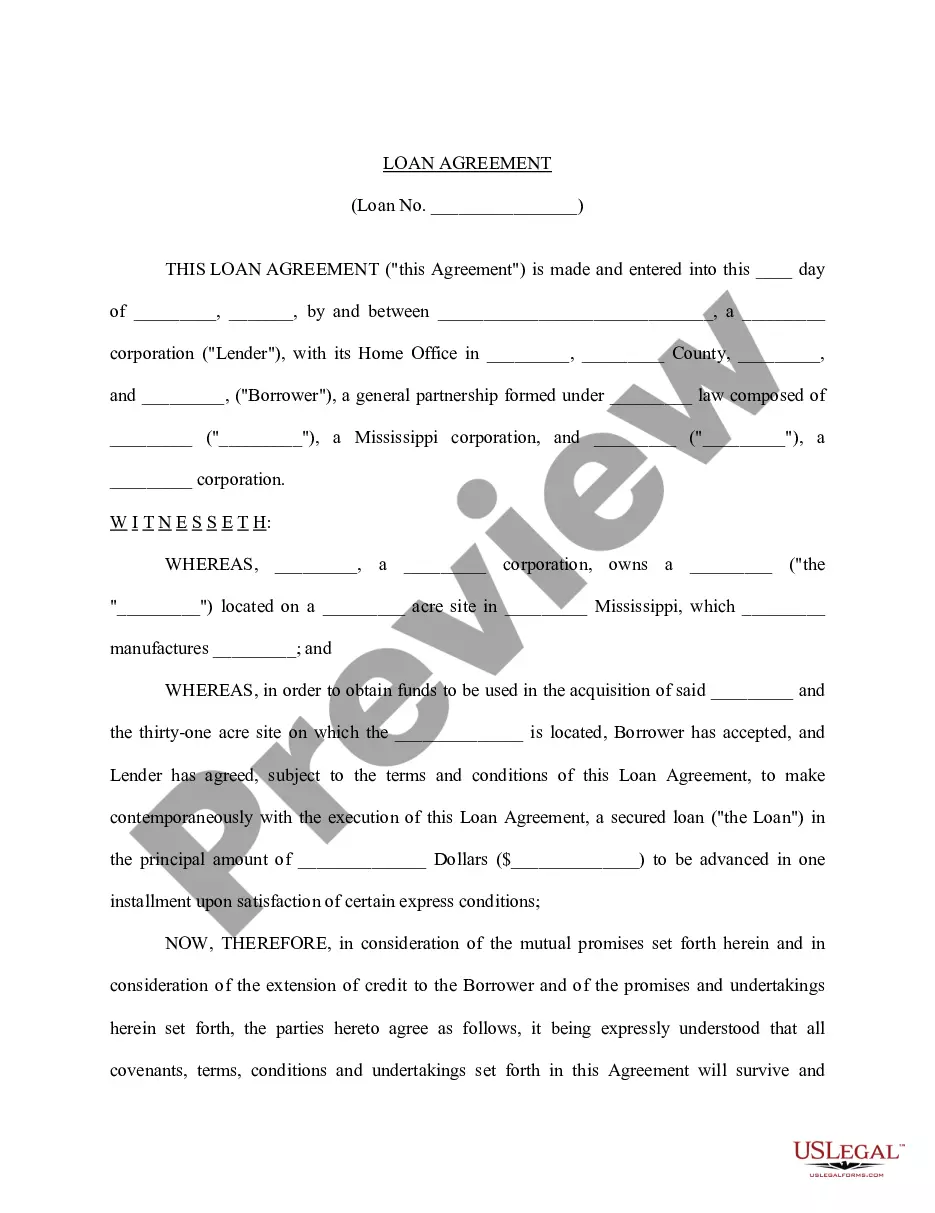
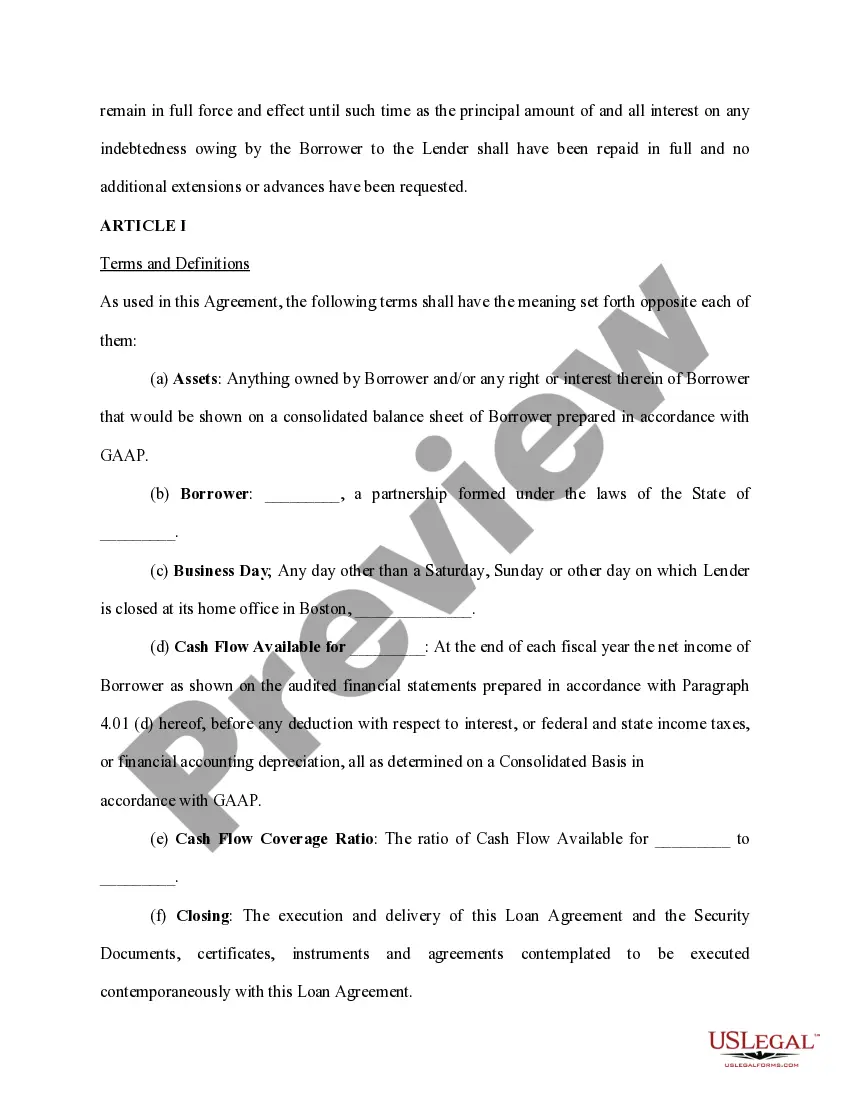
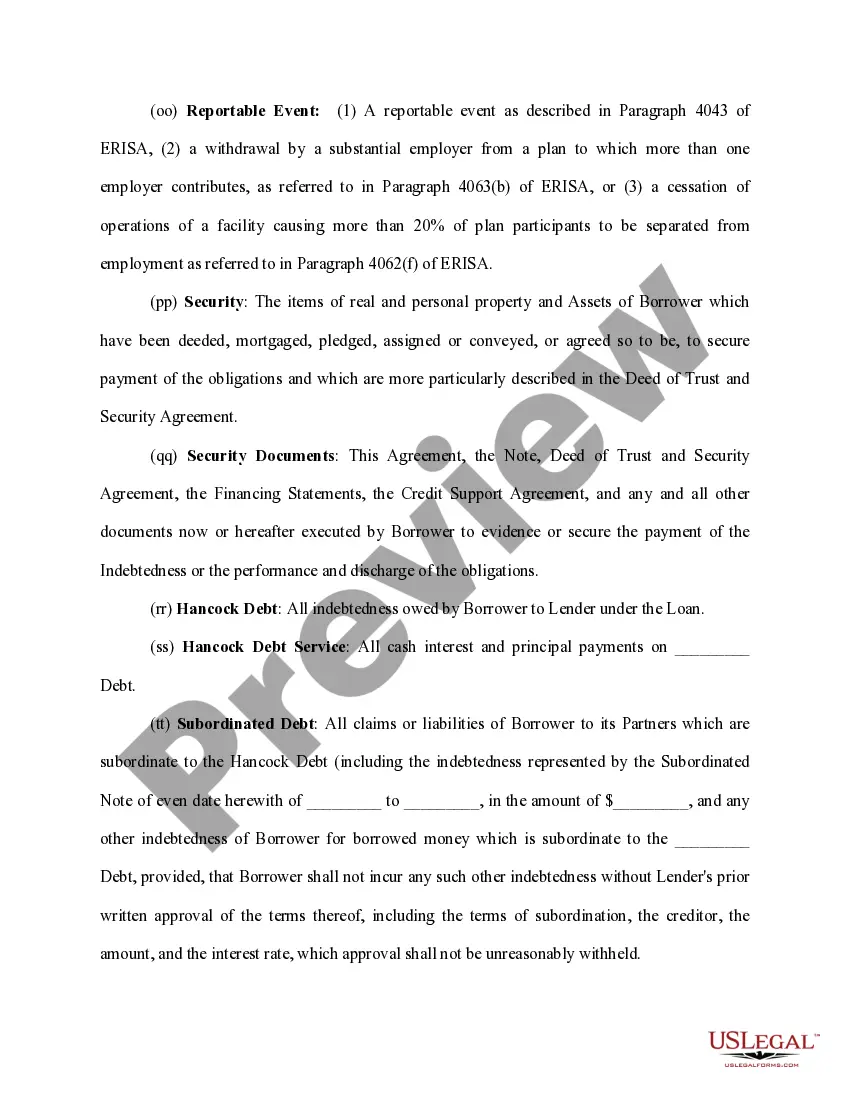
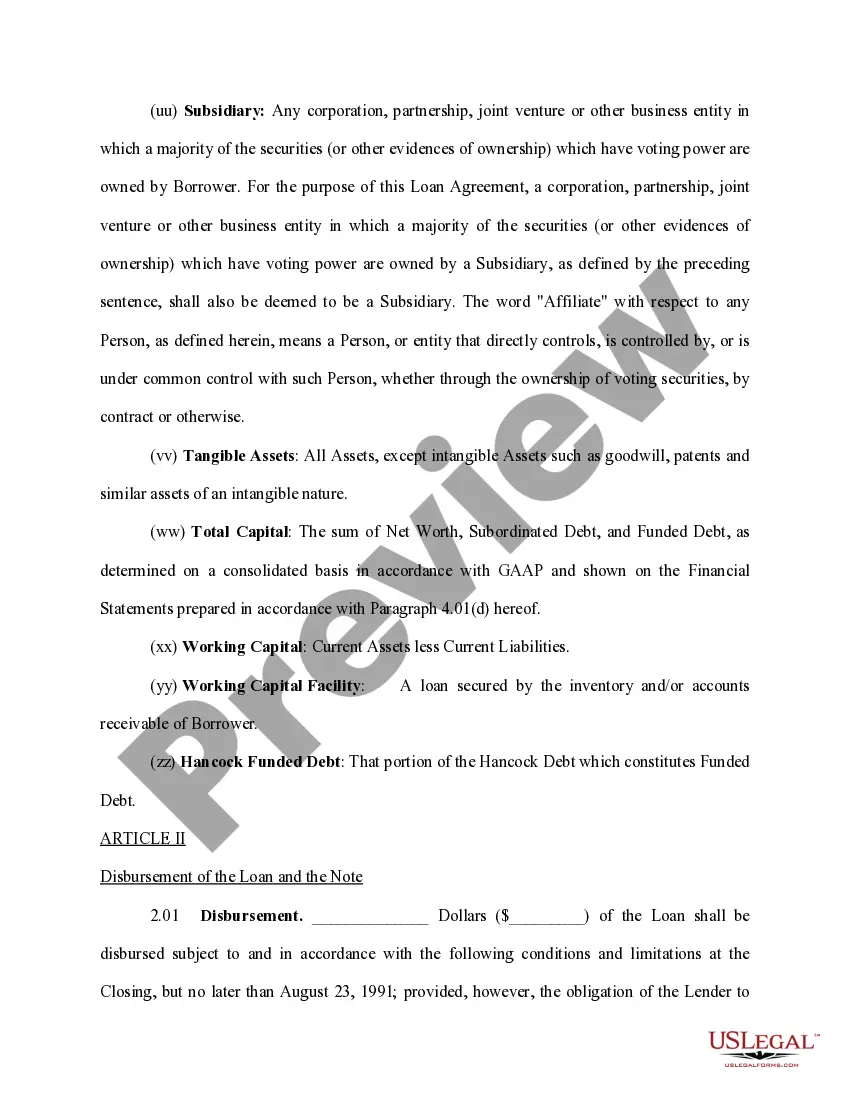
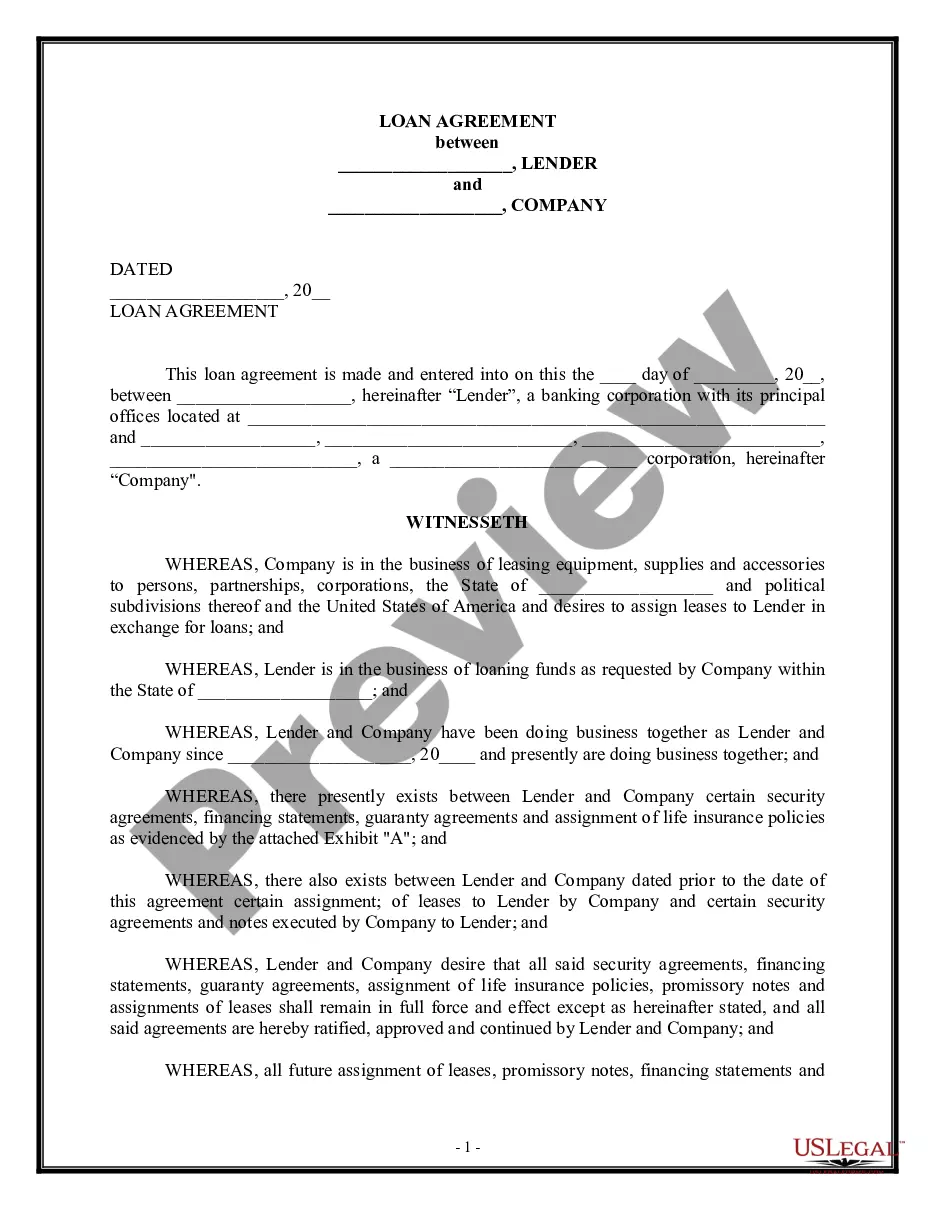
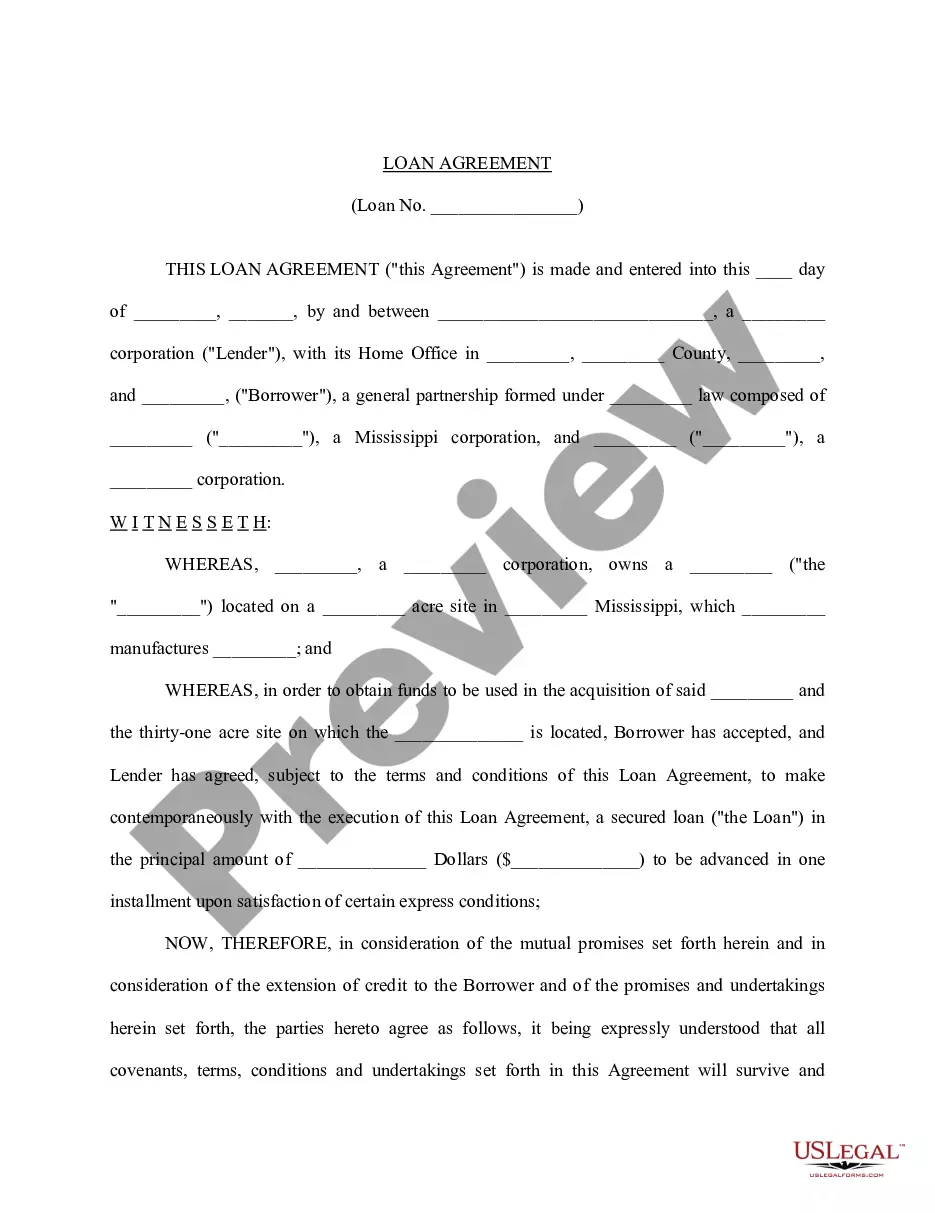
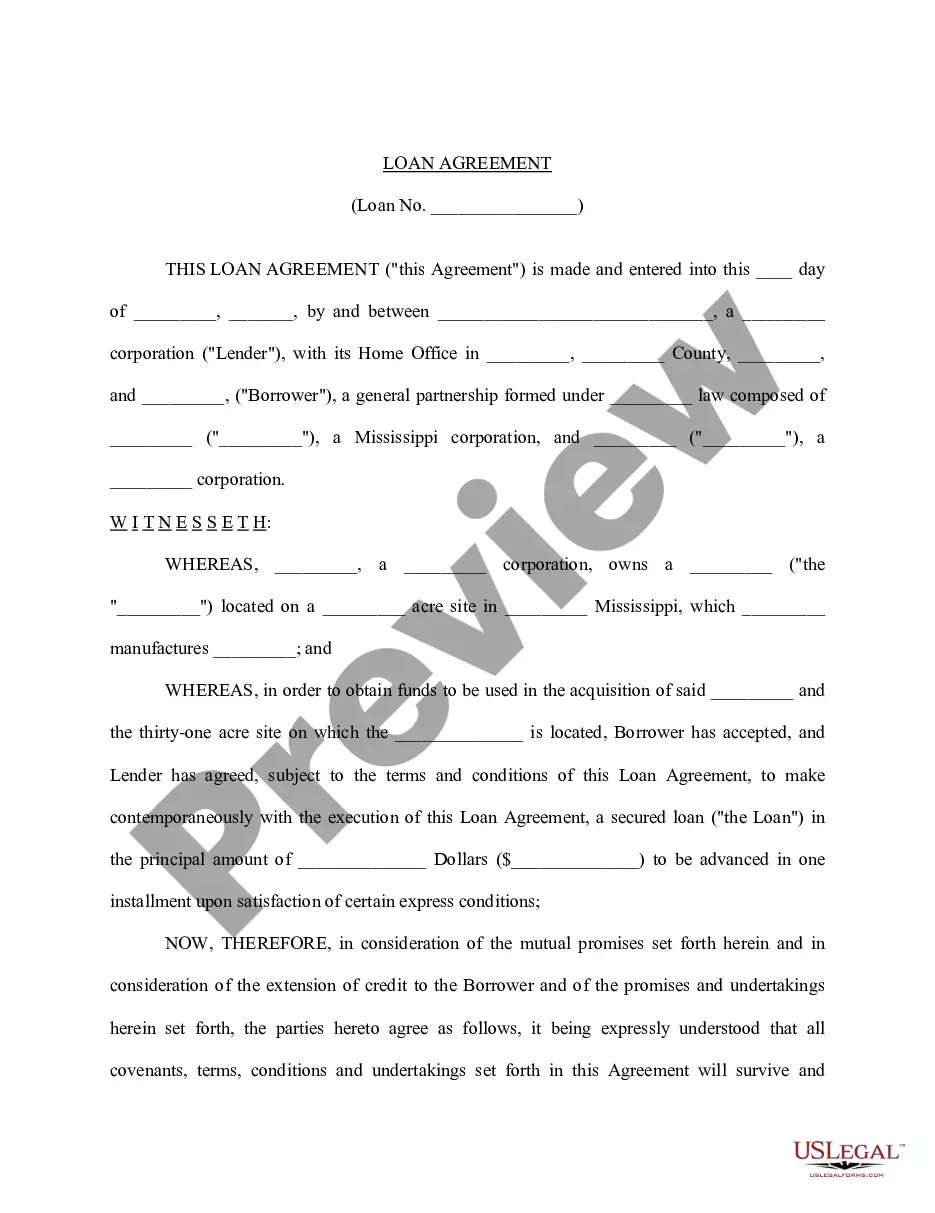
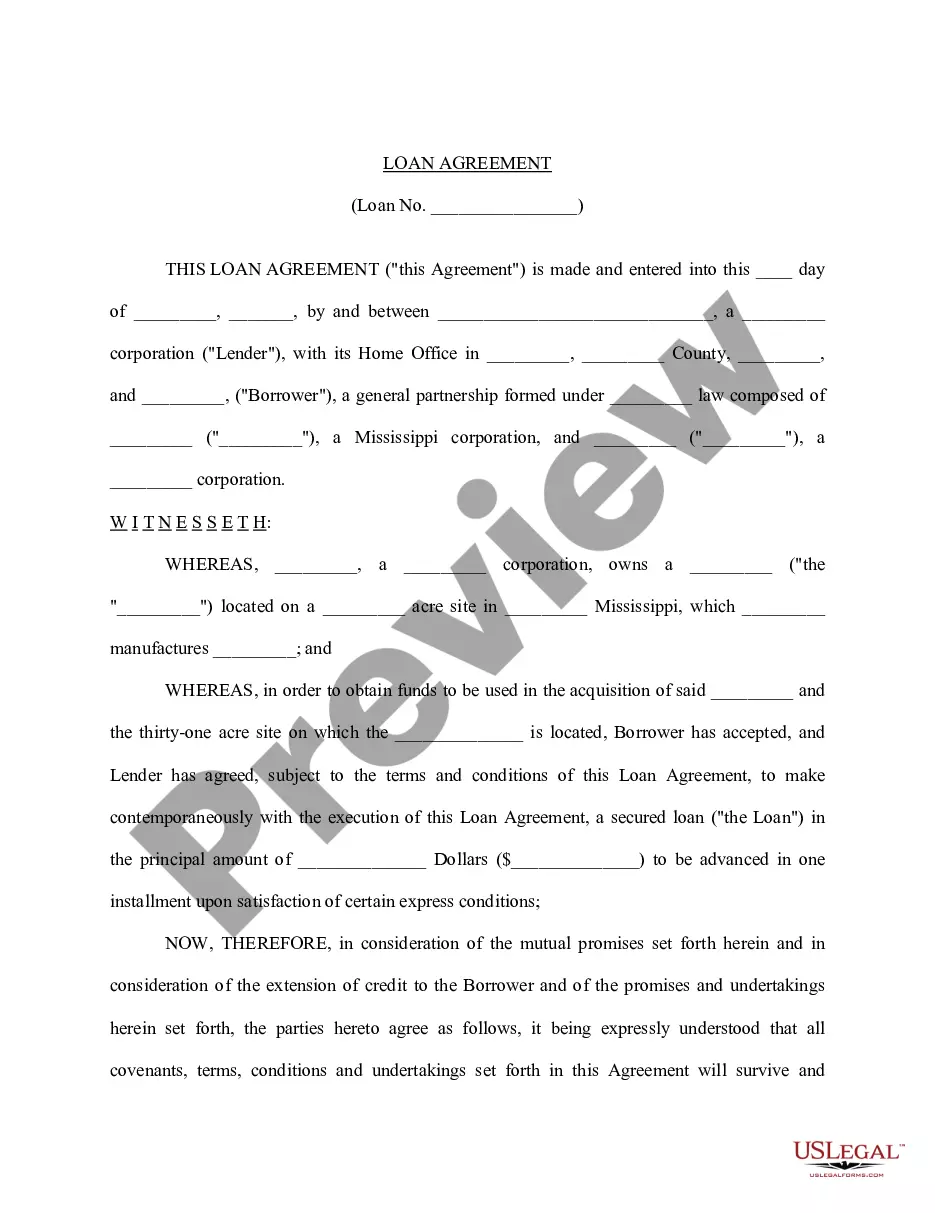
The Loan Agreement for Business is a legal document that outlines the terms and conditions under which one party (the Lender) agrees to lend money to another party (the Borrower) for business purposes. This agreement specifies the duties, obligations, and liabilities of both parties and serves to protect each party's interests. Unlike informal agreements, this formalized document provides legal clarity and enforceability in case of disputes.
Key components of this form
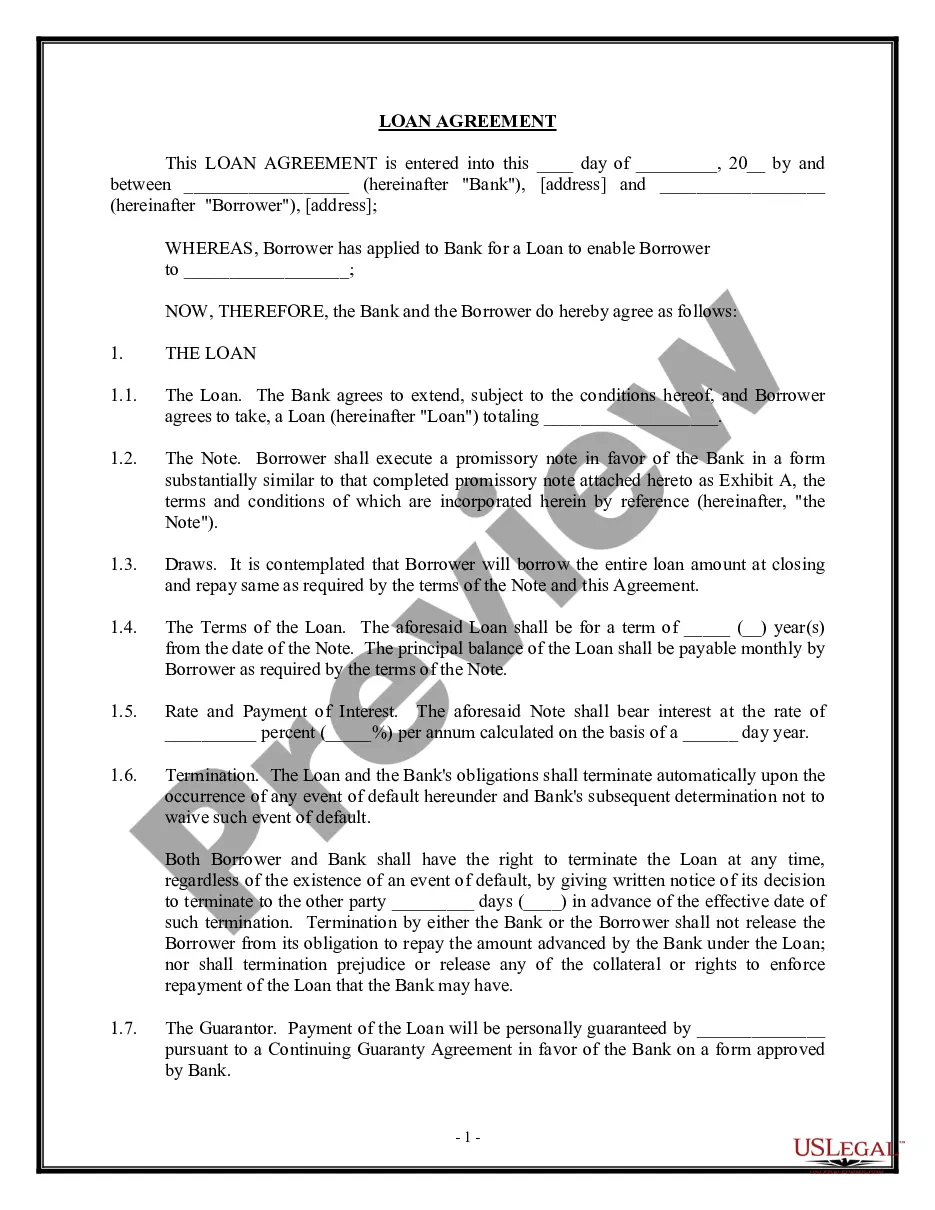
- Identification of the Lender and Borrower, including business structure.
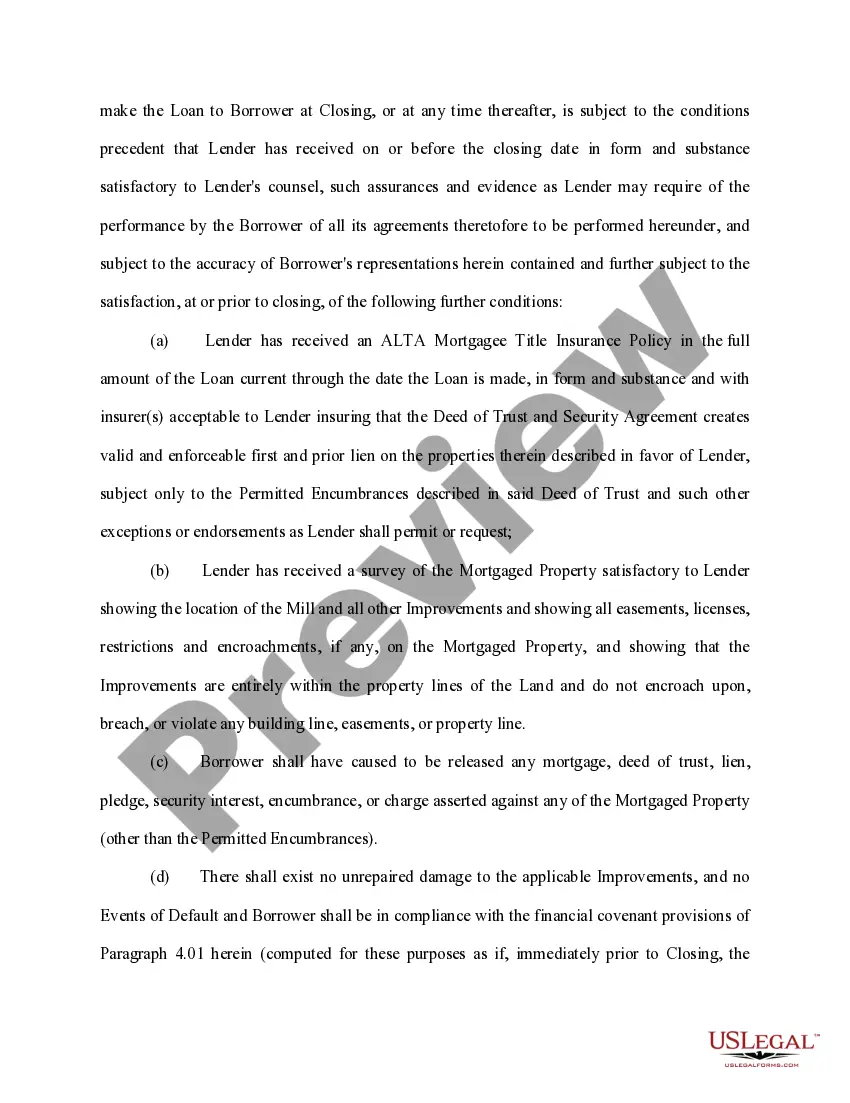
- Loan amount and disbursement terms.
- Interest rate and payment schedule.
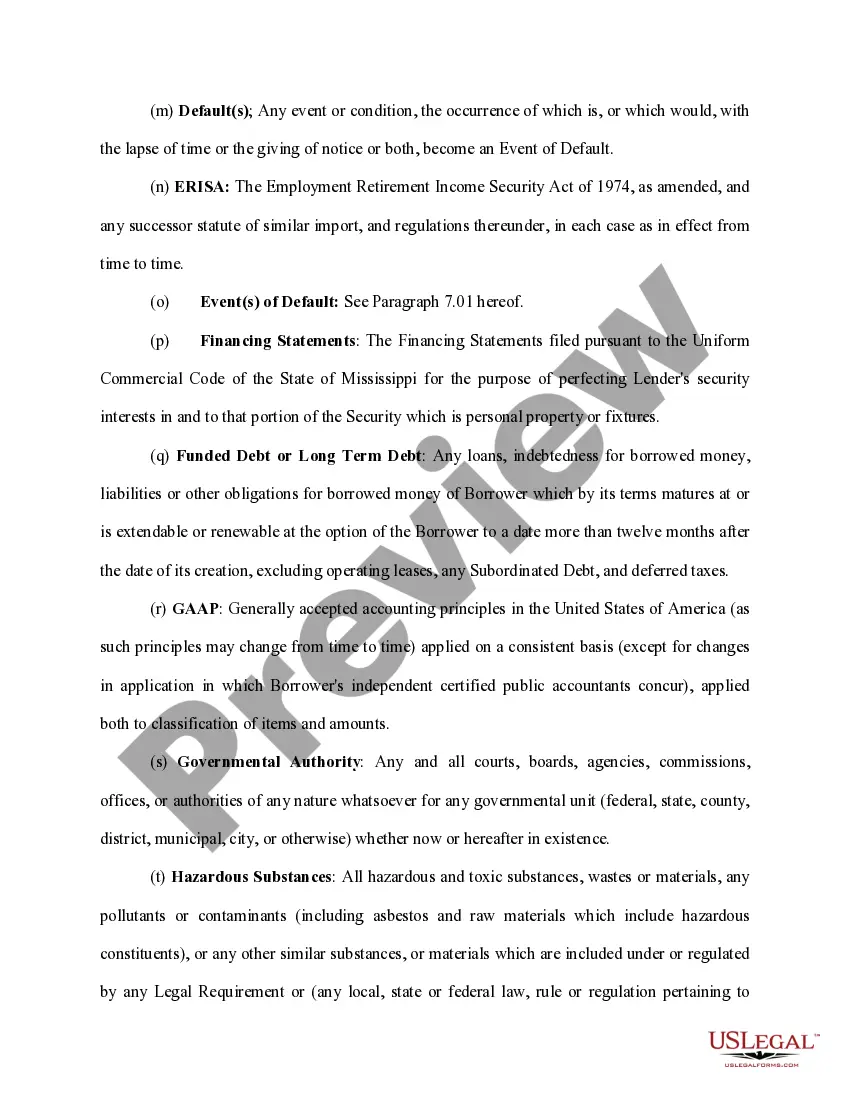
- Conditions for default and remedies available to the Lender.
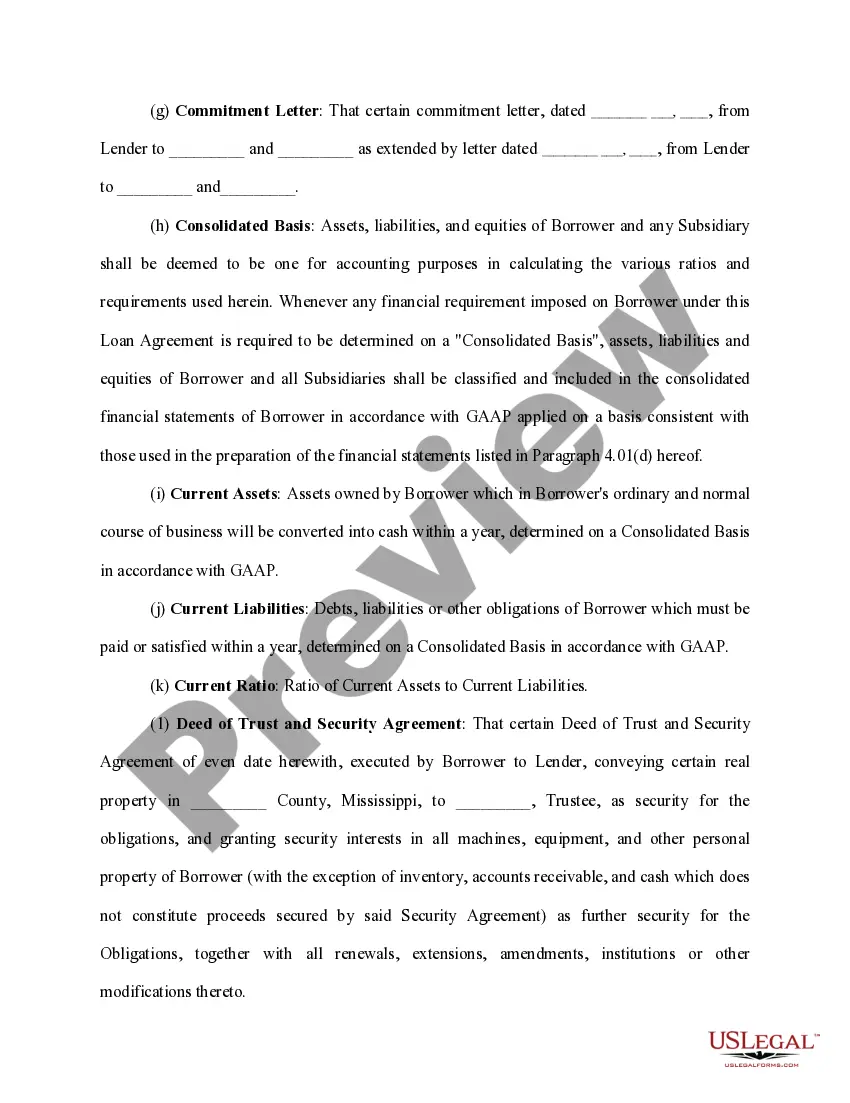
- Warranties and representations made by the Borrower.
- Affirmative and negative covenants to maintain debtor responsibilities.

When to use this form
This form is useful when a business needs to borrow money for operational expenses, expansion, or equipment purchases. It is particularly important for formalizing loans between business partners, investors, or institutions where clear terms are needed to avoid disputes later. Additionally, it may be used when securing loans with collateral to ensure repayment.
Who needs this form
- Business owners seeking financing from banks or private lenders.
- Partnerships needing to clarify the terms of internal loans.
- Investors providing funds to businesses for growth or expansion.
- Financial institutions lending to corporate entities.
- Individuals providing personal loans to business acquaintances under formal terms.
Instructions for completing this form
- Identify and enter the names and addresses of both the Lender and Borrower.
- Specify the principal loan amount and the disbursement conditions.
- Fill in details regarding the interest rate and repayment schedule.
- Include any agreed-upon covenants and representations from both parties.
- Sign the agreement to confirm acceptance of the terms.
Does this form need to be notarized?
This form does not typically require notarization unless specified by local law. Always check state regulations to ensure compliance with specific requirements for business loan agreements.
Get your form ready online
Our built-in tools help you complete, sign, share, and store your documents in one place.
Make edits, fill in missing information, and update formatting in US Legal Forms—just like you would in MS Word.
Download a copy, print it, send it by email, or mail it via USPS—whatever works best for your next step.
Sign and collect signatures with our SignNow integration. Send to multiple recipients, set reminders, and more. Go Premium to unlock E-Sign.
If this form requires notarization, complete it online through a secure video call—no need to meet a notary in person or wait for an appointment.
We protect your documents and personal data by following strict security and privacy standards.

Make edits, fill in missing information, and update formatting in US Legal Forms—just like you would in MS Word.

Download a copy, print it, send it by email, or mail it via USPS—whatever works best for your next step.

Sign and collect signatures with our SignNow integration. Send to multiple recipients, set reminders, and more. Go Premium to unlock E-Sign.

If this form requires notarization, complete it online through a secure video call—no need to meet a notary in person or wait for an appointment.

We protect your documents and personal data by following strict security and privacy standards.
Common mistakes
- Failing to clearly define the loan amount and repayment terms.
- Not specifying the conditions for default or remedies available to the Lender.
- Using vague language that can lead to misinterpretations.
- Neglecting to include pertinent legal language required by state laws.
- Forgetting to obtain signatures from all necessary parties.
Benefits of completing this form online
- Convenience of instant access to downloadable legal templates.
- Editability allows for customization to fit specific needs.
- Reliability of professionally drafted content ensures legal compliance.
- Saves time compared to drafting a contract from scratch.
- Easy storage and management of digital documents for future use.
Looking for another form?
Form popularity
FAQ
There is no requirement to have a loan agreement witnessed as it is not a deed and therefore can be signed under hand as a simple contract.These may need to be witnessed as deeds. Powers of attorney may be needed if all the parties cannot be present at completion to sign the loan agreement.
Starting the Document. Write the date at the top of the page. Write the Terms of the Loan. State the purpose of the personal payment agreement and the terms for returning the money. Date the Document. Statement of Agreement. Sign the Document. Record the Document.
A personal loan agreement is a legally binding document regardless of whether the lender is a financial institution or another person.As a borrower, you could be sued by the lender or lose the asset or assets used to secure the loan.
Loan agreements are binding contracts between two or more parties to formalize a loan process.Loan agreements typically include covenants, value of collateral involved, guarantees, interest rate terms and the duration over which it must be repaid.
A loan agreement is a contract between a borrower and a lender which regulates the mutual promises made by each party.Loan agreements are usually in written form, but there is no legal reason why a loan agreement cannot be a purely oral contract (although oral agreements are more difficult to enforce).
Loan agreements are an important part of borrowing money; they protect both the borrower and the lender. A loan agreement spells out the details of the transaction, including the loan amount, the interest rate, and the terms.
State the purpose for the loan. #Set forth the amount and terms of the loan. Your agreement should clearly state the amount of money you're lending your friend, the interest rate, and the total amount your friend will pay you back.
Identity of the Parties. The names of the lender and borrower need to be stated. Date of the Agreement. Interest Rate. Repayment Terms. Default provisions. Signatures. Choice of Law. Severability.