Sample Letter for Irrevocable Assignment and Lien to Medical Provider
Overview of this form
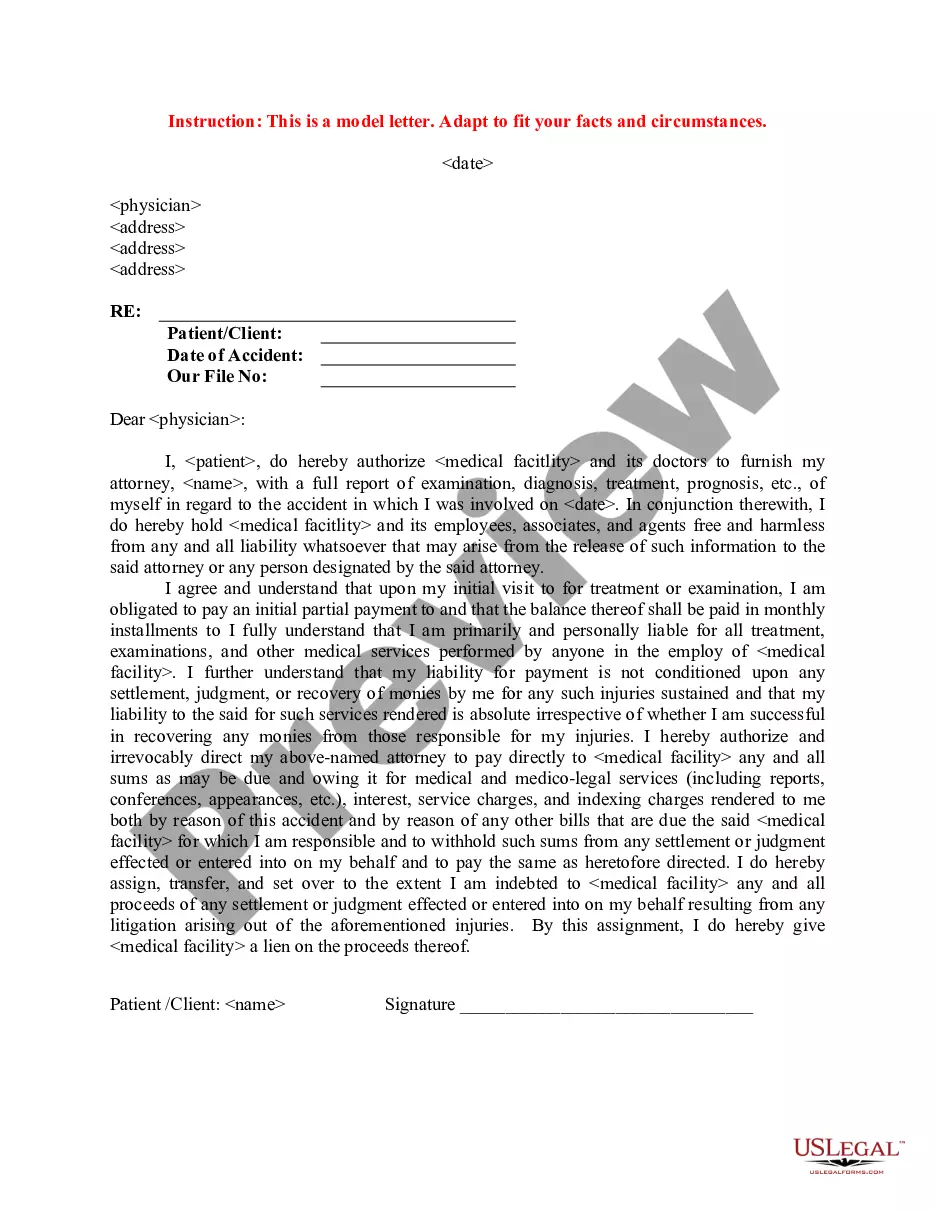
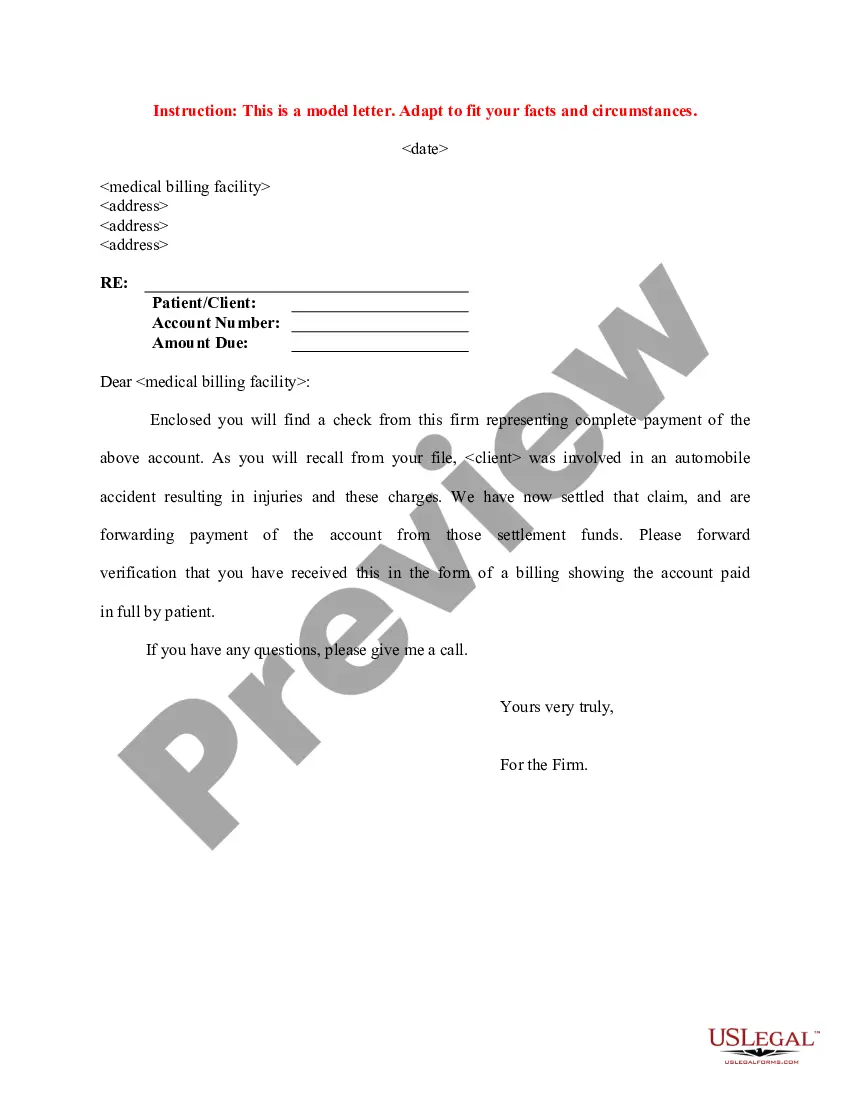
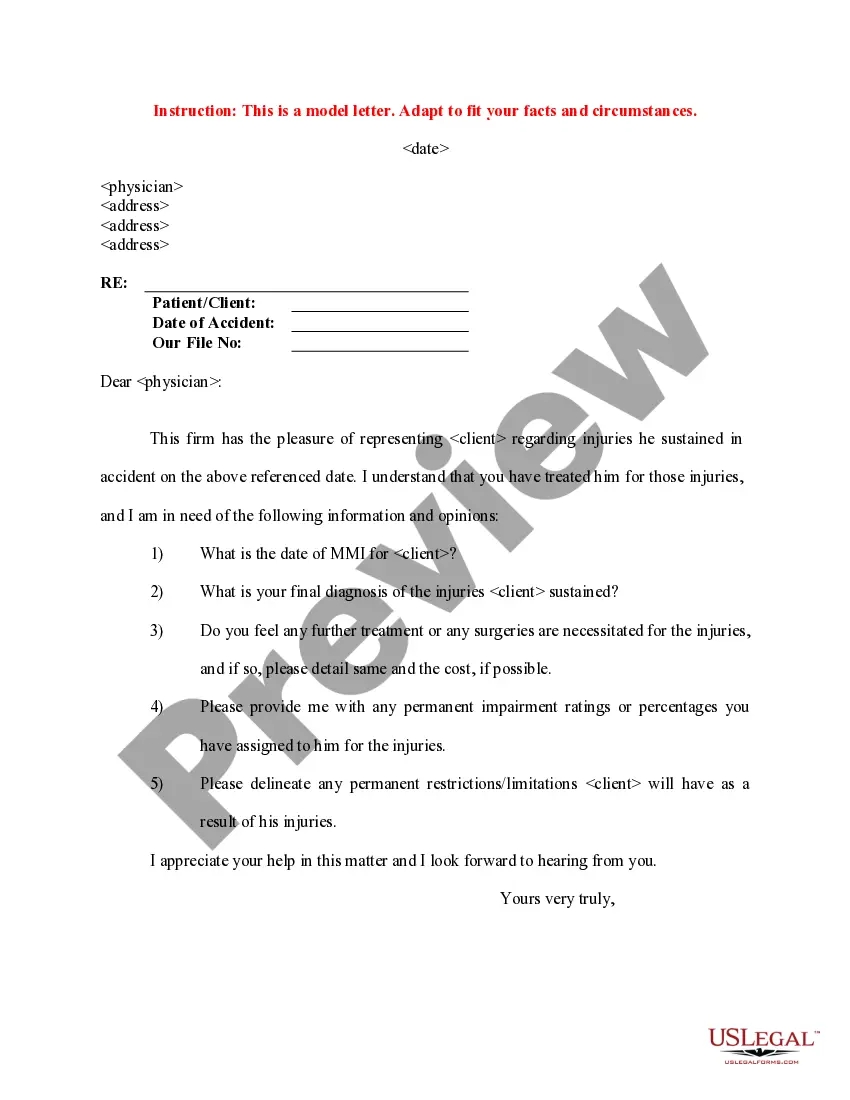
The Sample Letter for Irrevocable Assignment and Lien to Medical Provider is a legal document that allows a patient to authorize a medical provider to release medical information to their attorney. This form serves to assign any settlements resulting from a personal injury case to the medical provider for payment of services rendered. It is an essential tool for individuals involved in personal injury claims, as it helps streamline the payment process for medical expenses incurred due to an accident.
Key parts of this document
- Date of the letter and patient information
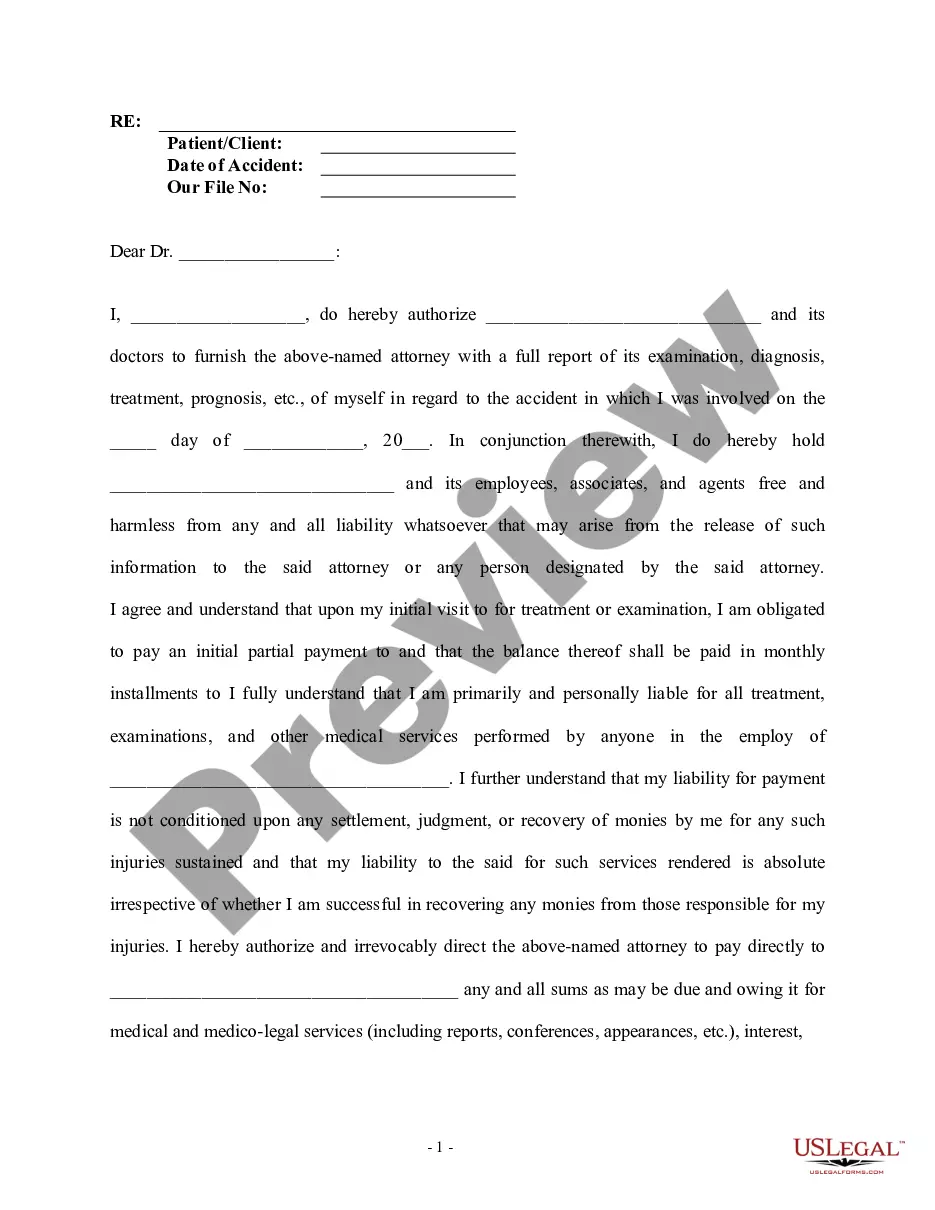
- Authorization to release medical records to the attorney
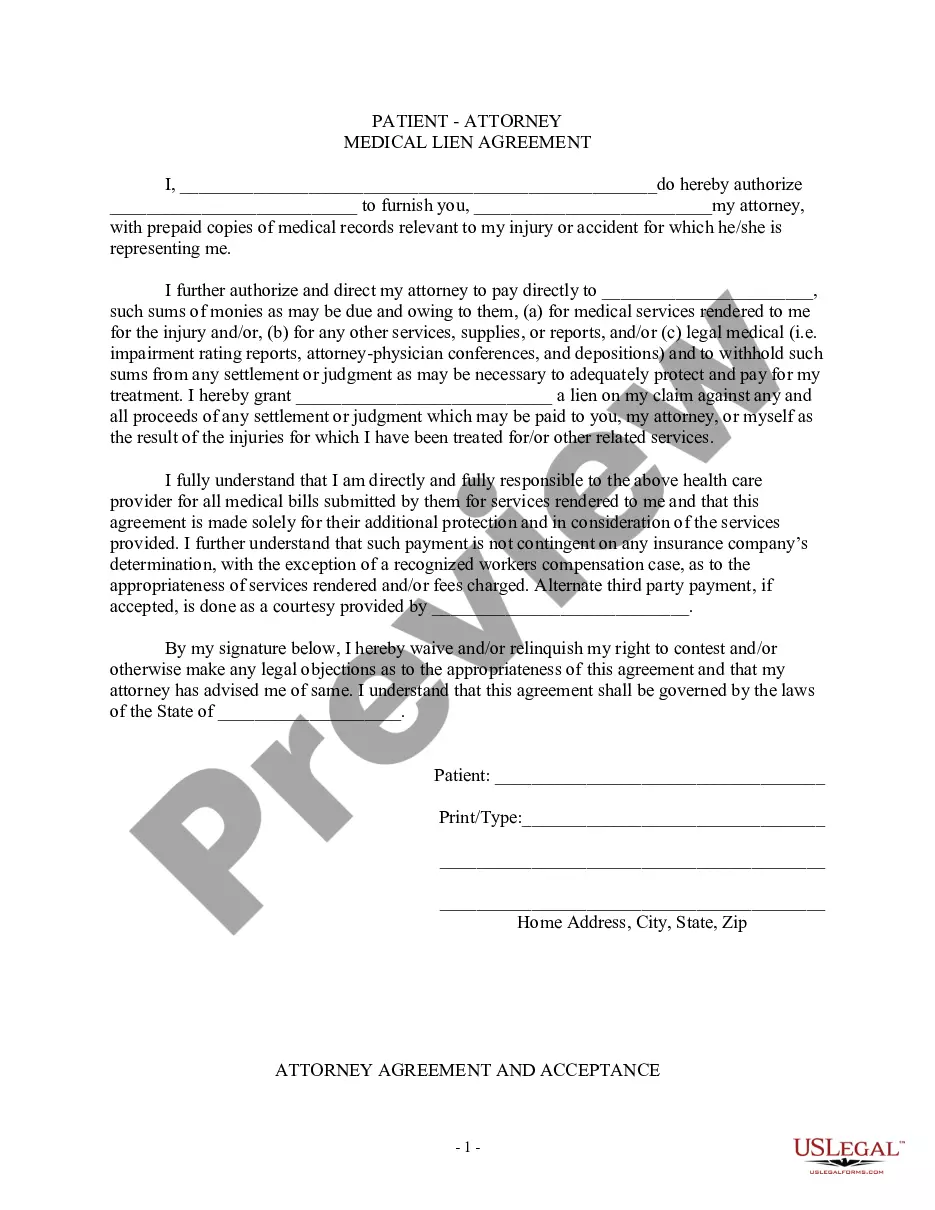
- Agreement on financial responsibility for medical services
- Direct payment authorization to the medical provider
- Assignment of lien on any settlement or judgment proceeds
Situations where this form applies
This form is used in personal injury cases where a patient seeks medical treatment after an accident. It is particularly useful when the patient intends to seek compensation from a third party, such as in car accidents or workplace injuries. By using this letter, the patient can ensure that their medical provider is paid directly from any settlement or judgment related to their case.
Who this form is for
- Patients who have been injured in an accident
- Individuals seeking to ensure medical bills are paid from settlement proceeds
- Attorneys representing clients in personal injury cases
- Medical providers requiring formal authorization for patient information release
How to complete this form
- Fill in the date of the letter.
- Provide full names and addresses for the patient, medical facility, and attorney.
- Enter the date of the accident and the claim file number.
- Authorize the medical facility to release information to the specified attorney.
- Sign and date the form to validate the authorization.
Notarization requirements for this form
This form does not typically require notarization unless specified by local law. However, confirming with state regulations is advised to ensure compliance.
Get your form ready online
Our built-in tools help you complete, sign, share, and store your documents in one place.
Make edits, fill in missing information, and update formatting in US Legal Forms—just like you would in MS Word.
Download a copy, print it, send it by email, or mail it via USPS—whatever works best for your next step.
Sign and collect signatures with our SignNow integration. Send to multiple recipients, set reminders, and more. Go Premium to unlock E-Sign.
If this form requires notarization, complete it online through a secure video call—no need to meet a notary in person or wait for an appointment.
We protect your documents and personal data by following strict security and privacy standards.

Make edits, fill in missing information, and update formatting in US Legal Forms—just like you would in MS Word.

Download a copy, print it, send it by email, or mail it via USPS—whatever works best for your next step.

Sign and collect signatures with our SignNow integration. Send to multiple recipients, set reminders, and more. Go Premium to unlock E-Sign.

If this form requires notarization, complete it online through a secure video call—no need to meet a notary in person or wait for an appointment.

We protect your documents and personal data by following strict security and privacy standards.
Common mistakes to avoid
- Failing to sign and date the letter.
- Omitting necessary information such as accident details.
- Not specifying the medical facility correctly.
- Using outdated forms that may not meet current legal requirements.
Benefits of using this form online
- Convenient access to customizable templates.
- Immediate download and editability to meet personal needs.
- Reliability from forms prepared by licensed attorneys.
Legal use & context
- This form is legally binding once completed and signed.
- It serves to protect the medical provider's interests in being compensated for services rendered.
- It may be subject to scrutiny in court; thus, ensuring accuracy is vital for enforceability.
Summary of main points
- The form facilitates medical payment from personal injury settlements.
- Accurate and complete information is crucial for legal validity.
- This document empowers both patients and medical providers in personal injury claims.
Looking for another form?


Form popularity
FAQ
A medical lien is a demand for repayment that can be placed against your personal injury case. When personal injury lawsuits are filed, the amount of money you have spent and could spend on your treatment is always taken into account.
Non-consensual liens arise from statutory or common law. The most notable example is a tax lien, which is imposed by law against the property of a taxpayer. If a taxpayer fails to pay the taxes owed to the government, the tax agency can seize his or her real or personal property for the amount of the lien.
Consensual liens are considered good liens and do not impact your credit. These include mortgages, vehicles, and business assets. Statutory liens are considered the bad kind and can will remain listed on your credit for seven years.These occur when a court grants a financial interest in your assets to a creditor.
What Is a Hospital Lien? Liens allow hospitals that provide emergency care to uninsured patients to claim a portion of any legal award that the patient might receive for the accident.A hospital can only attach a lien to a person's claim if it provided treatment within 72 hours of the patient's accident.
A lien is a claim or legal right against assets that are typically used as collateral to satisfy a debt. A lien could be established by a creditor or a legal judgement. A lien serves to guarantee an underlying obligation, such as the repayment of a loan.
A lien means putting a lock. So, the lien amount is the amount which the bank has put a hold on. That amount is frozen, and you can't withdraw those funds or use them until the lien is removed. The bank may put a lien on a specific amount in an account, or on the entire account.
A lien is a claim or legal right against assets that are typically used as collateral to satisfy a debt. A lien could be established by a creditor or a legal judgement. A lien serves to guarantee an underlying obligation, such as the repayment of a loan.
Medical debt does not affect your credit score unless it's reported to a credit bureau, and virtually no hospital or medical provider will report the debt directly, according to the National Consumer Law Center (NCLC). However, they might turn it over to a collection agency, which might report it.
Like most states, Arizona allows healthcare providers to impose medical liens on injury claims if victims cannot pay for their treatment.