Sample Letter for Garnishment
About this form
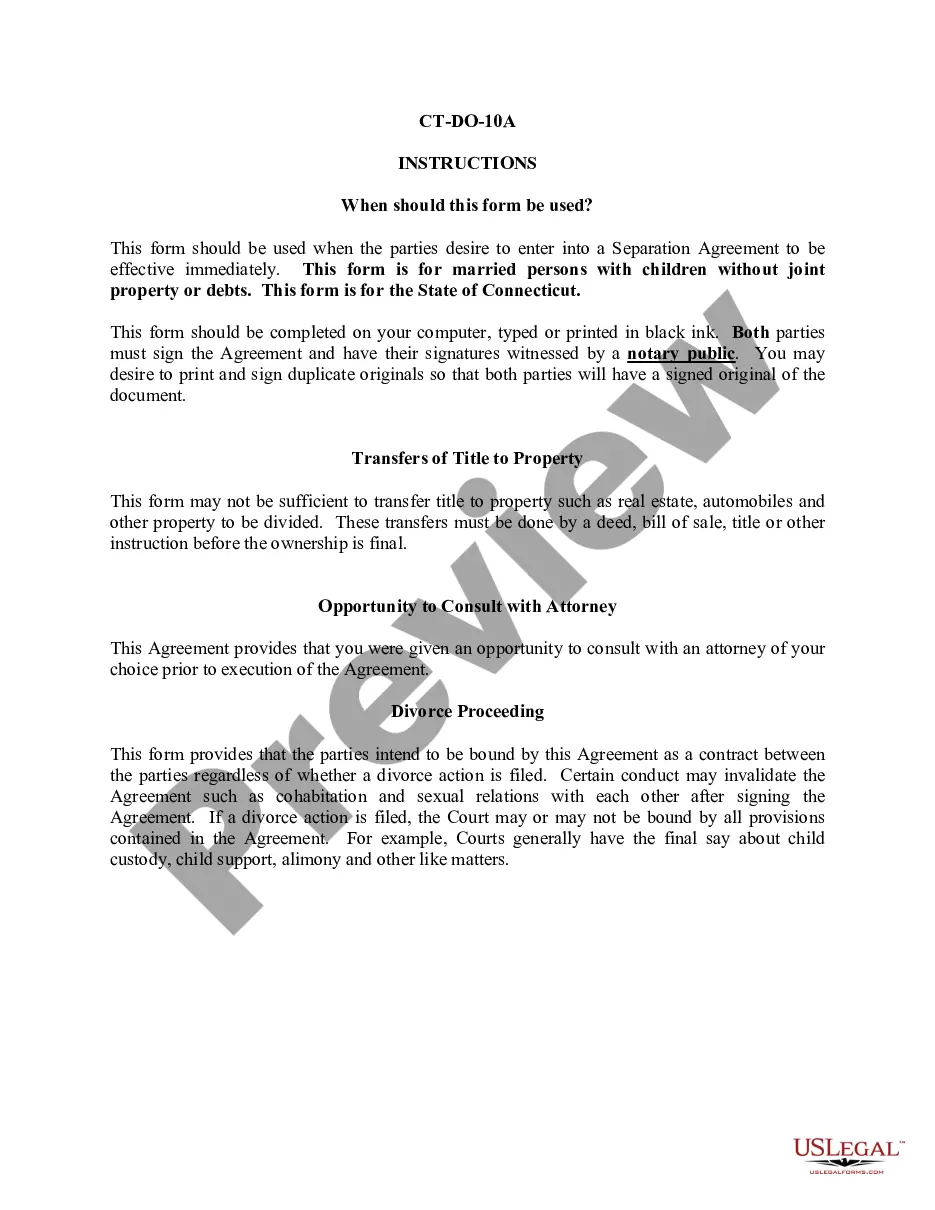
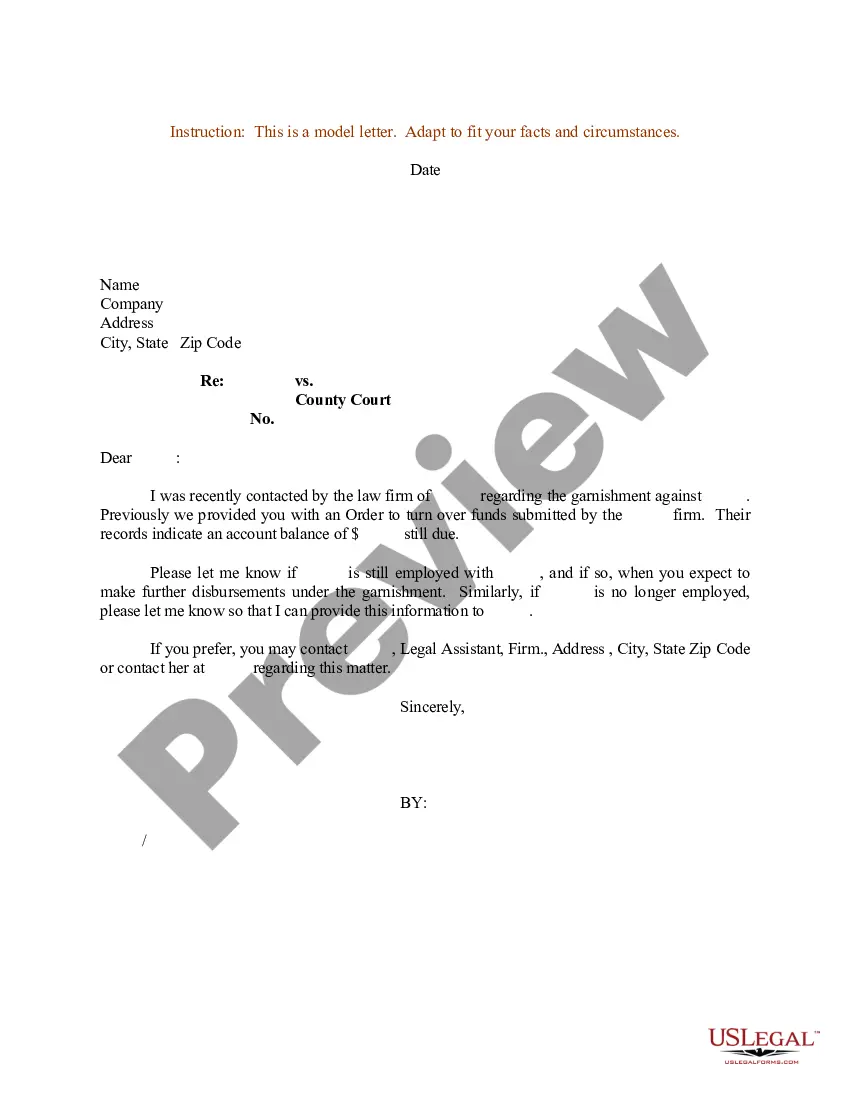
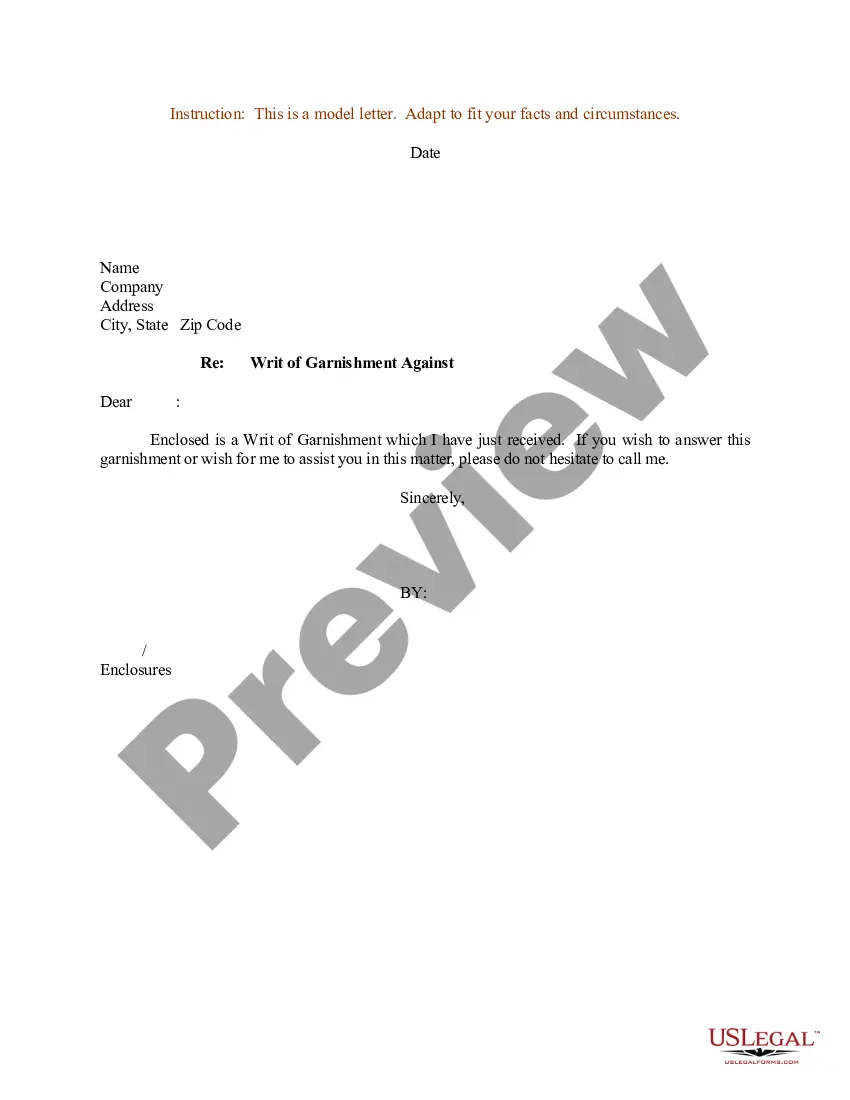
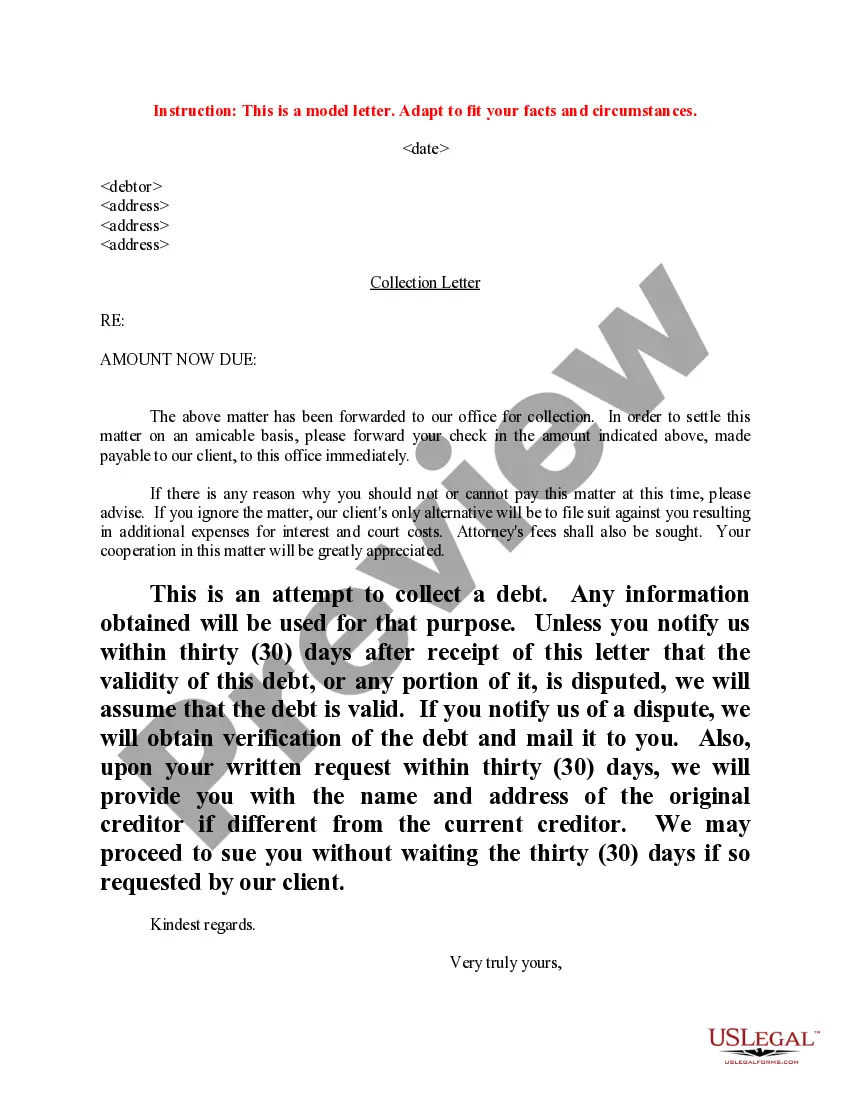
The Sample Letter for Garnishment is a template used to formally notify a debtor regarding an impending garnishment. This form serves as a communication tool to inform the recipient about the legal action that may affect their wages or bank accounts. Unlike other legal notices, this letter specifically addresses garnishment situations and is designed to comply with relevant legal requirements.
What’s included in this form
- Date: The date when the letter is prepared.
- Sender's Information: Name, company, address, city, state, and zip code of the sender.
- Recipient's Information: Name and address of the individual receiving the letter.
- Subject Line: Clearly states that the letter pertains to garnishment.
- Body of the Letter: Explains the garnishment process and what actions the recipient may need to take.


When to use this document
This form is useful in situations where a creditor has obtained a court order to garnish wages or bank accounts of a debtor. It can be used when notifying the debtor of the garnishment process, ensuring they understand the implications and giving them an opportunity to address the situation before it escalates further.
Who this form is for
This letter should be used by:
- Creditors seeking to initiate a garnishment against a debtor.
- Collections agencies handling debts on behalf of creditors.
- Individuals pursuing legal action to recover owed amounts.
How to prepare this document
- Enter the date at the top of the letter.
- Fill in your name, company, and contact information.
- Provide the recipient's name and address accurately.
- Clearly state the subject of the letter as garnishment.
- Draft the body of the letter to outline the garnishment details.
- Review the letter for accuracy and sign if necessary.
Does this document require notarization?
In most cases, this form does not require notarization. However, some jurisdictions or signing circumstances might. US Legal Forms offers online notarization powered by Notarize, accessible 24/7 for a quick, remote process.
Get your form ready online
Our built-in tools help you complete, sign, share, and store your documents in one place.
Make edits, fill in missing information, and update formatting in US Legal Forms—just like you would in MS Word.
Download a copy, print it, send it by email, or mail it via USPS—whatever works best for your next step.
Sign and collect signatures with our SignNow integration. Send to multiple recipients, set reminders, and more. Go Premium to unlock E-Sign.
If this form requires notarization, complete it online through a secure video call—no need to meet a notary in person or wait for an appointment.
We protect your documents and personal data by following strict security and privacy standards.

Make edits, fill in missing information, and update formatting in US Legal Forms—just like you would in MS Word.

Download a copy, print it, send it by email, or mail it via USPS—whatever works best for your next step.

Sign and collect signatures with our SignNow integration. Send to multiple recipients, set reminders, and more. Go Premium to unlock E-Sign.

If this form requires notarization, complete it online through a secure video call—no need to meet a notary in person or wait for an appointment.

We protect your documents and personal data by following strict security and privacy standards.
Common mistakes
- Leaving out important contact information.
- Failing to clearly define the garnishment details.
- Not signing the letter, if required.
- Using ambiguous language that could confuse the recipient.
Advantages of online completion
- Convenience: Download and customize the letter at your convenience.
- Editability: Modify the template to fit your specific situation.
- Reliability: Use a professionally drafted legal document created by licensed attorneys.
Key takeaways
- The Sample Letter for Garnishment is crucial for notifying a debtor of garnishment actions.
- Customizing the letter is essential to fit individual circumstances.
- Understanding state-specific requirements is key to legal compliance.
Looking for another form?



Form popularity
FAQ
If it's already started, you can try to challenge the judgment or negotiate with the creditor. But, they're in the driver's seat, and if they don't allow you to stop a garnishment by agreeing to make voluntary payments, you can't really force them to. You can, however, stop the garnishment by filing a bankruptcy case.
Make it clear to the creditor that you intend to pay the debt. Explain that you are unable to pay the debt due to (detail your hardship). or, if you are lucky, might accept it. Get your terms in writing before you send any payments.
Judgment proof is a description of a person who does not have enough assets for a creditor to seize when a court order requires debt repayment. A debtor who is broke and unemployed can be considered judgment proof, as can a debtor who only has certain legally protected types of assets or income.
Respond to the Creditor's Demand Letter. Seek State-Specific Remedies. Get Debt Counseling. Object to the Garnishment. Attend the Objection Hearing (and Negotiate if Necessary) Challenge the Underlying Judgment. Continue Negotiating.
Make sure you state you are exercising your rights under the Fair Debt Collection Practices Act. Include a sentence or two describing why you are judgment-proof For example: I am judgment proof because I am living only on Social Security benefits, own limited exempt property, and cannot meet current expenses.
A judgment is a court order that is the decision in a lawsuit. If a judgment is entered against you, a debt collector will have stronger tools, like garnishment, to collect the debt.You are likely to have a judgment entered against you for the amount claimed in the lawsuit if you: Ignore the lawsuit, or.
If your income is protected from garnishment and you have no assets (house, property, savings etc.) with which to pay your debt, you may be 'Judgment Proof'. Income that can NOT be garnished: TANF, GAU, SSI, SSDI, SSA, Food Stamps, child support, pension, etc. Income that can be garnished is wages from employment.
Garnishment, or wage garnishment, is when money is legally withheld from your paycheck and sent to another party. It refers to a legal process that instructs a third party to deduct payments directly from a debtor's wage or bank account. Typically, the third party is the debtor's employer and is known as the garnishee.
If you are collection proof you can write a letter to the debt collector that tells them it is not worth taking you to court. The letter also tells them not to harass you. If you are collection proof use the collection proof letter.